‘I praise god and ever shall / It is the sheep hath paid for all.’ (Wool merchant memorial)
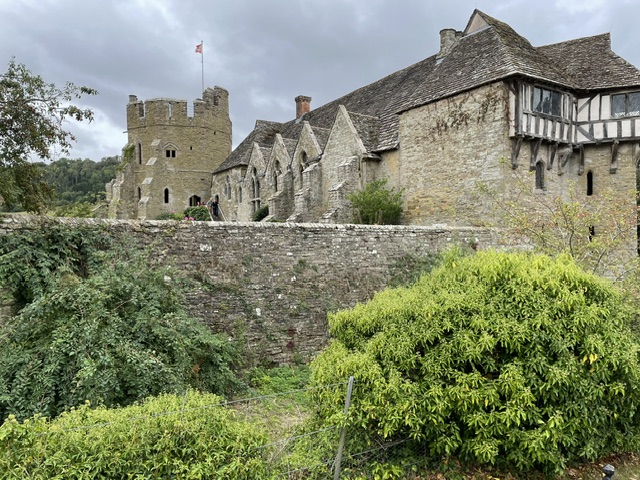
Stokesay is rightly acknowledged to be one of the finest surviving fortified manor houses in England, and we were keen to savour a return visit on this holiday. The castle was built between 1285 – 91 for Lawrence of Ludlow, one of the wealthiest merchants of 13th Century England. This enterprising figure was named for his birthplace in the neighbouring market town of Ludlow, the magnificent fortress capital of the Welsh Marches. His father Nicholas was a wool merchant who had laid the foundations of a family business which his son would extend into a complex pan European network.
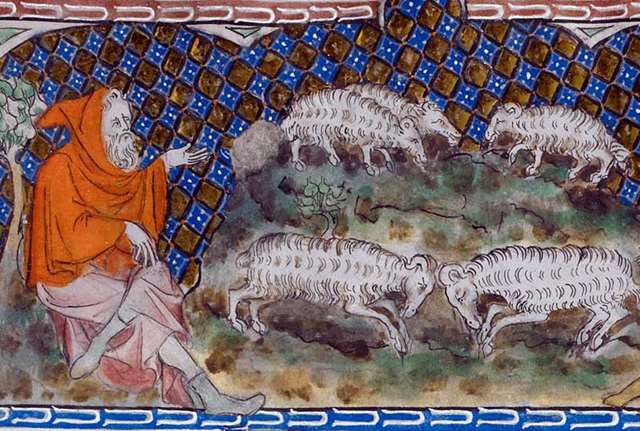
Lawrence travelled extensively to negotiate with cloth producers in the great centres of the trade at Bruges and Ghent as well as attending the most important fairs, like the one at Champagne. The biggest driver of the national economy, huge revenues generated through the wool industry built many grand churches and houses in town and country. It facilitated Lawrence’s social progression from urban businessman to country gentleman, making Stokesay, as a physical manifestation of wealth and power, so special and informative.
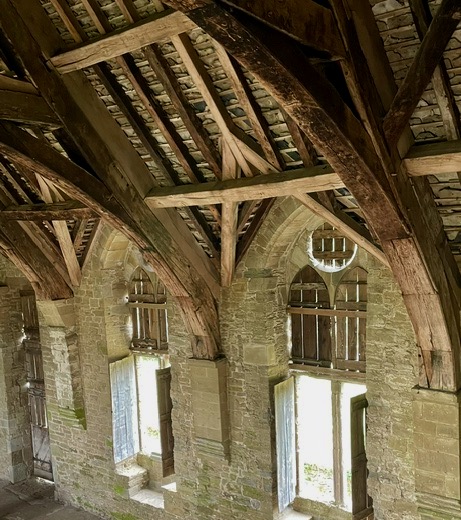
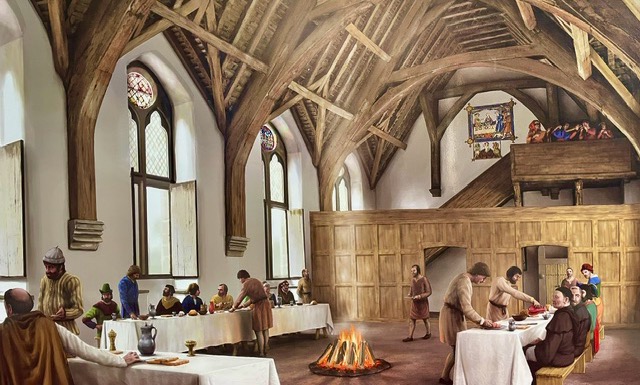
At his new abode possessions could be stored safely. The surrounding 120 acre manor of woods, watermills and farms would supply most everyday household needs. As on our previous visit swallows were diving in and out of the shafts of sunlight coming through the large open windows of the great hall. It’s easy to imagine Lawrence, his wife Agnes or any of their five sons entertaining guests at a feast. VIPs like the Bishop of Hereford and the Abbot of Haughmond Abbey are recorded attending. Lawrence had his local office in Shrewsbury and another in London near the royal court.
One of the country’s richest men, Lawrence became a money lender to courtiers and King Edward I himself. The warrior monarch, in order to fund imperial ambitions in Wales, Scotland and France introduced export taxes on the actual producers of wool – the great monasteries and wealthier landowners. Lawrence, head of a consortium of leading wool merchants, was seen as the instigator of this move, making him unpopular with many.
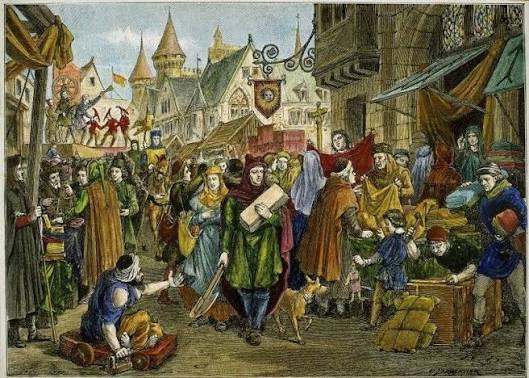
Travel in the medieval period was a business fraught with risks at the best of times and In November 1294 Lawrence and his brother perished in a shipwreck off the coast of Suffolk, en route to the low countries. it was recorded in one monastery that ‘…because he sinned against the wool mongers he was drowned in a ship laden with wool.’
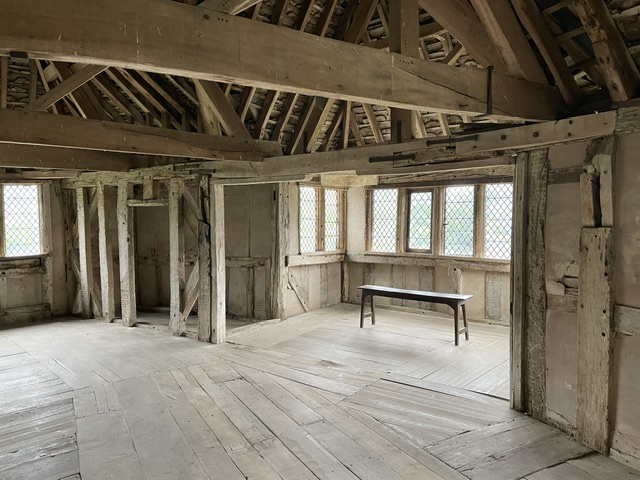
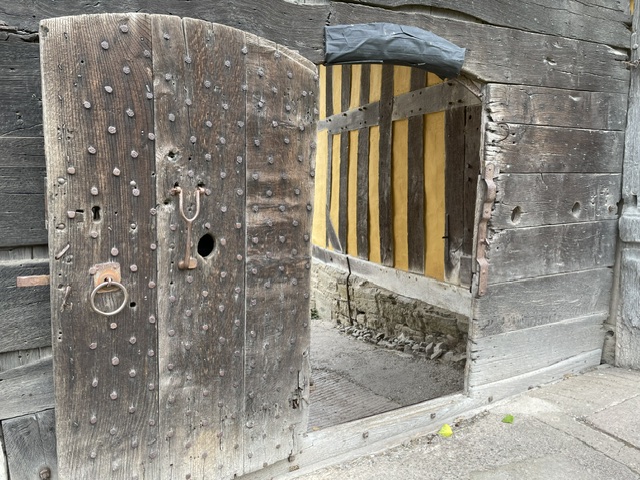
Thanks to the actions of the redoubtable Agnes and her eldest son the Stokesay legacy was secured, and his descendants continued to live relatively peaceably at their country estate until 1498. The picturesque half-timbered gatehouse was added in the 17th Century and the two great towers from Laurence’s day were made more comfortable as private and guest living quarters with the addition of wood panelling, remodelled fireplaces and decorative carvings.
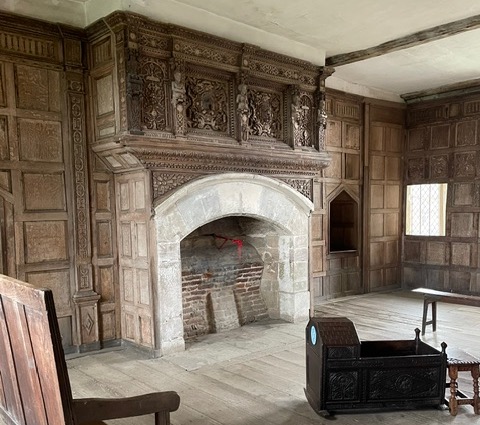
It was a delight to wonder through them before going down to the cellars or ascending the narrow age worn steps to the highest rooms.
There have been interpretive improvements by English Heritage since we last came a decade ago. Most of our fellow visitors opted for headset audio guides, which I personally find a rather alienating experience. Digital technology has also been used to give screen visualisation in principal rooms, showing how they might have looked at different periods in the building’s long history, and that I did like.
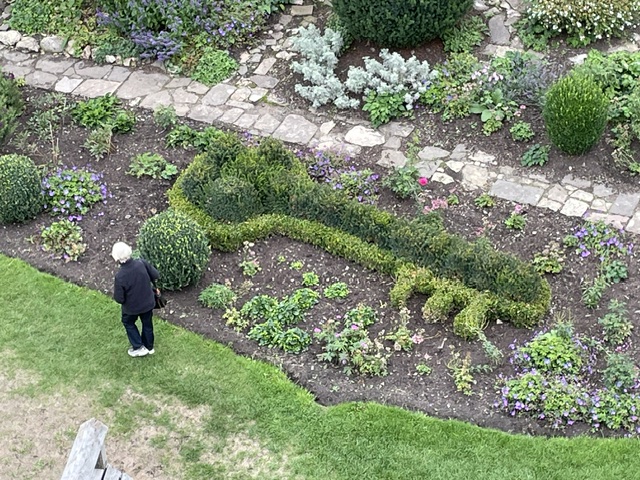
Another nice touch is the children’s discovery trail that leads curious young minds through the different spaces with various clues, ending on the castellated roof of the south tower. The end of their exploring adventure promises a revelation of the giant’s key to the castle. Spoiler alert – looking down onto the courtyard garden below the outline of a large key made up of different flora can be clearly seen.
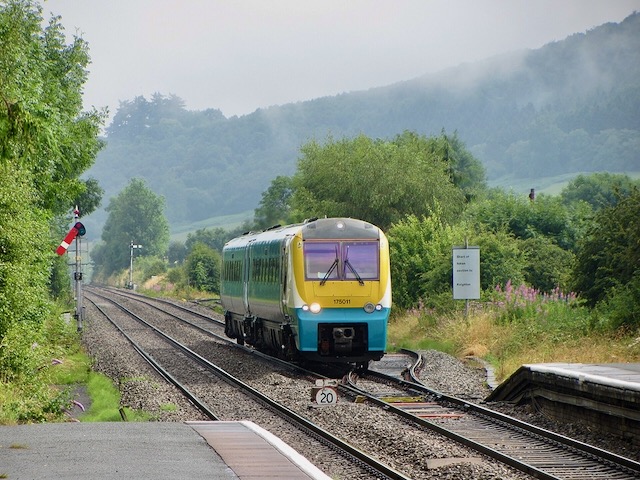
From this high point I could also clock, across the intervening meadow, Welsh Marches line trains speeding by on the double track linking Crewe to Newport Gwent. Frequency of services and modernity of carriages compares well with the older Heart of Wales line rolling stock we’d travelled on along single track to Knighton and back.
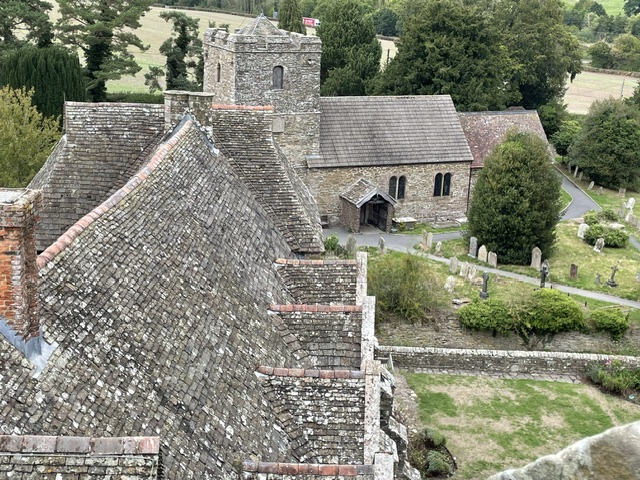
On leaving we slipped into the adjacent church of St John the Baptist. Originally the castle’s chapel it was rebuilt in 1654, in the wake of the civil war ( when the castle walls were demolished, rendering it indefensible). The handsome solid exterior gives way to a severe protestant interior with admonishing biblical texts on the whitewashed walls and a mass of high sided dark oak box pews which put me in mind of an early 19th century penitentiary.
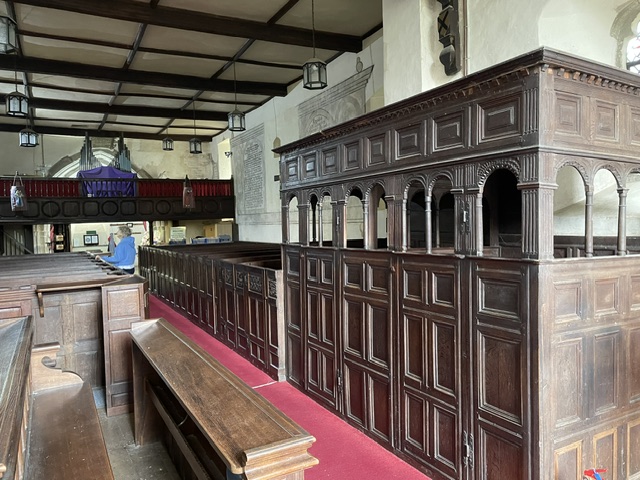
The original west gallery, where once the parish band would have played before being usurped by the church organ helped lighten the initial impression, evoking the ghost of Thomas Hardy’s Mellstock Quire in Under the Greenwood Tree. In another life I’d attended a packed candlelight Christingle family service here, with a jolly female vicar officiating and lots of small children engrossed in the seasonal proceedings. A memory quite at odds with today’s encounter. How curious and contradictory our unreliable recollections can be.
More on Stokesay here: https://www.english-heritage.org.uk/visit/places/stokesay-castle/


