Stokesay

‘I praise god and ever shall / It is the sheep hath paid for all.’  (Wool merchant memorial)
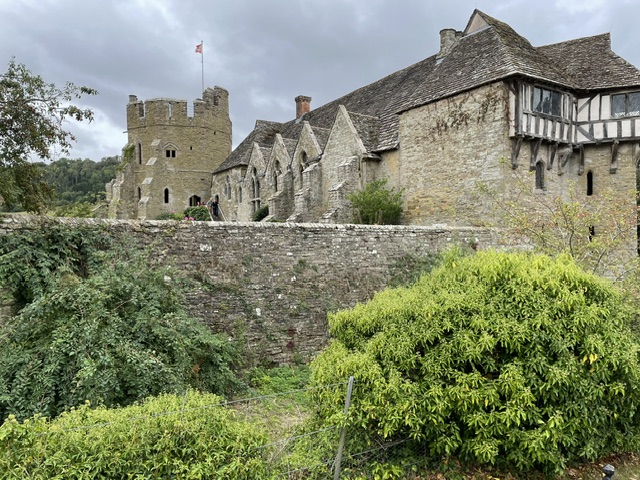
Stokesay is rightly acknowledged to be one of the finest surviving fortified manor houses in England, and we were keen to savour a return visit on this holiday. The castle was built between 1285 – 91 for Lawrence of Ludlow, one of the wealthiest merchants of 13th Century England. This enterprising figure was named for his birthplace in the neighbouring market town of Ludlow, the magnificent fortress capital of the Welsh Marches. His father Nicholas was a wool merchant  who had laid the foundations of a family business which his son would extend into a complex pan European network.
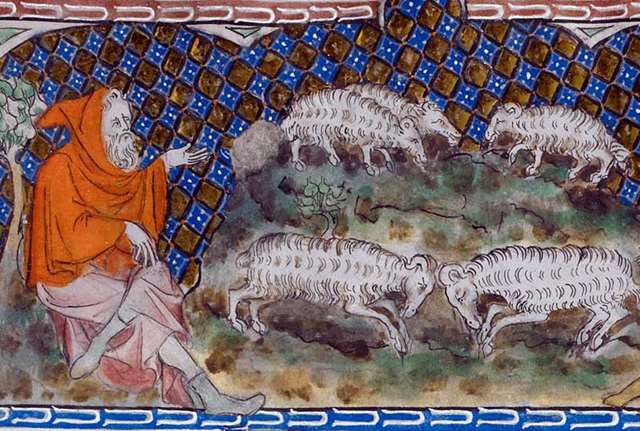
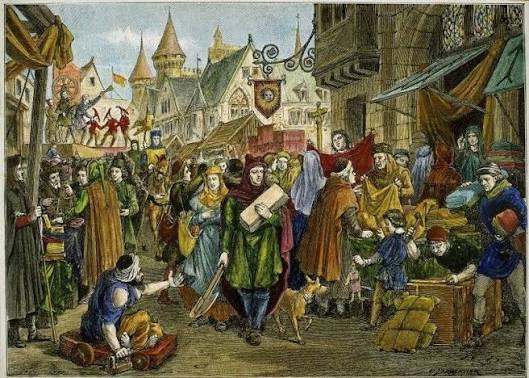
Lawrence travelled extensively to negotiate with cloth producers in the great centres of the trade at Bruges and Ghent as well as attending the most important fairs, like the one at Champagne. The biggest driver of the national economy, huge revenues generated through the wool industry built many grand churches and houses in town and country. It facilitated Lawrence’s social progression from urban businessman to country gentleman, making Stokesay, as a physical manifestation of wealth and power, so special and informative.
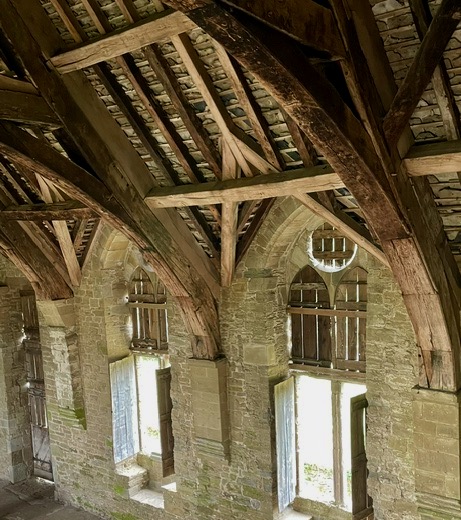
At his new abode possessions could be stored  safely. The surrounding 120 acre manor of woods, watermills and farms would supply most everyday household needs. As on our previous visit swallows were diving in and out of the shafts of sunlight coming through the large open windows of the great hall. It’s easy to imagine Lawrence, his wife Agnes or any of their five sons entertaining guests at a feast. VIPs like the Bishop of Hereford and the Abbot of Haughmond Abbey are recorded attending. Lawrence had his local office in Shrewsbury and another in London near the royal court.
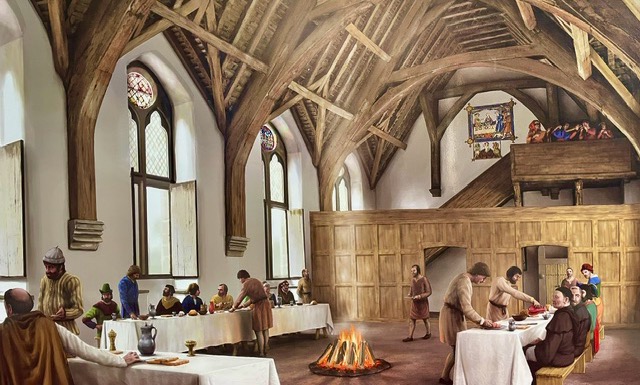
English Heritage reconstructive view of Great Hall as it may have looked.

One of the country’s richest men, Lawrence became a money lender to courtiers and King Edward I himself. The warrior monarch, in order to fund  imperial ambitions in Wales, Scotland and France introduced export taxes on the actual producers of wool – the great monasteries and wealthier landowners. Lawrence, head of a consortium of leading wool merchants, was seen as the instigator of this move, making him unpopular with many.
Travel in the medieval period was a business fraught with risks at the best of times and In November 1294 Lawrence and his brother perished in a shipwreck off the coast of Suffolk, en route to the low countries. it was recorded in one monastery that  ‘…because he sinned against the wool mongers he was drowned in a ship laden with wool.’
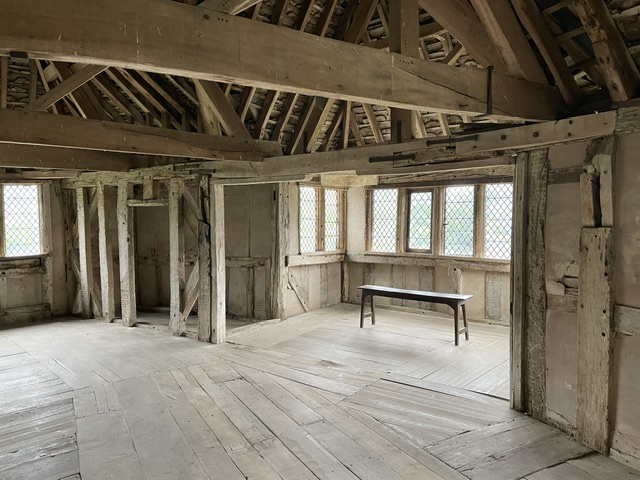
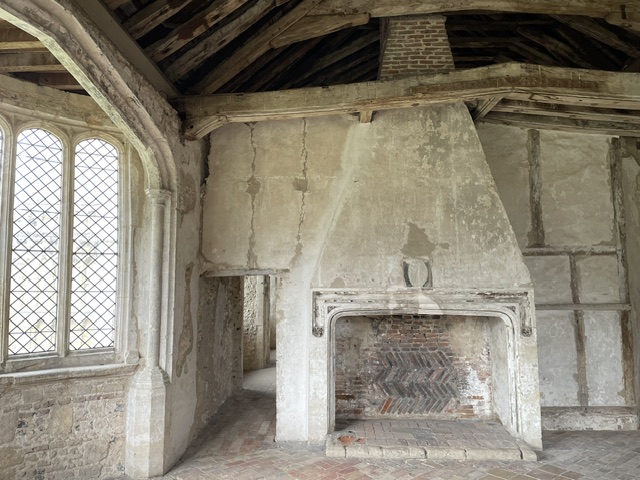
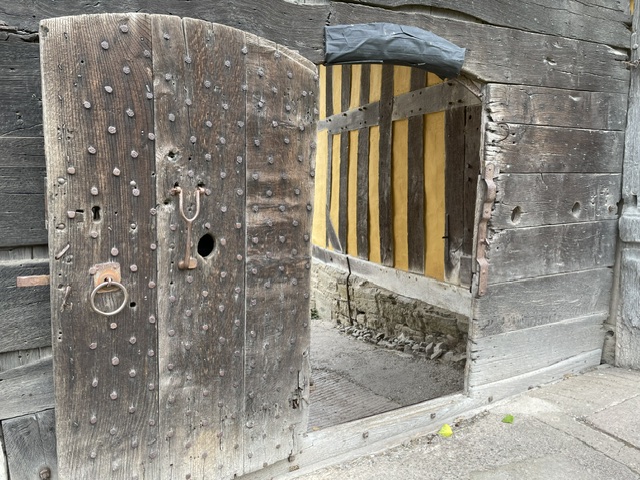
Thanks to the actions of the redoubtable Agnes and her eldest son the Stokesay legacy was secured, and his descendants continued to live relatively peaceably at their country estate until 1498. The picturesque half-timbered gatehouse was added in the 17th Century and the two great towers from Laurence’s day were made more comfortable as private and guest living quarters with the addition of wood panelling, remodelled fireplaces and decorative carvings.
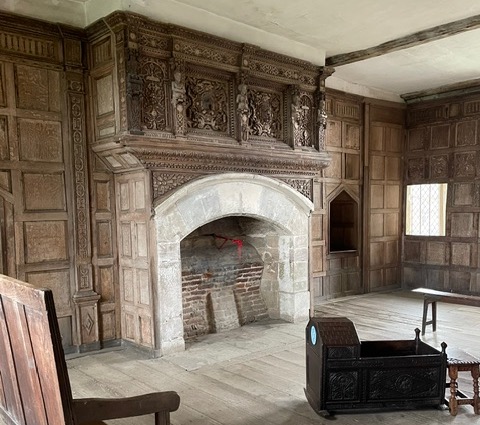
It was a delight to wonder through them before going down to the cellars or ascending the narrow age worn steps to the highest rooms.
There have been interpretive improvements by English Heritage since we last came a decade ago. Most of our fellow visitors opted for headset audio guides, which I personally find a rather alienating experience. Digital technology has also been used to give screen visualisation in principal rooms, showing how they might have looked at different periods in the building’s long history, and that I did like.
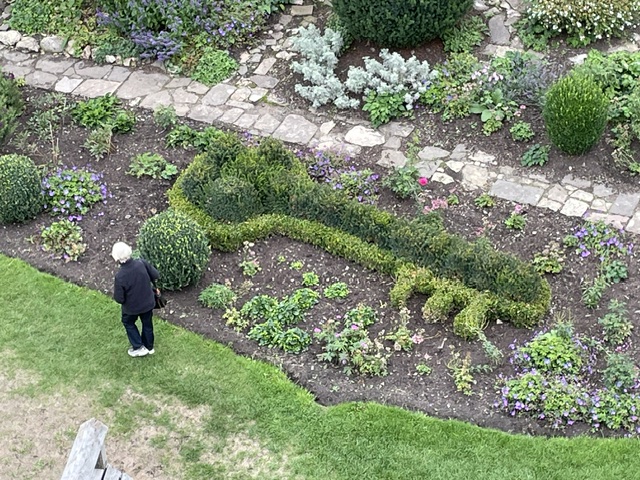
Another nice  touch is the children’s discovery trail that leads curious young minds through the different spaces with various clues, ending on the castellated roof of the south tower. The end of their exploring adventure promises a revelation of the giant’s key to the castle. Spoiler alert – looking down onto the courtyard garden below the outline of a large key made up of different flora can be clearly seen.
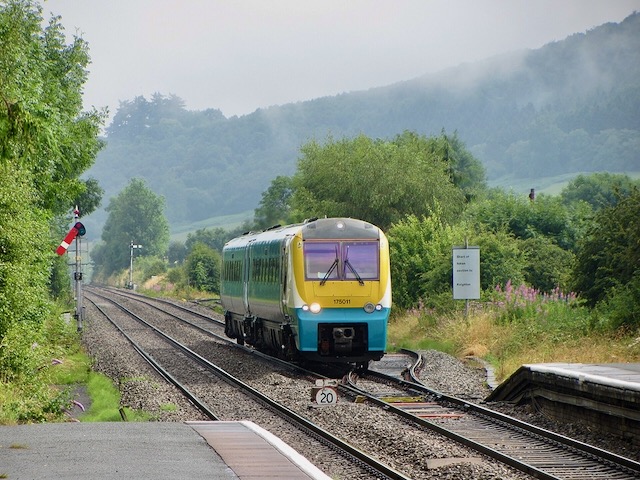
Northbound train at Craven Arms: Image Creative Commons via Geograph

From this high point I could also clock, across the intervening meadow, Welsh Marches line trains speeding by on the double track linking Crewe to Newport Gwent. Frequency of services and modernity of carriages compares well with the older Heart of Wales line rolling stock we’d travelled on along single track to Knighton and back.
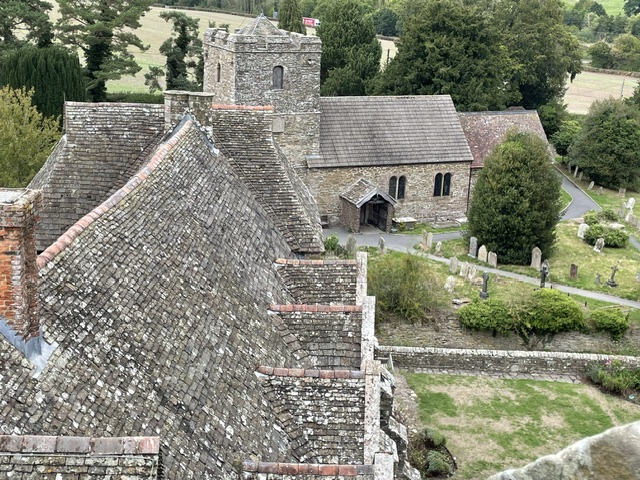
On leaving we slipped into the adjacent church of St John the Baptist. Originally the castle’s chapel it was rebuilt in 1654, in the wake of the civil war ( when the castle walls were demolished, rendering it indefensible). The handsome solid exterior gives way to a severe protestant interior with admonishing biblical texts on the whitewashed walls and a mass of high sided dark oak box pews which put me in mind of an early 19th century penitentiary.
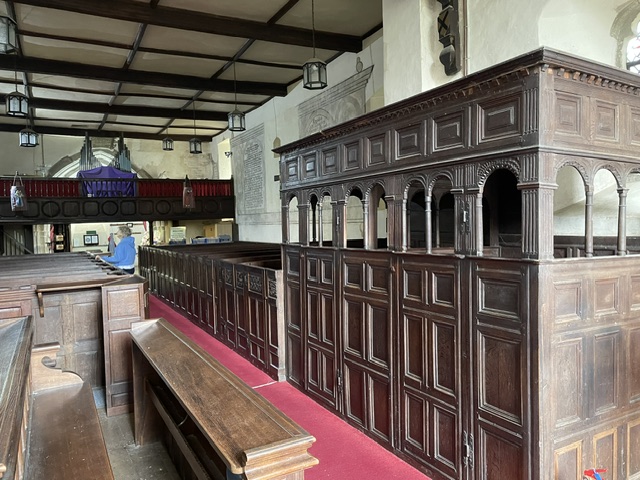
The original west gallery, where once the parish band would have played before being usurped by the church organ helped lighten the initial impression, evoking the ghost of Thomas Hardy’s Mellstock Quire in Under the Greenwood Tree. In another life I’d attended a packed candlelight Christingle family service here, with a jolly female vicar officiating and lots of small children engrossed in the seasonal proceedings. A memory quite at odds with today’s encounter. How curious and contradictory our unreliable recollections can be.

More on Stokesay here: https://www.english-heritage.org.uk/visit/places/stokesay-castle/
Castle Acre

Bare ruin’d choirs, where late the sweet birds sang. ( Shakespeare: Sonnet 73)

On the road to Norwich to start our East Anglian holiday we stopped off in north Norfolk to explore Castle Acre. It’s a quiet spot embedded into a rolling landscape of arable chalklands, woods and shallow valleys. But today the air was riven by the passing sorties of fighter planes. A reminder that American jets stationed at nearby RAF bases are actively involved in that country’s current conflict with Iran.

It was military conquest following the battle of Hastings that brought a veteran of that regime changing conflict, William de Warenne, to these parts in the 1080’s. He and his successors planned and built a whole new settlement consisting of priory, village, parish church and castle. Their main seat though remained at Lewes in Sussex.

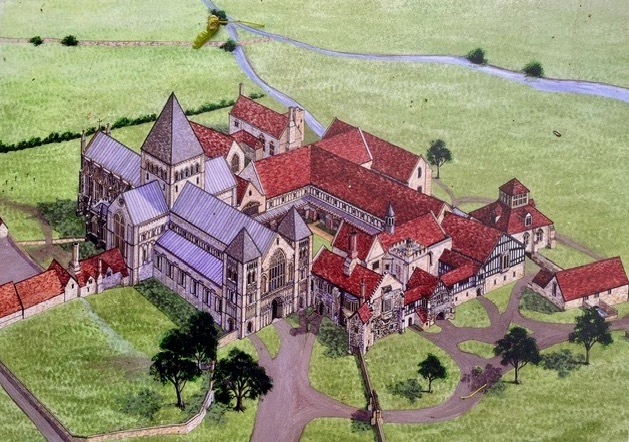
Artist’s impression of Castle Acre priory as was

Today the impressive remains of priory (dissolved at the reformation in the 1530’s) and castle (abandoned by the 14th century) stand either side of a well to do pretty village complete with pub, teashop and convenience store.

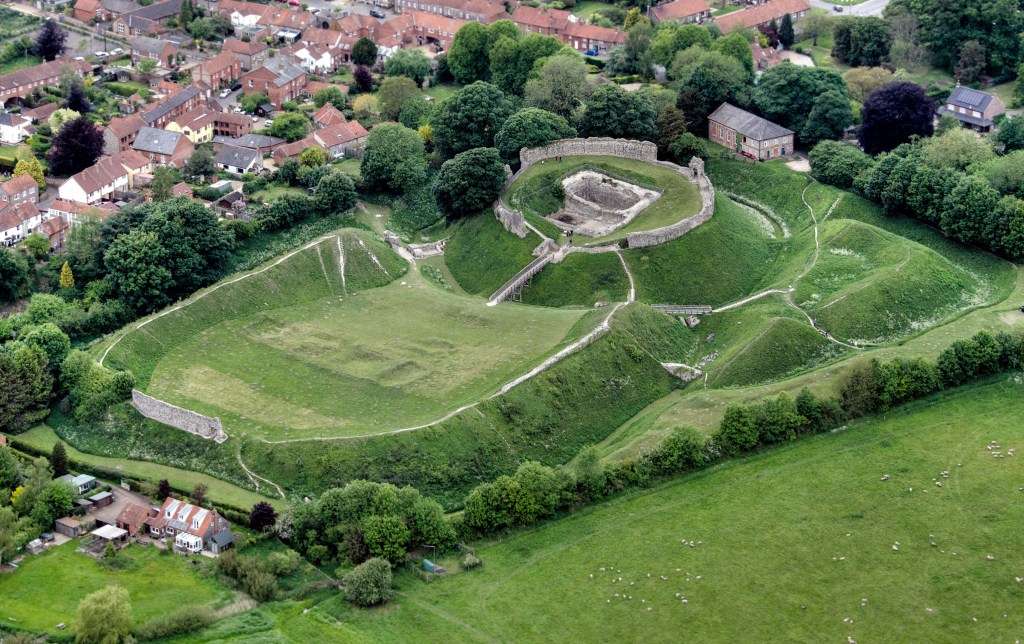
Castle Acre castle site: Source – Wikipedia

Arriving in this region you notice just how much flint is in evidence as building material, alongside other local stone and timber frame. The historic remains are in the care of English Heritage while the estate lands that surround it remain with the Coke family, earls of Leicester, landowners since the mid 17th Century. We noticed they were following the national trend in rewilding parts of the land, especially around waterways and hedgerows.

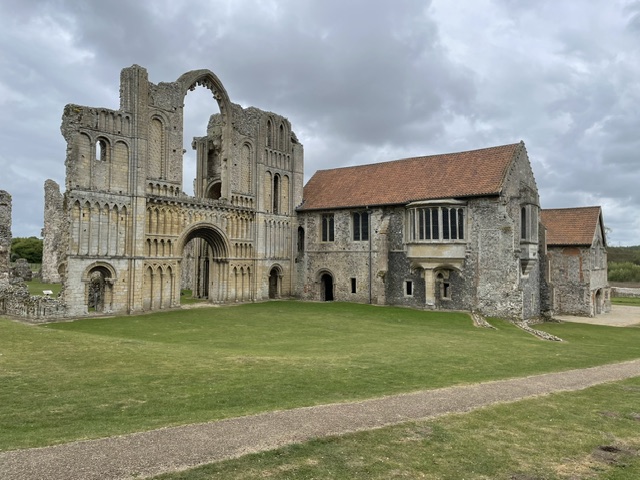
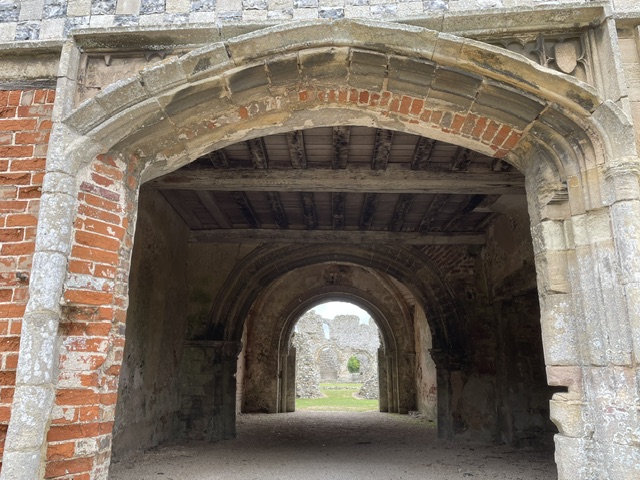
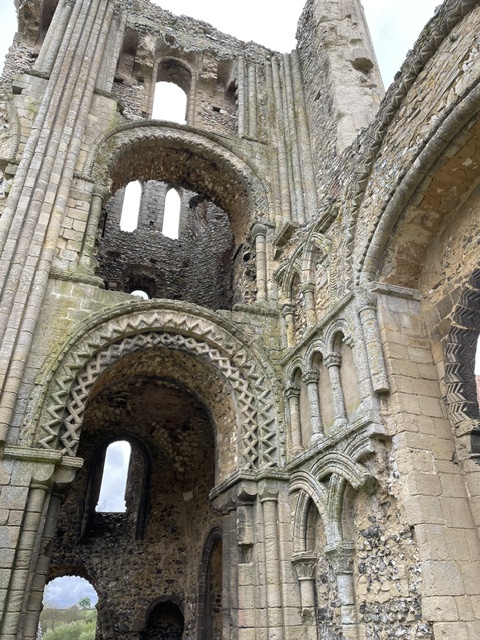
The priory was a wonder to discover as the ruins are so extensive and allow you to build a coherent picture of it as the grand self-contained community it once was. On entering the grounds you’re immediately struck by the C.12th west front facade of the church and  tower. The adjacent west range was the guest house for important secular visitors. We then ascended stone stairs to the Prior’s chambers, which includes a well-lit hall and private chapel.

These sections of the priory  were always roofed, unlike the religious buildings which were ruthlessly stripped following dissolution for their valuable construction material. It became a farmhouse and stores with the former priory ruins and meadows grazed by stock or otherwise farmed. In the  C.18th and C.19th growing appreciation of the picturesque and further interpretation and recording by antiquarians and artists allowed the Castle Acre complex to be seen in a new light and by 1929 the government  Ministry of Works were allowing visitors regular public access to both priory and castle.

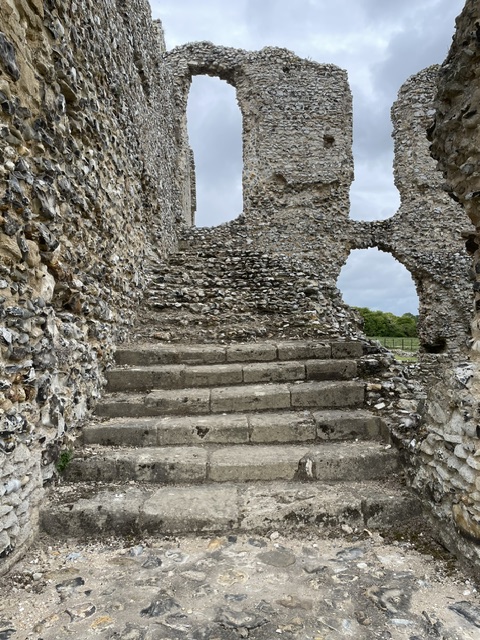
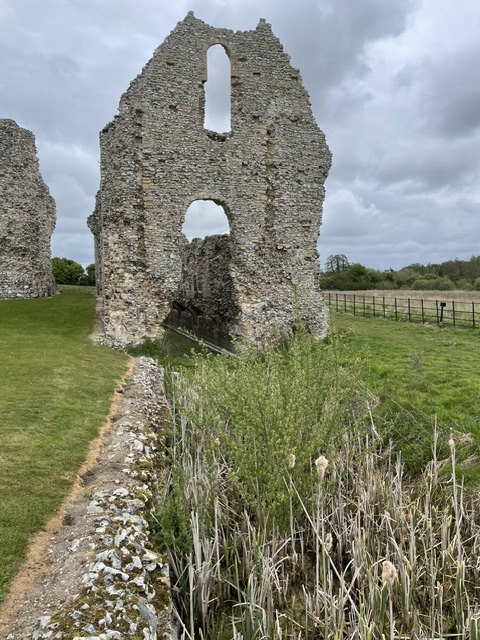
Of the ruined complex, largely stripped of dressed facing stone, the most evocative are the parts that betray human interaction, like the well-worn stairs that led up to the monks dormitory, where the brothers slept in their robes of black and white. The reredorter (literally, ‘at the back of the dormitory’) is a narrow two story building which was used on an industrial scale as a latrine block. Underneath is a watercourse designed to carry the waste away.

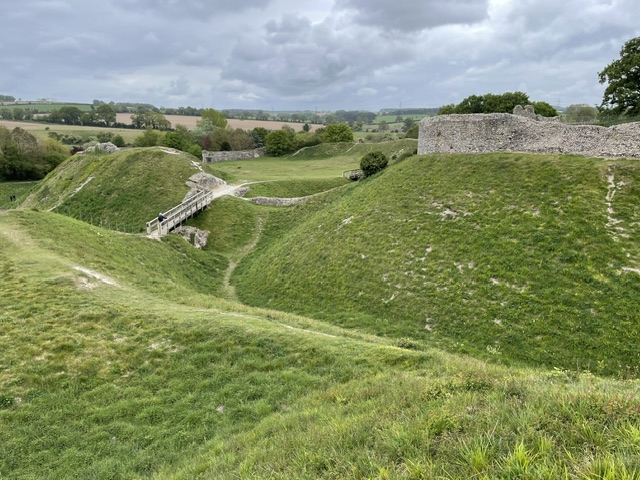
The castle footprint is huge, with steep embankments, ditches and motte. The De Warenne’s first buildings however were a relatively modest affair set within the outer defences.

It was only later, in the C13th civil wars that raged between nobles supporting the rival claims of Matilda and Stephen to the English throne that it was rapidly transformed from fortified house to full scale fortress, with barbican and inner bailey additions.

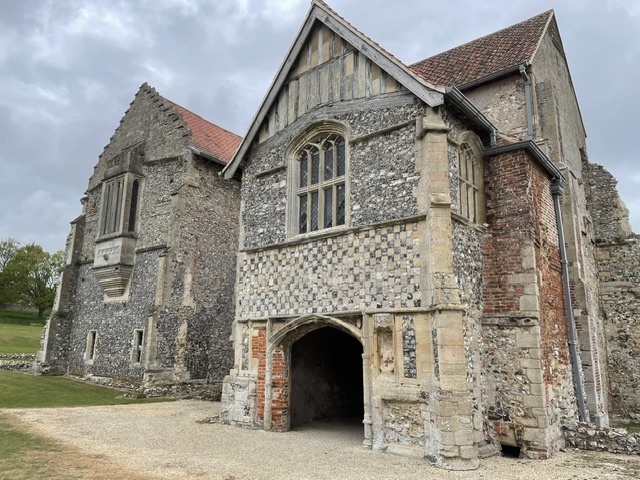
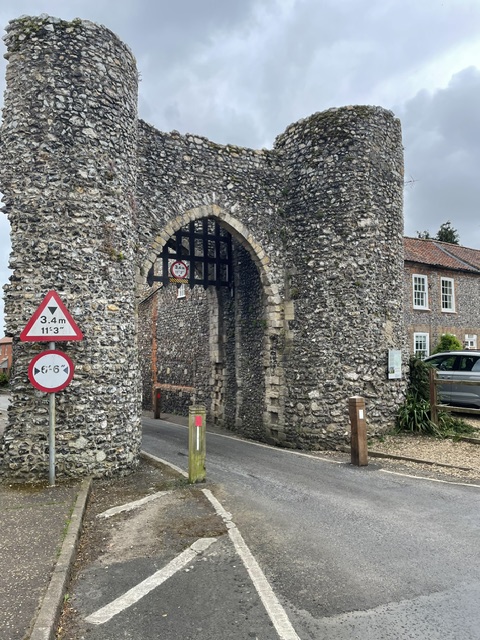
That protection stretched to an outer town wall and a bailey gate entrance, through whose narrow archway we carefully drove on entering and departing.

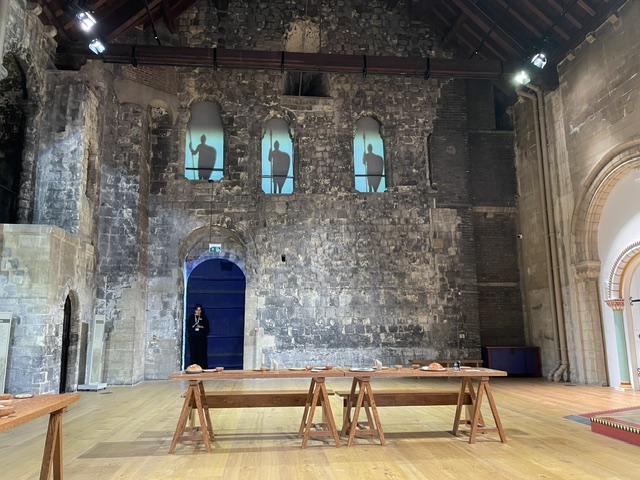
Norwich Castle Great Hall

In Norwich we were impressed with the multi-million pound makeover of the great Norman castle (or rather the remaining keep) which has been five years in the making and feel it would make for a worthy winner of this year’s ‘Museum of the Year’ award. The great hall would have been similar to the De Warenne’s eventual fortress creation at Castle Acre.

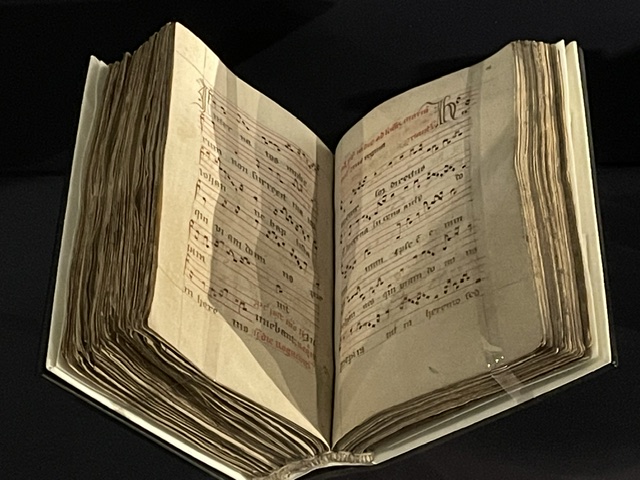
Two exhibits displayed in the revamped medieval treasures display pertain to Castle Acre. This C15th parchment chant book, made and used by the Castle Acre monks, is  of vellum (calfskin) oak and leather and small enough to be held in the hand. It’s complete with instructions (in red) for use in services as the brethren processed through the priory on different feast days throughout the year. The Cluniac order, founded in the French town of Cluny in the  6th century, strictly followed  the rules set down by St Benedict, but was also renowned for a love of art and decoration, which would have resulted in the walls of their establishments being brightly coloured and expressive.

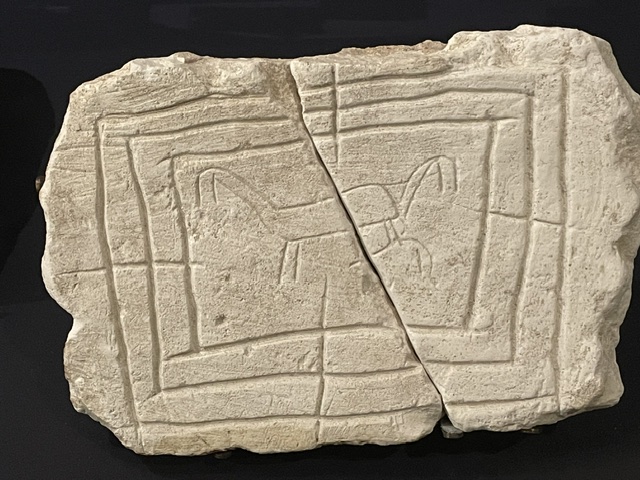
There’s a timeless quality to this simple board game of Nine Men’s Morris made of chalk with horse motif, found at the castle in Castle Acre. Two players try to place three of their counters in a row, allowing them to remove one of their opponent’s pieces. Whoever removes enough of their opponent’s counters to prevent them from moving is the winner.

Castle Acre is a fantastic place to get an idea of how the temporal and spiritual life of a rural medieval planned settlement would have appeared. Well worth a visit, especially at mid-week when we were only two of a handful of visitors at the priory. More at https://www.english-heritage.org.uk/visit/places/castle-acre-castle-acre-priory/