Lodes, Rodes and Sedge

There’s some quiet magic at work when you enter the world of Wicken Fen. Coming from the England of stone walls, fast streams, lush valleys and high moors I’ve nursed a lifelong need to sample the exact opposite. Finally I got the chance to do just that, in this corner of Cambridgeshire, where  horizontal and vertical combine to define new perspectives and land and waterways interact on different levels under a carapace of yawning skies.

Wicken is a complex interrelated wetland that is England’s most species rich nature reserve, as well as being its most studied. This National Trust site welcomes some 70,000 visitors annually; not that it felt at all crowded on a midweek day in May. Quite the opposite!

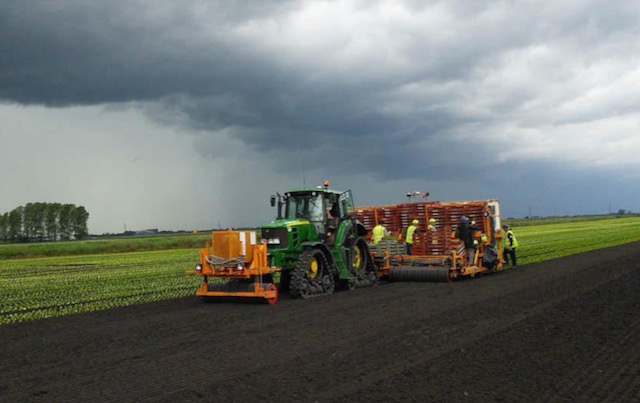
Over 2,000 years Romans, Normans, Medieval monks, Stuart Merchant Adventurers, Victorian improvers, modern governments and agribusinesses have played their part in draining, containing and cultivating the great rural swathe of eastern England known as the Fens. The bulk of England’s grain, vegetable and fruit harvests are produced in the region as a result. The changes to the landscape have been profound and widespread. Less than 1% of that original wetland ecosystem remains, and nearly all of it is at Wickham.

Planting Little Gem Lettuce in a Fenland Field: Credit NFU Online

So how come it’s still here? Partly because in 1637 an armed uprising by locals fearful of losing their livelihoods fishing, water fowling and sedge harvesting prevented the Anglo-Dutch drainage projects of the area’s aristocratic landowners from going ahead here, like they had elsewhere. By the end of the 19th century, naturalists, academics and enlightened landowners who prized this traditionally managed oasis for for its rare bird, moth and butterfly populations took action to preserve and extend it. In 1899 the newly formed National Trust bought two acres of Wicken Fen – the charity’s first ever nature reserve. Now acknowledged as’ the birth place of ecology’ it has grown to be a 629 nature acre (254 hectare) reserve of international importance featuring wet grassland, scrub woodland, reedbeds and sedge fen. More than 9,300 species have been recorded.

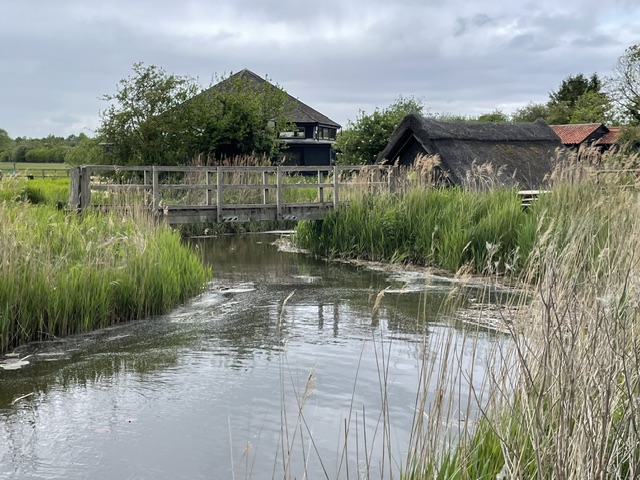
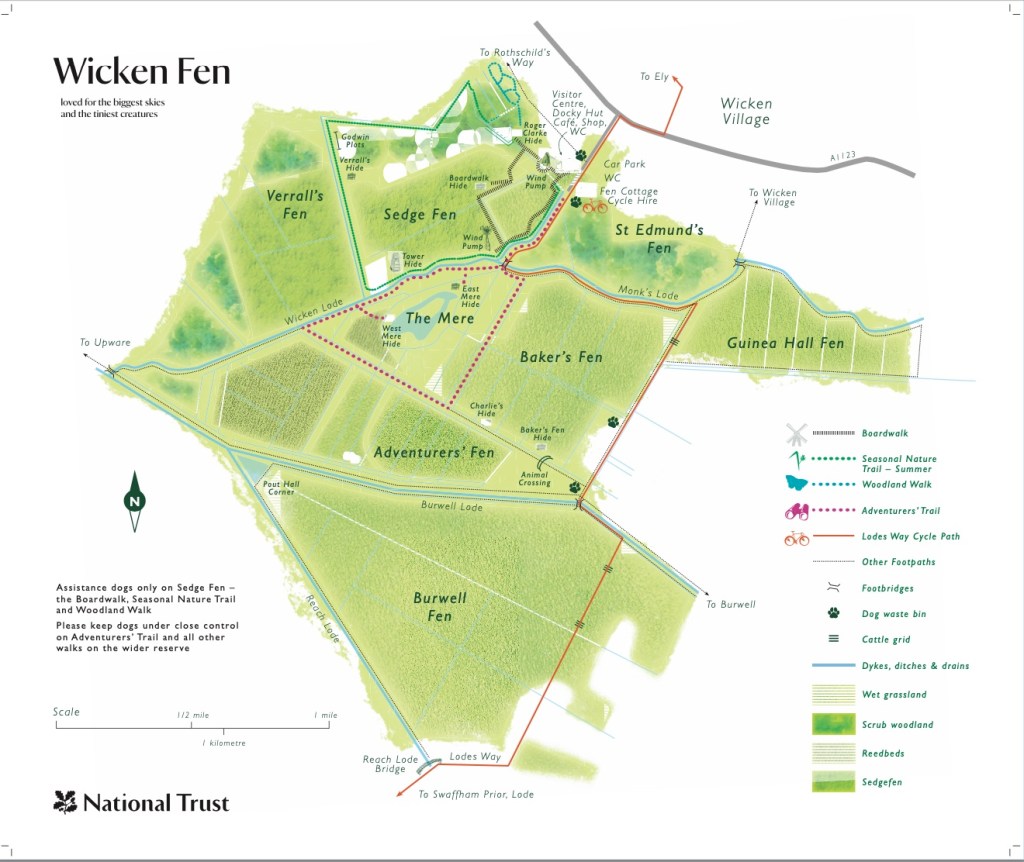
The reserve is connected by a network of boardwalks, paths, bridges and droves (grass roads) alongside ditches, dykes, meres, banks and lodes (canalised waterways). These waterways form part of the River Cam navigation and drainage catchment.

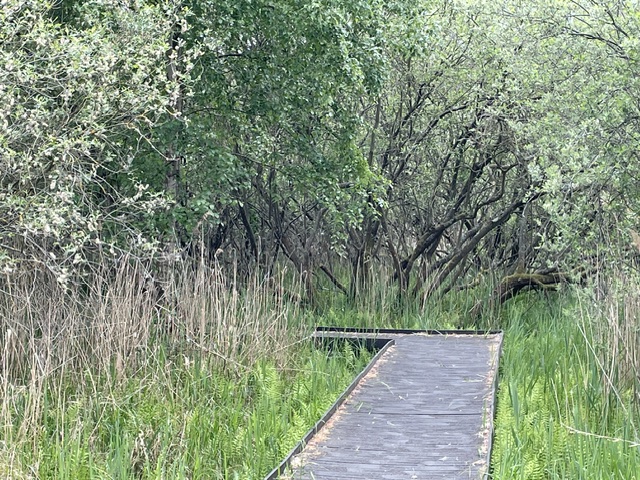
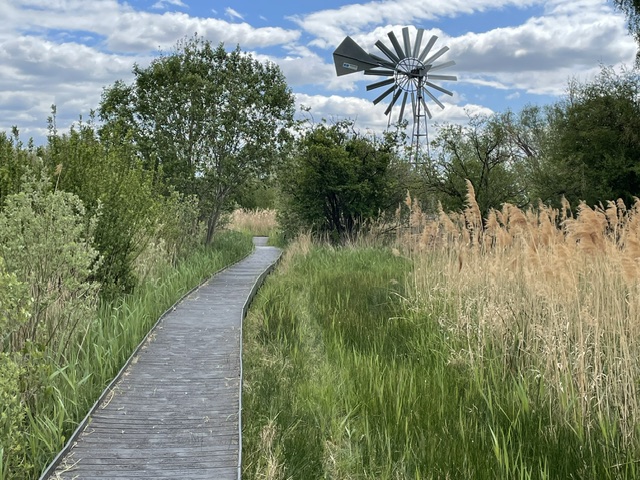
There’s only so much you can take in on one day at such a place. We set off from the Visitor Centre, with its chalk boards listing an array of daily bird sightings, to circumnavigate adjacent Sedge Fen. It proved a gentle introduction and easy perambulation, mainly on boardwalks fashioned from black recycled plastic.

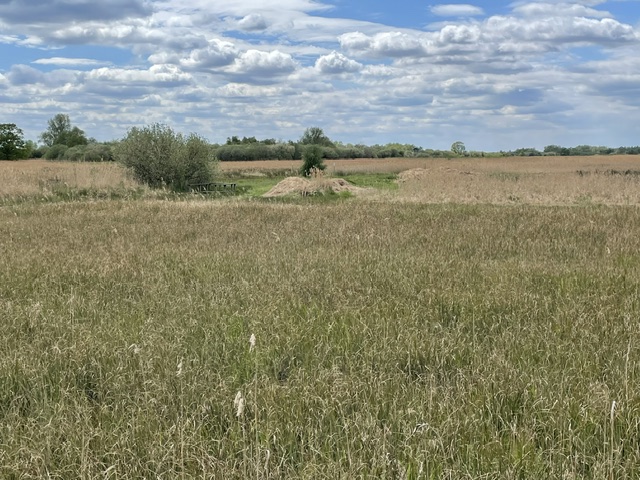
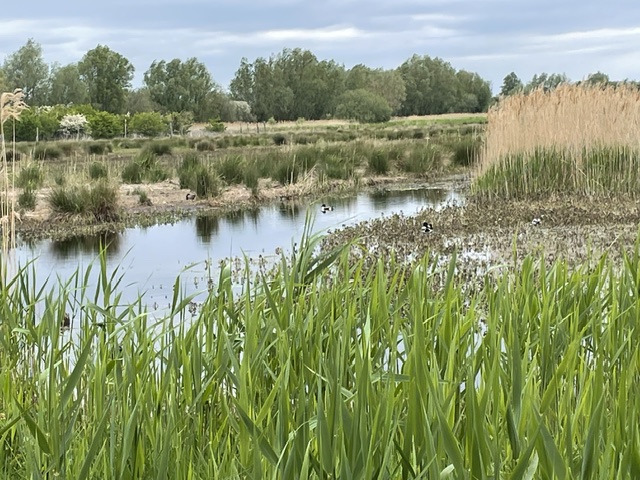
Passed the remains of old clay pits, now deep ponds with coots scuttling, used when this area was a brickworks. Passed through islands of willow and alder buckthorn carr (wet scrub) alive with reed warbler and other bird song. The neighbouring seasonally wet grasslands (above) were cordoned off, for conservation reasons they’re not open for visitors until the summer. Saw Chinese Water Deer, an invasive species, nibbling the turf.

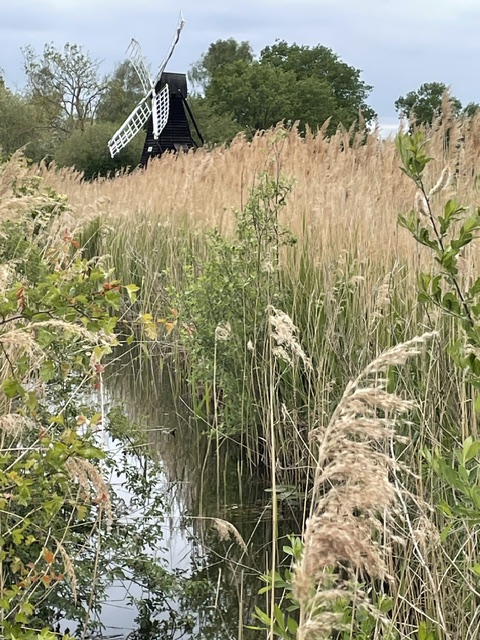
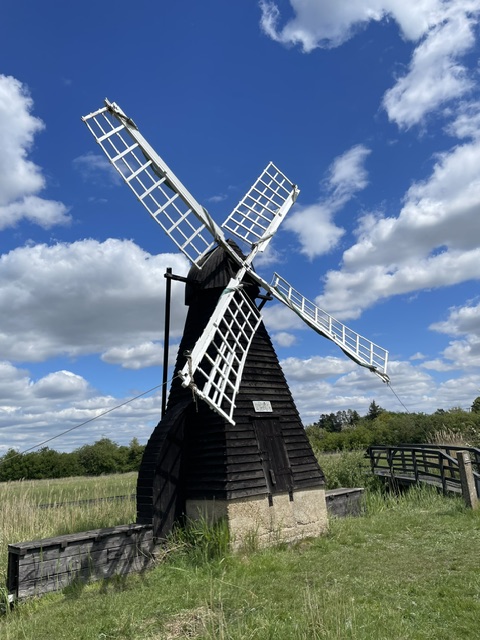
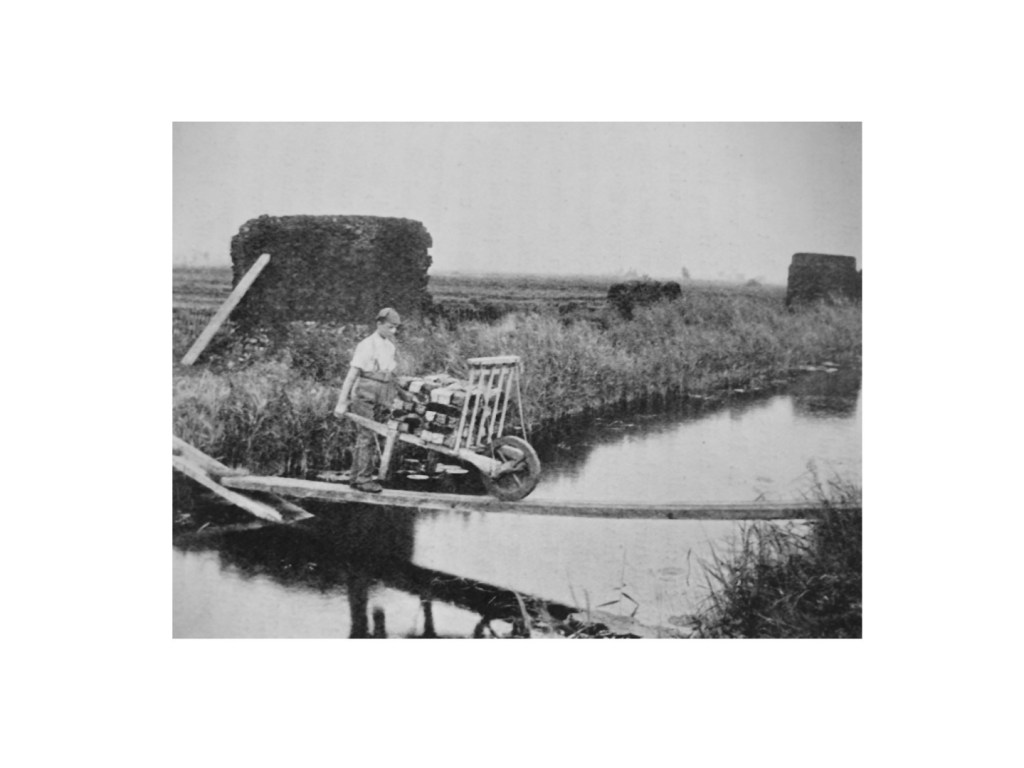
Vertical features have increased pull on the eye in such a landscape. The black wooden wind pump with its white sails is one such iconic marker. A relic of another former Fenland industry, peat digging.

Pushing a barrow of peat turves across a Fenland waterway c.1900

Before steam and diesel, wind power did the draining of the turf pits (peat diggings) so these small mills were once a common sight.

The modern structure seen here is a new wind pump, funded by the Environment Agency in 2011 to draw alkaline ground water to Sedge Fen from nearby Monk’s Lode in the winter months, helping keep the peat soil from drying out, a very real threat as the climate changes.

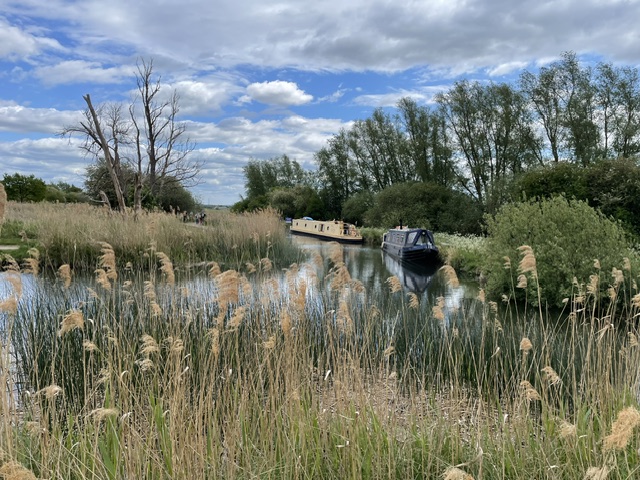
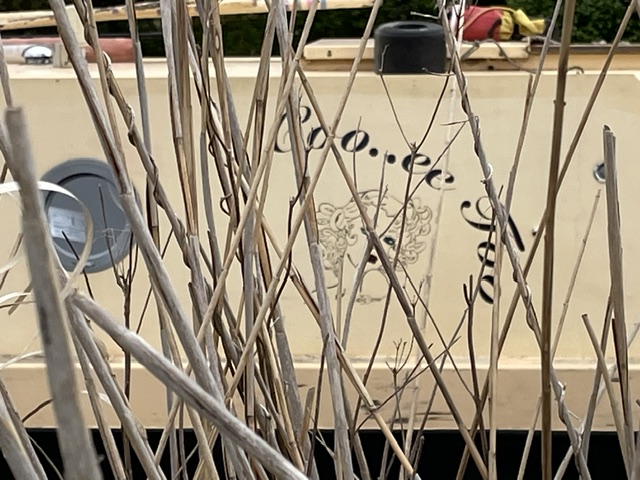
At this point, where Monk’s Lode meets Wicken Lode, is where we came across narrow boats moored. The name of one of them ‘Coo…ee Too’ a pun on a somewhat larger ocean going vessel!

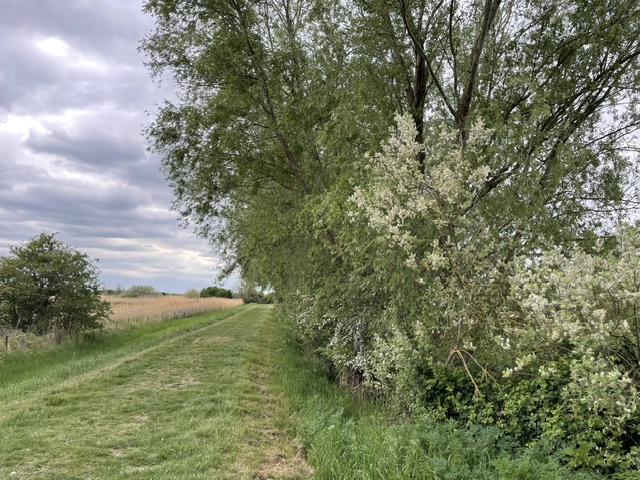
After a picnic lunch we followed paths that led in turn to the straight lines of droves dividing East and West Meres from Baker’s and Adventure’s Fens. And what a contrast. Here we looked down on to swathes of land drained for farming centuries back. An unforeseen consequence was the drying out and sinking of the land, leaving vast acreages below remaining water level. Reflooded by the Trust post WW2 the new bogland and pools in the peat created as a result now attract masses of wildfowl, especially in winter.

We lingered at one of the hides, hearing more birds than we saw. Later, some brave folk passed us on tandem bikes, hired at the visitor centre, bumping furiously along the deceptively uneven drove surface, laughing in mixed measures of anxiety and delight.

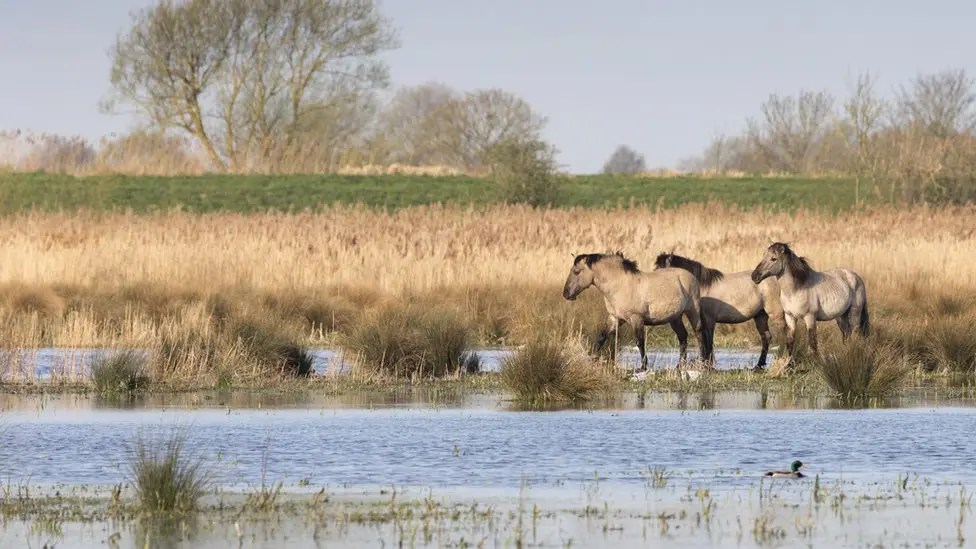
Image of Konik ponies at Wicken Fen: National Trust

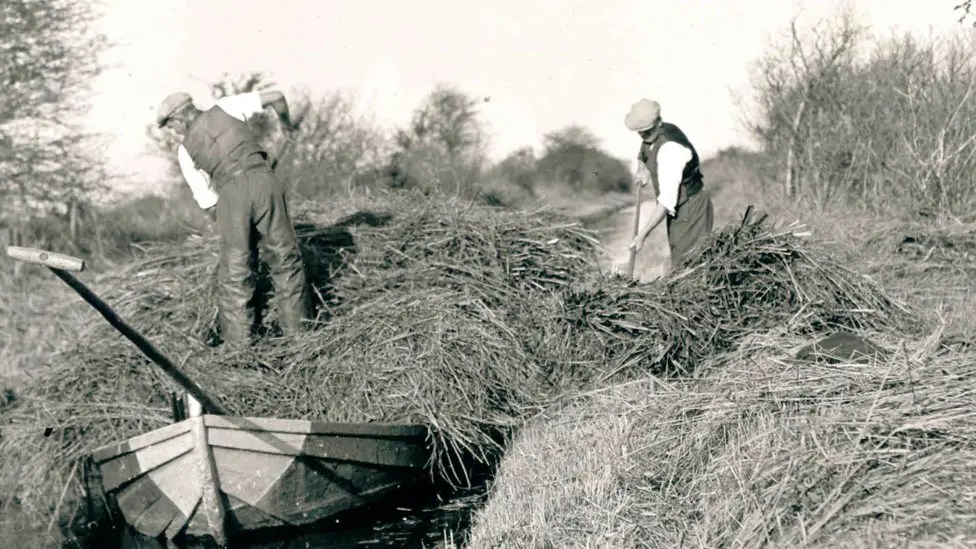
We glimpsed a distant group  of Konik ponies at pasture. Together with a herd of handsome highland cattle, these introduced conservation grazers free range the reserve. The animals contrasting complimentary grazing styles play a key role in managing wet grasslands, doing the job people once did, keeping the ever encroaching scrub at bay. They also distribute wild flower seed in their droppings! Sedge today is cut by machine where once the fenmen cut, stacked, stored and transported the material for a wide range of uses in the textile and building trades.

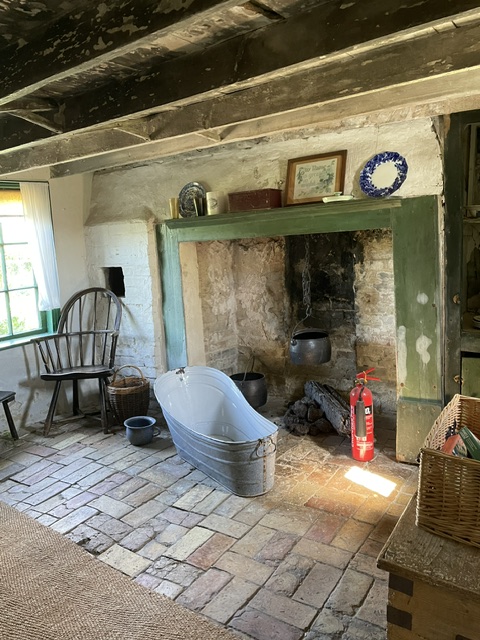
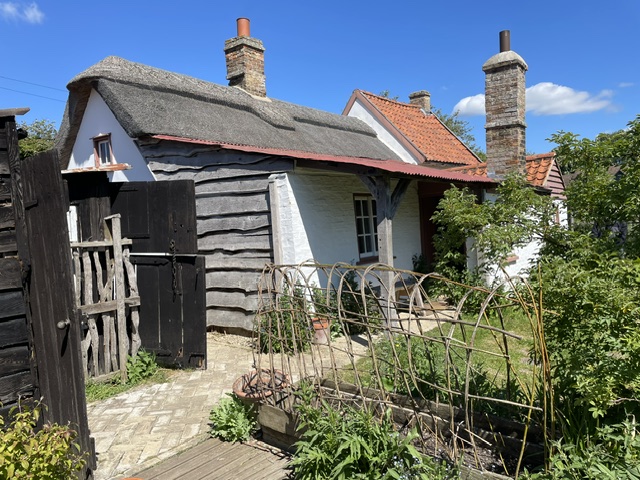
Opposite the visitor centre, off the narrow approach lane, is the pretty C18th Fenman’s Cottage, restored in 1990 and furnished as it might have been in the 1930’s. A must see that gives a fascinating insight into an age old relationship between people, buildings and place.

The cottage is vernacular architecture defined by the use of  locally sourced material; from dried peat  bricks to floor tiles and daub plaster of gault clay, thatching with reeds and sedge.  

Here, for many centuries, local families made a fiercely independent living from a raft of interrelated successional labours. Sedge, reed or willow harvesting, fishing, eel or mole catching, wildfowling, digging peat and clay, cutting litter (marsh hay) or transporting a wide range of goods in and out by water….all dictated by the seasons.

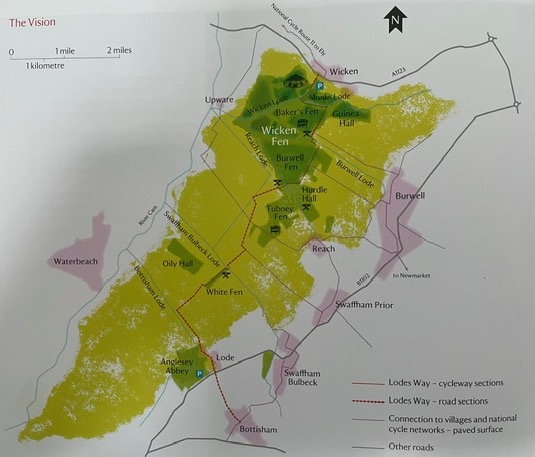
Under ambitious plans set out in the ‘Wicken Fen Vision’ the reserve is set to expand downstream, right to the outskirts of Cambridge. It’s the NT’s commitment to tackling climate change by re-establishing a lost landscape at scale, including nature friendly farm holdings on its edges acting as a buffer zone for the core fenland.

I wish them well in their mission. The Trust is protecting a treasure horde of vulnerable species and preserving precious peatlands, while still enabling  access for all  to enjoy this magnificent if fragile ecosystem. Balancing the need to increase self-sufficiency  and security of food production while including nature as a key to managing a healthy and sustainable countryside remains one of the most pressing challenges of our times.

Star of the East

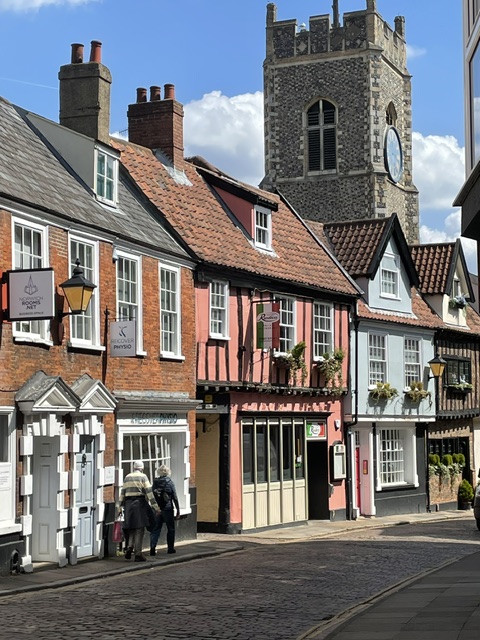
Country dwellers like us could take a shine to any city that presents like East Anglia’s regional centre. The centre of Norwich feels more like a town than a metropolis, retaining ancient street patterns while much new building complements the old. Following the trend of breaking  identity down into quarters also suits it well. We stayed two nights at the Maids Head, a venerable independent family hotel, right in the centre. The inhouse hire offer of Bentleys and bicycles must be unique.

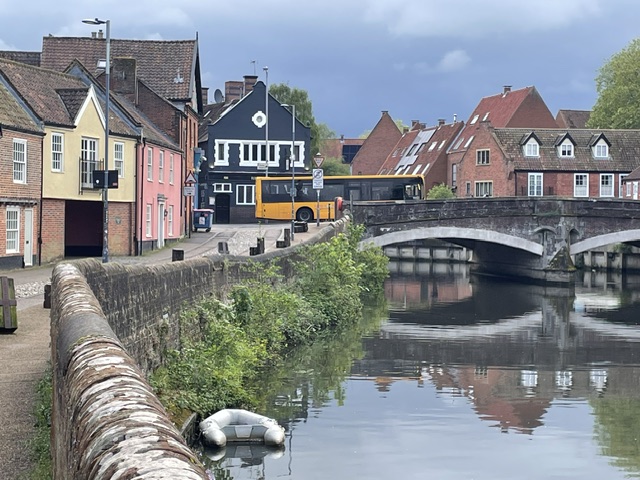
From this base on Tombland (Old Norse for ‘open ground’) we took an evening stroll along the quayside that skirts the encircling River Wensum, from Fye bridge to Pull’s ferry. Thanks to the demolition of the former city gas works in recent times that stretch of riverside path is now continuous.

Curiosities here included seeing the remains of a sluice gate and swan pit. With their wings clipped the birds were once culled for feasts at the neighbouring Great Hospital. Formerly part of a monastery and still linked to the cathedral, it continues its caring role as a sheltered housing complex – minus the swan diet.

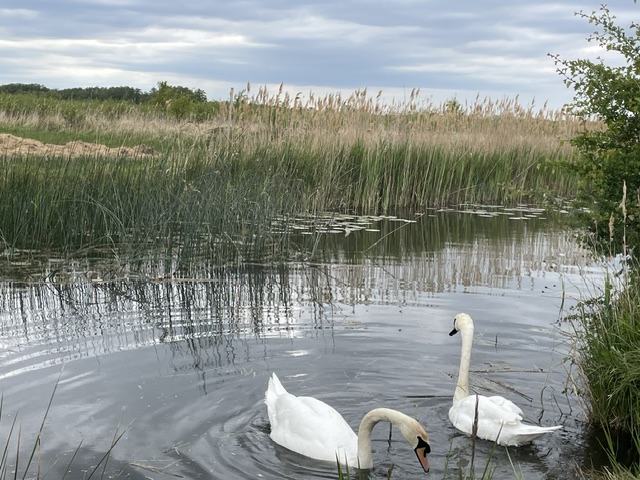
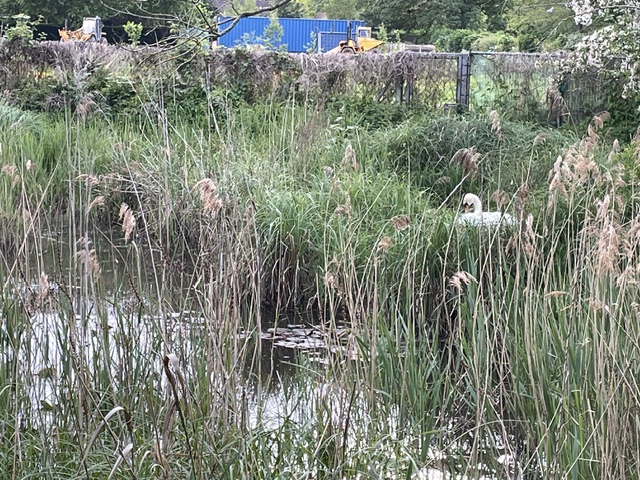
We watched a male bird waddling along the path while his mate sat on a nearby nest in the reedy corner of a fenced off pond.

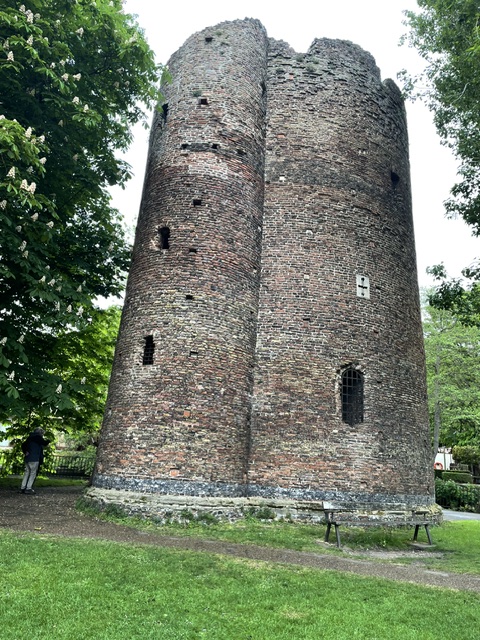
Cow Tower (c.1398) is an early example of an elevated gun battery set on a bend in the river. Originally part of the medieval city wall, it  looms up as a flinty floorless finger against the tranquil watery scene below.

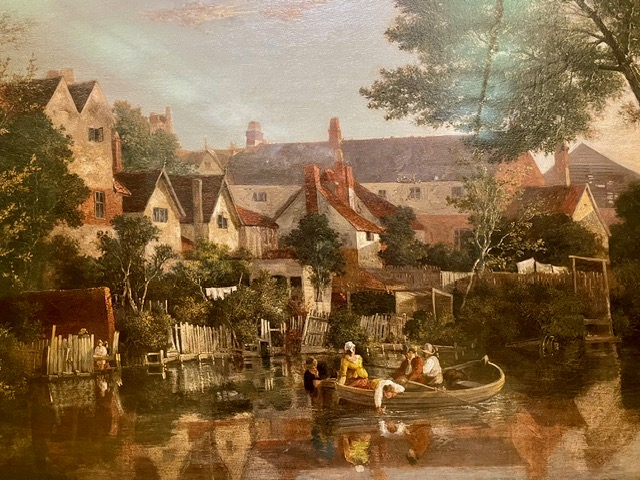
Later, in the castle, we’d see the work of Romantic era artists from East Anglia like John Sell Cotman and John Crome. Here’s Crome’s bucolic summer view of the riverside hereabouts in 1819.

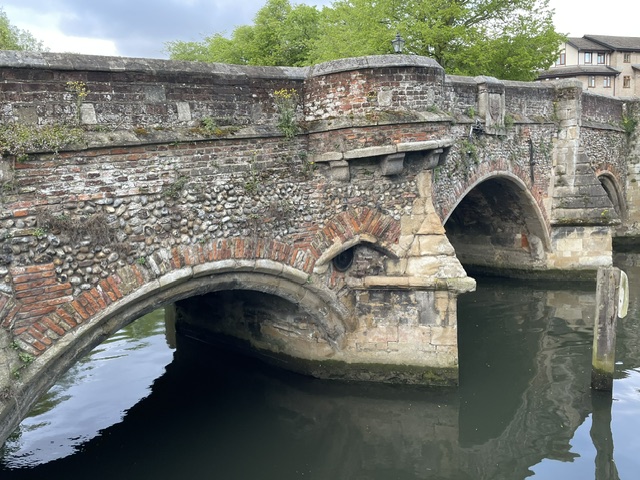
Bishops Bridge is a striking original structure of stone and brick, dating from 1340. The oldest span over the Wensum and once a major portal in the settlement’s walled defences. Terraced housing and small houseboats moored on the opposite bank give a peaceful counterpoint to passing traffic. A reminder of navigation that brought boats back and forth to the city’s teeming quays, helping Norwich develop as a major population centre of medieval England. Home to a thriving nexus of craftsmen, artisans and merchants.

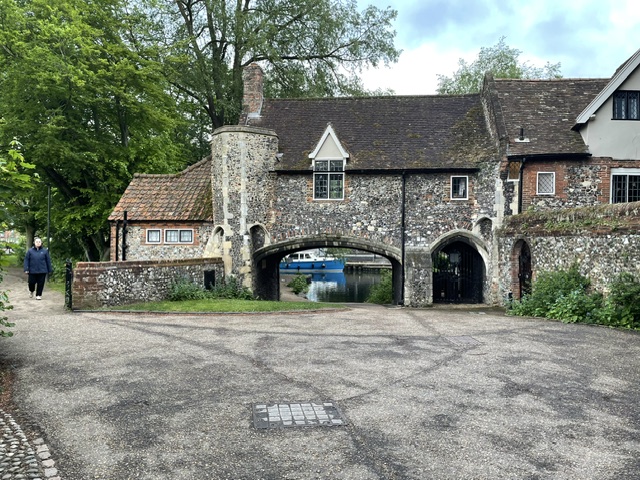
The stone used to build Norwich cathedral was imported  all the way from Caen in Normandy. To accommodate that final leg a short canal was dug here in the 1090’s, linking waterway to building site. Now long filled in we passed under the overarching ferryman’s house heading along the cut’s former course, now Ferry Lane, to the Cathedral close.

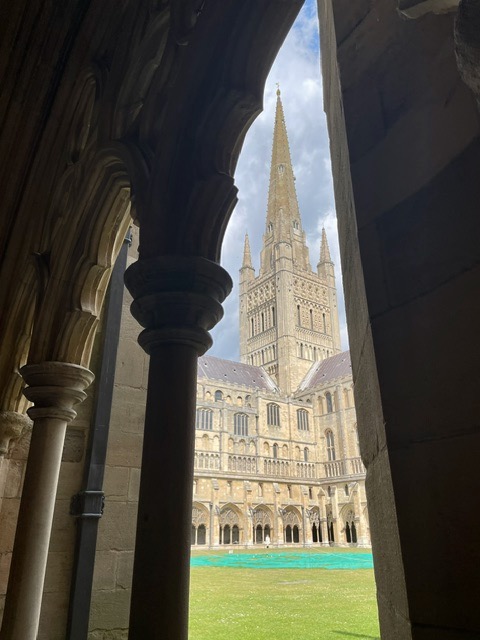
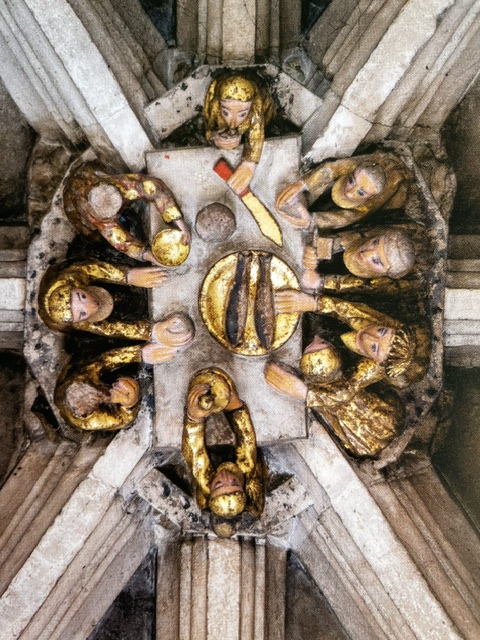
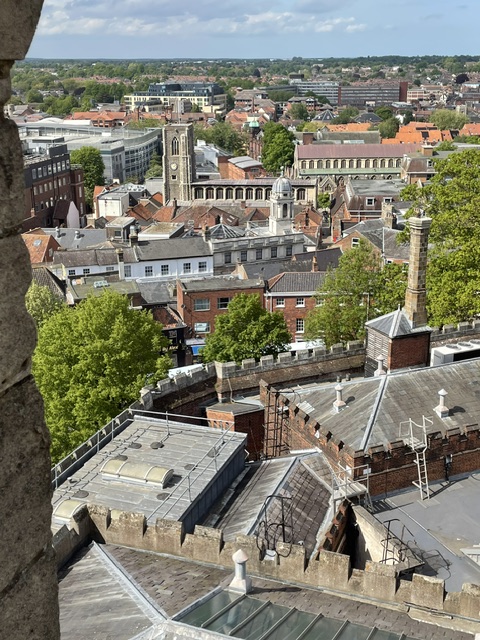
Next day found us digging further the city’s rich Norman legacy. From the newly refurbished castle to that imposing cathedral. The medieval splendour of the roof bosses in the cathedral is something to behold (preferably with binoculars!) Deeply impressed with the degree of visual narrative power so cleverly compressed in those vivid stone roundels.

The bosses were incorporated into the new stone roof of the late C15th. Yet for most of their existence they have been hidden from view, whitewashed over from the Reformation until late Victorian times. In 1932 they got repainted in their original bright colours.

An extraordinary achievement, 255 in total, looking down from on high above nave and choir, depicting biblical scenes and characters, from the Creation to the Last Judgement. I wondered if the much loved mystery plays performed by trades guilds through the streets of Norwich and other big towns had  inspired the stonemasons in their turn.  

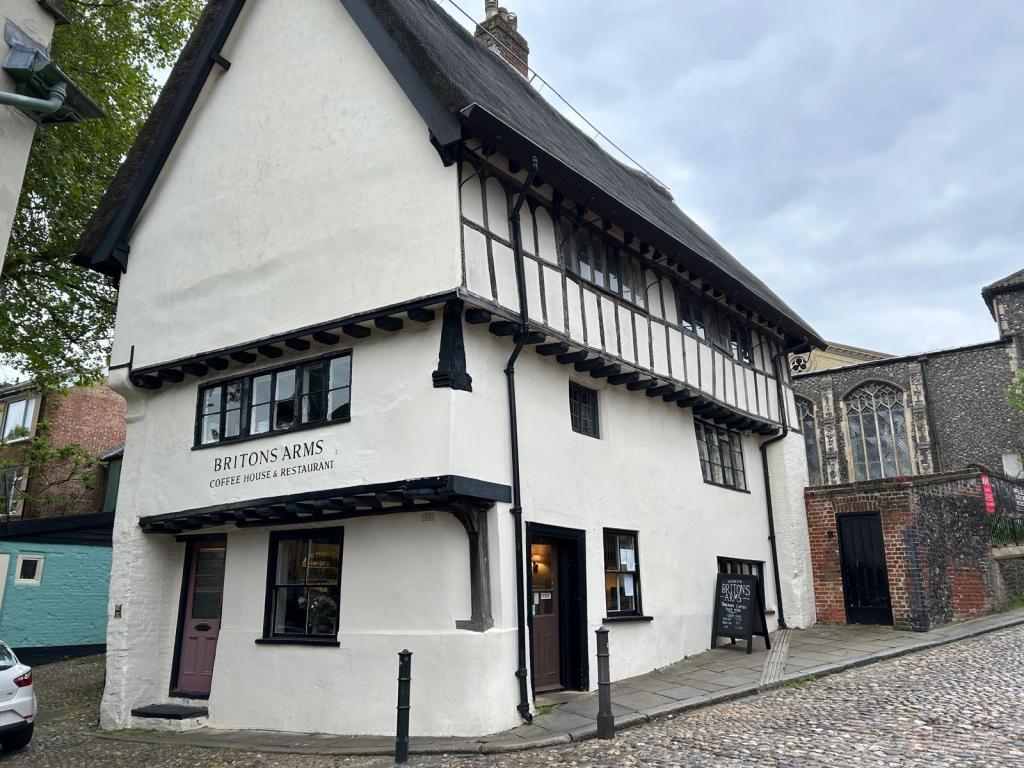
One of the best meals of our holiday was had in this gracious medieval building, the Britons Arms.  In the early C15th this was a ‘Beguinage’, a community of lay single women who devoted themselves to a life of prayer and charitable work. Today its secular tenants create some great dishes cooked with care and skill in the most relaxed and ambient of settings.

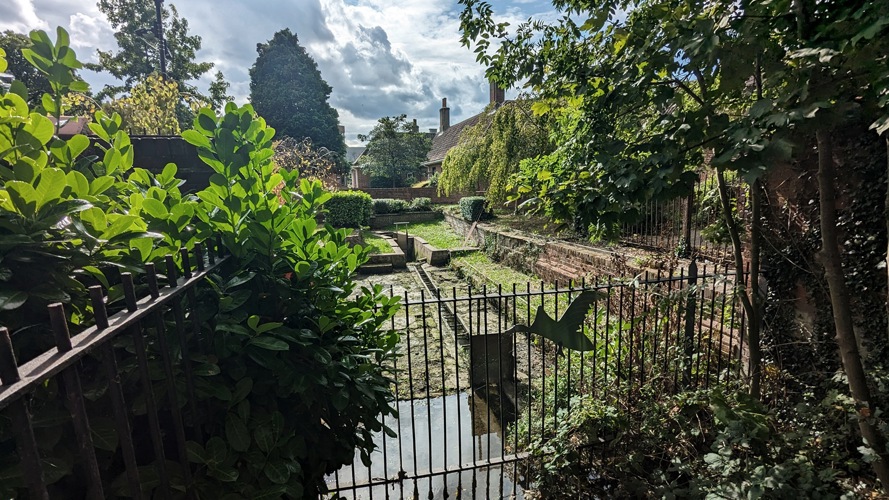
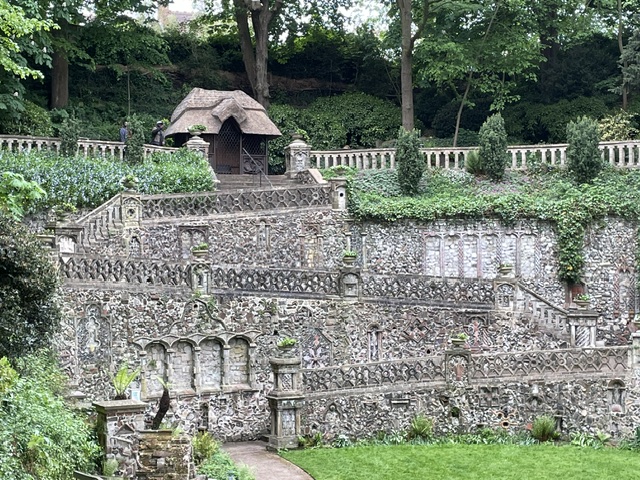
Taking a break from matters medieval, we stumbled upon a hidden gem, the Plantation Garden, situated just outside the centre. It’s a redundant chalk pit lovingly fashioned in the second half of the C19th into a charming  green oasis by local businessman Henry Trevor, often re-using redundant building material in the process. The villa he had built as his family home overlooks the tree bordered steep sided three acre spread.

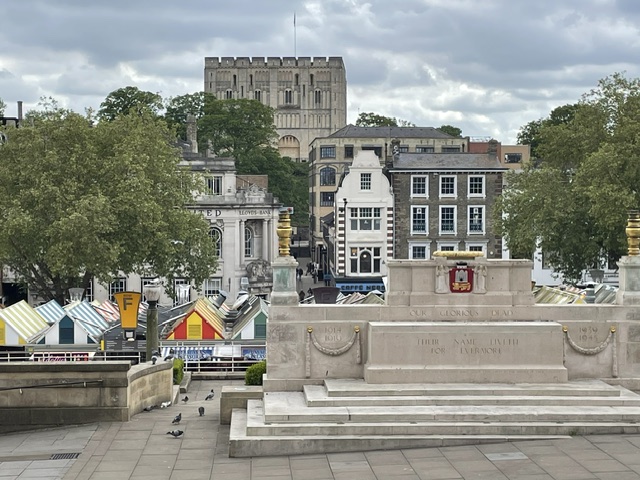
And finally…the steps of the C20th Art Deco City Hall not only give a fine view over the permanent market to the castle keep beyond but also yield overlooked sights of their own.

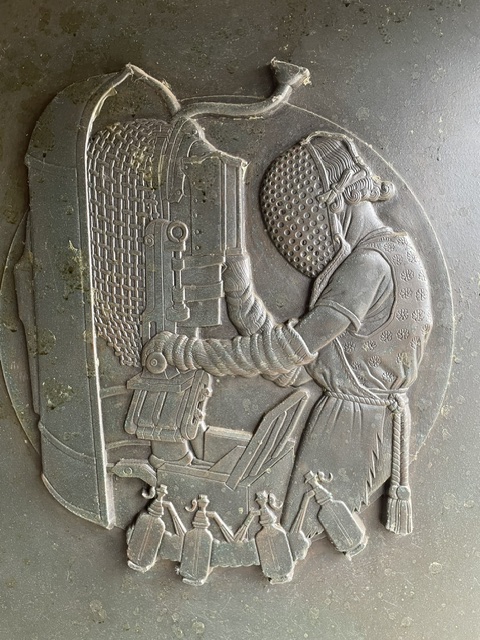
18 large round plaques grace the great bronze doors of the hall, chronicling Norwich’s history and its diverse businesses… I particularly liked this one of the former soda works.

We only saw a fraction of what Norwich has to offer and would gladly return to experience more. With a medieval church round every city centre corner, a maze of lanes and alleys, a wealth of business large and small, independents and chains, with its universities, museums and the wider cultural offer its civic star is rising. May its light continue to shine.

Castle Acre

Bare ruin’d choirs, where late the sweet birds sang. ( Shakespeare: Sonnet 73)

On the road to Norwich to start our East Anglian holiday we stopped off in north Norfolk to explore Castle Acre. It’s a quiet spot embedded into a rolling landscape of arable chalklands, woods and shallow valleys. But today the air was riven by the passing sorties of fighter planes. A reminder that American jets stationed at nearby RAF bases are actively involved in that country’s current conflict with Iran.

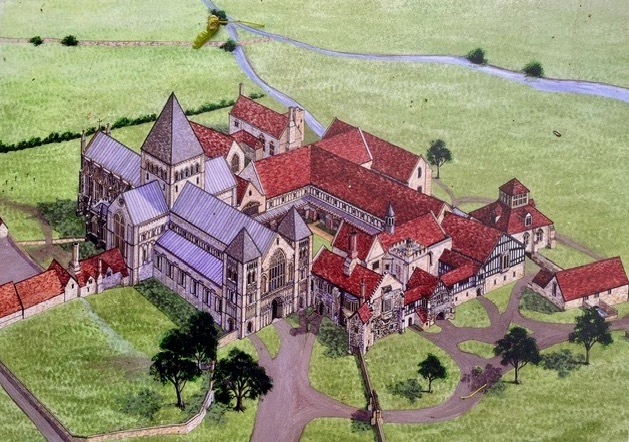
It was military conquest following the battle of Hastings that brought a veteran of that regime changing conflict, William de Warenne, to these parts in the 1080’s. He and his successors planned and built a whole new settlement consisting of priory, village, parish church and castle. Their main seat though remained at Lewes in Sussex.

Artist’s impression of Castle Acre priory as was

Today the impressive remains of priory (dissolved at the reformation in the 1530’s) and castle (abandoned by the 14th century) stand either side of a well to do pretty village complete with pub, teashop and convenience store.

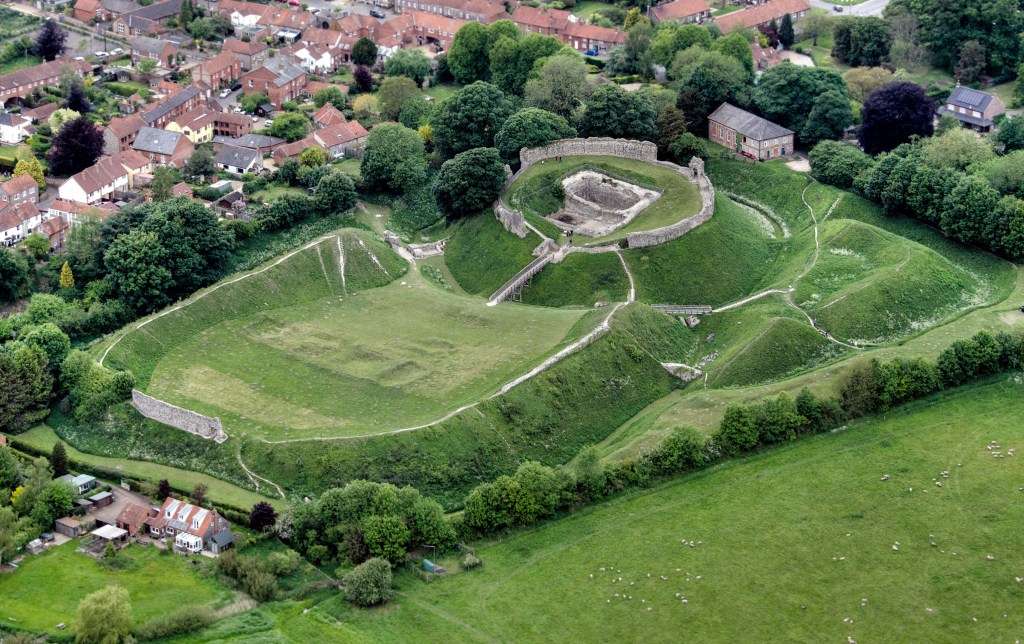
Castle Acre castle site: Source – Wikipedia

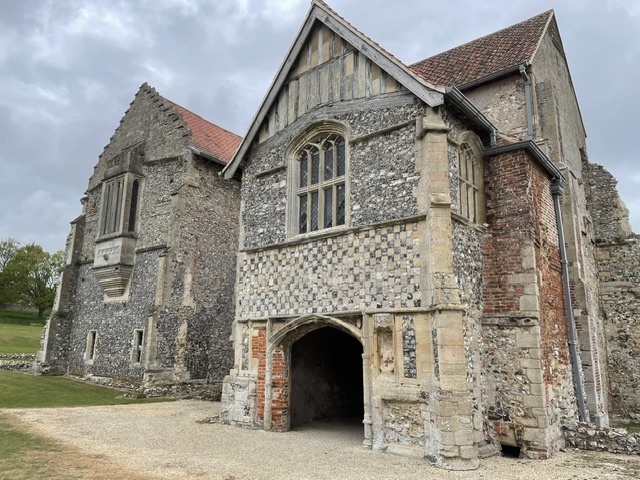
Arriving in this region you notice just how much flint is in evidence as building material, alongside other local stone and timber frame. The historic remains are in the care of English Heritage while the estate lands that surround it remain with the Coke family, earls of Leicester, landowners since the mid 17th Century. We noticed they were following the national trend in rewilding parts of the land, especially around waterways and hedgerows.

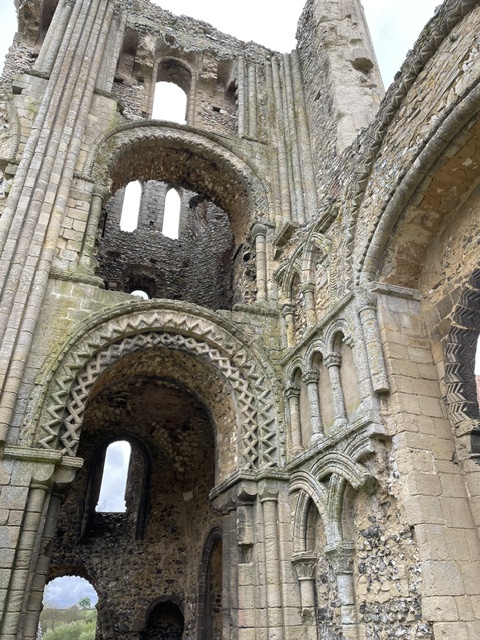
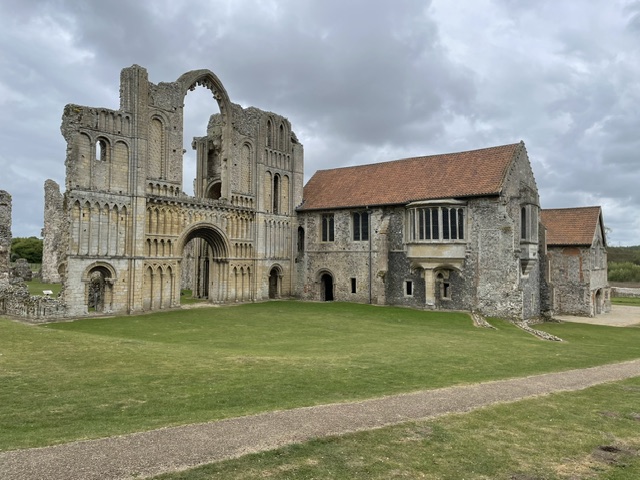
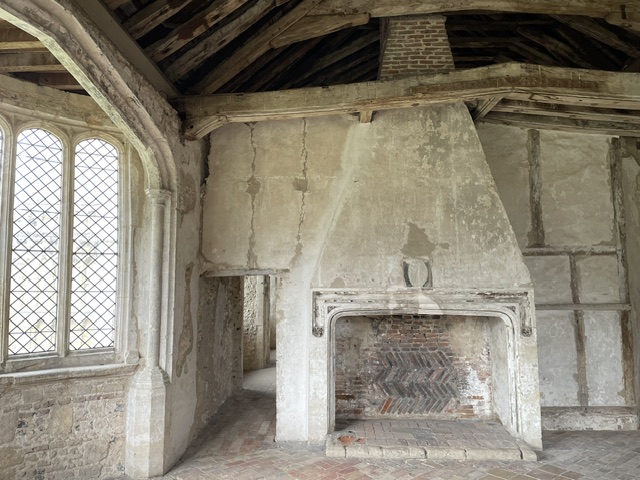
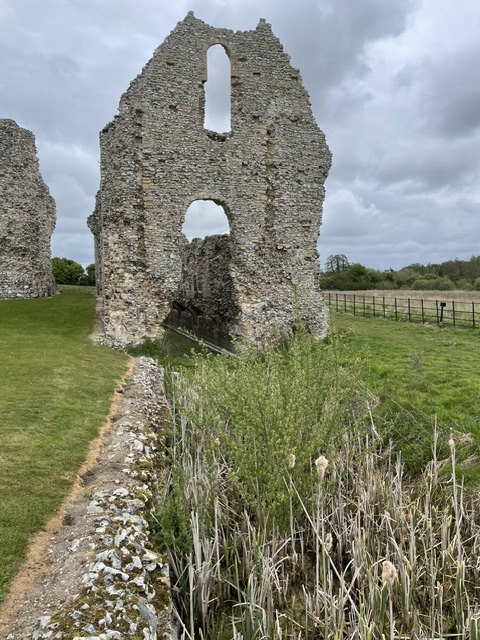
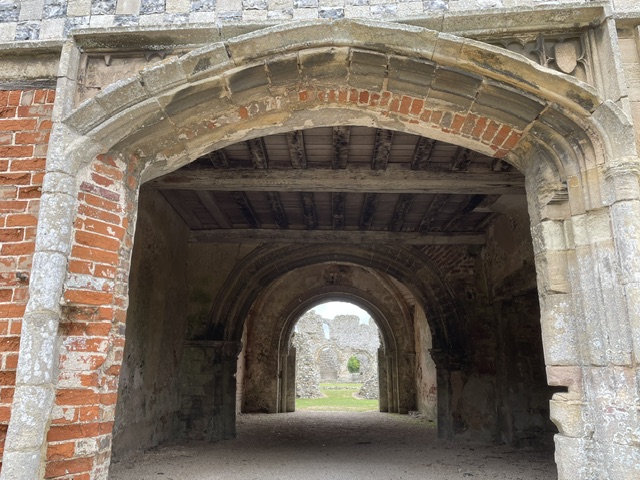
The priory was a wonder to discover as the ruins are so extensive and allow you to build a coherent picture of it as the grand self-contained community it once was. On entering the grounds you’re immediately struck by the C.12th west front facade of the church and  tower. The adjacent west range was the guest house for important secular visitors. We then ascended stone stairs to the Prior’s chambers, which includes a well-lit hall and private chapel.

These sections of the priory  were always roofed, unlike the religious buildings which were ruthlessly stripped following dissolution for their valuable construction material. It became a farmhouse and stores with the former priory ruins and meadows grazed by stock or otherwise farmed. In the  C.18th and C.19th growing appreciation of the picturesque and further interpretation and recording by antiquarians and artists allowed the Castle Acre complex to be seen in a new light and by 1929 the government  Ministry of Works were allowing visitors regular public access to both priory and castle.

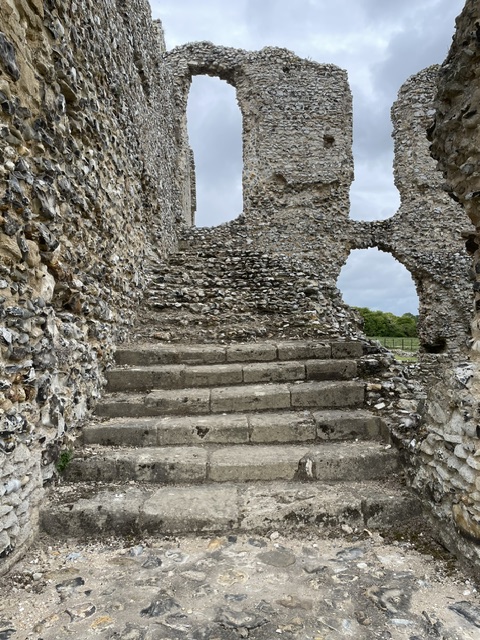
Of the ruined complex, largely stripped of dressed facing stone, the most evocative are the parts that betray human interaction, like the well-worn stairs that led up to the monks dormitory, where the brothers slept in their robes of black and white. The reredorter (literally, ‘at the back of the dormitory’) is a narrow two story building which was used on an industrial scale as a latrine block. Underneath is a watercourse designed to carry the waste away.

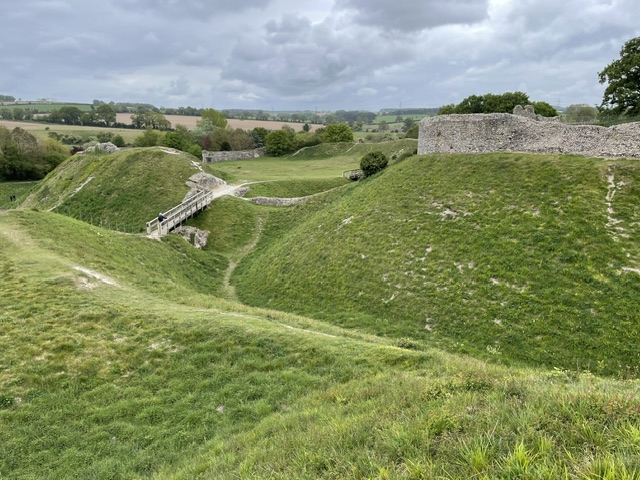
The castle footprint is huge, with steep embankments, ditches and motte. The De Warenne’s first buildings however were a relatively modest affair set within the outer defences.

It was only later, in the C13th civil wars that raged between nobles supporting the rival claims of Matilda and Stephen to the English throne that it was rapidly transformed from fortified house to full scale fortress, with barbican and inner bailey additions.

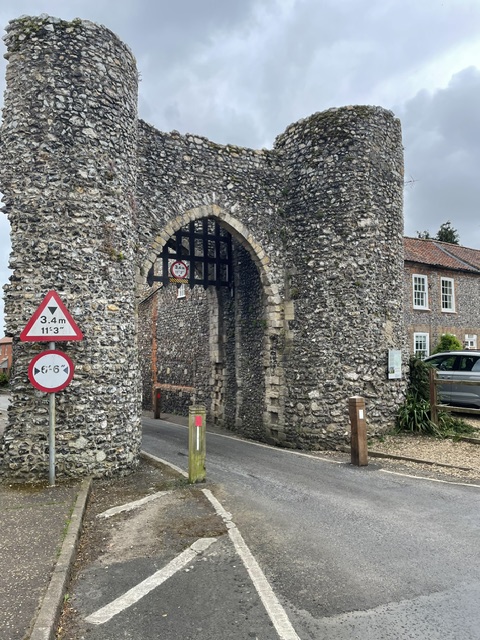
That protection stretched to an outer town wall and a bailey gate entrance, through whose narrow archway we carefully drove on entering and departing.

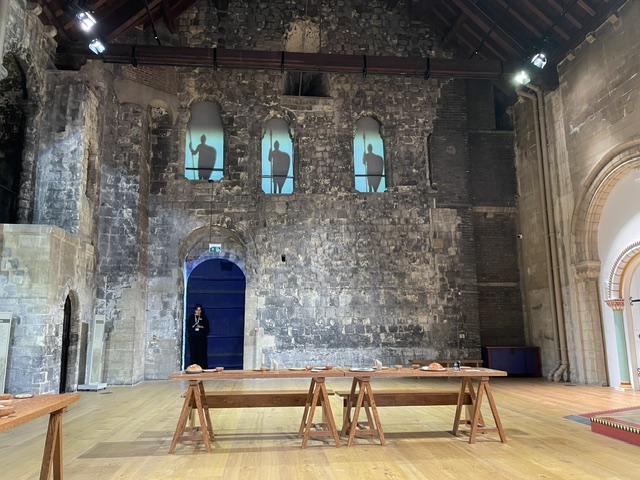
Norwich Castle Great Hall

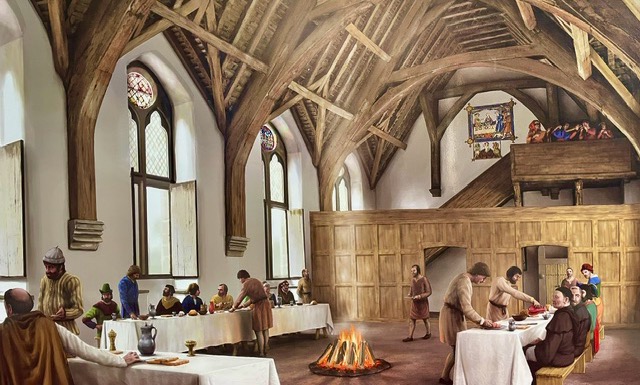
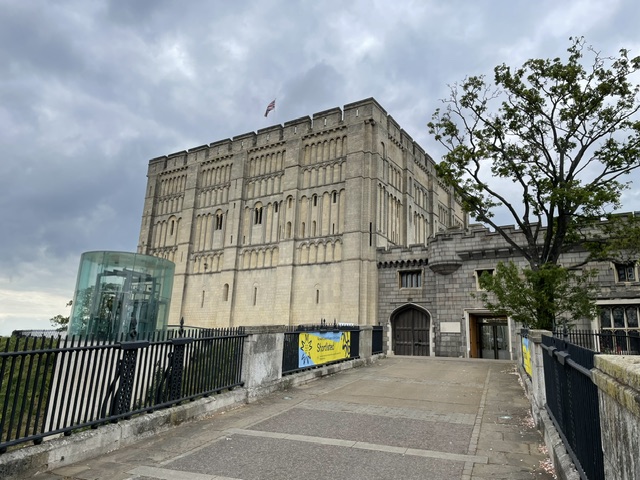
In Norwich we were impressed with the multi-million pound makeover of the great Norman castle (or rather the remaining keep) which has been five years in the making and feel it would make for a worthy winner of this year’s ‘Museum of the Year’ award. The great hall would have been similar to the De Warenne’s eventual fortress creation at Castle Acre.

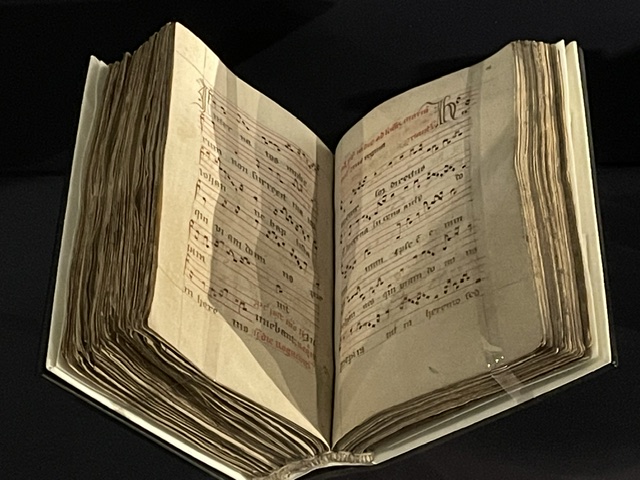
Two exhibits displayed in the revamped medieval treasures display pertain to Castle Acre. This C15th parchment chant book, made and used by the Castle Acre monks, is  of vellum (calfskin) oak and leather and small enough to be held in the hand. It’s complete with instructions (in red) for use in services as the brethren processed through the priory on different feast days throughout the year. The Cluniac order, founded in the French town of Cluny in the  6th century, strictly followed  the rules set down by St Benedict, but was also renowned for a love of art and decoration, which would have resulted in the walls of their establishments being brightly coloured and expressive.

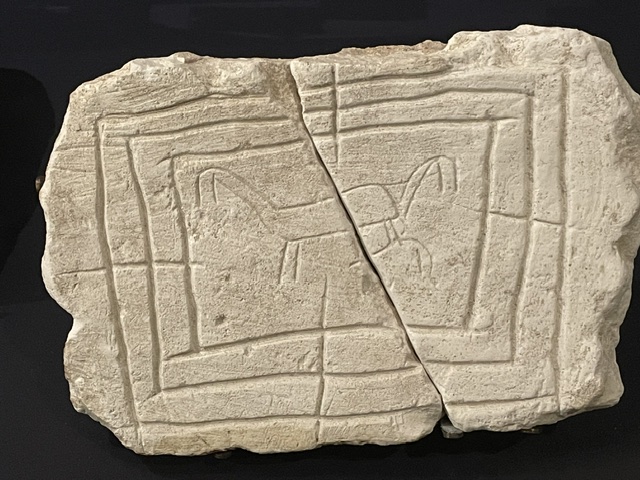
There’s a timeless quality to this simple board game of Nine Men’s Morris made of chalk with horse motif, found at the castle in Castle Acre. Two players try to place three of their counters in a row, allowing them to remove one of their opponent’s pieces. Whoever removes enough of their opponent’s counters to prevent them from moving is the winner.

Castle Acre is a fantastic place to get an idea of how the temporal and spiritual life of a rural medieval planned settlement would have appeared. Well worth a visit, especially at mid-week when we were only two of a handful of visitors at the priory. More at https://www.english-heritage.org.uk/visit/places/castle-acre-castle-acre-priory/

Light Over Jutland

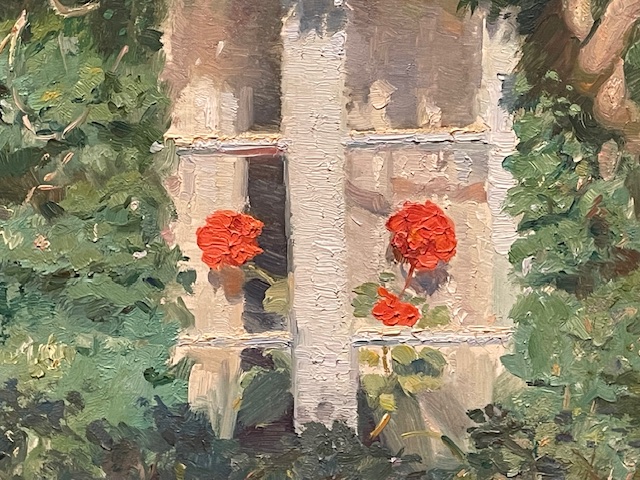
The Old Window (detail) Oil painting by Anna Ancher

Maybe it’s from watching too much Danish television and cinema, but the northern region of Jutland lodges in my imagination as a cold windswept archipelago breeding outlaws, from Viking raiders to Scandi noir murderers. How refreshing then to set the record straight with a welcome immersion in the luminous world created by one of that country’s most celebrated artists, Anna Ancher.

Last week, on a rain soaked Tuesday morning, we slipped into the serene interior of the UK’s oldest public art collection, the Dulwich Picture Gallery in south London. We’ve previously caught some fine shows here but this one was different in that the artist was hitherto unknown to us.

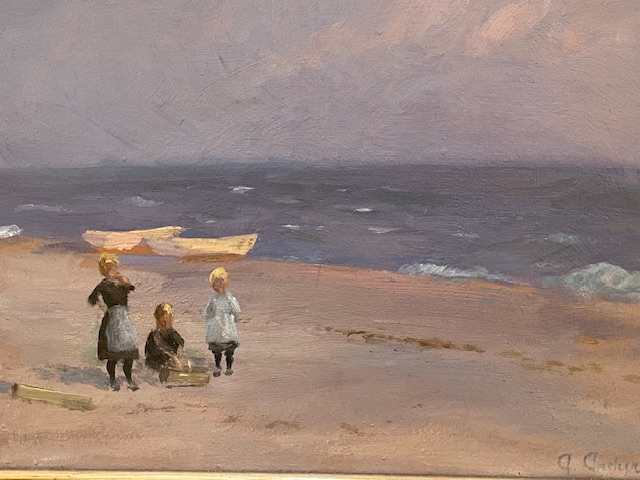
Children on the beach at Skagen

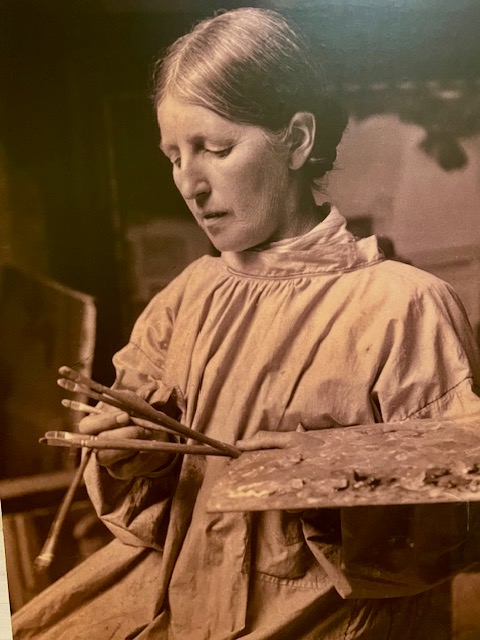
Women artists of Anna’s day – she lived from 1859 to1935 – faced huge barriers in pursuing their careers. Her family, the Brondum’s, ran the only hotel in the remote town of Skagen (pronounced Skay-en) where she was born and spent most of her life. It became a lively centre of artistic activity from the 1870’s and still trades today in what has become an upmarket seasonal resort town of uniform bright walls and red tile roofs.

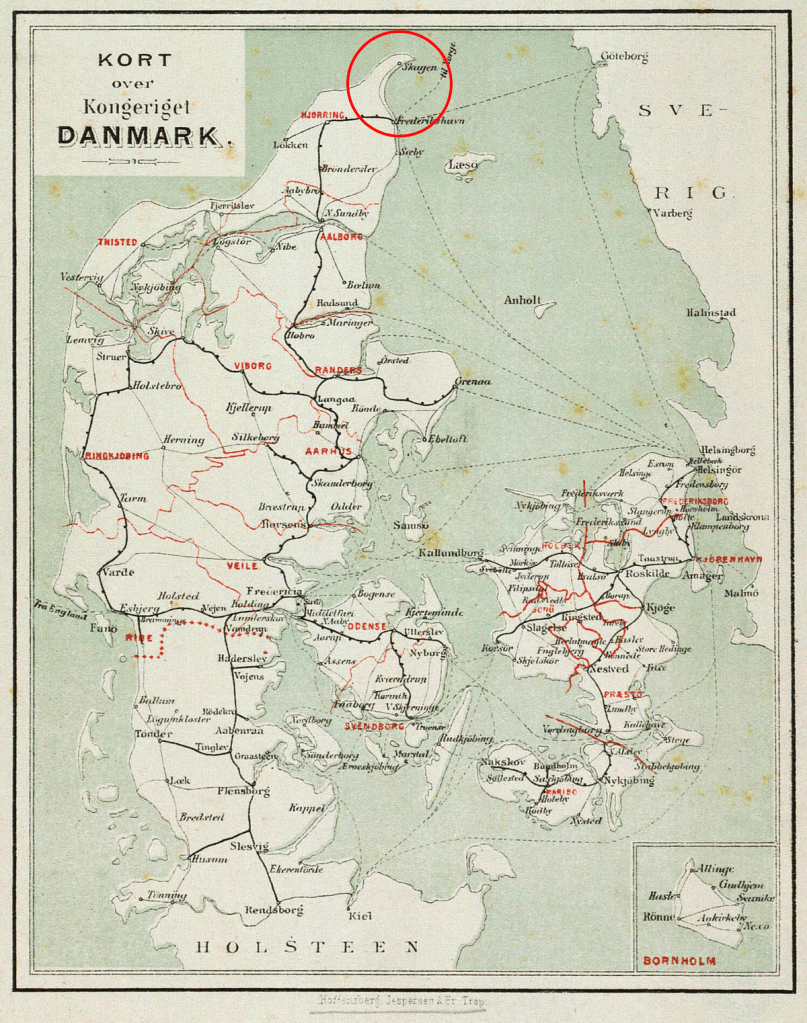
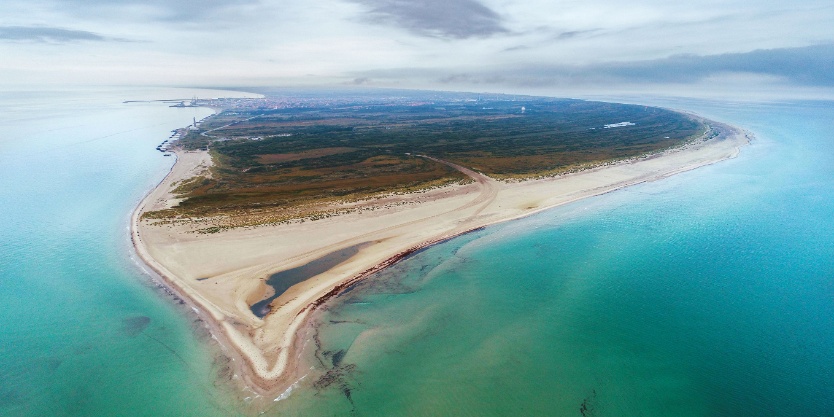
Emerging artists were drawn then to what was a near inaccessible spot at the very northern tip of Jutland, where the Skagerrak and the Kattegat seas meet. An exposed lone finger of land defined by sand dunes and continual beaches under vast open skies. One of those dynamic young  incomers, Michael Ancher, became Anna’s husband and collaborator.

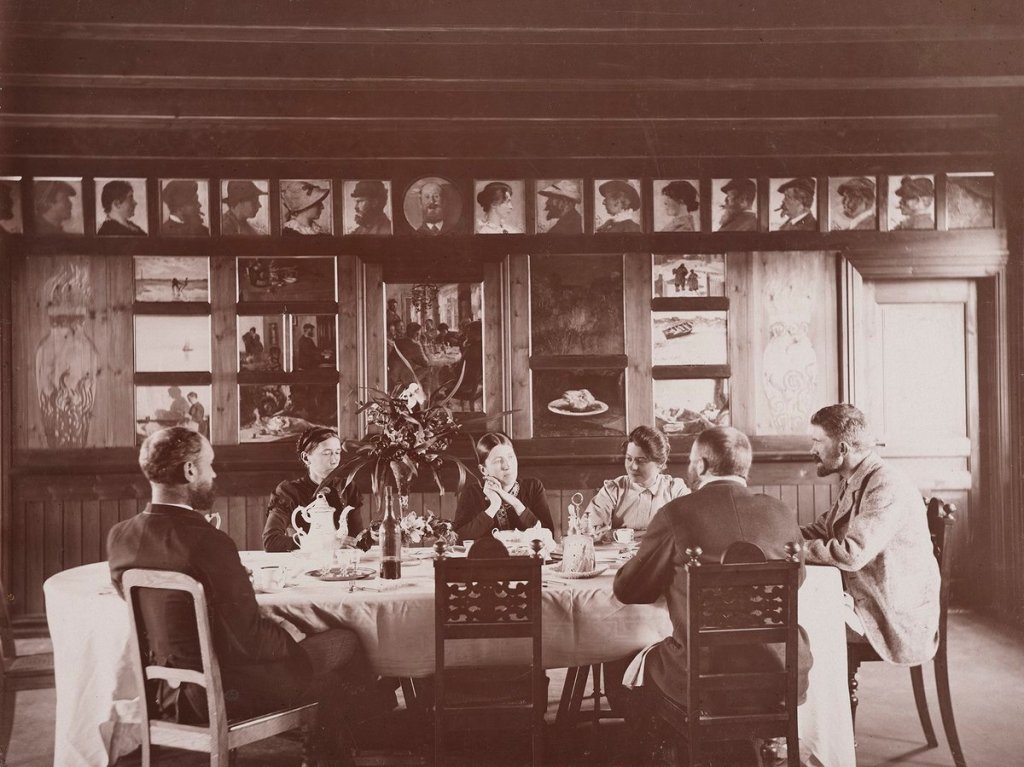
Anna, central, and her circle at the Brondum’s Hotel / Art Museums of Skagen, historic photo collection.
At that time most of the indigenous inhabitants led a hard existence as farmers and fisherfolk and many, like Anna’s mother Ane, were devout protestants. Surprisingly perhaps, Ane supported her daughter by paying for private art lessons in Copenhagen. (Women were banned from the official schools) Later both Anna and Michael studied in France where the liberating influence of impressionism was key to further development.

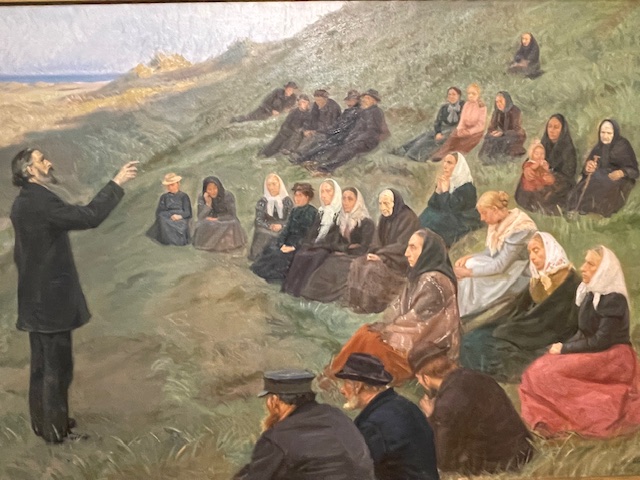
Anna was not just confined to the traditional female realms of home and family for subject matter and she demonstrated her compositional skills in large scale works like this one from 1903. The Skagen mission church congregation her mother belonged to, seated in the dunes ,listening  to a sermon given by their local preacher.

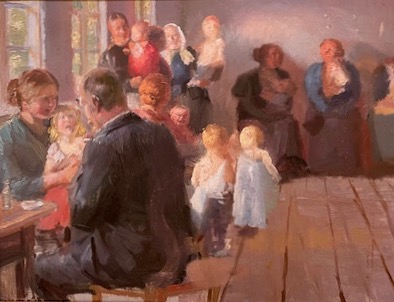
Particularly liked this little picture of mothers bringing children to be vaccinated against smallpox. The practice had been compulsory in Denmark since 1810 but then, as now, it was a cause of controversy. With Michael modelling as the doctor, alongside local women and children, clearly shows which side of the argument the Anchers favoured.

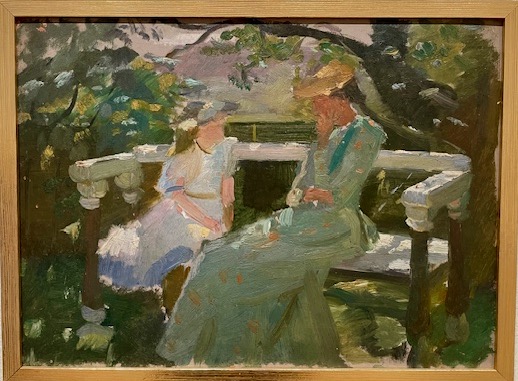
Another eye catching small study in oils shows the Ancher’s daughter Helga, with Anna’s cousin Ane Torup, dressed in green, at home on the bench in a summer garden (c.1892).

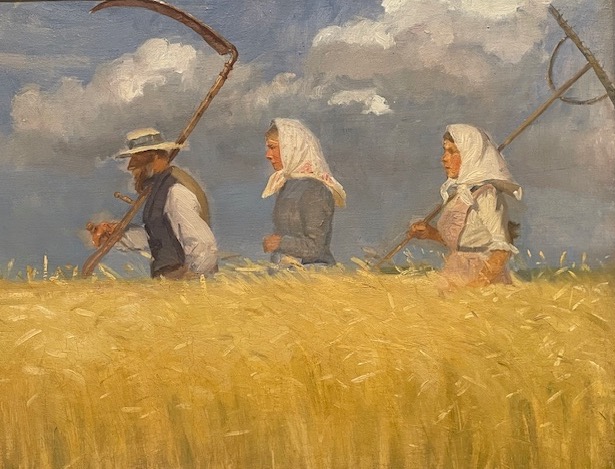
Farmland had been painstakingly reclaimed from sandy heath and this vibrant close study of harvesters in the corn from 1905 both focuses and intensifies the colouration of the scene, where the sturdy workers set out to reap the rewards of their year’s labour.

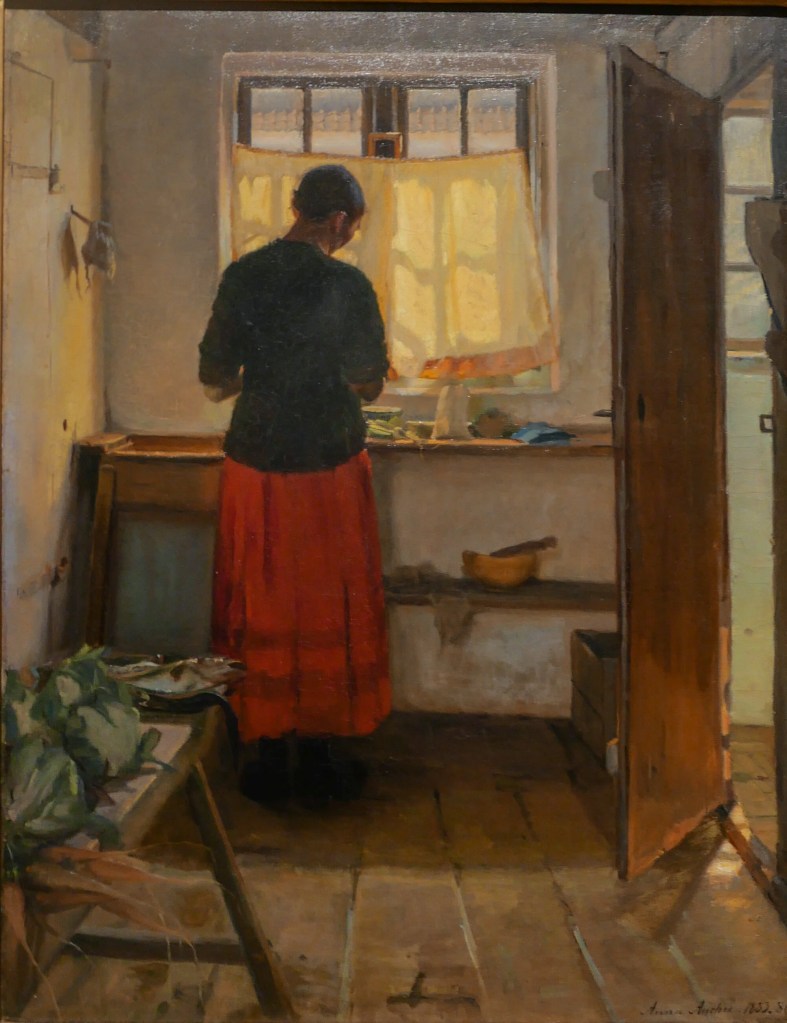
One of the major oil paintings on display is a wonderful portrait from 1886 of a maid in the kitchen which demonstrates Ancher’s particular genius. A fascinating composition imbued with intimacy and stillness. Entrancing in its luminosity, with echoes for me of Vermeer.

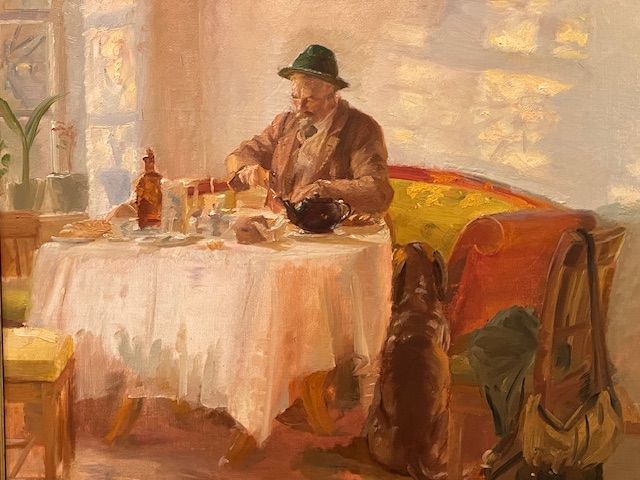
Before the Hunt, Michael Ancher painted by Anna

Thank you Dulwich for bringing us this cultural gift from rural Denmark. I for one will – literally – see that land in a rather different light from now on. The exhibition continues to 8th March. https://www.dulwichpicturegallery.org.uk/whats-on/anna-ancher-painting-light/

Grenen nature reserve, beyond Skagen. Image: Christian Faber

On Turner and Constable

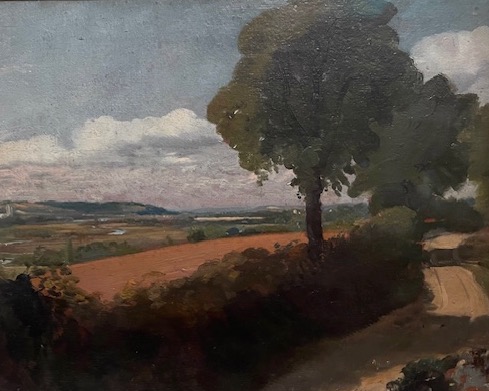
John Constable: View of Dedham Vale 1809 Oil paint, paper on canvas

When you live in the country but you’d like to know how others see the country then you need to head for the city. That’s what we did last week to indulge in a double dose of artistic genius served up for our consumption at Tate Britain.

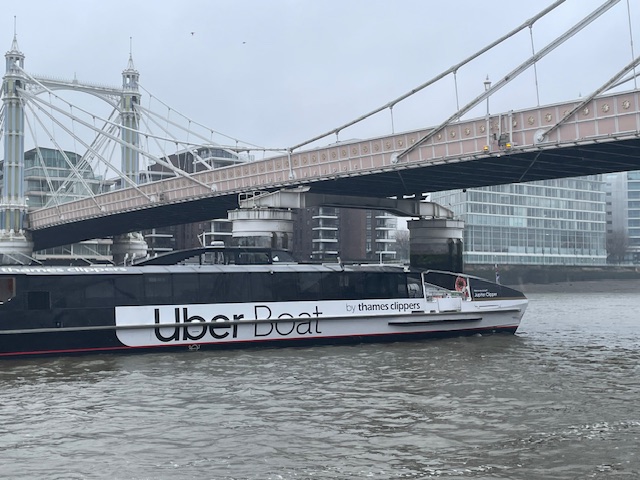
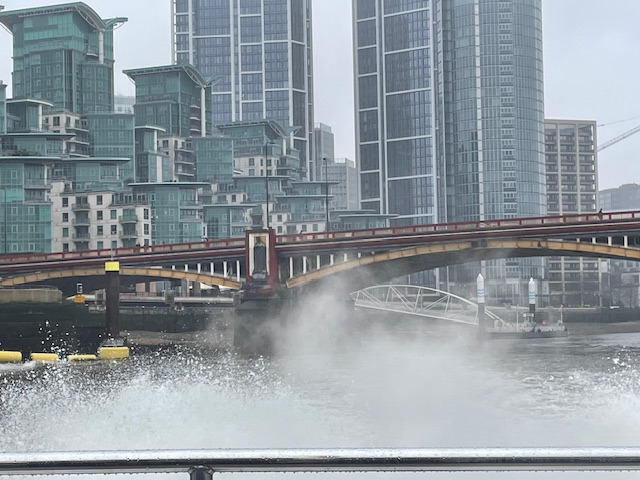
Arrived at Millbank by boat on one of the catamaran Uber river taxies that ply their trade on the Thames. Pricey, but worth it for the vistas afforded. Powerful engines allow for nimble sideways docking and a surprising turn of speed on the fast flowing floodwaters. Graceful bridges backed by sky blocking glass walled monoliths at Vauxhall with remnants of more graceful human scale buildings elsewhere on the river banks.

JMW Turner and John Constable. The two mighty creative engines that powered and defined the art of landscape painting in early C19th England. The Tate exhibition bills the two men as ‘Rivals and Originals’ and an intriguing combo they proved to be when viewed here in tandem.

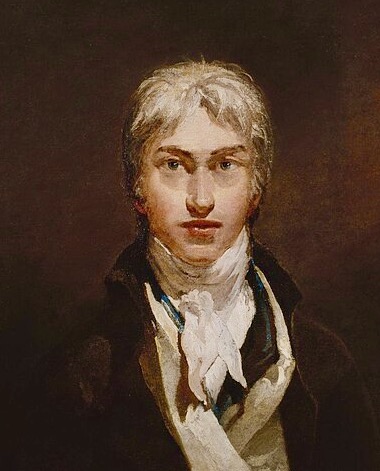
JMW Turner Self portrait 1799

Weaving in and out of the mass of fellow visitors we were skilfully drawn into their overlapping visions of a land and people in flux, complimenting and contradictory by turns.

Both men were out touring in summer and working up drawings and sketches to a finished state  back in their respective London studios throughout the winter, for display at the Royal Academy show, where they’d eventually secure top billing as leading members;  feted, criticized and praised in equal measure by critics, patrons and public alike.

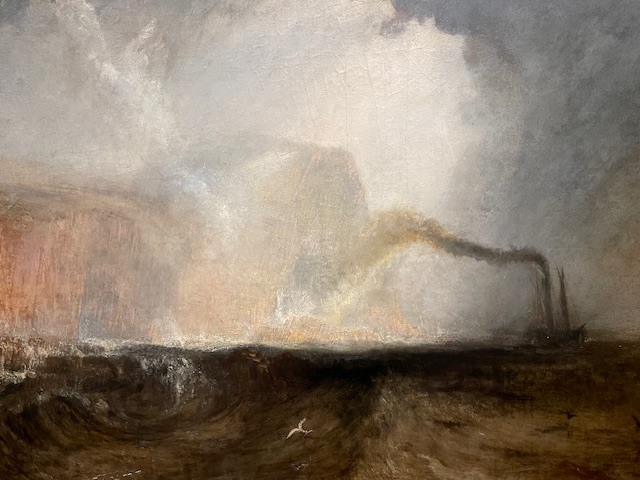
Turner: Steam Ship off Staffa

We were introduced to two very different personalities from contrasting social backgrounds. Joseph Mallord William Turner (1775-1851) was the son of a Devon born barber and wigmaker who had set up shop in Covent Garden. The proud father displayed his precocious 15 year old son’s drawings in the shop window to attract custom.

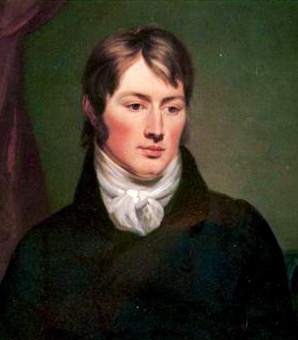
John Constable by R C Reinagle (1799)

By contrast Constable’s father was a prosperous miller and coal merchant in rural Suffolk who disapproved of his son’s artistic ambitions. John Constable (1776-1837) comes across as an introspective, conservative and conscientious countryman while Turner was quite at home in the capital; an eccentric showman and gallery owner, secure in his own genius.

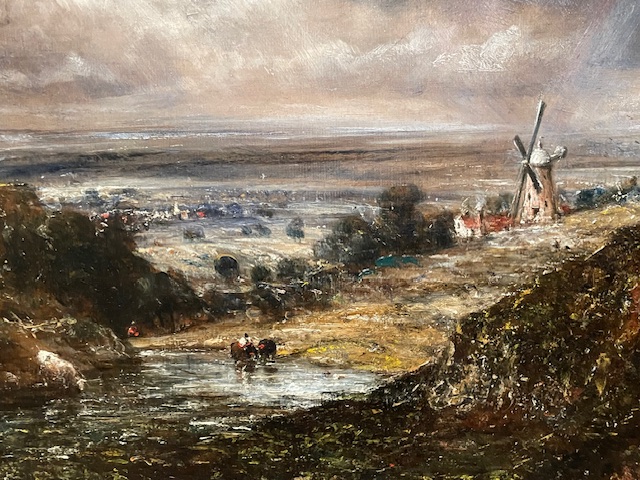
Constable: detail from oil painting of Hampstead Heath 1835

Against both their families initial opposition Constable married Maria Bicknell, a neighbour and childhood sweetheart, and subsequently supported a large family of seven children. For a while they lived out of London, in Hampstead village and Brighton, for the sake of Maria’s fragile health. Success came much later to him than it did Turner. Scaling up to work on larger canvasses his ‘Six footers’ helped secure artistic and economic success on being accepted as a member of the R.A. in 1829. Turner never married, though it’s believed he fathered two illegitimate daughters who he looked after. He also had Sandycombe lodge built in Twickenham for his widowed father. A fascinating miniature Italianate villa, still standing, recently restored and well worth a visit.

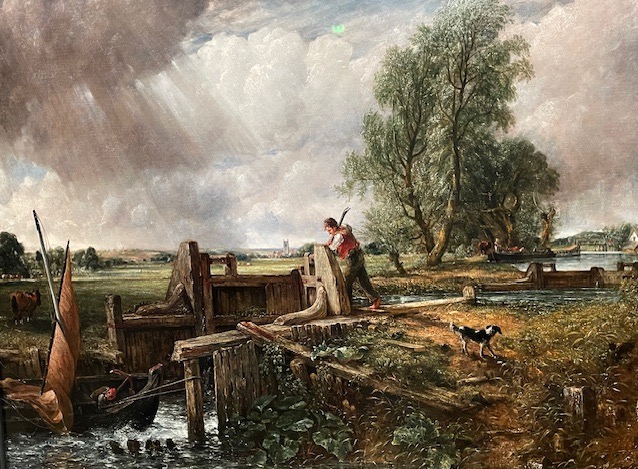
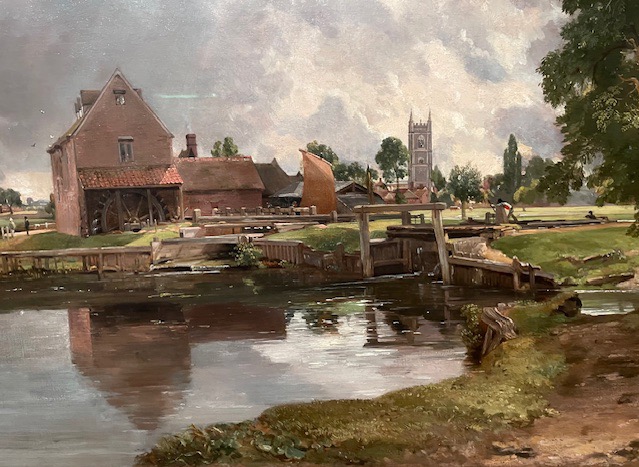
Constable: Dedham lock and Mill (1818)

The exhibition displays  a combined 170 works by the two artists. Constable’s masterpieces with the greatest appeal show us the working people of his native Suffolk going about their business in a quintessentially English pastoral setting. It seems idyllic on the surface but was often the opposite due to the huge changes wrought by the agricultural revolution then in full swing. A situation chronicled by contemporaries like William Cobbett in his ‘Rural Rides’ series of newspaper reports across the southern English counties.

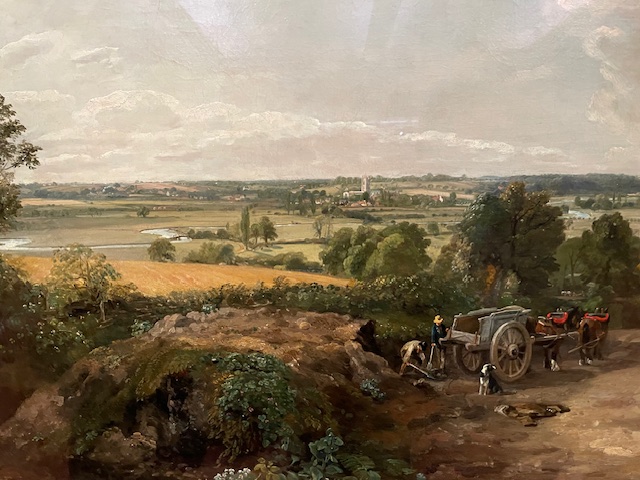
 I like this Constable picture of a muck heap, painted as a childhood friend’s wedding gift. Not the most obvious subject for a conjugal gift…Or is it? Composted fertility, spread on the land to increase yields, has a more obvious meaning. Like his most famous painting ‘The Haywain’ collie and patches of red feature as signatures to this otherwise everyday rural scene.

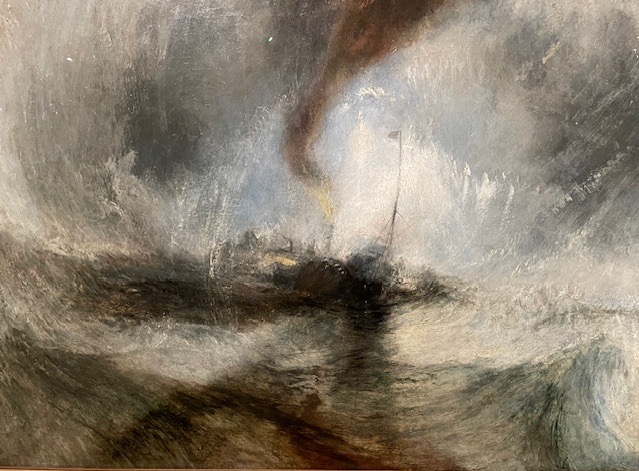
In Turner’s thrilling immersion we’re pitched into the dynamics of mechanised invention engaged with great elemental forces . ‘Snow storm – Steamboat off a Harbour’s Mouth’  (1842) is an outstanding  example of the artist’s innovative style. Turner claimed he was lashed to a mast so he could safely observe the scene. I mused to think how much more disorientating this kind of artistic vision would have been when first viewed by the public.

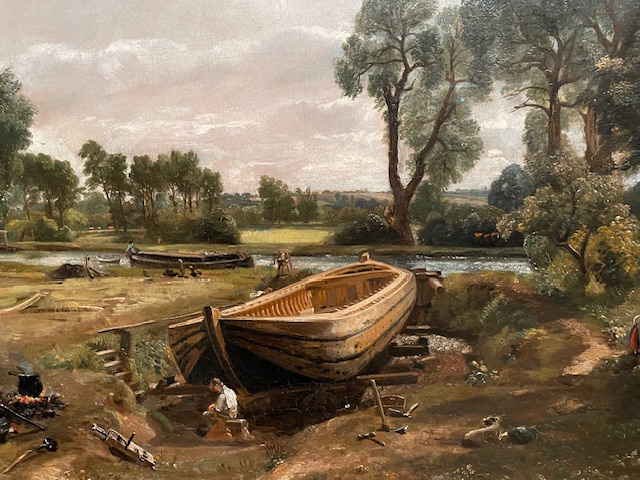
By way of contrast Constable reveres the age old crafts – boat building in a dry dock off the River Stour. Barges like this floated his father’s stores of grain to Flatford mill and beyond. They were the foundations of the family’s fortunes and are lovingly captured in this oil painting of  1815. Constable must have revisited his childhood self in such scenes. A warm memory, in his own words, of a ‘careless boyhood…which made me a painter.’

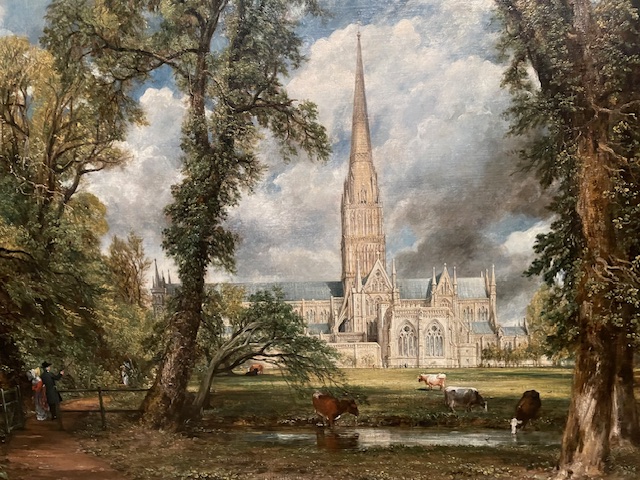
Constable’s studies of Salisbury Cathedral in different weathers are famous works, reminding us of his deep Anglican faith and concern for the church in the face of social and religious reform. I loved the attention to detail in this painting, commissioned by the bishop, seen at the far left of the picture with his wife. Constable’s celebrated portrayal of clouds and loose handling of paint would prove a major influence on contemporary French artists, helping to lay the foundations of impressionism. That would not have impressed his patron though, who we are told, disliked the conflicted cumulous and wanted a more serene sky.

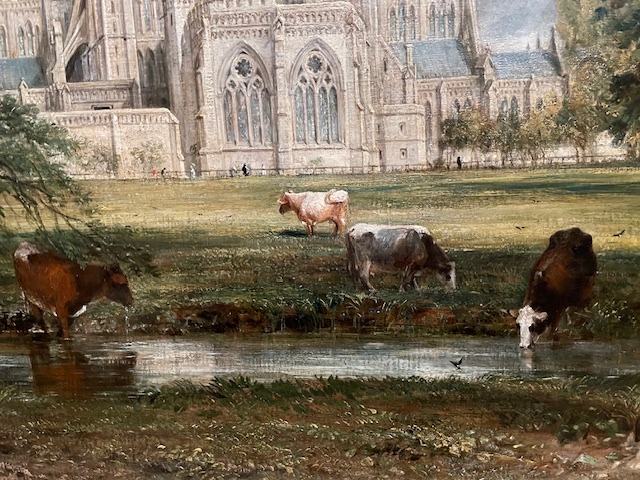
My eye was more drawn down earthwards, to the creatures in the foreground. Like the work of the C17th Dutch master Aelbert Cuyp, Constable clearly had a soft spot for cows, and they seem to represent the kind of rural contentment and prosperity he so valued. The beast on the left, having just drunk from the river, drools water while on the right a house martin hovers to catch flies over the stream. 

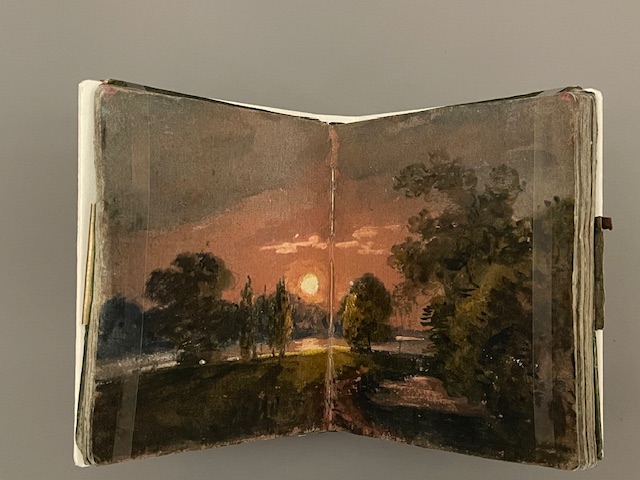
Turner travelled extensively all over Britain and ,during breaks in the Napoleonic wars, across western Europe too. He worked rapid sketches in different mediums. I liked this small notebook sunset from a tour of 1796-7 executed in gouache,  pencil & watercolour.

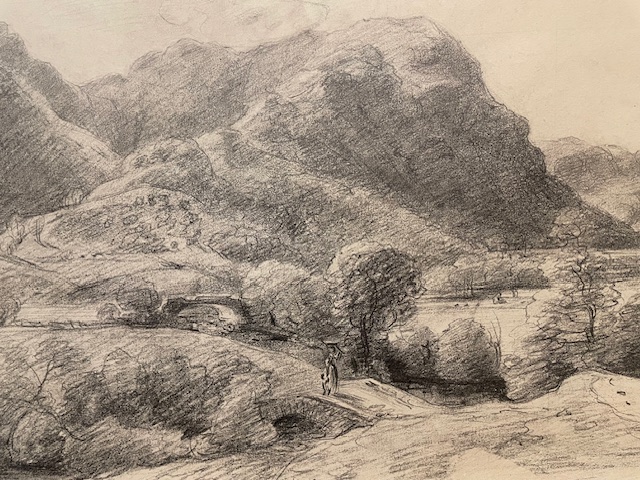
Constable too was no slouch on this outdoor tour mission. Six weeks spent touring the Lake District in 1806  sharpened his drawing skills as this fine pencil sketch of Borrowdale shows…I wondered if he ever met the Wordsworth’s on his perambulations then? What a conversation the Cumbrian poet and his sister may have had with artist from East Anglia.

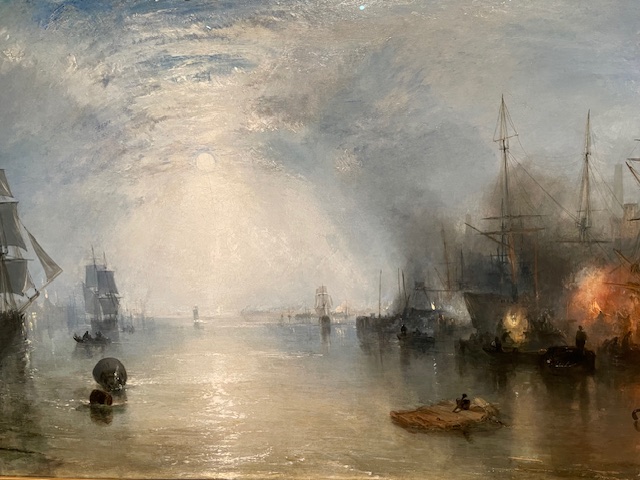
Turner’s association with Northumberland is reflected in a handful of paintings on show. ‘Keelmen Heaving in Coals by Moonlight’ is one.  It’s not specified which Tyne river port of Shields – North or South – is referred to. The image is typically dramatic yet also has a melancholic tone. The  keelmen transferred vast amounts of regionally mined coal from their barges (keels) to sail boats bound for London and other rapidly expanding industrial towns and cities. But It’s 1835 and the rapid spread of railways is already making transport by these means redundant.

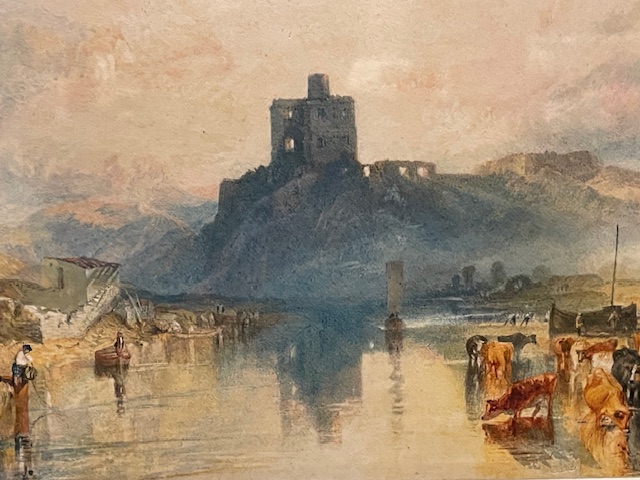
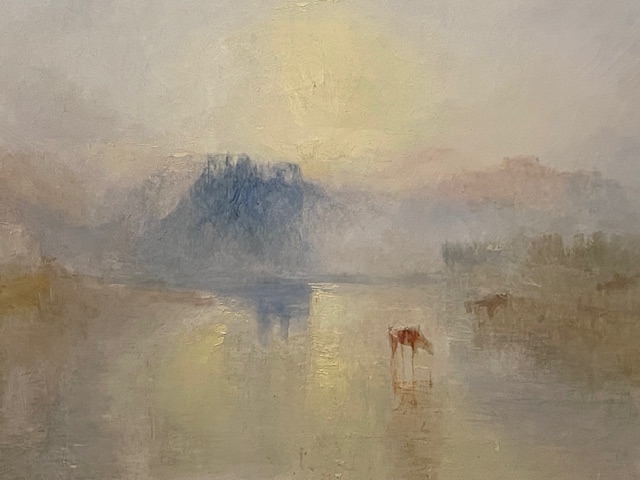
At the other end of the county Turner was drawn both as a young artist of 22 and as an old master to the ruins of Norham Castle on the English bank of the  River Tweed, the boundary with Scotland. He clearly loved the place and his views at sunrise were recalibrated from the infused romance of 1823 (above) to light drenched abstraction in 1845 (below). The latter interpretation opened the door to modernism and, by acknowledgement, the major contemporary art prize awarded in his name.

All in all a great show which does both artists justice in refreshing our understanding, documenting and illuminating their roles in that  revolutionary age. The exhibition continues to 12th April. https://www.tate.org.uk/whats-on/tate-britain/turner-and-constable

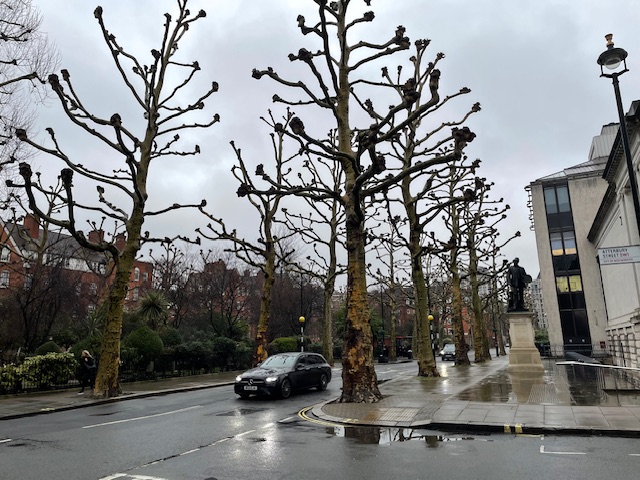
On leaving  we emerged into a street lined with mature plane trees,  their bare branch stumps rounded like boxing gloves, punching the grey London sky. After hours  infused in great art  you can’t help but wonder at these natural forms tailored to urban life, like an outside extension to the gallery…Wonder what JMW and John  would have made of them?

Cows on the Crags

What is this life if, full of care /We have no time to stand and stare? / No time to stand beneath the boughs / And stare as long as sheep or cows From ‘Leisure’ by W H Davies

The four acres of rough grazing in before our house – the crags – has had no stock on it since the spring when the Texel tups were taken off so vegetation has grown dense and high. A word with our farming neighbour at Southridge and we wake up last week to a small herd of cows in situ.

They’re beef shorthorn and white shorthorn cows with respective calves. These native bovine cousins are well suited to this environment being hardy foragers on poor grassland, easy calvers and good milk providers with a docile temperament for safer handling. They’re not only happy imbibers of our edible garden waste but their hearing is acute enough to catch the field gate opening, suddenly appearing over the crags as leafy foodstuffs arrive in my wheelbarrow.

The Durham Ox (1802) by John Boultbee: A national touring attraction weighing 171 stones

Delighted to discover that Shorthorns had their origin over 200 years ago here in the north-east of England through selective interbreeding of Teeswater and Durham cattle. The breeders herd book, dating from 1822, is the world’s oldest and the Shorthorn proved itself as adaptable to milk production as to meat when most farms were smaller mixed use holdings. On a larger scale, from Argentina to Australia and north America the breed rapidly established itself through C19th pioneering settlement and today some 40 breeds of cattle worldwide have their genes.

 It’s the Shorthorn bred for beef that’s best known now, as agricultural history post 1945 has greatly increased specialisation and boosted yields, undermining the mixed farming model. The strains of Shorthorn originally bred for dairy have been vastly outnumbered nationwide by the larger black and white mega milk producers that are Friesian/Holsteins.

We’ll drink to that!

The Higher Stewardship Scheme incentivises hill farmers to return to stocking native breeds. White Shorthorn in particular benefit as it is officially registered ‘At Risk’ by the Rare Breeds Survival Trust. Their endurance is in part due to the cows being put to (black) Galloway bulls, producing the Blue Grey beef cattle often seen across the borderlands. Originally known in the 19th Century as the ‘Cumberland White’  the breed has its heartlands very near us on the Northumberland/Cumberland border where the official society of breeders was founded at The Greenhead Hotel just off Hadrian’s Wall in 1962. Fitting then to have two of those distinctive white cows on our patch with their suckler calves sired in this case by a beef shorthorn bull.

In other news…A bumper year for apples so can hardly keep up at home juicing, pureeing or chip drying our orchard’s output. Recent moth trap reveals a fine example of seasonal camouflage with an Angle Shade demonstrating its October fallen leaf act. Volunteering in the garden at Cherryburn, I leave with some runner beans and a courgette from the take away table.

Enjoy a day trip to National Galleries of Scotland in Edinburgh for the wonderful Andy Goldsworthy retrospective. (showing to Nov 2nd). Here’s a detail from a recent ‘Sheep Painting’ of his created in mud and muck on dried canvas by action of flock in field round a mineral block, removed.

Bussaco

‘Bussaco Forest cannot be described, the best is to get lost in it.’  Jose Saramago

Having been told about the Bussaco National Forest by my cousin who had visited recently we were keen to discover it for ourselves during this holiday. An hour and a half’s drive from base by good main roads and testing twisters through mountainous foothills led us to this unique walled in world, one of the botanical wonders of the Iberian peninsula.

We entered from the spa town of Luso via the Serpa gate, one of 11 gateways that punctuate the 5 K (3.1 mile) boundary wall. Only mildly alarmed when the keeper in her lodge warned us that walking any distance into the forest from the centre was entirely at our own risk due to the heightened possibility of wildfire outbreaks.

It would have been no great hardship to have spent our time in and around the park’s historic centre, which consists of a former royal palace cum luxury hotel (below), monastery, now a museum (above), formal gardens, café and visitor centre. 

Although Bussaco was originally an early 7th Century Benedictine foundation the one we see today was established by the more austere Barefoot Carmelite order when they took stewardship of the buildings and park in the early C17th.

The brothers zealously set about gradually replicating the Holy Land’s Mount Carmel at Bussaco as a kind of desert, blending nature with God’s spiritual estate.

Many of their structures have exteriors distinguished by tessellated designs fashioned from quartz and adhesive tar while the interior of their monastery have coverings of native grown cork freely utilised to insulate walls ceilings and doors against winter cold.

The brothers ordered existence was rudely disrupted in September 1810 when the Duke of Wellington, commanding a combined mass of 50,000 Anglo Portuguese troops, based his command post in the monastery, using the monks cells for offices.

The British general’s army defeated Marshall Massena’s French forces here at Bussaco, halting their advance on Lisbon, a turning point in the country’s campaign of liberation from Napoleonic invasion.

The adjacent royal palace was built between 1888-1905 on part of the demolished monastery. Since 1910 and the fall of the monarchy it has been a luxury hotel, one of the finest in the land. Its initial architect, the Italian Luigi Mantini, also designed sets for grand opera, and it shows. What a brilliantly grand statement of opulence it makes to the world.

The obliging hotel receptionist let us take a look around the sumptuous ground floor. Large scale blue and white azulejos (tiles) decorate walls and stairs, some displaying the battle of Bussaco and others scenes from Portugal’s ‘Age of Discovery’ in the late 15th and early 16th centuries. At that time Portugal established its maritime trading outposts, stretching from Brazil to southern Africa, Goa in India to Macau off the coast of China.

The formal gardens provide a graceful unifying setting for the two contrasting buildings, although box blight and a certain faded glory added to a suitable sense of gentle decay.

The arboretum remains the true natural glory of the place. Some 400 native trees and shrubs grow alongside 300 specimens brought back home as the result of colonisation and exploration. Mexican Cypress, American redwoods, Chilean pines, many oaks, laurel, holly and ferns to hundreds of Camellia species are set around walks, steps, ponds, fountains, statues and other formal features – we saw just a fraction.

Leaving the formal gardens  for an upper woodland walk, we found ourselves on the Via Crucis- a lane of dappled shade linking enclosed stations of the cross – eventually leading to a purpose built hermit’s house with enclosed yard, now an empty shell, one of three around the domain.

The stations house life size red clay tableaux, vividly recreating scenes from the passion of Christ. Hermit retreats and devotional stations were originally set up by the Carmelite monks shortly after they  took over the estate in 1628.  A number seemed to have suffered damage, adding an unintentional modern feel of abstract dislocation to the dramatic scenes of heightened emotion.

Later learned this damage was caused by a particularly violent storm that struck the area in January 2013, severely affecting both buildings and trees and recovery has been hampered by lack of funds and resources. The state took over Bussaco when Portugal’s monasteries were dissolved in 1834, and today managerial responsibility lies with a charitable foundation, which has had to fundraise widely to painstakingly restore the place.

Our stroll took us to another entrance way – not accessible to traffic – the Coimbra gate which yielded surprise vistas beyond the canopy, across the wide plain, to the Atlantic coast.

Lingered by the great doors, now ajar, and the currently unoccupied lodge house (sometime holiday accommodation) with its pink washed walls. Wondered at the wall sign, a papal bull of 1623 forbidding, on pain of excommunication, the felling of trees within the walls or the entry of women!

Historical misogyny apart, I warmed to this early attempt at nature conservation. An atmospheric spot inviting reflection and ease, one where time seemed to have stood still. Stepping out on to the terrace in the full glare of the sun, the bone dry brown grass  crunched loudly underfoot, providing a reminder of the gatekeeper’s words on arrival.

Popular with the Portuguese themselves for its cultural and botanical importance, though less well known to foreign visitors, the Mata Nacional do Bussaco lives up to its reputation, inviting a return to sample further corners, in another season.

Cause for Celebration

John Dubbin’s painting is the basis for this animated panorama at Hopetown

Fifty years ago I was living and working on Teesside as an actor and drama workshops organiser for the Billingham Forum’s Young People’s Theatre Co. We enjoyed free outdoor events marking the 150th anniversary of the opening of the world’s first public passenger steam railway train between Stockton and Darlington. A souvenir from that time is this little China mug, now sadly minus its handle, but otherwise intact and very pretty.

The long train of 1st, 2nd and 3rd class passengers,  preceded by a rider on horseback for safety reasons, set off from Shildon in Co. Durham  on the 27th September 1825 travelling the 21.5 miles to Stockton, via Darlington, at an average speed of 9mph, cheered on by crowds of excited onlookers.

Friend Rob under Skerne bridge

Skerne Bridge, seen in the painting above, is still there today, part of the Hopetown site. The oldest railway bridge in the world still carrying a working rail route.

George Stephenson and his son Robert were the Tyneside engineers who gave us ‘Locomotion’, the engine that pulled those carriages on that triumphant day. Edward Pease, a leading Darlington Quaker (member of the Religious Society of Friends), was a retired wool merchant who had the time and capital to head the consortium of local businessmen were behind the scheme. The original plan was for a horse drawn tramway to transport coal from the mines in the Durham hills to the estuary port of Stockton-on-Tees where it could be shipped to the rest of the country. Stephenson Snr. persuaded the money men to opt for his newly invented coal fired steam engine instead. Adding passengers to commercial goods and loads of coal was something of an afterthought, but would have the greatest of consequences.

‘Locomotion’ replica on display at Hopetown

All this and much more my friend Rob and I learnt when we visited Hopetown in Darlington last week, in the year that sees the 200th anniversary of the Stockton & Darlington. Formerly known as ‘The Head of Steam’ museum at North Road railway station, the 7.5 acre heritage site has been transformed with a multi-million pound investment programme to make it a major regional tourist attraction and educational resource. Entry is free (donations welcomed) and the amount of digitalised interactive displays shows the ethos is about engaging with families and school parties to tell a spirited, many layered story. Exterior soft play areas and an adventure playground are other family attractions that help justify the public investment and draw the crowds.

We didn’t quite know what to expect but quickly became engrossed with what was on offer. The interactive stuff – being addressed by station master and engine driver holograms for instance and having our photos taken with them – sparked fun and laughter. Think the planners have got the mix of serious study material and simpler, bold displays about right, opening vistas for the curious and engaging visitors in the interplay of man and machinery.

Railway Pioneers exhibition

The Hopetown site, roughly triangular in size, consists of the original engine shed (1833) now the shop and café (above); station hall and offices (1842) now an exhibition area with locos and carriages, the Carriage Works (1853) with its huge open archive and large exhibition hall with awesome  replicas of early engines, part of the ‘Railway Pioneers’ exhibition currently showing.

Completing the building line up is the new, purpose built  Darlington Locomotive Works where 21st century steam locos are being made by a charitable trust and volunteers, the workshops overseen from a tower housing public viewing gallery.

Highlights? I think anyone who visits a heritage site is invariably fascinated by the unchanging necessities of everyday living and how each generation deals with them. That’s why the original station toilets were fascinating. Cast iron urinals, tiled walls and cubicles. Throw in the reputed ghost of a porter who committed suicide here in the 1840s that is believed to still haunt the place and you’ve got it made.

The simple elegant design of the original early Victorian station (above) entrance and its extension reflect the world view of those local Quaker company directors. The exuberant emerging Gothic style was not for them.

Britain being Britain the three original carriages on display remind us of rigid social and economic classification. First class enjoys padded seating and privacy while third class (above) is an array of hard benches and a hole in the roof to let out smoke and/or let in light. Second class a mix of both.

Lord Darlington

My favourite museum story happily fits the ‘Country Diary’ title for these occasional notes. We learned that it took three concerted attempts over many years to get the Stockton and Darlington railway up and running. At its heart was the struggle between the inherited wealth and influence of the landed gentry and the new money of the non-conformist urban business elite.

Henry Vane,  Earl of Darlington, resided at nearby Raby Castle, the centre of his great estate. A  fanatical fox hunter who maintained two packs of hounds, he was determined to stop ‘bankers, merchants and others wishing to employ money in the speculation’ from ruining his sport by running their rail road through his fox coverts. He and other country landowners successfully led the opposition in parliament to defeat the initial proposals. A contemporary petition, drawn up by a top London law firm for anonymous clients, makes fascinating reading. It objects to the railway proposal as being ‘harsh and injurious to the interests of the county through which it is intended to pass’ and will ‘spoil lucrative arable land’ splitting profitable holdings in two and be ‘detrimental to the profits of the turnpike road’ running parallel with it.

In March 1819 Quaker banker and line supporter, Jonathan Backhouse, got wind of a plot by the earl to bankrupt his business and so de-rail the financiers. Back then a bank’s promise to pay the bearer on demand the value of a note in gold inspired the disgruntled aristocrat to get his tenants and associates to turn up on a set day at the bank to demand just that. The resourceful Backhouse immediately took flight to London and had a whip round with other Friends in finance, loading the loaned bullion into his carriage and returning at fast as they could back up north on the new turnpike roads to Darlington.

He made it as far as the river crossing at Croft, three miles short of home, when the axle on the hard driven coach broke under the strain. The quick witted banker and his servants redistributed the heavy load and slowly hedged their way back into town, with time to spare, before the Earl’s steward came to call at the bank. Backhouse had raised £32,000 worth of precious metal, more than enough to meet the withdrawal threat. He reportedly saw off the Steward with the words ‘Now, tell thy master that if he will sell Raby, I will pay for it in the same metal’….A great story, which no doubt has improved with re-telling down the years. 

The Backhouse family bank prospered greatly thanks to the transformational economic prosperity the railway revolution engendered. Eventually, in the 1890’s, the business would merge with other Quaker founded financial institutions to form Barclays Bank. The bank branch (above) is still there, on its original site in the town centre and about to undergo a refurbishment. Ironically, given the simple design of the original North Road station, this  building is a fine example of imposing gothic architecture by Sir Alfred Waterhouse (1864).

Arriving and leaving Darlington via Bank Top – the mainline east coast station (1887) – we’re delighted to see that it too is getting a long deserved restoration. Looking up we take in the heraldic decoration and rhythmic flow of ironwork gracing the roof of this secular cathedral, fitting tribute to a wonderful railway history and the town’s proud role in it.

Linnell, John; Richard Trevithick (1771-1833); Science Museum, London ; http://www.artuk.org/artworks/richard-trevithick-17711833-179865

Footnotes: The current ‘Railway Pioneers’ exhibition at Hopetown features superb life size replicas of key early locomotives. One is the unnamed  engine (below) invented by Cornish mining engineer Richard Trevithick to transport iron from the Penderryn works in South Wales in 1804. In 2001 I had the pleasure of playing the obsessive charismatic inventor, in the BBC Radio 4 drama, ‘A Magnificent Prospect of the Works’ by Peter Roberts. The action was set in Coalbrookdale, the heartland of the industrial revolution on the river Severn, where Trevithick developed the prototype engine that would became the world’s first steam railway locomotive.

The Friends of the S & D Railway have produced an excellent illustrated introduction which you can download here: https://www.sdr1825.org.uk/wp-content/uploads/2021/10/stockton-and-darlington-railway-key-facts-booklet.pdf

Stitch in Time

In an hour and a quarter we are over the border into Scotland and our destination of Galashiels. Glad to sense the place looking brighter and more uplifted than on previous visits 15, 20 years ago. The textile industry was once the area’s biggest employer – as many as 20 mills, mostly water-powered, flourished here at its peak in the 1880’s. Those businesses that remain today have had to specialise to survive and the area remains famous worldwide for its tweed and tartan production. A fitting place then to give a home in 2013 to the peripatetic 21st century popular artwork known as The Great Tapestry of Scotland.

We didn’t quite know what to expect so were delighted to be immersed in what was on offer in the purpose built visitor centre standing proudly in the town centre, which opened in 2021. Having lunch at the friendly café broke down the hours so we could more realistically take in the 160 panel display. It splays across a spacious light filled first floor, depicting Scotland’s story from  prehistory to the opening of the new  parliament building in 1999.

Most panels are a metre/3’ 3” square and because they are not glassed over they appear even more immediate and fresh in their depictions of people, places and events, divided into seven triangular shaped time zones. The whole work stretches for 143 meters/ 469 ft. Informative brief text beneath each work with maker credits.

We are struck by how truly this is a people’s project, reflecting all that’s good in the character of the Scottish nation. A meritorious, interconnected, life affirming achievement. The combined work of a thousand volunteer stitchers in a range of community groups from Galloway to Shetland who put in some 50,000 hours of sewing using 300 miles of yarn. The movers and shakers of this national project were the author Alexander McCall Smith, artist Andrew Crummy, historian and broadcaster Alistair Moffat and head stitcher Dorie Wilkie. Between them they set framework for the stitchers to create and their formidable teamwork got the show on the road – literally!

Having the leisure to view the work in such a wonderful permanent setting opened new perspectives on our neighbouring land. This engaging way of presenting that narrative – of individuals, movements, beliefs through a unique synergy of history, culture and art – makes you wonder what an English, Welsh or Irish equivalent would look like. How would they define and reflect themselves through this form of craft based storytelling?

Scenes of conflict and warfare are vividly played out here. The sacking and pillaging of Holy Island in AD 793 in the Kingdom of Northumbria marked the arrival on these shores of the dreaded Vikings in their dreki – dragon ships. Subsequent colonisation along the Scottish coast saw these remarkably adaptable boats being hauled across narrow necks of land between inlets, giving rise to the place name ‘Tarbert’.

‘Is this a dig at the Bard I see before me?”…One particular panel reminds us how the genius of dramatic licence can run counter to historical truth. The real life Macbeth who ruled in the 11th Century and the character created by Shakespeare to flatter Scots King James 500 years later could not be more different. Macbeth was King of Moray, defeating and killing King Duncan of Alba in battle to become King of Scotland in 1040, ruling unchallenged for another fourteen years. A contemporary source tells of of ‘the red, tall, golden haired one…Scotland will be brimful west and east during the reign of the furious red one’  and that physical description gives character definition here.

Another tableau I liked was the one depicting the Invergarry ironworks. Here in the 1720’s the Englishman Thomas Rawlinson, a Quaker industrialist from Lancaster, encouraged his workforce to adopt a shorter kilt for work purposes. The body wrap style of traditional highlander wear being too encumbering otherwise for industrial labour. A new form of Scottish dress that would eventually become standard wear.

The Jacobite uprising of 1745-6 and Bonnie Prince Charlie’s role in it is a familiar narrative, poignantly and powerfully expressed here in a poignant bitter-sweet design as a ‘vine-line’ linking romanticised landing in Eriskay to final devastating defeat at Culloden.

There’s wit and humour running through the whole exhibition, and that gets more pronounced as the later 20th century chapters unfold with the increasing importance of the arts and popular culture in enriching the national picture, from major festivals to all forms of media .

The exhibition demands a return visit so we no doubt will be back. A great day out for us as borderers on the English side and essential viewing for anyone with an interest in Scots history, art and culture. If you’re planning a visit yourself there’s more info here: http://www.thegreattapestryofscotland.com