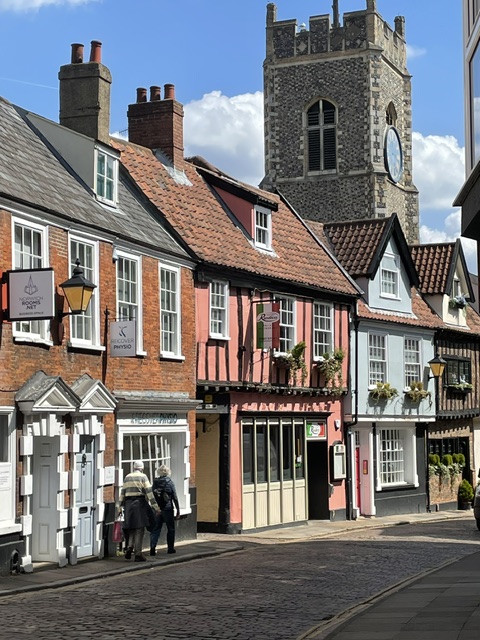
Country dwellers like us could take a shine to any city that presents like East Anglia’s regional centre. The centre of Norwich feels more like a town than a metropolis, retaining ancient street patterns while much new building complements the old. Following the trend of breaking identity down into quarters also suits it well. We stayed two nights at the Maids Head, a venerable independent family hotel, right in the centre. The inhouse hire offer of Bentleys and bicycles must be unique.
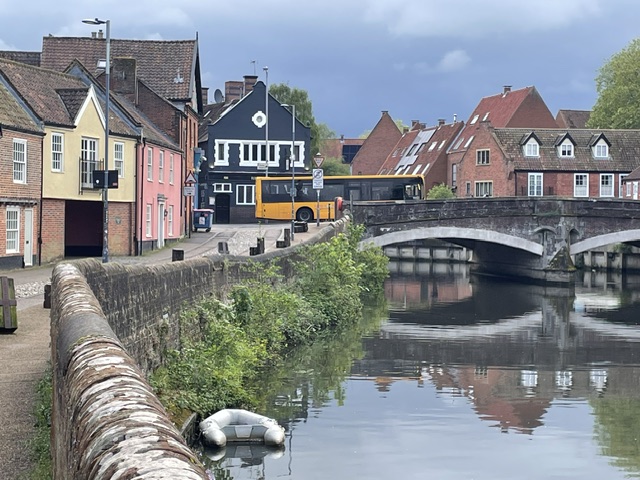
From this base on Tombland (Old Norse for ‘open ground’) we took an evening stroll along the quayside that skirts the encircling River Wensum, from Fye bridge to Pull’s ferry. Thanks to the demolition of the former city gas works in recent times that stretch of riverside path is now continuous.
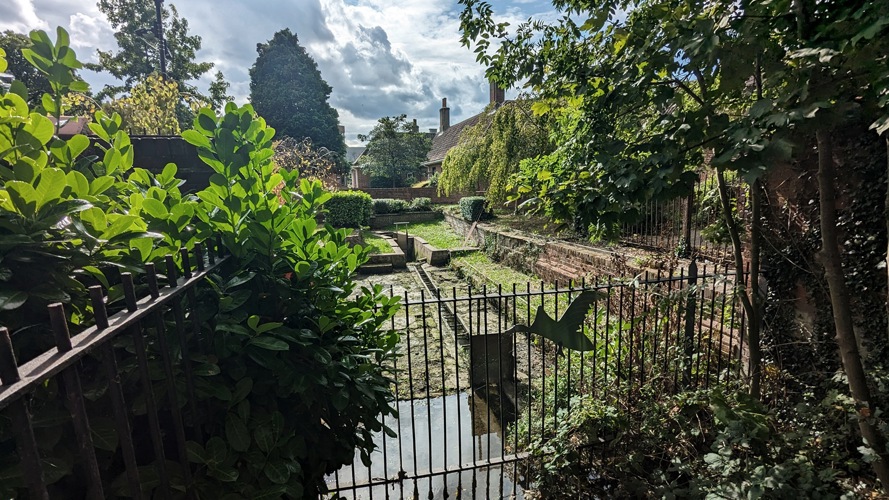
Curiosities here included seeing the remains of a sluice gate and swan pit. With their wings clipped the birds were once culled for feasts at the neighbouring Great Hospital. Formerly part of a monastery and still linked to the cathedral, it continues its caring role as a sheltered housing complex – minus the swan diet.
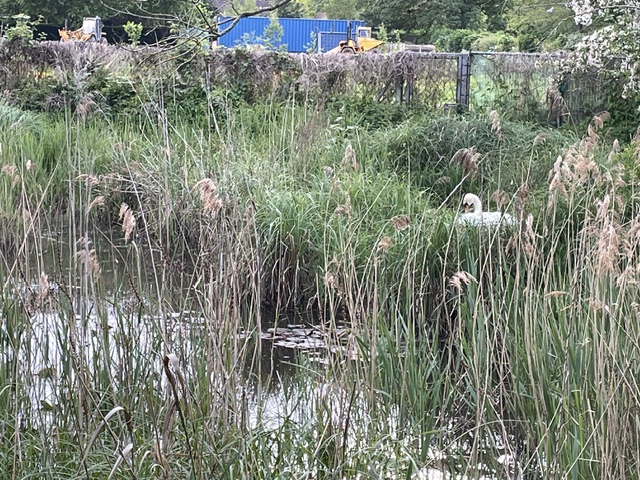
We watched a male bird waddling along the path while his mate sat on a nearby nest in the reedy corner of a fenced off pond.
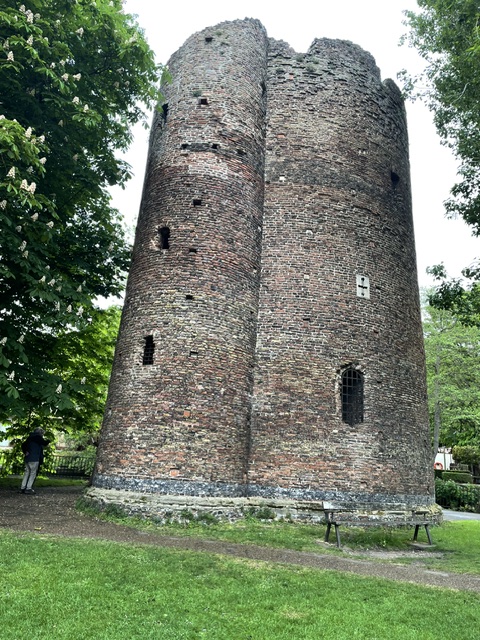
Cow Tower (c.1398) is an early example of an elevated gun battery set on a bend in the river. Originally part of the medieval city wall, it looms up as a flinty floorless finger against the tranquil watery scene below.
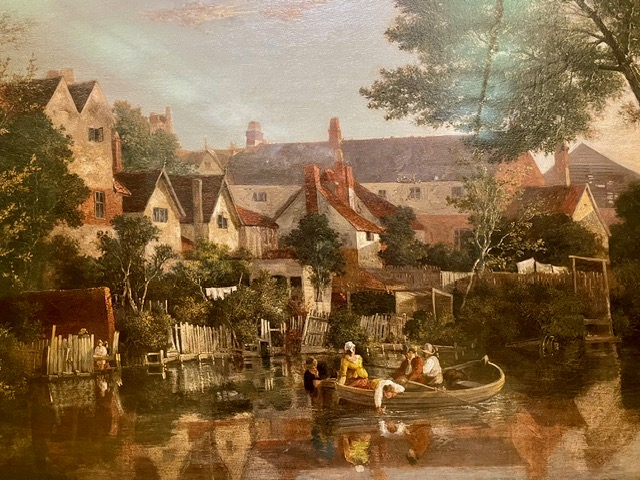
Later, in the castle, we’d see the work of Romantic era artists from East Anglia like John Sell Cotman and John Crome. Here’s Crome’s bucolic summer view of the riverside hereabouts in 1819.
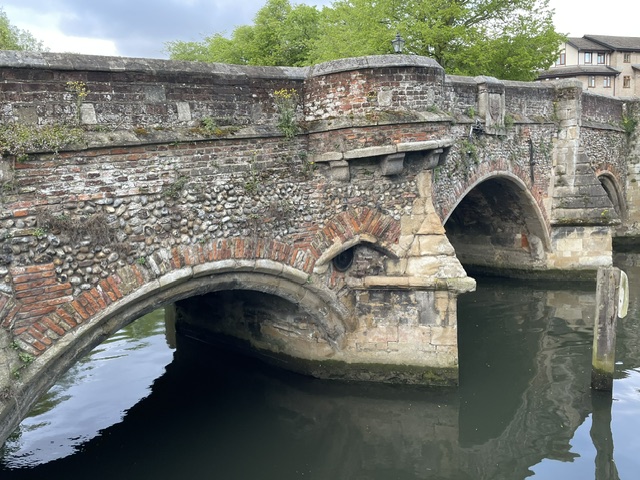
Bishops Bridge is a striking original structure of stone and brick, dating from 1340. The oldest span over the Wensum and once a major portal in the settlement’s walled defences. Terraced housing and small houseboats moored on the opposite bank give a peaceful counterpoint to passing traffic. A reminder of navigation that brought boats back and forth to the city’s teeming quays, helping Norwich develop as a major population centre of medieval England. Home to a thriving nexus of craftsmen, artisans and merchants.
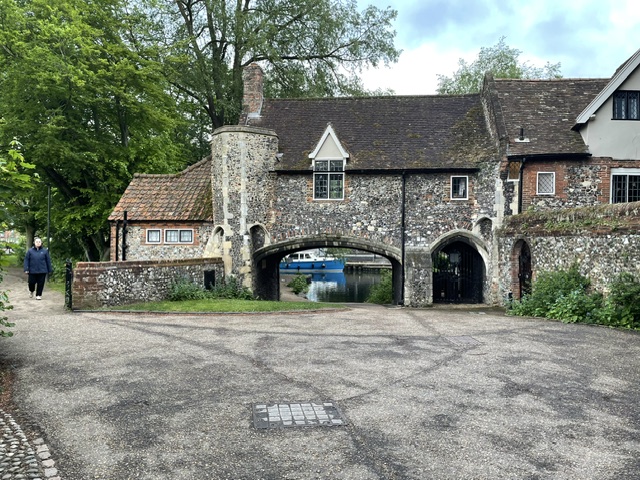
The stone used to build Norwich cathedral was imported all the way from Caen in Normandy. To accommodate that final leg a short canal was dug here in the 1090’s, linking waterway to building site. Now long filled in we passed under the overarching ferryman’s house heading along the cut’s former course, now Ferry Lane, to the Cathedral close.
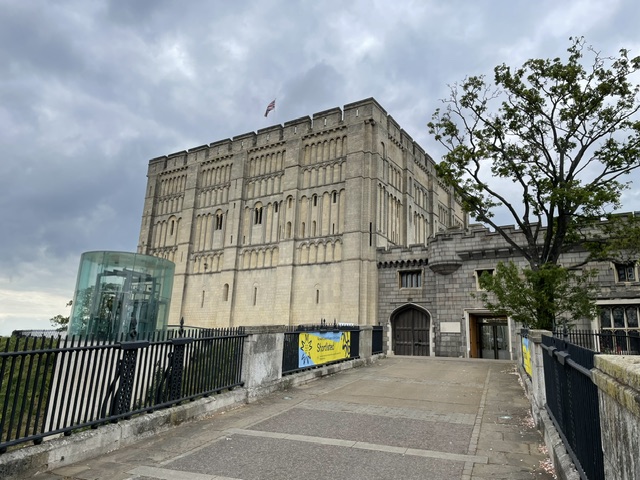
Next day found us digging further the city’s rich Norman legacy. From the newly refurbished castle to that imposing cathedral. The medieval splendour of the roof bosses in the cathedral is something to behold (preferably with binoculars!) Deeply impressed with the degree of visual narrative power so cleverly compressed in those vivid stone roundels.
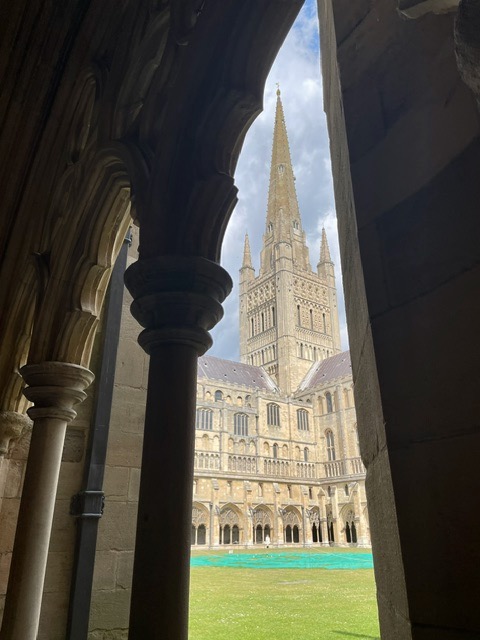
The bosses were incorporated into the new stone roof of the late C15th. Yet for most of their existence they have been hidden from view, whitewashed over from the Reformation until late Victorian times. In 1932 they got repainted in their original bright colours.
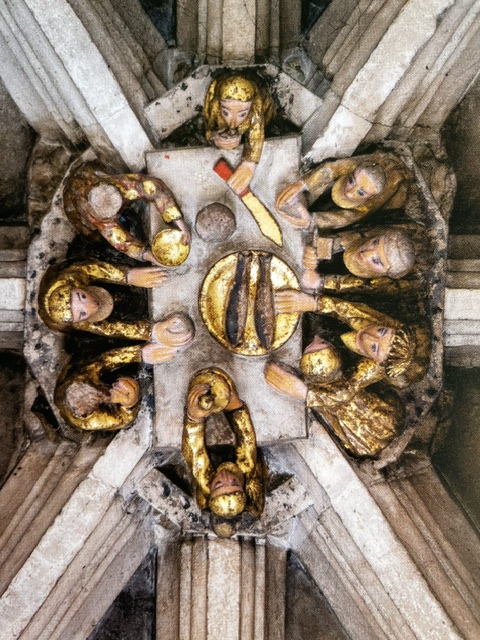
An extraordinary achievement, 255 in total, looking down from on high above nave and choir, depicting biblical scenes and characters, from the Creation to the Last Judgement. I wondered if the much loved mystery plays performed by trades guilds through the streets of Norwich and other big towns had inspired the stonemasons in their turn.
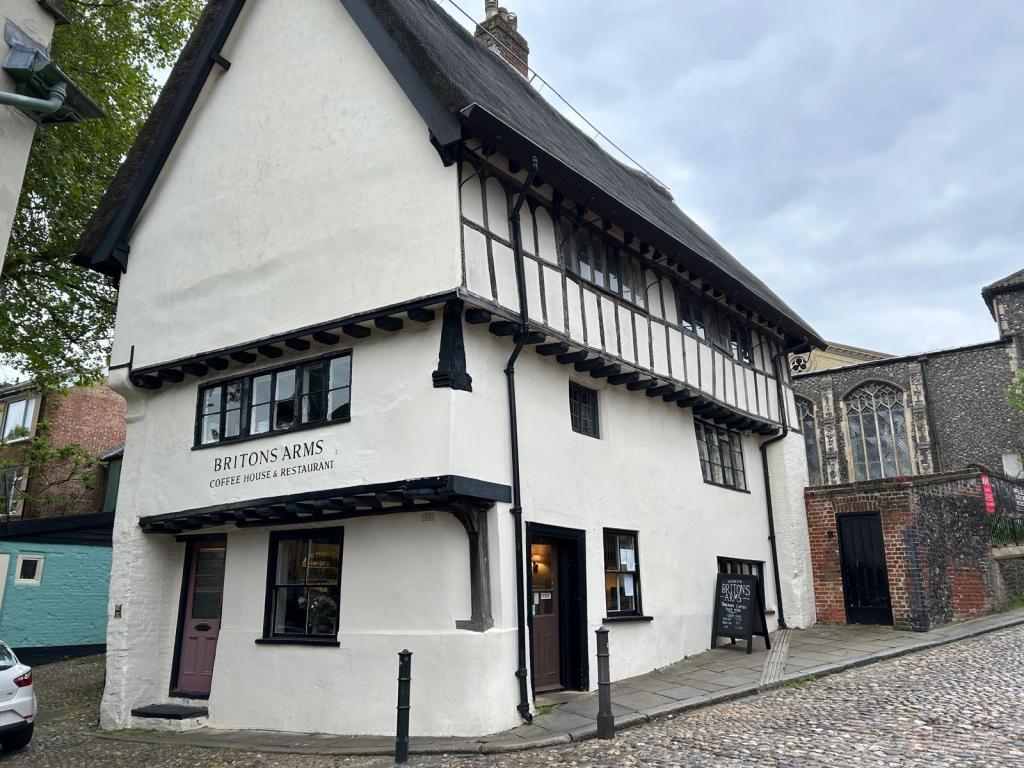
One of the best meals of our holiday was had in this gracious medieval building, the Britons Arms. In the early C15th this was a ‘Beguinage’, a community of lay single women who devoted themselves to a life of prayer and charitable work. Today its secular tenants create some great dishes cooked with care and skill in the most relaxed and ambient of settings.
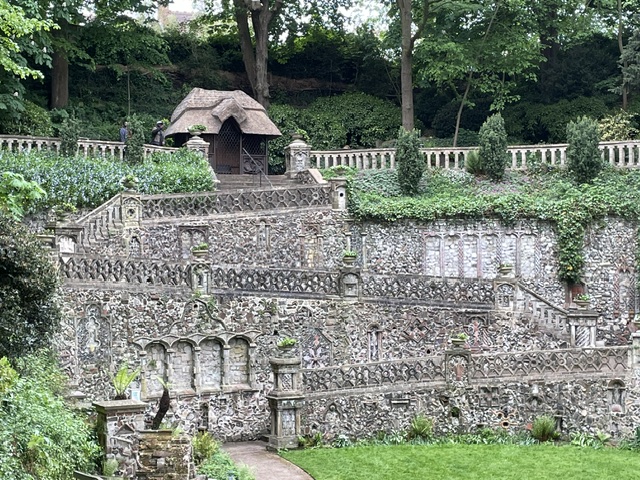
Taking a break from matters medieval, we stumbled upon a hidden gem, the Plantation Garden, situated just outside the centre. It’s a redundant chalk pit lovingly fashioned in the second half of the C19th into a charming green oasis by local businessman Henry Trevor, often re-using redundant building material in the process. The villa he had built as his family home overlooks the tree bordered steep sided three acre spread.
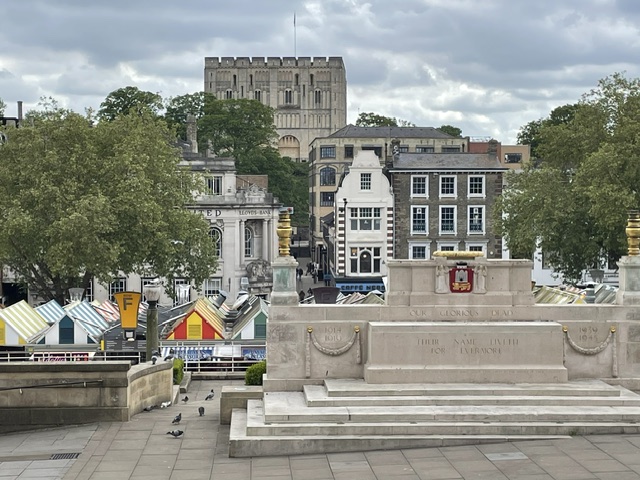
And finally…the steps of the C20th Art Deco City Hall not only give a fine view over the permanent market to the castle keep beyond but also yield overlooked sights of their own.
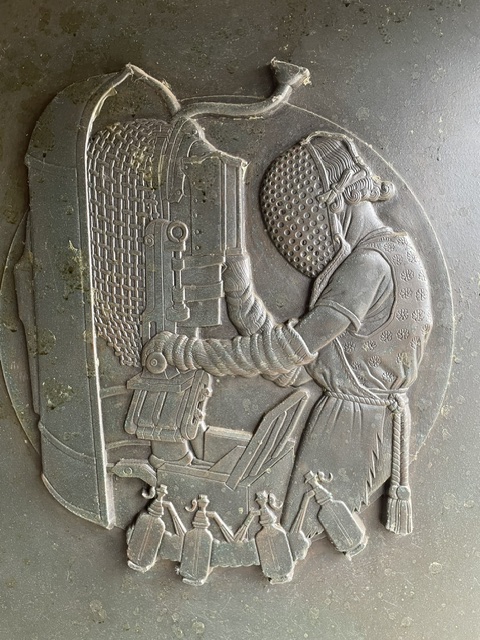
18 large round plaques grace the great bronze doors of the hall, chronicling Norwich’s history and its diverse businesses… I particularly liked this one of the former soda works.
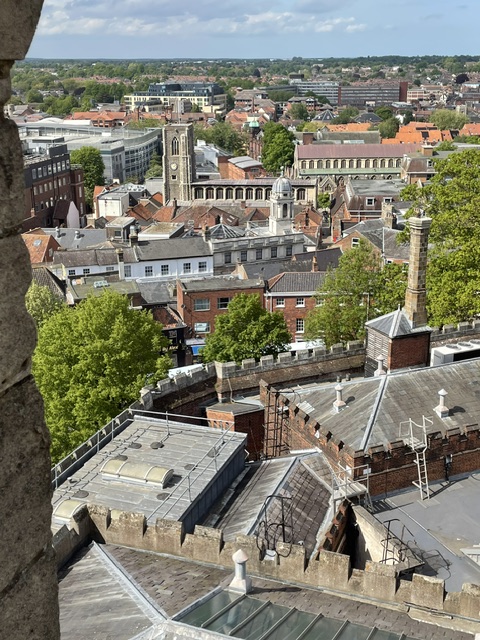
We only saw a fraction of what Norwich has to offer and would gladly return to experience more. With a medieval church round every city centre corner, a maze of lanes and alleys, a wealth of business large and small, independents and chains, with its universities, museums and the wider cultural offer its civic star is rising. May its light continue to shine.


