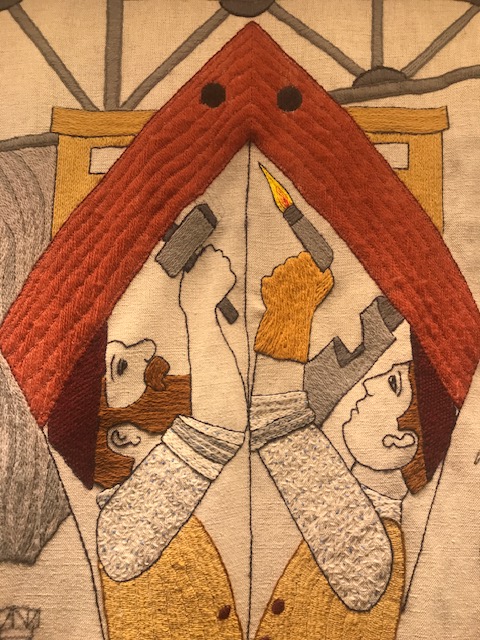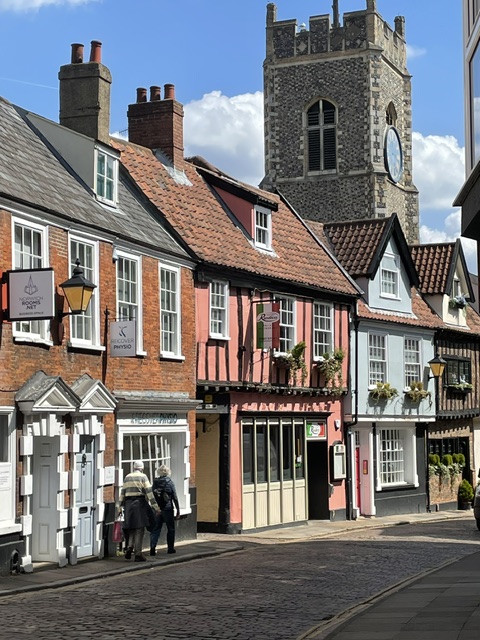
Star of the East

Country dwellers like us could take a shine to any city that presents like East Anglia’s regional centre. The centre of Norwich feels more like a town than a metropolis, retaining ancient street patterns while much new building complements the old. Following the trend of breaking  identity down into quarters also suits it well. We stayed two nights at the Maids Head, a venerable independent family hotel, right in the centre. The inhouse hire offer of Bentleys and bicycles must be unique.
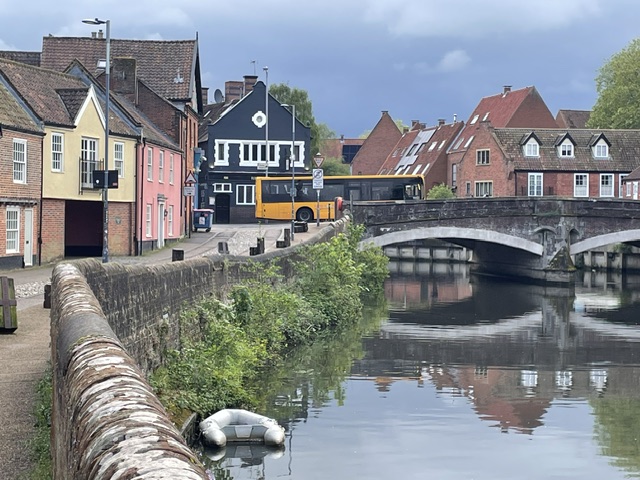
From this base on Tombland (Old Norse for ‘open ground’) we took an evening stroll along the quayside that skirts the encircling River Wensum, from Fye bridge to Pull’s ferry. Thanks to the demolition of the former city gas works in recent times that stretch of riverside path is now continuous.
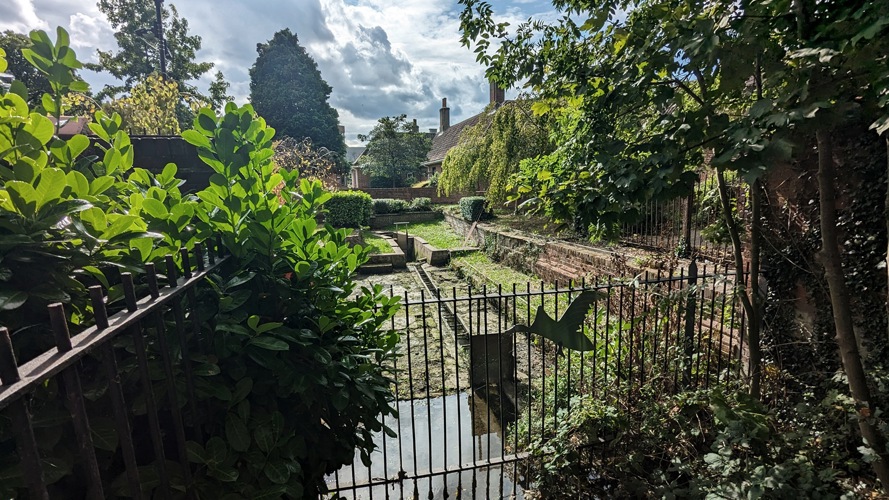
Curiosities here included seeing the remains of a sluice gate and swan pit. With their wings clipped the birds were once culled for feasts at the neighbouring Great Hospital. Formerly part of a monastery and still linked to the cathedral, it continues its caring role as a sheltered housing complex – minus the swan diet.
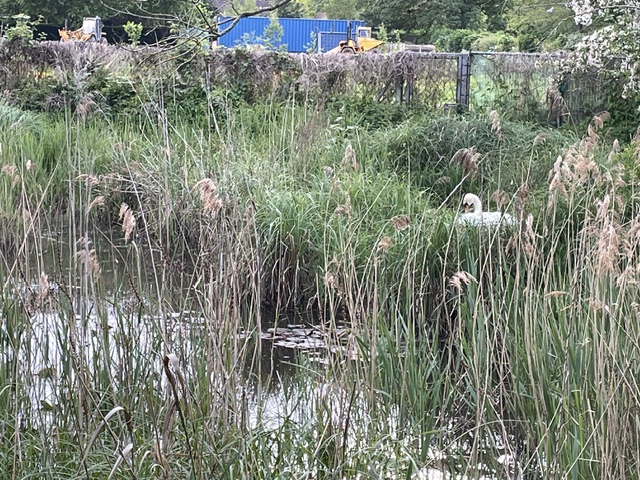
We watched a male bird waddling along the path while his mate sat on a nearby nest in the reedy corner of a fenced off pond.
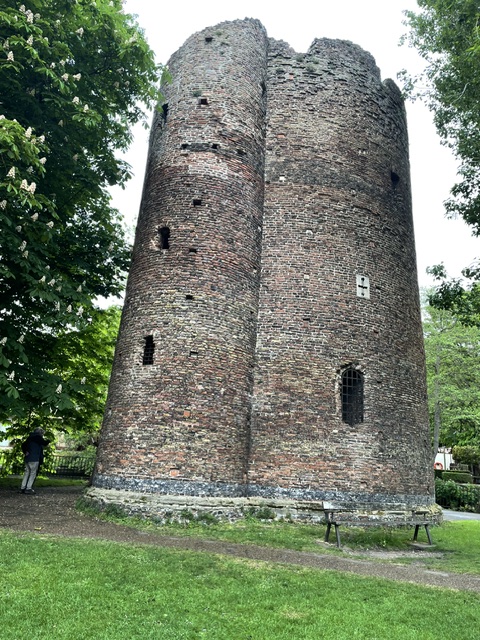
Cow Tower (c.1398) is an early example of an elevated gun battery set on a bend in the river. Originally part of the medieval city wall, it  looms up as a flinty floorless finger against the tranquil watery scene below.
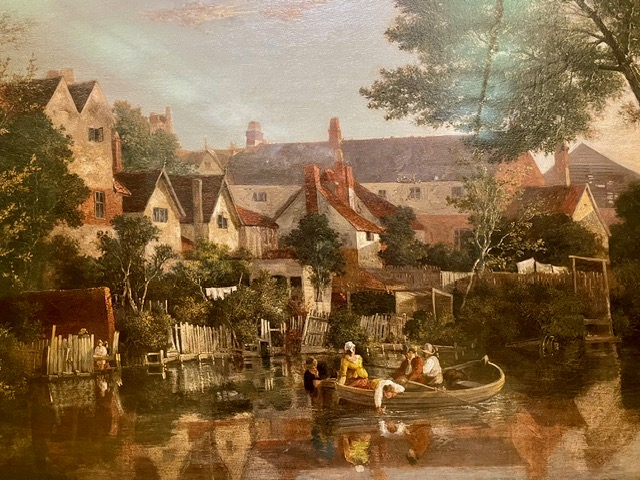
Later, in the castle, we’d see the work of Romantic era artists from East Anglia like John Sell Cotman and John Crome. Here’s Crome’s bucolic summer view of the riverside hereabouts in 1819.
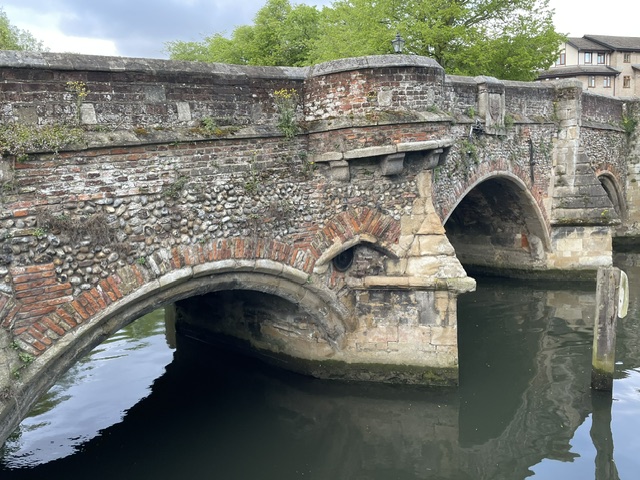
Bishops Bridge is a striking original structure of stone and brick, dating from 1340. The oldest span over the Wensum and once a major portal in the settlement’s walled defences. Terraced housing and small houseboats moored on the opposite bank give a peaceful counterpoint to passing traffic. A reminder of navigation that brought boats back and forth to the city’s teeming quays, helping Norwich develop as a major population centre of medieval England. Home to a thriving nexus of craftsmen, artisans and merchants.
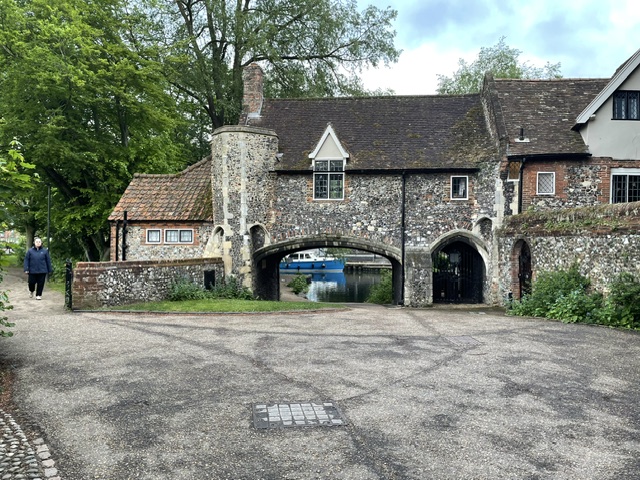
The stone used to build Norwich cathedral was imported  all the way from Caen in Normandy. To accommodate that final leg a short canal was dug here in the 1090’s, linking waterway to building site. Now long filled in we passed under the overarching ferryman’s house heading along the cut’s former course, now Ferry Lane, to the Cathedral close.
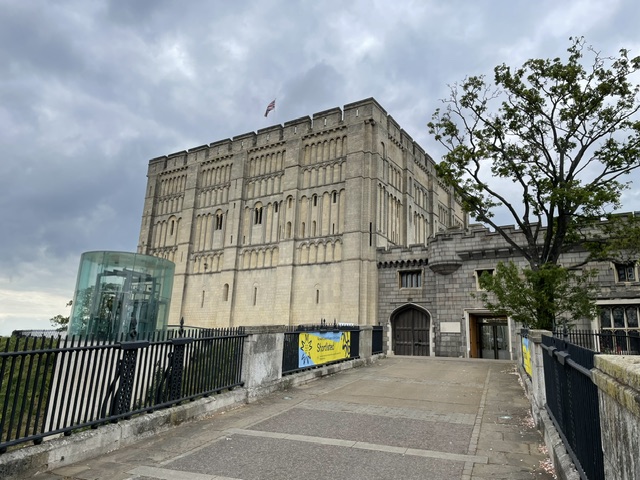
Next day found us digging further the city’s rich Norman legacy. From the newly refurbished castle to that imposing cathedral. The medieval splendour of the roof bosses in the cathedral is something to behold (preferably with binoculars!) Deeply impressed with the degree of visual narrative power so cleverly compressed in those vivid stone roundels.
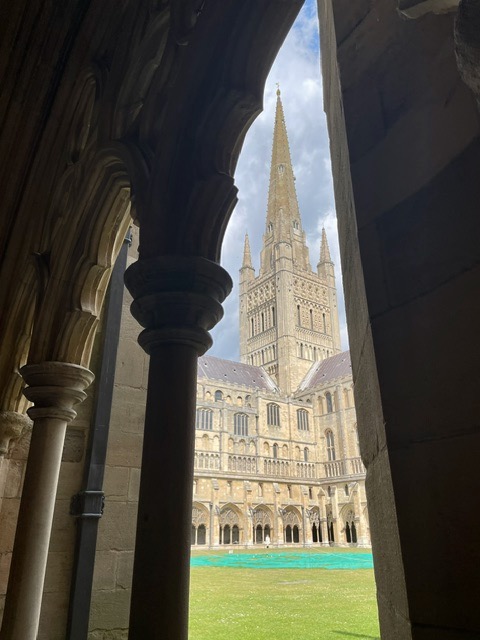
The bosses were incorporated into the new stone roof of the late C15th. Yet for most of their existence they have been hidden from view, whitewashed over from the Reformation until late Victorian times. In 1932 they got repainted in their original bright colours.
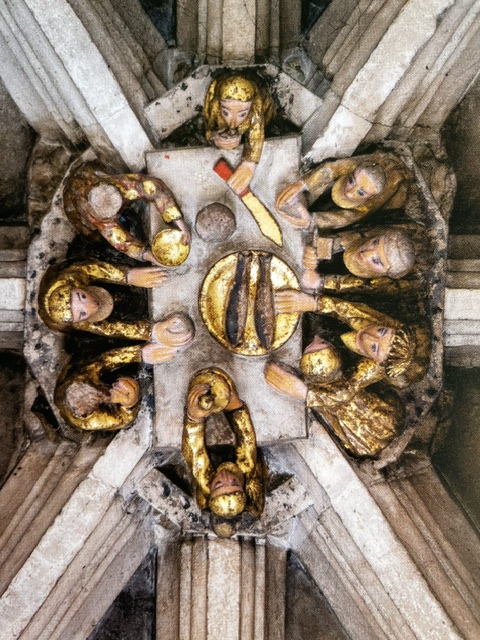
An extraordinary achievement, 255 in total, looking down from on high above nave and choir, depicting biblical scenes and characters, from the Creation to the Last Judgement. I wondered if the much loved mystery plays performed by trades guilds through the streets of Norwich and other big towns had  inspired the stonemasons in their turn.  
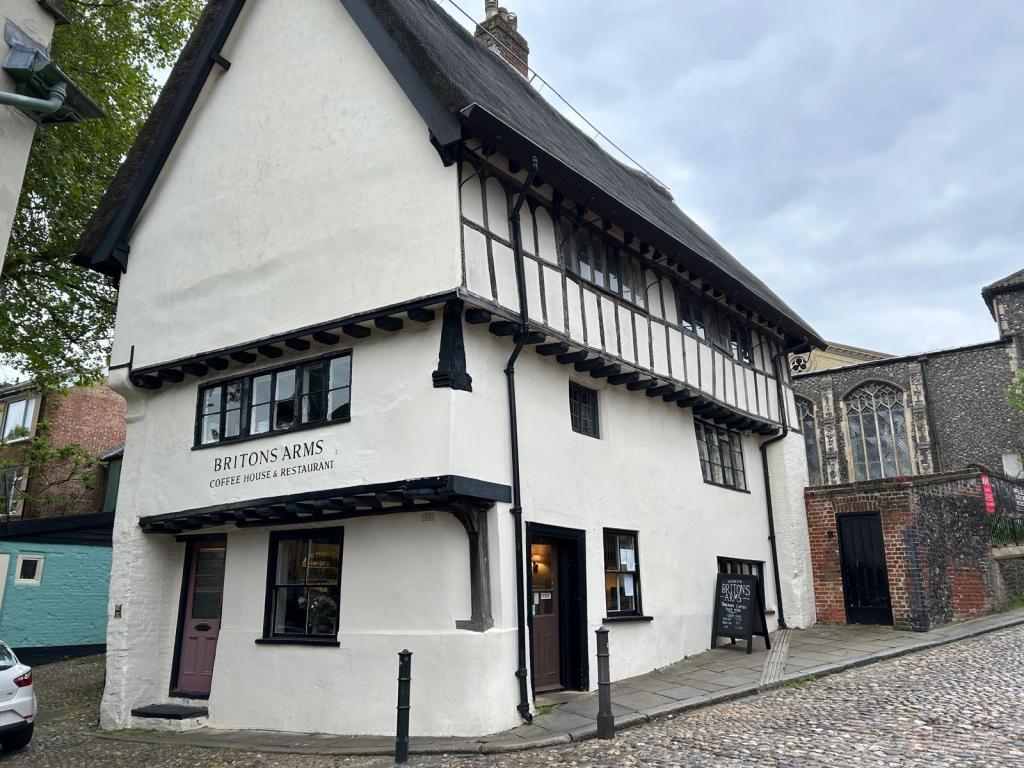
One of the best meals of our holiday was had in this gracious medieval building, the Britons Arms.  In the early C15th this was a ‘Beguinage’, a community of lay single women who devoted themselves to a life of prayer and charitable work. Today its secular tenants create some great dishes cooked with care and skill in the most relaxed and ambient of settings.
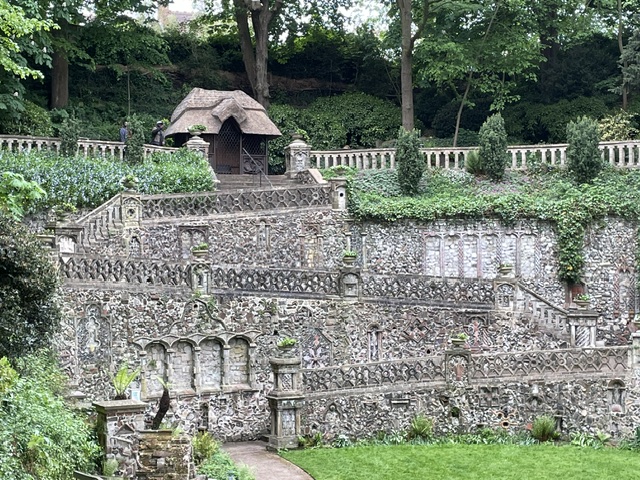
Taking a break from matters medieval, we stumbled upon a hidden gem, the Plantation Garden, situated just outside the centre. It’s a redundant chalk pit lovingly fashioned in the second half of the C19th into a charming  green oasis by local businessman Henry Trevor, often re-using redundant building material in the process. The villa he had built as his family home overlooks the tree bordered steep sided three acre spread.
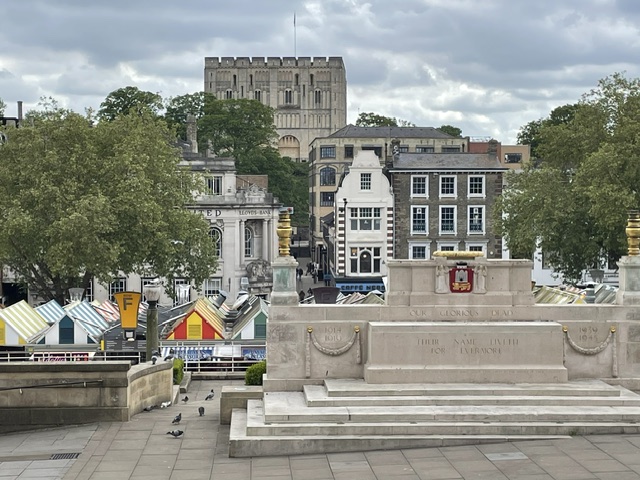
And finally…the steps of the C20th Art Deco City Hall not only give a fine view over the permanent market to the castle keep beyond but also yield overlooked sights of their own.
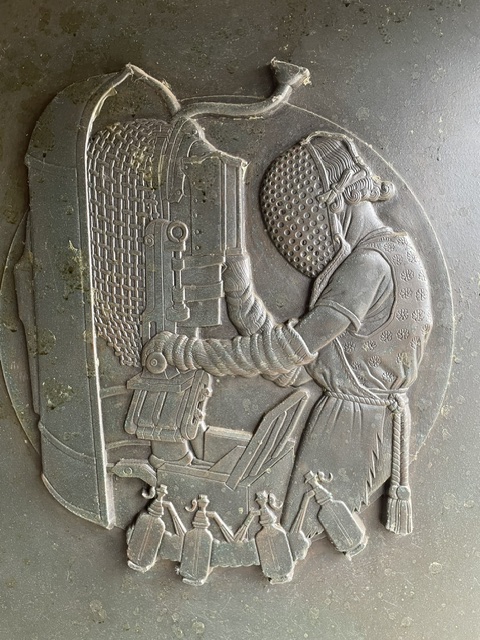
18 large round plaques grace the great bronze doors of the hall, chronicling Norwich’s history and its diverse businesses… I particularly liked this one of the former soda works.
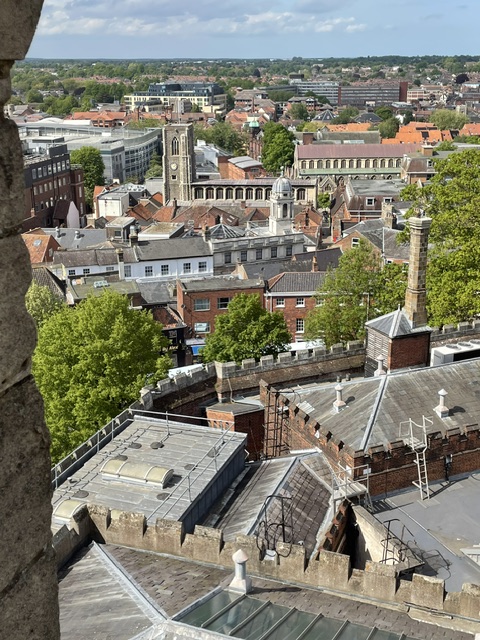
We only saw a fraction of what Norwich has to offer and would gladly return to experience more. With a medieval church round every city centre corner, a maze of lanes and alleys, a wealth of business large and small, independents and chains, with its universities, museums and the wider cultural offer its civic star is rising. May its light continue to shine.
Castle Acre

Bare ruin’d choirs, where late the sweet birds sang. ( Shakespeare: Sonnet 73)

On the road to Norwich to start our East Anglian holiday we stopped off in north Norfolk to explore Castle Acre. It’s a quiet spot embedded into a rolling landscape of arable chalklands, woods and shallow valleys. But today the air was riven by the passing sorties of fighter planes. A reminder that American jets stationed at nearby RAF bases are actively involved in that country’s current conflict with Iran.
It was military conquest following the battle of Hastings that brought a veteran of that regime changing conflict, William de Warenne, to these parts in the 1080’s. He and his successors planned and built a whole new settlement consisting of priory, village, parish church and castle. Their main seat though remained at Lewes in Sussex.

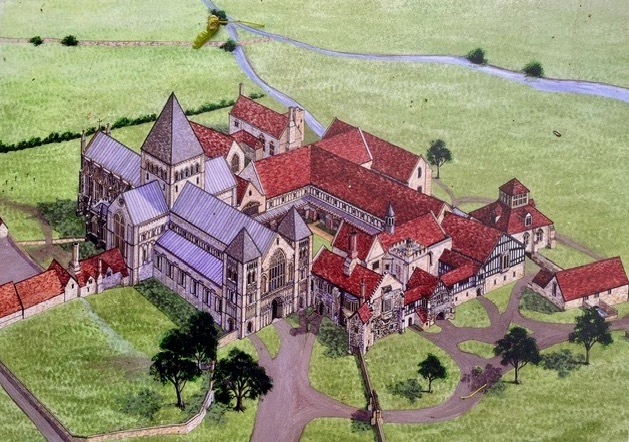
Artist’s impression of Castle Acre priory as was

Today the impressive remains of priory (dissolved at the reformation in the 1530’s) and castle (abandoned by the 14th century) stand either side of a well to do pretty village complete with pub, teashop and convenience store.

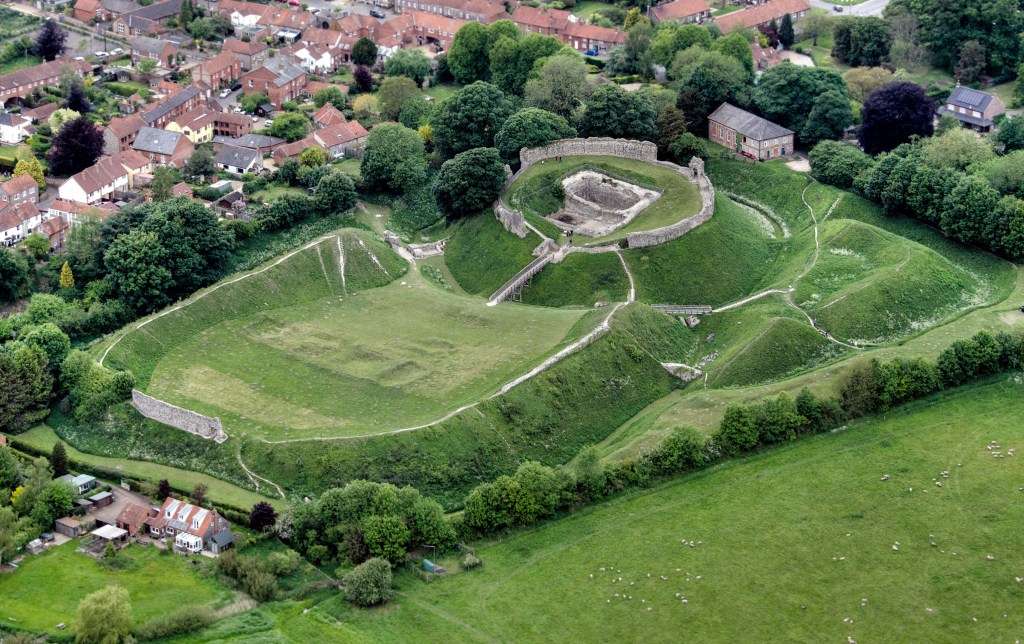
Castle Acre castle site: Source – Wikipedia

Arriving in this region you notice just how much flint is in evidence as building material, alongside other local stone and timber frame. The historic remains are in the care of English Heritage while the estate lands that surround it remain with the Coke family, earls of Leicester, landowners since the mid 17th Century. We noticed they were following the national trend in rewilding parts of the land, especially around waterways and hedgerows.

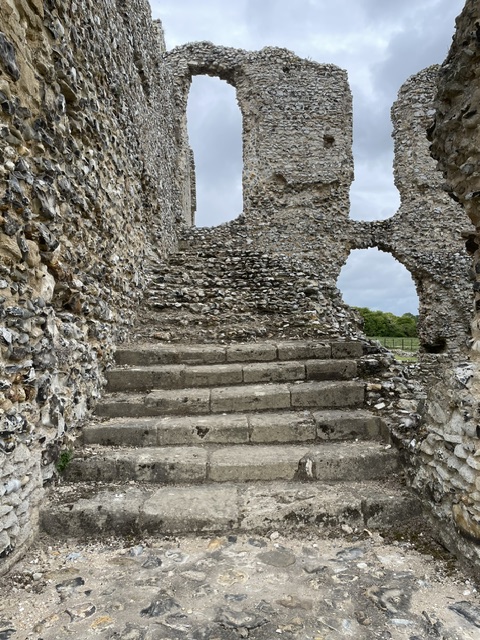
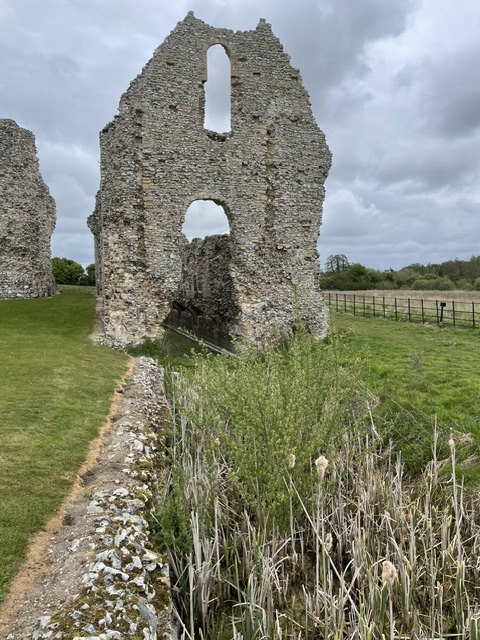
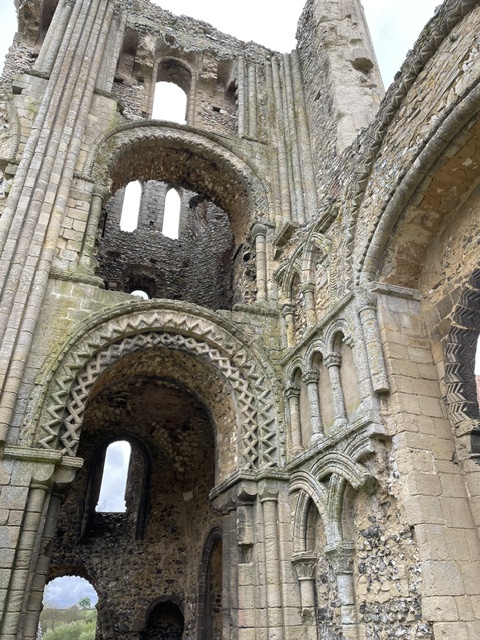
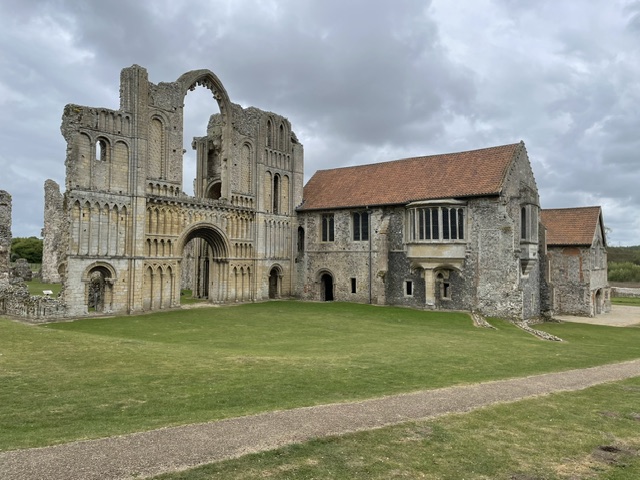
The priory was a wonder to discover as the ruins are so extensive and allow you to build a coherent picture of it as the grand self-contained community it once was. On entering the grounds you’re immediately struck by the C.12th west front facade of the church and  tower. The adjacent west range was the guest house for important secular visitors. We then ascended stone stairs to the Prior’s chambers, which includes a well-lit hall and private chapel.

These sections of the priory  were always roofed, unlike the religious buildings which were ruthlessly stripped following dissolution for their valuable construction material. It became a farmhouse and stores with the former priory ruins and meadows grazed by stock or otherwise farmed. In the  C.18th and C.19th growing appreciation of the picturesque and further interpretation and recording by antiquarians and artists allowed the Castle Acre complex to be seen in a new light and by 1929 the government  Ministry of Works were allowing visitors regular public access to both priory and castle.

Of the ruined complex, largely stripped of dressed facing stone, the most evocative are the parts that betray human interaction, like the well-worn stairs that led up to the monks dormitory, where the brothers slept in their robes of black and white. The reredorter (literally, ‘at the back of the dormitory’) is a narrow two story building which was used on an industrial scale as a latrine block. Underneath is a watercourse designed to carry the waste away.

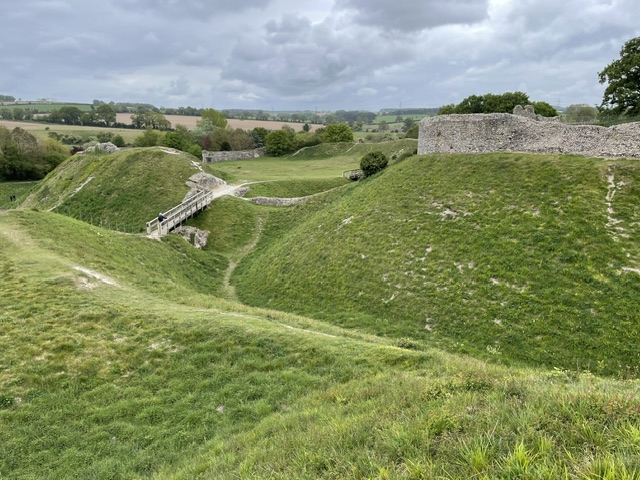
The castle footprint is huge, with steep embankments, ditches and motte. The De Warenne’s first buildings however were a relatively modest affair set within the outer defences.

It was only later, in the C13th civil wars that raged between nobles supporting the rival claims of Matilda and Stephen to the English throne that it was rapidly transformed from fortified house to full scale fortress, with barbican and inner bailey additions.

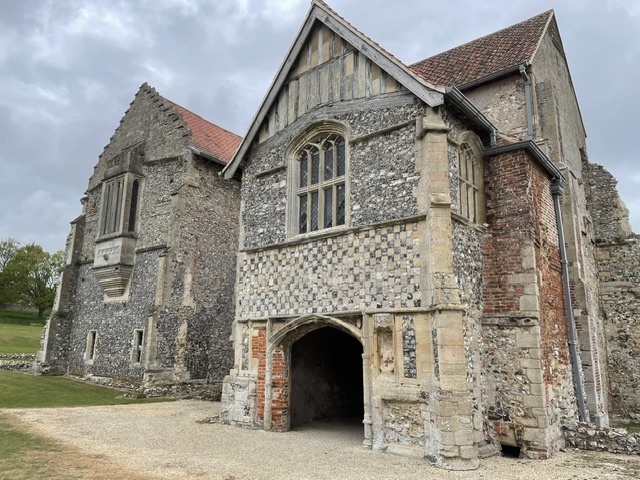
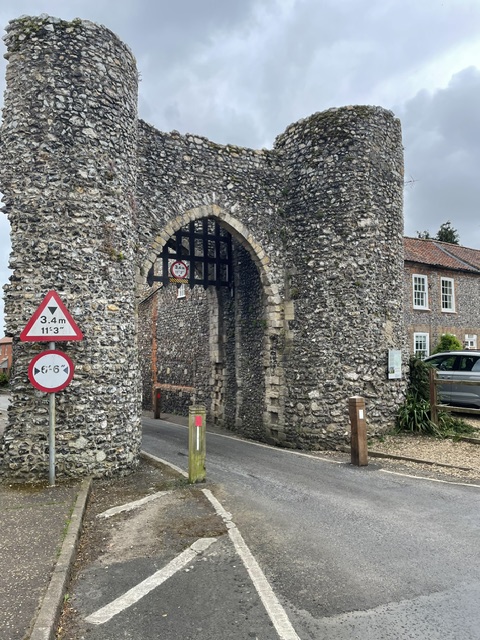
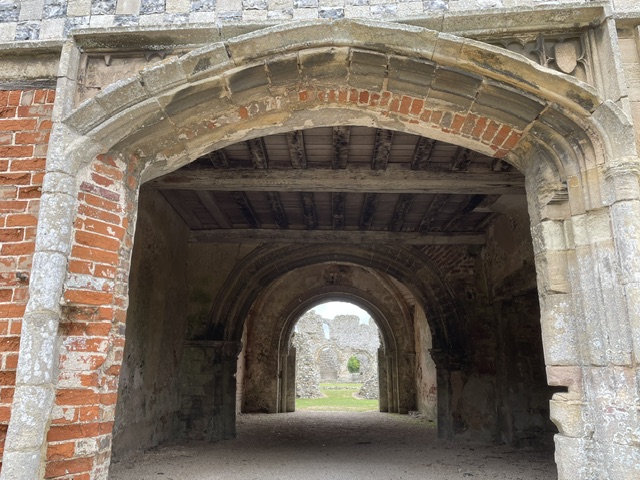
That protection stretched to an outer town wall and a bailey gate entrance, through whose narrow archway we carefully drove on entering and departing.

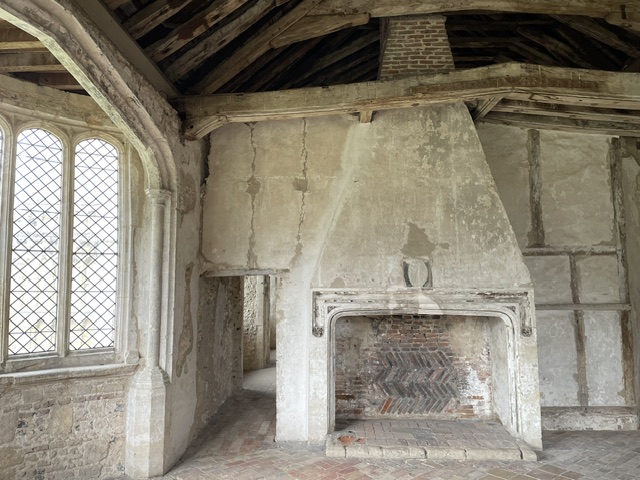
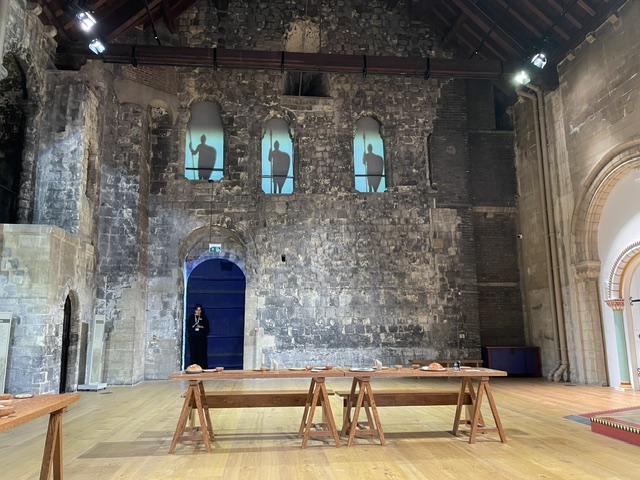
Norwich Castle Great Hall

In Norwich we were impressed with the multi-million pound makeover of the great Norman castle (or rather the remaining keep) which has been five years in the making and feel it would make for a worthy winner of this year’s ‘Museum of the Year’ award. The great hall would have been similar to the De Warenne’s eventual fortress creation at Castle Acre.

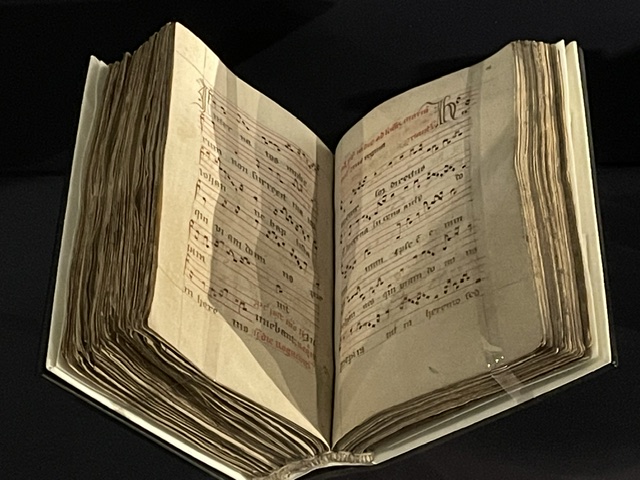
Two exhibits displayed in the revamped medieval treasures display pertain to Castle Acre. This C15th parchment chant book, made and used by the Castle Acre monks, is  of vellum (calfskin) oak and leather and small enough to be held in the hand. It’s complete with instructions (in red) for use in services as the brethren processed through the priory on different feast days throughout the year. The Cluniac order, founded in the French town of Cluny in the  6th century, strictly followed  the rules set down by St Benedict, but was also renowned for a love of art and decoration, which would have resulted in the walls of their establishments being brightly coloured and expressive.

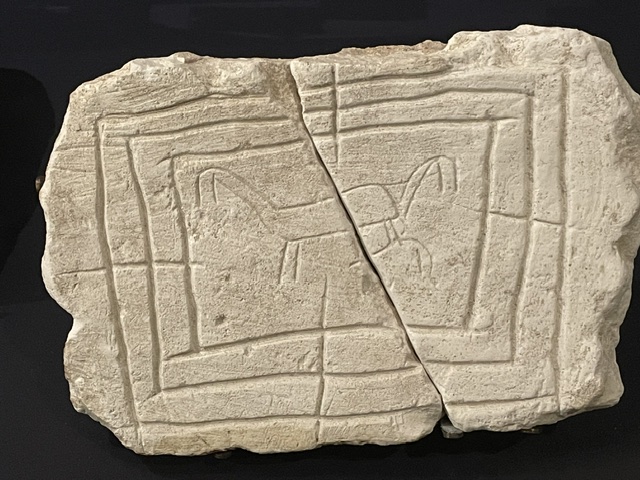
There’s a timeless quality to this simple board game of Nine Men’s Morris made of chalk with horse motif, found at the castle in Castle Acre. Two players try to place three of their counters in a row, allowing them to remove one of their opponent’s pieces. Whoever removes enough of their opponent’s counters to prevent them from moving is the winner.

Castle Acre is a fantastic place to get an idea of how the temporal and spiritual life of a rural medieval planned settlement would have appeared. Well worth a visit, especially at mid-week when we were only two of a handful of visitors at the priory. More at https://www.english-heritage.org.uk/visit/places/castle-acre-castle-acre-priory/

Bussaco

‘Bussaco Forest cannot be described, the best is to get lost in it.’  Jose Saramago

Having been told about the Bussaco National Forest by my cousin who had visited recently we were keen to discover it for ourselves during this holiday. An hour and a half’s drive from base by good main roads and testing twisters through mountainous foothills led us to this unique walled in world, one of the botanical wonders of the Iberian peninsula.

We entered from the spa town of Luso via the Serpa gate, one of 11 gateways that punctuate the 5 K (3.1 mile) boundary wall. Only mildly alarmed when the keeper in her lodge warned us that walking any distance into the forest from the centre was entirely at our own risk due to the heightened possibility of wildfire outbreaks.

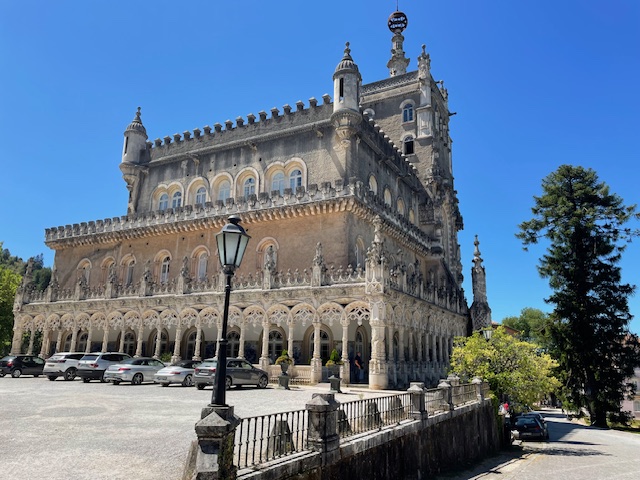
It would have been no great hardship to have spent our time in and around the park’s historic centre, which consists of a former royal palace cum luxury hotel (below), monastery, now a museum (above), formal gardens, café and visitor centre. 

Although Bussaco was originally an early 7th Century Benedictine foundation the one we see today was established by the more austere Barefoot Carmelite order when they took stewardship of the buildings and park in the early C17th.

The brothers zealously set about gradually replicating the Holy Land’s Mount Carmel at Bussaco as a kind of desert, blending nature with God’s spiritual estate.

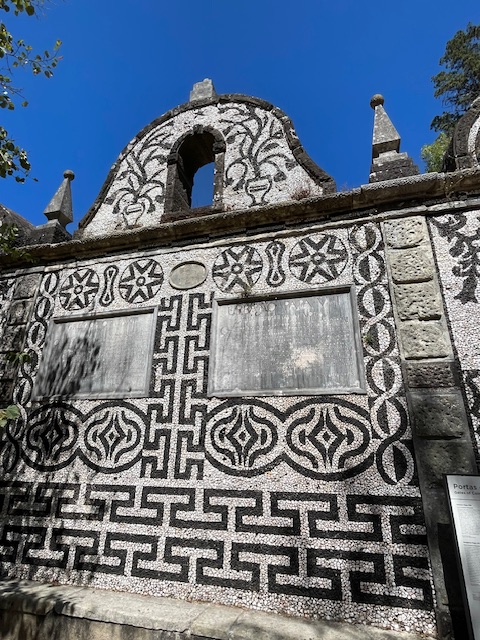
Many of their structures have exteriors distinguished by tessellated designs fashioned from quartz and adhesive tar while the interior of their monastery have coverings of native grown cork freely utilised to insulate walls ceilings and doors against winter cold.

The brothers ordered existence was rudely disrupted in September 1810 when the Duke of Wellington, commanding a combined mass of 50,000 Anglo Portuguese troops, based his command post in the monastery, using the monks cells for offices.

The British general’s army defeated Marshall Massena’s French forces here at Bussaco, halting their advance on Lisbon, a turning point in the country’s campaign of liberation from Napoleonic invasion.

The adjacent royal palace was built between 1888-1905 on part of the demolished monastery. Since 1910 and the fall of the monarchy it has been a luxury hotel, one of the finest in the land. Its initial architect, the Italian Luigi Mantini, also designed sets for grand opera, and it shows. What a brilliantly grand statement of opulence it makes to the world.

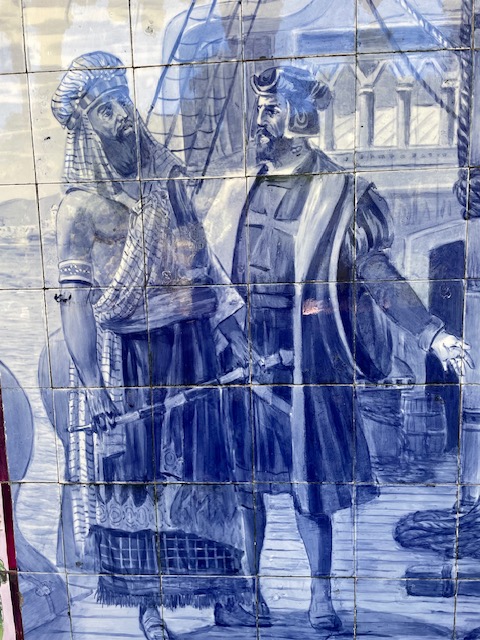
The obliging hotel receptionist let us take a look around the sumptuous ground floor. Large scale blue and white azulejos (tiles) decorate walls and stairs, some displaying the battle of Bussaco and others scenes from Portugal’s ‘Age of Discovery’ in the late 15th and early 16th centuries. At that time Portugal established its maritime trading outposts, stretching from Brazil to southern Africa, Goa in India to Macau off the coast of China.

The formal gardens provide a graceful unifying setting for the two contrasting buildings, although box blight and a certain faded glory added to a suitable sense of gentle decay.

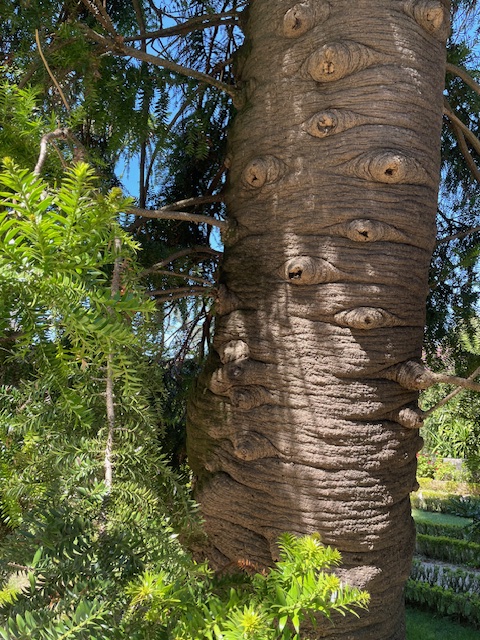
The arboretum remains the true natural glory of the place. Some 400 native trees and shrubs grow alongside 300 specimens brought back home as the result of colonisation and exploration. Mexican Cypress, American redwoods, Chilean pines, many oaks, laurel, holly and ferns to hundreds of Camellia species are set around walks, steps, ponds, fountains, statues and other formal features – we saw just a fraction.

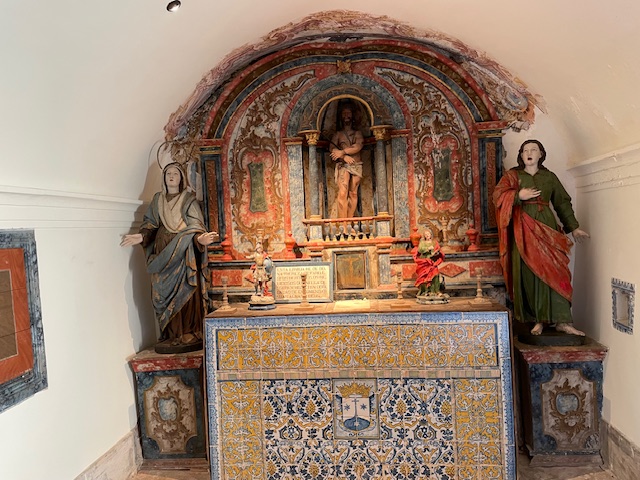
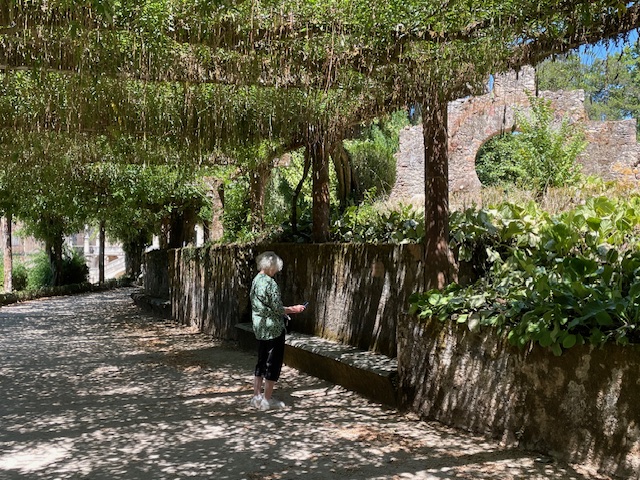
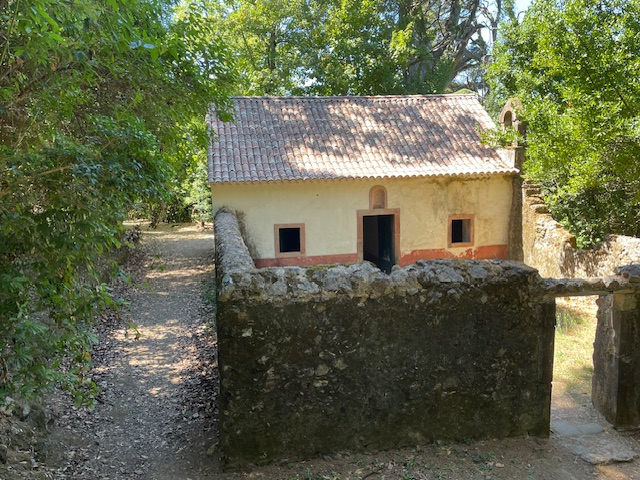
Leaving the formal gardens  for an upper woodland walk, we found ourselves on the Via Crucis- a lane of dappled shade linking enclosed stations of the cross – eventually leading to a purpose built hermit’s house with enclosed yard, now an empty shell, one of three around the domain.

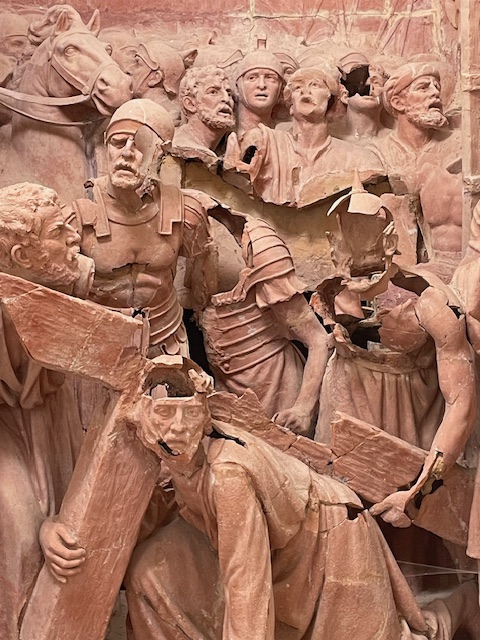
The stations house life size red clay tableaux, vividly recreating scenes from the passion of Christ. Hermit retreats and devotional stations were originally set up by the Carmelite monks shortly after they  took over the estate in 1628.  A number seemed to have suffered damage, adding an unintentional modern feel of abstract dislocation to the dramatic scenes of heightened emotion.

Later learned this damage was caused by a particularly violent storm that struck the area in January 2013, severely affecting both buildings and trees and recovery has been hampered by lack of funds and resources. The state took over Bussaco when Portugal’s monasteries were dissolved in 1834, and today managerial responsibility lies with a charitable foundation, which has had to fundraise widely to painstakingly restore the place.

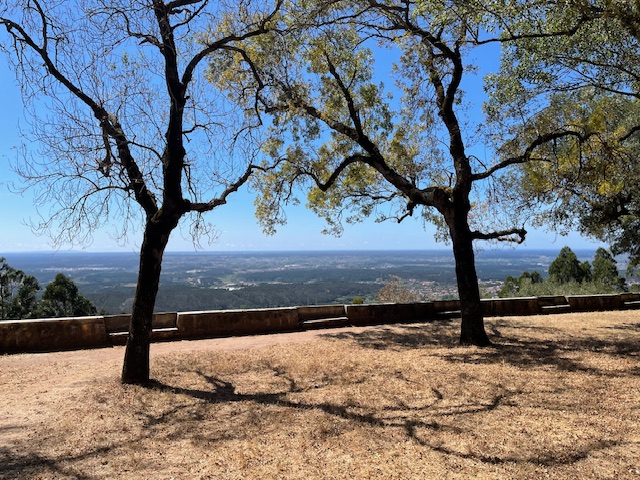
Our stroll took us to another entrance way – not accessible to traffic – the Coimbra gate which yielded surprise vistas beyond the canopy, across the wide plain, to the Atlantic coast.

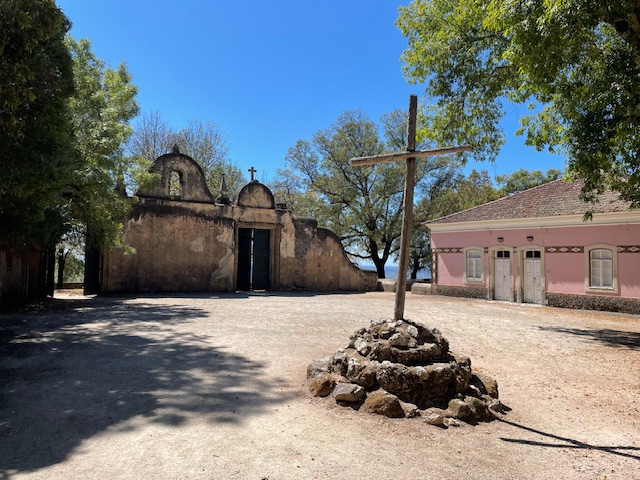
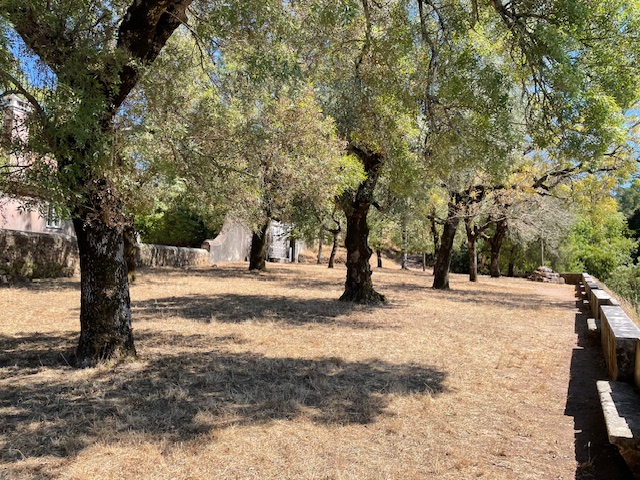
Lingered by the great doors, now ajar, and the currently unoccupied lodge house (sometime holiday accommodation) with its pink washed walls. Wondered at the wall sign, a papal bull of 1623 forbidding, on pain of excommunication, the felling of trees within the walls or the entry of women!

Historical misogyny apart, I warmed to this early attempt at nature conservation. An atmospheric spot inviting reflection and ease, one where time seemed to have stood still. Stepping out on to the terrace in the full glare of the sun, the bone dry brown grass  crunched loudly underfoot, providing a reminder of the gatekeeper’s words on arrival.

Popular with the Portuguese themselves for its cultural and botanical importance, though less well known to foreign visitors, the Mata Nacional do Bussaco lives up to its reputation, inviting a return to sample further corners, in another season.

Stitch in Time

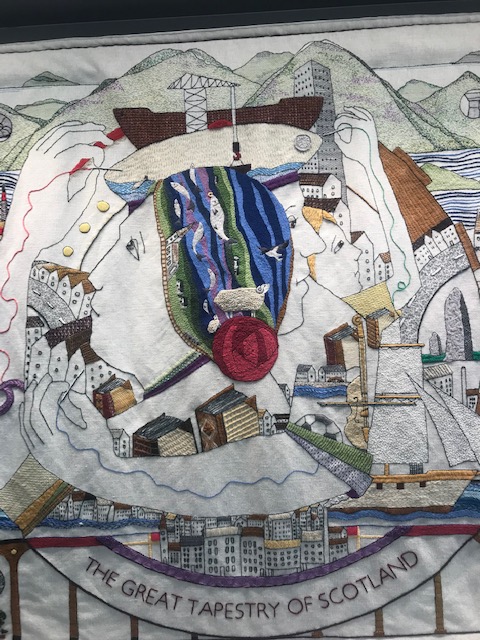
In an hour and a quarter we are over the border into Scotland and our destination of Galashiels. Glad to sense the place looking brighter and more uplifted than on previous visits 15, 20 years ago. The textile industry was once the area’s biggest employer – as many as 20 mills, mostly water-powered, flourished here at its peak in the 1880’s. Those businesses that remain today have had to specialise to survive and the area remains famous worldwide for its tweed and tartan production. A fitting place then to give a home in 2013 to the peripatetic 21st century popular artwork known as The Great Tapestry of Scotland.

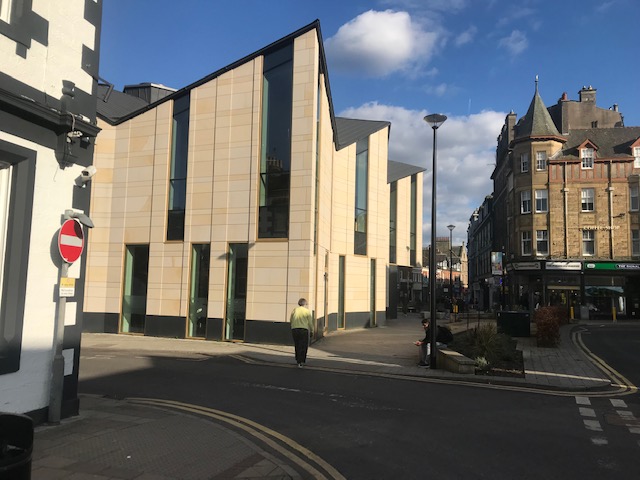
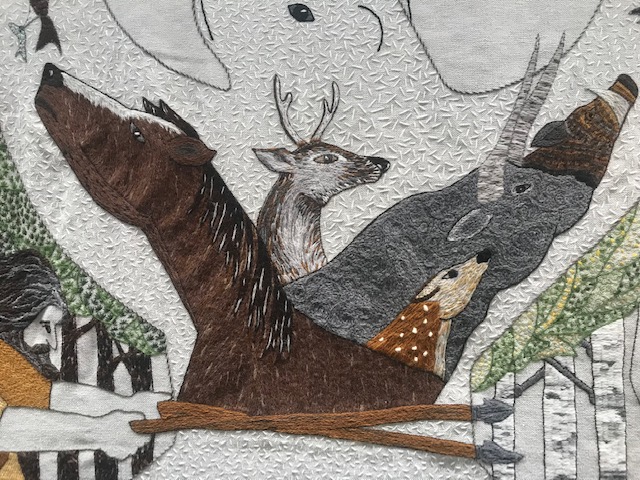
We didn’t quite know what to expect so were delighted to be immersed in what was on offer in the purpose built visitor centre standing proudly in the town centre, which opened in 2021. Having lunch at the friendly café broke down the hours so we could more realistically take in the 160 panel display. It splays across a spacious light filled first floor, depicting Scotland’s story from  prehistory to the opening of the new  parliament building in 1999.

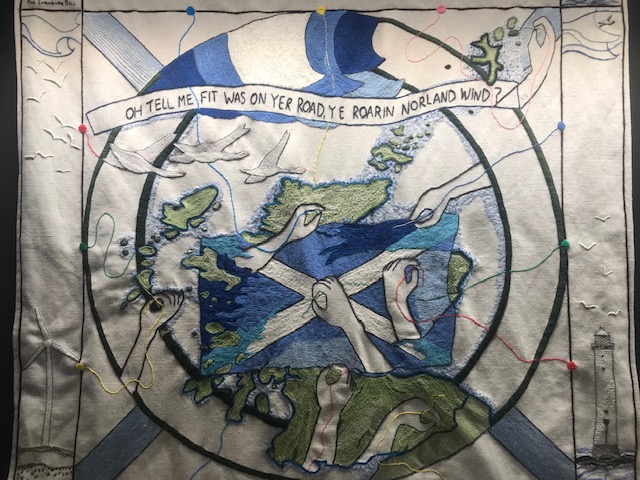
Most panels are a metre/3’ 3” square and because they are not glassed over they appear even more immediate and fresh in their depictions of people, places and events, divided into seven triangular shaped time zones. The whole work stretches for 143 meters/ 469 ft. Informative brief text beneath each work with maker credits.

We are struck by how truly this is a people’s project, reflecting all that’s good in the character of the Scottish nation. A meritorious, interconnected, life affirming achievement. The combined work of a thousand volunteer stitchers in a range of community groups from Galloway to Shetland who put in some 50,000 hours of sewing using 300 miles of yarn. The movers and shakers of this national project were the author Alexander McCall Smith, artist Andrew Crummy, historian and broadcaster Alistair Moffat and head stitcher Dorie Wilkie. Between them they set framework for the stitchers to create and their formidable teamwork got the show on the road – literally!

Having the leisure to view the work in such a wonderful permanent setting opened new perspectives on our neighbouring land. This engaging way of presenting that narrative – of individuals, movements, beliefs through a unique synergy of history, culture and art – makes you wonder what an English, Welsh or Irish equivalent would look like. How would they define and reflect themselves through this form of craft based storytelling?

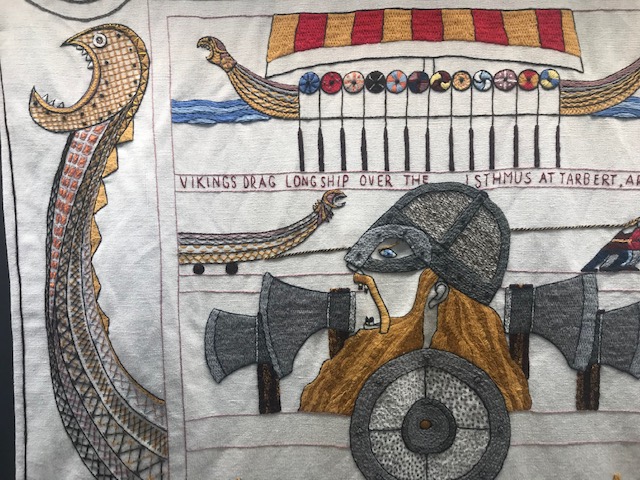
Scenes of conflict and warfare are vividly played out here. The sacking and pillaging of Holy Island in AD 793 in the Kingdom of Northumbria marked the arrival on these shores of the dreaded Vikings in their dreki – dragon ships. Subsequent colonisation along the Scottish coast saw these remarkably adaptable boats being hauled across narrow necks of land between inlets, giving rise to the place name ‘Tarbert’.

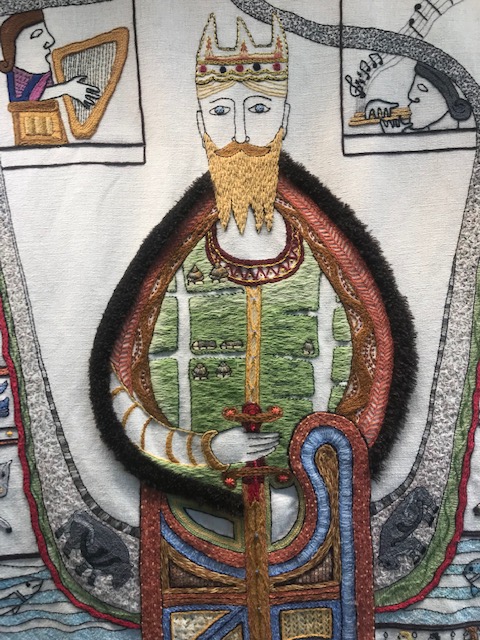
‘Is this a dig at the Bard I see before me?”…One particular panel reminds us how the genius of dramatic licence can run counter to historical truth. The real life Macbeth who ruled in the 11th Century and the character created by Shakespeare to flatter Scots King James 500 years later could not be more different. Macbeth was King of Moray, defeating and killing King Duncan of Alba in battle to become King of Scotland in 1040, ruling unchallenged for another fourteen years. A contemporary source tells of of ‘the red, tall, golden haired one…Scotland will be brimful west and east during the reign of the furious red one’  and that physical description gives character definition here.

Another tableau I liked was the one depicting the Invergarry ironworks. Here in the 1720’s the Englishman Thomas Rawlinson, a Quaker industrialist from Lancaster, encouraged his workforce to adopt a shorter kilt for work purposes. The body wrap style of traditional highlander wear being too encumbering otherwise for industrial labour. A new form of Scottish dress that would eventually become standard wear.

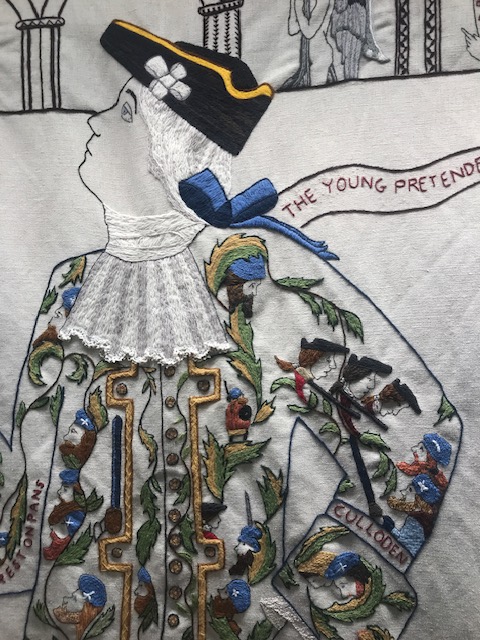
The Jacobite uprising of 1745-6 and Bonnie Prince Charlie’s role in it is a familiar narrative, poignantly and powerfully expressed here in a poignant bitter-sweet design as a ‘vine-line’ linking romanticised landing in Eriskay to final devastating defeat at Culloden.

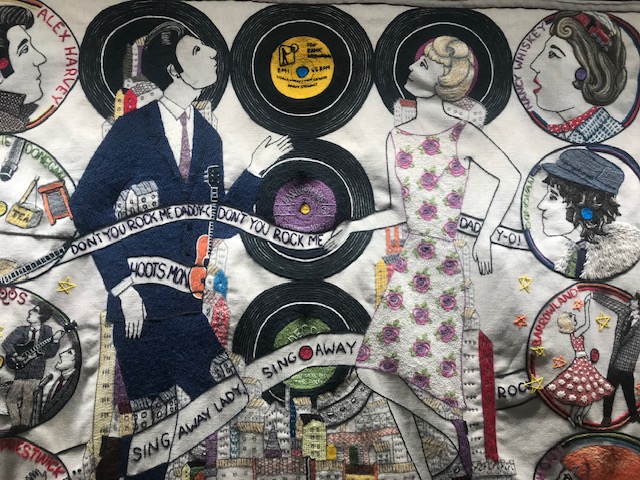
There’s wit and humour running through the whole exhibition, and that gets more pronounced as the later 20th century chapters unfold with the increasing importance of the arts and popular culture in enriching the national picture, from major festivals to all forms of media .

The exhibition demands a return visit so we no doubt will be back. A great day out for us as borderers on the English side and essential viewing for anyone with an interest in Scots history, art and culture. If you’re planning a visit yourself there’s more info here: http://www.thegreattapestryofscotland.com