Lodes, Rodes and Sedge

There’s some quiet magic at work when you enter the world of Wicken Fen. Coming from the England of stone walls, fast streams, lush valleys and high moors I’ve nursed a lifelong need to sample the exact opposite. Finally I got the chance to do just that, in this corner of Cambridgeshire, where  horizontal and vertical combine to define new perspectives and land and waterways interact on different levels under a carapace of yawning skies.
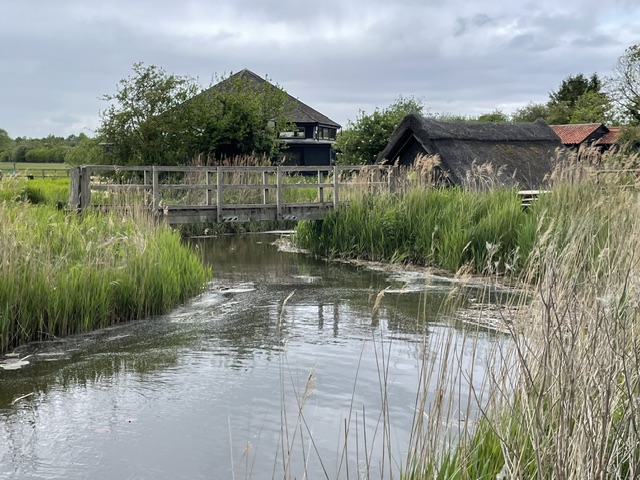
Wicken is a complex interrelated wetland that is England’s most species rich nature reserve, as well as being its most studied. This National Trust site welcomes some 70,000 visitors annually; not that it felt at all crowded on a midweek day in May. Quite the opposite!
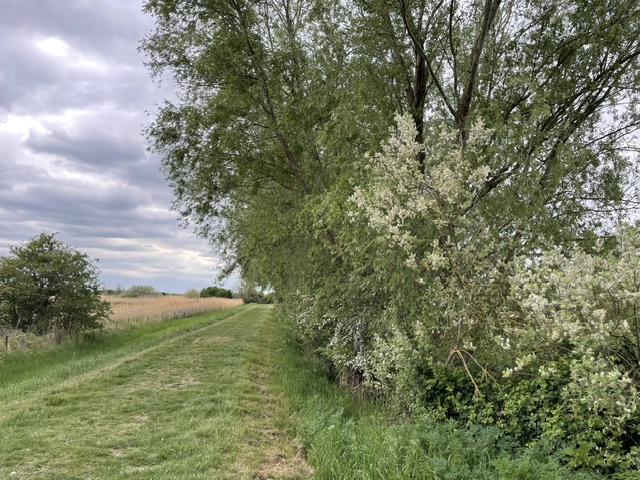
Over 2,000 years Romans, Normans, Medieval monks, Stuart Merchant Adventurers, Victorian improvers, modern governments and agribusinesses have played their part in draining, containing and cultivating the great rural swathe of eastern England known as the Fens. The bulk of England’s grain, vegetable and fruit harvests are produced in the region as a result. The changes to the landscape have been profound and widespread. Less than 1% of that original wetland ecosystem remains, and nearly all of it is at Wickham.
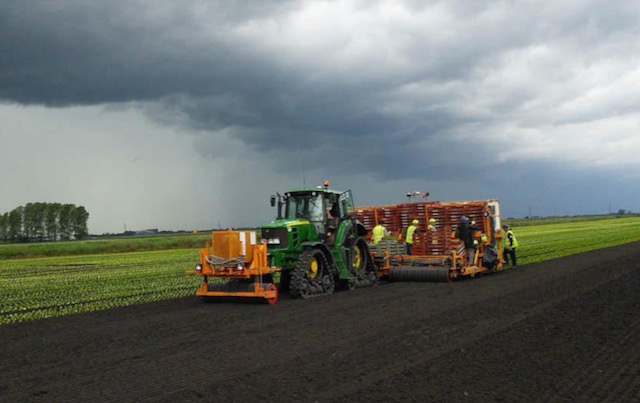
Planting Little Gem Lettuce in a Fenland Field: Credit NFU Online

So how come it’s still here? Partly because in 1637 an armed uprising by locals fearful of losing their livelihoods fishing, water fowling and sedge harvesting prevented the Anglo-Dutch drainage projects of the area’s aristocratic landowners from going ahead here, like they had elsewhere. By the end of the 19th century, naturalists, academics and enlightened landowners who prized this traditionally managed oasis for for its rare bird, moth and butterfly populations took action to preserve and extend it. In 1899 the newly formed National Trust bought two acres of Wicken Fen – the charity’s first ever nature reserve. Now acknowledged as’ the birth place of ecology’ it has grown to be a 629 nature acre (254 hectare) reserve of international importance featuring wet grassland, scrub woodland, reedbeds and sedge fen. More than 9,300 species have been recorded.
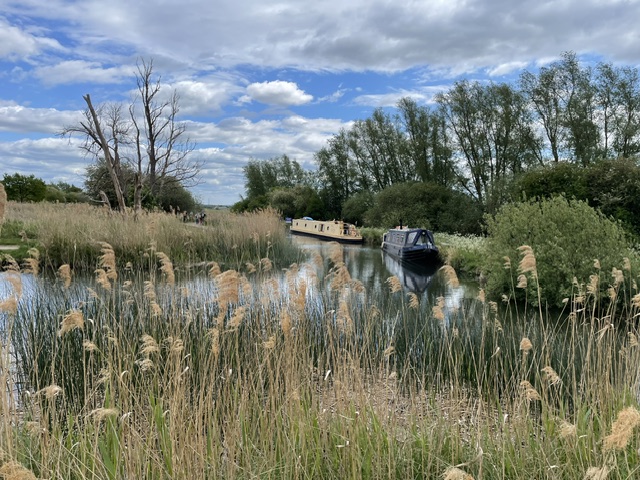
The reserve is connected by a network of boardwalks, paths, bridges and droves (grass roads) alongside ditches, dykes, meres, banks and lodes (canalised waterways). These waterways form part of the River Cam navigation and drainage catchment.
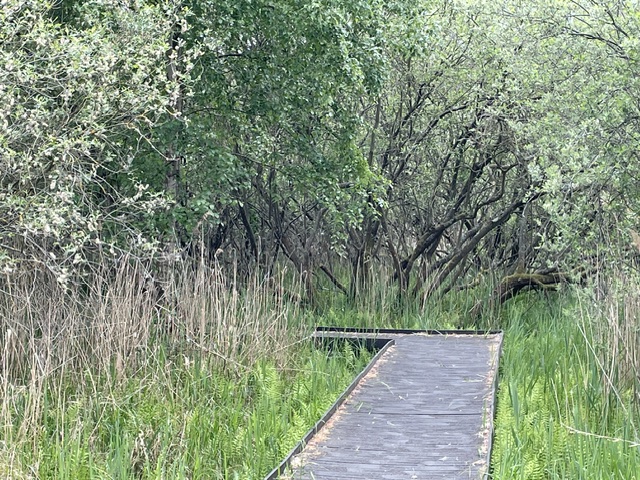
There’s only so much you can take in on one day at such a place. We set off from the Visitor Centre, with its chalk boards listing an array of daily bird sightings, to circumnavigate adjacent Sedge Fen. It proved a gentle introduction and easy perambulation, mainly on boardwalks fashioned from black recycled plastic.
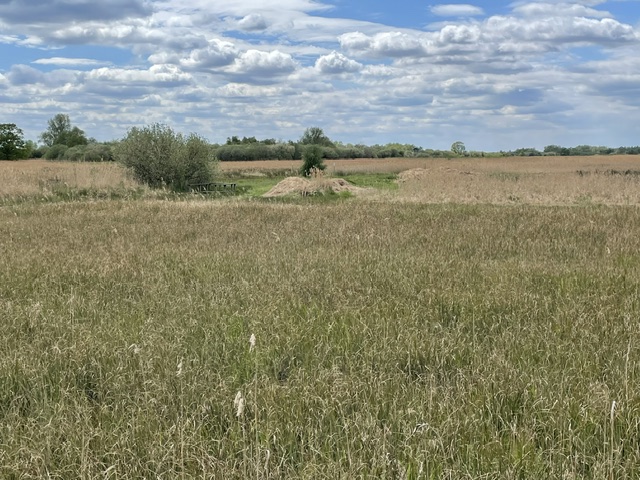
Passed the remains of old clay pits, now deep ponds with coots scuttling, used when this area was a brickworks. Passed through islands of willow and alder buckthorn carr (wet scrub) alive with reed warbler and other bird song. The neighbouring seasonally wet grasslands (above) were cordoned off, for conservation reasons they’re not open for visitors until the summer. Saw Chinese Water Deer, an invasive species, nibbling the turf.
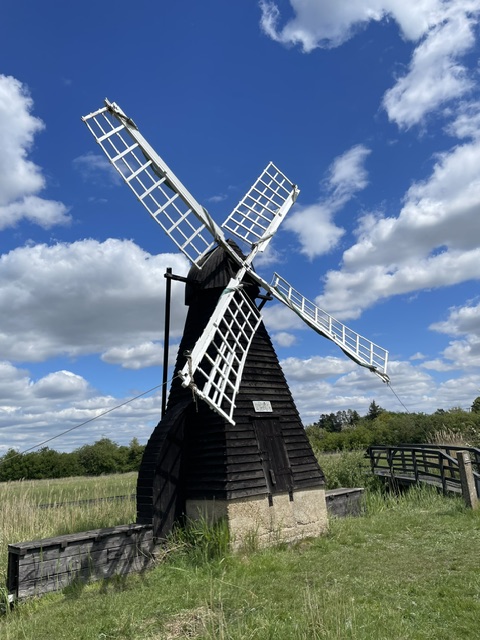
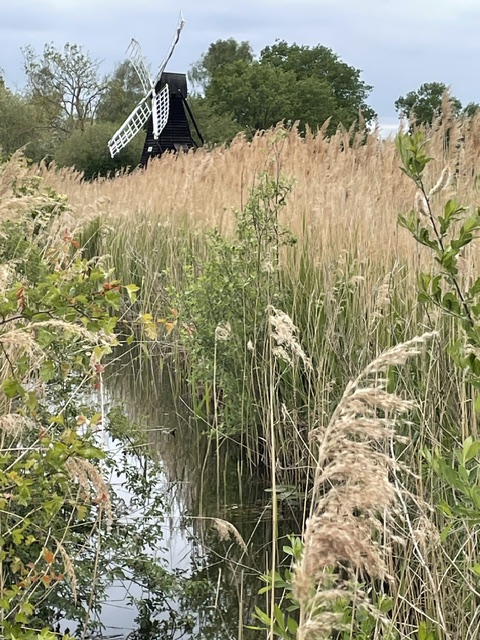
Vertical features have increased pull on the eye in such a landscape. The black wooden wind pump with its white sails is one such iconic marker. A relic of another former Fenland industry, peat digging.
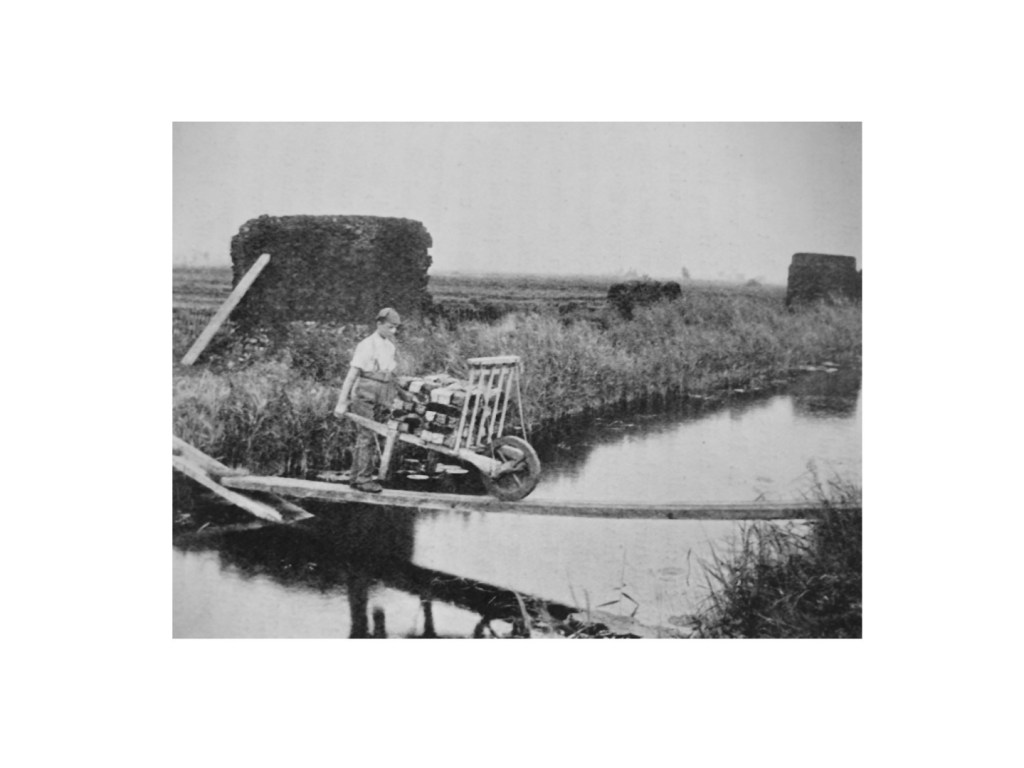
Pushing a barrow of peat turves across a Fenland waterway c.1900

Before steam and diesel, wind power did the draining of the turf pits (peat diggings) so these small mills were once a common sight.
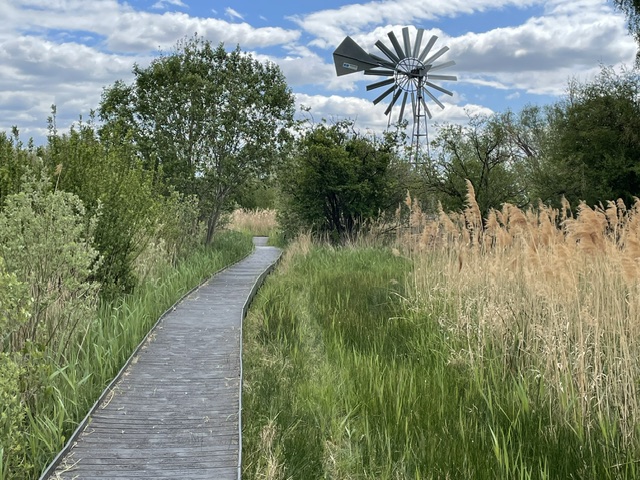
The modern structure seen here is a new wind pump, funded by the Environment Agency in 2011 to draw alkaline ground water to Sedge Fen from nearby Monk’s Lode in the winter months, helping keep the peat soil from drying out, a very real threat as the climate changes.
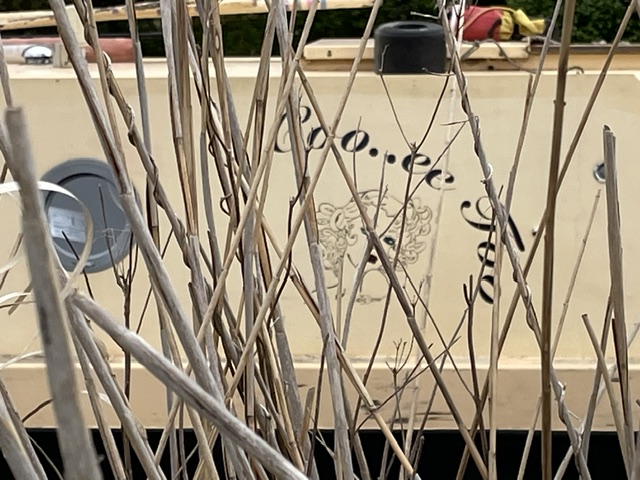
At this point, where Monk’s Lode meets Wicken Lode, is where we came across narrow boats moored. The name of one of them ‘Coo…ee Too’ a pun on a somewhat larger ocean going vessel!
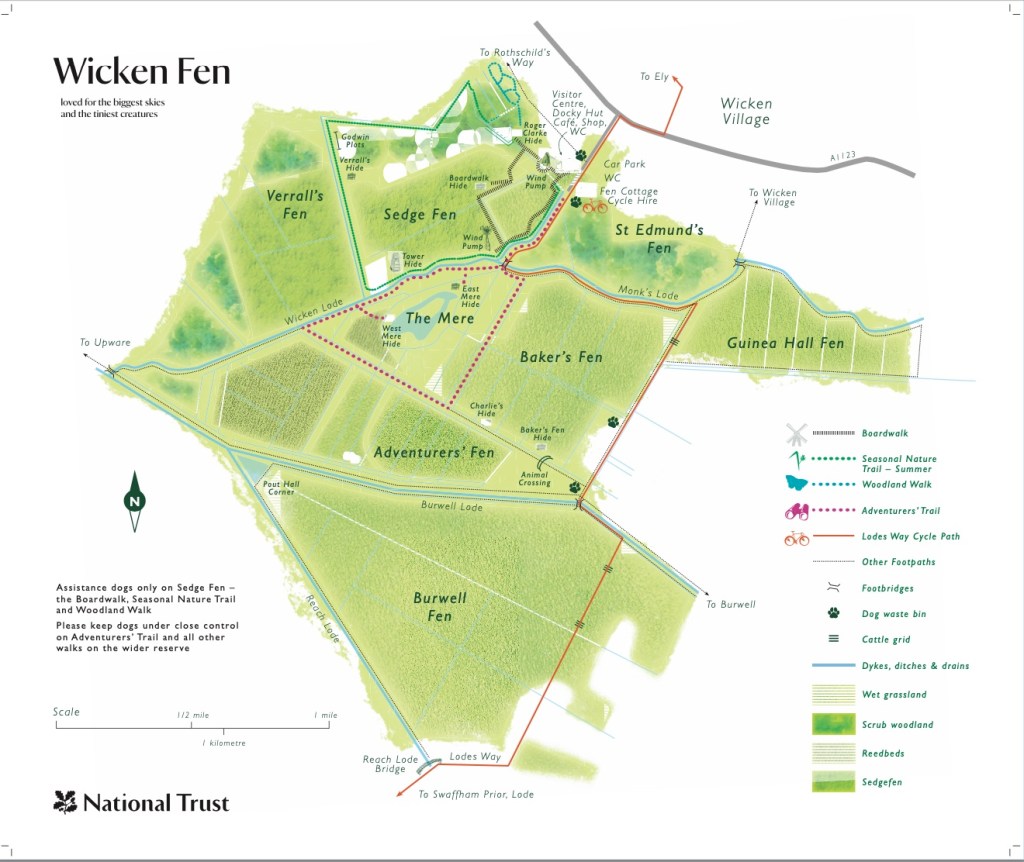
After a picnic lunch we followed paths that led in turn to the straight lines of droves dividing East and West Meres from Baker’s and Adventure’s Fens. And what a contrast. Here we looked down on to swathes of land drained for farming centuries back. An unforeseen consequence was the drying out and sinking of the land, leaving vast acreages below remaining water level. Reflooded by the Trust post WW2 the new bogland and pools in the peat created as a result now attract masses of wildfowl, especially in winter.
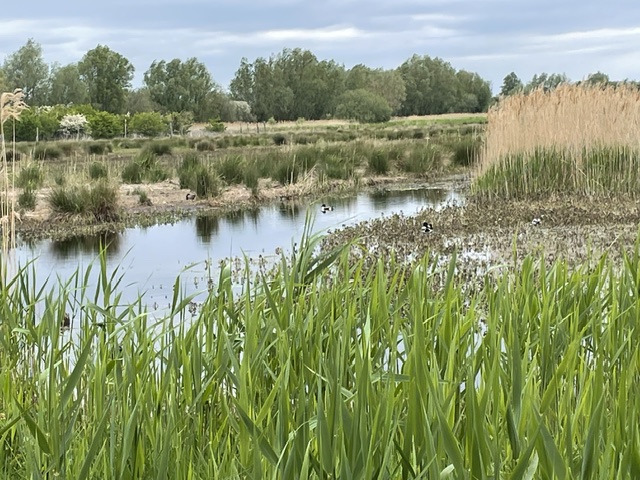
We lingered at one of the hides, hearing more birds than we saw. Later, some brave folk passed us on tandem bikes, hired at the visitor centre, bumping furiously along the deceptively uneven drove surface, laughing in mixed measures of anxiety and delight.
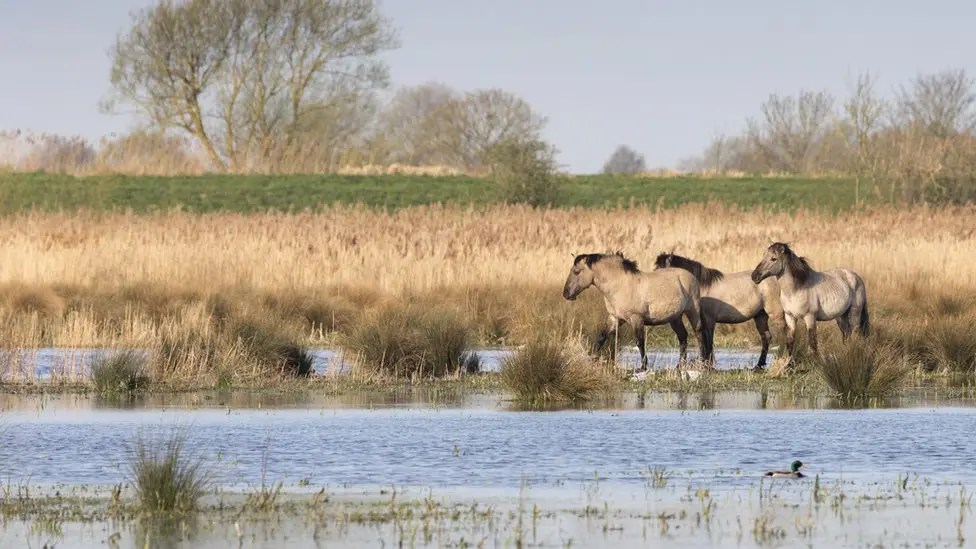
Image of Konik ponies at Wicken Fen: National Trust

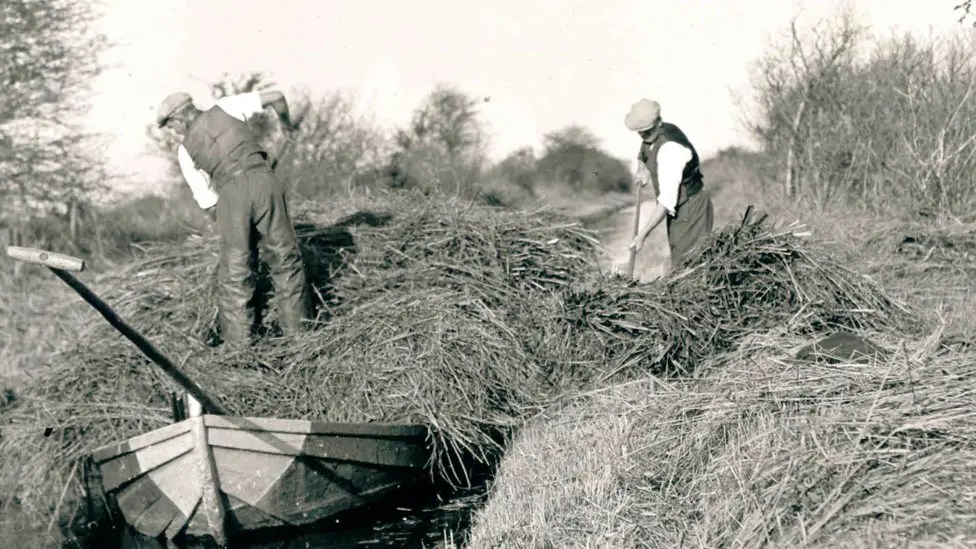
We glimpsed a distant group  of Konik ponies at pasture. Together with a herd of handsome highland cattle, these introduced conservation grazers free range the reserve. The animals contrasting complimentary grazing styles play a key role in managing wet grasslands, doing the job people once did, keeping the ever encroaching scrub at bay. They also distribute wild flower seed in their droppings! Sedge today is cut by machine where once the fenmen cut, stacked, stored and transported the material for a wide range of uses in the textile and building trades.
Opposite the visitor centre, off the narrow approach lane, is the pretty C18th Fenman’s Cottage, restored in 1990 and furnished as it might have been in the 1930’s. A must see that gives a fascinating insight into an age old relationship between people, buildings and place.
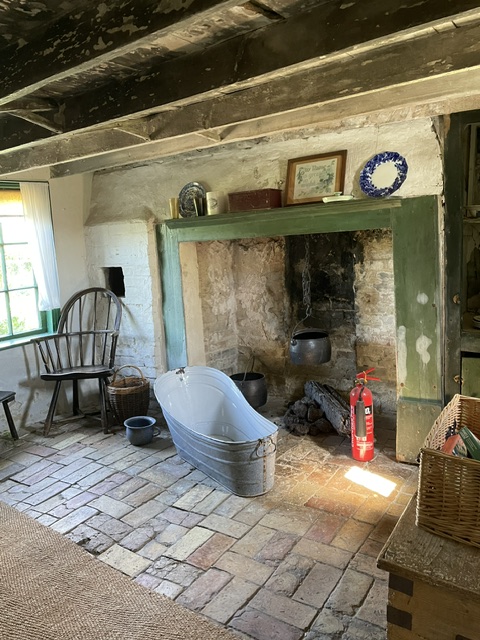
The cottage is vernacular architecture defined by the use of  locally sourced material; from dried peat  bricks to floor tiles and daub plaster of gault clay, thatching with reeds and sedge.  
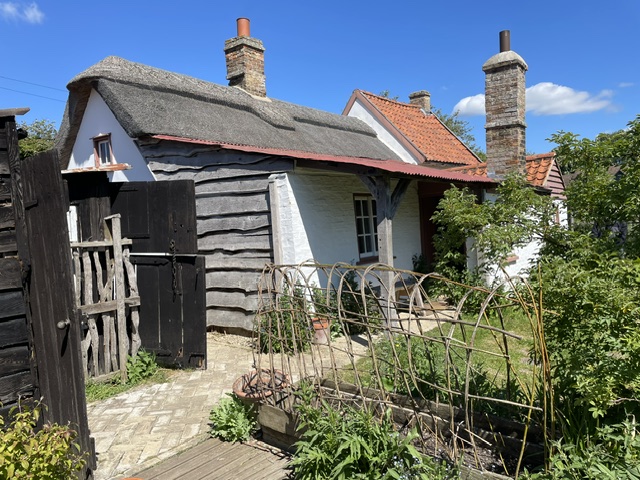
Here, for many centuries, local families made a fiercely independent living from a raft of interrelated successional labours. Sedge, reed or willow harvesting, fishing, eel or mole catching, wildfowling, digging peat and clay, cutting litter (marsh hay) or transporting a wide range of goods in and out by water….all dictated by the seasons.
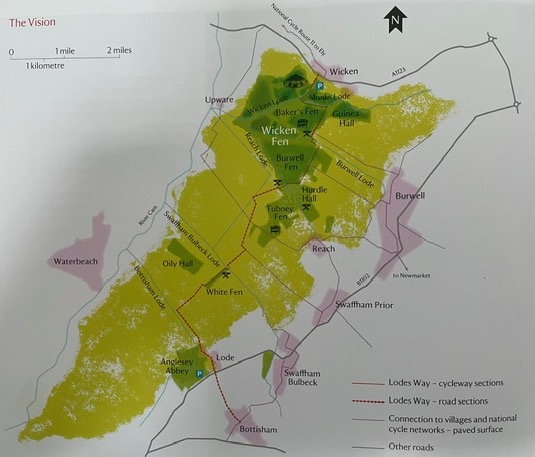
Under ambitious plans set out in the ‘Wicken Fen Vision’ the reserve is set to expand downstream, right to the outskirts of Cambridge. It’s the NT’s commitment to tackling climate change by re-establishing a lost landscape at scale, including nature friendly farm holdings on its edges acting as a buffer zone for the core fenland.
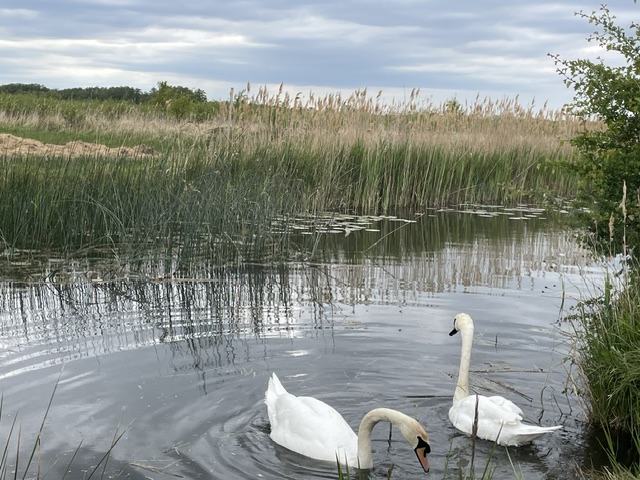
I wish them well in their mission. The Trust is protecting a treasure horde of vulnerable species and preserving precious peatlands, while still enabling  access for all  to enjoy this magnificent if fragile ecosystem. Balancing the need to increase self-sufficiency  and security of food production while including nature as a key to managing a healthy and sustainable countryside remains one of the most pressing challenges of our times.
Sizergh The Day

I’ve visited a lot of National Trust properties during my adult life. In the 1980s & 1990’s it was as an actor/researcher with their young people’s theatre company, devising and staging immersive dramas. More recently I was a welcome host then garden volunteer at Cherryburn, the Tyne valley farm that was Thomas Bewick’s childhood home. But it’s as an ordinary member that I’d rate a day spent on the Sizergh Castle estate near Kendal in Westmorland as one of the most coherent and harmonious of visitor experiences.

This happy outcome was due to an ideal combination of activities. A fine walk with varied views, seasonal garden delights and characterful castle interiors, rounded off with sampling the scones offer in the café.

The Sizergh estate came to the National Trust in 1950 after centuries in the ownership of one family, the Stricklands, whose Anglo-Norman ancestors inherited it through marriage in 1239. The family still retain part of the house as their private home. The 1,600 acre (647 hectare) estate is commercially farmed by tenants while rangers develop and manage nature restoration and greater access projects in and around the agricultural framework.  

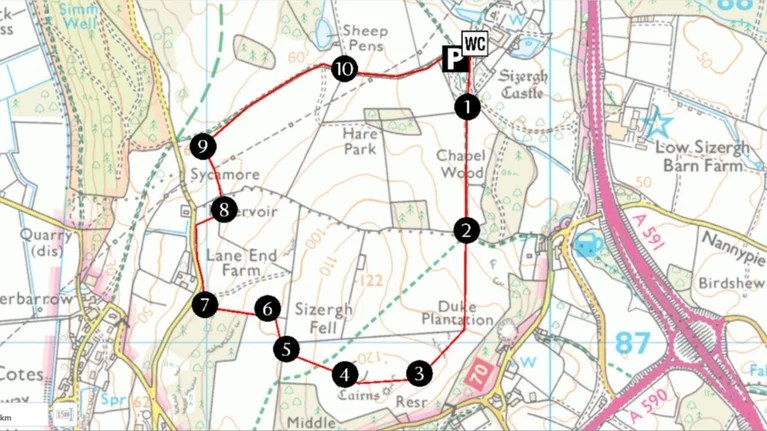
The well signposted Sizergh Fell trail provided lots of interest.  At the 400’ summit, overlooking Morecambe Bay to the south,  we came across remains of neolithic burial sites and traces of Romano-British settlements peeping through cropped turf and brambles at the edge of a huge swathe of tussocky anthills. Traditional British breeds of beef cattle are kept here, well adapted to this kind of upland grazing. Fittingly, the old English derivation of the name Strickland apparently means bullock pasture.

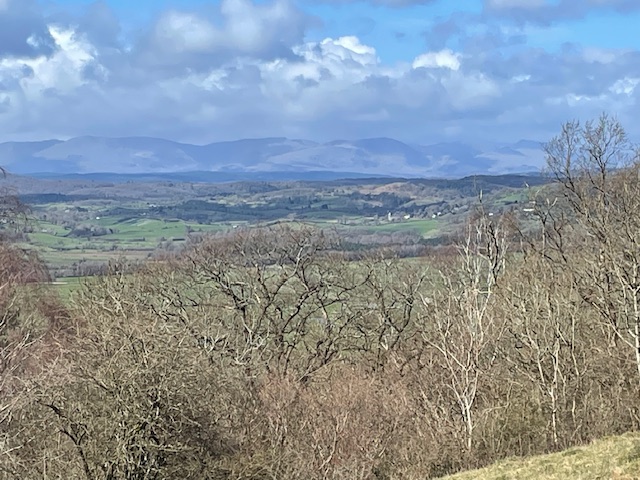
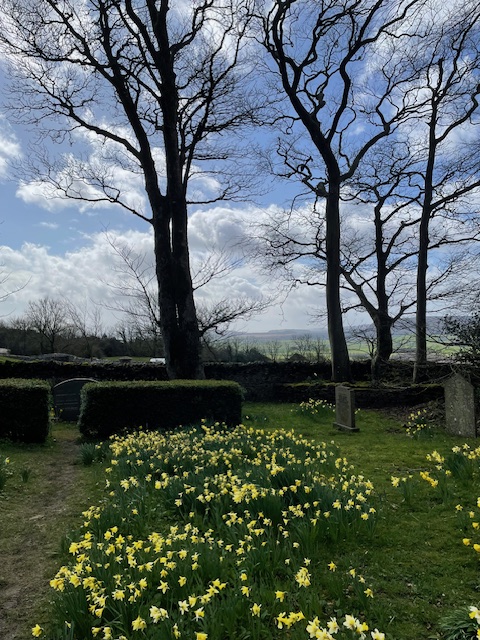
The track dips then rises to follow the limestone ridge, yielding fine views across the Lyth valley levels up into the mountainous heart of the Lake District. A brief ferocious hail storm cleared the grey clouds and let some sunshine in. Emerging from Brigsteer woods we  found ourselves at  Helsington Church, sheltered by its tree bordered burial ground now carpeted by daffodils and white starred wood anemones.

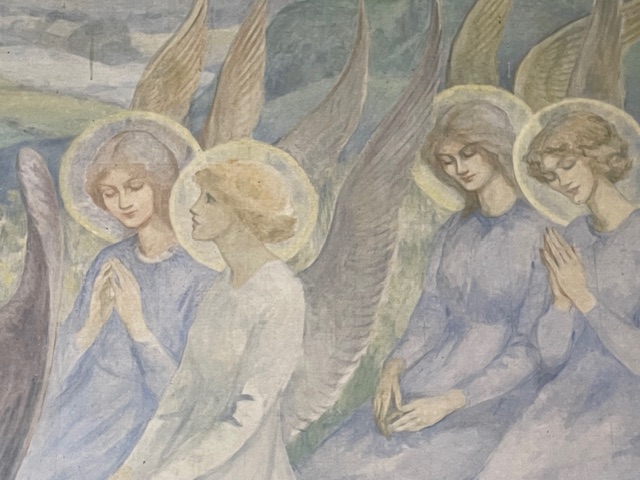
Inside the modest  light filled  interior the Georgian church’s distinctive decorative feature is wonderfully revealed…A whole wall depiction of supplicant female angels in a setting of Lakeland fells framing the altar below.

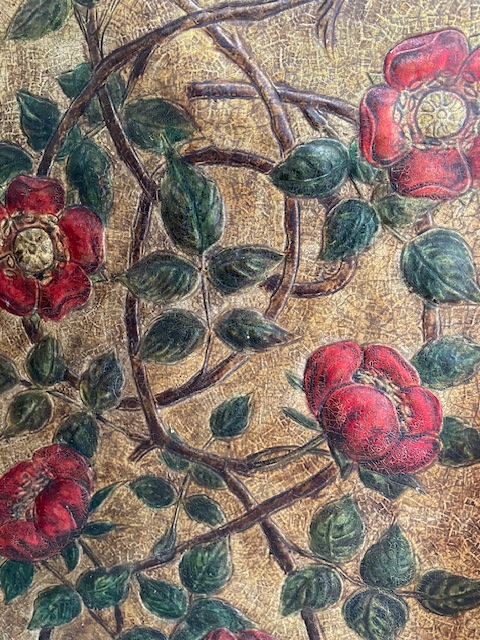
Dating from 1919, the painting commemorates those who gave their lives in the Great War.  Along with the altar paintings depicting flowers and other motifs, it was the work of a  female artist  who lodged at Sizergh Castle, Marion de Saumarez (1885-1978). Executed in oils on canvas the composition was stretched on battens and secured to the wall.

On our gradual descent back to the start we appreciated  the quality work put in by the rangers to make this circular trail so user friendly.

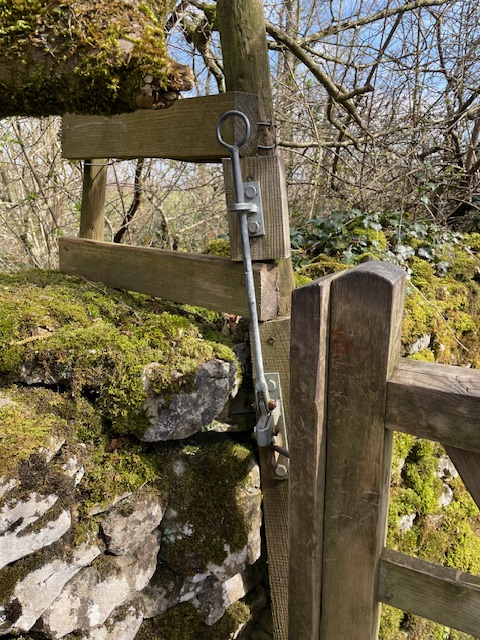
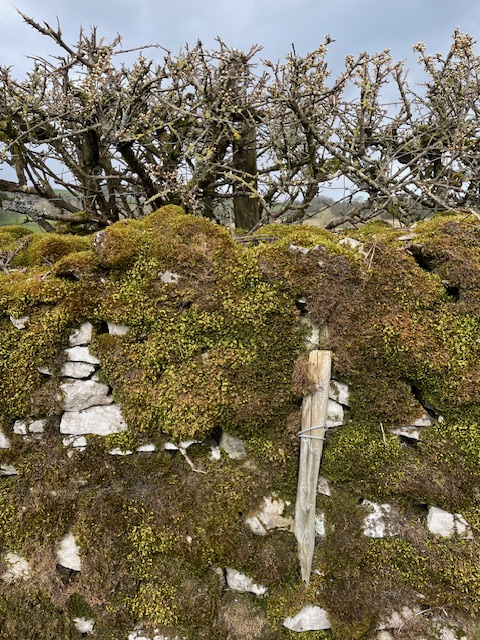
From  bespoke gate latches  to the  limestone dry stone walls strengthened by through ties of metal wire and wood block. This particularly thick wall also had extra stock proofing on the field side in the form of blackthorn hedging, which was just now coming into flower.

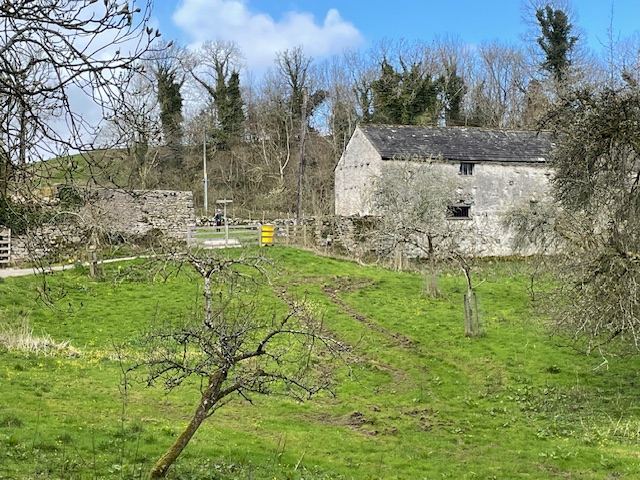
Down at Holeslack farm (now holiday accommodation) new laid hedges framed a damson orchard. In the old barn were bundles of hazel rods harvested from the neighbouring wood, no doubt to be used in hedge laying and other tasks about public parts of the estate.

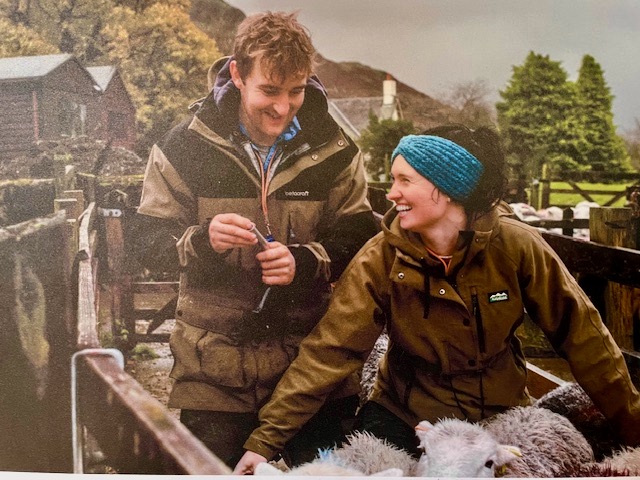
The building is also playing host to a temporary exhibition celebrating the often undervalued and overlooked role of women in upland hill farming in the 21st century. Illustrated by great images of said women at work on their farms, their number including profiled chroniclers of rural life like Andrea Meanwell (Tebay) and Helen Rebanks (Matterdale).

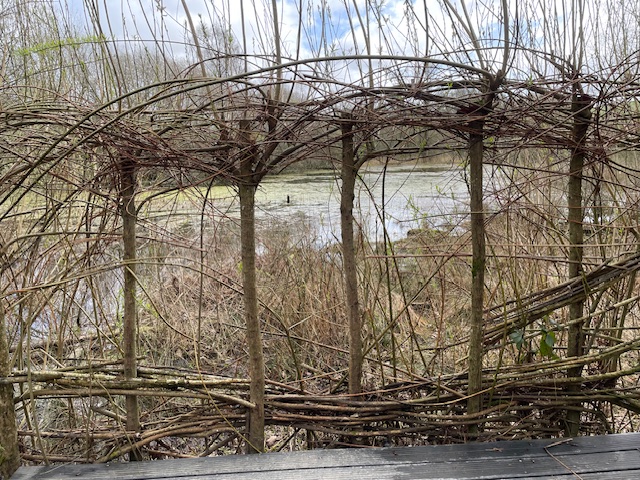
A walk through Holeslack woods revealed the wide paths and smooth surface to allow buggies and wheelchairs easy access. Dogs Mercury – an indicator of ancient woodland – is here in abundance. A branching path led us to a platform overlooking a wildlife pond on the woodland’s lowest edge, framed by arches of live willow wands. A nice touch.

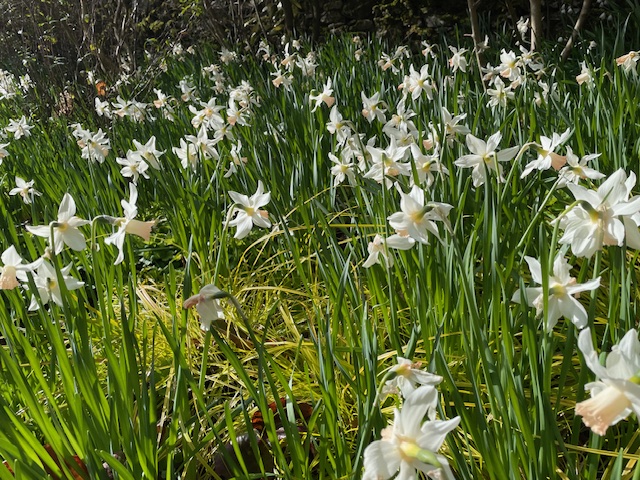
The gardens at Sizergh are a delight. Conversations with one of the gardeners about the narcissi as we strolled through gave extra pleasure to the discoveries.

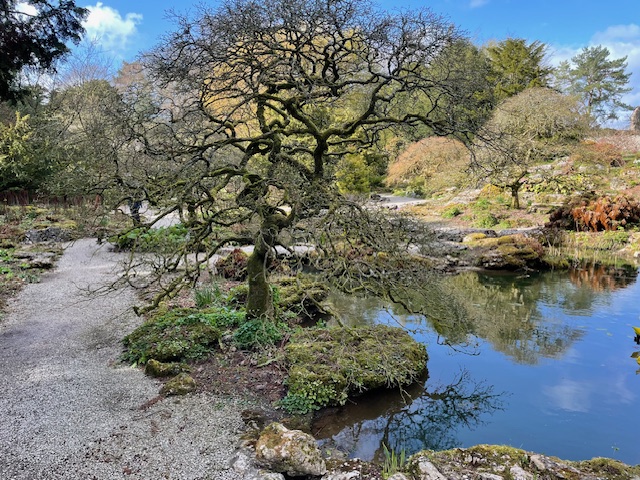
The wide borders, cordons of pears against orchard walls, herb beds framed and sheltered by reflective slate; an extensive sunken limestone rockery with pools, shrubs, trees and alpines giving way to large formal ponds, steps and terraces that frame the castle’s impressive south elevation.

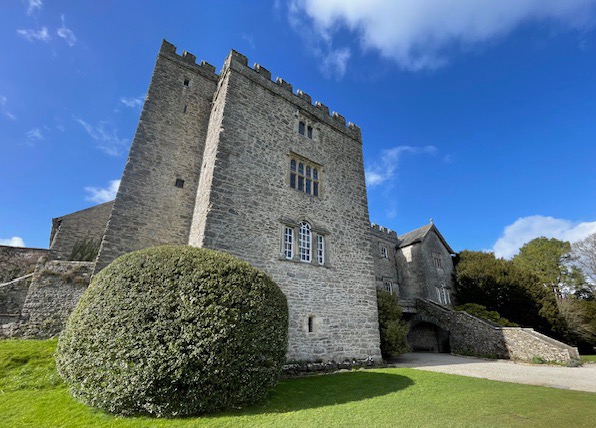
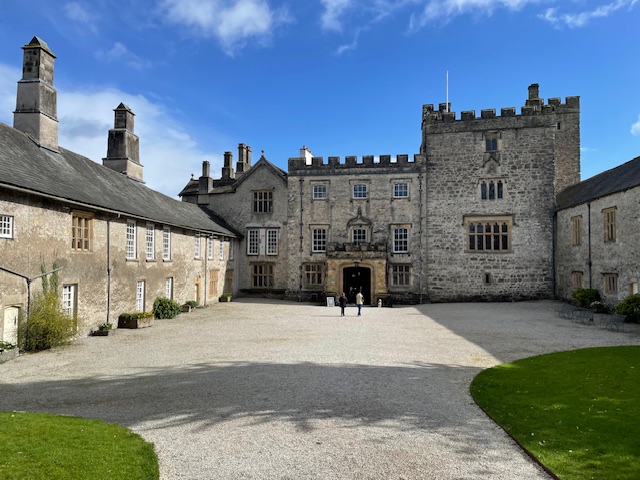
The castle core is the most impressive architectural feature to my eyes.. That’s the oldest section, the 60’ high C14th Pele or Solar tower. It also has the original spiral staircase which the little boy  inside me was quietly thrilled to descend at the end of our visit.

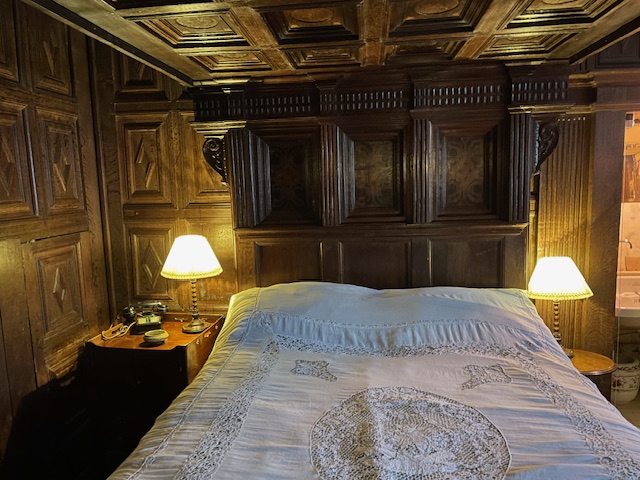
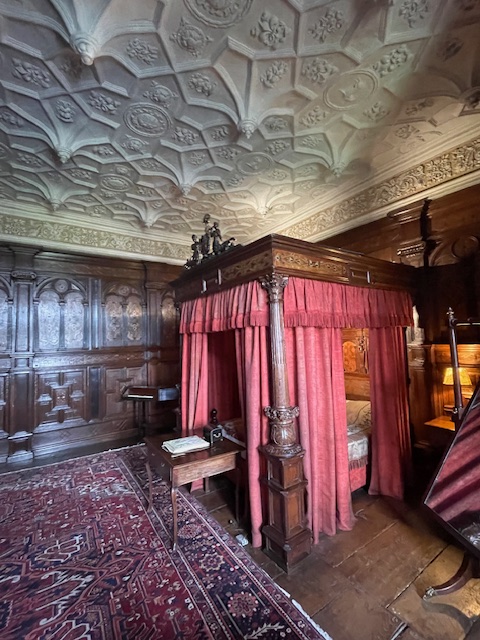
Inside the great square tower and its elegant Jacobean extension the takeaway impression is of dark oak floors and wall panels punctuated by huge sculpted fire surrounds within massively thick walls, enlightened and enriched by fine furniture and hangings. There are also generations of family portraits, alongside those of the Stuart monarchs many of them served. So close an association in fact that Thomas Strickland was forced into exile in France alongside fellow catholic James II after the Glorious revolution of 1688, never to return. His successors were fortunate to retrieve the family seat after protracted legal action.

In the 1890’s another dip in fortunes saw the selling off of the inlaid wainscoting that gave the Elizabethan bedroom at the top of great tower its name. A very rare survivor in a country house of oak panelling inlaid with pale poplar in floral and geometric patterns. London’s V&A museum had bought the panels from the family and displayed them throughout the 20th century. The story gets a happy ending when the NT and the V&A struck a deal, facilitating their refit in aitu in the 21st century.  We’d like to return too, to experience the garden in another season and explore those parts of the wider estate we’d not had time to discover this time around.

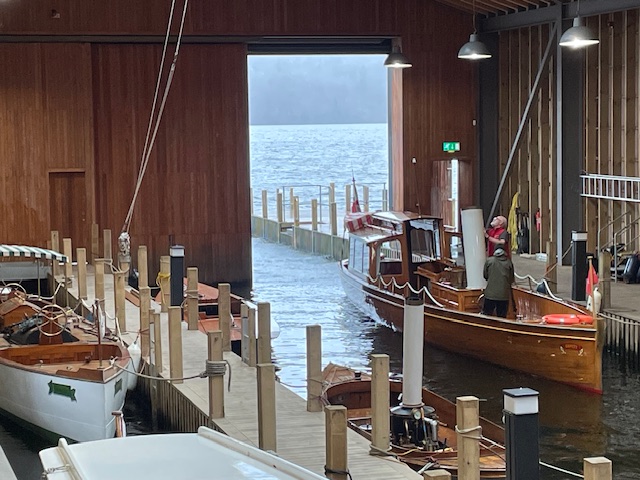
Footnote: returning home next day the weather turned  truly elemental in a way that only Cumbrian weather can. We spent a happy morning out of the biblical deluge, enchanted by the Windermere Jetty Museum in its impressive architect designed home on the lake at Bowness. It houses an extraordinary collection of craft associated with Lakeland waters and also offers – weather permitting – trips aboard steam powered vessels on Windermere.

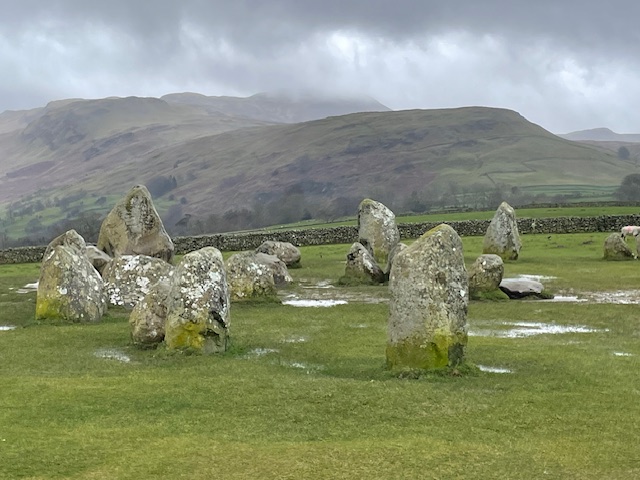
What really made our day though was when we eventually got to Castlerigg. Situated on a shoulder of hillside, between Keswick and the town’s neighbouring mountains this impressive stone circle is estimated to be some 3,000 years old.

Rediscovered by romantic era influencers of the early C19th like Wordsworth and Burns this mysterious round of huge stones then stood marooned within a ploughed field. The most likely reason the circle’s single stone outlier was moved and repositioned in a corner of the field was to ease passage for the plough and team. The ghosted form of rigg and furrow (ridge & furrow) is still evident  in the flattened corrugated ground. A challenge to stay upright when fiercely buffeted by fierce wind and rain but the effect was extra spectacular and – more selfishly – the weather helped keep this spell binding picture free of fellow humans for a while!