Quick and the Dead

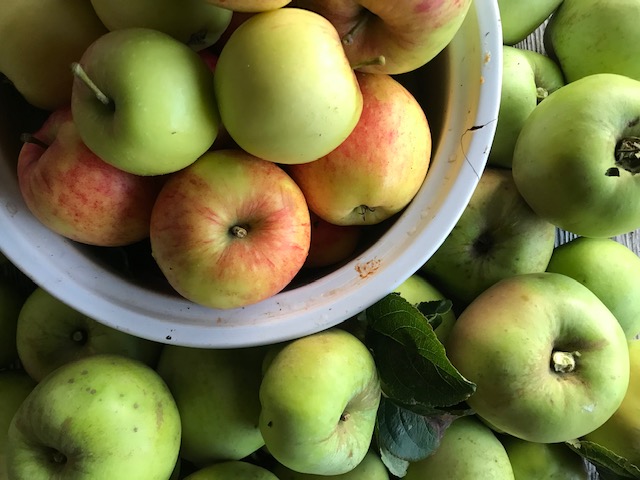
James Grieve (in bowl) & Arthur Turner: The most consistently generous of friends

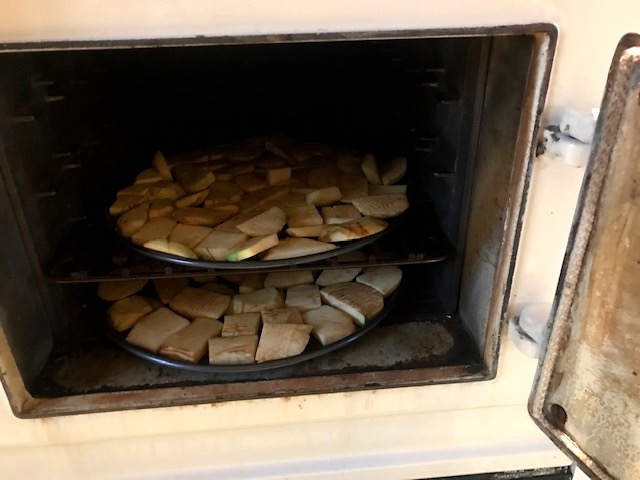
Apples aplenty this year so much time spent recently dealing with the glut. Cookers like Arthur Turner make a great puree, pies & segments slow dried in the Aga before going to store. Most of the crop (James Grieve, Discovery & Katy) grown for juicing means it doesn’t really matter too much what state they’re in when processed.

That’s just as well because birds (especially the blackbirds) make merry with their beaks on the fruit, whether on the bough or the ground. Mice (and I suspect rats) likewise get stuck in once landed. Slugs and insects account for the rest. Wasps though have been notable by their absence this year, which seems odd. Cool temperatures and autumnal winds may have played a part in deterring them.

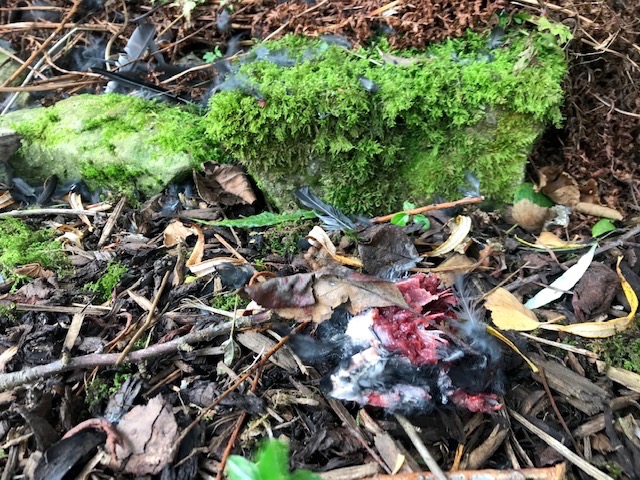
Not that the resident blackbirds have had it all their own way. Far from it. Going out to empty the kitchen compost bin the other lunchtime I unwittingly disturbed a male Sparrowhawk at its lunch. Caught a few seconds of grey back above long yellow legs and talons as it veered off on the wing. There wasn’t much left of the poor blackbird, just the ripped torso amid a frame of feathers. When I went out again an hour or so later the corpse had disappeared so I guess the raptor must have returned to finish its meal as a takeaway.

Got round to clearing out some gutters and down pipes around house and garage this weekend. A year’s worth of pungent unplugged detritus gave way, nearly giving me an involuntary cold shower. Atop the compression of sludge was a recently deceased mouse. Curious end, climbing high to end up drowned.  

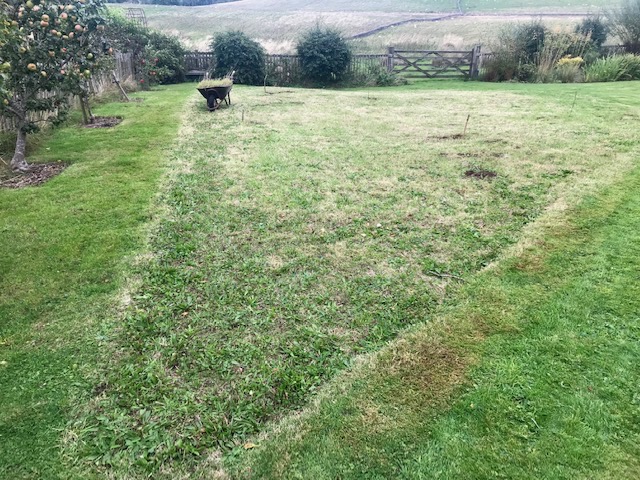
The last cut of grass for the year. A satisfying job when complete, as it frames and sets everything off in the garden. The clippings go to the ewes grazing our field or end up under the denser tree cover in one of the copses or sometimes in the compost bins. Just as I was finishing the starter cord got itself stuck inside the engine head cowling. Don’t know how that happened but luckily no hurry to fix it as the machine won’t see any more action now until next Spring.

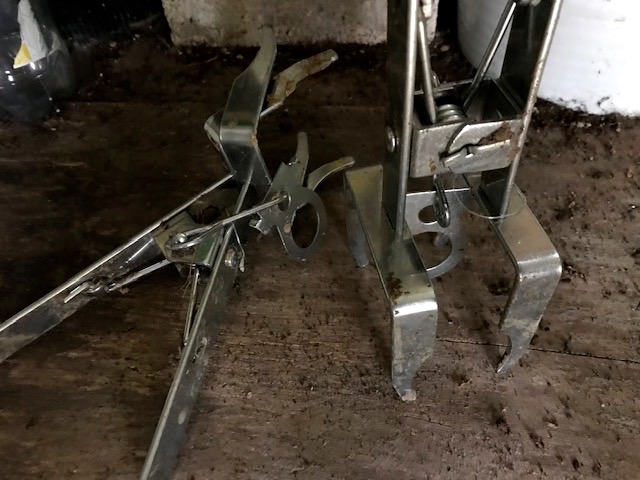
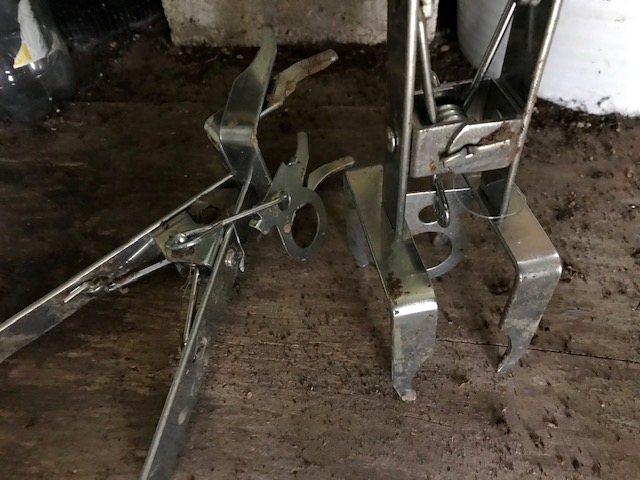
Our contractor did a good job on the serious mowing in September, clearing the meadow and raking all the vegetation off so little nutrient waste was left. Very pleased with the spread of yellow rattle this season and only hope that continues next year, as their semi-parasitic action weakening the coarse grasses will help make room for other meadow flowers to grow. Was less pleased with the appearance of molehills. Our late mole catcher Jim had inducted me into the craft and when he retired left me a handful of old half barrel traps. Using them in the meadow and lawn however made no difference to activities of my unwelcome subterranean visitors.

I called by a garden centre and bought a batch of the new style clipper types (pictured) and these proved effective. Easier to set physically and you know when they’re triggered as the handles remain above ground. By trial and error, setting and resetting I eventually caught two, in different places, and have had no trouble since. I hate killing these poor creatures and if other non-lethal ways to rid the garden of them worked I would opt for them. I let them do their thing in our field but once they cross the boundary into the garden it’s all out war.

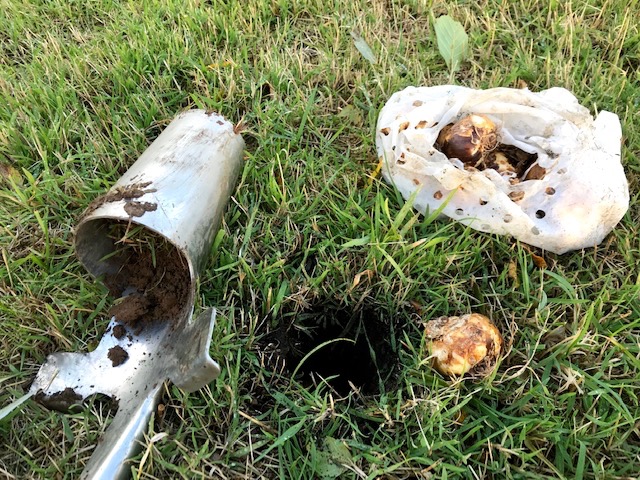
Moles are voracious eaters of earthworms, disabling their prey and storing them captive in a chamber for eating later. The bulbs we plant in the meadow are safe from them (though not from mice or rats). Growing up in Canada Kim has a fondness for Camassia – the North American wild hyacinth – and we were both very impressed with swathes of this tall blue flowered beauty in the meadow at Yeo Valley organic gardens in Somerset when we visited one late Spring pre-Covid. We’re seemingly doomed to disappointment here as our corms rarely grow more than a foot or so in the meadow. We think it humous rich and well drained enough but clearly the camassia has other opinions. Still, hope the chunky bulbs planted this weekend will prove the exception.

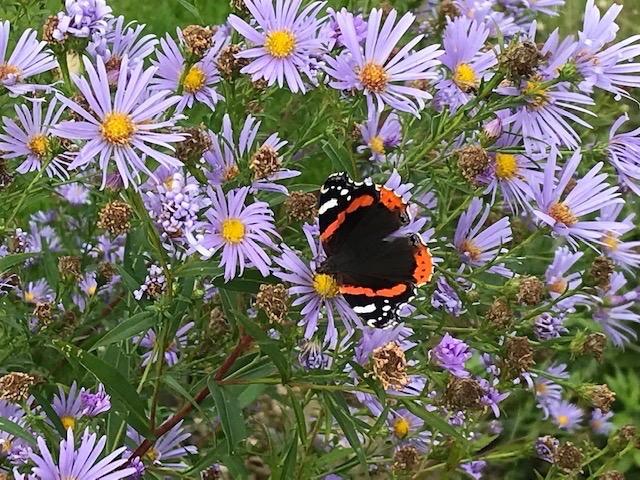
Late flowering blue varieties of clematis and a bed of Michaelmas daisies make for cheering sights at this time of year when most other blooms have passed. Especially when so many insects, bees and butterflies feed on them.

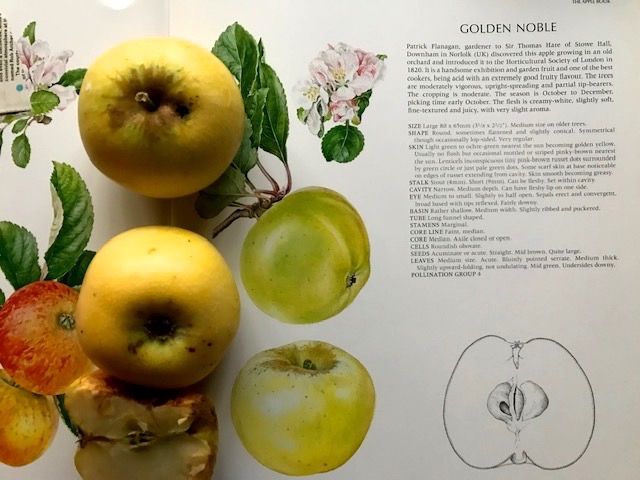
Good cropping on the apple front and the first time we’ve had a proper fruiting from our stout little tree in a tub, gifted by friends, and rejoicing in the name of ‘MickandGrace’. None of us knew what variety it was. Separate threads of homework however declared our apple to be a Golden Noble, an old Norfolk variety of cooker. Grace had grafted the tree on a course at the National Trust’s garden at Acorn Bank in Cumbria and her tutor there helped pin the variety down from a photo I’d sent of the fruit. Our own source was a fabulously authoritive volume I’d been gifted by Kim – The RHS Apple Book. 

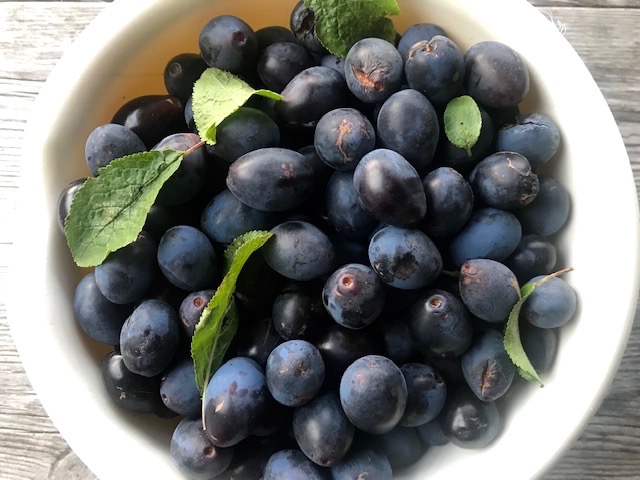
It’s also been a grand year for the damsons. Our main tree, a Shropshire Prune variety, has shown vigour in its spread, matched this year at least by the cropping. Bagfuls have been gifted to friends or turned into jam. Best of all lying like sunken treasure in a sea of sweetened gin, gently infusing it with unmistakeable flavour, to help us through the coming long dark winter nights.

Knepp

The day after the Petworth expedition Geoff, Dianne & I (along with their faithful canine companion Phoebe) took a drive down the A24 to the village of Dial Post and parked there for a visit to the Knepp Castle Estate. If Petworth was the apogee of 18th Century landscaping on the grand scale in England then Knepp must be the 21st Century equivalent for re-wilding. How do you balance the need for home food production with the restoration of nature in the farmed landscape? Knepp was one of the first big estates in England to tread this tricky path and the results have been very encouraging indeed.

Isabella Tree & Charlie Burrell outside Knepp Castle in 2018

The 3,500 acre estate just south of Horsham has been in the Burrell family for 220 years. Charlie Burrell and his wife Isabella Tree took on the running of it in 1983. They farmed it conventionally for 17 years as a combined dairy and arable operation. The land hereabouts is predominantly heavy Wealden clay. A great thick mass of it, intractable and heavy, dry and cracked in summer and a dense porridge in winter, and that required tons of artificial fertiliser to increase yields. The soil became even poorer over the years to the point where they were putting more resources in all round than they were taking out. That, combined with ever decreasing margins from milk production, forced them to consider radical alternatives if they wanted to keep farming. They resolved to turn conventional wisdom on its head by taking their hands off the steering wheel and letting nature take over; to begin a challenging process of regenerative husbandry on the 2,400 acres/1,000 hectares bulk of the estate.  

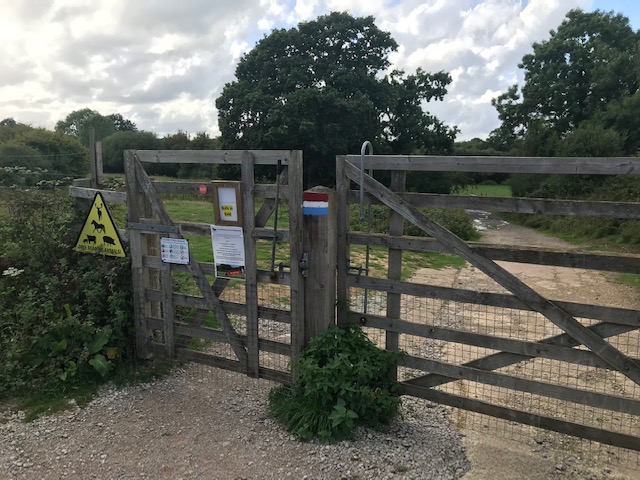
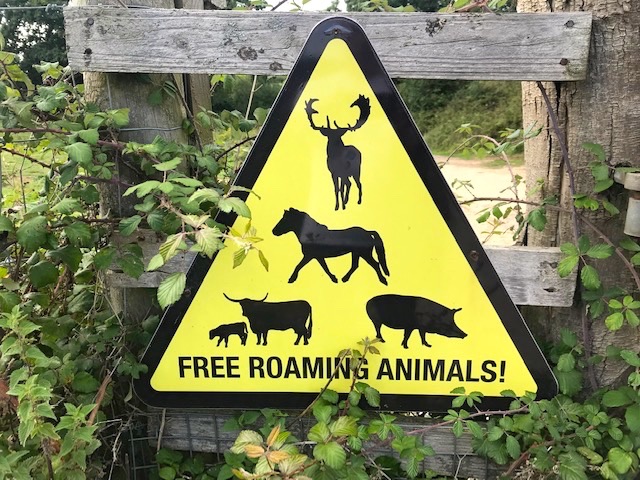
Entrance gate to the re-wilded area. Red white & blue mark the public paths and bridleways

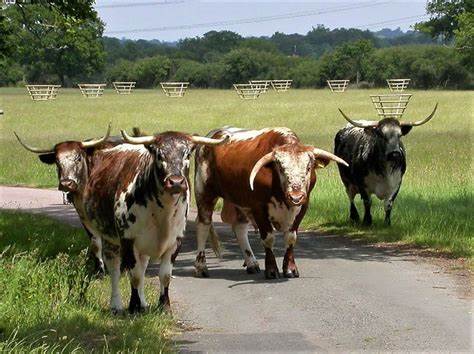
The 21st century started with the painful business of selling off the dairy herd, letting the arable out to contract, getting rid of the heavy machinery and letting loyal employees go with it all. They then removed internal stock fencing and built tall encompassing perimeter fencing to retain their new stock, creatures who would best mimic beasts of the ancient past – aurochs, bison, wild boar. They chose traditional English Longhorn cattle, deer (red, roe & fallow), Exmoor ponies and Tamworth pigs. With their differing grazing patterns these beasts would be the drivers of change, the self regulating managers by which rebalancing could occur across the whole range of interconnected habitats.

Longhorns seen here in the private estate park at Knepp

Sadly we saw none of those handsome cattle on our three mile sojourn along one section of the estate’s 16 miles of public footpaths and bridleways. We did though glimpse the fleeting forms of deer through dense patches of undergrowth and rejoiced at the sight of sows and boars, wallowing in newly created ponds or alongside their maturing piglets turning up the turf of the re-wilded fields. Grubbing up by the pigs, trampling by the cattle, browsing by the deer and cropping by the ponies all play their part in letting nature back into the picture.

Some of the perimeter land was still fenced and the grass not let go as elsewhere. Another field was given over to solar panels as they seek to be self sufficient in power. In Tudor and Stuart times the River Adur’s headwaters had been harnessed as ‘furnace ponds’, reservoirs that powered iron making, when the forests of the Sussex weald provided the industry’s raw fuel. I noticed stands of hazel in the woods we passed, formerly coppiced, and wondered if they’ll be harvesting them again in future for charcoal making, producing decorative hurdles etc.

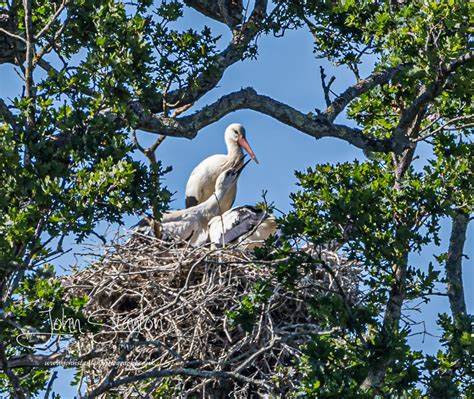
White Storks on the nest at Knepp

A lady we met dog walking told us that carp are seen in the headwaters of the river while white storks, previously unknown to breed here, are now well established, either in the trees or utilising purpose built platforms dotted about the place. Big increase in a number of species, previously in decline or not seen here for decades, include those of nightingales, turtle doves, peregrine falcons and purple emperor butterflies.

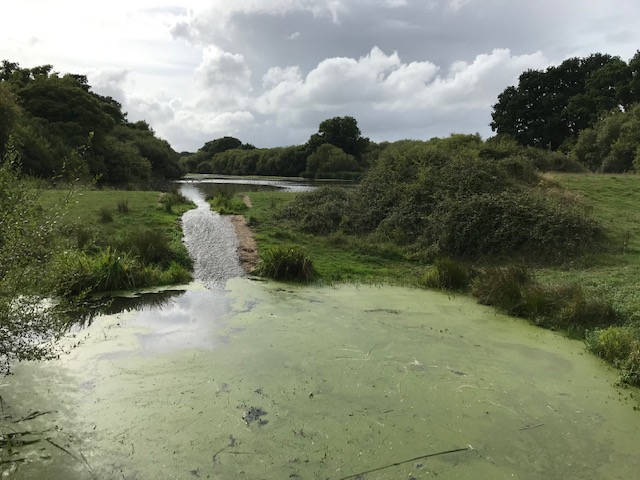
Typical re-wilded pastures at Knepp

Tree houses are stationed in the magnificent old oaks by the bridle paths and they gave us views over flat fields now sprouting trees, shrubs and flowers. Noticeable were the masses of fleabane in some pastures, alongside scabious, plantain etc. The uncut hedges, with their fund of berries, grow high and wide here, linear woods providing food and shelter, that also act as wildlife corridors.

Willow Carr was evident where the blocking of ditches and drains have resulted in the creation of 78 acres of wetlands. That has brought back even more species of wildlife as well as providing watering places, shelter and food for stock.

The circularity of it all is key. I’ve never seen happier or more contented pigs as these Tamworths, free ranging outdoors in their natural environment. We saw them wallowing & foraging in the waterways and feeding on acorns (pannage) which gives depth and flavour to the meat, sold locally and in the estate shop or by mail order. Likewise for the different beef and venison cuts, which are matured on the bone for tenderness and flavour.

The emerging success of this revolutionary process has allowed the estate to develop a range of eco-tourism offers; from camping and shepherd huts, yurts and bothies to wildlife safaris by all terrain vehicles as well as yoga retreats and wildlife study courses.

traditional wooden barns are havens for owls and swallows

The Burrell’s benefit greatly from grant aid by Natural England and government higher stewardship funding and their work has been hugely influential in shaping both public and governmental opinion on nature restoration, carbon capture and soil health, flood prevention, food quality etc. The National Trust and other estates have implemented or plan to launch their own schemes for regenerative farming and nature renewal inspired by Knepp. Current projects involve developing and supporting a cluster group of neighbouring farms to spread interconnectivity for wildlife through a contiguous cross county corridor.

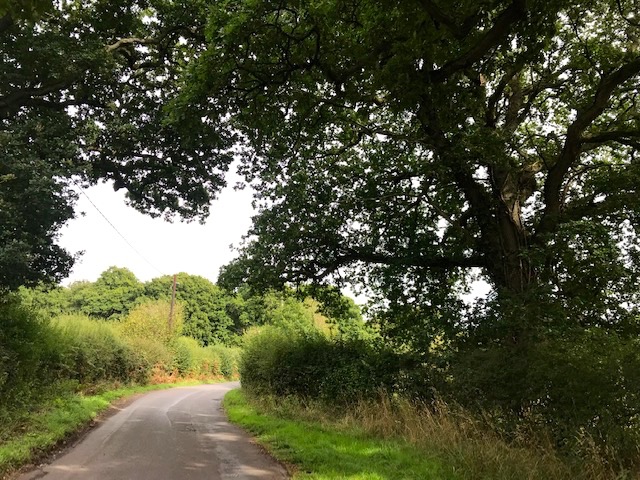
Country lane bisecting the Knepp estate, bordered by old oaks

The Knepp castle estate model is not a panacea to fit all UK farmed landscapes but it is a positive exposition of what is possible and gives all who care about nature, farming and the rural environment cause to believe that truly sustainable and balanced ecosystems are achievable. Now the challenge is to extend and broaden the scale of change so that the population at large can benefit and the restoration and regeneration of nature in our country be secured for future generations.

I wrote last year about the ongoing regenerative work by the Bennett family at Middleton North Farm Northumberland inspired by the Burrell’s work..  

You can find out more about the Knepp project on the website: https://www.kneppestate.co.uk

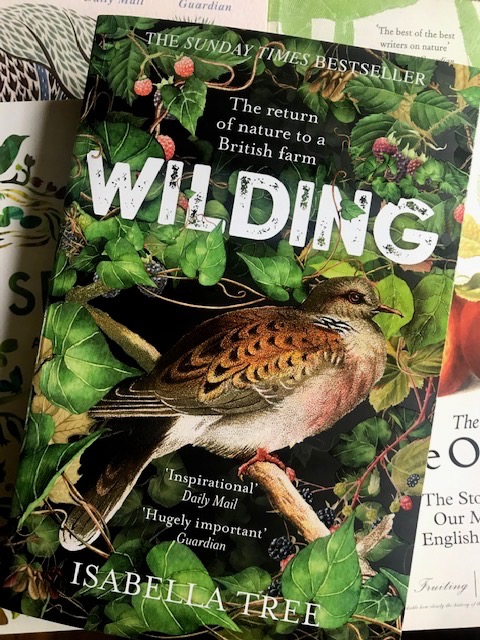
Turtle Dove features on the book cover

Isabella Tree’s bestselling book Wilding (2018) eloquently chronicles the Knepp story and is available at your local library or from all good bookshops. A practical follow up book, The Wilding Handbook, is due to be published soon. More about Isabella and her books here: https://www.isabellatree.com/

It was a serendipitous pleasure to visit Petworth and Knepp, back to back. Both estates reveal a lot through form and use about the epochs that created them and the complex interactivity between man and nature that make such landscapes dynamic reflections of society at a particular point in time. I’m looking forward to returning to Sussex in another season, to walk more parts of both estates, and see what else can be discovered.

Petworth

Took a long overdue trip south recently to visit my brother and sister-in-law in West Sussex. Two delightful interest packed days discovering a contrasting pair of local estates, each of which reflect the ideas and requirements of their dynamic owners and creators, more than two centuries apart.

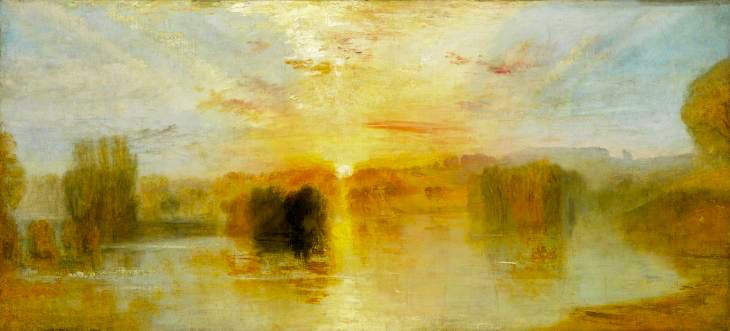
Petworth House is a 17th century mansion surrounded by 700 acres of garden and parklands designed for the 2nd Earl Egremont (1751-1837) by Lancelot ‘Capability’ Brown. In the care of the National Trust since 1947, the great house contains the charity’s single largest and most valuable collection of paintings and art works, including twenty paintings by JMW Turner immortalised the place in his work. The earl was a great collector and patron of contemporary artists like Constable, Leslie and Turner, all of whom were at one time or other guests of the gregarious aristocrat, who had several mistresses and numerous illegitimate children. Turner’s accommodation in the mansion was also his painting room with a specially adapted window to allow greater vision of the grounds.

The Lake, Petworth, Sunset; Sample Study c.1827-8 Joseph Mallord William Turner 1775-1851. Part of the Turner Bequest 1856 http://www.tate.org.uk/art/work/N02701

The current Lord Egremont and his family still occupy a wing of the great house and retain ownership of the rest of the 13,500 acre agricultural estate; made up of arable, pasture and mixed woodland managed by tenant farmers and land agents.  

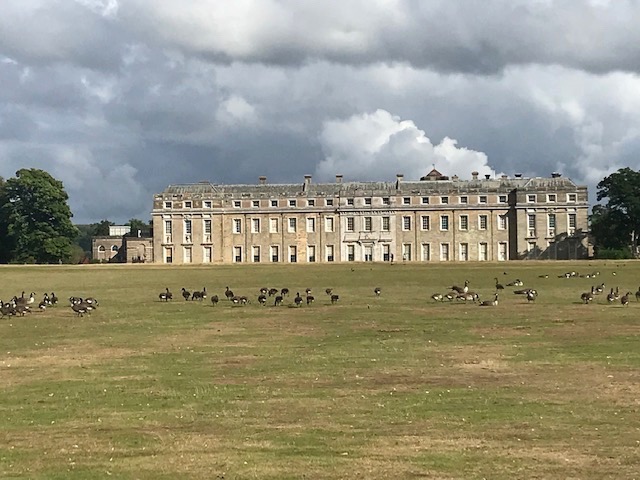
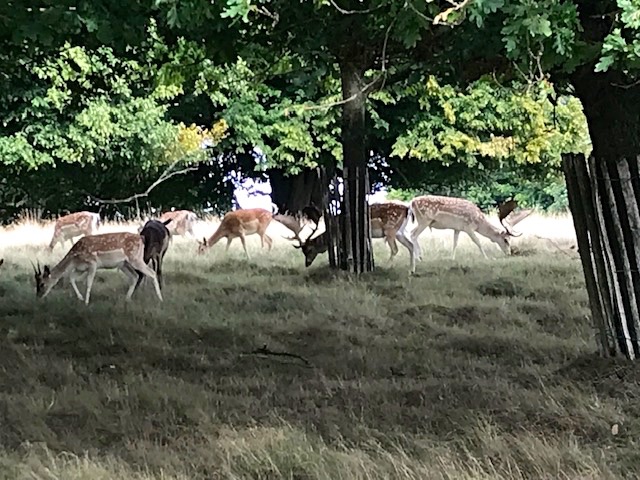
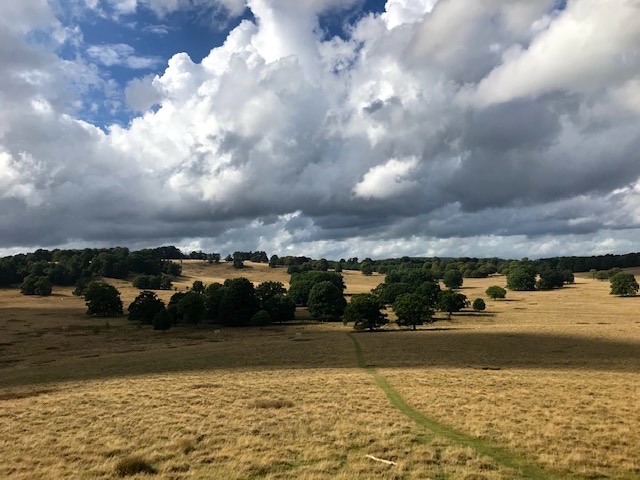
No time to see the treasure house of contents on this occasion. This was a familiar perambulation for Geoff and Dianne exercising their beloved canine Phoebe, but the classic parkland we roamed was reward enough. A fine example of Brown’s work, opening vistas and planting clumps of trees to catch and lead the eye. Petworth’s herd of fallow deer are believed to be the oldest and largest in the country and today number between 700-800. Being used to human company they present gracefully wherever the herd spreads itself, like the chorus in a grand opera. The otherwise unrecorded image of a silhouetted single stag passing slowly under the browse line of a great oak will remain with me.

Some 70,000 tons of clay and soil were shifted by the earl’s extensive workforce to create all the natural seeming curves to please the discerning visitors eye while the park’s meandering 14 miles of wall keep the deer safely enclosed.

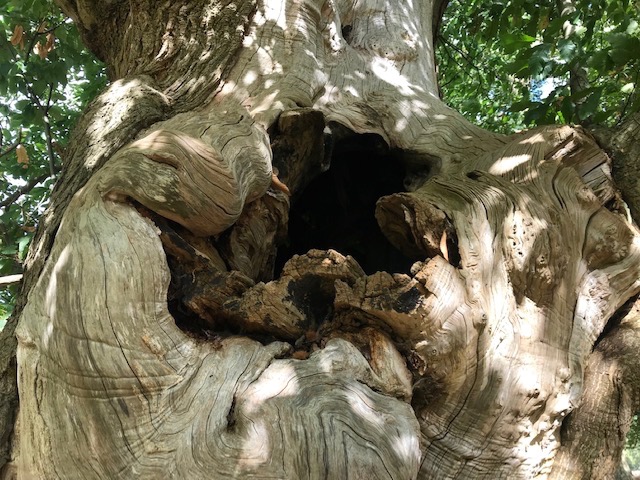
We visited on a wind blown moody afternoon that only served to magnificently heighten the key features. I particularly loved the magnificent clumps of sweet chestnut trees, bristling now with spiky autumnal fruit, as well as the huge venerable ancient oaks from Tudor times. Deep fissured trunks blasted by lightning or displaying stumps of lost limbs were particularly arresting in their form and texture.

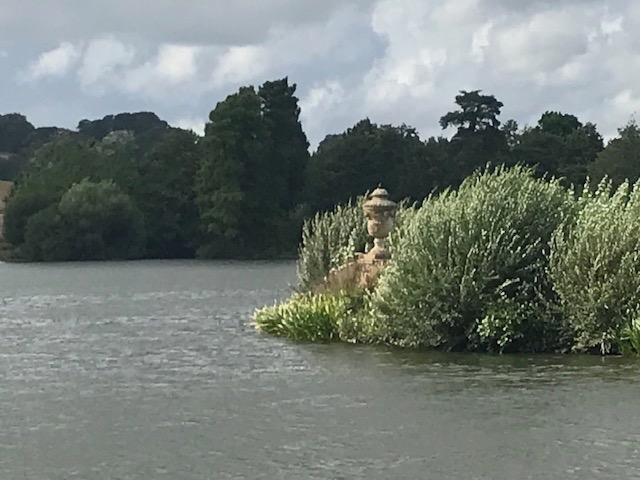
Another of Brown hallmark is the great reflective lake, complete with viewing terrace and islands with their stone ornaments immersed in greenery. It is home to migrant and resident birdlife, with a flock of Canada geese, grazing swathes of smooth grasslands that align lake and mansion. The swags of great rolling clouds on the day we visited would surely have appealed to Constable, who was renowned for his studies of them. The close mown ground beneath our feet bore recent press marks from the last extensive film set that had been loaded upon it. A major production set in Napoleonic times, we heard it said…Bridgerton perhaps?.

This artfully designed and manicured pleasure grounds, with its wonderful distant views over the South Downs and rolling farmland, continues to offer its visitors rest and recreation. On the other side of the boundary wall the narrow thronged streets of pretty Petworth village is full of antique, craft and book shops alongside restaurants and pubs. The triple attractions of house, grounds and town make for a picture perfect traditional view of southern England and its countryside.

Roman Stones

here where the landscape /is a long conversation/and the breeze/a list of the missing/and of the dead/read from the surface/of these stones/that do not forget. (From A Northern Aspect by Paul Farley)

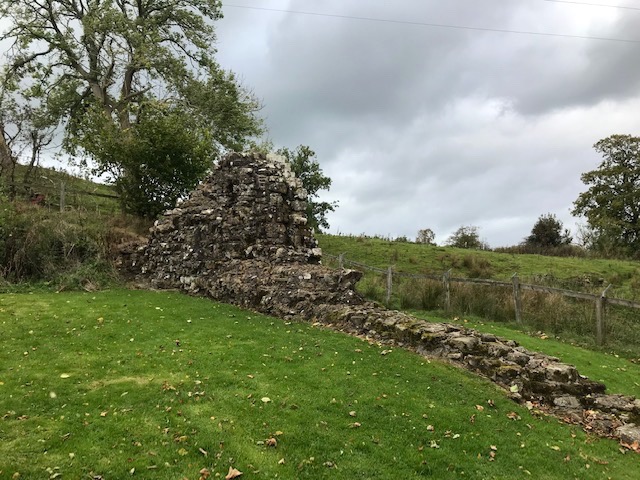
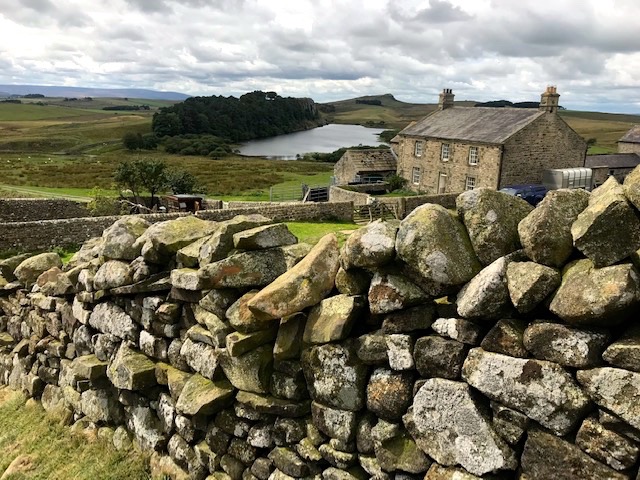
Here in Hadrian’s Wall country you can have endless fun spotting how many buildings have, at one time or another, recycled the component parts of that once mighty edifice.  When the Romans left in 410AD all that precious building resource was up for grabs. Neighbouring farmsteads, churches and fortified sites owe a huge debt to the Roman legionnaires for quarrying, dressing and transporting those millions of whin sill (hard dolerite) and softer sandstone blocks.

A UNESCO world heritage site since 1987, This year marks the wall’s 1,900th birthday and a host of different activities have been taking place along its 76 mile length. My indomitable cousin Quetta, a retired archaeologist from London, was up here recently for a week as part in a ‘Secret Histories’ holiday study group. Based at the Beaumont hotel in Hexham these curious souls were ferried from Wallsend to the Solway, with all manner of stops in between, discovering all there was to know about this famous world heritage site and the extraordinary civilisation that built it. The experts leading the party pointed out other sites of interest that they’d no time in the packed schedule to visit. One of them was Chollerton Church, just down the road from us, and Quetta was keen to visit when she came to stay with us for a few days afterwards, as indeed were we.

The first church of St Giles was a wooden building consecrated in 1097. It was rebuilt in stone in the mid C13th by the local landholding family of Swinburne and sympathetically restored from near dereliction in 1875. Chollerton is a few miles upstream from Cilurnum, the fort at Chesters, where the wall crossed the north Tyne River. Not too far then to haul four handsome pillars to support the roof on the south side of the nave of that new stone church, back in the 1260’s.

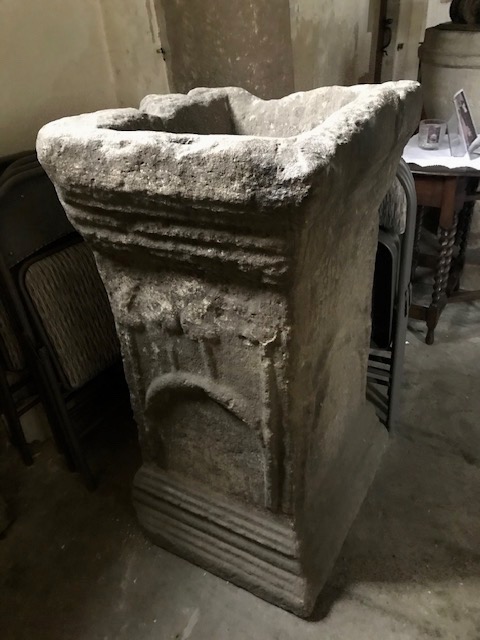
Another Roman recycled stone relic was originally an altar dedicated to Jupiter, discovered in the churchyard in 1827. It was turned upside down, re-purposed as a font, which was a little odd really as they already had a font! That one is circular (with a fine Jacobean wooden cover) probably fashioned for the new C13th church. Do the families of infants about to be baptised get to choose which stone receptacle they want used?

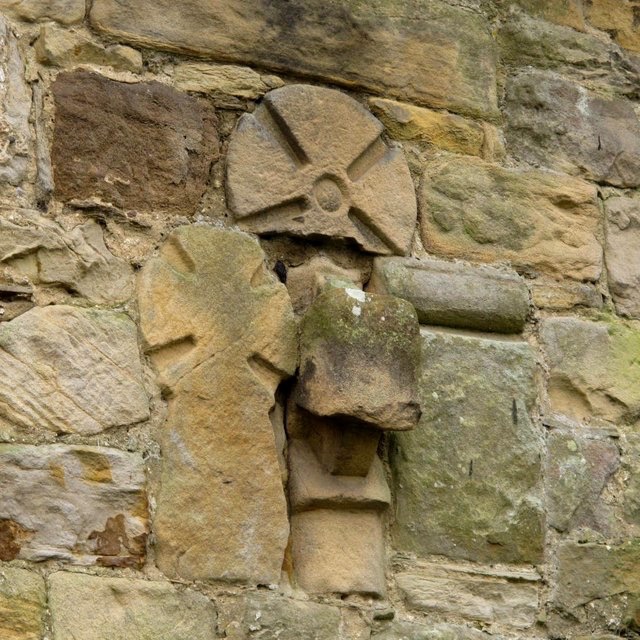
A walk around the churchyard revealed high up on the north wall of the chancel a former window blocked with small stone crosses formerly used to mark medieval graves…Were they recycled skywards when the church was restored in the 1870’s I wondered?

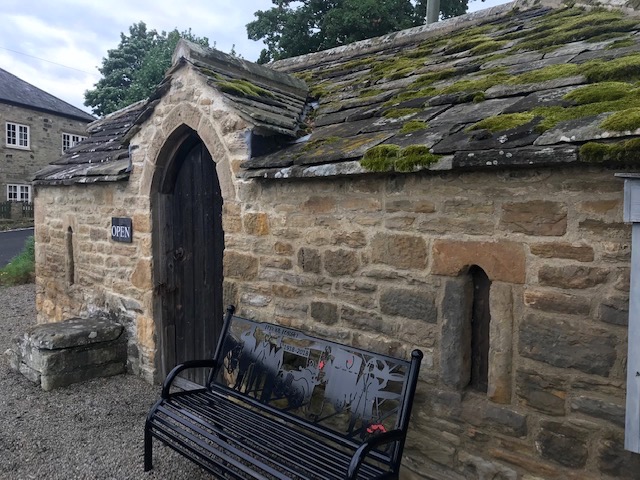
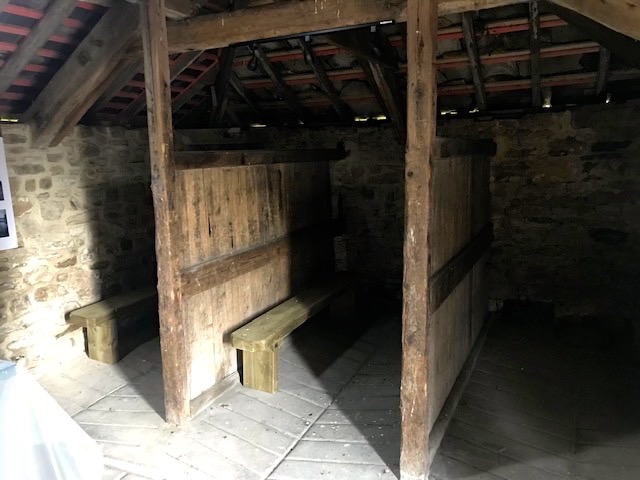
The church ground’s other unusual feature was a complete surprise to us. On arriving we’d taken the sign saying ‘Open’ only referred to the church and not to the single storey building by whose old wooden door it hung. So it was a bit of a thrill to step into what was an early C19th church hearse house and stable block. Restored seven years ago, there are illustrated information panels on the wall about the village and its history.

As well as the stalls for horses and bearers coffin carriage, I liked the pattern of drainage rills in the floor and the fact that the building was formerly the village post office.  Today the parish is home to under a thousand people while in 1851 the population was over 5,000. Much of the housing has disappeared, along with all its agricultural and industrial trades.

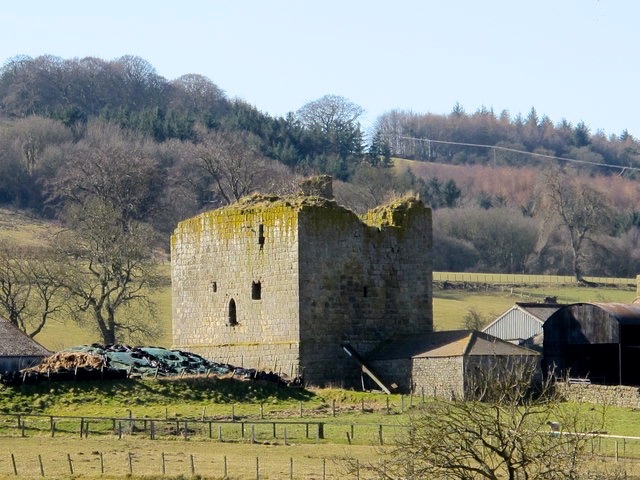
On leaving we noticed a mile southwards the impressive remains of an unaltered  C15th century bastle (fortified house) known as Cocklaw Tower. This was the former home of feudal landowners the Errington family, some of whose tombs lie in the church. Today all that’s left of the medieval settlement of Cocklaw is a large farm whose modern buildings surround the tower. Unsurprisingly the substantial three storey tower with its vaulted first floor is largely made of recycled Roman stone.

Bare Headland and Barley

Spent a few happy days away in the Scottish Borders, staying with the two oldest grandchildren while their mum, my daughter, was away in Edinburgh housesitting for a friend. Good time had catching up with Thea (15) and Joe (18). We shared their pleasure and relief that they’ve done well in school exams and are both ready for the next steps in their educational journey.

We did a couple of countryside walks. The family home in the village of Gattonside gives outstanding views over Melrose, centred round its romantic ruined abbey, and the heather and bracken covered steep slopes of the Eildon hills beyond. Leafy Gattonside, lying on the sunnier south flank of the valley of the Tweed, was the site of the medieval monks orchards. Today a footpath links it via a fine Victorian suspension bridge over the river to Melrose. I like the attractive small town’s range of independent shops and hostelries, with happy memories of attending the Borders Book Festival here in summers past. Reminded too that the former Saxon Kingdom of Northumbria once stretched from modern day County Durham to these eastern Scottish Borders, with its capital at Bamburgh on the Northumberland coast, so in an historic sense at least we were still on home turf.

Our first day walk was led by the kids, who know the terrain well. An initial steep climb up the hillside behind the house, with stops to enjoy good viewpoints over the wider fertile valley and its settlements. A field occupied by bull and cows with calves at foot prompted a diversion around a field of barley where the headlands had been mowed and the combine harvester was at rest, minus driver.

These great machines never fail to impress, especially when seen up close as now. What a revolution they have wrought in agriculture. Reaping, threshing and winnowing combined in one machine. This one was an American make, the CaseIH5140. Smaller than many and no doubt better suited to this sort of hilly terrain and relatively small acreage. Jerome Case invented and manufactured his first horse drawn machine in the 1840’s on the plains of Wisconsin. The business later amalgamated with that of fellow inventor Cyrus McCormick and eventually in the 20th century the by then multinational business became known as Case International Harvester, or CaseIH.

The barley was short stalked. Almost certainly this is premium grade grain, grown to supply Scotland’s famous whisky industry with its key ingredient. Apparently the qualities of an ideal crop are consistent grain size in each ear of corn, low nitrogen and high starch content to produce good enzymes required for the germination and drying process of malting, the basis of the distilling process.

We picked up the Southern Upland Way, making a gentle descent under the cooling shade of beech trees, emerging into quiet narrow lanes that eventually brought us back home. This is Scotland’s first and only coast to coast long distance path.  212m/341K in length the trail runs across the border country, mainly over sandstone hills, south west to north east, from the Atlantic to the North Sea.

Our second family walk allowed us to discover Old Melrose, a few miles downstream from the current site, situated on a promontory formed by a hairpin bend in the Tweed. This was the land gifted by King Oswald of Northumbria in the 7th Century to missionary monks from Iona, led by St Aiden. That early set of monastery buildings would have been separated from the mainland by an earth bank ditch or vallum. This physically secured the site and acted as a reminder that the monastery was a sacred holy place, separated from the secular world. It would have been treeless then, hence the name ‘Bare Headland’ or ‘Mail Ross’. Aiden inspired Cuthbert to become a monk and eventually he became Prior here. Cuthbert heavenly visions caused him to leave for Lindisfarne where he secure Aiden’s foundation on Holy Island, and where he was initially buried as a revered saint. The modern St Cuthbert’s Way, officially designated as a long distance trail in 1996, retraces the great man’s 62m/100K sojourn.

Melrose Abbey. Photo Credit: Jibber Jabber

Eventually, through war and political shifts the old monastery at Mail Ross was destroyed, and though rebuilt was, by 1073, once again in ruins with only a pilgrimage chapel remaining. In 1130 King David of Scotland granted the land to the Cistercian monks of Rievaulx. They retained the name but moved the settlement two miles west to what is now the location of Melrose Abbey.

The peninsula today is part of an estate owned by the Younger family who made their fortune in the C19th as Scotland’s leading brewers. The family purchased and rebuilt ‘Ravenwood’, an estate house that lies hidden in the woods that now cloak the previously ‘bare headland’. Where those woods give way to pasture and arable the estate steading’s old court yard has been converted to offices, an antique shop, café and second hand bookshop. We had a excellent lunch outdoors there after our traverse of the estate’s scenic trails.

Landowner William Younger has initiated a phased programme of works to clear coniferous plantations and replant with deciduous trees. We saw chestnut (above), rowan, oak, hazel etc. secured by tree guards, surrounded by deer fencing. Those clearances and rides also happen to encourage butterflies to breed and open fine views of the Tweed, one of the country’s best salmon and trout fisheries. There’s a mile and a half’s beat here on the right bank, with eight named pools, good for both high and low water conditions. Anglers who can afford the rates clearly need to be confident casters of line and competent waders in its variable waters.

We passed a newly created wildlife pond on the wider flood plain. Lined and weighed with stones around the circumference with no planting to soften the outline it presents as bare and uninteresting. No doubt in a few years it’ll be serving its intended purpose, creating a rich habitat for amphibians, insects and water fowl. In that regard I was delighted to catch large red damselflies skimming its shallows – testing the waters as it were. We’ll come back another day to see how it’s all coming along.

Large Red Damselfly. Photo Credit: British Dragonfly Society

Future Proofs

Phoebe Connolly looking at one of her engravings on glass made for her residency 2020/21

Following on from my last entry on Cherryburn and the naturalist and engraver Thomas Bewick (1753-1828) here’s a summary of the resident artists programme since 2017, when my own association with the birthplace also began.

Bewick’s work was widely popular in his own day as well as with succeeding generations of artists and crafts people. Numerous woodblocks and preparatory drawings are in museum and private collections worldwide, alongside those of his thirty five apprentices at the Newcastle workshop, like Luke Clennell and Robert Johnson.

In 2017 a project to reflect that artistic association and craft legacy was launched. In association with Northern Print and the Arts Council contemporary arts duo Juneau Projects, AKA Philip Duckworth and Ben Sadler, exhibited Birds Want You To Listen during September & October. The exhibition featured an interactive print kit, viewfinders, prints, sculptures, and print blocks. I had a lot of fun as a new volunteer at Cherryburn, helping out in the print room (below) doing simple hands on work with children and adults using the duo’s templates, designed with the input of local schoolchildren.

From 2018 onwards the contemporary arts engagement project was expanded. The Arts & Heritage charity facilitated along with Mapping Contemporary Art in the Heritage Experience. The latter is a major research project led by Newcastle University with the National Trust, Churches Conservation Trust, Arts Council England and Contemporary Visual Arts Network. Our resident artists work is usually on display within the birthplace itself and/or adjacent museum. These season long events draw extra visitors, stimulating discussion and further involvement.

Credit and Copyright ©: Colin Davison +44 (0)7850 609 340 colin@rosellastudios.com http://www.rosellastudios.com

Conference of the Birds by Marcus Coates (2019) Six bird species engraved by Bewick, given personalities by Coates, articulated by guest contributors with natural history expertise, recorded and played through speakers in an extended conversation covering all aspects of the birds lives and behaviour. Members of the public either stood near or sat beneath the heads – all fabricated by the artist in the style of Bewick – to listen in. Which we all did…enraptured! An original and engaging exercise that many visitors said was the best contemporary art exhibition they’d ever experienced.

Walking, Looking and Telling Tales (2018) by painter Mark Fairnington. (above) The exquisite small paintings reflect the place, the Northumbrian landscape and the work of Bewick. Mark gathered information by walking the county, his work becoming a record of the people and places he visited. The paintings, on display in the birthplace itself, include miniature landscapes that look at the countryside Bewick knew well from a contemporary viewpoint.

The Hanging Swing by Mark Fairnington: oil on board 16x12cm

Birds, Beasties & Bewick (20/21) Capturing the spirit of Cherryburn through observations and encounters of animals and plants in the landscape, in the Spring and Summer of 2021, arts graduate Phoebe Connolly’s installation of 20 finely detailed engraved glass panels sought to inspire visitors to reconnect with nature. Despite the bedevilment caused by the health emergency Phoebe’s beautiful work drew a great deal of admiration.

Phoebe Connolly with her glass engravings in the birthplace

This year’s artist in residence is George Shaw. Turner prize nominated George (b.1966) grew up on a council estate in Coventry and his finely detailed work, executed in humbrol oils, have become well known for creating distinct observations of alienation and discord in contemporary urban Britain. The pieces on display here, entitled Home is Unspent take a slightly different course.

Opening evening at the private view for George Shaw’s Home is Unspent

George’s show opened at Cherryburn in mid July and runs to the end of October when the property shuts down for the winter. Everyone had a good chatty time of it at the well attended private view which took place both outdoors and indoors on a lovely warm evening.

The wee pictures on easels in the birthplace are of George’s former childhood home after he’d moved all his mother’s possessions out following her death. The paintings in the house chronicle nests and dead birds in the garden of his current home on Dartmoor, done during lockdown. He calls these a ‘History of Dead Birds’.

If you’re in the area please come and visit! Property open on Thursdays and Fridays until end of October. Bookings preferred but you can also rock up, though you may have to wait a short while if numbers are limited. Check out the website www.nationaltrust.org.uk/cherryburn for details and to book a slot.

One of Thomas Bewick’s most famous woodcuts: The Chillingham Bull (1789)

Cherryburn

‘Oh now that the genius of Bewick were mine / And the skills that he learned on the banks of the Tyne’ (Wordsworth)

When in 2017 I moved from Lancashire to live in Northumberland, encouraged by Kim I took to volunteering for the National Trust at Cherryburn, birthplace of the engraver, artist and naturalist Thomas Bewick (1753-1828)

Thomas Bewick by James Ramsay

Post Covid I’m now employed there as a ‘Customer Services Assistant’ on the two opening days, Thursday and Friday, up until the end of October. With mine and Bewick’s birthdays fast approaching I thought it a good time to write a few words about man and place…

Cherryburn; birthplace exterior (2022)

Interior of the birthplace in 2017

Cherryburn is a preserved 18th century farmhouse situated on the steep southern flank of the Tyne valley, a dozen miles upstream from Newcastle. The Bewick family’s new farmhouse next door, dating from the 1820s, made the former stead redundant as a residence, when it was part demolished and given over to stock and storage use. Cherryburn was the first museum to be taken into the care of the NT, in 1990. It only had 8 acres attached to it in Bewick’s day but the family also leased and worked a small coal pit and enjoyed grazing rights on neighbouring Mickley Common.

The Museum & Print Room in the Cherryburn New farmhouse

Thomas was born at Cherryburn in August 1753, the eldest of 8 children. He spent the first 14 years of his life here before leaving to serve out a seven year apprenticeship to the engraver Ralph Beilby in his workshop at Amen Corner by St Nicholas Cathedral in Newcastle. The two men later became partners in the thriving business, engraving everything that could be engraved on any surface, from glass and precious metals to wood, ivory and leather. The busy premises have long gone but a bust and plaque to commemorate Bewick marks the spot.

In the print room at Cherryburn

Thomas Bewick perfected the art of wood engraving in Georgian England, revolutionised the illustration of natural history and was the first artist to make a living from book illustration. Seeking to produce the illustrated wildlife book he sought out as a youth but never found, the young businessman set out to produce it himself.

Original Quadrupeds book boxwood block from the Cherryburn collection

The resulting volume, 5 years in the preparation, was A General History of Quadrupeds (1790). A glorious muddle of illustrations and descriptions of familiar four legged creatures – horses, cattle, sheep, badger, fox etc. – mixed in with the unfamiliar – kangaroo rat, lapland marmoset, cameleopard, spotted hyena and many other creatures novel and exotic to European eyes.

Magpie (Enlargement) from A General History of British Land Birds

Encouraged by the widespread popularity and commercial success of Quadrupeds he went on to produce the influential masterwork on which his reputation rests, A General History of British Birds (land birds, published 1797 and water birds in 1805). Its breakthrough style – pocket sized, with detailed illustration of animal in its habitat with description under – established the format for future field guides.

The young untutored Thomas had been obsessed with ’figuring’ on every available surface with anything he could get hold of – bird feather quills, nails, pencils or chalks. In between doing hard every day physical work around the farm and mine he flunked elementary education at the village school to roam the fells, woods and riverside. Acute first hand observation and total immersion in every aspect of nature and country life, through all the seasons, would stand him in good stead for his future chosen career. He would draw freely on that rich memory bank of imagery and incident which, when combined with outstanding technical mastery of craft, resulted in the extensive range of work we admire today.

The Runaway Cart. The carter has been distracted by the Inn and its barmaid, with drastic results…(From A General History of British Birds)

Bewick is also famous for the ‘tail pieces – or ‘tale pieces’ as he called them – which filled in any blank white space on a page at the end of a description. These delightful miniature vignettes usually tell a story or point a moral. Just like the bird engravings they capture and distil an intimate and earthy knowledge of the subject matter and encapsulate it brilliantly despite, or because of, the restrictive space.

Cherryburn: The birthplace

Up until his parents died in 1785 Bewick would spend most weekends at Cherryburn, walking there and back from Newcastle as a matter of course. A big personality, mentally and physically, Bewick prided himself on his physical fitness, self improvement activities and clean living. Only when both parents died in 1785 did the young man consider himself free to marry childhood sweetheart Isabella the following year, the couple going on to have four children.

Thomas Bewick became famous in his own lifetime, much to his great embarrassment. He died, aged 74, still working to the end, having spent virtually all his life on Tyneside. Bewick’s work is better known than he is, most of our visitors knowing little about him when they arrive but leave knowing a lot more, sharing our love and respect for this remarkable northerner and his singular achievements.

If you’re in the area and fancy discovering Cherryburn for yourself please pay a visit. You’ll be greeted on arrival either by me or my lovely colleague and friend Norma. She is someone guaranteed to give you the warmest of Geordie welcomes! https://www.nationaltrust.org.uk/cherryburn

The neighbouring farm’s Hereford cattle grazing Cherryburn’s fields today

If an actual visit isn’t possible but you’d like to know more about Thomas Bewick and his world check out the beautifully designed and comprehensive Bewick Society website. http://www.bewicksociety.org/

Leading biographer Jenny Uglow has written a highly readable award winning biography of Thomas Bewick entitled Nature’s Engraver (2007) https://www.faber.co.uk/product/9780571223756-natures-engraver/

A gate and a field half ploughed,/ A solitary cow,/A child with a broken slate,/A titmarsh in the bough. But where, alack, is Bewick / To tell the meaning now? (Tennyson)

July Days

Temperatures have been taking wild swings, from sizzling to chilly. More thankfully rain revived the greenery and topped up the near empty water butts. We continue to save bath water and fill the zinc trough in the yard. Very pleased to source and fit covers for our other open top tubs thus ending the accidental drowning of summer songbirds. Being permeable they let the rainwater in and will keep falling leaves out. A real win-win and only regret I didn’t do it earlier.

Sitting on the deck, reading or writing, I hear the whirr of wren wings as the parents nurture a second brood in their moss mounded nest high above the log stack. At the other end of the stone paved deck the second set of swallows swoop in to their mud thatch home in the rafters. We thought this pair was about to produce young but despite much coming and going and general twittering nothing’s happened so far. Do they go through the reproductive motions only to then prove barren I wonder?

Wren’s nest above log store

This year’s swallow babies, now in the avian stage of teenagerdom, have taken to hanging together out on the telephone wire running the length of the lane between us and Southridge. Our crew and the much larger kin group up at the farm number in excess of 30 juvenile birds. Insect activity is high, especially on humid windless days, and all our resident bird species – wagtail, wren, robin, dunnock, tits – are actively feasting and foraging on them, some to raise a second brood. From my study window I see the swallows beating the air in freeze frame, picking off the assorted bugs that get corralled under the glass pitched roof of the porch just feet across from their nest.

Delighted to spot the elegant shapes of willow warblers – delightful melodious summer visitors – insect hunting on the garden foliage. Even more delighted to eventually distinguish them from their near identical cousins, the chiff chaffs.

Another wild animal that likes what our summer garden has to offer is a brown hare. It turned up the other evening in the fading light, cautious yet fearless, making a leisurely circuit round the gravel paths and steps, sampling plants as it lopped along. Kim thinks it was probably responsible for dispatching some of the kale plugs she planted earlier in the season. That doesn’t stop us from being thrilled that it’s gracing our patch. Laden with symbolism in most human cultures, such a beautiful creature will be forgiven almost anything.

Any guest at the corner house this time of the year might well be invited to help pick a seemingly endless supply of fruit from the laden branches of our blackcurrant bushes. (If only we could get raspberries to thrive in the same way!) What isn’t turned into jam gets packed away in plastic bags for the freezer.

The meadow as it matures produces new flower species each year. Making a welcome debut in 2022 is that pretty wayside plant, musk mallow. More common in the drier south this plant originated from the shores of the Mediterranean. The French name for mallow is ‘mauve’ and is where the colour name came from.

Having the two youngest grandchildren (Max 7 & Lois 5) in residence with their mum for five days recently was lovely. Did lots of stuff together and got the two little Londoners that little bit closer to nature. A walk in the nearby woods, following the stream, worked a treat. Especially when we came upon scores of tiny froglets making their intrepid way across the path, hopping through the grass to reach water. 

Another time I gave the children jobs to do in the garden (under close supervision) like lifting potatoes, deadheading spent roses or watering plants in pots. Hopefully this may give them both a taste for gardening in future…

Max adores his miniature version of ‘Floss’ while Lois has long been in love with Seymour and Henry and the two little ducklings that were Kim’s models for the picture book were never far from her side during the children’s stay with us.

Walk in the Woods

But most where trees are sending / Their breezy boughs on high / Or stooping low are lending / A shelter from the sky.

(From: ‘Moonlight, Summer Moonlight’ by Emily Bronte)

A favourite local walk threads through a mile and a half of mixed woodlands and riverside where Kielder Forest intersects with the rough upland pasture that surrounds it. I think of this as the Forestry Commission’s factory shop window. With nearly nine trees in ten being either a Sitka or Norway spruce, the vast bulk of the country’s biggest made forest does not invite entry for rest and recreation, but this delightful spot they’ve created always does, whatever the season. This week, during a rare spell of prolonged warm dry weather, it made for a fine cooling stroll with visiting family.

Youngest son Patrick is a chef at a Lake District gastro pub and pointed out as we passed a bank of it that Meadowsweet is as good a bet as elderflower to make a seasonal cordial from. Took the man at his word and the creamy blossoms picked were prepared immediately by him on returning home…And yes, it does indeed.

Shocked to find the normally fast flowing burn so perilously low and sluggish. We watched inch long salmon or brown trout fry (I’m not sure which species) as they darted through the stony shallows seeking shelter and food. The Tyne, of which this stream is a tributary, is currently the only English river in a stable state to support healthy salmon numbers.

This is partly due to major environmental improvements cleaning up the post-industrial river estuary and partly due to the well established salmon breeding centre by the north Tyne river headwaters in Kielder village. (A tourist attraction in itself). The centre releases many thousands of fry into the North and South Tyne river systems every year. Survival rates for game fish in the wild are low; only around 1 in 20 salmon and trout fry survive their first year of life.

Flocks of goldfinches flicking through the lodge pole pines while the cool woods and wide rides at this point are alive with butterflies. Most of them were reluctant to settle, so unable to take a decent photo with my phone. However daughter Grace and I managed to ID a male Meadow Brown. This common butterfly feeds on grasses and loves this sort of environment. There were even greater numbers of ringlets on the wing. Giveaway dark velvety appearance with the halo fringe of white and the palest of dots on the wing in the one I eventually got a shot of when it finally alighted.

Both butterfly species love nectar rich brambles, of which there were a good supply here on the wooded slopes below the pines. I admire the subtle mauve colouring of the flowers and forget about the plant’s wounding barbs.

The forest is estimated to be home to half of England’s endangered red squirrel population and (as noted in ‘Red Alert’) it was here I last saw some in early January last year. No sightings now but always glad to see something striking, like this fungi working its way through a fallen tree trunk or a toppled shallow rooted conifer re-configuring the forest floor.

The winter storms brought down whole swathes of mature trees, causing a path diversion and the foresters have been gradually cutting and clearing masses of windblow timber on this site. Most is now stacked and ready to be loaded and driven off to be turned into chipboard, used as fuel for biomass or sliced up in saw mills.

Across the narrow tarmacked lane a whole hillside was clear felled last year. Today we heard then saw a harvester on caterpillar tracks lifting and stashing a stout wall of brash and brushwood left in the wake of that clearance. They’ll be replanting soon and I’ll be interested to see whether it’ll be all spruce or a mix with deciduous and/or pine.

At one point the path crosses over, or rather through, a shallow bank and ditch, even less noticeable when filled with the flush of tall summer grasses. This is a section of what was once an ancient south to north earthwork known as the Black Dyke, which predates Hadrian’s Wall (where the dyke disappears as the Roman wall runs east to west across it). The earthwork is traceable from the junction of the Allen and South Tyne River to above the North Tyne between Bellingham and Tarset; a distance of approximately 13 miles. The planting of Kielder forest in the 20th century obliterated more, but here the course is clear, while elsewhere the dyke and bank have been incorporated into field boundaries or used as farm tracks and footpaths. It’s generally assumed – though cannot be proved for lack of evidence – the earthwork was originally intended as a boundary between neighbouring Iron Age tribes.

I was reminded of another ancient earthwork, the Giant’s Hedge in Cornwall, a section of which I ‘d walked last month. (see ‘Rail and Trail’ entry)

Hay Up

Through the ample open door of the peaceful country barn / A sunlit pasture field with cattle and horse feeding / And haze and vista, and the far horizon fading away. Walt Whitman: A Farm Picture

The summer heat wave has finally arrived, like a long awaited and keenly anticipated guest. Here in the far north of England we’re allowed to revel in its luxurious presence. House and garden are surrounded by fields and the lanes are busy with verge to verge fast moving machinery as farmers and contractors make proverbial hay while the sun shines.

Our neighbouring big meadow was finally cut and turned mid week and on Saturday morning the same contractors returned for part two. First the rowing up with tractor and tedder (machinery that can both spread and ‘row up’ cut hay), soon joined by the tractor with baler and finally a tractor hauled long flat bed trailer makes an appearance with another tractor whose hydraulic forks lift and load the round bales that the baler has just dropped. The whole exercise is fabulously efficient and as skilfully and gracefully executed as a piece of dance theatre.

I make little videos of each stage of process to WhatsApp for viewing by the youngest grandchildren, Max (7) and Lois (5) at home in London who love all things mechanical in action; from cranes to trains to agricultural kit. I did the same last year so this is probably old hat to them now, but I hope they like to be reminded of these classic countryside scenes none the less.

Eldest grandson Joe (18) has, to our delight, opted for a career in farming. We fixed him up for initial work experience with two of our neighbours last year and he’s gained a place at Newcastle University to study agriculture, starting this Autumn. Earlier this Summer he did a two day tractor driving course near his home in the Scottish Borders so in a few years time, who knows, maybe it will be Joe driving one of those tractors in a field near us at hay time!

The garden meadow has produced a flush of oxeye daisies where none flowered before. It was a bordering metre wide strip I’d scarified in previous years so chances of seed taking were greatly increased. Still surprised me though as it took a couple of years for them to finally flower there. Meanwhile the yellow rattle, now spreading freely of its own accord without me needing to reseed by hand, is colonising large patches of grass and consequently reducing the height and density of the sward so that next year, with any luck, other more delicate meadow plants should be able to join the floral cast on display. The pretty yellow flowers have now mostly died away to brown seed pods, whose characteristic rattle give the plant its common name.

The common orchids bought at a local nursery’s closing down sale last summer, re-planted as plugs in the meadow borders have, to my great delight, taken and spread. Having a clump of birds foot trefoil making a debut in the most intensively prepared top triangle of meadow made me very happy too. I hope it too colonises next year. And that, in essence, is the joy of any meadow a gardener creates. You never know what will happen year on year as the character changes with the appearance of different plants, whether deliberately planted or opportunistic arrivals.

I’ve a soft spot for that recurring symbol of pre Christian paganism, the green man. While walking the main thoroughfare out of Polperro when we were back in Cornwall  last month I discovered the workshop of a local woodcarver and bought one of his green man imaginings fashioned from a curving flank of ashwood, to station in our garden back home. Lots of places it could go but for now it has residence in the lush flower and shrub beds of the bank border. I hope it will be happy there, keeping an eye on the landscape.

I love gathering heads of elderflower from our garden trees for Kim to make cordial. Particularly like the blossoms of our single black elder which yield a beautiful deep pink cordial. Some we’ll have over the coming weeks while the rest (decanted in plastic bottles) goes to the freezer to re-conjure the scent of summer in winter.

We’ve caterpillar tent moths camping out on the apple fans for the first time this year. Going round removing them whole by hand eased the problem and reduced chances of the caterpillars devastating leaves and buds. All the apple varieties doing well and the fruit beginning to swell. The James Grieve, the oldest established and most productive of the fan varieties on our south facing wall, doing particularly well.

Two swallow pairs nested this year and one couple are currently sitting on a second brood we suspect, having built a second nest. I guess they have the time to do so, but why bother I wonder? Unless, of course, they’re not the same parents. I say this because the pair that set up shop in our open fronted garden shed (the old railway goods wagon chassis) seem not to have bred there successfully. After initial nest building flights in and out seemed to cease I found a dessicated newly hatched dead nestling on the ground beneath their nest there. There was also a lot of intense chirruping and chasing agro a few weeks back between adults in and around the traditional open porch area where the first pair nested. It could be that the second duo have forced their way in from the old hut to what is clearly the more favoured location. Only a team of ornithologists working with ringed birds could tell if my theory is true!

Swallow flight path…Nests and night roosts are above this viewpoint

Northumberland skies are the gift that keeps on giving. Sunsets crown the darkened uplands in spectacular fashion with an infinite variety of clouds forms, while daytime scenes remind us just how busy the skies are with summer flights, as plane vapour trails dissolve in the azure of a near cloudless sky.