I got a call this week from a stranger in a phone box on the Isle of Lewis. Well, not a stranger so much as a fellow arts worker I’d never met. Although in many ways I feel I do know him, having worked happily with his archetype before. Let’s just say we’re fellow travellers on the same road. William Arnold is an experimental photographic artist from Cornwall and he’s just completed a self-imposed eccentric mission to save public telephony in Lewis.
I’d read about his proposal in Caught by the River, https://www.caughtbytheriver.net/ the online magazine covering the intersection of arts, nature and culture. (website) and was hooked. Maybe because of the shared Cornish connection and my own Theatre in Education tour of Lewis & Harris in the late 1970’s for Pitlochry Festival Theatre, the fact that william had studied at both Lancaster and Plymouth Universities. No, really it was because the whole idea was such a romantically eccentric connective adventure and I wanted to support it. Let William explain the self imposed task in his own words, from the Crowdfunder pitch (my edit):
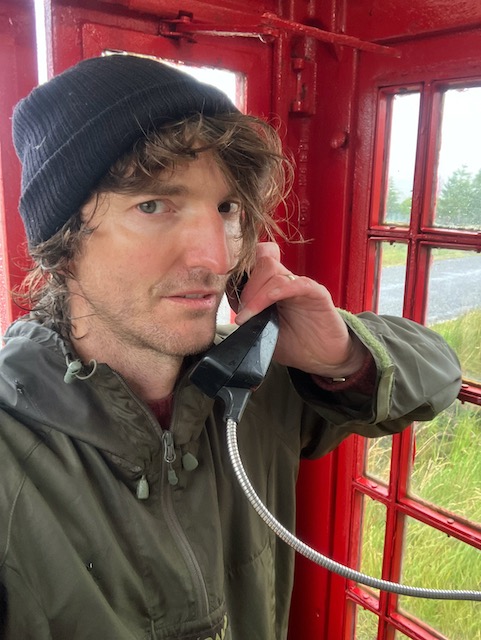
‘This is a campaign aiming to cover expenses of a trip this August from Cornwall to the Outer Hebrides to make 52 calls from a BT telephone kiosk for it to be retained by law for another year. 52 calls made within a one year period is enough to prevent BT from disconnecting a kiosk under OFCOM rules.
Ideally, I will try to make these calls from the last double-door K6 kiosk in the country with a connected phone line….If this all sounds daft, it is probably because it is, but it is underpinned by a genuine desire to make connections between disparate rural and coastal localities, have real conversations that aren’t mediated by a screen and of course the phone might actually be useful in an emergency!
From poring over the available BT removals proposals [I have] identified those lucky few that escaped the cull and have been retained, presumably because somebody like me wrote a good enough email of complaint….Cross-referencing against a local council document which contained the phone numbers for these kiosks I have been able to establish that the lines are still connected.
I can’t offer any huge rewards, it is difficult to monetise a weird performance project like this and I’m not even going to try the Arts Council but you could think of it as a kind of rural touring theatre. Why the Outer Hebrides? I have since 2017 been making work considering the ritual landscapes of the Atlantic seaboard, in particular West Cornwall where I live and Na h-Eileanan Siar (Lewis & Harris). The work considers these landscapes in their contemporary context and considers the weight given to some markers of heritage value over others. I think there’s a link between the stones and the phones!’
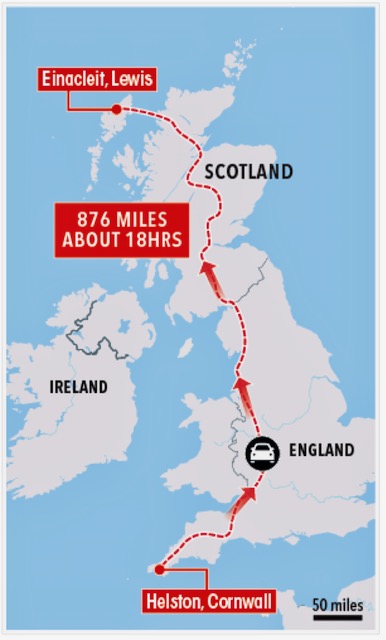
Along with a bunch of other folk across the country we coughed up enough and more in the way of sponsorship to enable our man to complete a 1,700 mile round trip from his home in Helston (Mainland England’s most southerly town) to the other end of the UK and back. William told me, in one of those essential 52 individual calls made to sponsors, that he’d broken the epic drive staying with his parents in Northumberland and would be overnighting in a B&B in the Lake District on the long trek back. While in Lewis he’d been hosted by an old friend.
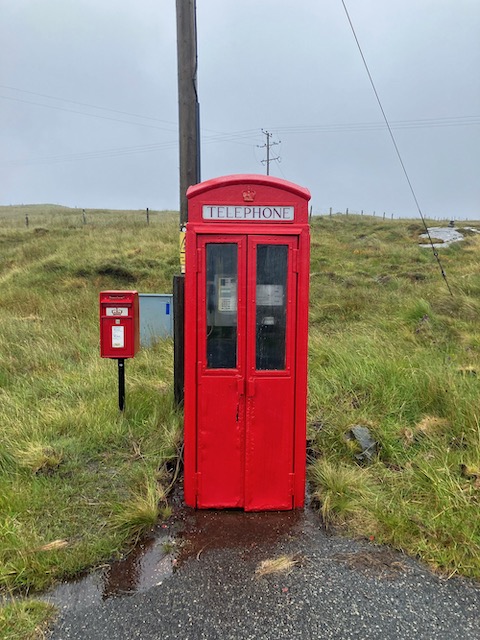
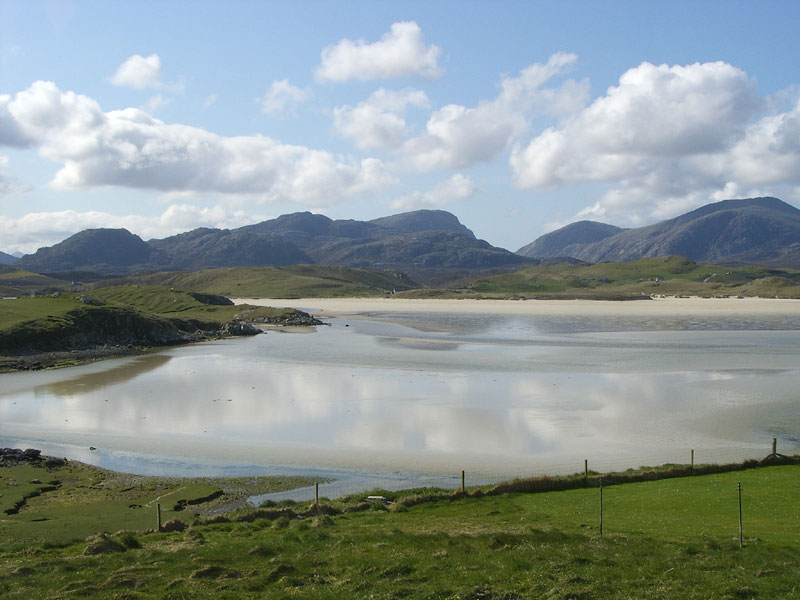
As the southern part of the UK sizzled in the current extended heat wave our lone hero was ensconced in a unique K6 double doored box next to a post box in the remote crofting township of Einacleit on Loch Uig, fierce wind hurling all about him outside, with rainwater filling an inch of floor within. (Double doors can more safely withstand ferocious winds compared to a conventional single one). Armed with a stash of silver to feed the box, his connection was crystal clear to our own land line. We joked in our chat that local folk seeing him in the box on the phone for such a long time might conclude he must be calling the Samaritans!
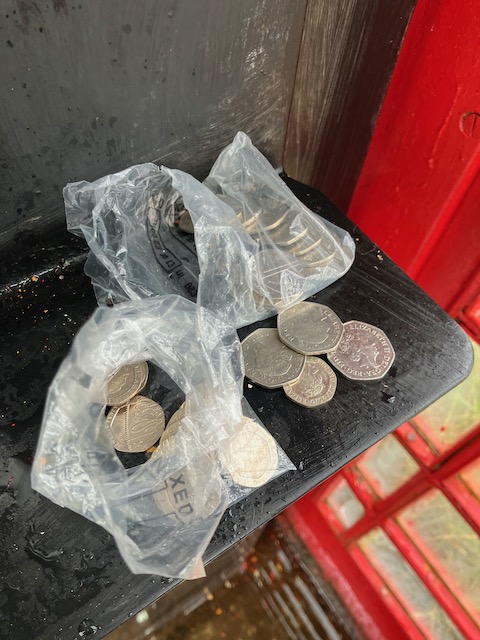
One question I failed to put to William was what if the good folk of Einacleit, by not using the phone box enough (presumably because they all have mobile phones) felt that the loss of their BT box to be inevitable, if regrettable.
William, like all cultural practitioners in our day, is media savvy. The Scottish Sun picked up on his mission and ran a comprehensive story on the project. Likewise it was a topic on BBC R4’s Today programme on Mon 10th August, and no doubt on other platforms too. I hope he benefits from the whole experience and look forward to seeing what other imaginative socially relevant happenings his fertile imagination will conjure up in future. https://williamarnold.net/
For an inspiring read about a handful of other surviving K6 telephone boxes around the UK here’s an article by the 20th Century Society marking the 40th anniversary of the listing of these iconic British structures: https://c20society.org.uk/news/quirky-kiosks-40th-anniversary-of-first-phonebox-listing-marked