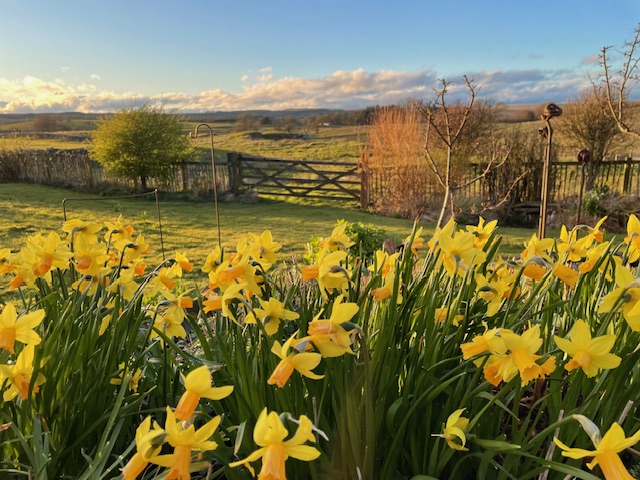
Who doesn’t want to see the back of winter? The trouble is winter doesn’t want to see the back of us just yet. Spring is a tad tardy in appearing here in the borderlands, arriving in fits and starts. But the longer days and gradual greening is cause for cheer; the soundtrack of curlew, skylark and lapwing balm for the ear.
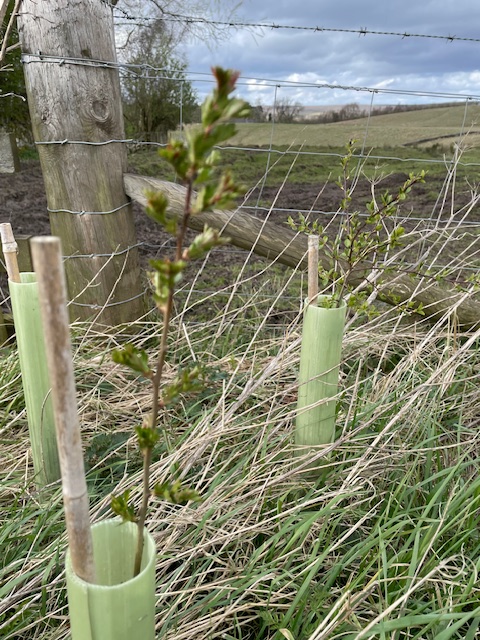
Good progress on the mile of roadside hedging either side of our abode established by our friends and neighbours at Southridge. I continue the volunteer monitoring, rectifying fallen guards, replacing rotten or broken canes. Now hawthorn and hazel, blackthorn and run ahead roses are breaking cover, waving in the wind atop their protective plastic tubes.
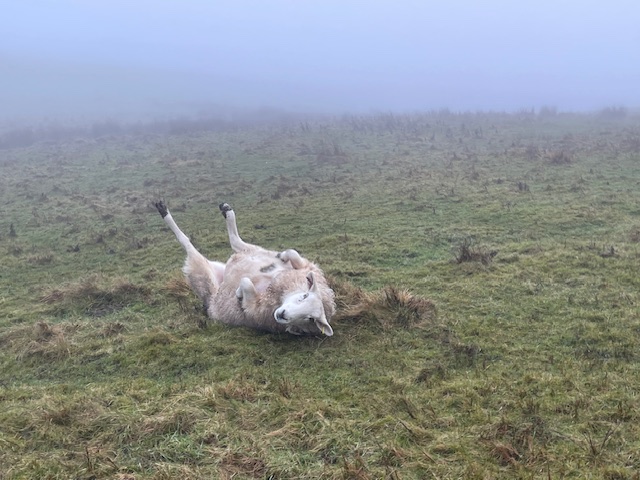
Earlier this year, one misty day, we stopped to right a cast ewe in our neighbour’s field. The animal’s gravid barrel body and dense fleece had stopped it righting itself, so glad to lend a helping hand. The flock were taken off last week, back to the farm, and now the biggest and best pasture is filling with ewes and lambs.
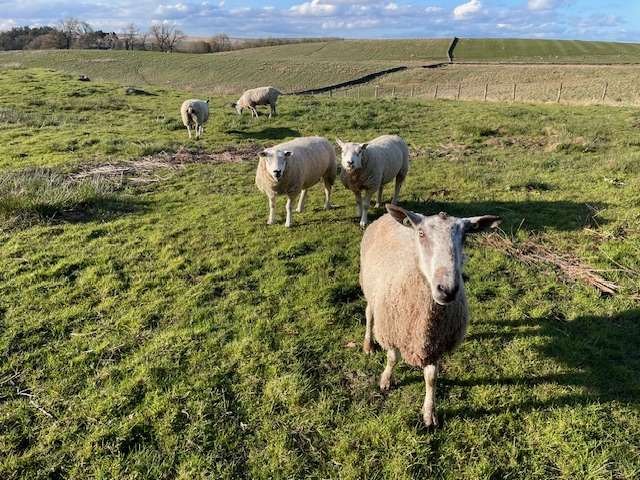
Next to it our four acres of rough grazing is back to host the tups – Texels and the Border Leicester ram who has featured in this diary before. They loll about not doing much, like old fellas down the working mens club, while their offspring skip and leap about on the other side of the dry stone wall, oblivious of their presence.
Delighted to catch hares re-appearing in the garden at all hours, whether grazing or just passing through. With no dogs or cats on the premises they have no fear of being driven off. Am convinced these particular hares are the adult form of those last seen as leverets on summer evenings, gathered as a family group on the garden paths whilst their dam was out and about foraging.
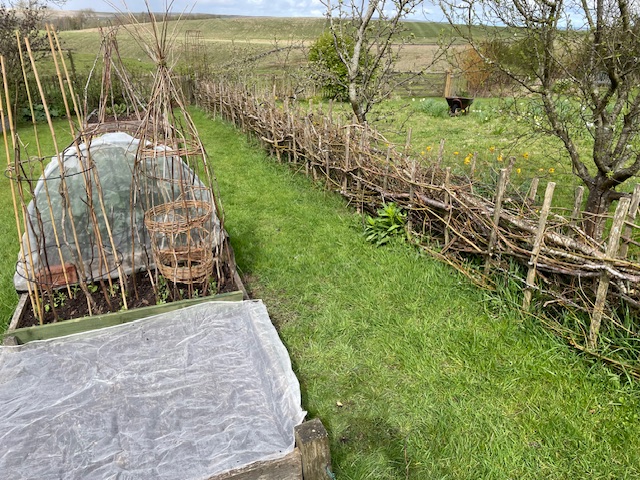
Earlier this year I decided to create a dead hedge in the garden. By recycling as vertical stakes the best preserved chestnut paling in the picket fence that separated kitchen garden from meadow we were able to establish the hedge’s breadth and length. Then built up horizontal layering and weave with pruned branches of old willow, alder and various woody bushes over following weeks. A remarkably satisfying transition, relatively easy to accomplish, in the rustic tradition!
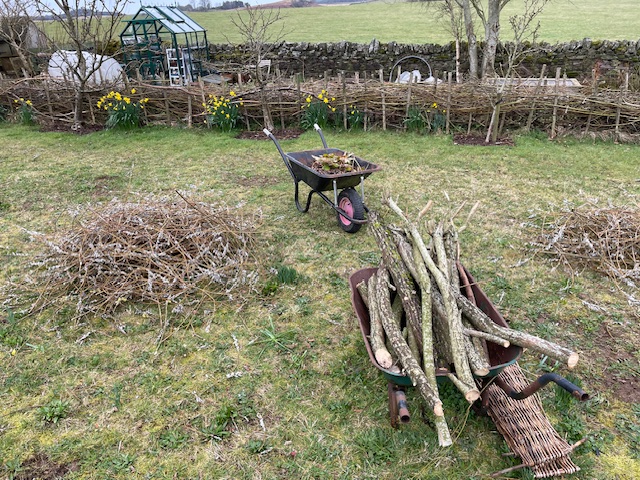
We’re hoping this dead hedge will benefit resident wildlife, act as a windbreak, and add another blended structural feature to the garden. I’d been gradually repositioning the bigger species of daffodils along the former fence line over the years so pleased to see they sit equally well, framed by the new hedge.
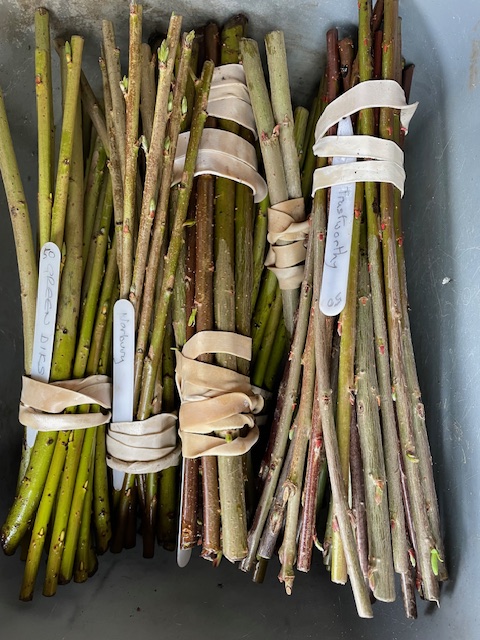
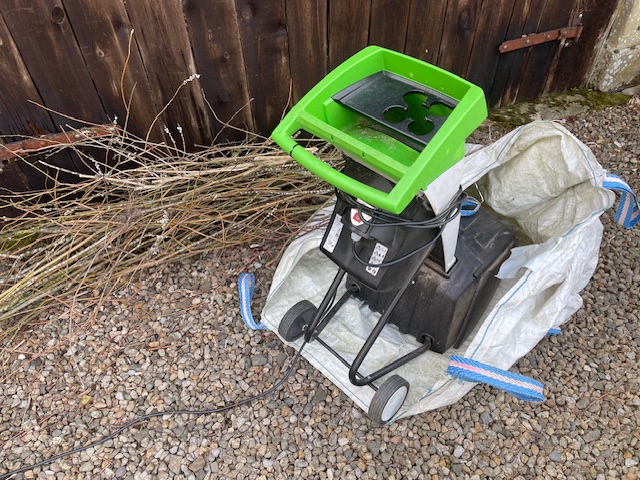
I never knew there were so many varieties of willow. In the wake of my clearing old established ones from the largest copse the serious family gardeners/ craftswomen planted these varieties in wet ground and large pots with an eye to harvesting for weaving into baskets and wreathes. I will chip what they don’t use for mulching and adding to compost. The straight young wands go down the throat of my noisy little chipper a treat and cause it few digestion problems, unlike tough knotty stuff like hawthorn or blackthorn.
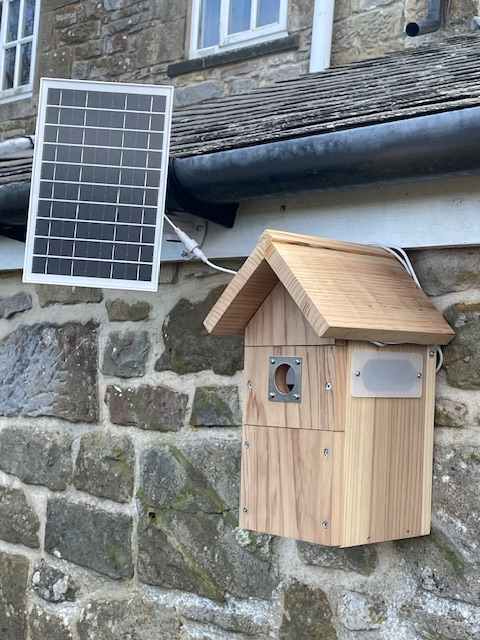
A lovely family Christmas present was a solar powered bird box with camera. Setting it up proved a tad tricky (It helps to read the instructions about operational range from router) but after a few false starts and final technical know how applied by the giver, we were finally set and ready to go.
Within hours the camera showed us a shake of moss on the box floor. I took that to be a down payment by a would be tenant and gradually more material appeared. At first I thought a wren might be the mystery depositor but soon we caught sight of the visitor. Rather unsurprisingly it turned out to be one of the blue tits that colonise the garden every year.
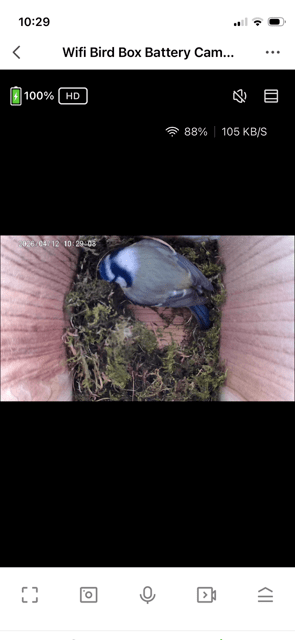
The bird’s hyperactive action in burrowing and fluffing the moss with its wings before stopping to view the result and flying off was a revelation. That led us to think it must be drying through aerating the fluffed up soft material. Constant re-arrangement takes place as a dense pile builds. Strands of dried grasses and cloudy swirls of sheep’s wool have been integrated into the uniform bed of green and we await full time occupation and laying of eggs.
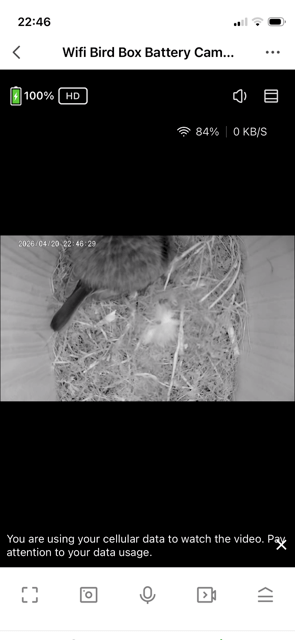
A few days ago we recorded this remarkable night time image. The adult bird has spent a lot of time preparing to roost by pulling out hundreds of its feathers to form a warm duvet to maintain life through the cold night. Early morning will be spent relaying them.
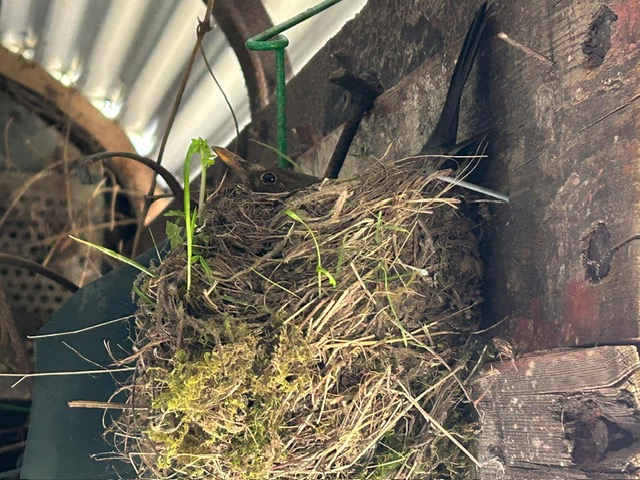
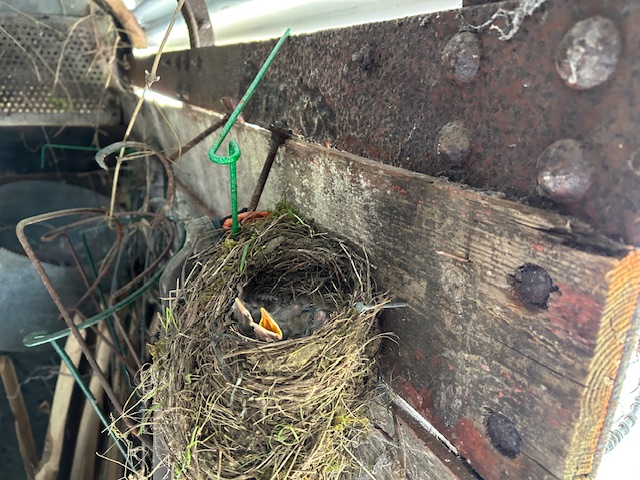
Meanwhile in the open gated garden shed we call the railway hut – the body of a former goods wagon – blackbirds have again taken up residence. In previous years they favoured a seed tray on a high shelf to support their intricate weaved abode. This year, oblivious of our entrances and exits inches from them, their nest sits exposed atop coat hook nails flush by the doorway. The hen, all head and tail, totally silent and still, keeps a sharp eye on our comings and goings.
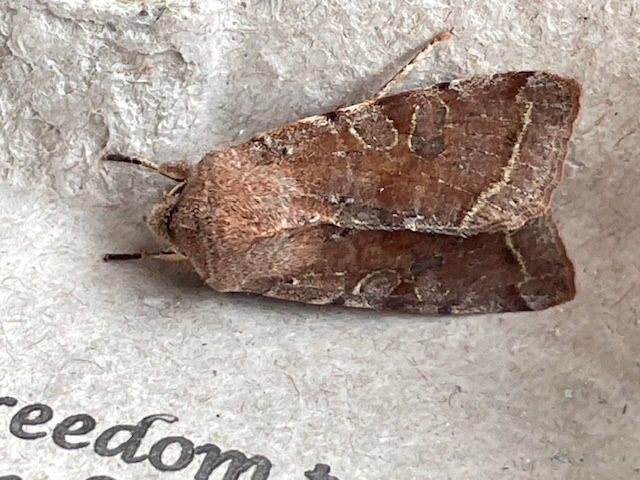
Starting to trap moths again. Amongst their number the usual early arrivals on the spring scene like Hebrew Character, Clouded Drab (pictured) and Common Quaker. Look forward to having more species visit as we warm and settle. That and following the progress of the nesting birds we know about while looking out for signs of where our other avian residents – wagtails, dunnocks, robins etc – will be bringing their broods into the world.