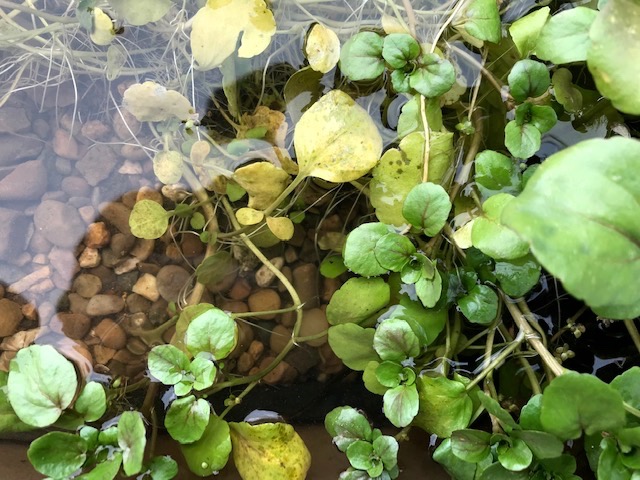
The new pond has already attracted newts, which is what I was hoping. Have also spotted a frog. Marginal plants I’ve set there include water avens, ragged robin and watercress. The floating leaves of watercress are a particular favourite for female newts to wrap their eggs in for protection from predators and this plant has attracted their attention as a hide out too. I’ve seen a pregnant newt on one occasion and what I took to be a male close by. As in previous years, in the original pond, they appear to be palmate as opposed to smooth newts. Palmate males have webbed back feet and the species prefer ponds in more acidic soils, like ours here in the hills.

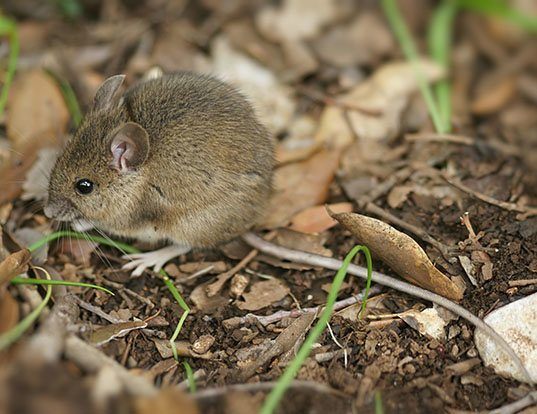
Had a treat yesterday when we saw through the kitchen window a long tailed field mouse (wood mouse) inside the bird feeder feasting on the fat balls I’d put there earlier. Interestingly when both a sparrow and a blue tit turned up to feed. Interestingly both birds kept their distance and didn’t want to go anywhere near the interloper. I stepped outside to try and getting closer for a photograph but its keen hearing had it flee before I got anywhere near. You can see from the picture that a skilled climber like this mouse can easily navigate the boughs of a lilac tree I’ve since moved the feeder to a higher, more slender branch which should put it beyond the rodent’s reach.
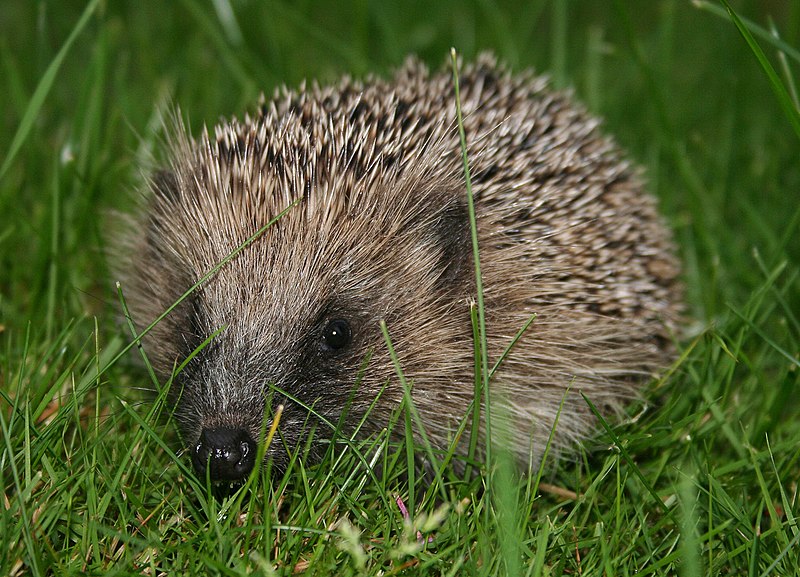
We had a fabulous treat last night on hearing a snuffle and a shuffle. By the lean to on the yard side of the house there was…a hedgehog! It’s the first time we’ve seen one this year, although their distinctive dark twisted droppings have been found elsewhere in the garden. Over the years I’ve made our patch as hedgehog friendly as possible. In previous years a hedgehog has hibernated in lodgings provided deep in the largest of our garden copses, but this past winter sadly there was no taker. Hopefully this visitor will stick around and we’ll have more chances to observe its nocturnal behaviour. With hedgehog numbers in the UK still in serious decline we’re conscious of the biggest threat our animal faces, death on the road outside. Not that it’s a busy carriageway, quite the contrary, it’s a typical twisting country lane, but people tend to drive fast and hedgehogs have no road sense. Curling up into a ball on the highway usually proves fatal.

It was a shock encounter with a hare on another lane last week that reminded me just how vulnerable so many mammals are to being killed or injured when crossing roadways. In this case it was too late to break or swerve when an animal suddenly broke cover in front of the vehicle I was driving en route to see friends. We felt a bump but saw no body. Hopefully the hare was just shocked or injured and able to move off with hope of recovery. The incident was upsetting and prompted me to help make amends in the best possible way I could by joining the Hare Preservation Trust. It’s a voluntary run charity and membership costs £15 p.a. http://hare-preservation-trust.com/
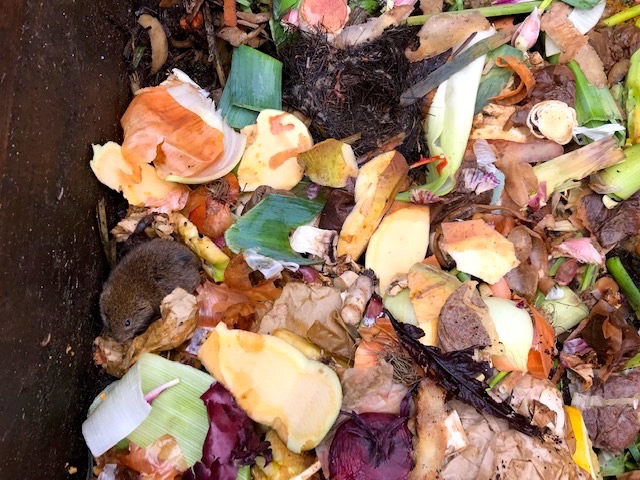
Every garden should have at least one compost bin. We’ve expanded over the years to three in number. One of them currently has a resident in the shape of a field vole. These little rodents are the most abundant of mammals in Britain and are key to the food chain. They don’t hibernate but do moult. The tails of the field vole are shorter than those of bank voles and both species are a lot smaller than their cousins, the endangered water voles. Our vole (who I speak softly to every time I deposit another load of peelings, apple cores, crumpled paper bags etc) has got used to my appearances and does not immediately disappear or burrow out of sight, but holds still and watches me. In the last week or so she’s been weaving her nest of dark stalks in amongst the offerings. Slowly it rises as the little creature readjusts levels under the cover of a square of covering carpet, below the box’s top.

 STEPHEN TOMLIN
Here in rural Ireland, I’ve had at least 2 species of bat fly past me on summer evenings for many years. Rabbits have meandered across the lawn during the day. Last year, I saw many butterflies and at least 6 different species — for years, I was lucky to see a single butterfly. This year a fox is patrolling the lawn. I’m told the birds of prey hovering in the breeze and occasionally being mobbed by ‘crows’ (they might be rooks for all I know) are buzzards.
LikeLike
Great to hear nature so much in evidence around your neck of the woods Pascal. Corvids are highly protective of their patch and regularly bother all types of birds of prey. Our lives are enriched by healthy signs of natural life living alongside us.
LikeLike