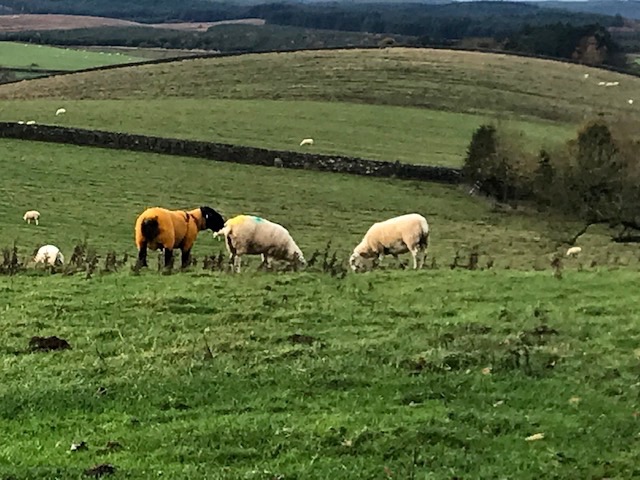
A walk up the road brings us to a field where Easterhouse’s Suffolk ram has been harnessed with its chest marker and put to their flock of texels and mule ewes. As the name indicates Suffolk are a lowland breed originating from the county of that name in the south of England, prized for their quick maturing fat lambs. He’s not easy to overlook either, being dyed yellow as a result of the latest farming fad for colouring tups. Suffolks grow their wool short and dense so can take a dose of dye while a long rough staple northern breed like Blackface or Swaledale would prove nigh impossible to colour up in this manner.

Strolls or bike rides along the lane inevitably means finding an empty red bull tin. The tosser responsible for littering the verges with them is probably either a log lorry driver, delivery driver or local resident. Luckily it’s not a serious environmental problem compared with more densely populated areas by busier roads but it’s still annoying and of course unnecessary. I continue to collect, stamp down and add the cans to our recycling.
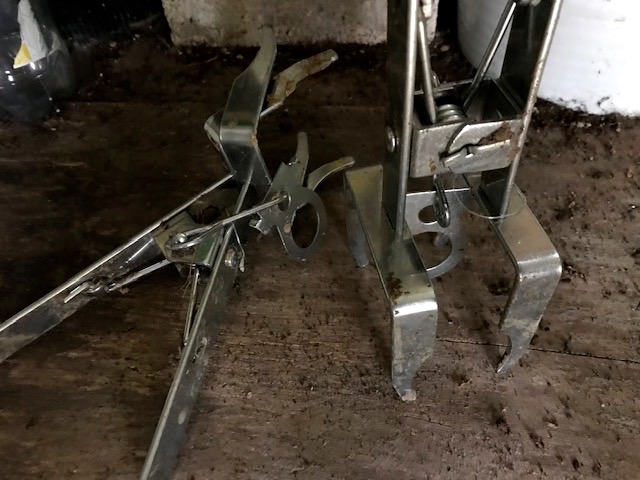
After a few weeks of inaction we’ve once again been troubled by the remaining member of our resident mole family. Have had to reset both the half barrel and clip type traps in the garden meadow area they colonise. This roughly triangular patch has a labyrinth of tunnels established by earlier intrusions from our field the other side of the fence. It troubles me to see their dead velvet coated forms gripped by metal wires or claws but it hurts even more to see the damage the remorseless burrowers will cause throughout the garden if left unchecked.
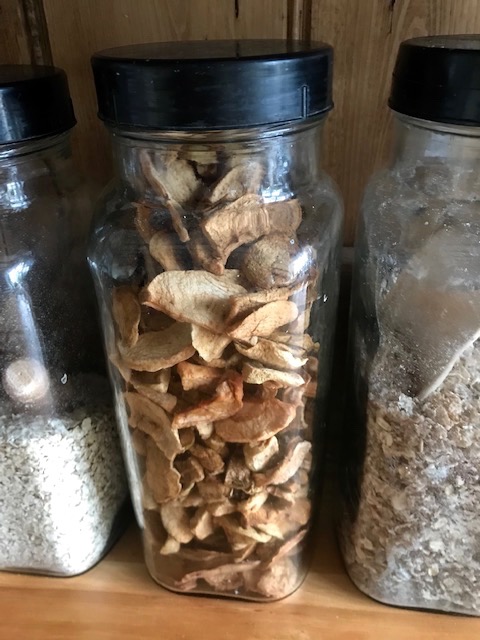
All the apple varieties in the garden – with the exception of Christmas Pippin – have now been gathered in and I’m still processing them as puree or dried fruit for winter use. Old sweet jars, like the one seen here, are great for this. An end of seasonal fare for birds, rodents and slugs to feast on. I witnessed for the first time a crow fly off with a large windfall apple in its beak. The general ingenuity of the corvus family should never be underestimated and I wonder if they’ve developed this technique or learnt it from parents.
Pondering on pets and predators, we still miss Pip, our little black and white Geordie cat. She lived to a good age and now rests in peace in the garden below the wooden henge. Three years on and her role as rodent population controller becomes more obvious than ever. I hate having to use poison to limit rat and mouse numbers but until another cat comes along that’s what we’ve had to do.
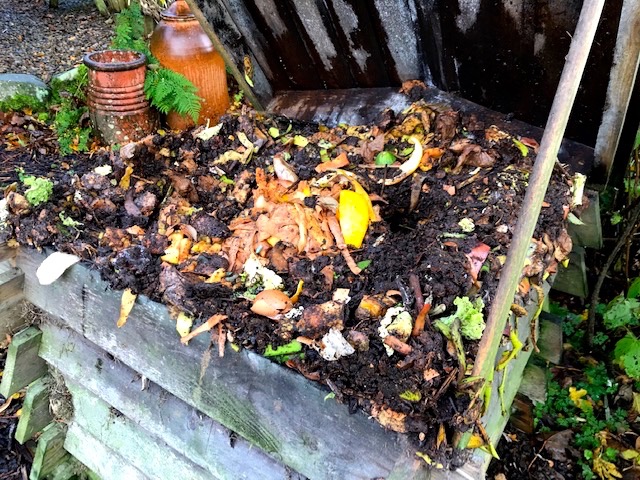
The rats do us a good turn (literally) in the main compost bin, as their wall of death circuitry is effective in mixing up old, decaying and new material. To ensure being spared seeing them at work I always knock on the wood lid before lifting. Have now added bait to a bowl on top of the mix and should soon see results. A field mouse (or mice) has been seen about the house and their preference for avocados in the larder shows discerning taste at least. Sadly not for much longer as the little dishes of granular bait secreted under store cupboards and other hideaway places have been consumed overnight.
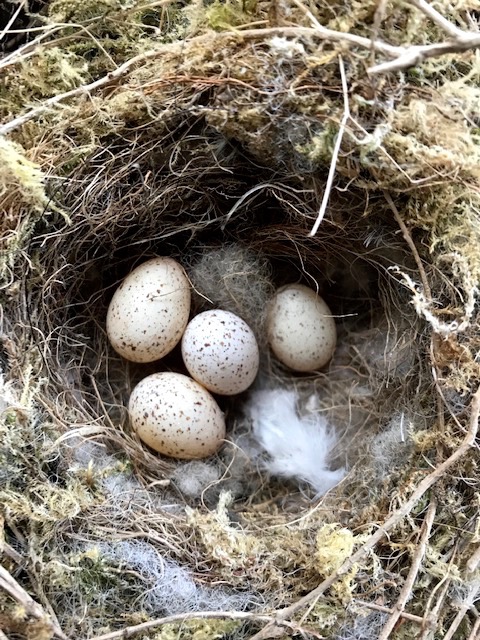
I spend a happy morning re-clipping the string of fairy lights around the upper edging and wooden rafters of the recently rebuilt garden porch. In the process I reach up to feel in the nest that the swallows built this year and discover four perfect little eggs. That second brood only produced one fledgling so these infertile unhatched eggs, measuring some 13 x 20 mm, are a poignant, beautiful reminder of our summer visitors. The photograph shows the clutch in a new setting – an abandoned goldfinch nest I found in the garden, that now sits on a shelf on the porch.
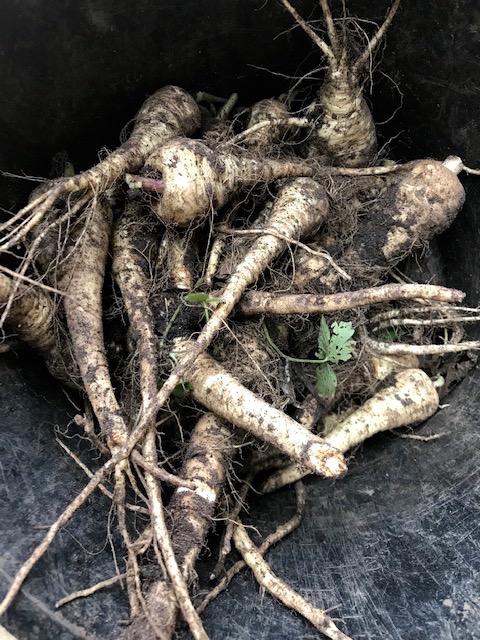
I retain a soft spot for parsnips as a vegetable. A dependable grower in harsher climes, we appreciate its sweet delicacy of flavour in the darkest months of the year. Our less favourable soil conditions mean smaller crops but when chopped and turned into soup, served with fresh home made bread, they make for a warming and wholesome autumn meal.
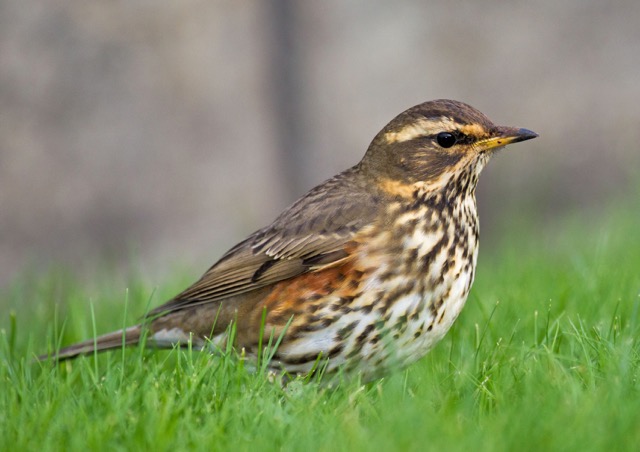
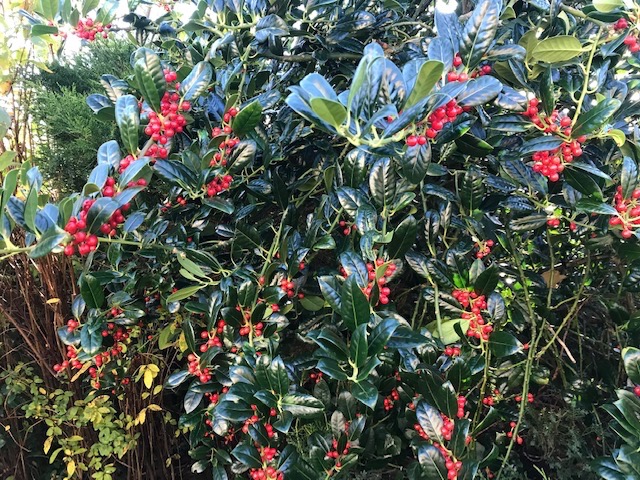
A glance out to front yesterday caught a thrush on branches eyeing up the bumper crop of red berries on the holly bush. Closer examination revealed it to be a redwing. Same family, smaller than a song thrush, with distinctive yellow eyebrow and the namesake red patch under the wing. A reminder that these overwintering visitors from the far north have already arrived. An odd feeling when temperatures are currently remaining stubbornly high for November. Another reminder, if needed, that climate change is affecting seasonal weather patterns.

 STEPHEN TOMLIN
A lovely evocation of late autumnal rural life; thank you.
LikeLike