‘Recall the cold of Towton on Palm Sunday before dawn…fastidious trumpets shrilling into the ruck: some trampled acres, parched, sodden or blanched by sleet, stuck with strange postured dead. Recall the winds flurrying, darkness over the human mire.’ (Geoffrey Hill: King Log)

On 29th March 1461 two great armies met in battle outside the village of Towton, on the high wide limestone ridge country between Leeds and York. This was to prove a watershed event in the intermittent C15th civil conflict known as the ‘Wars of the Roses’. A dynastic power struggle between the aristocratic affinity who supported the pious Lancastrian King Henry V1, led by his fearsome warrior wife, Margaret of Anjou and the charismatic Yorkist claimant to the throne, Edward Earl of March, heir to the rival house of York
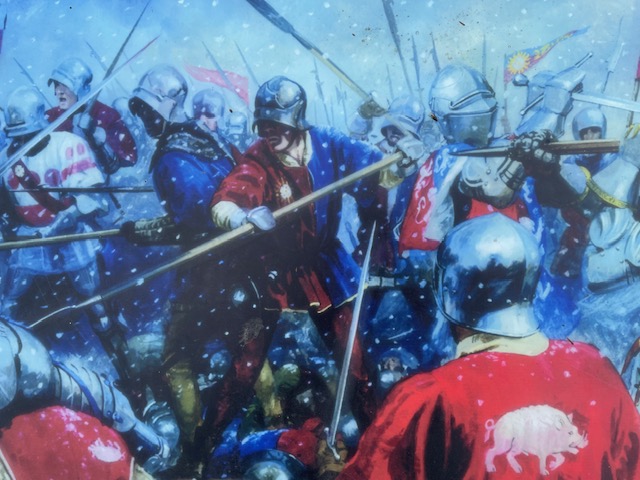
The Lancastrian forces were mainly northerners, the Yorkists drawn mostly from the south and midlands. The 19 year old Edward had lost both his father, Richard Duke of York and younger brother Edmund, Duke of Rutland at the Battle of Wakefield three months earlier. Edward’s revengeful victory at Towton lead to the deposition and imprisonment of Henry, the exile of Margaret and to him being crowned as Edward IV.
The weather played a key role in determining the battle’s outcome that fateful Palm Sunday. A snowstorm blinded the oncoming Lancastrian forces and the mass of Yorkist arrows borne on the bitter wind inflicted heavy losses on their tight battle formations. This pressurised the Lancastrian host to advance through the teeth of the storm, which in turn pushed the Yorkists backward. Only the last minute arrival of reinforcements from the south, led by the Duke of Norfolk, halted their slow retreat and raised the morale. After yet more fierce hand to hand combat the Lancastrian army finally broke. Panic and hot pursuit ensued. The main line of retreat for the fleeing soldiery was on the old London road towards Tadcaster, over a narrow bridge crossing the Cock Beck below, to the west.
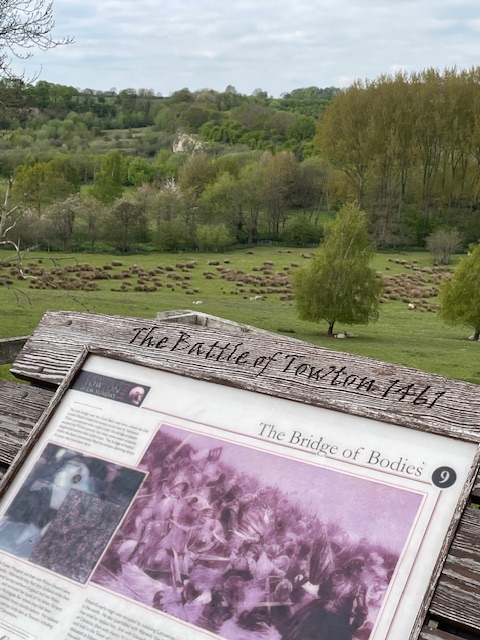
Some escaped that way while others, the mass of lightly protected infantry and archers, were not so lucky. No quarter would be asked or given. Jammed with the dead and dying, a desperate brute slaughter took place, the beck running red with the blood of butchered bodies that piled up, damming its course. Towton would go down in history as the biggest, longest and bloodiest of battles to be fought on British soil.
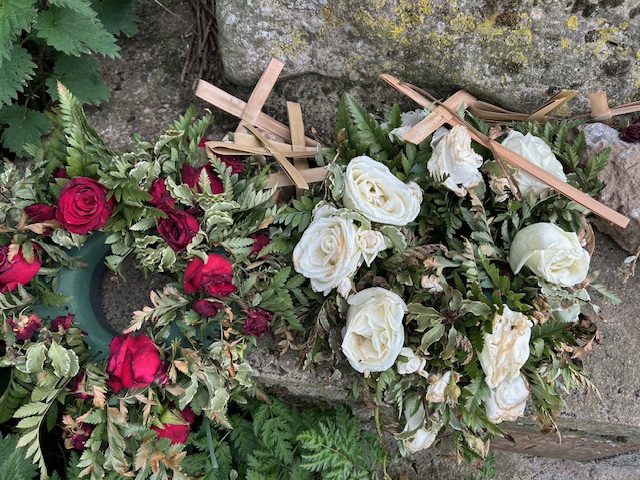
The late April day we visited was clear skied, cool and fresh. After a good pub lunch at the Rockingham Arms in Towton village we drove down the B road to where the official ‘Battlefield Walk’ started, by a simple monument known as the Dacre Cross, named after a Lancastrian lord killed in the battle. A weathered wreath of red and white roses left at its base to mark the anniversary a couple of weeks earlier lent the exposed spot a melancholy air. The path sets out alongside fertile soil recently sown and banked, Toblerone like, for potatoes. One couldn’t help wondering if the blood and bone spilt here, albeit centuries since, makes for a good crop year on year.
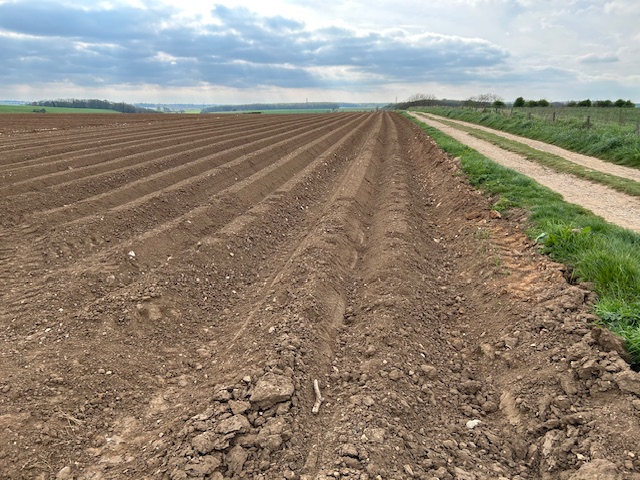
The lie of the land proved crucial to the course and outcome of the fighting and the locally based volunteers of the Towton Battlefield Society have done a great job in establishing and maintaining the 2.5 mile trail, complete with information boards at key points.
On one side stretches the undulating main battlefield site, where thousands of soldiers fought in hand to hand combat. Recently unearthed archaeological evidence points to the use of small cannon on the field of battle, a first for any in England. Excavations on private land around the village property of Towton Hall thirty years ago also revealed 50 skeletons dated to this period, packed into a mass grave, all displaying signs of injury or violence.

Today this section of the former great field system has been sown for what we took for either barley or wheat, surrounded by headlands of some kind of green manure, then grass banks or wire, with hardly a hedge in sight to break or block the overview..
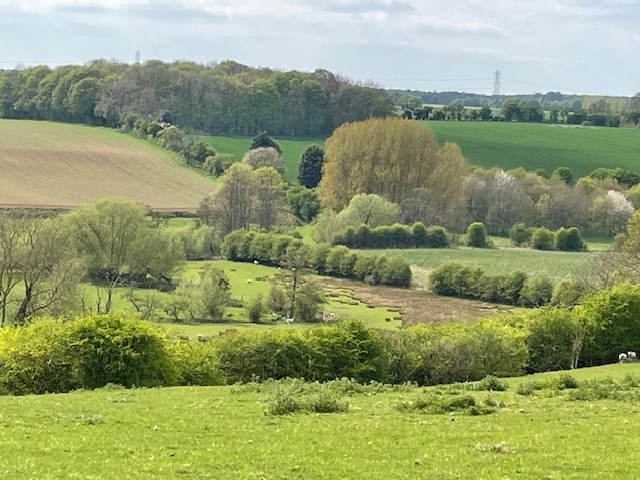
On the other side of the path the land falls suddenly and steeply down to the narrow winding Cock beck, a tributary of the River Wharfe.. Here we gazed over a typical pastoral scene of deciduous woodland within pastureland on which ewes and lambs were grazing, with willows, alder and poplars hiding the waterside at bottom.
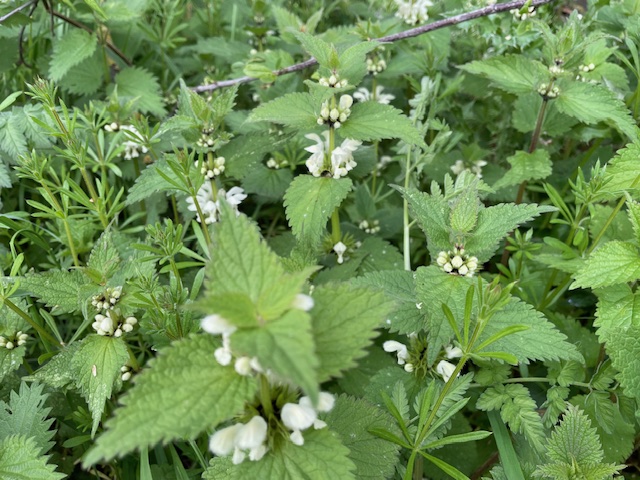
I’m struck by the mass of white flowers we passed – dead nettle, stitchwort and crab apple blossom, combined with the presence of those Spring lambs, that somehow, unconsciously adds to the symbolism of the Yorkist victory here at the heart of the White Rose county.
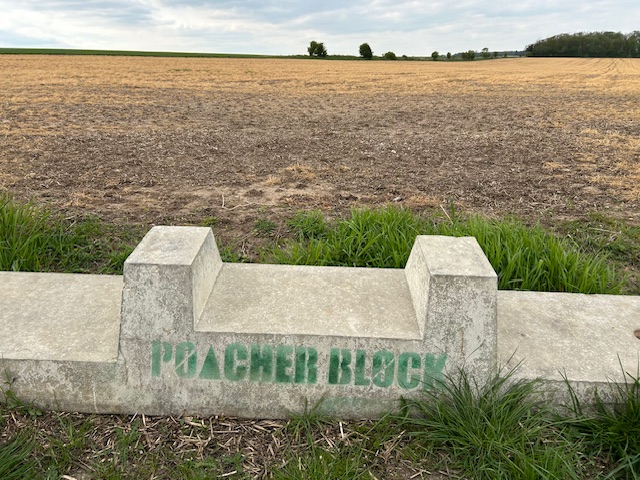
The warfare these days is between landowners and poachers, as the vehicular concrete barriers we came across at roadside field entrances testify to. Whether poaching of gamebirds, deer or hares (or all) remains unknown.

Towton Battlefield walk is an engaging accessible circuit, rarely busy one suspects. We encountered only four people on our stroll, all dog walkers, and the way is clearly interpreted and cared for. It has a particular atmosphere and ably communicates the brute horror of medieval warfare, made more so when seen against an overlay of the modern day farmed countryside. Well worth a visit, especially at a time of year somewhere near the anniversary. Find out more at the Battlefield Society’s website: www.towton.org.uk

 STEPHEN TOMLIN