Back End Notes

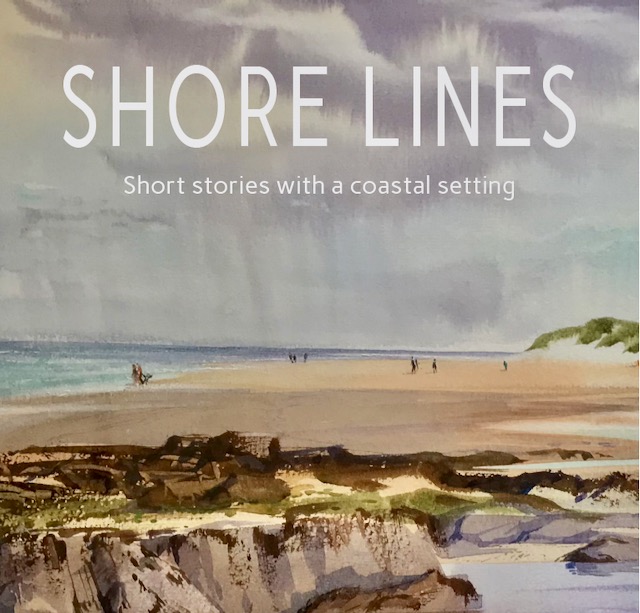
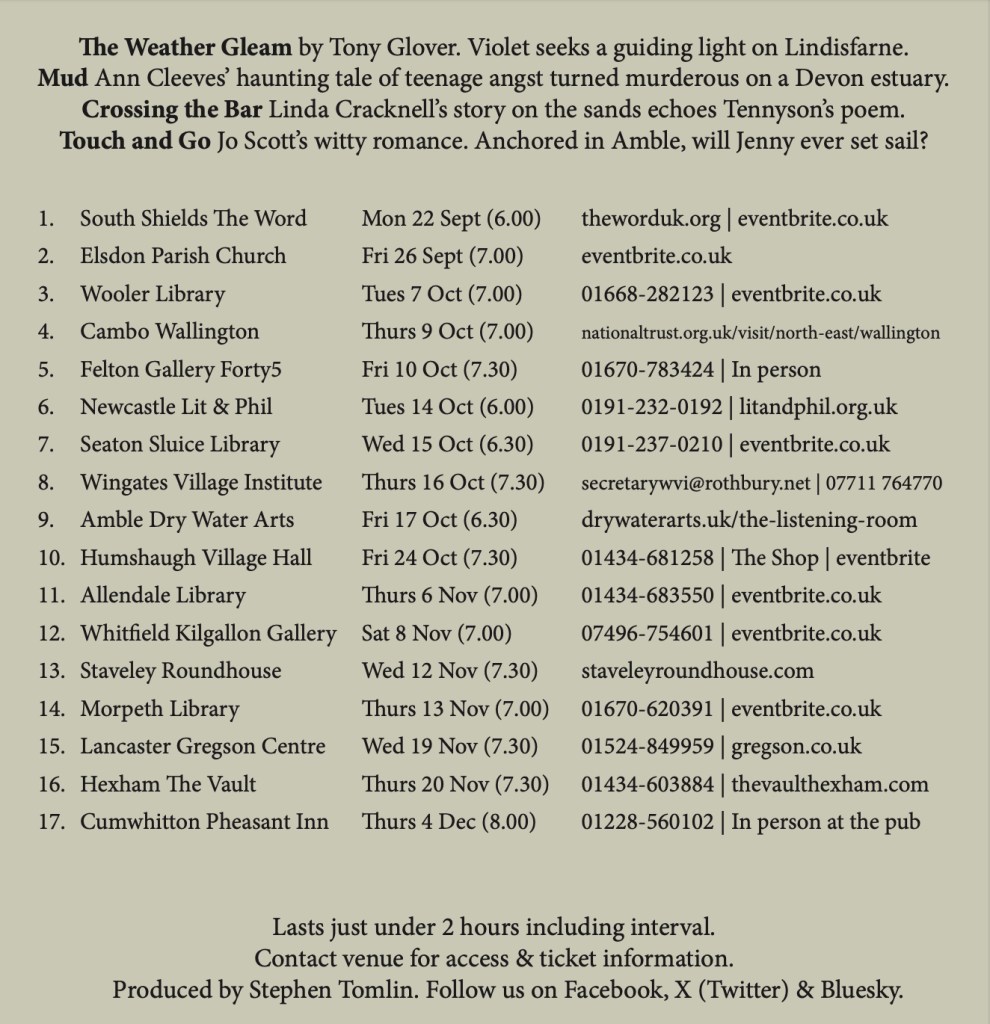
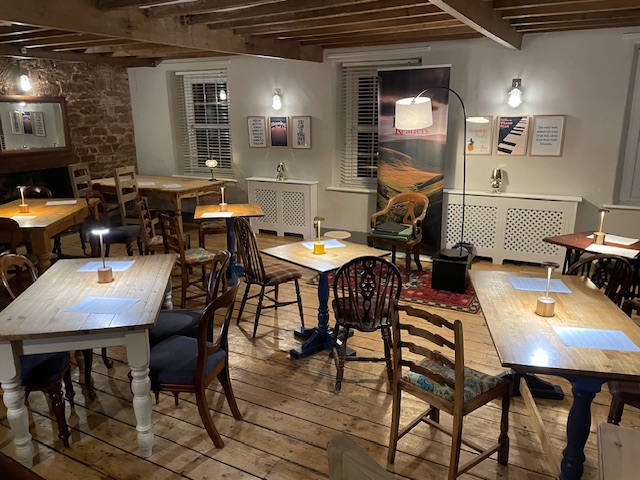
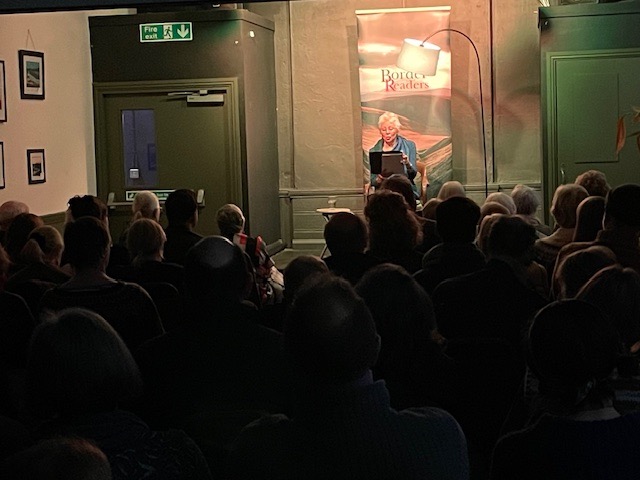
Experienced the usual emotional mixture of pleasure and relief that this year’s ‘Shore Lines’ tour for The Border Readers had ended earlier this month. A pub’s not a bad place to come to the end of the road in and The Pheasant at Cumwhitton in the Eden valley is an exceptionally warm and welcoming hostelry.

The function room upstairs set out with tables and chairs proves the most intimate of surroundings for this final gig for myself and fellow readers Grace and Wynne. A bonus in having writer Linda Cracknell and her partner Robin with us. Linda’s short story, ‘Crossing the Bar’ was originally  commissioned and broadcast by BBC Radio 4 in 2018, and was inspired by Tennyson’s classic poem ‘. I picked them up earlier from Armathwaite station on the fabled Settle – Carlisle line a few miles away. A beautifully preserved Victorian village station, wreathed now in a swirling mist, my friends the only passengers getting off here, who were more than pleased to see me emerge from the gloom. Very atmospheric indeed.

Other highlights of the tour included a sell-out debut at The Gregson Centre in my former home town of Lancaster. A lively celebration, with family in the audience and readings shared with old pals and demi-paradise associates, Roberta and Helen. I use to captain the Gregson bar’s ‘B’ team, part of the city ‘s pub quiz league, so it’s a place dear to my heart.

I always assume our annual themed literary event to be a cost neutral production but this year, to make sure I was not kidding myself, I crunched the numbers and, lo and behold, that was indeed the case. Those calculations make no account of hours spent  as producer – this is after all a retirement passion project – but in every other way it continues to pay for itself as a non for profit community based  cultural venture.

Caught  ‘Miniature Worlds’ the latest exhibition at the Laing Art Gallery, Newcastle a few weeks ago. It explores the intricate beauty of small-scale landscapes across three centuries of British art. (Intro at https://www.youtube.com/watch?v=dgQf9zt3x7o&t=59s) There is work by Thomas Bewick (1753 – 1828) a particular favourite, thanks to my association with Cherryburn, the farm which was his childhood  home in the Tyne valley, and which I’ve written about here in the past. Bewick’s exquisitely executed  borderless wood cut vignettes and ‘tale pieces’ that accompanied his text about birds and animals he depicted were hugely influential in both artistic and natural history terms.

Other favourites took me back to an early love of literature gained through the great childhood classics, like Jon Tenniel’s unforgettable illustrations for Lewis Carol’s ‘Alice’s  Adventures in Wonderland’.

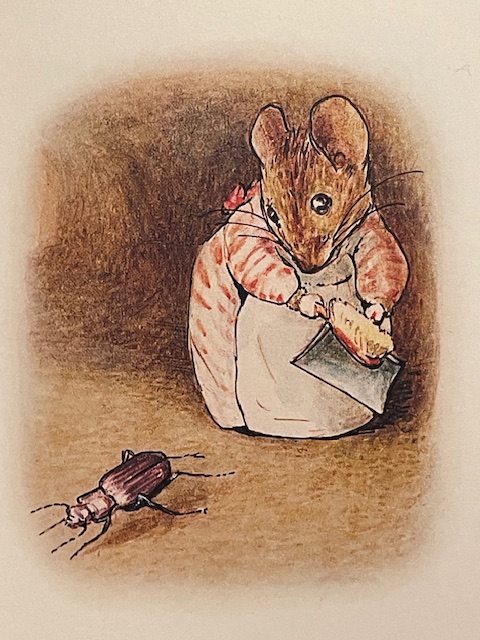
And who can resist Beatrix Potter’s charming animal character studies in watercolour for those love-to-handle little books published by Frederick Warne in the early C20th.

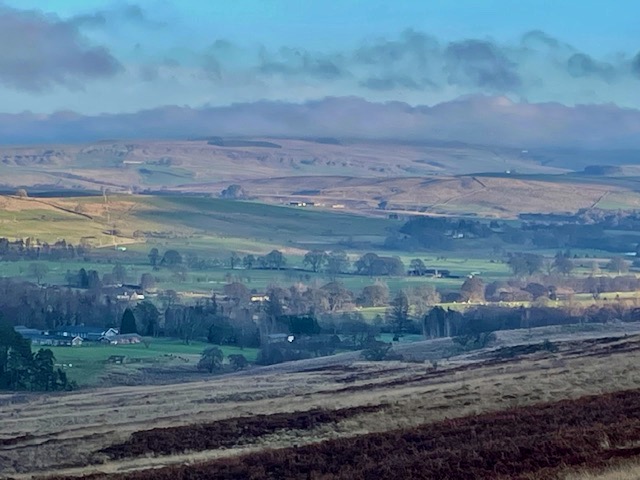
The countryside around  lies dormant now but the play of weather over it never ceases to impress. The changing climate has brought with greater unpredictability, with milder winter days and heavier rains. Bare branches reveal last year’s tiny nests of moss, feathers and grass.

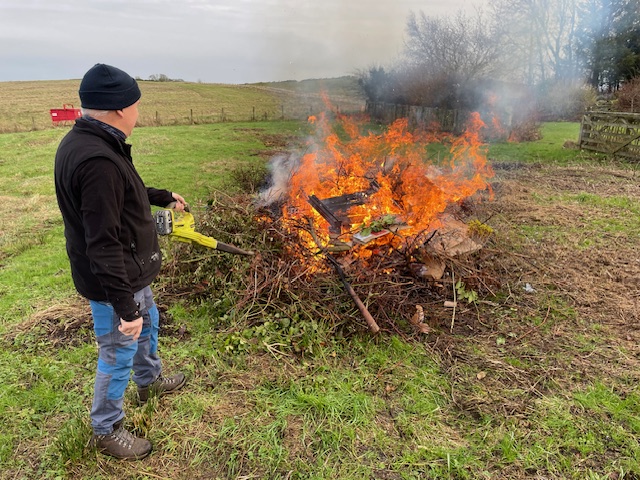
Gardening tasks undertaken when weather permits include clearing banks of dead foliage, starting to prune, nourishing compost heaps, fishing surplus leaves from the ponds. With the help of a neighbouring friend, who brought his leaf blower to push the necessary oxygen, we had fun setting a bonfire in the field with cautious use of petrol to ignite the damp mass.

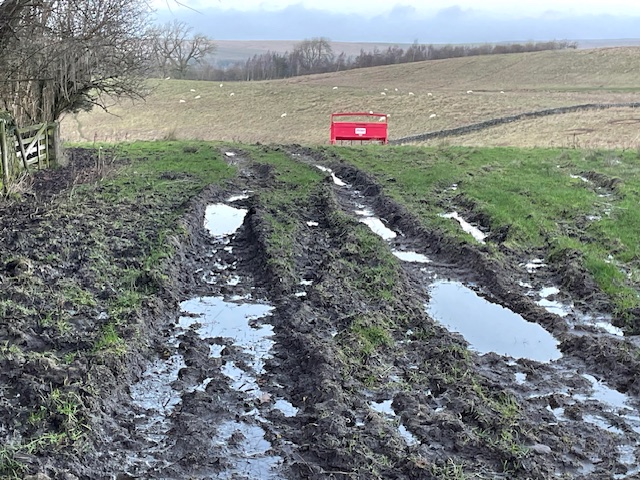
Neighbouring farms’ cattle and sheep  are rotated around sodden pastures. My eye  caught by the substantial red metal creep feeder which allow the shorthorn herd’s calves dedicated access through metal bars to get their fill of hay. A foretaste of Spring and the lambs to come. Flocks of ewes graze, rumps raddle marked by tups in harness. A Suffolk lords it  in one neighbour’s  field, A Texel in another and an old favourite from past years, Southridge’s Border Leicester in the field opposite us. BLT I call him. He’s always fearless and inquisitive when we meet so suspect he’s been used to handling from an early age. Curiously, there’s no harness on him, but has obviously been hard at work.  

Bumping in to friends out and about we are related some hairy tales, disarmingly told with great humour. One person, out walking on remote hills to the north of the county succumbs to a heart episode caused by arrythmia which floors him. Ringing 999 he’s told to text a number. Rescue services precisely locate through GPS and a stand by air ambulance helicopter is swiftly dispatched to hoist and whisk him away to hospital in Berwick.

Our egg supply is down. The neighbour who supplies them says a badger dug a tunnel into the coupe overnight and wiped out over half the hens and ate what eggs it could find too. 

A walk over the fell leads us to an artistic friends household selling home-made artefacts for Christmas, all on display in a cosy made-to-order shepherd’s hut next their cottage. We pop into the kitchen to pay and are invited to stay for another hour or so for a long overdue laughter loaded catch up over coffee and home made mince pies.

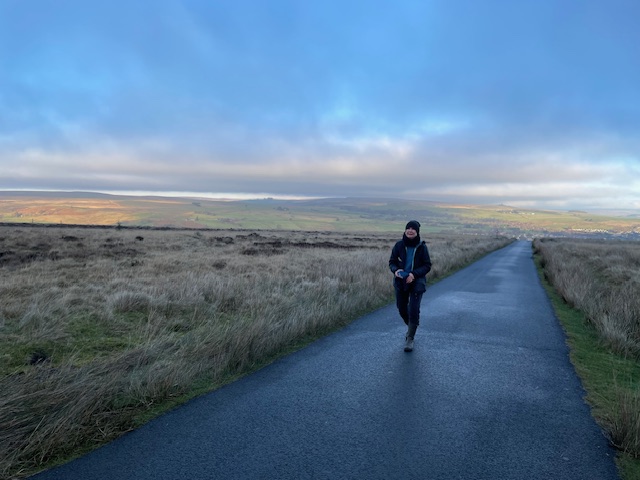
There’s a nearby lane, along which the long distance trail runs, narrow and undulating with dry stone walls, trees and shrubs either side. It boasts a good crop of haw berries popping red against a thick crusted layer of lichen. Benefits of not cutting back means a vital food source for birds while the presence of the lichen proving pure air quality in these uplands.

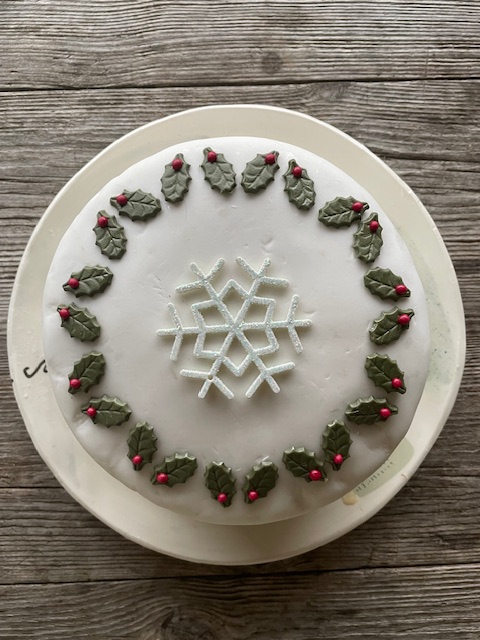
Kim in a flurry of home baking and making for Christmas so really looking forward to sampling what’s on offer. Here’s our Christmas best wishes to you and yours. Look forward to having your company on this occasional country diary page through 2026!

Thoor Ballylee and Coole

Our recent holiday with family in Ireland threw up the opportunity to visit two inter connected places in the Galway countryside associated with two of the country’s great cultural figures.

An ancient bridge, and a more ancient tower,
A farmhouse that is sheltered by its wall,
An acre of stony ground,
Where the symbolic rose can break in flower,
Old ragged elms, old thorns innumerable,
The sound of the rain or sound
Of every wind that blows;
The stilted water-hen
Crossing Stream again
Scared by the splashing of a dozen cows.

W.B.Yeats ‘My House’ (1928)

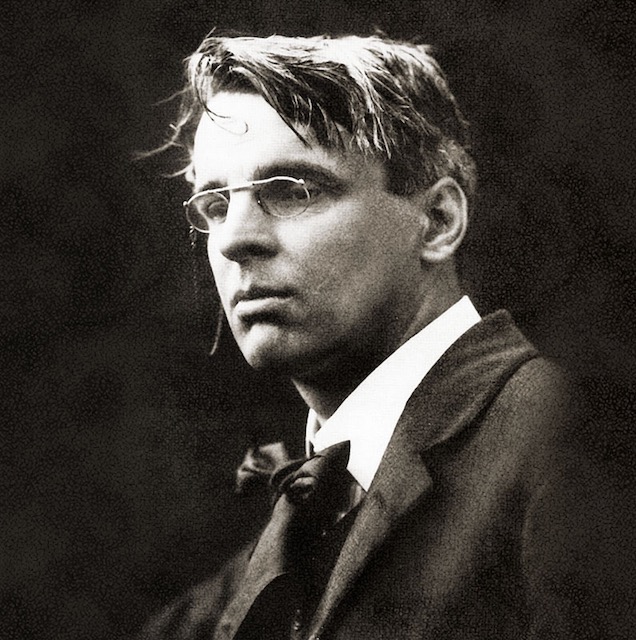
Thoor Ballylee is a C14th Hiberno-Norman defensive tower on the gentle banks of the Streamstown river in the west of Ireland built by the De Burgos, or Burkes, a Norman clan whose power base was in this area. It had fallen into a state of decay when the poet W B  Yeats first saw it in 1898 while staying with his friend and artistic collaborator Lady Augusta Gregory at neighbouring Coole Park.

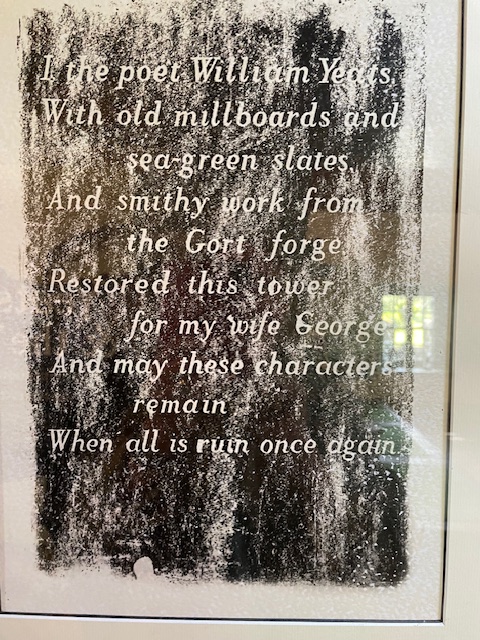
Eventually, as a newly married man with two children wanting a home away from Dublin in the west from where his own family originated, Yeats bought the romantic though ruinous structure for £35 in 1916. Working closely with local craftsmen he and his wife George carefully restored the structure to make it habitable as their summer residence through the 1920’s.

Interesting to note that neither he nor fellow protestant notable Lady Gregory were directly threatened by either of the feuding sides during the rebellion against British rule or the bitter civil war that followed. As respected cultural icons they were otherwise shielded from the violence and atrocities that marked the ‘Troubles’ across Ireland.

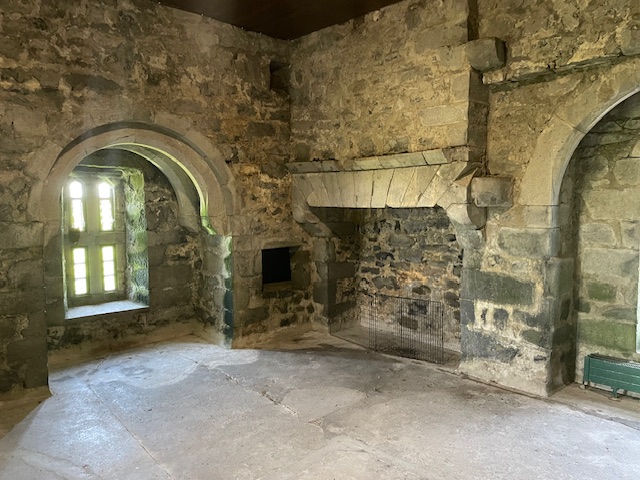
It’s not hard to see why the tower became the Yeats’s happy place, acting as both a refuge and an inspiration. George decorated and furnished rooms in the arts and crafts style while also developing the skill of fishing from the  windows! Friends visited regularly and everyone enjoyed the socialising. Yeats wrote some of his best poetry here; work that appears in the collections ‘The Tower’ (1928) and ‘The Winding Stair’ (1933).

Yeat’s deteriorating health, along with the damp and damage wrought by winter floods eventually caused the family to sell up and move away. Summers were increasingly spent abroad in France, with its kinder climate, better suited the ailing artist, but he never forgot this place or its importance in his life. Nor did admirers of his work forget him when in the summer of 2015, to mark the 150th anniversary of Yeats’s birth, the Yeats Thoor Bally Lee Society re-opened the tower to visitors and have continued to do so each season ever since. It is now a thriving cultural centre offering courses, talks and literary themed events.

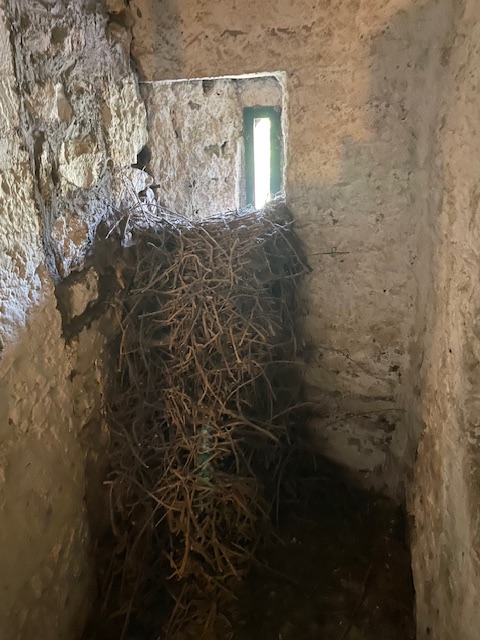
We loved chatting with the cheerful knowledgeable warden and exploring all four floors of the tower. Intrigued by the stack of crow’s nest below one of the slit windows and surprised by the alarmed cries of a returning parent just as I caught sight of the fledglings within.

From the top, I took in extensive views over surrounding pastoral landscape rich in hedging, banks, woods and fields. The white flood of flowering hawthorn everywhere. Curiously the gentle sparkling stream below literally disappears within these woods. This distinctive Karst limestone country is known for its turloughs – intermittent lakes that fill with water from streams like this one that drain back into the water table, having no surface outlet.

Under my window ledge the waters race,/Otters below and moor-hens on the top,
Run for a mile undimmed in Heaven’s face,/Then darkening through ‘dark’ Raftery’s ‘cellar’ drop,/Run underground, rise in a rocky place/ In Coole demesne, and there to finish up/
Spread to a lake and drop into a hole./What’s water but the generated soul?’

                                                                                              ( W.B. Yeats ‘Coole Park and Ballylee’, 1931)

We followed the hidden line of flow on leaving Yeats Tower and within a few miles were at Coole Park, now a national nature reserve stretching over 1,000 acres (400 Hectares). The woods here have been attracting visitors from when they were first developed by the Gregory family in the late C18th. Coole Park was home to  Lady Augusta Gregory (1852-1932) and in her widowhood her genius for inspiration made it a centre for the movers and shakers involved in the Irish Literary renaissance, from Synge to Shaw, Casey to Yeats.

“These woods have been well loved, well-tended by some who came before me, and my affection has been no less than theirs. The generations of trees have been my care, my comforters. Their companionship has often brought me peace.” ( Lady Gregory, 1931)

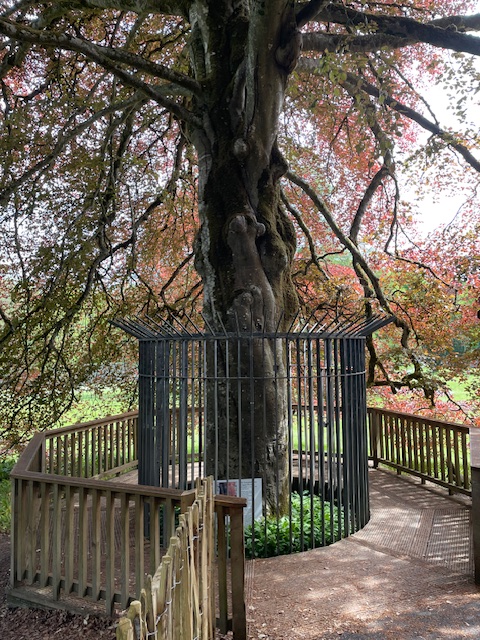
We were quickly enfolded into that peaceful, unhurried arboreal world and instantly appreciated the spell it must have cast on others. Although there was no time to discover the lakes with their swans or walk the woodland paths beyond the centre we did find the famous autograph tree – a venerable copper beech – where the great  men of letters carved their initials during their frequent visits. Their incisions now stretched and compacted by growth and stoutly defended from further additions by the public by railings.

‘Here poet, traveller, scholar take your stand / when all these rooms and passages are gone’ (Yeats)

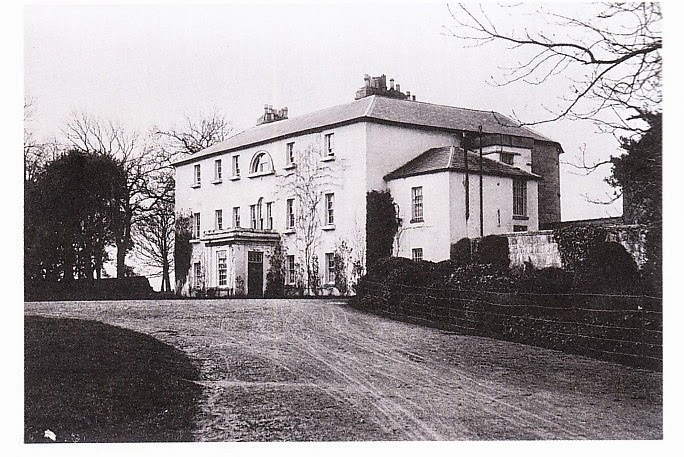
The Georgian house was demolished in 1941, although the handsome restored stable block has a museum, facilities and excellent tea rooms serving imaginative good quality food, so a most enjoyable lunch was had here.

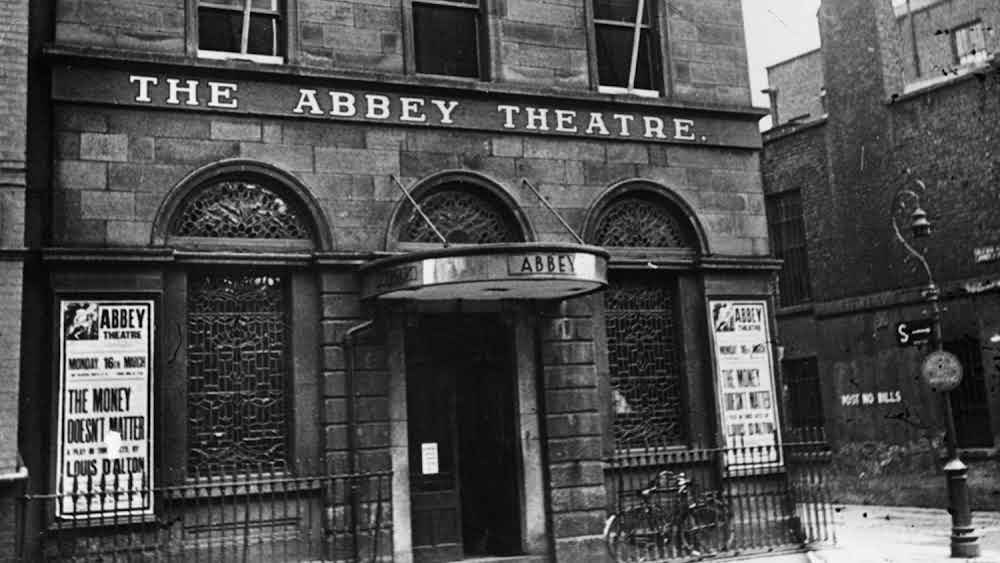
Yeats had first arrived at Coole in 1897, physically and psychologically exhausted and was nursed back to health and a more sustainable  lifestyle by Lady Gregory. As he described: “I found at last what I had been seeking always, a life of order and labour” Lady Gregory prescribed for him a balanced regimen of work and relaxation. It was the beginning of a lifelong friendship that saw them  in 1904 co-found with others the Abbey Theatre in Dublin. In so doing they were preparing the ground for independence by writing, producing and performing plays about Irish life for Irish people.

More here: www.yeatsthoorballylee.org and https://www.coolepark.ie