Vouga voyage

Recently returned from a week’s holiday in the valley of the River Vouga, mid-way between its outlet at Aveiro on the coast and the city of Viseu near its source in the Serra Lapa.
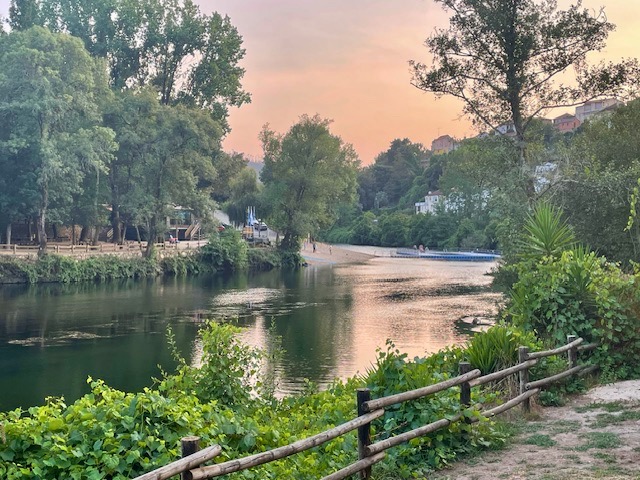
Like the other major rivers of Portugal The Vouga runs its 148 KM course from east in the mountains to the Atlantic in the west. It was once a major transport route for countryside produce; from wines, granite, metals and timber to fruit and other agricultural produce. (In the 17th Century most of their oranges were exported to England) By 1913, a train line had replaced the inland river boats, which in turn gave way to EU funded new roads that twist and turn above the Vouga’s sinuous green waterways. We enjoyed three separate outings sampling distinctive phases of the river’s flow and topography.
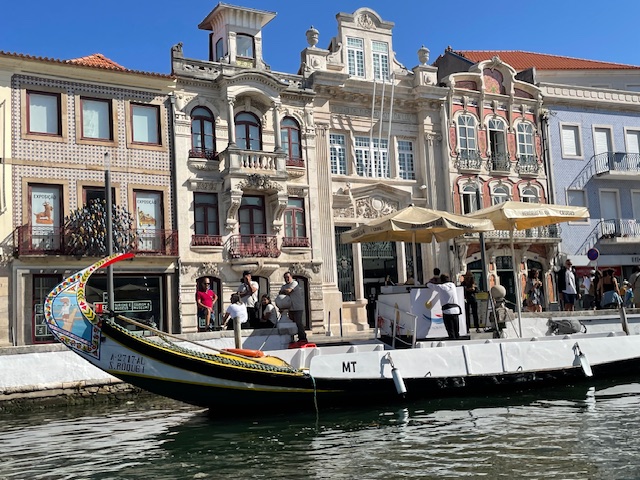
Took a fun day out to swell the ranks of other tourists milling around ‘The Venice of Portugal’, as the city centre of old Aveiro is dubbed. A major port in late medieval times it later became famous for commercial salt abstraction, fishing and seaweed harvesting.
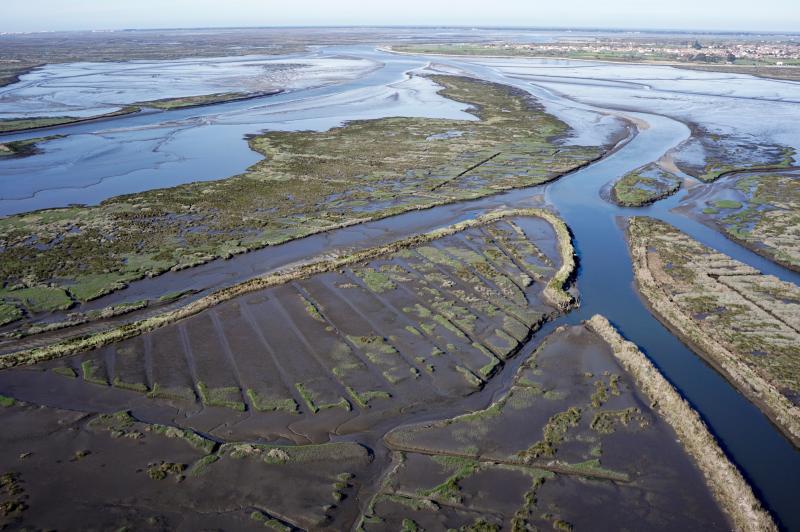
Ria Aviero ecosystem image credit: CESAM

The extensive lagoon and dune ecosystem of the Ria de Aviero, as this estuarial stage of the Vouga is known, now enjoys international status as a major bird sanctuary, home to some 20,000 overwintering wildfowl, the most photogenic of which being pink flamingos.

Trips around the centre’s canal system are a must and the colourfully decorated flat bottomed barges – Molicheiros – that once carried seaweed, salt and general goods now carry human cargo on 45 – 60’ guided excursions.

Unsurprisingly, the last fishing lofts lining the canals have finally closed and are being developed into luxury waterside apartments.

Back on land we visited an Art Nouveau house, now a museum with fine decorative detail, one of many tasteful villas that reflect an early C20th era of increased wealth and pride amongst its leading merchants.
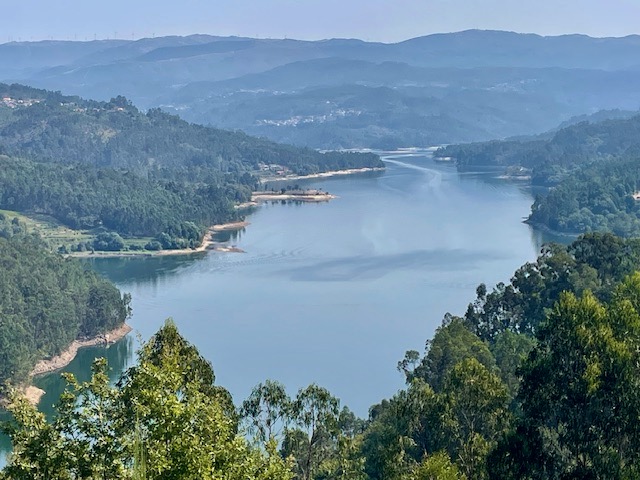
The other end of the Vouga could not be more different. Foreign tourists like us were in short supply here in the mountains, probably because of the limited visitor attractions to lure people up from the popular coastal strip and dangerously high summer temperatures. The Upper Beira  region suffered badly last September from wildfires, causing evacuations and widespread disruption, and we sensed a nervousness even now, lest they return.
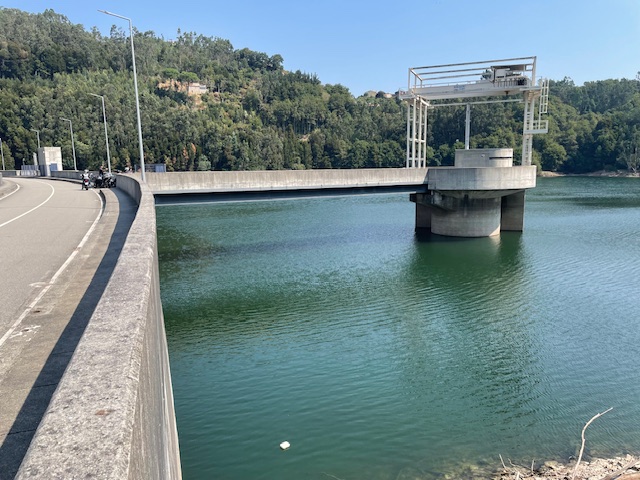
We stopped off at the Ribeirado dam and looked along the 14km long reservoir it created. It was built earlier this century to supply hydroelectric power, ease flooding and increase scarce water reserves. The road runs along the broad arc of the high dam wall, the power station and its infrastructure far below, where the river re-emerges. With the sheer valley walls either side the whole presents as a peerless study in concrete.

The brightest objects encountered in this uniformly grey spot were the red, blue and yellow recycling bins in the car park. Ominously, the control tower in the reservoir emitted flashing light and warning noises every few minutes. If this location were to feature in a future James Bond film or dystopian TV drama it would not surprise us. A perfect setting of its kind.
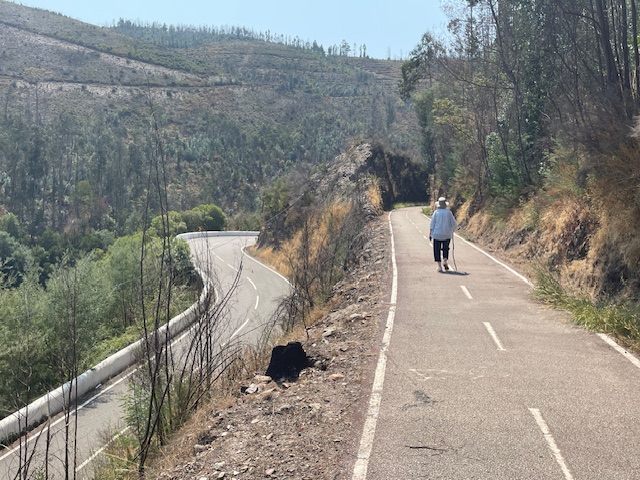
Another day we walked the middle reaches of the river. Was keen to access an upper trackway I’d clocked above the road while driving to our holiday accommodation nearby.

As suspected this was once a single track railway. Built just before WW1 it closed in 1980 and its repurposed state, the former Vale Das Voltas line offers superb viewpoints of the valley.
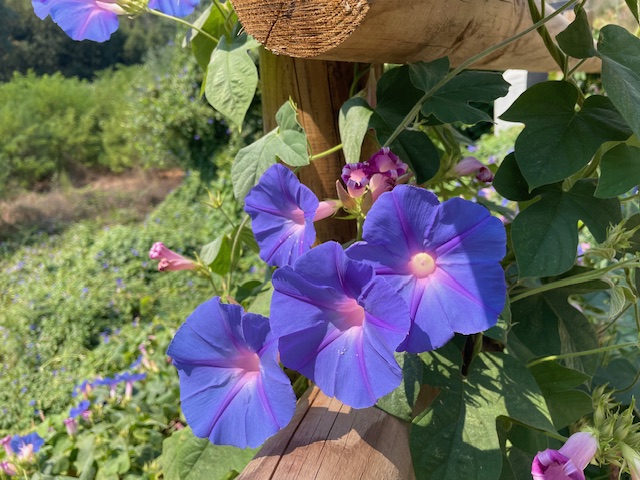
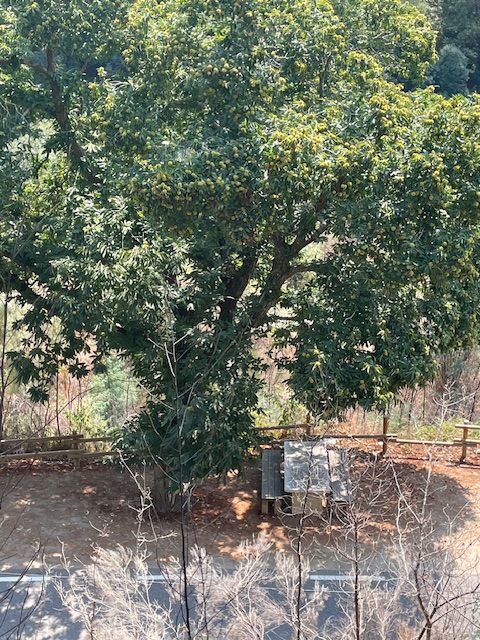
Our parking place by the road revealed a picnic table made from a single slab of local granite set under the awning of a mature horse chestnut tree. Masses of richly purpled convolvulus – bindweed – curled around the wood  rails.
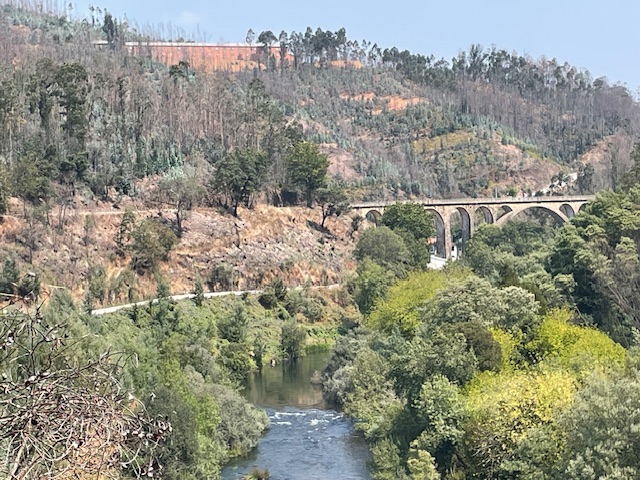
The track is understandably popular with cyclists, yet we only encountered four other pedestrians on our amble to and from the route’s spectacular highlight, the Santiago rail bridge at Pessegueiro do Vouga. It’s one of the highest stone masonry bridges in Portugal, with eleven arches and 165m high deck, gracefully spanning river and wooded slopes.
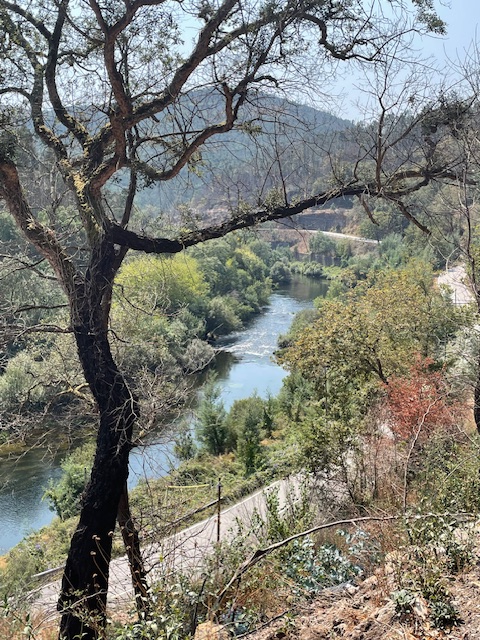
Our walk revealed a stark reminder of last year’s big burn. Blackened trunks and boughs in abundance. A contentious issue in these parts is the preponderance of silvery leaved eucalyptus trees, commercially planted to supply nearby works with biomass and extracted oils. That process is also understood to cause environmental air pollution.
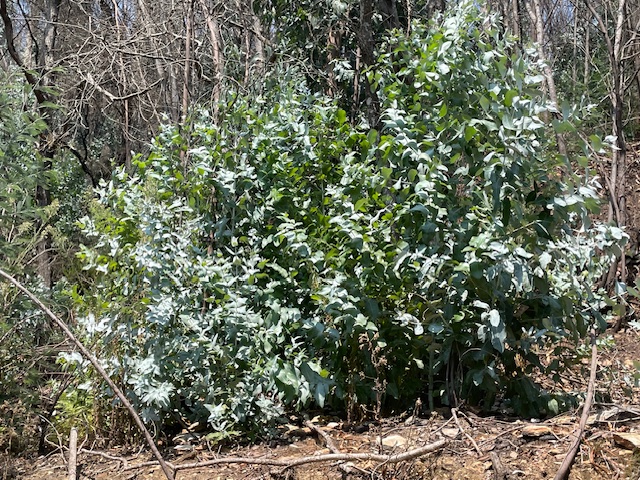
This alien tree, of Australian origin, successfully sustains itself on steep slopes with minimum moisture and burns easily. Eucalyptus rapidly colonises cleared land post fire and is hard, if not impossible, to eradicate.
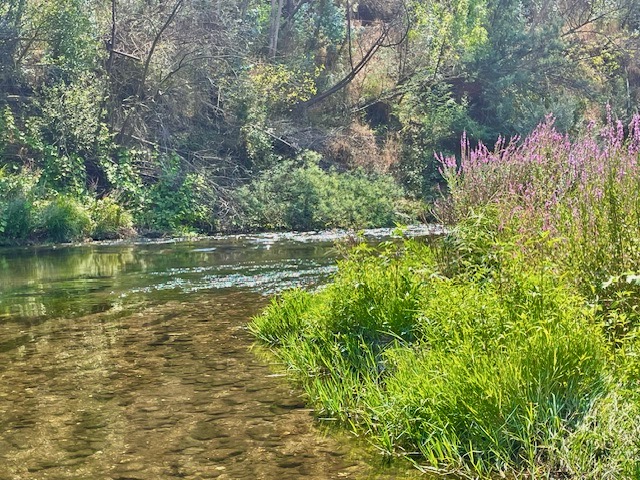
Our walk ended ‘off line’. Carefully crossing the white walled switchback of a highway, we descended to the quiet stillness of river bank and cooling shade of willow and alder that thrive here on its stony floodplain.

This middle stretch of the Vouga is officially designated a ‘Site of Community Interest’. That means minor blockages like weirs that present obstacles for migrating species of trout, eel, shad, barbel, lamprey or mullet are being gradually removed and in some places fish passes are being installed. Otters, birds of prey and many other species of birds and insects are also able to thrive here where human habitation is scarcer.

Delighted in encountering dragonflies and butterflies I waded barefoot in and allowed the hundreds of trout fry mingling in the sunlit shallows to continue feeding and flitting around my feet. A cooling calm end to our lovely lone amble under the afternoon sun.
Marvellous Moths

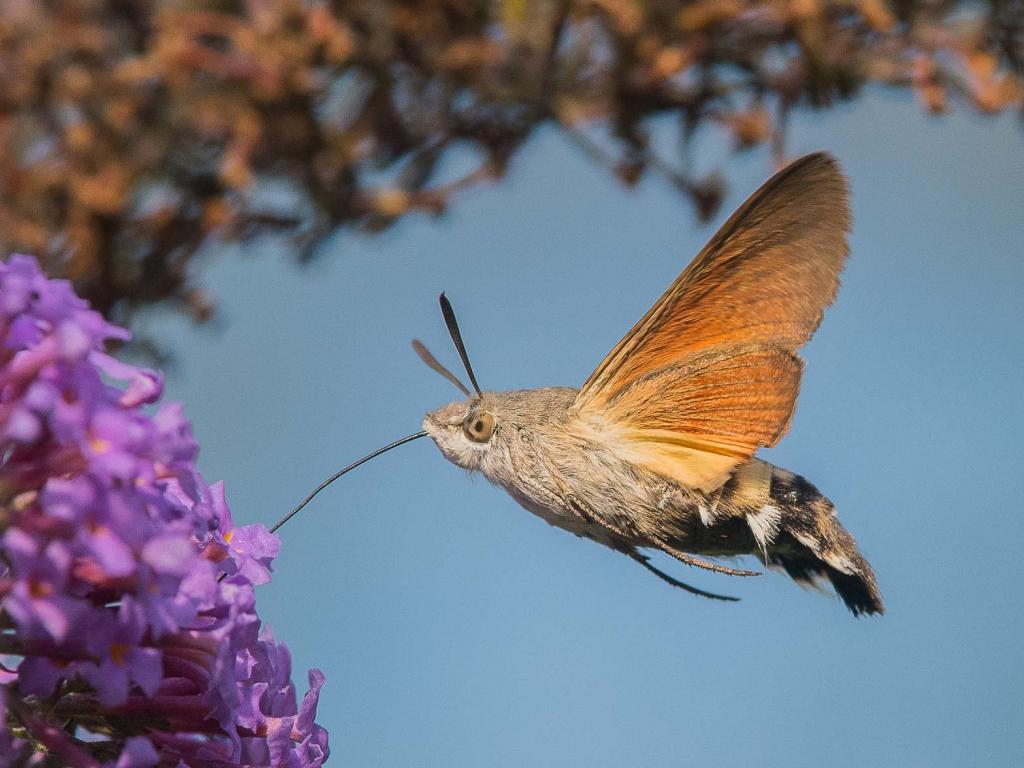
Humming bird hawk moth. Image credit: Butterfly Conservation /Graham Mounteney

Mention the word ‘moths’ to people and I suspect the majority are likely to think about those nasty critters whose larvae consume clothes or chew carpets. I confess to being a bit indifferent to moths in general until I saw a humming bird hawk moth in my town garden years back. That remarkable encounter made me sit up and take note yet it wasn’t until I moved back to the country that I eventually got actively involved this spring in entering the world of the amateur lepidopterists.

There are some 50 species of butterflies and 2,600 species of moth in the UK. Roughly 900 of those are macro moths and the rest a bewildering range of micro moths, many virtually indistinguishable one from t’other to the non-expert eye.

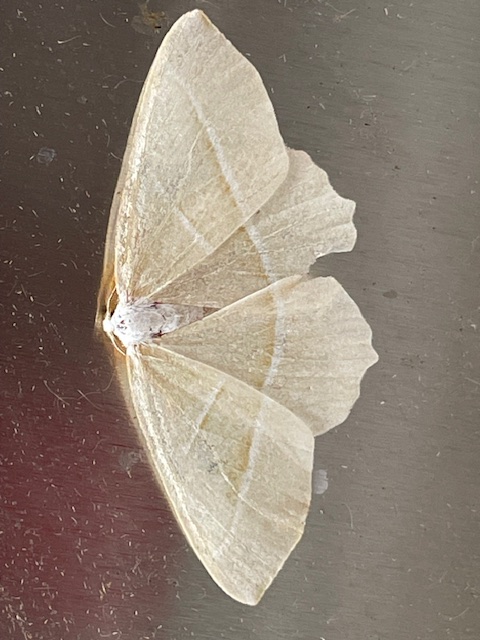
Light Emerald Moth

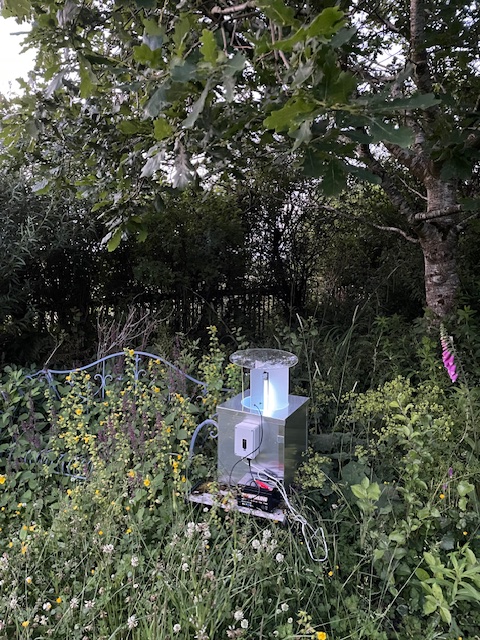
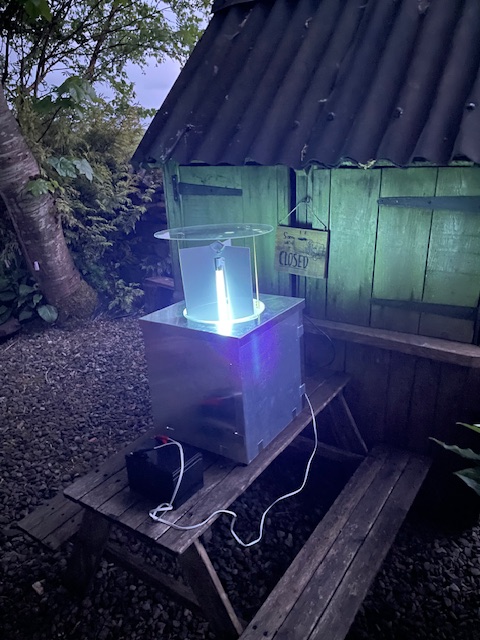
Where to start when trapping and identifying specimens? Online research around the options makes for a good start. Thinking through what best suits your situation when matched with what’s affordable and you’re ready to proceed. There are three main types of moth trap, named after the experts who devised them. The Heath trap consists of a collapsible rectangular metal box with a funnel and fluorescent UV bulb. The larger Skinner trap has a slot entrance below the light. The Robinson is a large round, non-collapsible trap, most likely to catch and retain the largest number of moths. It’s also the most expensive to buy. I opted for the Heath model.

I nearly got a version powered by an extension run from the house mains. On reflection thought that a daft idea as the more places to set the trap of an evening around the garden (or beyond) would be a much better proposition. So I also bought a battery and charger. It’s proved a great investment, not only giving me pleasure as well as visiting friends and family, young and old alike.

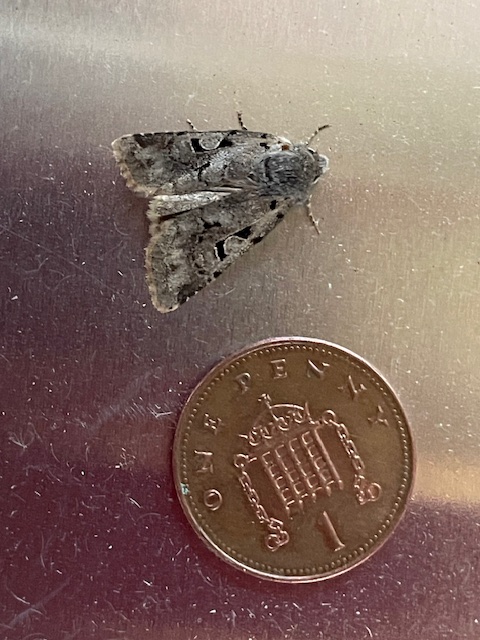
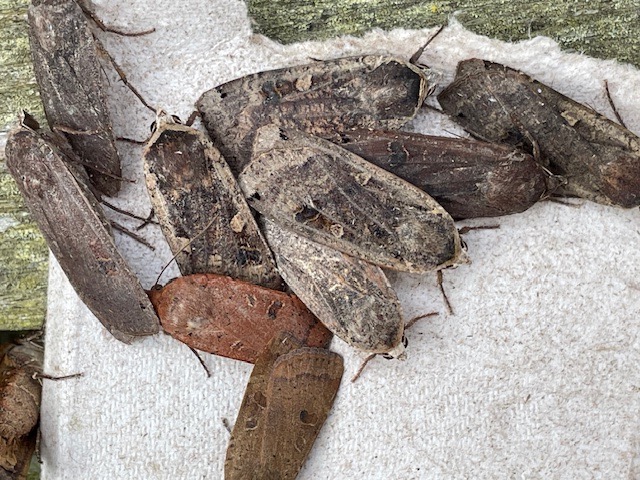
My first and most numerous species caught, back in April, was ‘Hebrew Character’; so called from the dark marks on its forewings that look like letters in Hebrew script. They’ve now been replaced as most numerous by a scrum of large yellow underwings, clustering in a gang around the egg boxes I’ve furnished the floor of the steel box with.

Although Latin nomenclature is essential in classification worldwide it is surely the common names, reflecting archetypical characteristics, that catch the imagination and lodge in one’s mind. Here are a few favourites:

Burnished brass. Small, widely distributed, lover of damp places, feeds on low lying plants like red valerian, honeysuckle and buddleia…all of which we have in the garden. The wonderful metallic sheen on the forewings is a entrancing sight.

Wainscot. Named for resemblance of wings to the ribbed wood raised panels of interior walls, introduced in Tudor times. The caterpillars of this common moth feed on grasses and our meadow and surrounding pastureland provides ample acreage.

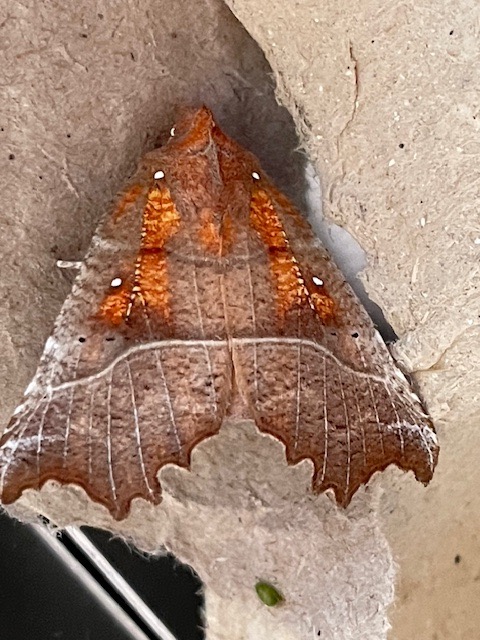
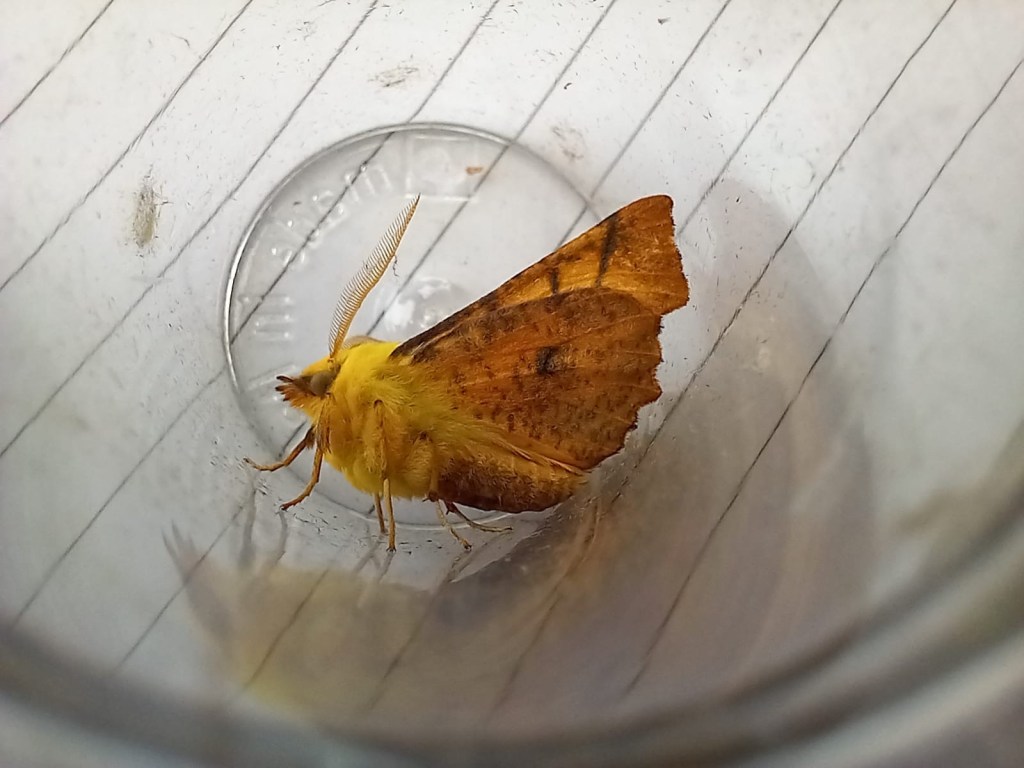
The Herald. Scalloped broad forewings and splashes of orange colouring give this medium size moth a distinct dynamic appearance hinting at speed with a purpose. It overwinters in barns and outbuildings and we have both. The caterpillars feed on willow trees and again no shortage of them hereabouts. Small resident birds like tits and robins we see working wands of willow in the spring are probably feeding on the larvae of the many species of moths and other insects that live there.

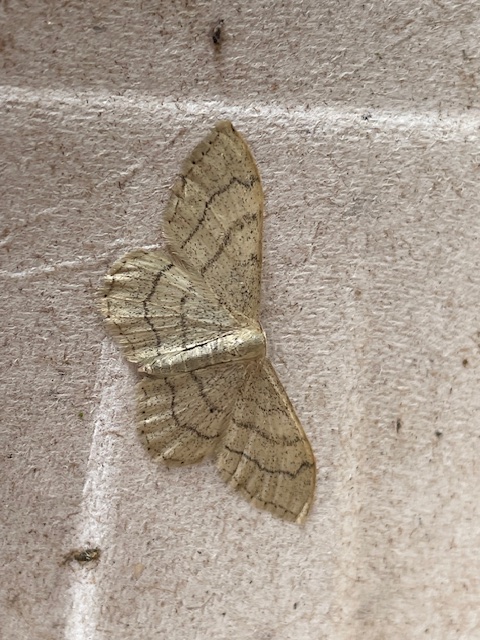
Riband wave. I love the poetry of the name reflecting the subtle patterning of its wings displayed when at rest, drawing on the imagery of a sandy seashore.

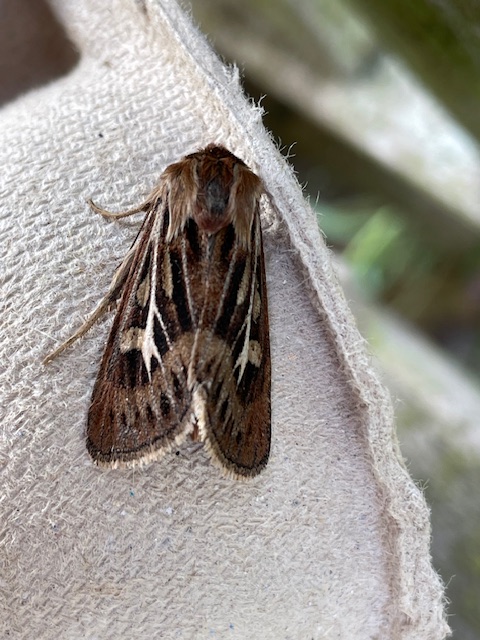
The Antler. The pale markings on the forewings resemble deer antlers. This medium size moth is at home here in upland moorland country, its caterpillars feeding on acid grasslands. The antler also flies in the daytime, feeding on thistles and ragworts.

Poplar Hawkmoth. Sure to wow any observer when first sighted. Varieties of hawkmoth, like their avian namesakes, spread their wings and the large size and studied stillness never fails to impress. Most of my specimens (or the same ones recaptured) feature when the trap is left near the mature poplar tree in the east end copse.

As spring turned to summer the moth count increased in variety and number. Warm, still, humid nights with good cloud cover tended to produce the greatest number of captives. I discovered that when the trap was set in amongst shrubbery and trees it upped the number and variety even more. Some species flew off immediately on opening the container in the morning but the vast majority remained static, happy to linger, having to be emptied out at the same collecting spot once recorded.

One morning one of the parent swallows nesting in the eaves above the porch where I’d parked the open trap, flew down and snapped up an unfortunate escapee as it fluttered skywards. Daytime insect feeding birds apart, bats are the main nocturnal predators, and these we see regularly so the numbers of insects must be high enough to sustain populations, which is good. Nationally, the situation is not so good. There’s been a worrying decrease in UK macro moth numbers in recent decades, much of that due to human activity, and that has had a knock on effect in the wider ecosystem.

So far I’ve identified around 50 species in this Northumberland garden. Use of the phone camera has proved invaluable as it utilises AI to help identify a subject by family or common name; a real boon to beginners like me. Bernard Skinner (he of the trap) produced ‘Moths of the British Isles’ handbook, a definitive colour identification guide, back in 1984. My updated ex-library copy is still invaluable too, with 1,600 of the UK’s moth specimens recorded, with very useful notes. There are lots of good guidebooks out there so well worth investing in one. Triangulate by visiting excellent online sites too, like Butterfly Conservation charity https://butterfly-conservation.org/ or joining a Facebook moth trapping group.

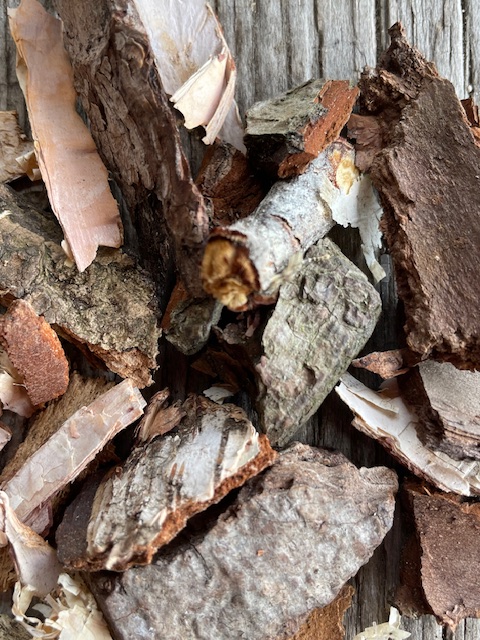
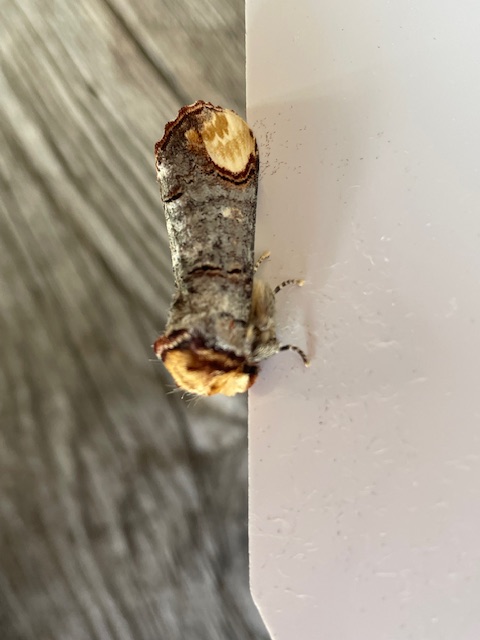
Buff tip and bark chips

A fascinating element of moth survival technique is camouflage. Some species I’ve come across when trapping are past masters at the art. The Buff tip for example. At rest its wings are held almost vertically against the body with two buff area in front of the thorax (body) at the tip of the forewings. Looks like a twig or chipping. Colouration varies but its favoured tree is birch, into whose bark it merges. On the wing from May to July, it’s one to marvel at.

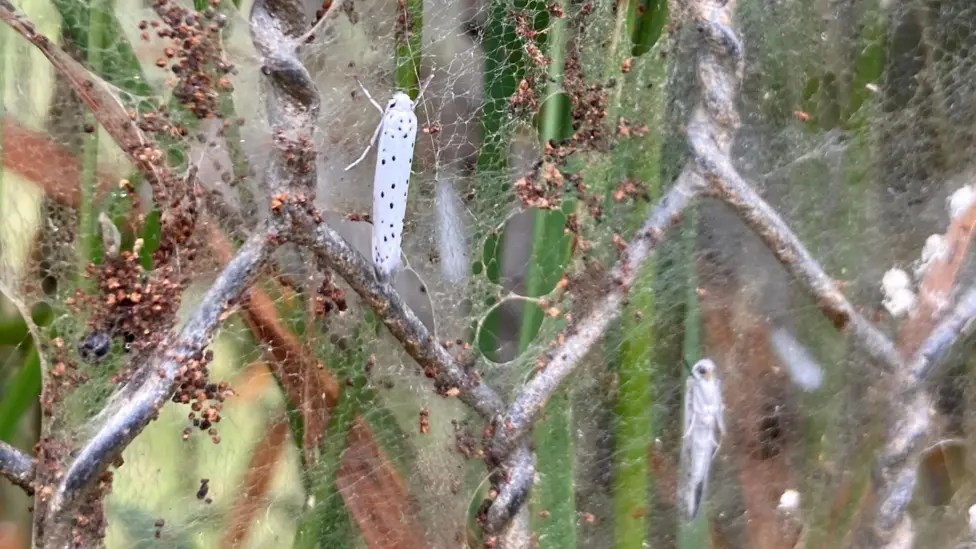
A problem gardeners like us who have an orchard is probably more alarming than deadly. The apple ermine moth lays its caterpillars on apple trees. The ghostly tent like web that surrounds the larvae give protection from bird predation but the caterpillars devour the leaves and can denude the tree and restrict budding. I’ve had to carefully peel off and destroy the tent caterpillars found in our trees each spring.

Apple ermine moth and web

When I came across the handsome white ermine moths in the trap I mistook it for its cousin causing the problem so was relieved to discover the difference when looking it up. Appearances are more obvious when you see them together.

White ermine moth

The white ermine’s caterpillars live in webbed tents feeding on nettle, dock and other common vegetation. Apparently this medium size moth has few predators because it is highly poisonous. (But not to humans if touched). Like some other moth species they have another defence mechanism against predators; dropping, seemingly lifeless from their perch, into undergrowth beneath.

I’ll look forward to what the autumn brings to the moth mix. As one observer remarked, ‘trapping is like a lucky dip for adults’. For me it’s yet another strand to an understanding of the wonders that surround us in the world wide web of nature and the farmed environment.

Hare Raising

A brief summary of the past month’s wild animal activity in our out-by rural garden. The big advantage of having no dogs or cats on the premises increases chances of encountering wild animals and the privilege it brings of seeing them up close.

New born leveret: Image by wildwelfare.org.uk

Star event has been the up close sighting over three evenings of baby hares – leverets – hanging out in forget-me-nots that have colonised gravel paths between house and hedge. Our viewpoint from the pantry window  being just a few yards away. I’ve not the equipment to capture images in near darkness, but the youngsters intimate interaction is engraved in the memory. Best night ‘s observation was the second. Four of the brood bundled together grooming  each other’s fur while a fifth, just a foot away, lay facing out into the gathering dark. Was it keeping watch for their dam or on guard duty for predators? Whatever the reason the outrider eventually came back to its brethren and joined in the ongoing grooming process.

Occasional spotted individual growing leverets since during  the day, shooting in and out of close packed flower beds and full leafed copses. The mainstay of family life is their mother, the Jill, who we first saw regularly at Winter’s end. She seemed to have adopted our ever growing garden rubbish tip, t’other side of the fence, as her nursery. Miniature versions of the parents, leverets are born above ground in a shallow depression, or form, and each weighs in around 100 gms (3.5 oz) Unlike rabbits they are fully formed when born, with eyes and ears open. The Jill feeds her litter twice a day but goes foraging, keeping her distance to deter predators like foxes, stoats and weasels from tracking their location. The leverets in turn remain motionless throughout and their colouration helps them blend into the background. They venture out as they grow – as we witnessed – and are fully grown at six months.

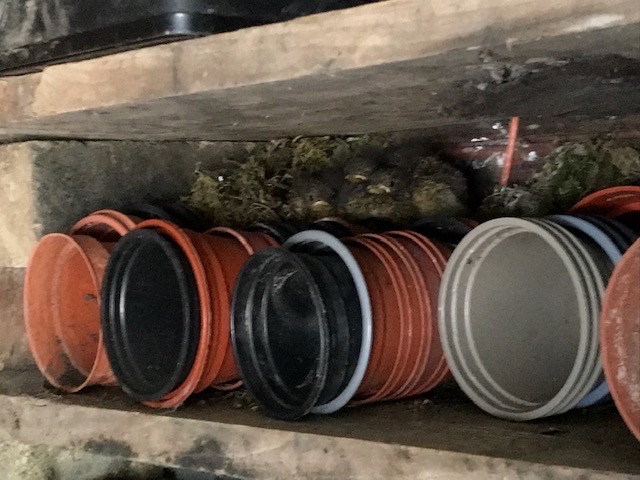
When it comes to seeking out the hidden birthplaces of creatures around the garden we were intrigued to see which of the many wrens nests would be the Jenny’s chosen location to lay her eggs. This one amongst the flowerpots won out. Amusing to see the nestlings sporting top knots of moss wrested from their nest lining. Whirring forms of fledglings often seen since about the place. One’s had to be shooed out of the house and others from under the cars in the yard before driving out.

The railway goods waggon that’s our unusual garden shed has in successive years been home to nesting swallows, blackbirds, robins and pied wagtails, each fiercely protective of  territorial space. We have indoor residents and  under-the-eaves tenants, and thus they co-exist. The wagtails usually opt for either the suspended metal watering can or bucket. The spill of feather, grass and wool lining indicate eventual fledging. Later came across a second wagtail nest within a tangle of rampant clematis, montana rubens, outside the bathroom.

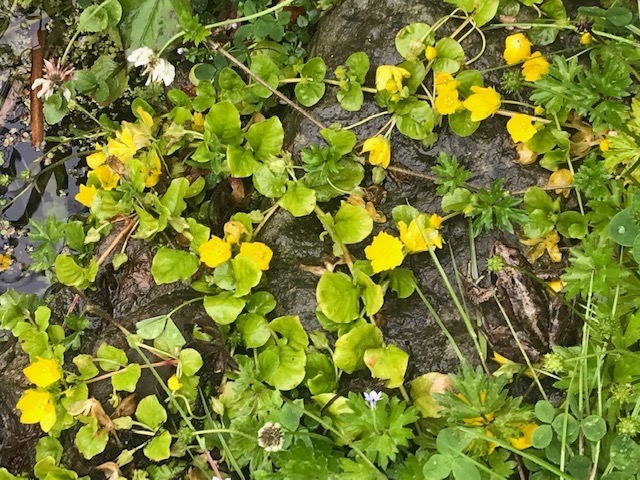
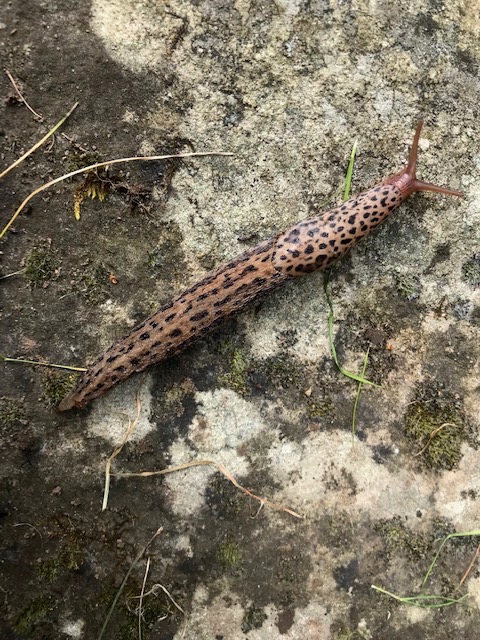
The rain brings amphibians  and their ilk out to forage. A frog amongst prostate free flowering  lysmachia nummularia at the old pond’s edge one day, or the elegant emergence from cover of a leopard slug on another damp day. There are around forty types of slug in the UK, most of which are not supposed to be crop pests. This one’s beneficial in feeding on  a diet of fungi, plant or animal matter and in turn is preyed on by hedgehogs and birds.