Radnorshire is a landscape of river, spa town, sheep country and long-distance ridge rather than metropolitan focus. (Real Counties Geographical Survey)
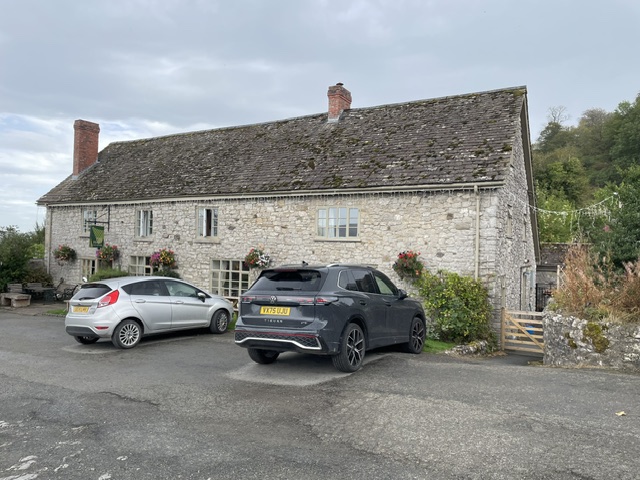
The third and last of our holiday diaries. Sunday lunch in a pub. We rarely do it these days. Our B&B hosts in Bucknell thought the Harp at old Radnor might be worth a shot. They’d not been since the old hostelry had changed hands recently but thought it a good bet.
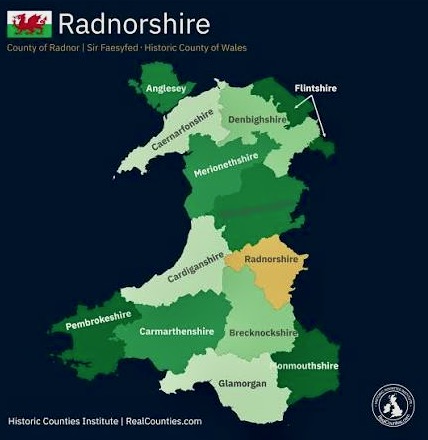
Radnorshire is the least populated of the thirteen original historic counties of Wales, formed in the 1540’s by that most upwardly mobile of Welsh families, the Tudors. The only accents we heard in The Harp though were English, some with the borders lilt. A good place to settle for outsiders seeking a rural retreat, or just visitors like us? Hard to tell. Staff were welcoming and we enjoyed a fine traditional Sunday lunch in this venerable low beamed traditional pub. https://harpinnoldradnor.co.uk/
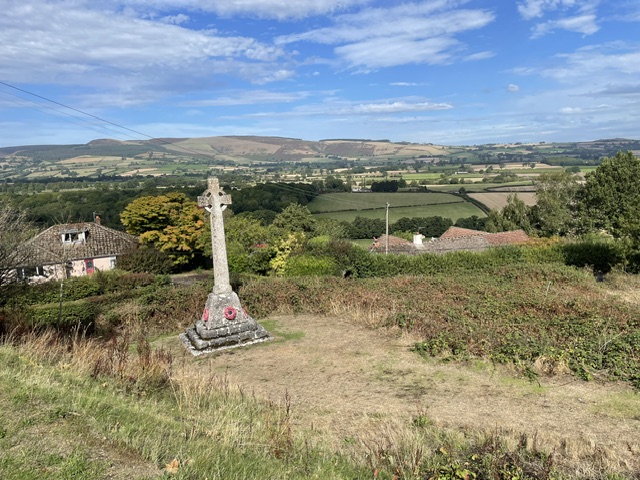
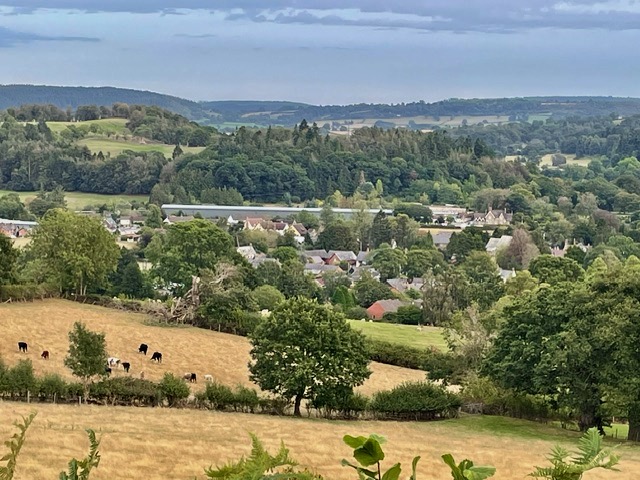
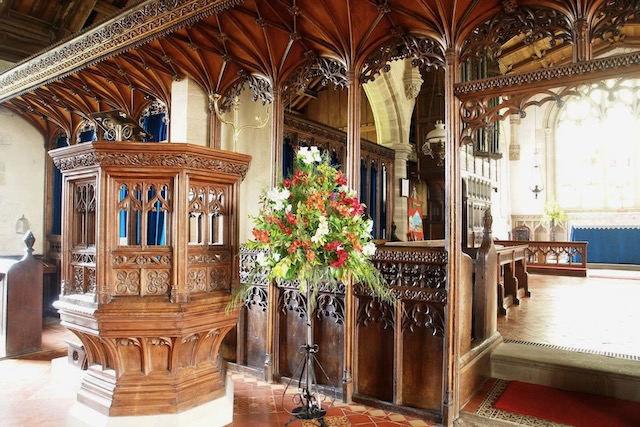
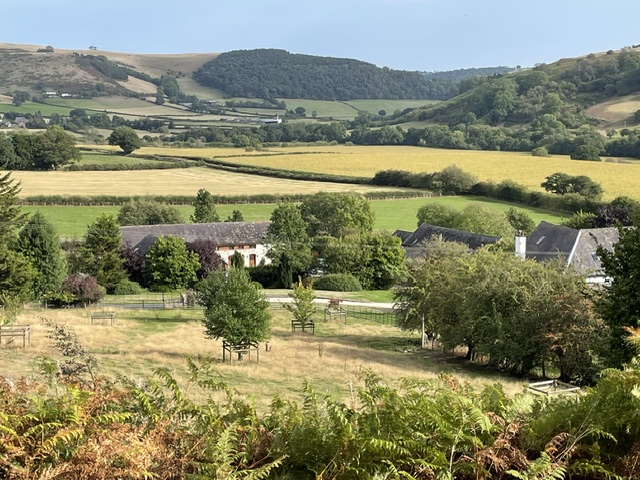
Outside there’s a vista northwards over the broad Vale of Radnor to the great hump of ridge that was the former medieval aristocratic hunting ground of Radnor Forest. Old Radnor village’s Norman castle is long lost, but the parish church of St Stephen is highly rated for its treasures – an organ case c.1500, a unique 8th Century font, Tudor timber ceiling and original C.15th rood screen. Not that we could see any of them as the building is undergoing fabric repairs and was locked. A shame for us, but good news for the continued stability of this ancient building. https://www.nationalchurchestrust.org/church/st-stephen-old-radnor
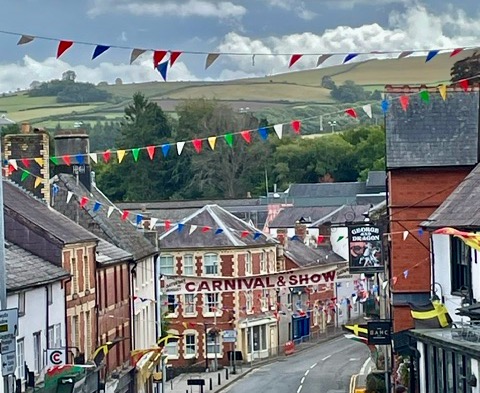
Down in the valley a few miles westwards New Radnor lies off a long wide stretch of the A44 trunk road. Motor bikes roared past us, clocking up a ton. Quietness was fully restored once we’d turned off and parked. We ambled around its pleasant grid of planned streets, hardly a soul in sight. Broad Street by name and nature hinted at past importance. Here are interesting buildings great and small from different eras, community shop, farm, church.
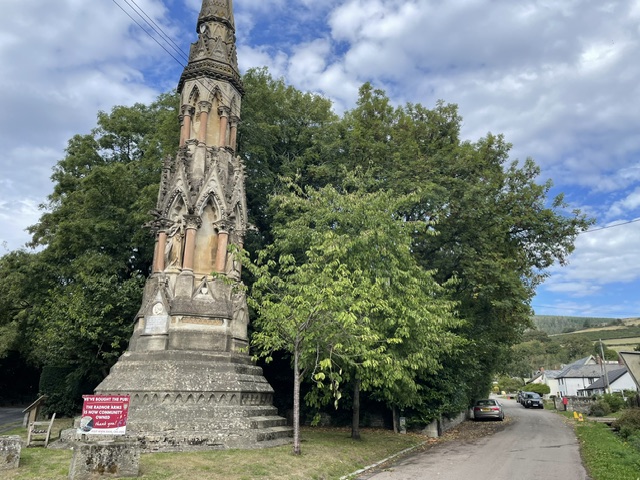
A grand monument at the town entrance some 69’/21m high rivals surrounding mature trees in height, demanding attention. This rocket shaped eyecatcher honours local landowner and leading liberal cabinet member Sir George Cornewell Lewis (1806-1863). An exemplar of public art in the high Victorian period.
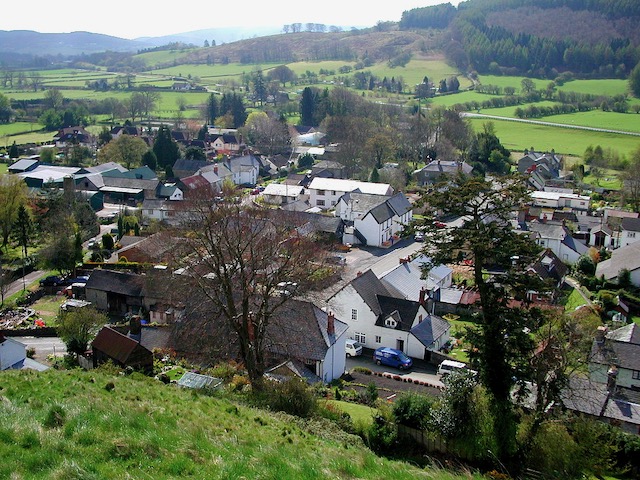
Hard perhaps to imagine today’s settlement giving its name to a whole county in the 1540’s. Like many other places in the Welsh Marches it was founded by Norman overlords whose protective castle on the hill brought a civic borough into existence, the site of judicial assizes and important markets up until the late c19th. As other boroughs in the county – Presteigne, Rhayader and the current county town of Llandrindod Wells – rose in importance New Radnor’s status and fortunes declined.
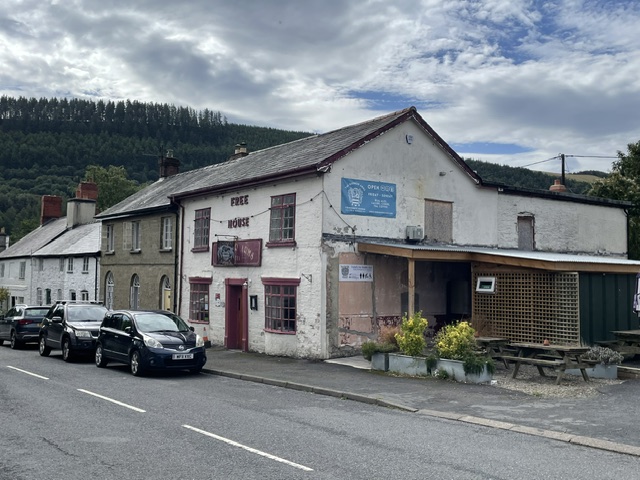
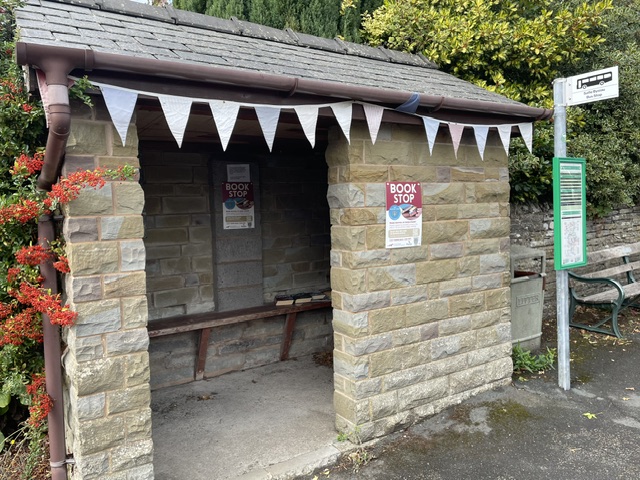
The loss of the last pub in 2016 spurred today’s population into action. In 2025 , as the result of a multifaceted fundraising campaign, The Radnor Arms (C.1700) re-opened. Currently Weekends only but continuing to be renovated and extended to make it fit for another century. Another initiative here is the bus stop shelter doubling as a book exchange. (‘The Book Stop’) Good luck to the locals and may their communal spirit thrive. https://www.rahl-cbs.org/
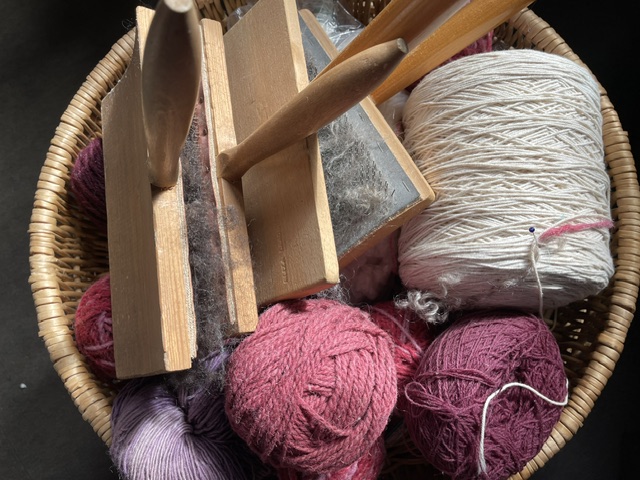
‘She stands, revolves the wheel with her right hand, / sets a motion, moves two paces away, a rhythmic creak in her ear, / draws wool from the central spindle,/ twists, twists yarn until strong enough to load the cop, / repeats, repeats until the cone is full,/ her arms and fingers burning. / Spinster, though tied now with a gold’. (From ‘Walking Wheel’ a poem by Helen Cook)
On to Whitton, a small village on a crossroads which once had a primary school which, despite the addition of a new block in recent times, closed a decade or so ago as the result of falling pupil numbers. An indicator of the depopulation problem in rural areas of rural Wales. More older people moving in as younger people and parents move out in search of jobs, affordable housing, better transport links etc.
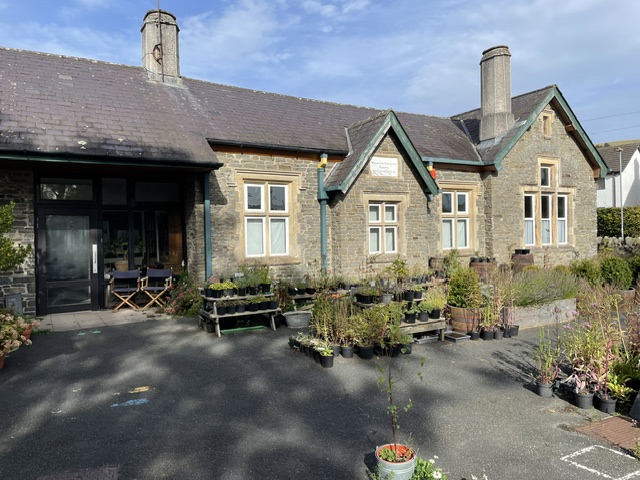
Education of another sort continues here though. The buildings now house the Museum of Welsh Textiles and the Radnorshire Arts and Craft Foundation. We were hosted on this open day by resident founders Rosamund and her husband Dave.
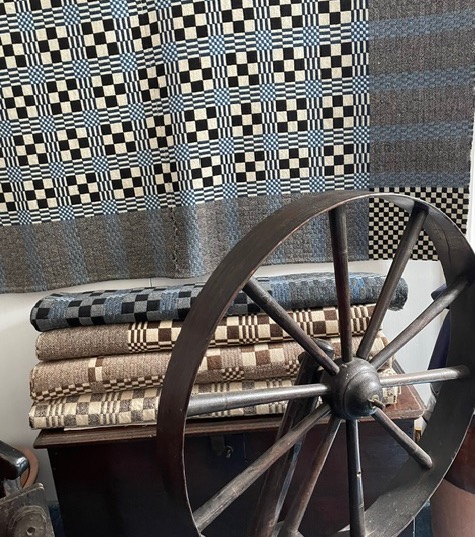
He’s a former furniture restorer from Australia and what she doesn’t know about textiles and the history of them in Wales isn’t worth knowing. Her long introduction covered many aspects of history, craft skills of spinning weaving and dying. She talked about the loss of this cottage industry in rural Wales and challenges of revival and sustainability in the modern era. Rosamund also runs courses and classes here in the old school.
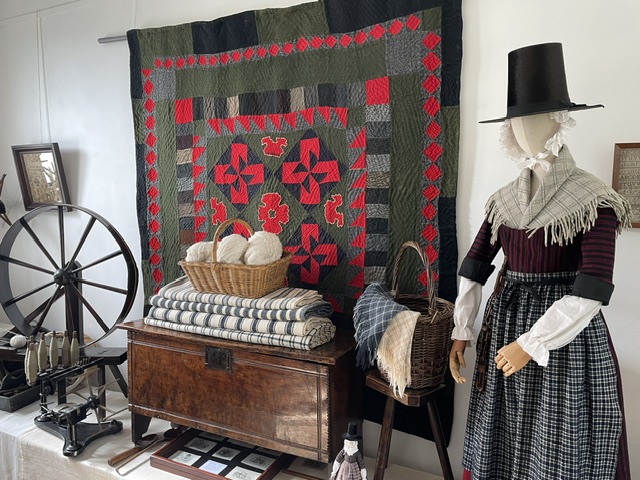
I’ll admit my capacity and interest in the subject stops after a while but I was impressed with the design and quality of quilts, blankets, shawls and contemporary knitwear on display. https://www.radnorshireartsandcraftsfoundation.org/
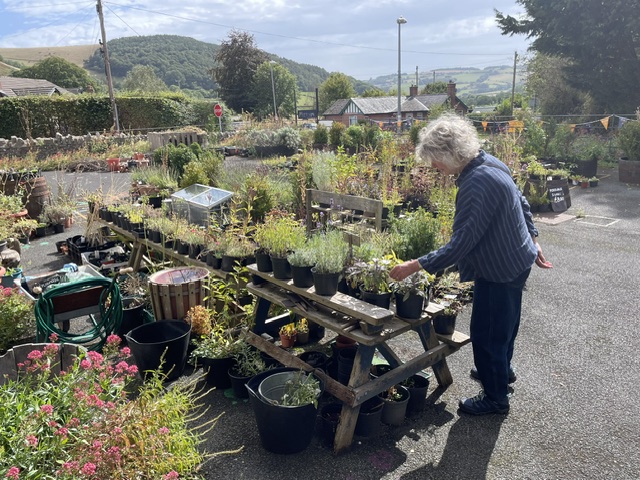
Enjoyed tea and cakes over conversation in the little café area overlooking a mass of plants in pots covering the former children’s playground. Kim couldn’t resist buying some items in the sale to take home with us to Northumberland. Monies raised goes towards further renovations to the museum and purchase of artifacts. Discovered our chat with other visitors that an important battle took place just up the road, so decided to go see…
‘…the noble Mortimer / Leading the men of Herefordshire to fight / Against the wild and irregular Glendower / Was by the rude hand of that Welshman taken / A thousand of his people butchered.’ (from Shakespeare’s Henry 1V Part 1)
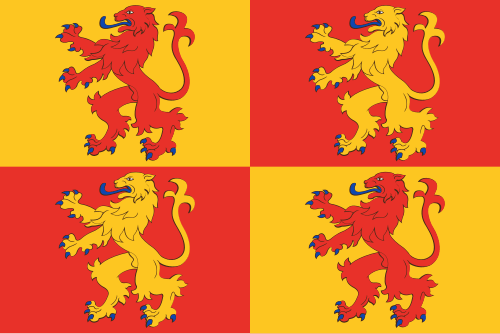
If there’s one name that epitomises the historic spirit of Welsh nationalism it has to be that of Owain Glyndwr, the Marcher Lord and outstanding military strategist whose guerrilla warfare during the first decade of the 14th century, during the troubled reign of Henry IV, almost achieved the cherished goal of independence from English rule. That insurrection was also a thread linking the places we’d visited. Glyndwr’s forces destroyed the predecessor church at Old Radnor as well as the castle at New Radnor, massacring its English garrison in the process.
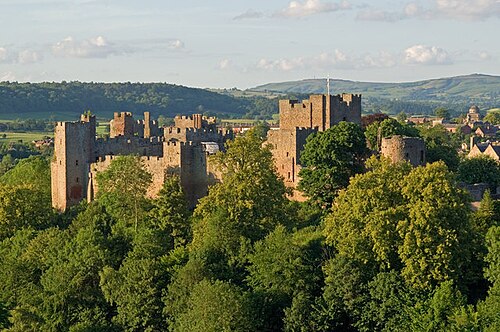
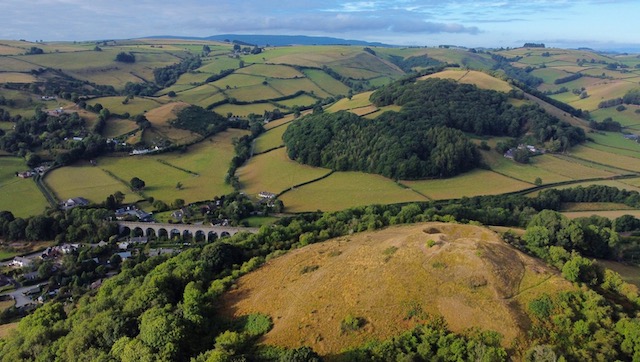
The greatest of the Marcher lords, with his power base at Ludlow castle (above), was Edmund Mortimer. His Herefordshire and Shropshire levies were literally facing an uphill struggle against the Welsh forces of Glyndwr mustered on the heights of Bryn Glas (‘Green Hill’) above the scattered settlement of Pilleth that fateful day in June of 1402. The Welsh leader’s clever tactics, hiding archers in flanking hillside woodlands, together with the desertion (planned or spontaneous) of Mortimer’s own Welsh archers in the thick of the ensuing battle resulted in a massacre of the English forces, no quarter being given.
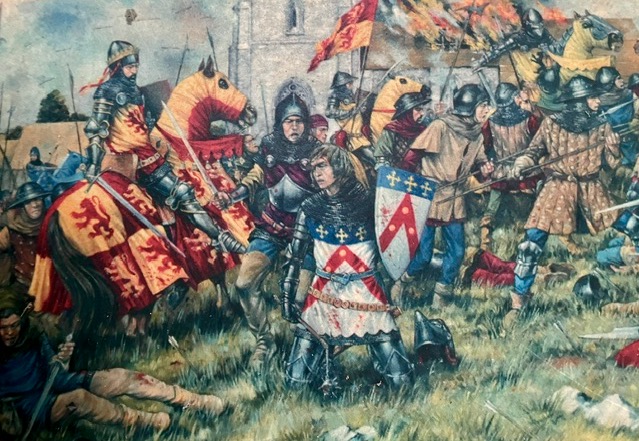
Their bodies were left unburied by the victors and legend has it that, in revenge for earlier English atrocities, they were further mutilated in death. Mortimer himself was held hostage and when cash strapped King Henry refused to pay up, a disillusioned Edmund swopped sides and ended up marrying Glyndwr’s daughter Caitlin.
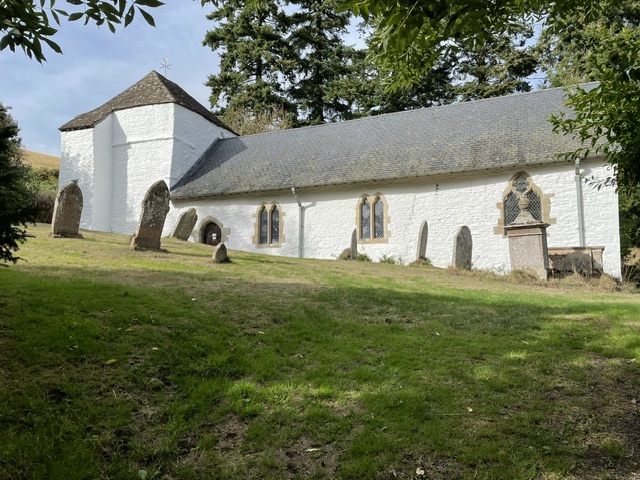
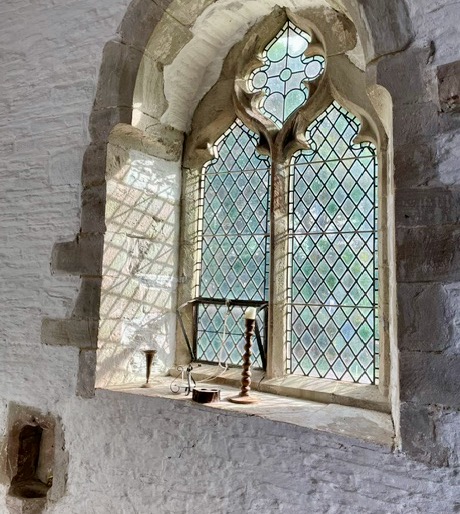
Today a stand of pines and commemorative plaque mark the battle site. Pilleth’s white washed medieval church, embedded half way up that murderous steep slope, would have witnessed the awful conflict. Entering that thick walled building we stepped into a serene light filled interior with interesting illustrated display about the battle. (Above)
Very glad to have got the heads up to include this special place in our tour, historically resonant as it is. There’s more about Owain Glyndwr and his life and times on the website of the society set up to honour the man in 1996. https://www.owain-glyndwr.wales/
‘A county of small towns and large distances….its remoteness never meant isolation’ If you’re interested in discovering more about Radnorshire I recommend this well researched & written blog by Antony Davies. https://antonydavies.uk/