Cabeco Trigal

‘The colours, aromas, flavours, textures and the melody of laughter’  

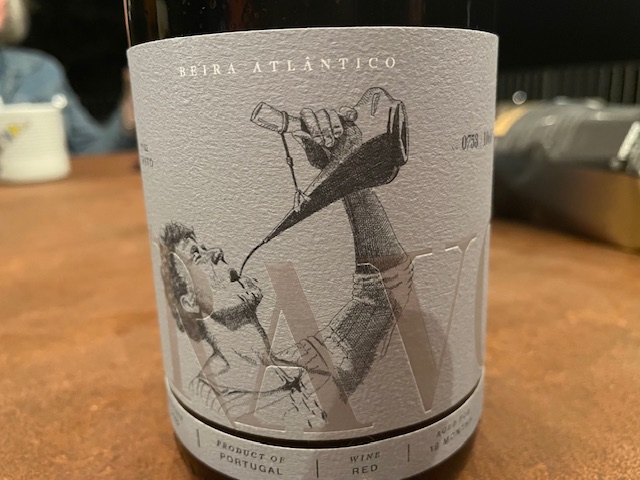
(Cabeco Trigal wine bottle label).

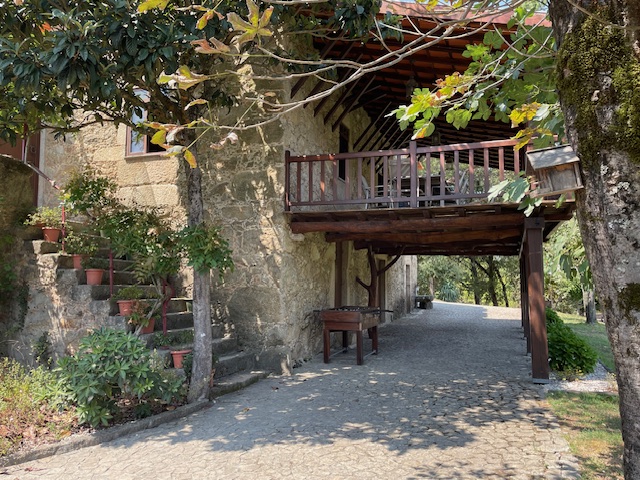
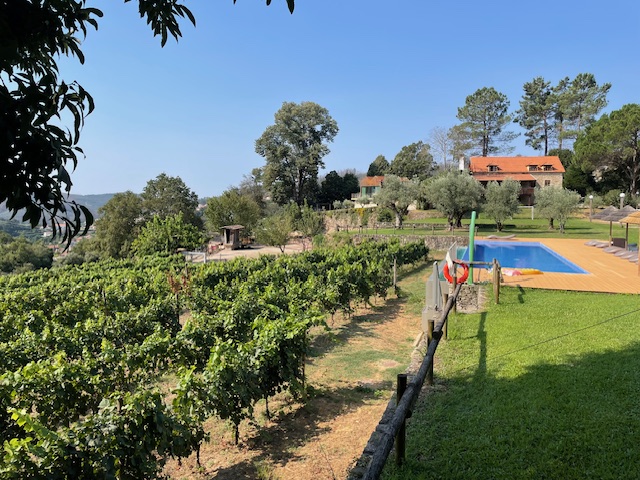
The Air B&B we stayed in had some very attractive features, being a modernised traditional dwelling with all mod cons, lovely outdoor open pool and extensive private grounds.

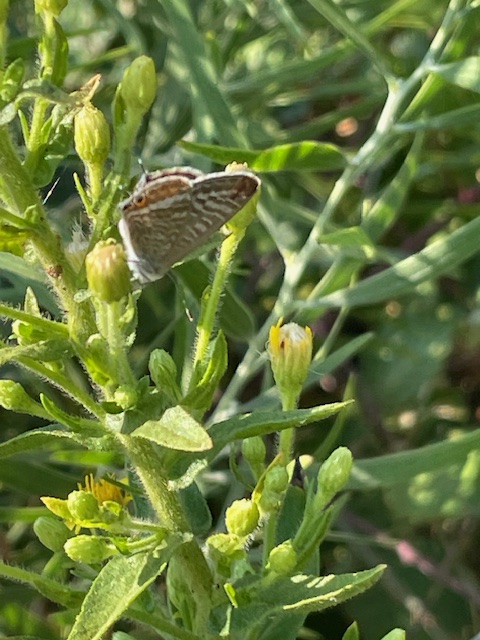
The lawn between house and pool had remained green despite the punishing heat, being the toughest of varieties refreshed by evening sprinkling and morning dews. Many long tailed blue butterflies were about while squadrons of house martins dived, dipped and sipped from the pool water, most thrillingly while I was in it, swimming alone. Jays were seen in the surrounding woodlands. Our lovely accommodation apart, the other aspects of the place had particular rural interest that made this establishment stand out from the crowd.

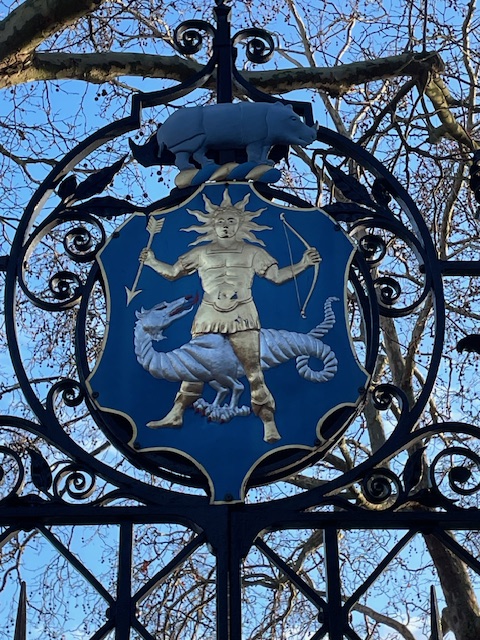
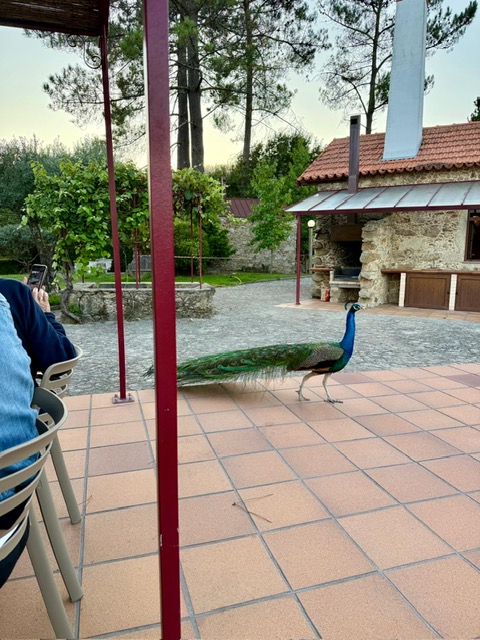
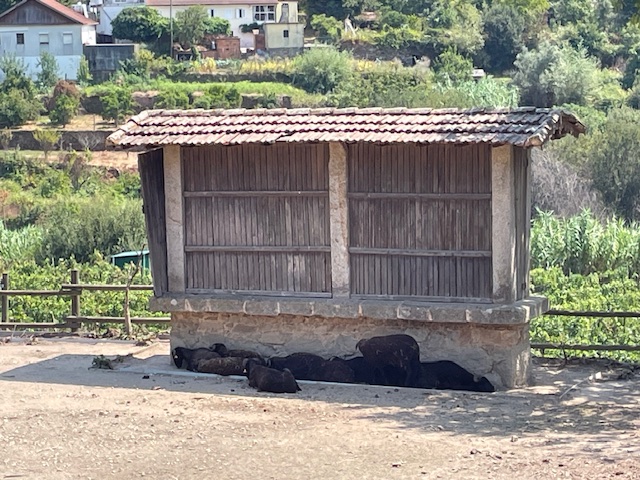
Cabeco Trigal is also a quinta (winery) and a smallholding with traditional breeds of sheep and pigs, alongside horses and llamas. The last features as the estate logo. Animal grazing being sparse it is subsidised with hay and grain. Sheep sheltering from the sun in the shadow of trees or the traditional horreo (granary). Pigs wallowing in mud pools, free roaming male peacocks punctuating the air with their screeches.

Tiago, the owner and our genial warm hearted host, is an architect by profession who lives with his family nearby. He specialises in repurposing industrial buildings and the tasteful conversion of this his family farm complex, including extra bedrooms in the adjacent barn cum workshop, succeeds splendidly in effectively blending old and new materials.

As temperatures climbed we appreciated even more the cool retreat three floors of indoor space provided, as well as the welcome shade of its wide wooden balcony overlooking the wider estate, with views across the hillside.

What especially endeared it to me was that house and barn were originally constructed of the light grey granite which defines the local topography. Growing up on the edge of Dartmoor this was a comforting reminder of that happy connection of time and place.

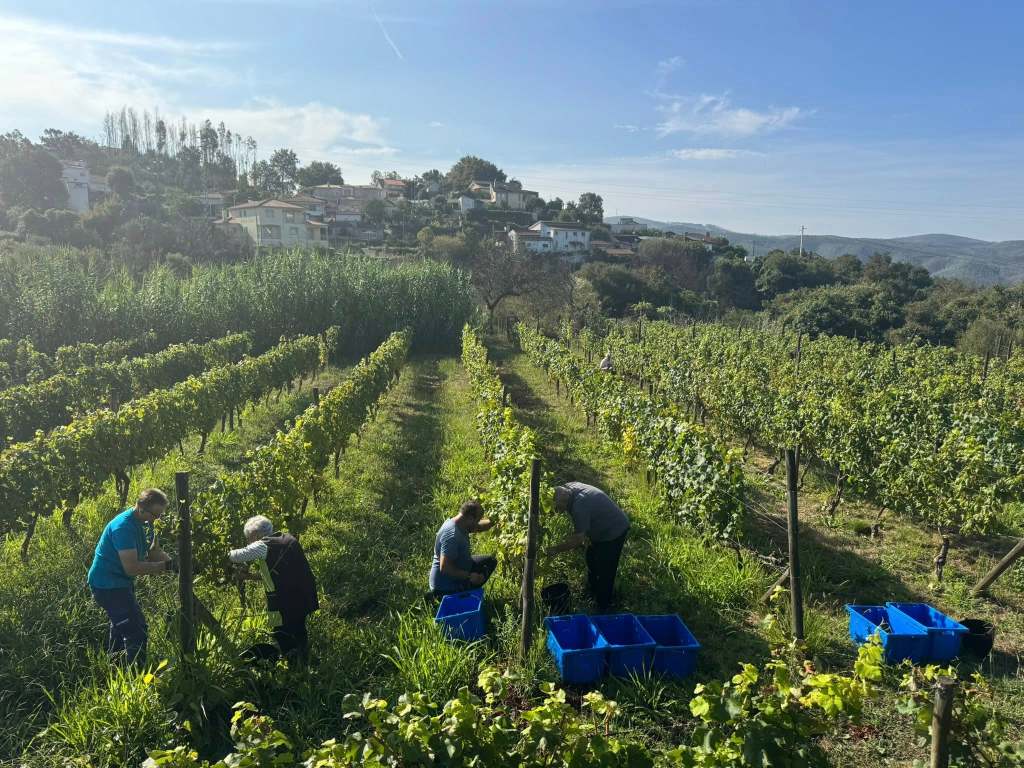
Our host is proud of his family’s long history in the Vouga valley. To honour the patrimony he embarked earlier this century on a multi-faceted passion project to reinvent what remained of a once grand estate, here at the cabeco (high place).  Modernising the old farmhouse and repurposing the remaining land by switching away from arable (Trigal means wheat field) to develop and extend the existing wine production on artisan lines was central to that vision. Holiday rental income is the third aspect underpinning the enterprise.

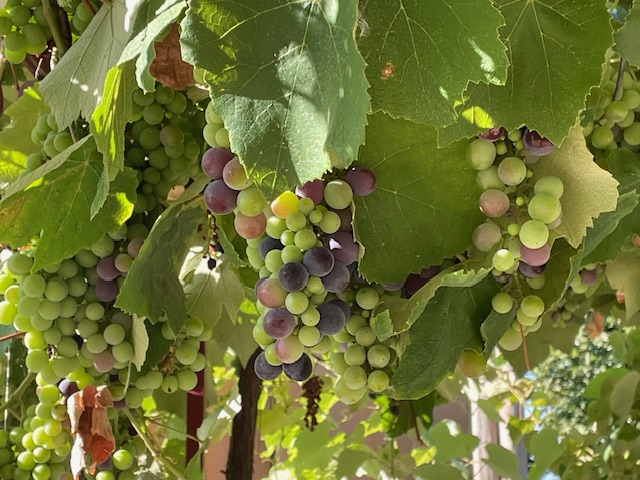
Intense cultivation here, fully utilising the land’s south facing terracing, involves controlled animal grazing in the aftermath of harvesting and again in the spring to control weed growth. Tiago told us that the land here is not ideal terroir for wine production, being rich enough for grain but not for vines which thrive best on impoverished soils. And that’s the reason they cannot go organic. Minimal, though essential, chemical treatment is necessary to ensure successful growth of the new varieties of grapes they’ve planted.  

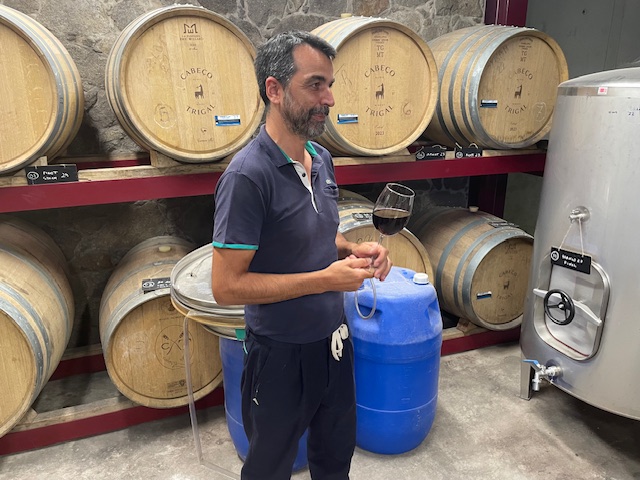
We joined Tiago early in our stay in the workshop underneath the barn, standing amongst the stainless steel vats where the ‘22 and ‘23 harvests of merlot, pinot noir etc stand alongside the French oak barrels the vintages will eventually be transferred to for maturation. He consults  throughout with Louis, his business partner and wine maker, who oversees the whole process.

That day Tiago was testing the grape juice to calculate how far off harvesting they were. His sampling tool logged a 10.5 degrees alcohol strength, not the 12 or 13 various varieties need to be at harvesting. (At the time of publishing that would be now.) Friends and neighbours join in to pick, sort and trample the grapes, earning their just reward in produce!
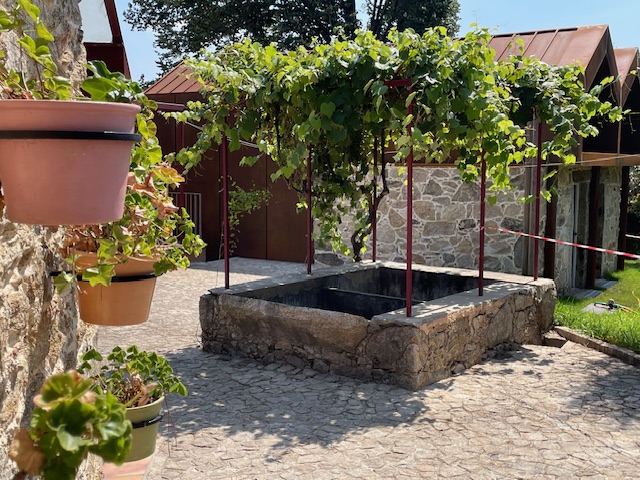
The metal press is used for processing  the chardonnay, sauvignon blanc and other native Portuguese white grape varieties. Interestingly, the actual pressing utilises minimal weight to ensure longer extraction and subsequent subtly of flavour. It’s in the final balancing  process that the skill of the experienced winemaker comes to the fore.

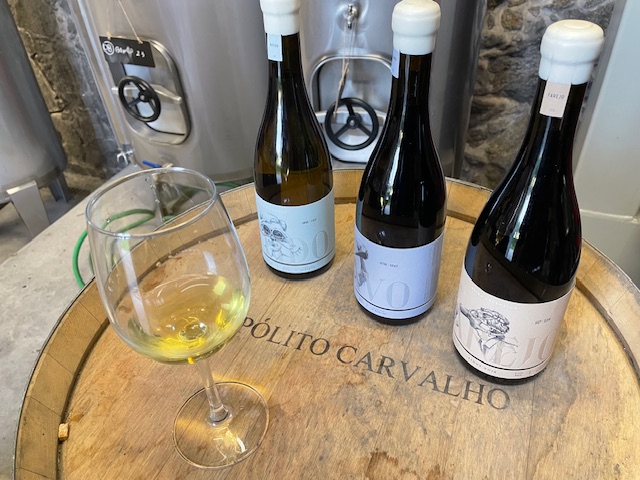
We understood there to be some 6,000 litres currently in production, which makes for approximately 8,000 bottles. These are individually sealed with wax by hand after labelling at the bottling plant.

Unsurprisingly you don’t find Cabeco Trigal wines on the shelves of local supermarkets where we noticed the average price of the country’s home product is around €8. Portugal’s main wine producing regions lie to the south and they produce  there industrially at scale. No, these bottles cost around €20 if retailed locally and Michelin starred restaurants are the main customers.

We loved the distinctive quirky line drawings employed for each label. A bottle’s appearance should be an entree for the eyes and these do that. Here’s a translation of one of the key sentences on each label, which neatly sums up what they have set out to achieve.

‘On a hillside where the ancient wheatfields turn to lush vineyards that colour the bucolic mountain landscape, these are our wines in an environment of perfect co-existence with our people and farm animals’.

The much anticipated wine tasting with Tiago on our penultimate night was a convivial affair. The final evening we followed through on his recommendation and enjoyed delicious traditional specialities on the riverside terrace of a local restaurant. it was a pleasure to end that last evening with the remaining bought samples back home. Toasts was raised to the spirit of Portugal in general and one enterprising wine producer in particular.

You can see more pictures of this year’s harvest at https://www.facebook.com/QuintadoCabecoTrigal

Bussaco

‘Bussaco Forest cannot be described, the best is to get lost in it.’  Jose Saramago

Having been told about the Bussaco National Forest by my cousin who had visited recently we were keen to discover it for ourselves during this holiday. An hour and a half’s drive from base by good main roads and testing twisters through mountainous foothills led us to this unique walled in world, one of the botanical wonders of the Iberian peninsula.

We entered from the spa town of Luso via the Serpa gate, one of 11 gateways that punctuate the 5 K (3.1 mile) boundary wall. Only mildly alarmed when the keeper in her lodge warned us that walking any distance into the forest from the centre was entirely at our own risk due to the heightened possibility of wildfire outbreaks.

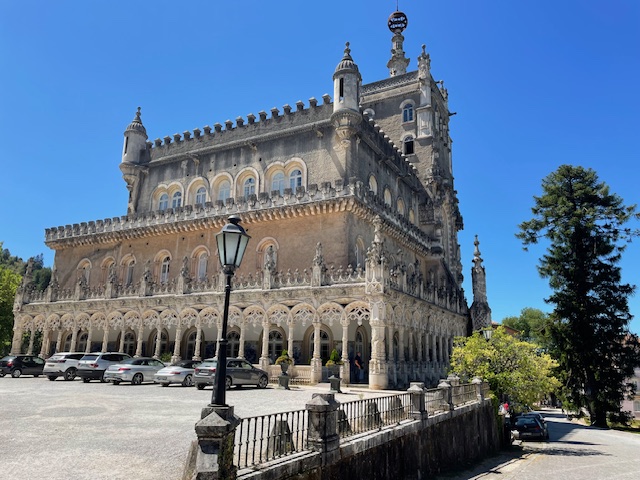
It would have been no great hardship to have spent our time in and around the park’s historic centre, which consists of a former royal palace cum luxury hotel (below), monastery, now a museum (above), formal gardens, café and visitor centre. 

Although Bussaco was originally an early 7th Century Benedictine foundation the one we see today was established by the more austere Barefoot Carmelite order when they took stewardship of the buildings and park in the early C17th.

The brothers zealously set about gradually replicating the Holy Land’s Mount Carmel at Bussaco as a kind of desert, blending nature with God’s spiritual estate.

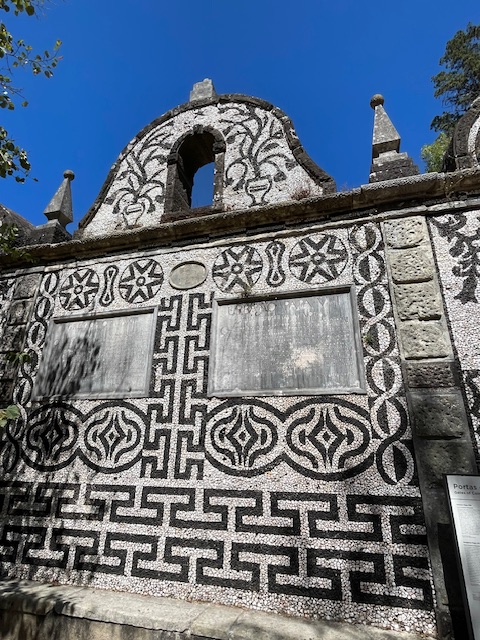
Many of their structures have exteriors distinguished by tessellated designs fashioned from quartz and adhesive tar while the interior of their monastery have coverings of native grown cork freely utilised to insulate walls ceilings and doors against winter cold.

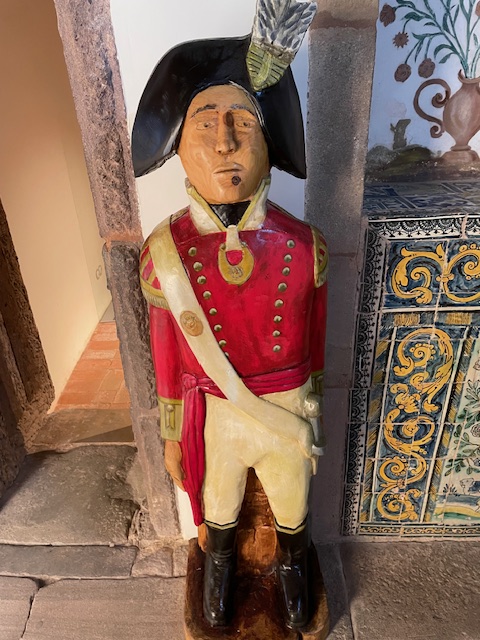
The brothers ordered existence was rudely disrupted in September 1810 when the Duke of Wellington, commanding a combined mass of 50,000 Anglo Portuguese troops, based his command post in the monastery, using the monks cells for offices.

The British general’s army defeated Marshall Massena’s French forces here at Bussaco, halting their advance on Lisbon, a turning point in the country’s campaign of liberation from Napoleonic invasion.

The adjacent royal palace was built between 1888-1905 on part of the demolished monastery. Since 1910 and the fall of the monarchy it has been a luxury hotel, one of the finest in the land. Its initial architect, the Italian Luigi Mantini, also designed sets for grand opera, and it shows. What a brilliantly grand statement of opulence it makes to the world.

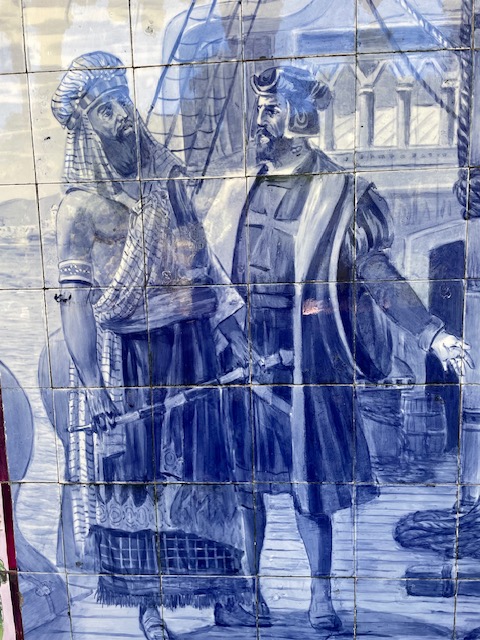
The obliging hotel receptionist let us take a look around the sumptuous ground floor. Large scale blue and white azulejos (tiles) decorate walls and stairs, some displaying the battle of Bussaco and others scenes from Portugal’s ‘Age of Discovery’ in the late 15th and early 16th centuries. At that time Portugal established its maritime trading outposts, stretching from Brazil to southern Africa, Goa in India to Macau off the coast of China.

The formal gardens provide a graceful unifying setting for the two contrasting buildings, although box blight and a certain faded glory added to a suitable sense of gentle decay.

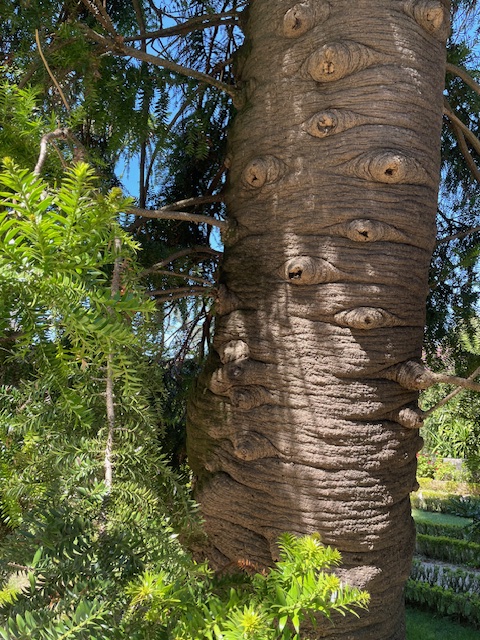
The arboretum remains the true natural glory of the place. Some 400 native trees and shrubs grow alongside 300 specimens brought back home as the result of colonisation and exploration. Mexican Cypress, American redwoods, Chilean pines, many oaks, laurel, holly and ferns to hundreds of Camellia species are set around walks, steps, ponds, fountains, statues and other formal features – we saw just a fraction.

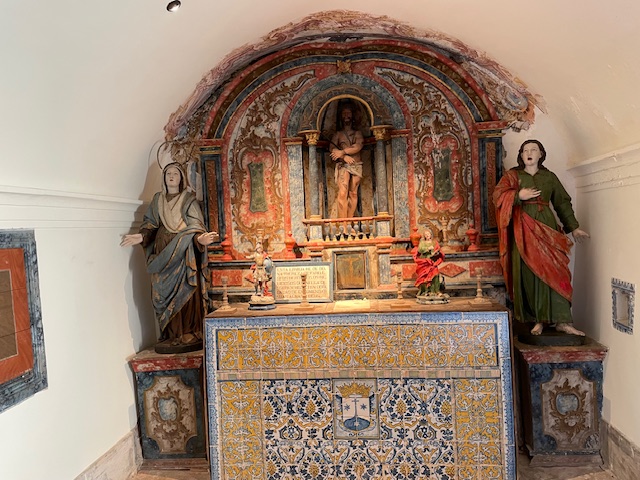
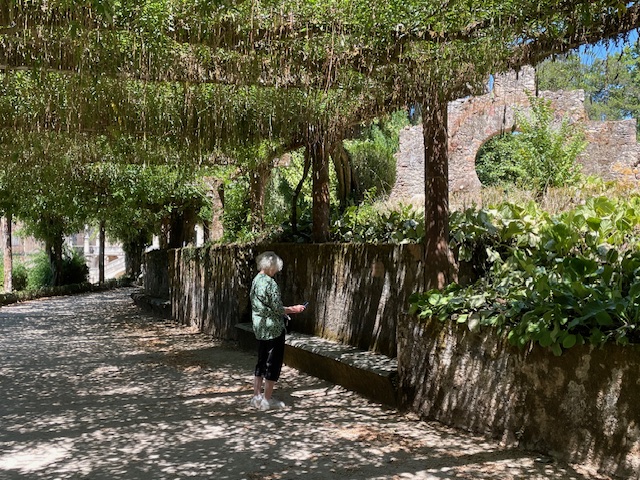
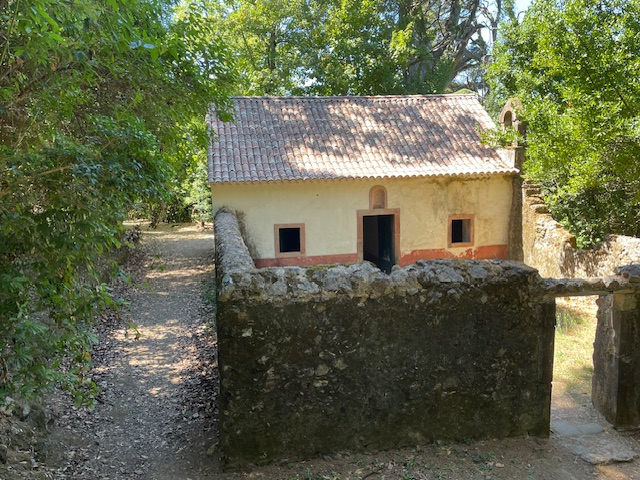
Leaving the formal gardens  for an upper woodland walk, we found ourselves on the Via Crucis- a lane of dappled shade linking enclosed stations of the cross – eventually leading to a purpose built hermit’s house with enclosed yard, now an empty shell, one of three around the domain.

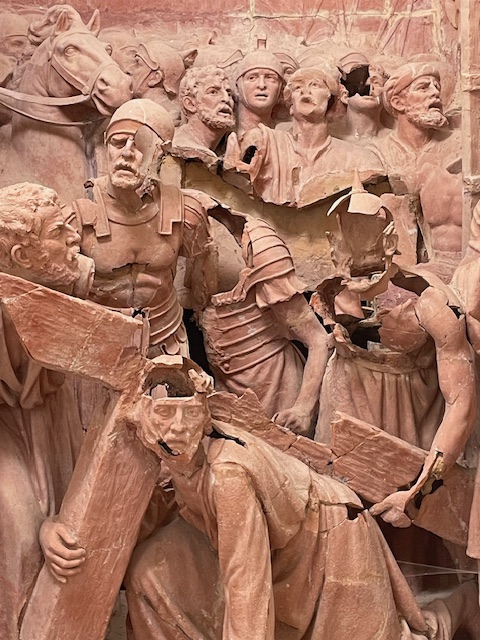
The stations house life size red clay tableaux, vividly recreating scenes from the passion of Christ. Hermit retreats and devotional stations were originally set up by the Carmelite monks shortly after they  took over the estate in 1628.  A number seemed to have suffered damage, adding an unintentional modern feel of abstract dislocation to the dramatic scenes of heightened emotion.

Later learned this damage was caused by a particularly violent storm that struck the area in January 2013, severely affecting both buildings and trees and recovery has been hampered by lack of funds and resources. The state took over Bussaco when Portugal’s monasteries were dissolved in 1834, and today managerial responsibility lies with a charitable foundation, which has had to fundraise widely to painstakingly restore the place.

Our stroll took us to another entrance way – not accessible to traffic – the Coimbra gate which yielded surprise vistas beyond the canopy, across the wide plain, to the Atlantic coast.

Lingered by the great doors, now ajar, and the currently unoccupied lodge house (sometime holiday accommodation) with its pink washed walls. Wondered at the wall sign, a papal bull of 1623 forbidding, on pain of excommunication, the felling of trees within the walls or the entry of women!
Historical misogyny apart, I warmed to this early attempt at nature conservation. An atmospheric spot inviting reflection and ease, one where time seemed to have stood still. Stepping out on to the terrace in the full glare of the sun, the bone dry brown grass  crunched loudly underfoot, providing a reminder of the gatekeeper’s words on arrival.

Popular with the Portuguese themselves for its cultural and botanical importance, though less well known to foreign visitors, the Mata Nacional do Bussaco lives up to its reputation, inviting a return to sample further corners, in another season.

Vouga voyage

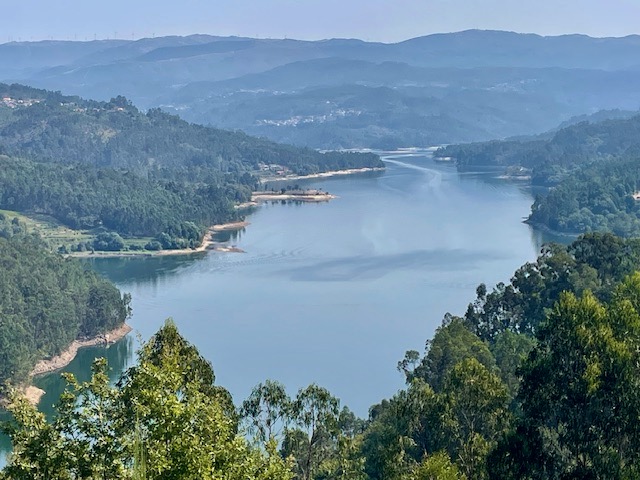
Recently returned from a week’s holiday in the valley of the River Vouga, mid-way between its outlet at Aveiro on the coast and the city of Viseu near its source in the Serra Lapa.

Like the other major rivers of Portugal The Vouga runs its 148 KM course from east in the mountains to the Atlantic in the west. It was once a major transport route for countryside produce; from wines, granite, metals and timber to fruit and other agricultural produce. (In the 17th Century most of their oranges were exported to England) By 1913, a train line had replaced the inland river boats, which in turn gave way to EU funded new roads that twist and turn above the Vouga’s sinuous green waterways. We enjoyed three separate outings sampling distinctive phases of the river’s flow and topography.

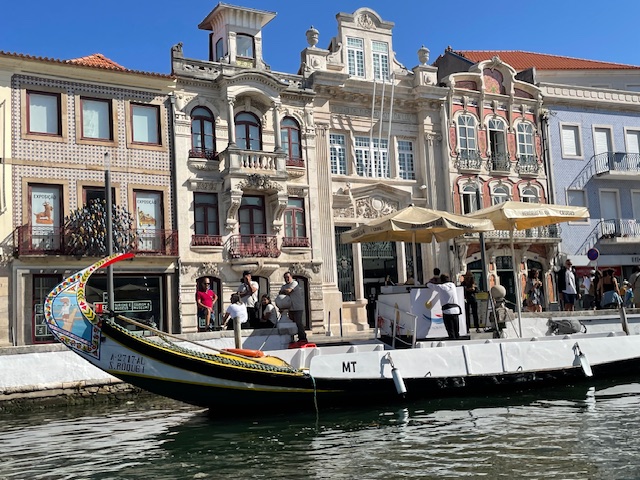
Took a fun day out to swell the ranks of other tourists milling around ‘The Venice of Portugal’, as the city centre of old Aveiro is dubbed. A major port in late medieval times it later became famous for commercial salt abstraction, fishing and seaweed harvesting.

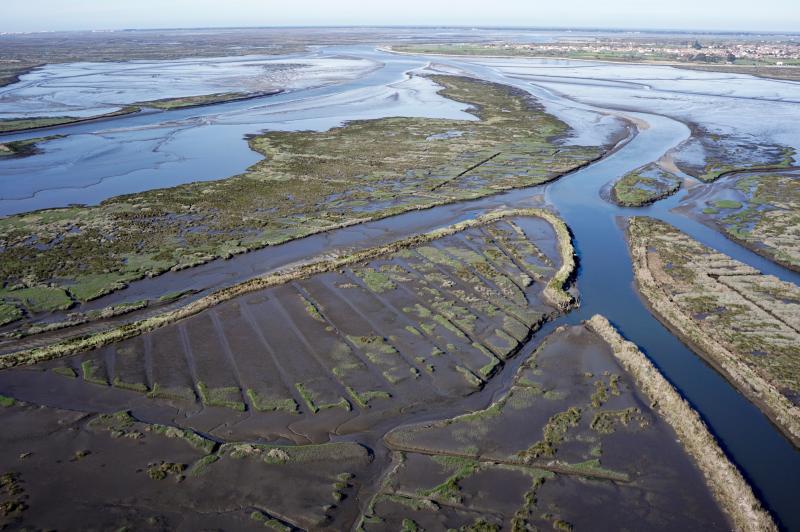
Ria Aviero ecosystem image credit: CESAM

The extensive lagoon and dune ecosystem of the Ria de Aviero, as this estuarial stage of the Vouga is known, now enjoys international status as a major bird sanctuary, home to some 20,000 overwintering wildfowl, the most photogenic of which being pink flamingos.

Trips around the centre’s canal system are a must and the colourfully decorated flat bottomed barges – Molicheiros – that once carried seaweed, salt and general goods now carry human cargo on 45 – 60’ guided excursions.

Unsurprisingly, the last fishing lofts lining the canals have finally closed and are being developed into luxury waterside apartments.

Back on land we visited an Art Nouveau house, now a museum with fine decorative detail, one of many tasteful villas that reflect an early C20th era of increased wealth and pride amongst its leading merchants.

The other end of the Vouga could not be more different. Foreign tourists like us were in short supply here in the mountains, probably because of the limited visitor attractions to lure people up from the popular coastal strip and dangerously high summer temperatures. The Upper Beira  region suffered badly last September from wildfires, causing evacuations and widespread disruption, and we sensed a nervousness even now, lest they return.

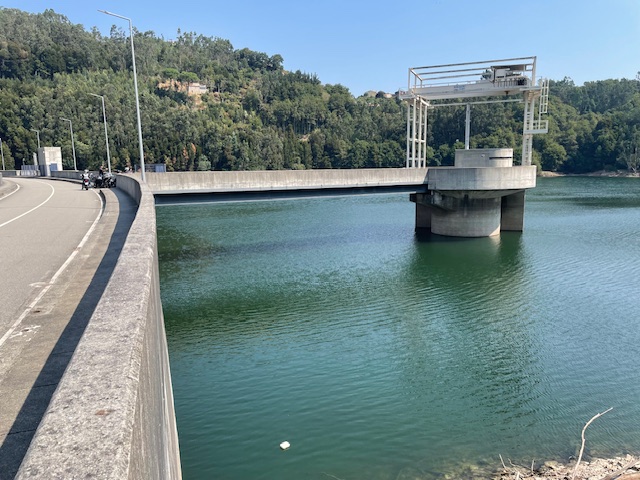
We stopped off at the Ribeirado dam and looked along the 14km long reservoir it created. It was built earlier this century to supply hydroelectric power, ease flooding and increase scarce water reserves. The road runs along the broad arc of the high dam wall, the power station and its infrastructure far below, where the river re-emerges. With the sheer valley walls either side the whole presents as a peerless study in concrete.

The brightest objects encountered in this uniformly grey spot were the red, blue and yellow recycling bins in the car park. Ominously, the control tower in the reservoir emitted flashing light and warning noises every few minutes. If this location were to feature in a future James Bond film or dystopian TV drama it would not surprise us. A perfect setting of its kind.

Another day we walked the middle reaches of the river. Was keen to access an upper trackway I’d clocked above the road while driving to our holiday accommodation nearby.

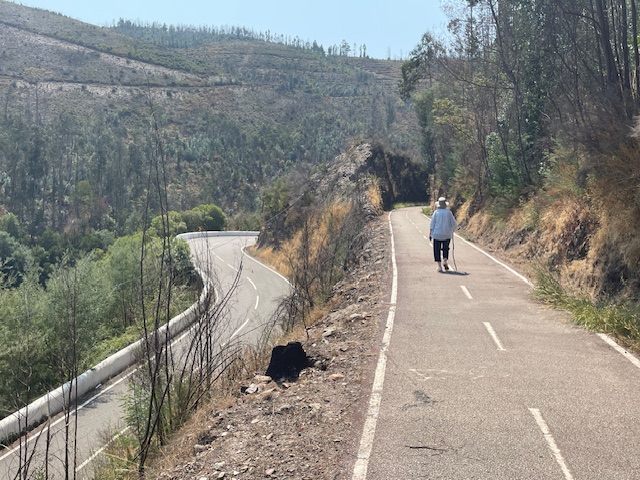
As suspected this was once a single track railway. Built just before WW1 it closed in 1980 and its repurposed state, the former Vale Das Voltas line offers superb viewpoints of the valley.

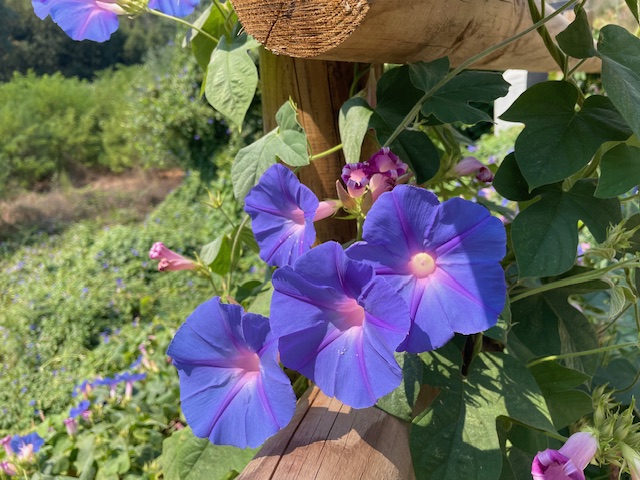
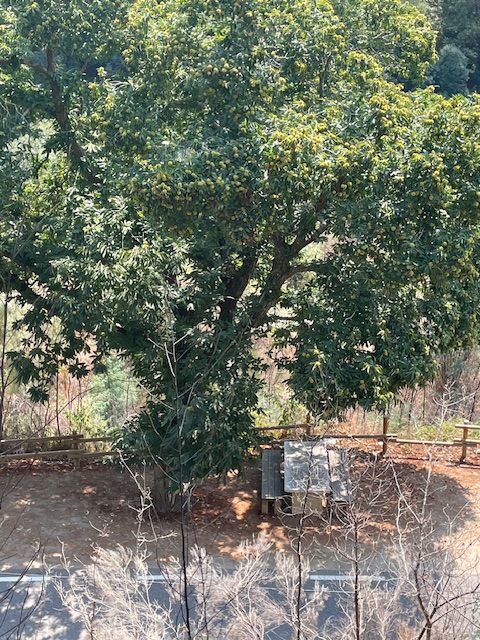
Our parking place by the road revealed a picnic table made from a single slab of local granite set under the awning of a mature horse chestnut tree. Masses of richly purpled convolvulus – bindweed – curled around the wood  rails.

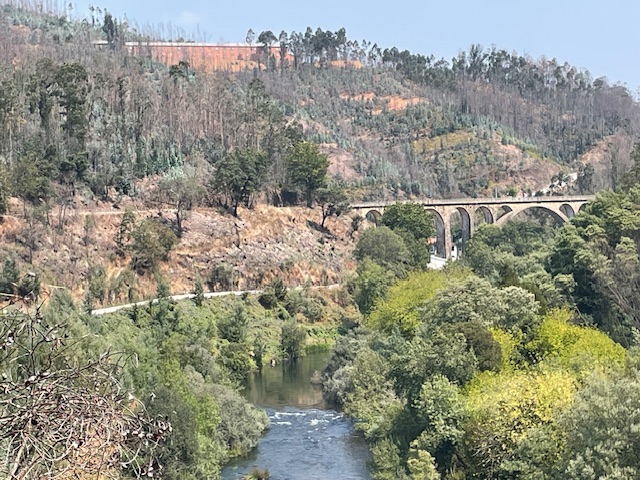
The track is understandably popular with cyclists, yet we only encountered four other pedestrians on our amble to and from the route’s spectacular highlight, the Santiago rail bridge at Pessegueiro do Vouga. It’s one of the highest stone masonry bridges in Portugal, with eleven arches and 165m high deck, gracefully spanning river and wooded slopes.

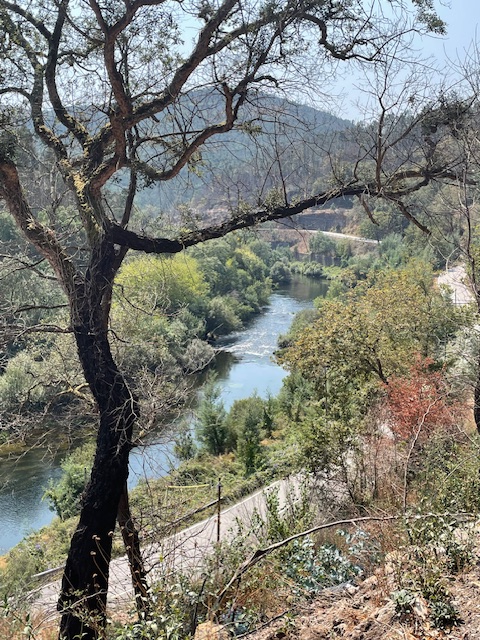
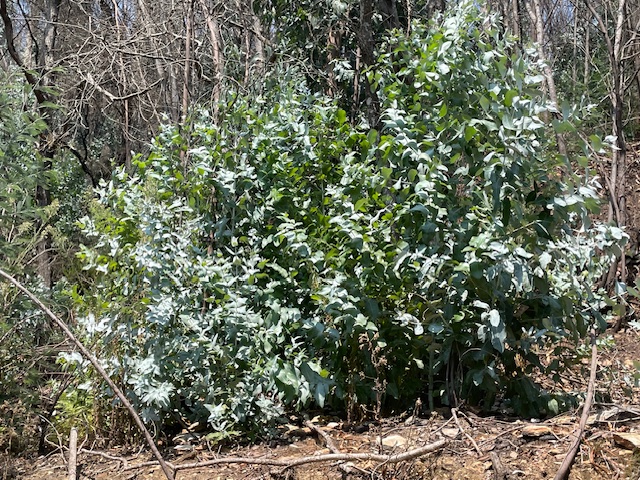
Our walk revealed a stark reminder of last year’s big burn. Blackened trunks and boughs in abundance. A contentious issue in these parts is the preponderance of silvery leaved eucalyptus trees, commercially planted to supply nearby works with biomass and extracted oils. That process is also understood to cause environmental air pollution.

This alien tree, of Australian origin, successfully sustains itself on steep slopes with minimum moisture and burns easily. Eucalyptus rapidly colonises cleared land post fire and is hard, if not impossible, to eradicate.

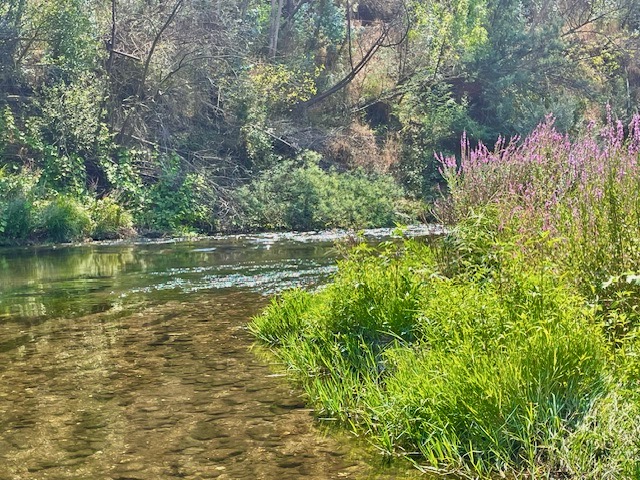
Our walk ended ‘off line’. Carefully crossing the white walled switchback of a highway, we descended to the quiet stillness of river bank and cooling shade of willow and alder that thrive here on its stony floodplain.

This middle stretch of the Vouga is officially designated a ‘Site of Community Interest’. That means minor blockages like weirs that present obstacles for migrating species of trout, eel, shad, barbel, lamprey or mullet are being gradually removed and in some places fish passes are being installed. Otters, birds of prey and many other species of birds and insects are also able to thrive here where human habitation is scarcer.

Delighted in encountering dragonflies and butterflies I waded barefoot in and allowed the hundreds of trout fry mingling in the sunlit shallows to continue feeding and flitting around my feet. A cooling calm end to our lovely lone amble under the afternoon sun.

Bountiful Berwickshire

We’re recently back from a celebratory weekend away, organised in secret as a gift to share with the significant other. Found a place near enough to drive to easily but far enough away to make for a proper countryside adventure. Some highlights then, as follows.

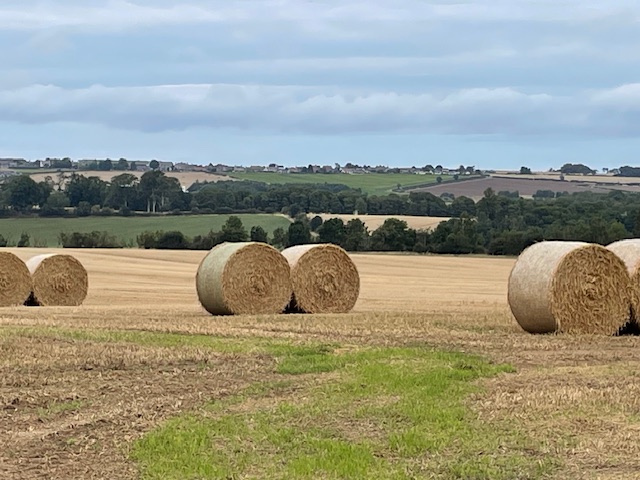
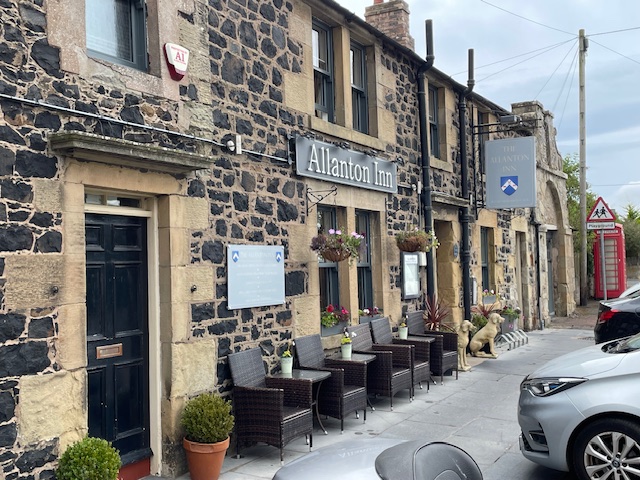
We arrived in Berwickshire, in the wide valley of the River Tweed and its tributary the Whiteadder, for our stay in the village pub at Allanton. All around the area huge combines, tractors and trailers were cutting, winnowing, baling and carrying off barley and specialist wheat. They continued late into the night, headlights glowing, growling over wide rolling fields with the lanes alive to traffic up to midnight. A fascinating contrast for us who live in the grassy uplands of west Northumberland where log lorries and tipper trucks loaded with gravel for forest roads are the big beasts of rural transport.

We sat out in the pub’s pleasant back garden with a refreshing pint before supper gazing over a scene of blond stubble and waving grain, shadows stretching to far woodlands, the land glowing warm under a setting sun. The Allanton Inn really is at the heart of its rural community. A family run business, part of an ecosystem of small independent local producers and suppliers, proud of their good food offer – from honey and ice cream to meat and eggs – as we were to partake of it. The perfect relaxed hostelry from which to explore this side of the border.

This is a land of big estates and large farms, the metal and concrete barns mostly modern and huge enough to properly house mountains of grain and straw. The population is much sparser now than it would have been in the pre-machine agrarian age. It’s extraordinary to note that within the radius of a couple of miles some of the great figures of the Scots enlightenment were born and grew up. These include the moral philosopher David Hume, geologist James Hutton and botanist and populariser of the tea plant, Robert Fortune.

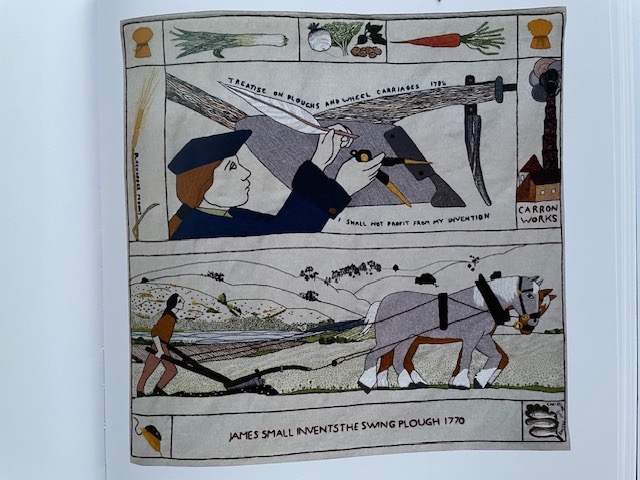
Most touchingly of all is the story of the least known of these worthies and the revolutionary device he freely gifted to agriculture, one that would help fashion the arable landscape around us today. In the 1770’s local engineer James Small used a smithy on the  former Blackadder estate at Allanton, using mathematics to experiment on different mouldboards, curvatures and patterns to produce his improvement on the ‘Rotherham’ cast iron swing plough. Previously many men were needed to work teams of oxen to pull a flat wooden plough while Small’s only required a pair of shire horses and a single ploughman to operate. Small even demonstrated his invention to ‘Farmer’ George III and his ‘Scots Plough’ was rapidly copied and developed by others as he not wish to profit from his invention by taking out a patent and sadly died in 1793 of overwork and poverty. Modern day embroiders have honoured his memory as James and the plough feature as one of the wonderful metre square panels in the Great Tapestry of Scotland, on permanent display in Galashiels.

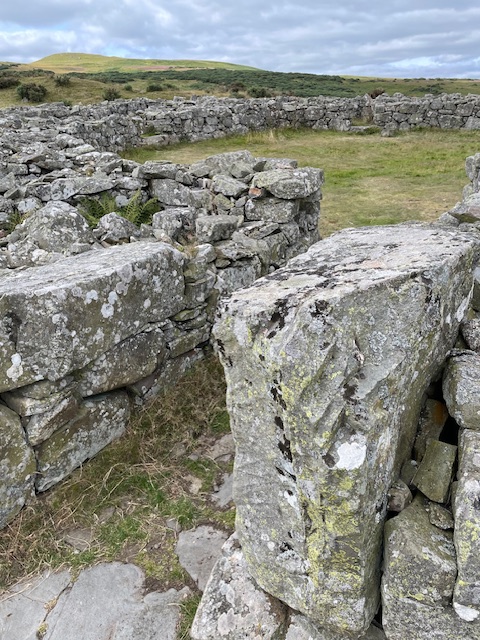
Situated on the eastern edges of the Lammermuir hills, below the lofty summit of Cockburn Law and overlooking a steep valley sits Edin’s Hall Broch. It was the high point of a circular five mile walk we took over fields, through woods, along tracks and heathland paths.

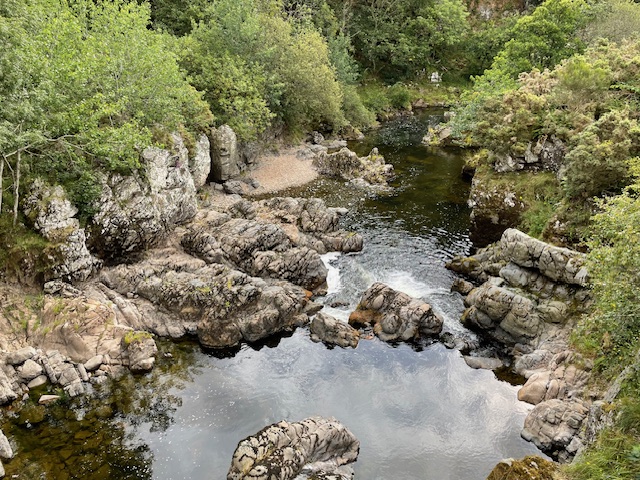
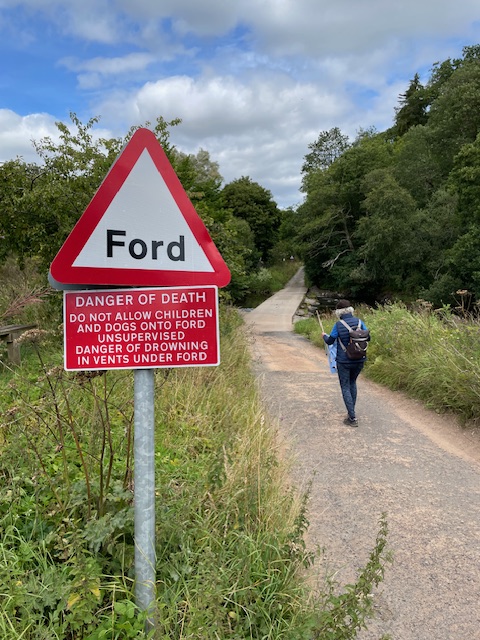
We made two separate crossings of the infant River Whiteadder by ford and footbridge. Summer picturesque as the scene was, one could imagine the place when the waters were in spate. The road sign at Abbey St Bathans reminds drivers of the risks.

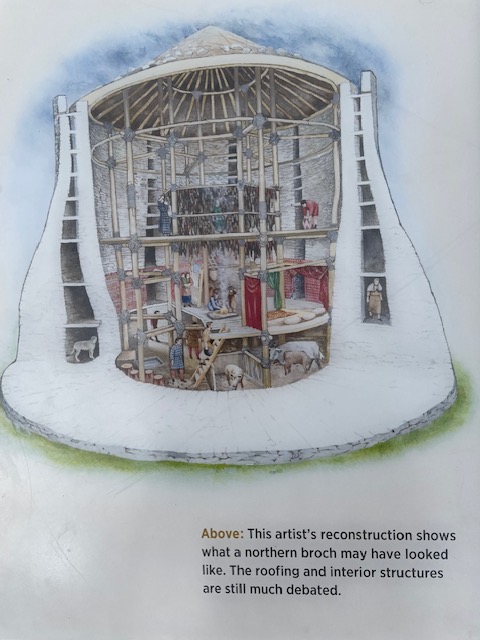
Brochs – ancient fortified tower houses – are usually found in the highlands and far north of Scotland so the one here is something of a geographical oddity. Our slow climb to reach it enhanced by seeing male wall brown and small copper butterflies basking in the sun and fluttering ahead as we climbed through swathes of tall bracken.

Dated to the 1st century AD what really lends Edin’s Hall broch a sense of wonder is that so much stone remains to define its walls, wide enough to incorporate chambers and stairs. The centre point gives a 360 degree experience of what was once a whole community’s secure home and stores, standing at least two levels high and probably roofed with timber. Hard by  the broch are remains of later hut circles, ditches and ramparts. Awed as we were we couldn’t help wondering though where its inhabitants would have sourced their water supply, with not a spring in sight.

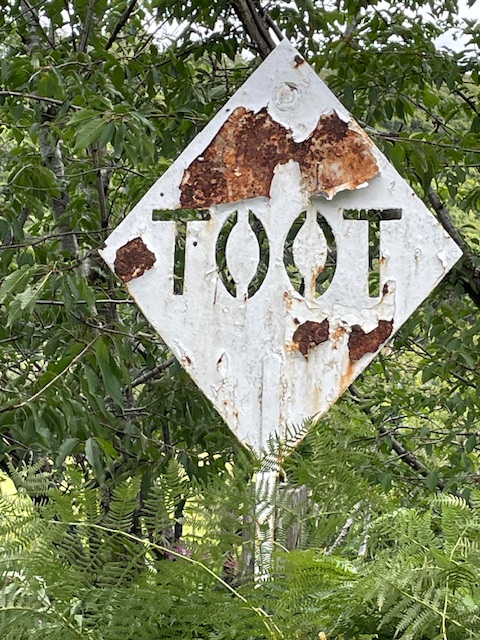
Picking up a metalled lane diving down into the wooded valley bottom we came upon this weathered sign at a hairpin bend. The only thing near a toot we heard on the descent was from the occasional whirr of spokes or tinkling bells as racing cyclists shot by with friendly waves. Like them we appreciated a rest break at the friendly informal tearooms in the old stables of the original village woodyard by the river. We can testify that the home baked fruit scones are superb.

Every few years sees us on a return visit to Berwick. A preamble along the massive Elizabethan ramparts leads literally ‘off the wall’ into the multi-storied Granary gallery, a former Georgian warehouse on the quay overlooking the three great bridges, monuments of different centuries, that carry road and rail links across the great border river.

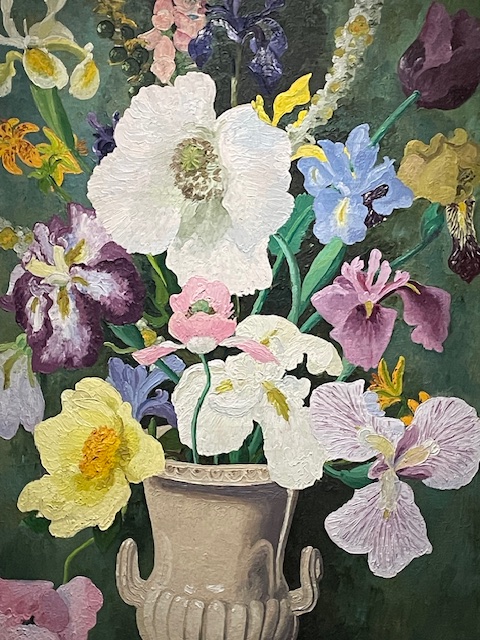
The retrospective exhibition we’d come to see at the Granary was of the respected artist, teacher and plantsman Cedric Morris (1889-1982). We found it something of a mixed bag. His flower painting, especially of Irises, remain glorious testimony to his knowledge and ecological awareness. The best known self-portrait and studies of Parisian café life in the 1920’s insightful and sensual. 

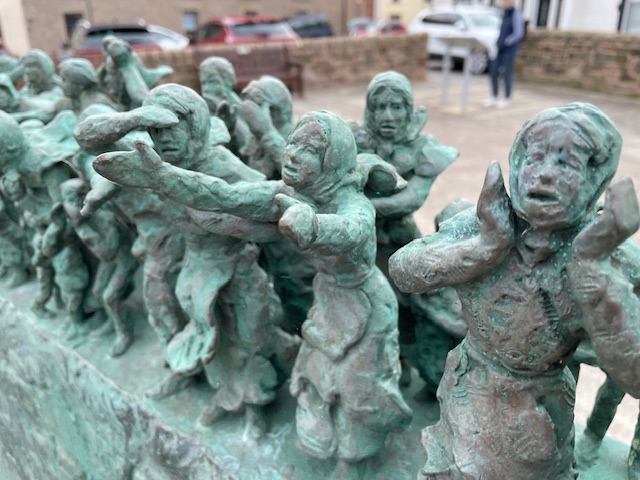
The art that really moved us though was on the seafront across the border at Eyemouth. In October of 1881 a terrible storm wreaked havoc on the Berwickshire coast, and 189  local fishermen were drowned, leaving behind 78 widows and 182 children. The town’s fortunes went into long term decline in the wake of this, Scotland worst recorded fishing disaster.

‘Widows and Bairns’ represents real people, arranged in groups above the name of their boats. Sculpted by Jill Watson and cast by Powderhall Bronze it opened in 2016. We watched visiting families stop and talk about the story. The best kind of public art, rooted in people’s history, powered in this instance by tragic drama to command our attention and stimulate conversation.

In the 21st century, the community here has been embracing eco based industries and sustainable tourism and this attractive harbourside town – like Berwick across the border – seems on the cusp of change for the better. The broader Eyemouth story is well told in the delightful volunteer run museum housed in a former church.

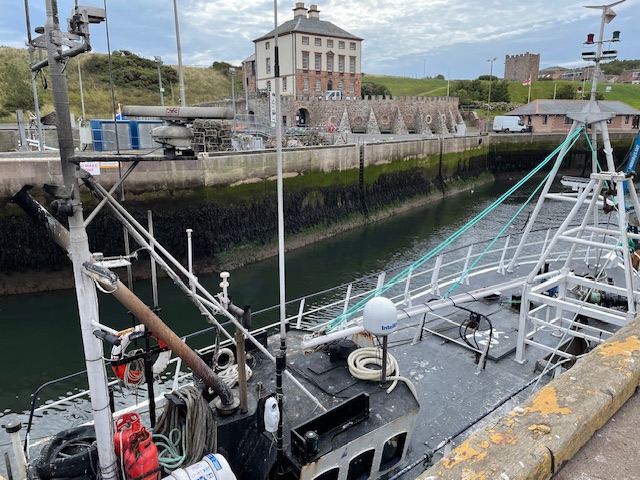
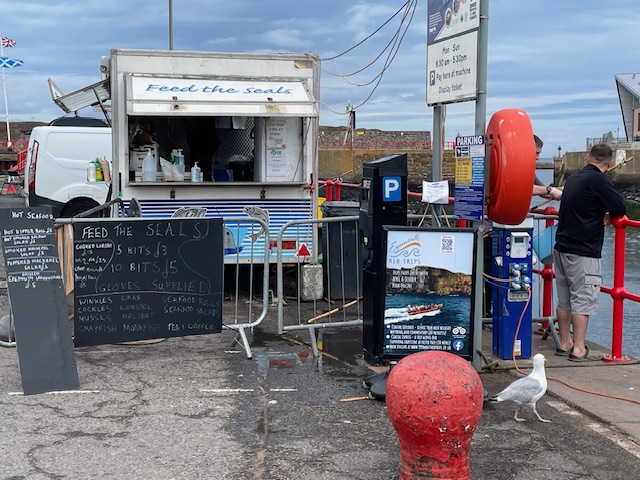
We also enjoyed taking a leisurely stroll along the narrow harbour around the mouth of the river Eye with its working fishing boats, quayside  processing plants and local produce stalls. (kipper rolls anyone?) These merge with an array of smart locally based retail businesses (excellent Italian ice creams), the sandy town beach and restored stone jetty with its bright red handrails and fine prospect.

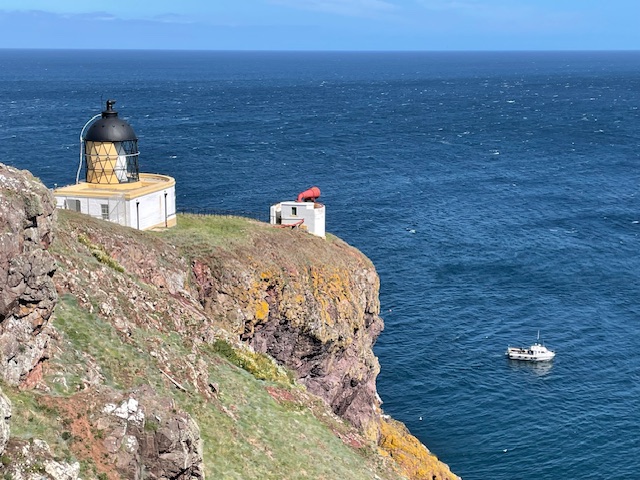
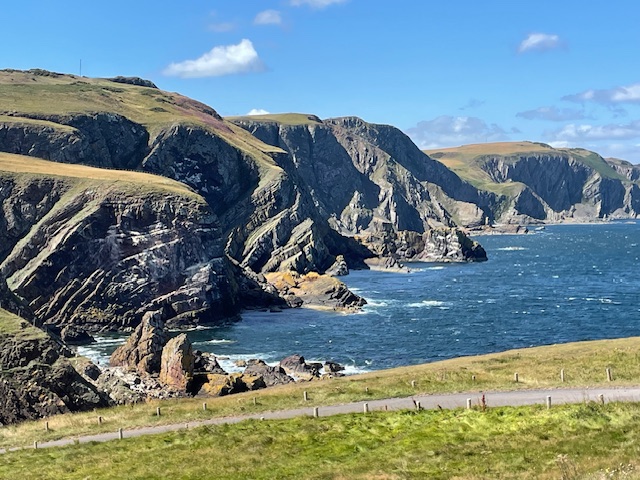
A little further up the rocky coast lies St Abb’s Head, named for a Northumbrian princess who founded a monastery here, now long lost, following her safe delivery from shipwreck. Fittingly a lighthouse, dating from the 1860’s and built by the Stevenson family (who else?), still casts its powerful light from the head. Unusually, it is tucked into the cliff below the lighthouse keepers cottages (now holiday accommodation) as the higher ground above and beyond has always been prone to mist and rain, obscuring vision at sea. Hence the red painted fog horn, seen below.

If we’d been here in late Spring we’d have witnessed the vast flocks of gannets, razorbills, gannets, kittiwakes and other seabirds that crowd the nursery rockfaces and for which the bird reserve is nationally renowned. Their guano, whitening the masses of red blue sandstone rocks, is striking but the birds and their fledglings were no longer in evidence this bright breezy morning in August. Instead masses of house martins dominated the clear blue skies above small bobbing boats filled with visitors tasking in the awesome sea level view of this spectacular headland.

Our return leg, mostly along the single track lighthouse access road, revealed a stunning surprise vista of more cliffs running northwards. Once out of the severe wind tunnel blast between those cliffs and St Abb’s head, the path drew us away into the calm serenity of a narrow fresh water loch in a ravine fringed with reed and sheltered by woods. The National Trust for Scotland run the excellent visitor centre in an old farm complex where we parked to start and finish our wonderfully rewarding  four mile trek.

Recently shorn cheviot sheep at St Abb’s head

Hanging Stones

When it comes to rest and recreation it pays to walk. The health and wellbeing benefits are obvious. It’s not so often though that you pay to walk. But that’s what we did a few weeks ago. And for a very good reason.

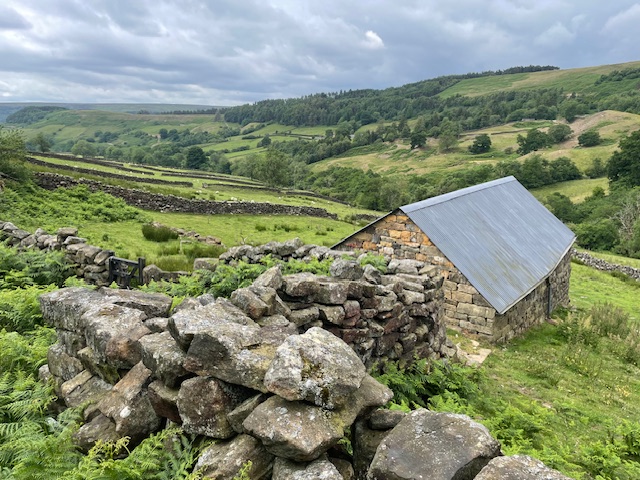
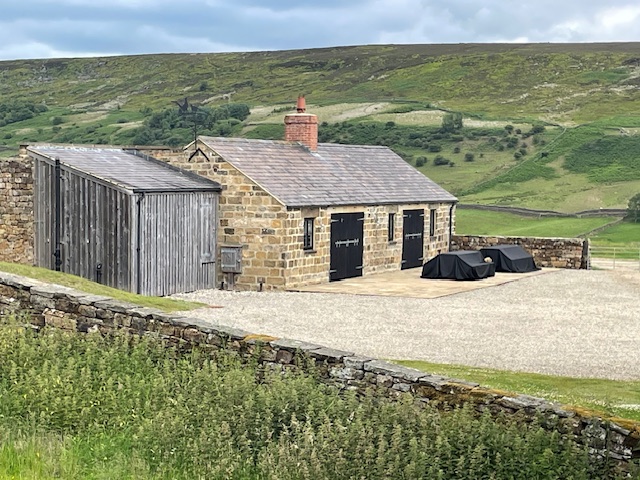
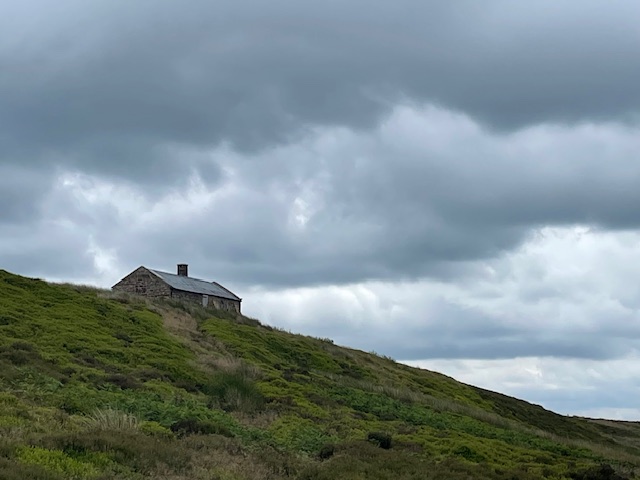
The Hanging Stones art project is unique. Ten restored or rebuilt former agricultural buildings, each containing a bespoke art installation, situated in the heart of the North Yorkshire Moors National Park, all linked by a 6 mile walk. It’s the creation of one of the UK’s – and indeed the world’s – leading sculptural landscape artists, Andy Goldsworthy. His long working relationship with stone dates back to time spent as a teenage farm labourer, maintaining and repairing dry stone walls in his native Yorkshire.

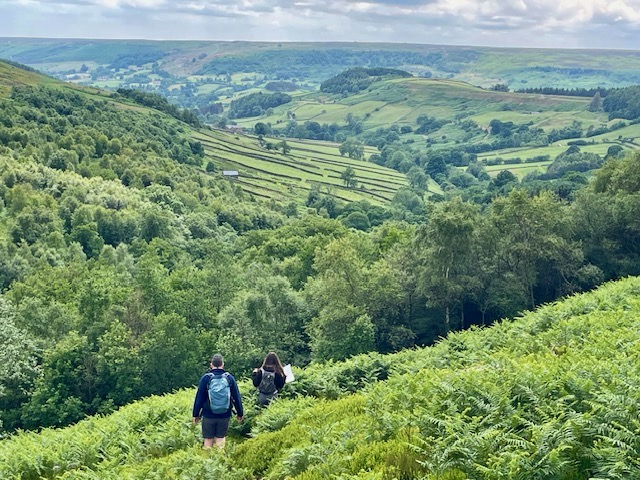
Our party of five was one of four groups of no more than six members booked each day. The trail begins and ends in the village of Roseland Abbey. Parties set out every two hours along public paths, tracks and bridleways into the increasingly steep sided valley that is Northdale, defined on both sides by high bare moorland. At the highest point we saw the group ahead descending and those behind us ascending.

In his 2018 prospectus Goldsworthy wrote: ‘The walk is an integral part of Hanging Stones, the artery by which people will give life to the buildings….It will be both discreet and dramatic. Visible to those who know it is there and hidden to those that don’t’.

The Roseland Abbey area has a long history of mining and quarrying although tourism, agriculture and field sports appear to provide most employment income these days. The highest part of our walk was on a permissive path that threaded through the source waters of the north beck, on whose steep bracken and heather clad slopes stand a dozen or more shooting butts. Returning along the lower valley floor we skirted an immaculately kept shooting lodge, currently under wraps, awaiting the open season in August.

This project clearly could not have happened without the approval and financial backing of the area’s main landowner, the Rosedale Estate, a 4,000 acre commercial grouse moor. Most of the North York Moors is owned by the King as Duke of Lancaster but this particular holding belongs to Carphone Warehouse founder David Ross. His philanthropic foundation supports arts, educational and sports activities. http://www.davidrossfoundation.co.uk/

With the buy in of the local community, the foundation and the National Park Authority, Goldsworthy’s vision and consummate skill has harnessed all the necessary elements to produce an outstanding example of renewal within a protected upland landscape. Work started in 2019 after a struggle to accommodate the proposal to the strict planning laws governing national parks it was given permission to proceed. The result is emotionally charged and thought provoking in its playful linked exposition.

 Goldsworthy says: ‘One of the rationales for working with buildings is that sound, atmosphere and materials are amplified when experienced inside a confined space’ That sense of theatre, which also invokes the atmosphere of a shrine or chapel, is the hallmark of the most effective of the interiors. Dramatic use of natural light and intense application of materials or textures onto the building fabric is fantastic.

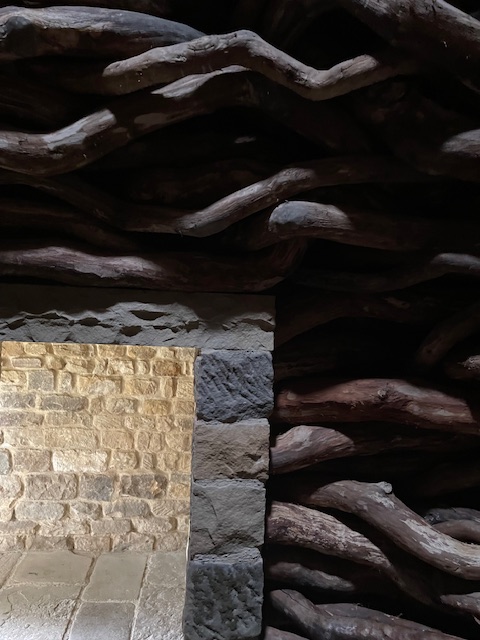
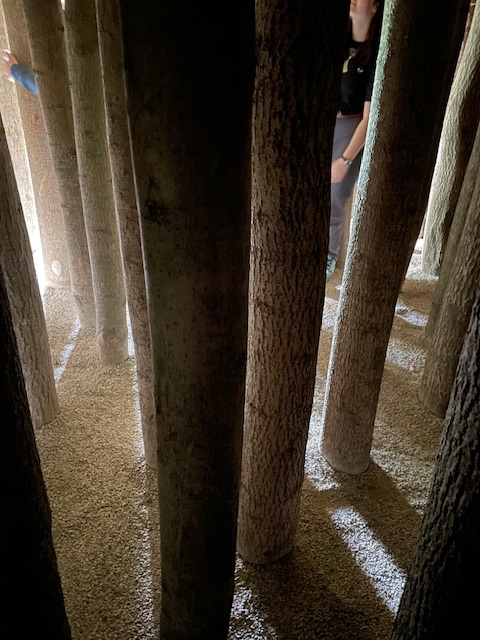
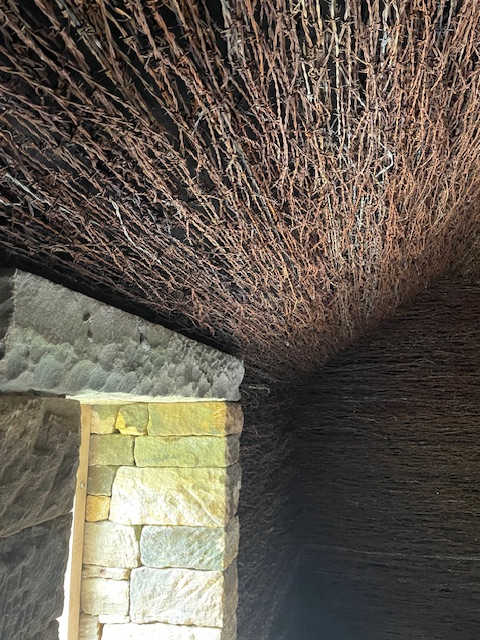
From weave of rusted barbed wire to powdered ochre paint, burnt boughs to woven logs or light bending thicket of poles in gravel – each environment works its rough magic, drawing you into a sensual response.

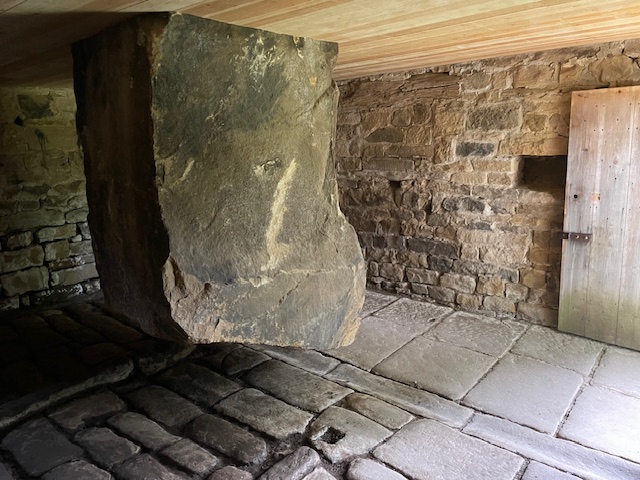
The barn that displays the eponymous hanging stone – all 11 tonnes of it – is brilliant testimonial to structural engineering that teases visual perception of mass in space.

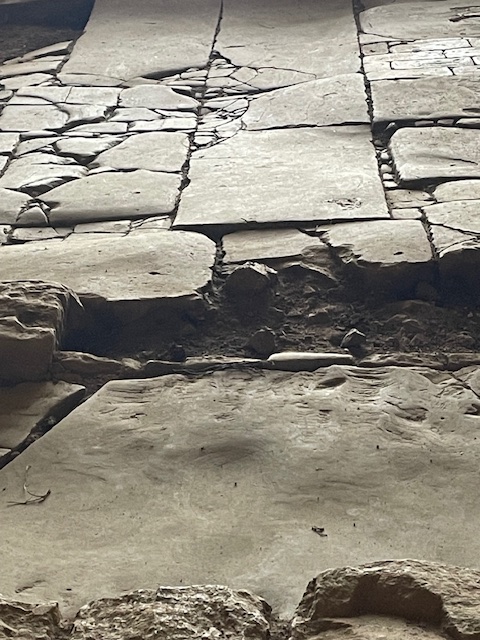
Elsewhere a new build barn traverses the ruin of an old farmhouse floor where the mosaic of concrete and broken flags yield clues of former occupation. This put me in mind of Thomas Hardy’s poem ‘The Self-Unseeing’ whose opening lines run: Here is the ancient floor / Footworn and hollowed and thin,/ Here was the former door/ Where the dead feet walked in.

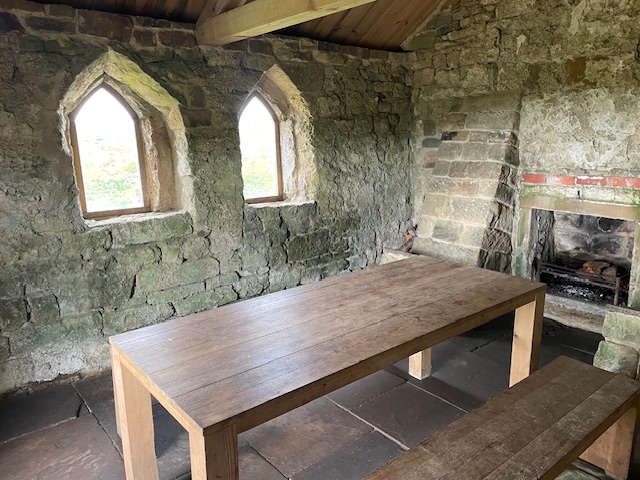
We enjoyed our packed lunches at the ramble’s half way point, following a steep upward scramble through swathes of bilberry covered moorland slopes. Here a large table sits in a little house perched on the open moor’s cusp. Through the open door on a clear day we enjoyed fine views across the high moorland plateau and cleave of dale spread out below.

Passing the shorn trunk of a wayside ash at one point I noted the cut section and wondered if this was an incidental wayside art work or just some essential tree surgery.

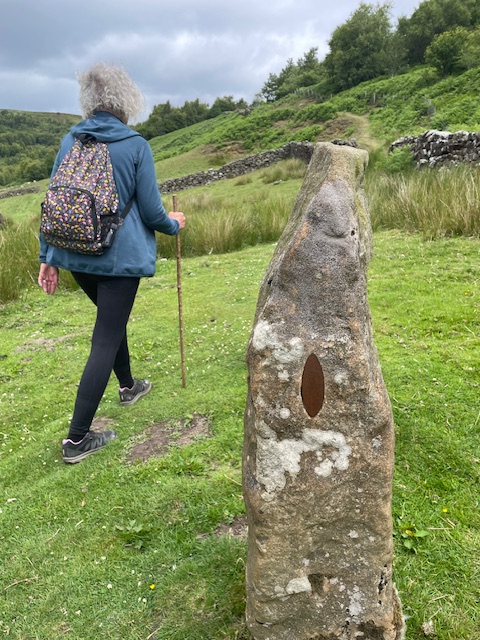
Goldsworthy’s attention to detail helps seal the overall impression. His way markers are subtle oval metal markers set into stone gateposts, some of which also feature small square through holes.

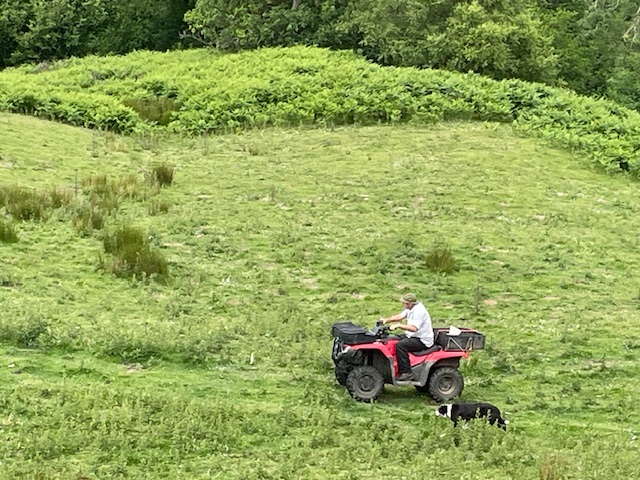
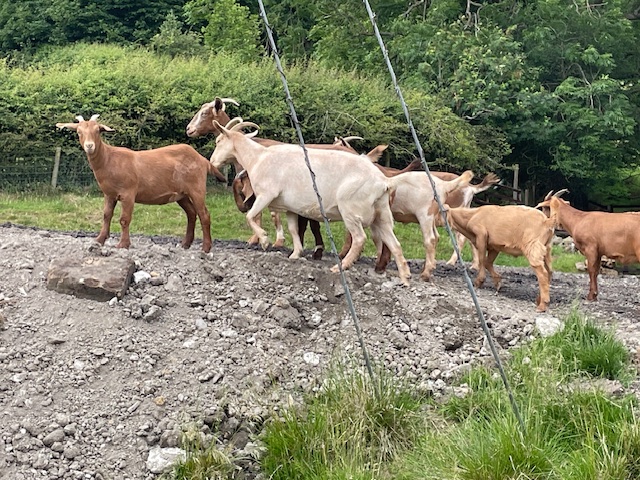
We spoke to a friendly farmer who asked if we were enjoying the art works. Later we saw him rounding up sheep with his collies astride a quad. I suspect he, like many here, are pleased to see redundant buildings restored and repurposed. Later, passing by another farm, we were presented with a picture book collection of ducks, geese, lambs, calves, dogs and goats, all putting up a cacophonous chorus of sound, much to our delight.

Cistercian nuns founded a priory in 1258 at Roseland, establishing the wool trade which sustained them up to dissolution in 1539. In more recent times, from the 1850’s – 1920’s, high quality magnetic iron stone mining became the principal industry. On leaving we passed abandoned roasting kilns atop the valley’s precipitous Chimney Bank road, but with gradients of up to 33% it felt wise not to stop. 

I came away from this remarkable walk with a deeper understanding of how Goldsworthy and his collaborators created these amazing site specific art works, utilising natural local materials to complement and enhance a sensitive and highly protected rural environment.

It proved a memorable  immersive experience in which we as visitors are part of the synergy generated within each of those boxes of delight. Like all great art the effects are cumulative, resonating and lingering in the imagination long after actual contact.

The complex, often contradictory issues and compromises involved in the planning, funding and execution of this project has intrigued me almost as much as the actual installations themselves. I feel that’s worth a tenner of anyone’s money, to allow one the chance to walk in wonder, to witness and reflect on a particular genius of place and time.

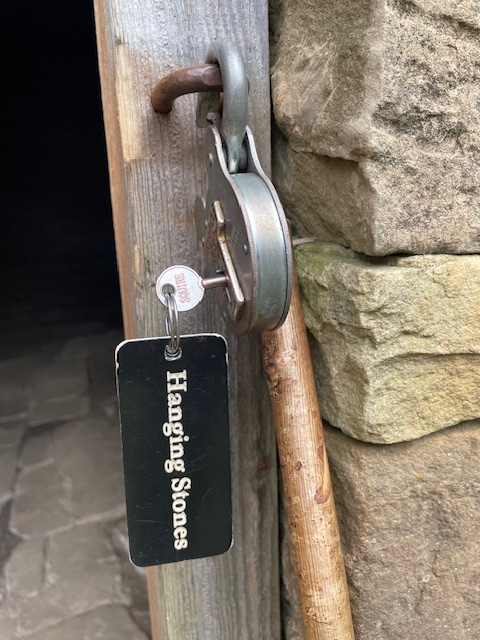
If you are able to experience Hanging Stones for yourself I’d urge you do so. Along with a set time on the allotted day you get a map and key that unlocks each building. Moderate map reading skills and stamina are needed, depending on seasonal weather conditions. Demand is high though. We hear that there’s no availability until February 2026.

More information and to book: https://hangingstones.org/

Dingle: Dun, Bee & Boat

The distinctive peninsulas that characterise this south west corner of Ireland present challenges to the modern day tourist, with cars and coaches traversing narrow twisting roads. Meanwhile the locals have to put up with peak season congestion as they go about their everyday business. It’s lucky then that nobody seems in a hurry to get anywhere fast.

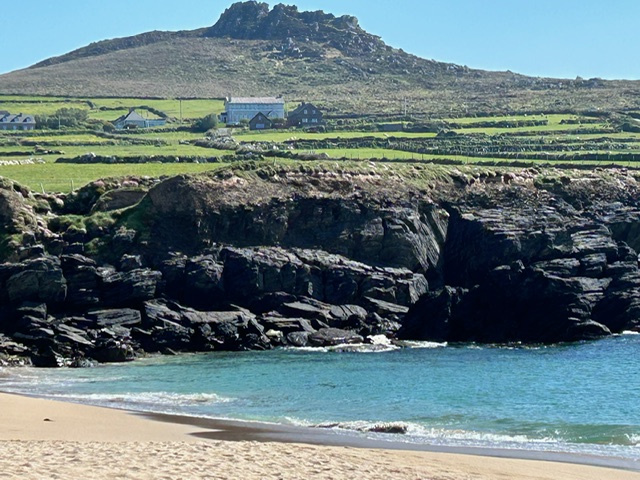
The Dingle peninsula boasts over 2,000 historical monuments and that reflects its remote location and farming way of life over thousands of years. Rocks cleared from patchworks of land built drystone field walls and farmhouses that distinguish this rugged landscape.

The ancient inhabitants of the peninsula were skilled in using the water as their sea roads. These would also have been trade routes and their culture and artefacts reflect that. We were lucky enough to get some sense of their world from the handful of sites visited on our traverse of the 38k/24 mile circular route marketed for tourist purposes as the Slea Head Drive. As advised we drove clockwise, with the traffic and not against it.

A Mountain range dominates the centre of the 48k/30m long peninsula, ending at the westernmost point in Ireland around Dunmore Head. It was here in 1588 that two of the remaining ships of the Spanish Armada’s failed invasion of England were tragically wrecked. The narrow road in and out of Dingle town, its busy main population centre, hugs the jagged coastline by cove cliff and beach.

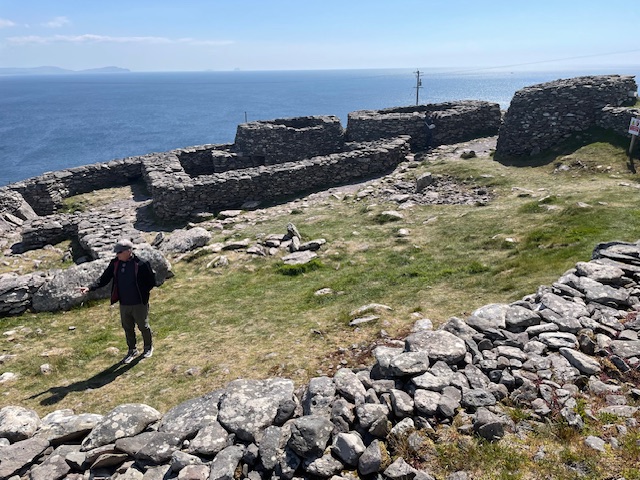
Dun Beag (‘small fort’) on the cliffs at Fahan has a beautifully created visitor centre inspired by traditional vernacular design. Here we watched an introductory film while sitting in the dark on animal hides in an intimate environment, suggesting the domestic interior of the 5,000 year old promontory fort below.

The streamside path leading to the fort with its massively wide dry stone walls is unexpectedly graced by lilies, while the bare sea cliffs below sport patches of thrift.

Storm damage this century has been extensive and fences now secure the site from over enthusiastic exploration but it still exudes a strong sense of its ancient role guarding the wild sea ways. This once formidable stronghold created was in the Iron Age, though archaeological evidence suggests Dun Beag remained in use between 8th – 11th centuries.

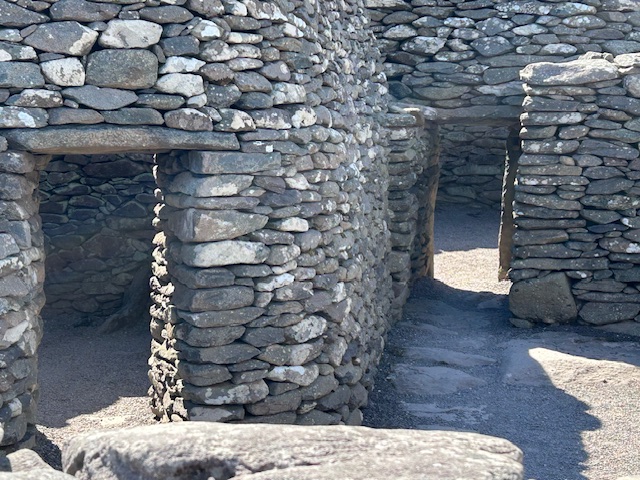
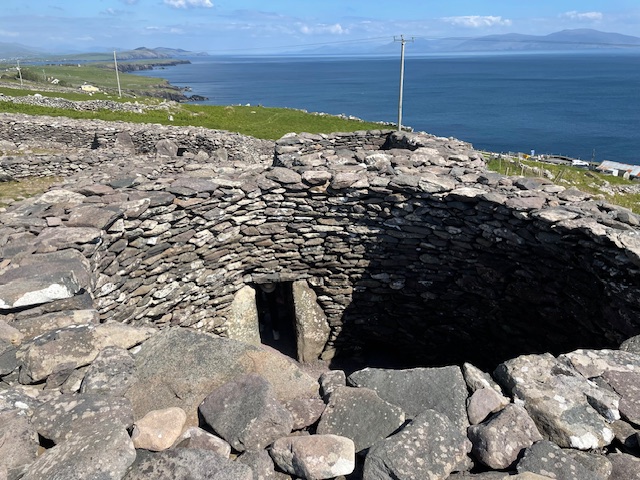
A short drive westwards brought us to the a group of Clochlans, better known because of their shape as beehive huts. Dating from the early medieval period they were home to Christian communities of farmers and fisherfolk and are remarkably well preserved. We learned that although significant historic monuments like these belong to the state, owners of the land have the right to grant paid access to the public.

Here the huts are part of a wider offer by Aiden, the occupying farmer and his family, to feed lambs and watch sheep dogs at work. A nice line in farming for tourism in the C21s. Good on them. 

Beyond this compact set of interlinked dwellings I glimpsed another cluster higher up the hill and the farmer’s dad (who it turned out had spent most of his working life in England as a labourer), told me access rights were in dispute and the owners were keeping it as was and unvisited. He felt those buildings were even more complete and whole than their own.

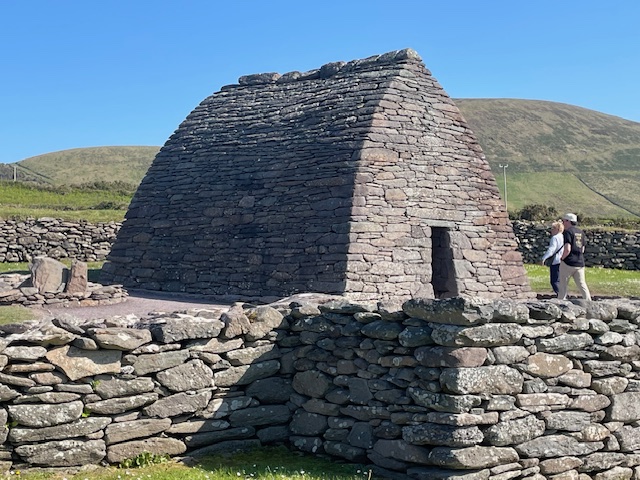
Our trio of antiquities was completed by a visit to the early Christian oratory at Gallarus. Dating from around 500 AD and fashioned in the shape of an upturned boat, the chapel is lit only at the far end by a simple window. An austere and striking symbol of the Celtic Church overlooking a harbour that has outlasted Viking raids, Norman conquests and everything the weather has thrown at it.

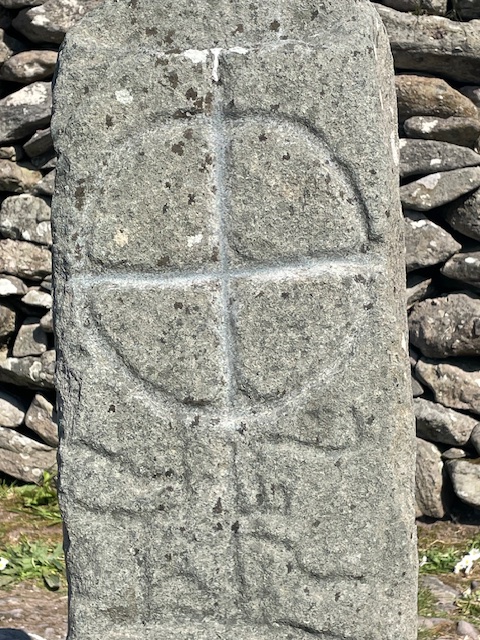
Made of gritstone the oratory measures 8m long x 5m wide and 5 m high. Some graveyard stones remain, like this simple cross inscribed in stone.

Thought of the skill seen in constructing beehive huts when viewing this little church, as the stones of various graded sizes meet to form the roof ridge. Also bore in mind that the central aisle of a church is called the nave because of that upturned boat shape, from Latin ‘navis’ for ship.  

We left Dingle entranced by the extraordinary sights, sorry not to have time to do more but glad to have sensed the life of the past through wonderfully well preserved examples of its fortifications, homes and churches.

Cliffs of Moher

You know that Ireland’s road infrastructure has improved dramatically in the 21st century when you see day trips offered in Dublin to this tourist mecca in County Clare on the ‘Wild Atlantic Way’. That’s a 3.25 hour coach journey to cover the 268k (166m) trip, mostly by motorway, and the same back. One very long day out. And there are no shortage of takers.

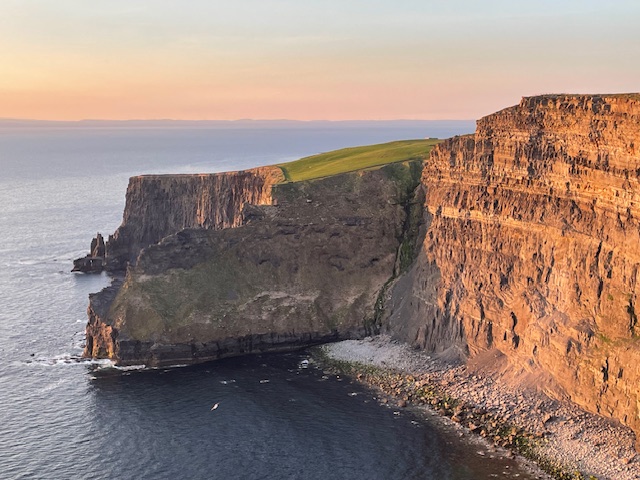
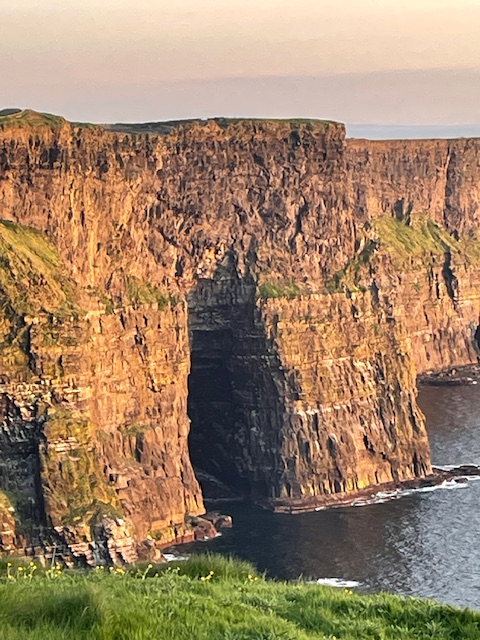
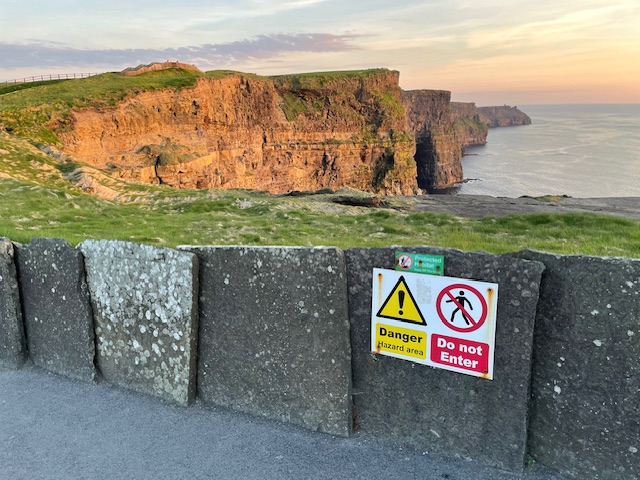
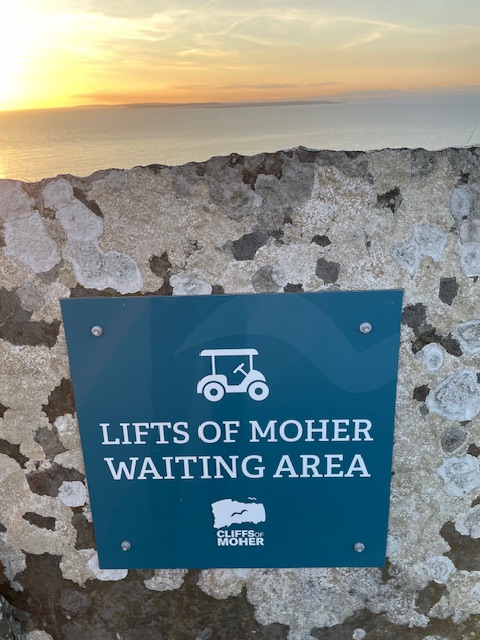
We visited on a weekday evening after the park had closed and crowds had left. To my mind this has to be the best time as the setting sun was starting to illuminate to great effect the 8 Km (5 miles) of high cliff faces, 214 m/700ft at their tallest, to dazzling effect. The place lives up to its hype, especially on yet another glorious blue sky day, offering sublime views over becalmed seas towards America way out west. The sheer cliff faces, eroded by wind and water into caves and stacks in places, providing a wealth of different breeding sites for over 20 species of sea bird and we watched some of them wheel about us in the golden light.

The cliffs consist of carboniferous rock, including shale and sandstone, and once formed part of a delta system 320 million years ago, carried up here from the equator on vast tectonic plates; broken, fractured and stratified on its snail’s pace journey north.

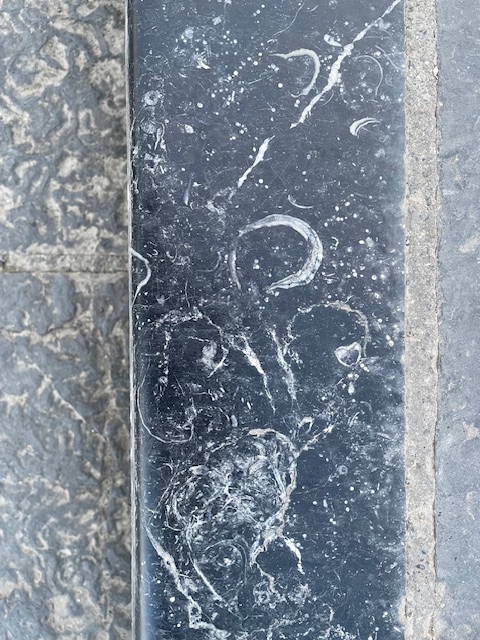
We climbed and descended the cliff tops on wide black marble like steps, tucked  in behind a protective barricade of grassed flagged bank, preserved to accommodate the thousands who pay to visit each day. These handsome steps are fashioned from locally quarried Liscannor stone and I loved looking closely at them as they contain a wealth of fossils: crinoids and ammonoids and other unidentified creatures whose trails are preserved for eternity.

The Cliffs of Moher are named for a deserted prehistoric fort on a headland that once stood here before being replaced by a look out during the Napoleonic wars, when national defence was key. In peace time the invasion has been internal and despite concerns about road congestion and overcrowding the locals we talked to welcomed the income tourism brings in its wake.  

Reflecting the intrinsic importance of music in the culture buskers have pitches set aside for them at key points along the walks and the nearby village of Doolin is acknowledged as a centre of traditional Irish music.

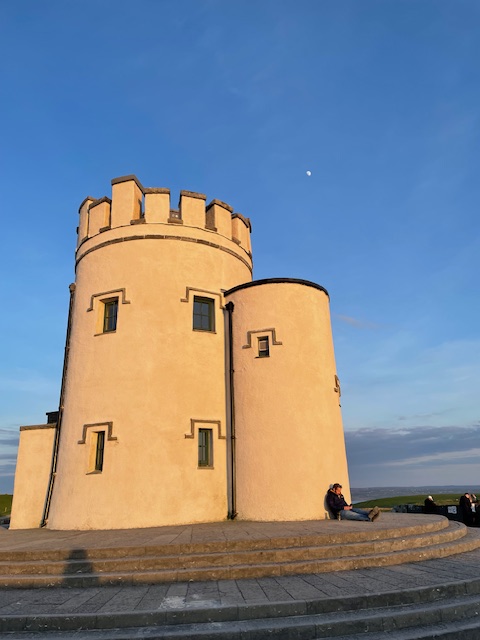
A far sighted local landowner built a viewing place in 1835, now named after him – O’Brien’s Tower – to help foster a  growing trend and provide local alternative employment for the remote rural community of the day. Since 2011 The Cliffs of Moher have been part of Ireland’s latest UNESCO Geo-park, along with that most remarkable of internationally renowned landscapes, The Burren….More of which in the next diary.

Thoor Ballylee and Coole

Our recent holiday with family in Ireland threw up the opportunity to visit two inter connected places in the Galway countryside associated with two of the country’s great cultural figures.

An ancient bridge, and a more ancient tower,
A farmhouse that is sheltered by its wall,
An acre of stony ground,
Where the symbolic rose can break in flower,
Old ragged elms, old thorns innumerable,
The sound of the rain or sound
Of every wind that blows;
The stilted water-hen
Crossing Stream again
Scared by the splashing of a dozen cows.

W.B.Yeats ‘My House’ (1928)

Thoor Ballylee is a C14th Hiberno-Norman defensive tower on the gentle banks of the Streamstown river in the west of Ireland built by the De Burgos, or Burkes, a Norman clan whose power base was in this area. It had fallen into a state of decay when the poet W B  Yeats first saw it in 1898 while staying with his friend and artistic collaborator Lady Augusta Gregory at neighbouring Coole Park.

Eventually, as a newly married man with two children wanting a home away from Dublin in the west from where his own family originated, Yeats bought the romantic though ruinous structure for £35 in 1916. Working closely with local craftsmen he and his wife George carefully restored the structure to make it habitable as their summer residence through the 1920’s.

Interesting to note that neither he nor fellow protestant notable Lady Gregory were directly threatened by either of the feuding sides during the rebellion against British rule or the bitter civil war that followed. As respected cultural icons they were otherwise shielded from the violence and atrocities that marked the ‘Troubles’ across Ireland.

It’s not hard to see why the tower became the Yeats’s happy place, acting as both a refuge and an inspiration. George decorated and furnished rooms in the arts and crafts style while also developing the skill of fishing from the  windows! Friends visited regularly and everyone enjoyed the socialising. Yeats wrote some of his best poetry here; work that appears in the collections ‘The Tower’ (1928) and ‘The Winding Stair’ (1933).

Yeat’s deteriorating health, along with the damp and damage wrought by winter floods eventually caused the family to sell up and move away. Summers were increasingly spent abroad in France, with its kinder climate, better suited the ailing artist, but he never forgot this place or its importance in his life. Nor did admirers of his work forget him when in the summer of 2015, to mark the 150th anniversary of Yeats’s birth, the Yeats Thoor Bally Lee Society re-opened the tower to visitors and have continued to do so each season ever since. It is now a thriving cultural centre offering courses, talks and literary themed events.

We loved chatting with the cheerful knowledgeable warden and exploring all four floors of the tower. Intrigued by the stack of crow’s nest below one of the slit windows and surprised by the alarmed cries of a returning parent just as I caught sight of the fledglings within.

From the top, I took in extensive views over surrounding pastoral landscape rich in hedging, banks, woods and fields. The white flood of flowering hawthorn everywhere. Curiously the gentle sparkling stream below literally disappears within these woods. This distinctive Karst limestone country is known for its turloughs – intermittent lakes that fill with water from streams like this one that drain back into the water table, having no surface outlet.

Under my window ledge the waters race,/Otters below and moor-hens on the top,
Run for a mile undimmed in Heaven’s face,/Then darkening through ‘dark’ Raftery’s ‘cellar’ drop,/Run underground, rise in a rocky place/ In Coole demesne, and there to finish up/
Spread to a lake and drop into a hole./What’s water but the generated soul?’

                                                                                              ( W.B. Yeats ‘Coole Park and Ballylee’, 1931)

We followed the hidden line of flow on leaving Yeats Tower and within a few miles were at Coole Park, now a national nature reserve stretching over 1,000 acres (400 Hectares). The woods here have been attracting visitors from when they were first developed by the Gregory family in the late C18th. Coole Park was home to  Lady Augusta Gregory (1852-1932) and in her widowhood her genius for inspiration made it a centre for the movers and shakers involved in the Irish Literary renaissance, from Synge to Shaw, Casey to Yeats.

“These woods have been well loved, well-tended by some who came before me, and my affection has been no less than theirs. The generations of trees have been my care, my comforters. Their companionship has often brought me peace.” ( Lady Gregory, 1931)

We were quickly enfolded into that peaceful, unhurried arboreal world and instantly appreciated the spell it must have cast on others. Although there was no time to discover the lakes with their swans or walk the woodland paths beyond the centre we did find the famous autograph tree – a venerable copper beech – where the great  men of letters carved their initials during their frequent visits. Their incisions now stretched and compacted by growth and stoutly defended from further additions by the public by railings.

‘Here poet, traveller, scholar take your stand / when all these rooms and passages are gone’ (Yeats)

The Georgian house was demolished in 1941, although the handsome restored stable block has a museum, facilities and excellent tea rooms serving imaginative good quality food, so a most enjoyable lunch was had here.

Yeats had first arrived at Coole in 1897, physically and psychologically exhausted and was nursed back to health and a more sustainable  lifestyle by Lady Gregory. As he described: “I found at last what I had been seeking always, a life of order and labour” Lady Gregory prescribed for him a balanced regimen of work and relaxation. It was the beginning of a lifelong friendship that saw them  in 1904 co-found with others the Abbey Theatre in Dublin. In so doing they were preparing the ground for independence by writing, producing and performing plays about Irish life for Irish people.

More here: www.yeatsthoorballylee.org and https://www.coolepark.ie

Cause for Celebration

John Dubbin’s painting is the basis for this animated panorama at Hopetown

Fifty years ago I was living and working on Teesside as an actor and drama workshops organiser for the Billingham Forum’s Young People’s Theatre Co. We enjoyed free outdoor events marking the 150th anniversary of the opening of the world’s first public passenger steam railway train between Stockton and Darlington. A souvenir from that time is this little China mug, now sadly minus its handle, but otherwise intact and very pretty.

The long train of 1st, 2nd and 3rd class passengers,  preceded by a rider on horseback for safety reasons, set off from Shildon in Co. Durham  on the 27th September 1825 travelling the 21.5 miles to Stockton, via Darlington, at an average speed of 9mph, cheered on by crowds of excited onlookers.

Friend Rob under Skerne bridge

Skerne Bridge, seen in the painting above, is still there today, part of the Hopetown site. The oldest railway bridge in the world still carrying a working rail route.

George Stephenson and his son Robert were the Tyneside engineers who gave us ‘Locomotion’, the engine that pulled those carriages on that triumphant day. Edward Pease, a leading Darlington Quaker (member of the Religious Society of Friends), was a retired wool merchant who had the time and capital to head the consortium of local businessmen were behind the scheme. The original plan was for a horse drawn tramway to transport coal from the mines in the Durham hills to the estuary port of Stockton-on-Tees where it could be shipped to the rest of the country. Stephenson Snr. persuaded the money men to opt for his newly invented coal fired steam engine instead. Adding passengers to commercial goods and loads of coal was something of an afterthought, but would have the greatest of consequences.

‘Locomotion’ replica on display at Hopetown

All this and much more my friend Rob and I learnt when we visited Hopetown in Darlington last week, in the year that sees the 200th anniversary of the Stockton & Darlington. Formerly known as ‘The Head of Steam’ museum at North Road railway station, the 7.5 acre heritage site has been transformed with a multi-million pound investment programme to make it a major regional tourist attraction and educational resource. Entry is free (donations welcomed) and the amount of digitalised interactive displays shows the ethos is about engaging with families and school parties to tell a spirited, many layered story. Exterior soft play areas and an adventure playground are other family attractions that help justify the public investment and draw the crowds.

We didn’t quite know what to expect but quickly became engrossed with what was on offer. The interactive stuff – being addressed by station master and engine driver holograms for instance and having our photos taken with them – sparked fun and laughter. Think the planners have got the mix of serious study material and simpler, bold displays about right, opening vistas for the curious and engaging visitors in the interplay of man and machinery.

Railway Pioneers exhibition

The Hopetown site, roughly triangular in size, consists of the original engine shed (1833) now the shop and café (above); station hall and offices (1842) now an exhibition area with locos and carriages, the Carriage Works (1853) with its huge open archive and large exhibition hall with awesome  replicas of early engines, part of the ‘Railway Pioneers’ exhibition currently showing.

Completing the building line up is the new, purpose built  Darlington Locomotive Works where 21st century steam locos are being made by a charitable trust and volunteers, the workshops overseen from a tower housing public viewing gallery.

Highlights? I think anyone who visits a heritage site is invariably fascinated by the unchanging necessities of everyday living and how each generation deals with them. That’s why the original station toilets were fascinating. Cast iron urinals, tiled walls and cubicles. Throw in the reputed ghost of a porter who committed suicide here in the 1840s that is believed to still haunt the place and you’ve got it made.

The simple elegant design of the original early Victorian station (above) entrance and its extension reflect the world view of those local Quaker company directors. The exuberant emerging Gothic style was not for them.

Britain being Britain the three original carriages on display remind us of rigid social and economic classification. First class enjoys padded seating and privacy while third class (above) is an array of hard benches and a hole in the roof to let out smoke and/or let in light. Second class a mix of both.

Lord Darlington

My favourite museum story happily fits the ‘Country Diary’ title for these occasional notes. We learned that it took three concerted attempts over many years to get the Stockton and Darlington railway up and running. At its heart was the struggle between the inherited wealth and influence of the landed gentry and the new money of the non-conformist urban business elite.

Henry Vane,  Earl of Darlington, resided at nearby Raby Castle, the centre of his great estate. A  fanatical fox hunter who maintained two packs of hounds, he was determined to stop ‘bankers, merchants and others wishing to employ money in the speculation’ from ruining his sport by running their rail road through his fox coverts. He and other country landowners successfully led the opposition in parliament to defeat the initial proposals. A contemporary petition, drawn up by a top London law firm for anonymous clients, makes fascinating reading. It objects to the railway proposal as being ‘harsh and injurious to the interests of the county through which it is intended to pass’ and will ‘spoil lucrative arable land’ splitting profitable holdings in two and be ‘detrimental to the profits of the turnpike road’ running parallel with it.

In March 1819 Quaker banker and line supporter, Jonathan Backhouse, got wind of a plot by the earl to bankrupt his business and so de-rail the financiers. Back then a bank’s promise to pay the bearer on demand the value of a note in gold inspired the disgruntled aristocrat to get his tenants and associates to turn up on a set day at the bank to demand just that. The resourceful Backhouse immediately took flight to London and had a whip round with other Friends in finance, loading the loaned bullion into his carriage and returning at fast as they could back up north on the new turnpike roads to Darlington.

He made it as far as the river crossing at Croft, three miles short of home, when the axle on the hard driven coach broke under the strain. The quick witted banker and his servants redistributed the heavy load and slowly hedged their way back into town, with time to spare, before the Earl’s steward came to call at the bank. Backhouse had raised £32,000 worth of precious metal, more than enough to meet the withdrawal threat. He reportedly saw off the Steward with the words ‘Now, tell thy master that if he will sell Raby, I will pay for it in the same metal’….A great story, which no doubt has improved with re-telling down the years. 

The Backhouse family bank prospered greatly thanks to the transformational economic prosperity the railway revolution engendered. Eventually, in the 1890’s, the business would merge with other Quaker founded financial institutions to form Barclays Bank. The bank branch (above) is still there, on its original site in the town centre and about to undergo a refurbishment. Ironically, given the simple design of the original North Road station, this  building is a fine example of imposing gothic architecture by Sir Alfred Waterhouse (1864).

Arriving and leaving Darlington via Bank Top – the mainline east coast station (1887) – we’re delighted to see that it too is getting a long deserved restoration. Looking up we take in the heraldic decoration and rhythmic flow of ironwork gracing the roof of this secular cathedral, fitting tribute to a wonderful railway history and the town’s proud role in it.

Linnell, John; Richard Trevithick (1771-1833); Science Museum, London ; http://www.artuk.org/artworks/richard-trevithick-17711833-179865

Footnotes: The current ‘Railway Pioneers’ exhibition at Hopetown features superb life size replicas of key early locomotives. One is the unnamed  engine (below) invented by Cornish mining engineer Richard Trevithick to transport iron from the Penderryn works in South Wales in 1804. In 2001 I had the pleasure of playing the obsessive charismatic inventor, in the BBC Radio 4 drama, ‘A Magnificent Prospect of the Works’ by Peter Roberts. The action was set in Coalbrookdale, the heartland of the industrial revolution on the river Severn, where Trevithick developed the prototype engine that would became the world’s first steam railway locomotive.

The Friends of the S & D Railway have produced an excellent illustrated introduction which you can download here: https://www.sdr1825.org.uk/wp-content/uploads/2021/10/stockton-and-darlington-railway-key-facts-booklet.pdf

Toronto Treats

We were in Toronto recently, where Kim’s niece Clare was getting married to her partner Adam in a 1930’s art deco former cinema, now an events venue. The hospitality and good companionship of  immediate family – who had flown in from all over the country for the big event as well as that of the new in-laws – was incredibly generous and inclusive making this visit extra special and truly memorable.

The city and its extensive suburbs is by far the biggest metropolitan area in Canada at 243 sq. miles/ 630 sq. km. and with a population of nearly six million people, is one of the most multicultural cosmopolitan cities in the world with hundreds of languages being spoken other than English. Arriving and departing from the city’s busy airport certainly reinforced that fact. Commanding the northern shores of Lake Ontario Toronto is the centre of Canada’s principal  financial, media, commercial and logistical worlds, and its grid system of thoroughfares is bisected by rivers, ravines and urban forest.

We were staying in an Air B&B in the inner suburb of Eglington. Strolling the residential area I clocked black squirrels, flocks of little finches and American Robins. Our clapboard house with its trees, porch & garden looked over – or rather, were overlooked by – new built blocks of apartments and condos.

There were the familiar street furniture of a north American cityscape, from fire hydrants to overhead traffic lights, yellow school buses and wide concrete sidewalks. More surprisingly were the first of a number of licensed outlets we’d see across Ontario legally selling marijuana products.

A stroll down the sun kissed boulevard took us by Mabel’s Fables, the city’s much loved children’s bookshop. The lady behind the desk got Kim to add her message & signature to the writers and illustrators wall in the room upstairs. She found a space between Neil Gaiman and David Almond to add her contribution of appreciation for this literary metropolitan oasis for the young.

My eye was caught by what I thought was a stuffed cat stretched leisurely over a pile of books on a display table. It turned out to be the shop’s real life mascot. Later I saw the laid back moggie skilfully catching flies in the shop window. Every bookshop should have one.

We enjoyed two special viewings of remarkable art collections during our four days in Toronto which allowed for a real insight and appreciation of Canadian culture. We were invited to a luxury apartment block downtown, to the penthouse home of one of the country’s foremost private arts patrons and philanthropists. Our genial host, a retired financier in his 80th year, had acquired and framed one of Kim’s drawings – Flea’s Hands (1979) – to add to his impressive collection of works by Canadian women artists. Our two hour personal guided tour of so many beautifully curated artworks, artifacts and rare manuscripts was an extraordinary privileged experience that will never be forgotten. That said, I’m glad I don’t reside in the sky as acrophobia would rob me of any enjoyment of immediate surroundings, however culturally awesome and life affirming.

The second artistic foray on the following day was a repeat visit to AGO – The Art Gallery of Ontario – a couple of blocks away. The Frank Gehry designed wing in particular made the perfect backdrop to this comprehensive collection of Canadian art over the centuries.

The vivid dynamic scenes of pioneer life from Montreal based Cornelius Krieghoff (1815-1872) contrast with contemporary paintings by leading First Nations artists like Kent Monkman. ‘The Deluge’ depicts the displacement of indigenous peoples by European settlers. Here the artist’s alter-ego rescues falling children and hands them back to their parents.

I was particularly drawn to the detailed paintings of country folk at work and play by an artist of Ukrainian heritage, William Kurelek (1927 – 1977). Loved the narrative qualities this self taught, spiritually motivated figure created in his fond depictions of rural life on the great plains.

The Group of Seven is probably the most widely known school of Canadian art. These individuals explored and captured the rugged and remote landscapes of this vast country, putting them at the centre of their work, bringing their vision to international attention. Here’s one example, a view of Georgian Bay from 1913 by group co-founder JEH Macdonald (1873-1932) Born the son of a joiner in Durham, his family emigrated to Canada when he was fourteen. MacDonald founded a successful design firm and eventually became principal of the Ontario College of Art.

It was to the rural highlands in the east of Ontario we were heading, after the lovely wedding celebrations and art treats in Toronto, and further diaries will live up to their country titles.