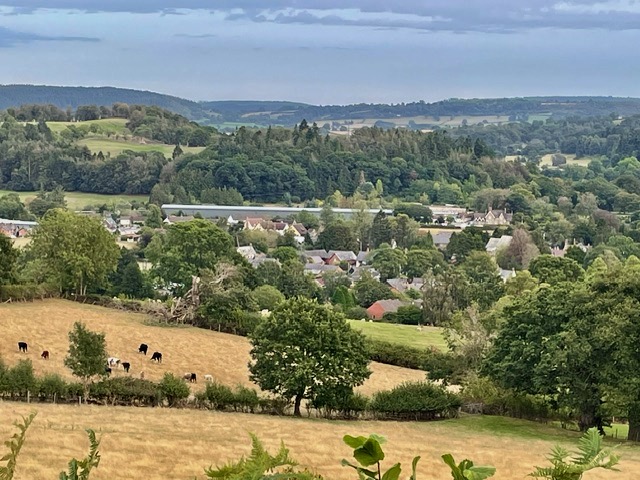
A packed five days away on the Welsh Border where Shropshire, Radnorshire and Herefordshire intertwine. Our base a lovely B&B in a Georgian house in the village of Bucknell. https://www.thehallbucknell.com/ One of this location’s attractions to me was its location on the Heart of Wales rail line. https://www.heart-of-wales.co.uk/
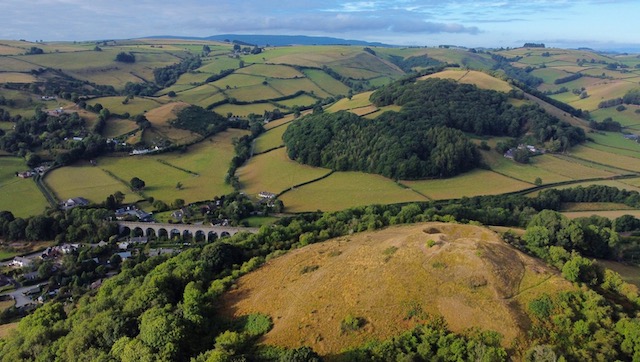
This 120 mile much loved rural railway, dating from the 1850’s & 60’s, links Shrewsbury and Swansea and apart from its enduring value serving remote communities in both England and Wales the main draw today is for hikers and cyclists, giving extraordinary access as it does to some of the most remote and challenging of upland landscapes.
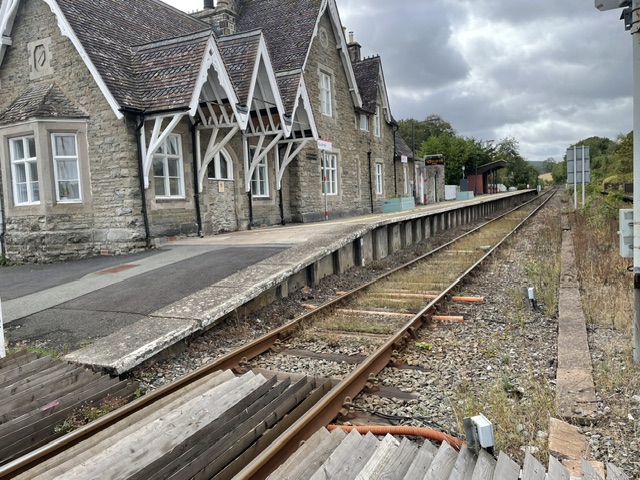
Bucknell Station is a handsome well preserved building (now a holiday home) from where we took an old two carriage diesel to the next stop of Knighton, a 10 minute trip below conifer forest and above the River Teme in its valley of several oxbow lakes marking the stream’s former meandering course.
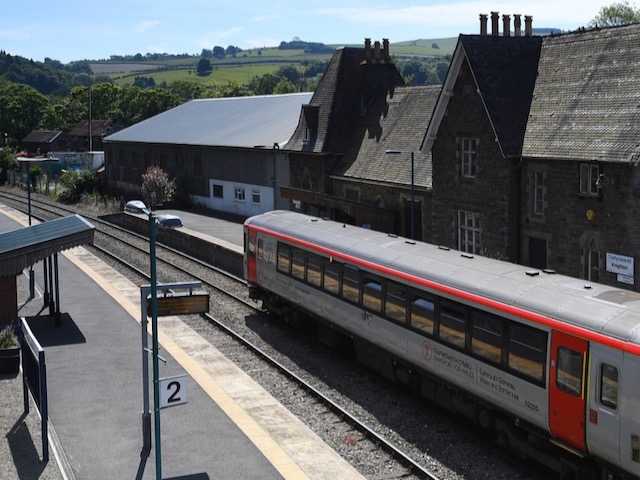
Curiously the station at Knighton, dated 1860, is in England while the town itself is in Wales. The once proud brick built station building presents as a sorry sight today, with windows blocked and falling roof tiles, desperately in need of a suitable owner or tenant to bring it back to life in some form or another.
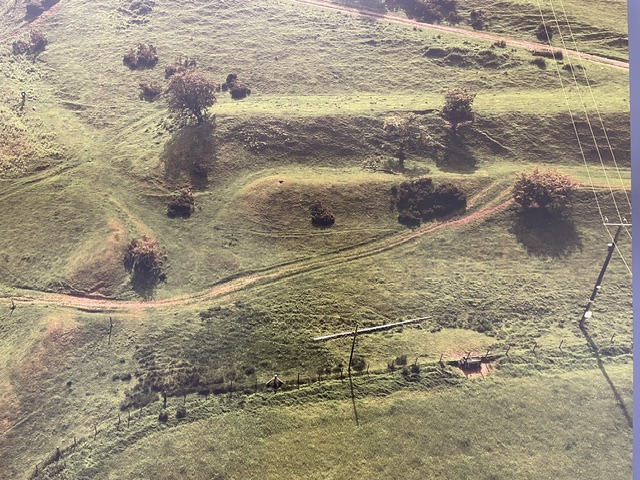
Knighton or Tref-y-Clawdd (town on the dyke), lies on the long earthwork known as Offa’s Dyke, named after the 8th Century King of Anglo-Saxon Mercia who had the structure built. Whether as a prestige project or to restrain or tax through customs his Celtic Welsh neighbours remains unclear but his monument would define the first proper border between the two countries.
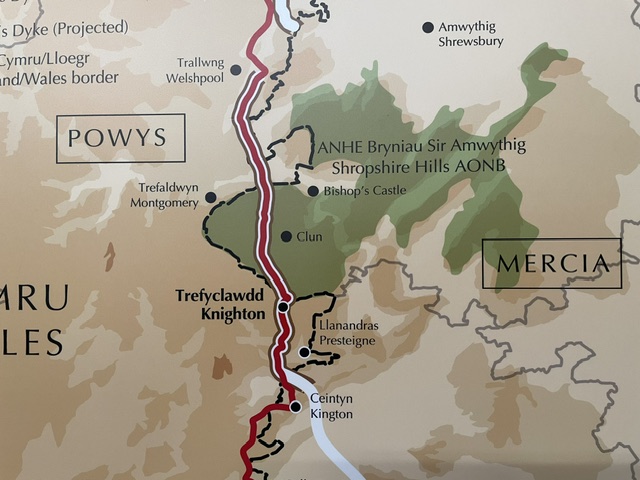
Offa’s Dyke stretches for 82 discontinuous miles. Much has been lost or erased through the ravages of time, weather, burrowing, landslides and modern developments. A 2018 survey found that only 8% of the monument was in a favourable condition. What remains is officially protected as a ‘Scheduled Monument’ and enhanced by the tireless volunteer action of the Offa’s Dyke Association, formed in 1969. (www.offasdyke.org.uk) Offa’s Dyke, and its northern extension Wat’s Dyke, are part of a 177 mile long National Trail linking Chepstow on the south coast of Wales with Prestatyn on the north, a magnet for ramblers from all over the UK and abroad.
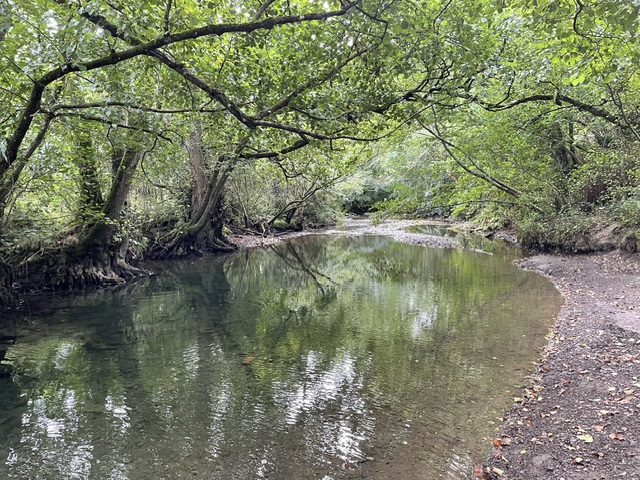
The very short section we followed took us through woods and back across the rails, over the river. We watched a dipper below the metal rail bridge searching for caddis fly and other insects to eat in the shallow water.
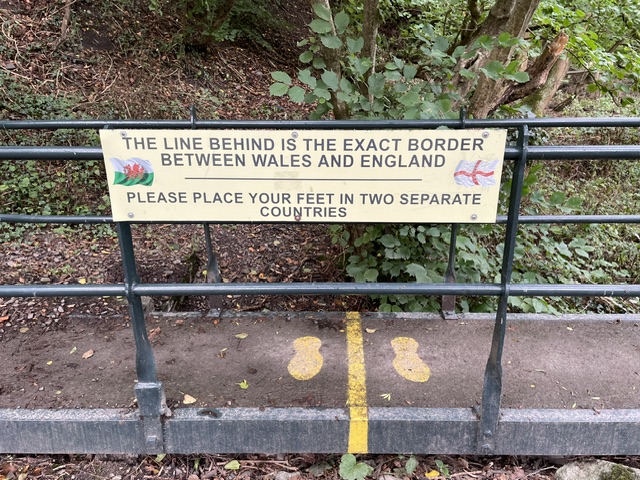
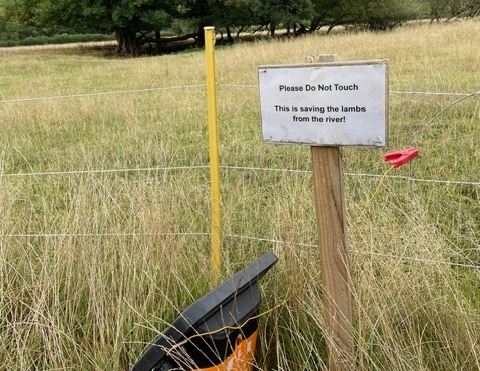
Later downstream brought us back over the meandering border, from Shropshire (England) into Radnorshire ( Powys), pausing for photos at the boundary marker. The riverside stretch into Knighton was a pleasant walk and I liked the sign on the electric fence here on the meadow’s edge.
Finally, in ambling over another isolated section of the Dyke, we arrived at the OD visitor centre and café, dating from 1999, that sits rather elegantly alongside the monument.
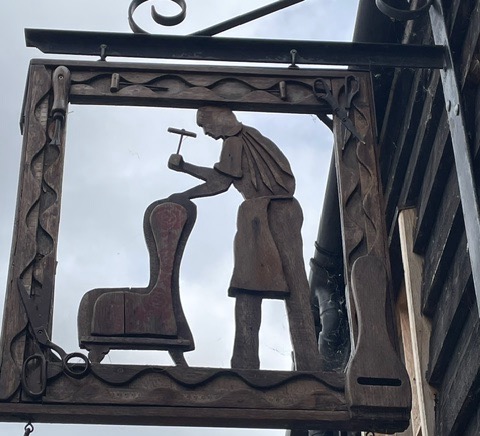
Knighton is a small rural town of many architectural styles with few national chains but many local businesses.
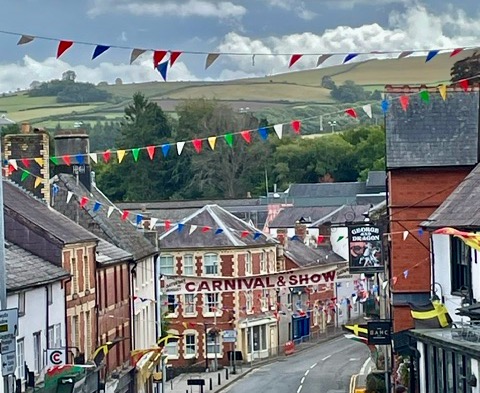
Had our lunch in the little café below the central clocktower, homely cheerful chintz, with lovely warm hearted laughing ladies serving. The rest of the venerable low ceilinged building that is ‘Prince & Pugh’ revealed itself when threading one’s way up to the toilets on the top floor past an array of store rooms.
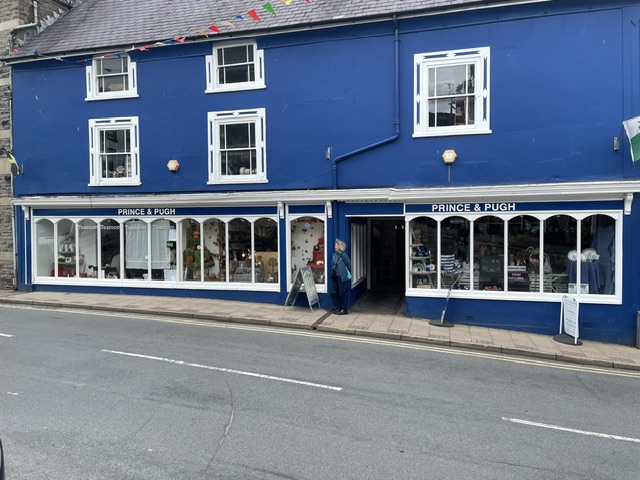
This outlet is a rare old fashioned country store, stocking everything one needs when living out by. Sadly, by way of contrast, the one-time grand Victorian hotel at the bottom of the hill was standing empty and forlorn, as was an even older pub nearby that had only recently served its last pint.
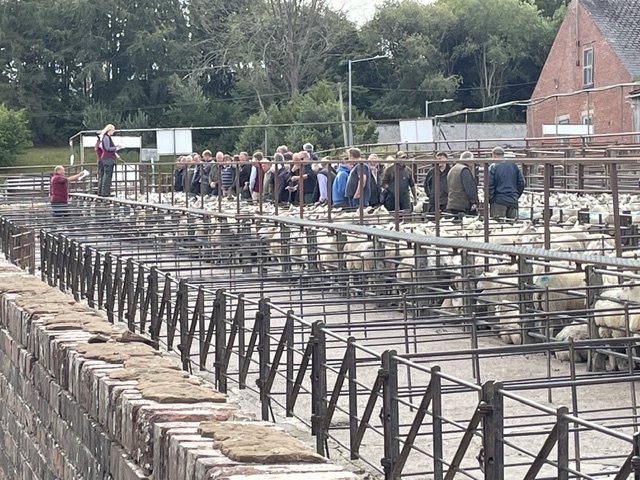
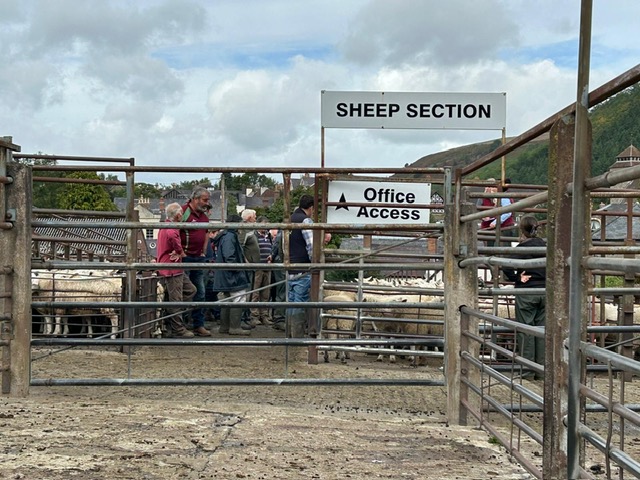
A market town since 1230, Knighton services a widespread agricultural community so we were delighted to discover that a sheep sale was on in the livestock market. The local Clun and Welsh Mountain were the main breeds being loaded and unloaded from trailers pulled by farmers’ 4x4s, plus the odd hauliers stock waggon. The two young women rattling through the auctioneer’s patter while perched on the pen rails were doing a cracking job of keeping the trade brisk and the laughter and chat flowing.