Meadows And Mortality

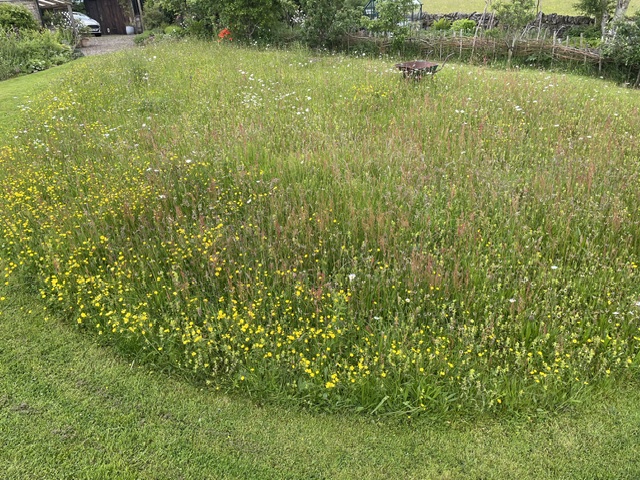
Regular readers of these occasional notes will know I’ve been gradually forming and managing a meadow area in our country garden since I came to live at the Corner house nine years ago.. The tough grasses have been weakened through autumn seeding of yellow rattle, with various meadow flower mixes to follow. Before seeding  I manhandled a hired petrol driven scarifier over the ground until its cumbersome circling caused a strained muscle which finally caused me to desist.
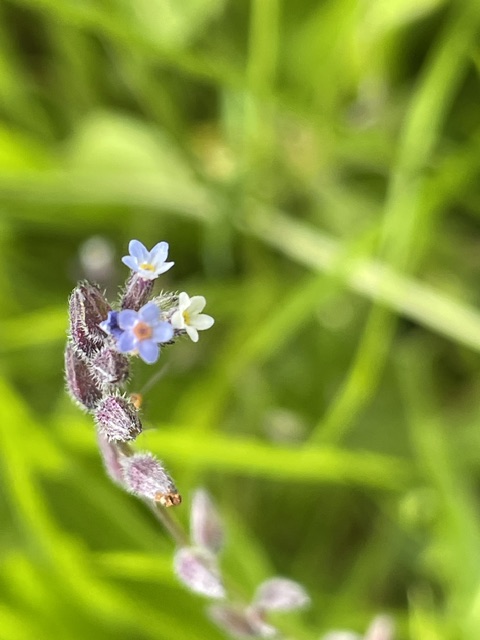
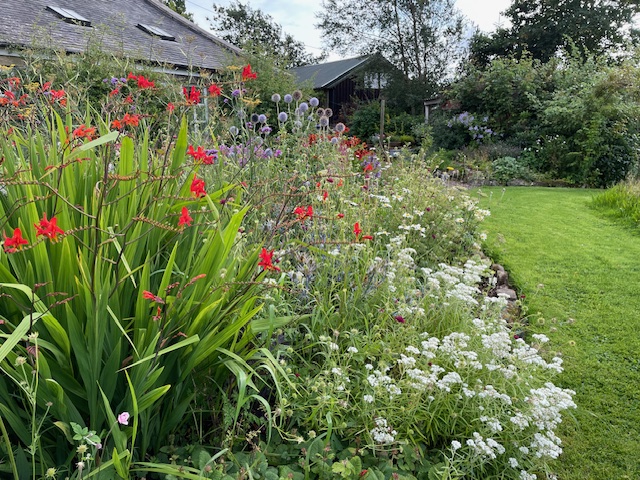
The seasonal groundwork  paid off. Every summer we enjoy a different plant line up. Initially dominated by poppies, ox eye daisies. Later, buttercups claimed the wetter end while sorrel and bugle, alongside umbellifers like cow parsley, yarrow and pig nut have found their happy place in the drier or thinner soiled sections. I even chanced a few plugs round the lusher grass margin – musk-mallow, ragged robin, meadow crane’s bill, chickweed. They hold their own, but do not spread. A kneel down reveals the arching form of that smallest of pasture  flowers, field forget-me-not. (above) A tiny delicate delight.
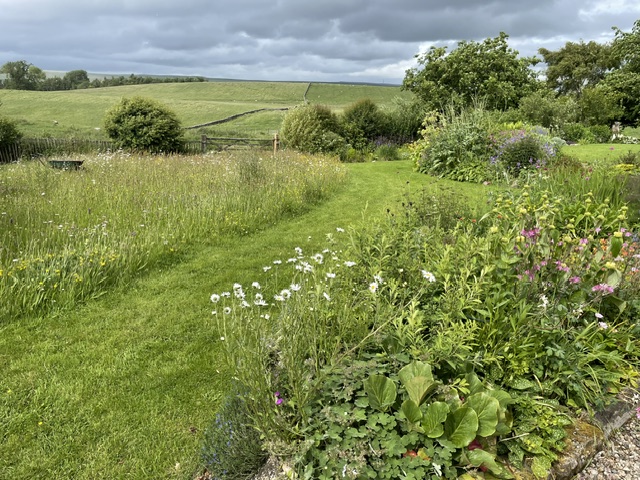
This spring my heart sank when I realised that one plant in particular had usurped the field. Ribwort plantain (Plantago lanceolata) is suddenly  everywhere. It’s also escaped into the mown grass area that border the roughly triangular island of meadow slope, which is more problematic. The semi-parasitic yellow rattle has worked  only too well in weakening the variety of vigorous grasses whose roots it feeds on. Those grasses have been replaced by masses of vigorous free seeding plantain, with its deep root and basal flattening leaves. Most of the more delicate seeds listed in the original meadow mix have never been spotted.
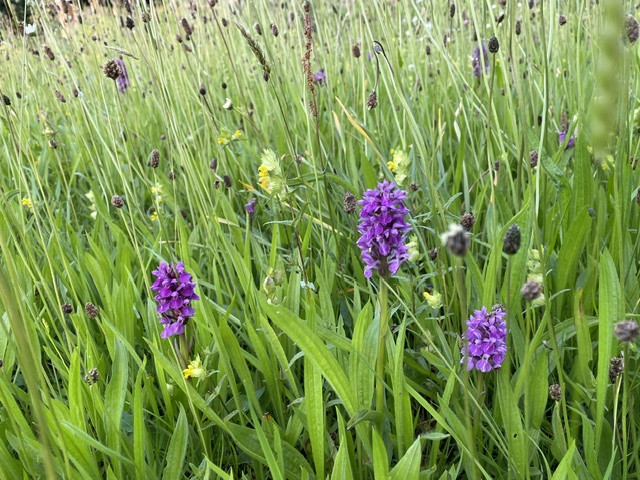
Orchids in amongst the plantain and yellow rattle

Or so I thought…Returning from holiday,  looking with joy over the emerging meadow, I counted more than sixty orchids. Thinned grasses have allowed these beauties to find the light, despite the dominating presence of plantain. Although photo ID tells me these are common spotted orchid I have my doubts as there’s not a spot of any kind on their basal leaves and the flower configuration seems not to quite fit the description.
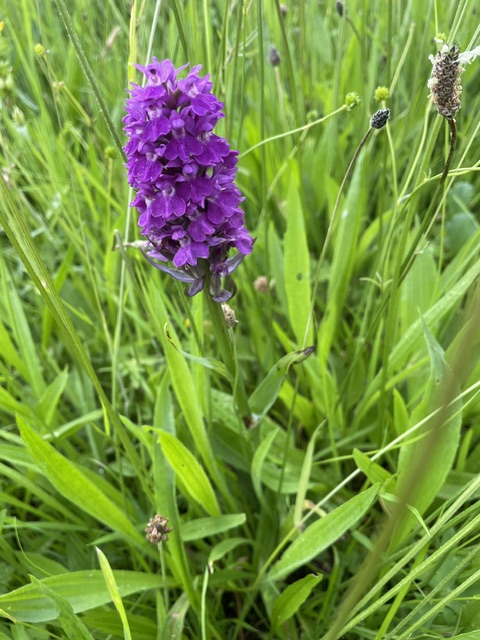
Then I recalled that in the early days of managing this patch I’d bought a couple of orchid plugs (variety unknown) from a small local independent nursery that was closing down and had subsequently planted them on the meadow margin. They reappeared for a few years and then disappeared. There are 57 varieties of native orchid in the UK and ours may be a hybrid of common varieties, as originally sourced from that local nursery. The important thing is that they’re back and thriving in this dynamic ecosystem. As orchids depend on a symbiotic relationship with mycorrhizal fungi in the soil to allow their minuscular seeds to germinate and grow we clearly have a meadow in good heart.
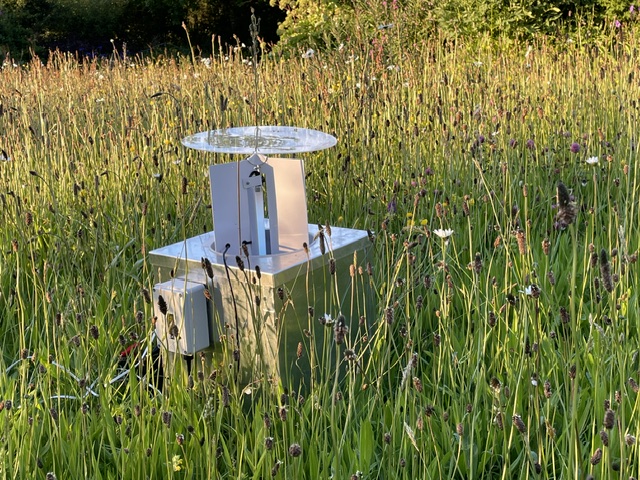
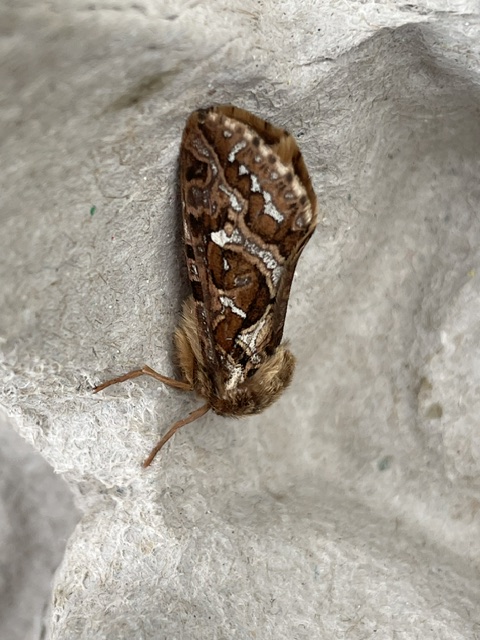
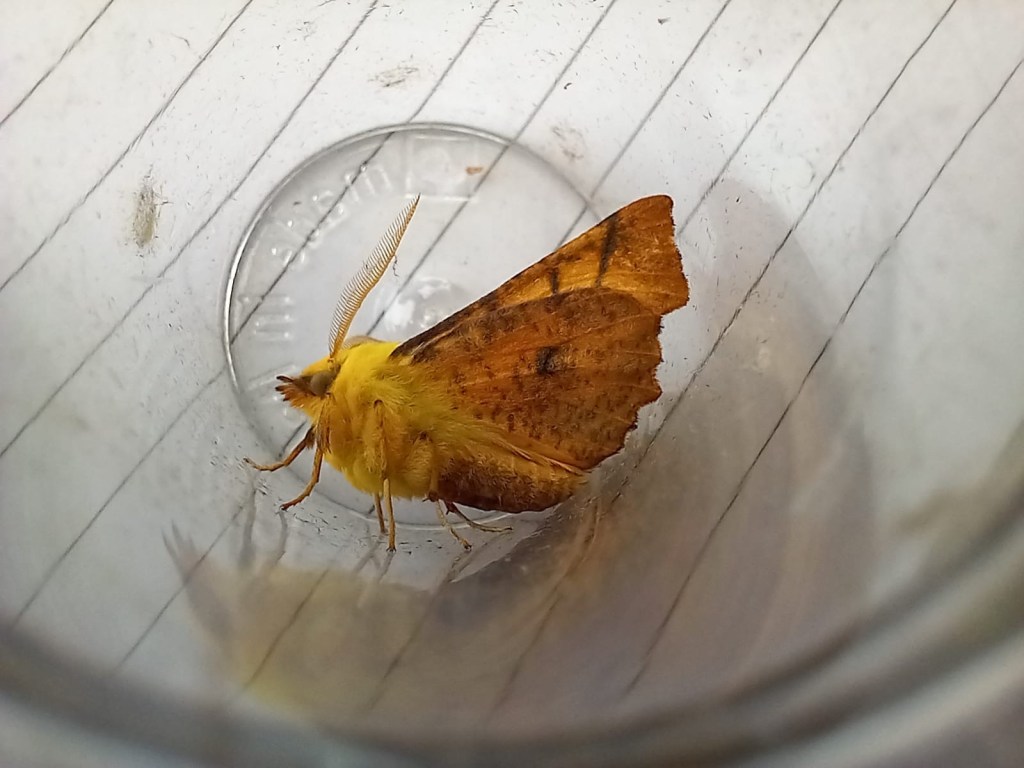
All plants have an essential pollinating relationship with moths, butterflies, hoverflies, bees etc. The other night I set the moth trap in the meadow and amongst the haul was this Common Swift, (Korscheltellus lupulina) which  feeds on the roots of grasses and small plants, while its larvae live underground.
Overlooking the garden, low down on the north facing wall of the studio/office, sits our new bird box with camera. A fabulous family Christmas gift which, when set up in early April, attracted tenants in the shape of blue tits. The little birds painstakingly assembled layer upon layer of moss, sheep wool and feathers. The birds deep dive manoeuvres to mould the cup of nest was fascinating to observe and we waited with baited breathe to see one egg after another laid. At a dozen the reproductive strategy was clear. A high loss number.
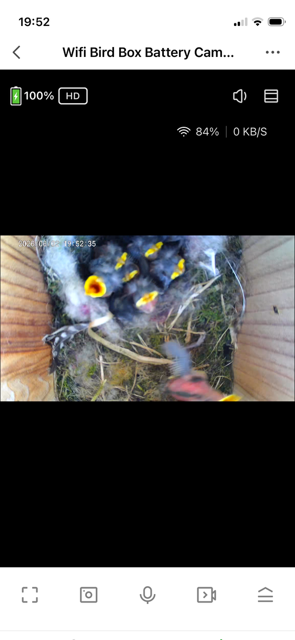
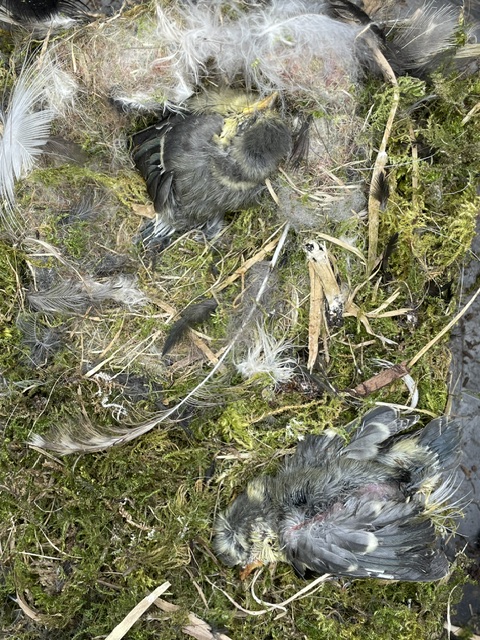
The chicks hatched, one by one, only to weaken and die in much the same way until eventually only two feathered nestlings remained. They looked ready to fledge. The next day though they too had expired. Those two fledglings apart, what had happened to their siblings? No sign of them so can only presume the parents had disposed of their tiny corpses. And what of those adult birds? Did the chicks starve because the parents could not source enough caterpillars to feed their brood? Had one or both parents been suddenly predated, causing the last two chicks to starve to death? Did parasites or bacterium play a part in their demise?…We’ll never know but it was a fascinating, if sobering, opportunity to witness at close hand avian life & death through the intimate unblinking eye of technology.
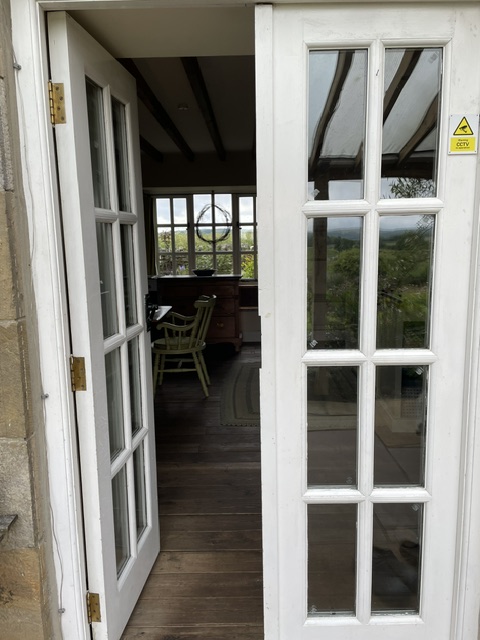
By contrast our returning  swallows present with another successful breeding achievement. Two fledglings have joined the parents in aeronautical manoeuvres in the skies above. Their year on year return to the nest under the open porch roof always gladdens the heart. This year’s brood are more prone than usual to making attempted fly throughs when the door to the garden is open. We have got used to coaxing them back out but now keep the door closed more than usual. The young hare that spends so much of its time in and around our house has been seen in the past to stop at the doorstep to sniff the air before thinking better of it and lopping off again.
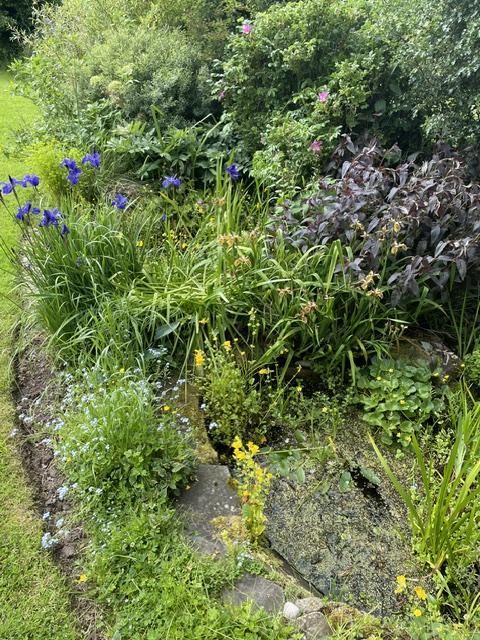
Down by the ponds plant growth has been more fecund than ever. Water avens seeding, different varieties of irises in bloom, intermingling yellows of monkey flower and native buttercup. Surface blanket weed regularly  removed here on the deeper of the two wildlife ponds to allow the lily and water hawthorn to spread. Unseen below, the breeding palmate newts continue to thrive in a cool dense environment of oxygenating weeds teeming with micro-insect life.
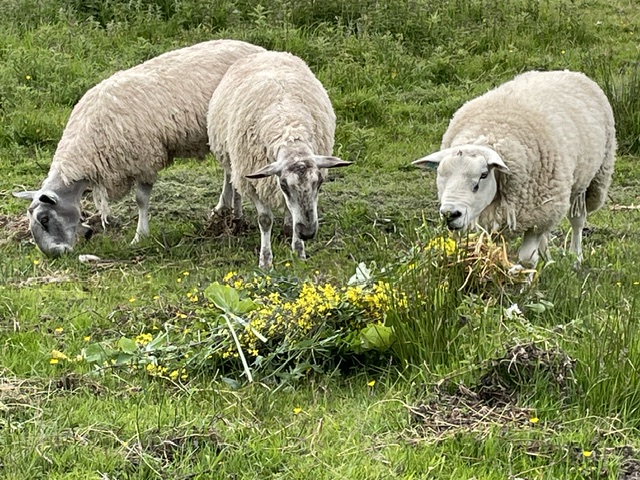
The tups on the crags continue to do sterling work in munching through the majority of our green garden waste, delivered them in the wheelbarrow.
Cows on the Crags

What is this life if, full of care /We have no time to stand and stare? / No time to stand beneath the boughs / And stare as long as sheep or cows From ‘Leisure’ by W H Davies

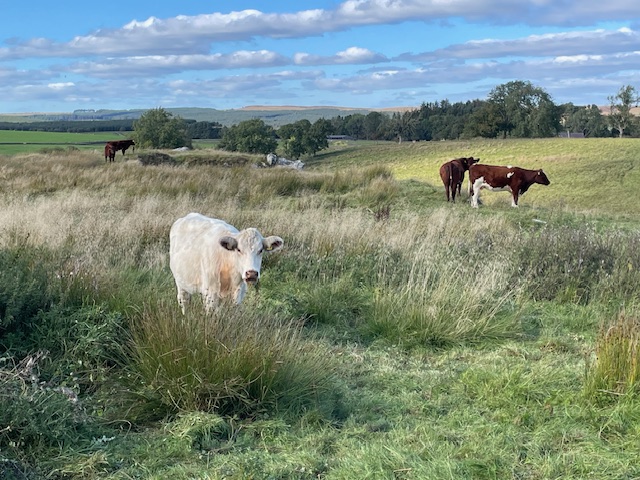
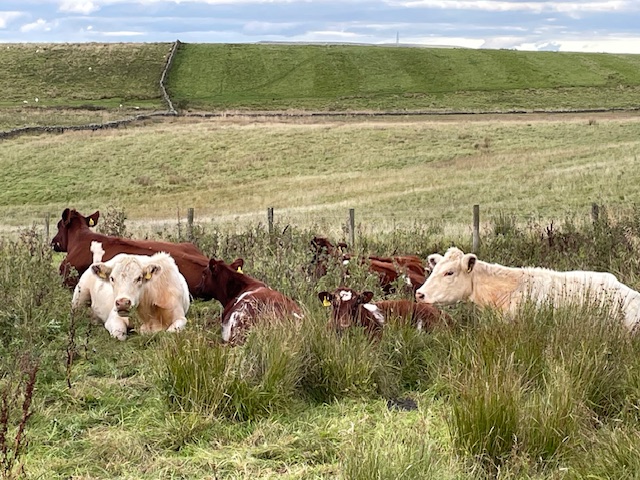
The four acres of rough grazing in before our house – the crags – has had no stock on it since the spring when the Texel tups were taken off so vegetation has grown dense and high. A word with our farming neighbour at Southridge and we wake up last week to a small herd of cows in situ.

They’re beef shorthorn and white shorthorn cows with respective calves. These native bovine cousins are well suited to this environment being hardy foragers on poor grassland, easy calvers and good milk providers with a docile temperament for safer handling. They’re not only happy imbibers of our edible garden waste but their hearing is acute enough to catch the field gate opening, suddenly appearing over the crags as leafy foodstuffs arrive in my wheelbarrow.
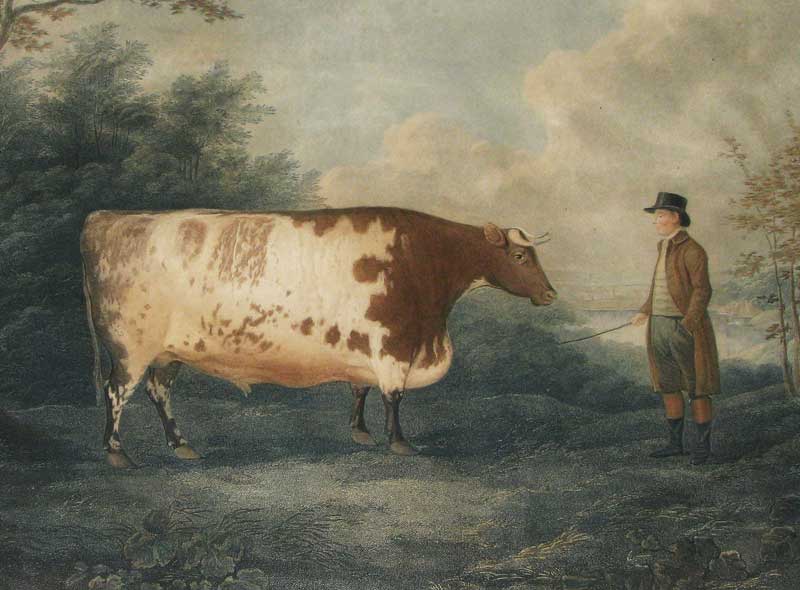
The Durham Ox (1802) by John Boultbee: A national touring attraction weighing 171 stones

Delighted to discover that Shorthorns had their origin over 200 years ago here in the north-east of England through selective interbreeding of Teeswater and Durham cattle. The breeders herd book, dating from 1822, is the world’s oldest and the Shorthorn proved itself as adaptable to milk production as to meat when most farms were smaller mixed use holdings. On a larger scale, from Argentina to Australia and north America the breed rapidly established itself through C19th pioneering settlement and today some 40 breeds of cattle worldwide have their genes.

 It’s the Shorthorn bred for beef that’s best known now, as agricultural history post 1945 has greatly increased specialisation and boosted yields, undermining the mixed farming model. The strains of Shorthorn originally bred for dairy have been vastly outnumbered nationwide by the larger black and white mega milk producers that are Friesian/Holsteins.

We’ll drink to that!

The Higher Stewardship Scheme incentivises hill farmers to return to stocking native breeds. White Shorthorn in particular benefit as it is officially registered ‘At Risk’ by the Rare Breeds Survival Trust. Their endurance is in part due to the cows being put to (black) Galloway bulls, producing the Blue Grey beef cattle often seen across the borderlands. Originally known in the 19th Century as the ‘Cumberland White’  the breed has its heartlands very near us on the Northumberland/Cumberland border where the official society of breeders was founded at The Greenhead Hotel just off Hadrian’s Wall in 1962. Fitting then to have two of those distinctive white cows on our patch with their suckler calves sired in this case by a beef shorthorn bull.

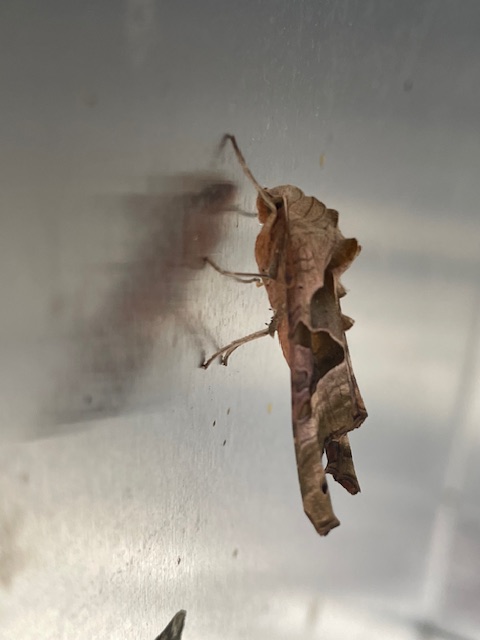
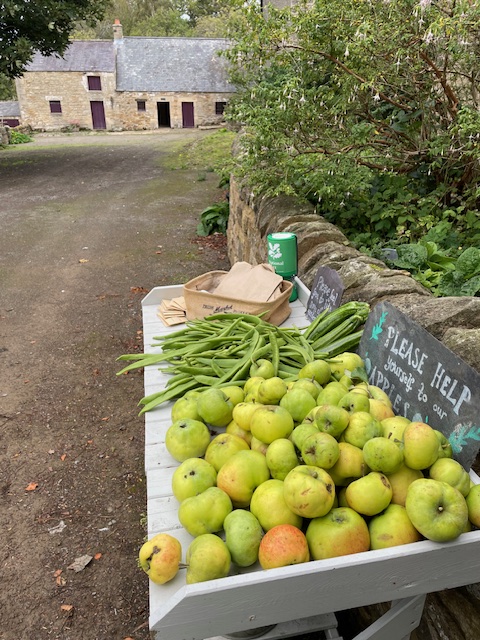
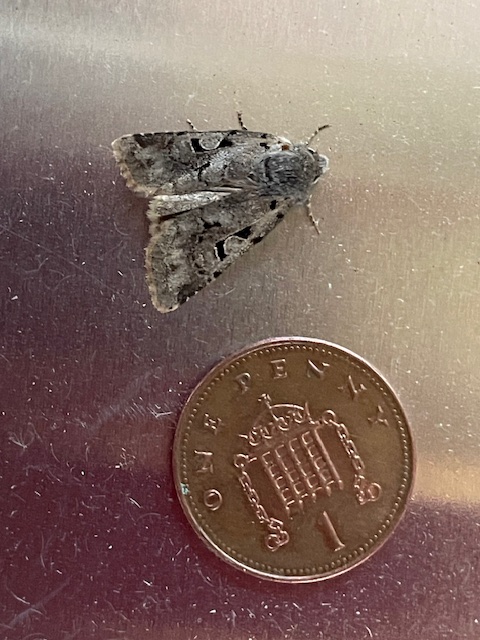
In other news…A bumper year for apples so can hardly keep up at home juicing, pureeing or chip drying our orchard’s output. Recent moth trap reveals a fine example of seasonal camouflage with an Angle Shade demonstrating its October fallen leaf act. Volunteering in the garden at Cherryburn, I leave with some runner beans and a courgette from the take away table.

Enjoy a day trip to National Galleries of Scotland in Edinburgh for the wonderful Andy Goldsworthy retrospective. (showing to Nov 2nd). Here’s a detail from a recent ‘Sheep Painting’ of his created in mud and muck on dried canvas by action of flock in field round a mineral block, removed.

Marvellous Moths

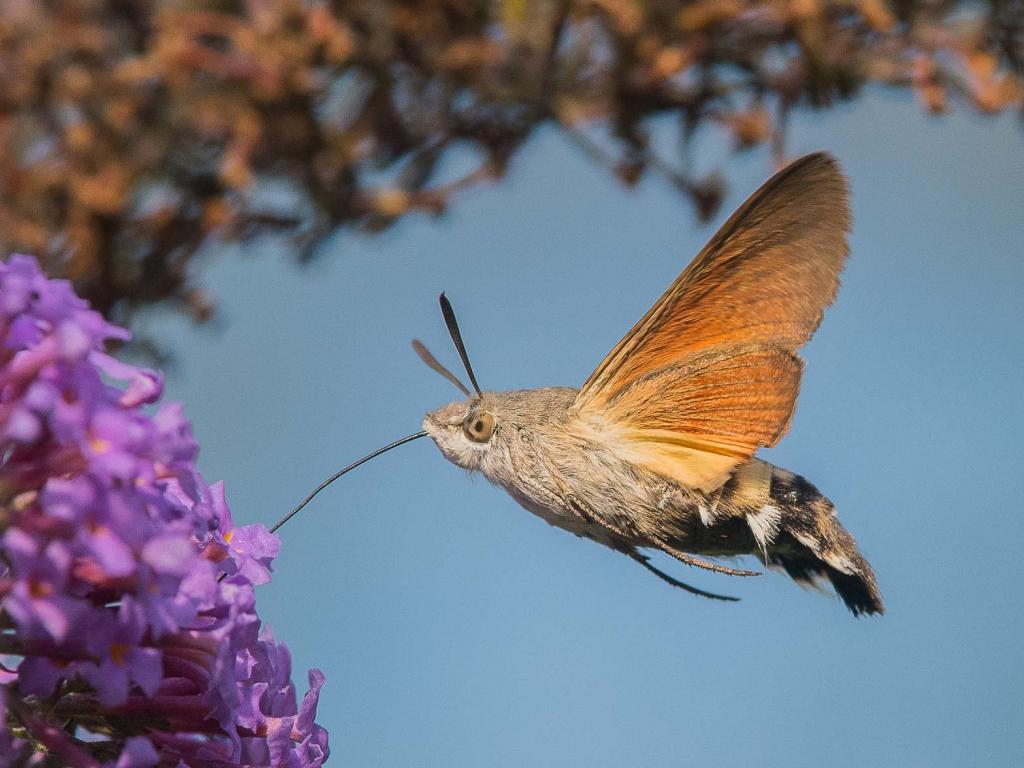
Humming bird hawk moth. Image credit: Butterfly Conservation /Graham Mounteney

Mention the word ‘moths’ to people and I suspect the majority are likely to think about those nasty critters whose larvae consume clothes or chew carpets. I confess to being a bit indifferent to moths in general until I saw a humming bird hawk moth in my town garden years back. That remarkable encounter made me sit up and take note yet it wasn’t until I moved back to the country that I eventually got actively involved this spring in entering the world of the amateur lepidopterists.

There are some 50 species of butterflies and 2,600 species of moth in the UK. Roughly 900 of those are macro moths and the rest a bewildering range of micro moths, many virtually indistinguishable one from t’other to the non-expert eye.

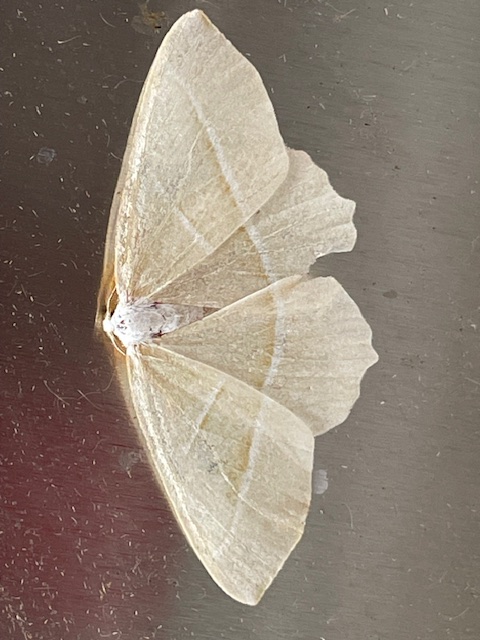
Light Emerald Moth

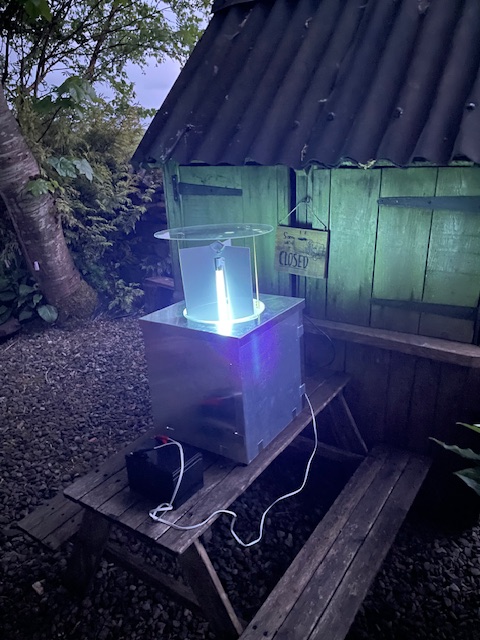
Where to start when trapping and identifying specimens? Online research around the options makes for a good start. Thinking through what best suits your situation when matched with what’s affordable and you’re ready to proceed. There are three main types of moth trap, named after the experts who devised them. The Heath trap consists of a collapsible rectangular metal box with a funnel and fluorescent UV bulb. The larger Skinner trap has a slot entrance below the light. The Robinson is a large round, non-collapsible trap, most likely to catch and retain the largest number of moths. It’s also the most expensive to buy. I opted for the Heath model.

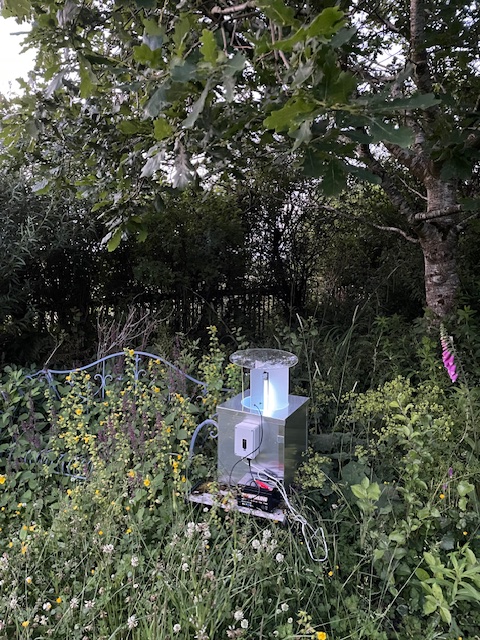
I nearly got a version powered by an extension run from the house mains. On reflection thought that a daft idea as the more places to set the trap of an evening around the garden (or beyond) would be a much better proposition. So I also bought a battery and charger. It’s proved a great investment, not only giving me pleasure as well as visiting friends and family, young and old alike.

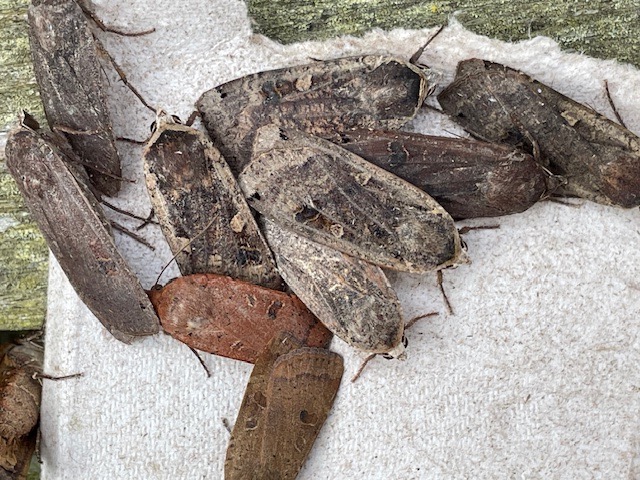
My first and most numerous species caught, back in April, was ‘Hebrew Character’; so called from the dark marks on its forewings that look like letters in Hebrew script. They’ve now been replaced as most numerous by a scrum of large yellow underwings, clustering in a gang around the egg boxes I’ve furnished the floor of the steel box with.

Although Latin nomenclature is essential in classification worldwide it is surely the common names, reflecting archetypical characteristics, that catch the imagination and lodge in one’s mind. Here are a few favourites:

Burnished brass. Small, widely distributed, lover of damp places, feeds on low lying plants like red valerian, honeysuckle and buddleia…all of which we have in the garden. The wonderful metallic sheen on the forewings is a entrancing sight.

Wainscot. Named for resemblance of wings to the ribbed wood raised panels of interior walls, introduced in Tudor times. The caterpillars of this common moth feed on grasses and our meadow and surrounding pastureland provides ample acreage.

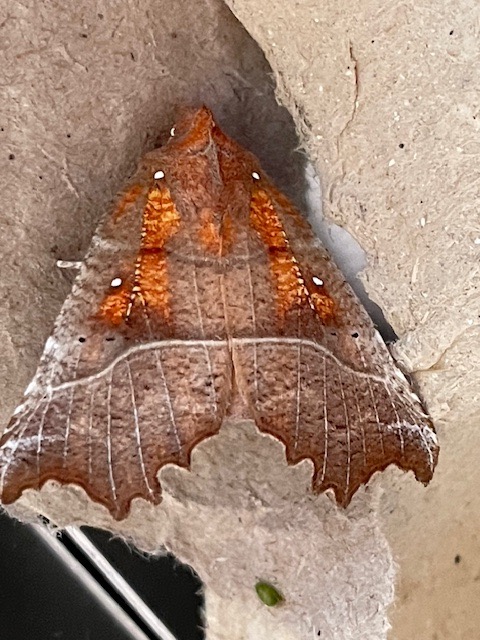
The Herald. Scalloped broad forewings and splashes of orange colouring give this medium size moth a distinct dynamic appearance hinting at speed with a purpose. It overwinters in barns and outbuildings and we have both. The caterpillars feed on willow trees and again no shortage of them hereabouts. Small resident birds like tits and robins we see working wands of willow in the spring are probably feeding on the larvae of the many species of moths and other insects that live there.

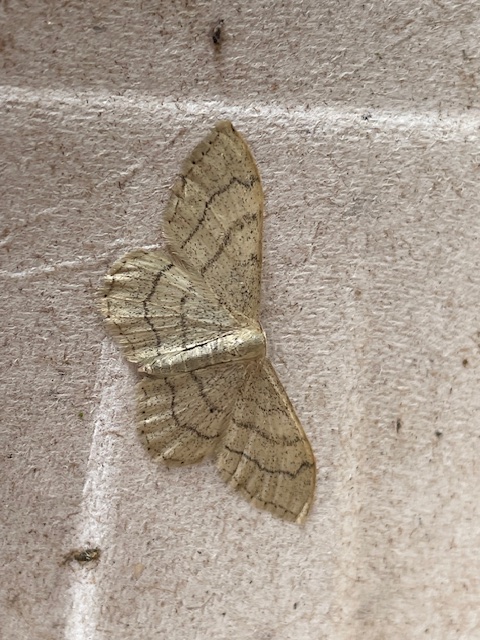
Riband wave. I love the poetry of the name reflecting the subtle patterning of its wings displayed when at rest, drawing on the imagery of a sandy seashore.

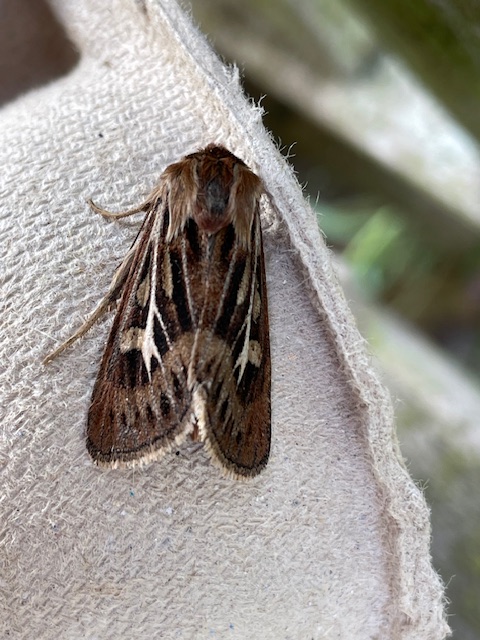
The Antler. The pale markings on the forewings resemble deer antlers. This medium size moth is at home here in upland moorland country, its caterpillars feeding on acid grasslands. The antler also flies in the daytime, feeding on thistles and ragworts.

Poplar Hawkmoth. Sure to wow any observer when first sighted. Varieties of hawkmoth, like their avian namesakes, spread their wings and the large size and studied stillness never fails to impress. Most of my specimens (or the same ones recaptured) feature when the trap is left near the mature poplar tree in the east end copse.

As spring turned to summer the moth count increased in variety and number. Warm, still, humid nights with good cloud cover tended to produce the greatest number of captives. I discovered that when the trap was set in amongst shrubbery and trees it upped the number and variety even more. Some species flew off immediately on opening the container in the morning but the vast majority remained static, happy to linger, having to be emptied out at the same collecting spot once recorded.

One morning one of the parent swallows nesting in the eaves above the porch where I’d parked the open trap, flew down and snapped up an unfortunate escapee as it fluttered skywards. Daytime insect feeding birds apart, bats are the main nocturnal predators, and these we see regularly so the numbers of insects must be high enough to sustain populations, which is good. Nationally, the situation is not so good. There’s been a worrying decrease in UK macro moth numbers in recent decades, much of that due to human activity, and that has had a knock on effect in the wider ecosystem.

So far I’ve identified around 50 species in this Northumberland garden. Use of the phone camera has proved invaluable as it utilises AI to help identify a subject by family or common name; a real boon to beginners like me. Bernard Skinner (he of the trap) produced ‘Moths of the British Isles’ handbook, a definitive colour identification guide, back in 1984. My updated ex-library copy is still invaluable too, with 1,600 of the UK’s moth specimens recorded, with very useful notes. There are lots of good guidebooks out there so well worth investing in one. Triangulate by visiting excellent online sites too, like Butterfly Conservation charity https://butterfly-conservation.org/ or joining a Facebook moth trapping group.

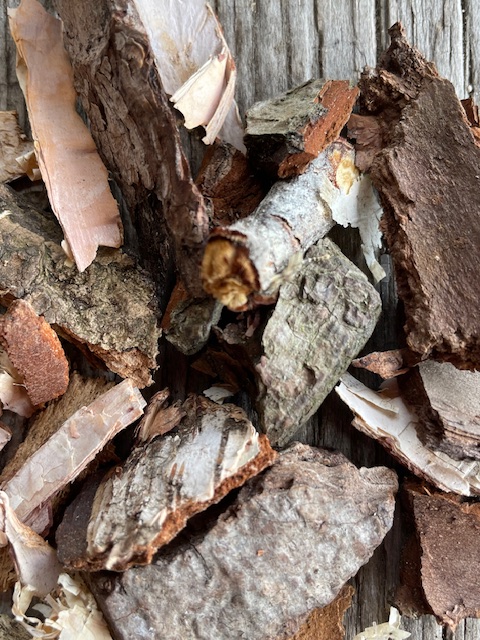
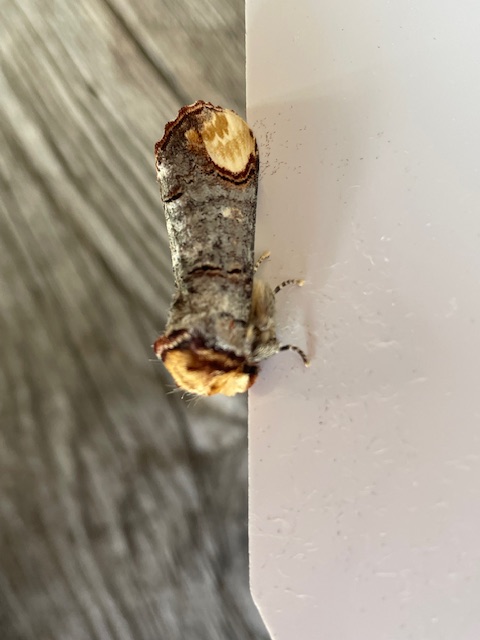
Buff tip and bark chips

A fascinating element of moth survival technique is camouflage. Some species I’ve come across when trapping are past masters at the art. The Buff tip for example. At rest its wings are held almost vertically against the body with two buff area in front of the thorax (body) at the tip of the forewings. Looks like a twig or chipping. Colouration varies but its favoured tree is birch, into whose bark it merges. On the wing from May to July, it’s one to marvel at.

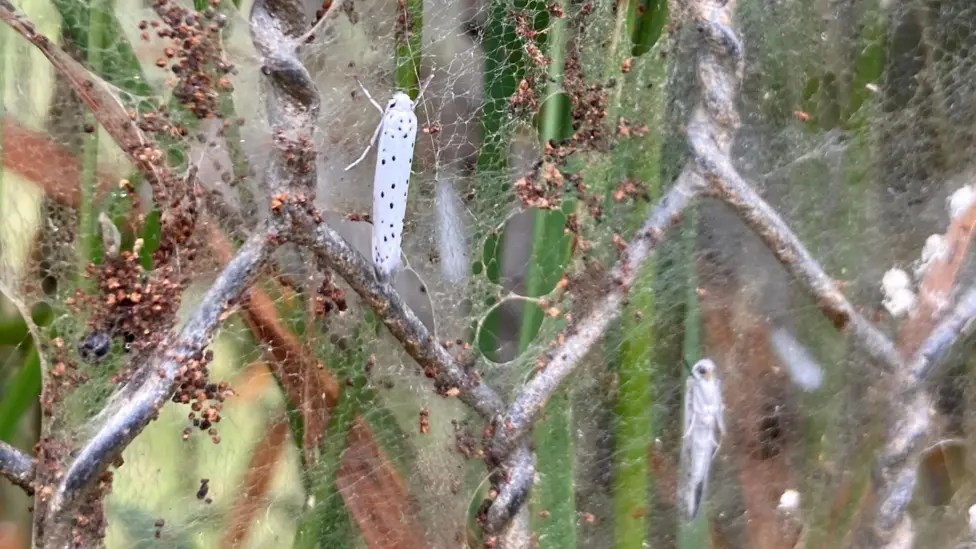
A problem gardeners like us who have an orchard is probably more alarming than deadly. The apple ermine moth lays its caterpillars on apple trees. The ghostly tent like web that surrounds the larvae give protection from bird predation but the caterpillars devour the leaves and can denude the tree and restrict budding. I’ve had to carefully peel off and destroy the tent caterpillars found in our trees each spring.

Apple ermine moth and web

When I came across the handsome white ermine moths in the trap I mistook it for its cousin causing the problem so was relieved to discover the difference when looking it up. Appearances are more obvious when you see them together.

White ermine moth

The white ermine’s caterpillars live in webbed tents feeding on nettle, dock and other common vegetation. Apparently this medium size moth has few predators because it is highly poisonous. (But not to humans if touched). Like some other moth species they have another defence mechanism against predators; dropping, seemingly lifeless from their perch, into undergrowth beneath.

I’ll look forward to what the autumn brings to the moth mix. As one observer remarked, ‘trapping is like a lucky dip for adults’. For me it’s yet another strand to an understanding of the wonders that surround us in the world wide web of nature and the farmed environment.