Its floors complain with every tread, soft echoes of its long since dead…A stubborn, time-worn, tender place. (From a poem by Christopher Skaife)
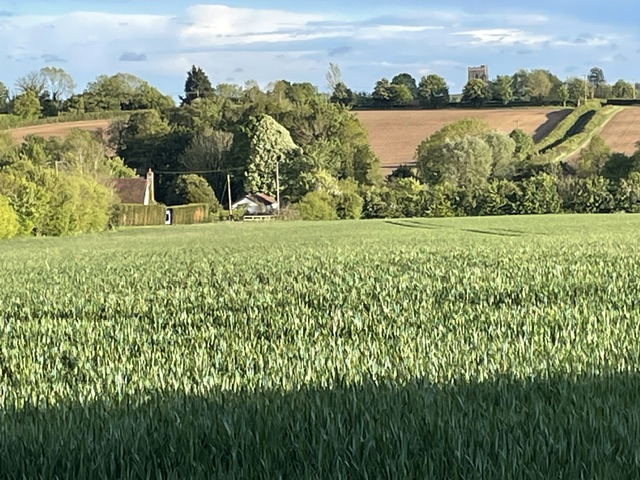
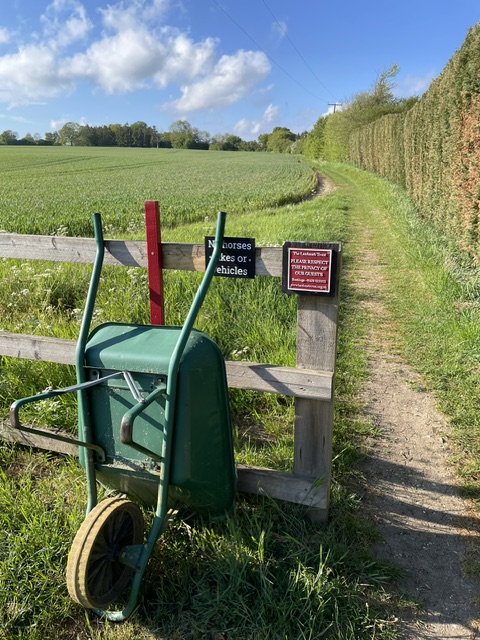
Leaving Norwich we drove southwards into Suffolk. A winding country lane and the turn off we were looking out for. Down a rutted unmade sunken track, concrete ford over dried up stream, parking at lane’s end. All our stuff offloaded into two waiting wheelbarrows. Anticipation rising, we pushed on up the cracked earth path between swooping acres of barley and lush hedge of young elm, field maple and hawthorn. At the woodland ridge, we turned the corner and…there it was.
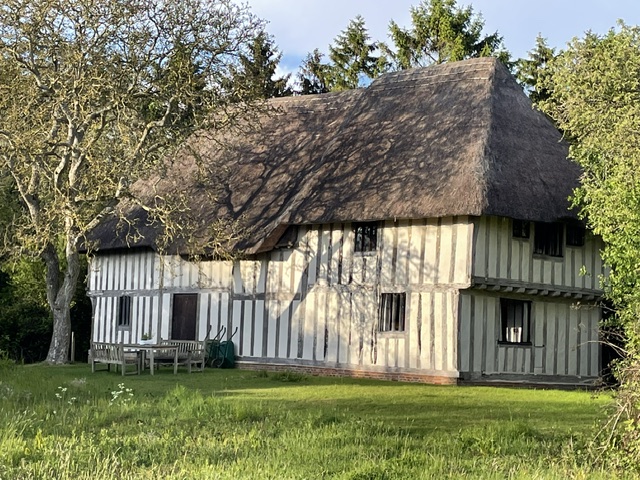
Looking like a film set, real yet unreal. No driveway, hedge, wall, garden, garage, aerial, telephone pole or other visual anchor of our times. Self-contained, giving off a curious sense of mirage, as if it could vanish at any moment, its plaster glowing in the late afternoon sun. A present from the past, waiting to be unlocked and occupied in the present.
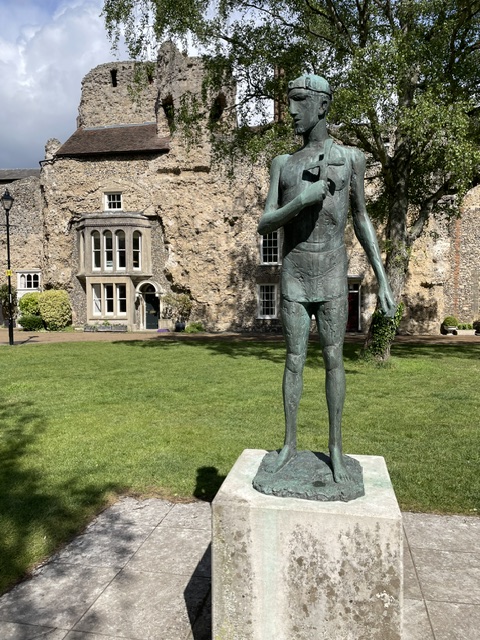
Purton Green is the only surviving building of a lost medieval settlement, on an abandoned highway leading to the great abbey and pilgrimage shrine of England’s first patron saint, St Edmund the Martyr at Bury, a few miles north-east….We later enjoyed an afternoon exploring its extensive civic gardens where the abbey once stood. A modern bronze statue of the ninth century Saxon king of East Anglia, executed for his faith by marauding Danes, stands in the grounds there.
Built as a hall house sometime around 1270, probably by Walter de Priditon, Steward to the Earl Marshal, a high ranking official of the royal court. It was remodelled in the 15th century and again, when by now a farmhouse, with internal alterations c.1600. Slowly declining in status and condition over time It was saved from total dereliction in 1970 by a nascent conservation charity.
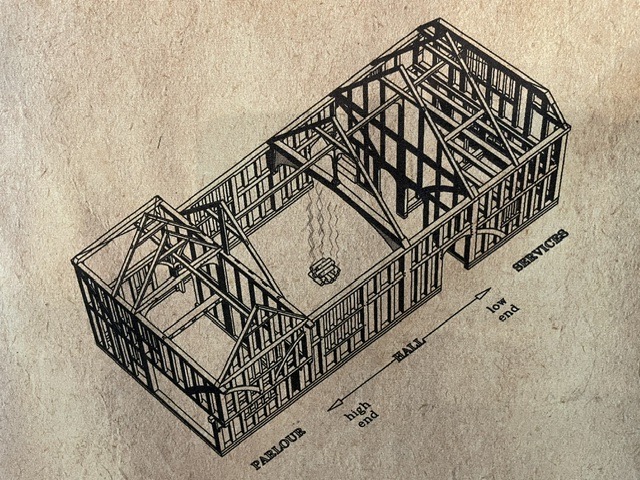
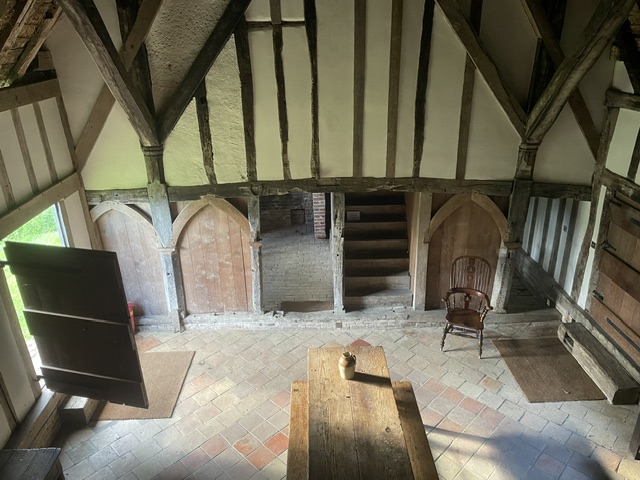
Our medieval homestead was divided when built, as now, into three parts. The service end, where most of the daily work took place. Communal hall with central hearth, where the household met and dined in their social order. The Parlour, inhabited by the owner and his family, is now the cosy cottage like heated section that was our base for the week.
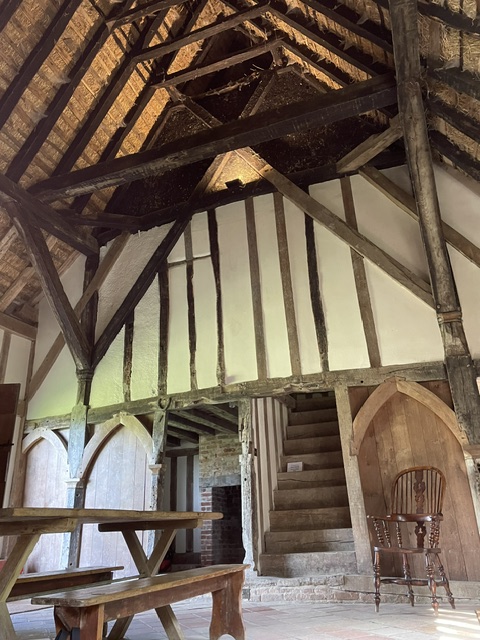
This extraordinary building is distinguished by its arcaded service area and cross frame scissor braces stretching to the open thatched roof. I love the way new replacement woodwork harmonises with the original timber structure.
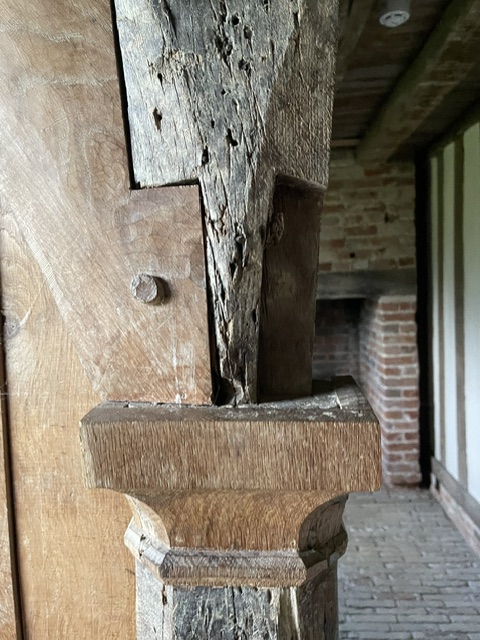
Because East Anglia lacks natural stone a ready supply of timber from copious woodlands was the obvious building material. Cut ‘green’ and easily worked the individual components would have been assembled then slotted together and raised on site; its many posts, joints and braces secured with wood pegs. Walls made from a weave of hazel wands and daub (clay and straw) completed the construction…The original pre-fabricated building!
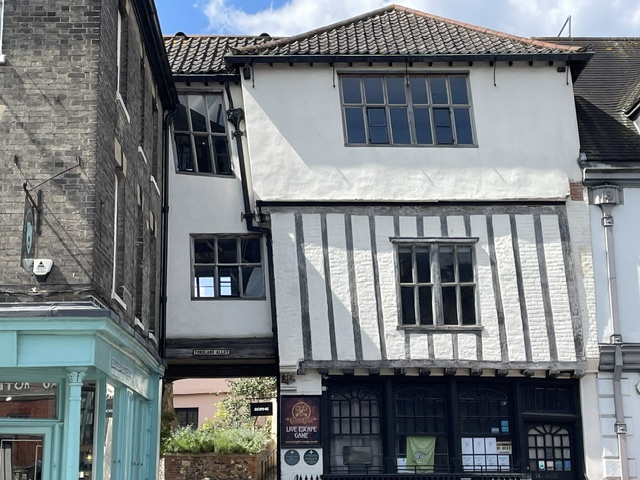
Building ‘green’ leaves properties to warp and shift with age, a quaint feature we’re all familiar with in old timber frame buildings. This one in Norwich is a good example. Was also taken with the literal ‘door step’ here at Purton Green. A minor human inconvenience to secure a strong frame and keep out dust and mud.
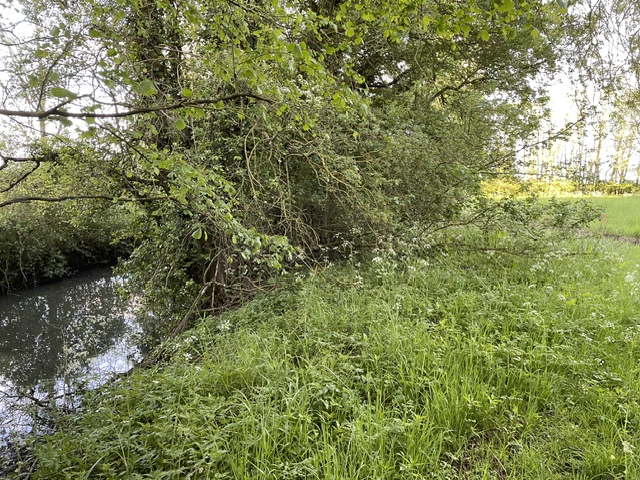
Exploring the immediate environment by public footpath I stumbled across a stretch of former moat under a dense canopy of foliage. (The OS map shows a remarkable number of moated properties in this area). The ground was bone dry and we didn’t see a soul all week. Hares were in evidence though, with birdsong aplenty. At one point a painted lady butterfly landed at my feet.
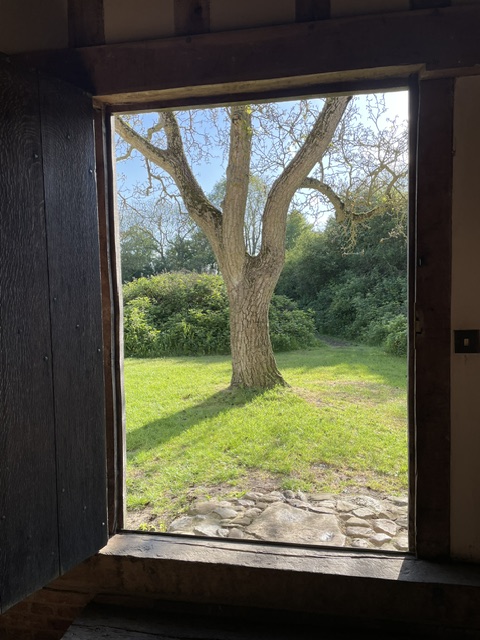
The only melancholy note of our stay was struck by the sad ash tree out front by the dried out shallow pond. A victim, like so many across the land, of ash dieback.
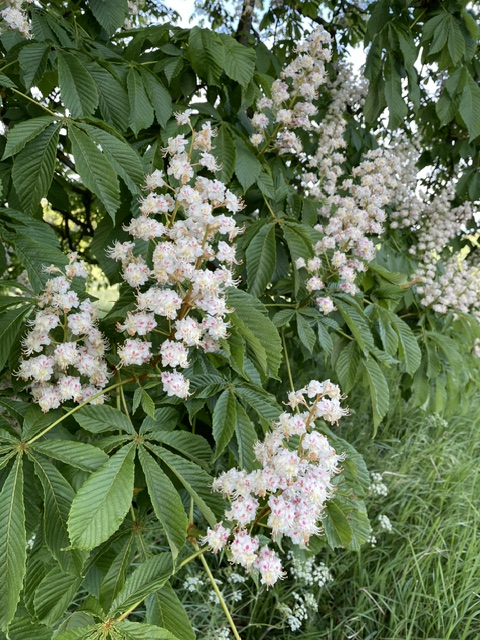
The most common native broadleaf tree in these parts has to be the horse chestnut. We admired several fine specimens in full flower, which reminded me of lines from Philip Larkin’s poem ‘The Trees’: Yet still the unresting castles thresh/ In fullgrown thickness every May./ Last year is dead, they seem to say,/ Begin afresh, afresh, afresh.
You can read about Purton Green and the charity that owns it here:

