Fire and Ice

I can see all the country from Bolkow to Sheahan / And watch Lou go back in his flying machine/ Oh well its a job and I really feel great/ When reporting the ‘smokes’ Lou can’t see from his crate. From ‘A Towerman’s Lament’ by L Moreau

Dorset was another interesting historic lakeside spot to visit. Like Bobcaygeon it occupies a neck of flat land between lakes where once First Nations peoples lived and traded sustainably.

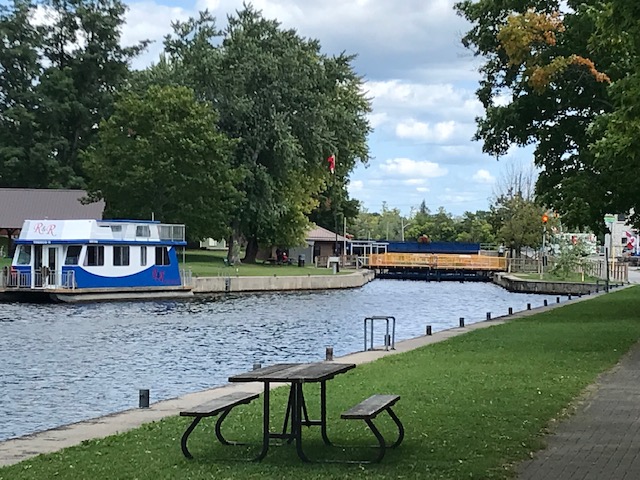
The settlement’s preserved centre boasts a canal side museum in the old schoolhouse, white clapboard church, craft shops, restaurants, a former lake pleasure steamer and a much loved well patronised traditional general store (est. 1921) full of essential items on different floors needed to sustain the scattered rural communities hereabouts.
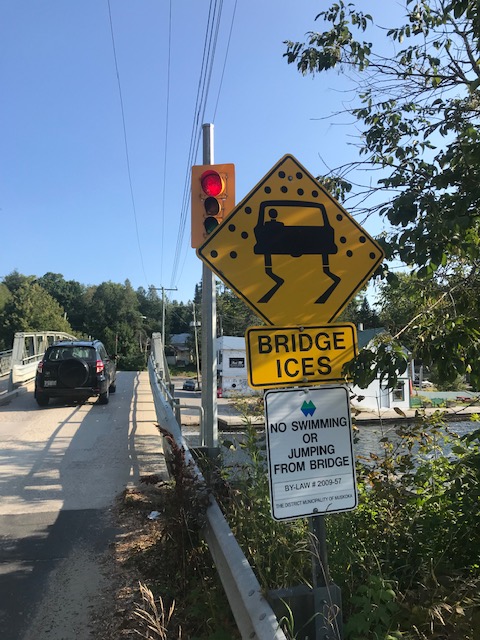
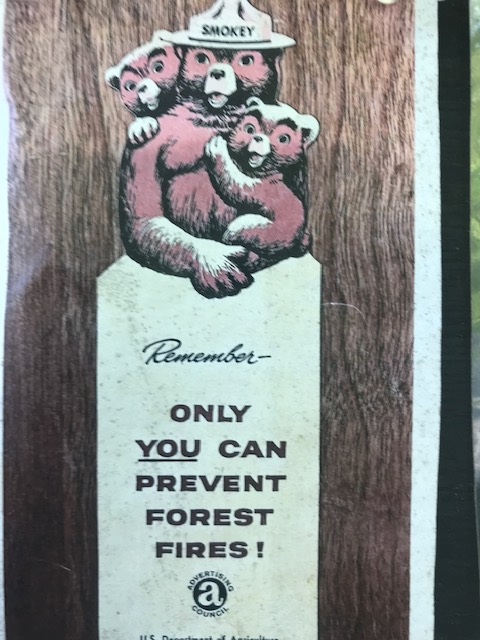
The bridge over the canal is a sturdy steel arched affair with lights to regulate traffic and warning signs of icy winter dangers. Dorset’s most famous engineering feature though is its preserved fire tower on the heights above the town.  A network of open sided metal watch towers, some 140 metres high were erected in the 1920’s, manned by fire wardens (Tower Jacks) from May to October to monitor the hundreds of square miles of forests for conflagrations. Use of spotter aeroplanes in the 1960’s made the towers redundant and they in turn were superseded by satellite cameras in the 1980’s.
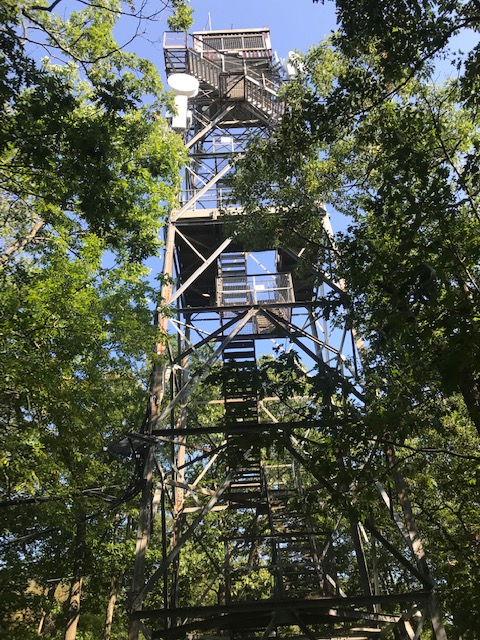
This sole remaining tower on the Dorset heights is actually the second on site and of a different design, as it was originally intended to be an early warning structure on a military base during the cold war era.  Rescued and re-sited by a local community body it now doubles as telecoms tower and popular tourist attraction.
It’s easier to ascend the open structure’s 128 steps, eyes upwards, than to descend, which is more vertiginous and harder on the leg muscles. Apparently only 6 visitors in 10 feel able to make it to the top viewing platform. (It’s caged in to prevent anyone doing anything they shouldn’t). We met fellow Brits on the way who lived in Dorset and who just had to include it in their to do list.

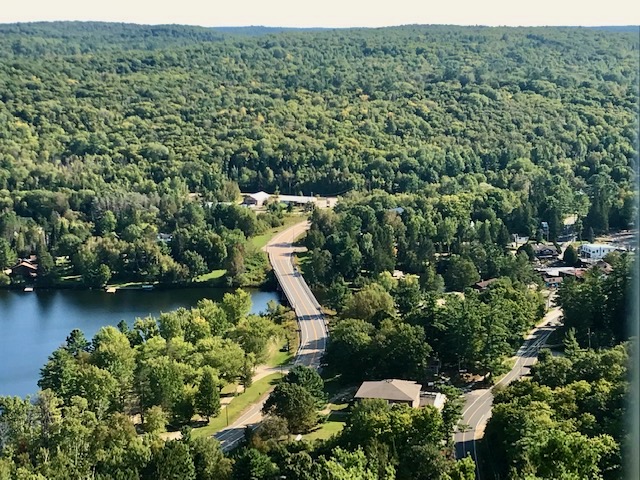
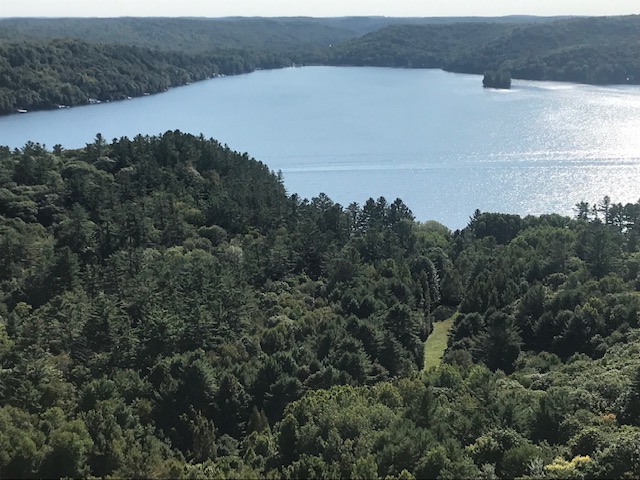
The views from the top are truly spectacular and gives a real feel for the distinctive landscape of forest and lakes stretching away to far horizons so I for one was glad I’d overcome a fear of heights to be rewarded with such an awesome 360 degree vista.
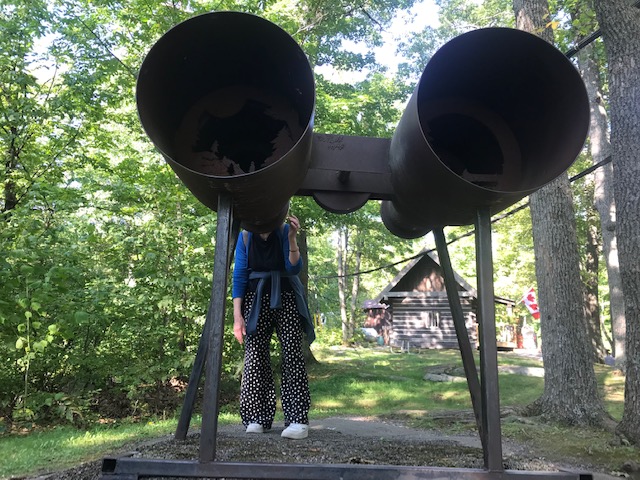
A giant metal sculpture at the base of the tower attracts visitors who may have left their own binoculars behind!
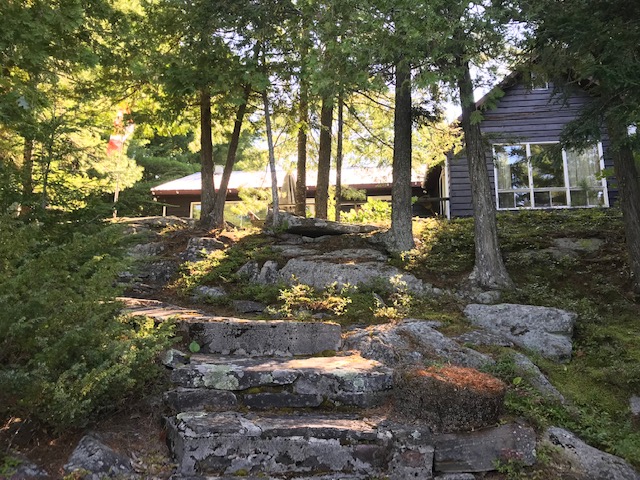
Cottages Lakes and Canal

Our destination was the highland landscape of wooded lake lands, known to Ontarians as ‘Cottage Country’, and a popular rural retreat for city dwellers. Our stay was made possible by the great generosity of our hosts – the groom’s family – in whose traditional lakeside  holiday home we stayed for four wonderful days, enjoying their convivial company and delicious home cooking, unrivalled during our vacation!

Their more traditional wooden cottage had been gradually adapted and improved down the years but planning laws here allow for comprehensive redevelopment of plots so some of today’s ‘cottages’ present more like mansions now. Nearly all properties have launches or jetties on the water and the generous wraparound of natural tree cover preserves privacy.

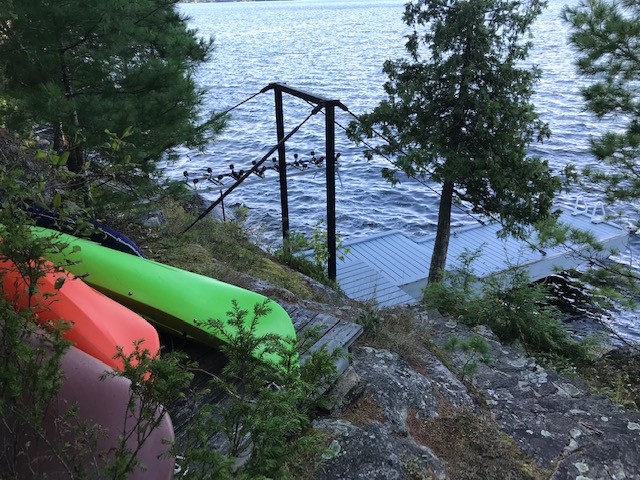
Like many others our host’s jetty was of the drawbridge type, and next to it there was a high boat rack. Autumn storage season sees all summer’s playthings put away for another year. In winter the lakes freeze solid, some three feet deep or more, so the ice would simply crush anything on its surface. Out come the snowmobiles to cross the frozen lakes and Ice hole fishing is very popular, extending seasonal vacationing for the hardy.

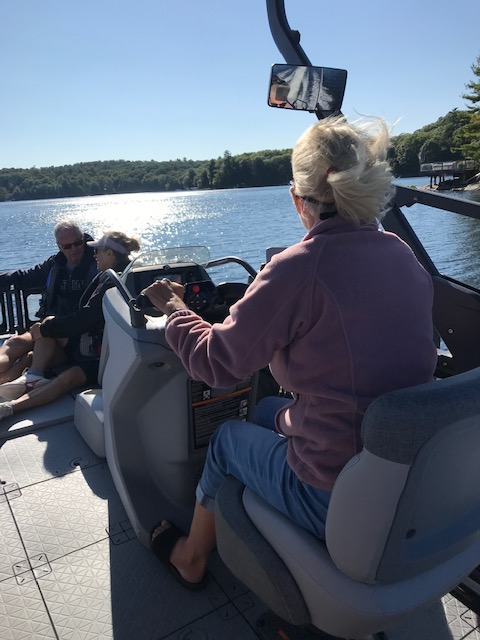
Thrills, but no spills, were had one fine afternoon on the neighbouring lake where our host’s sister had her own lovely property, south facing on a shallow inlet. We took our seats aboard her new speedboat. First time out was a fast and thrilling ride for me on the dickie seat up front towards the prow, pulling her brother on his water skis on a bracing circuit of the placid dark waters. The second trip had us all aboard at the back, at a more leisurely pace, for a fascinating sightseeing tour around the shoreline.

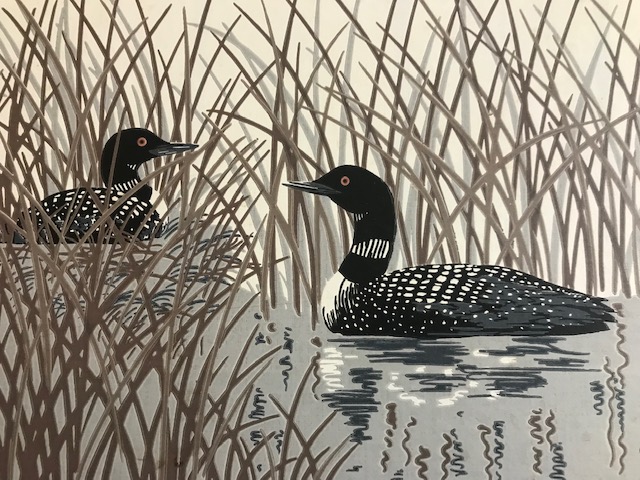
We saw a loon, one of north Americans most iconic water fowl on the lake, diving for fish. The birds distinctive calls at night haunt the air. Lake levels are some four foot lower at the end of summer because water is filtered off to top up the Trent-Severn canal system that links many of the major lakes in the region to the vastness of Lake Ontario to the south.

This impressive 386 KM long waterway took over ninety years to complete. It was begun in 1833 as a means to get British troops deployed rapidly should hostilities break out again with the US – The War of 1812 being still fresh in the collective memory.  Despite construction setbacks the waterway became an economic driver responsible for small towns springing up around saw mills and other industrial works. The coming of a railway followed by major highways in the last century saw decline and decay followed by a leisure boom of pleasure boating and cruising that defines the modern era.

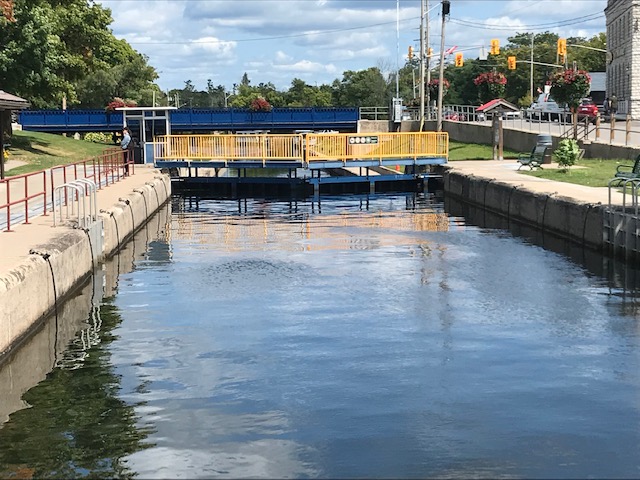
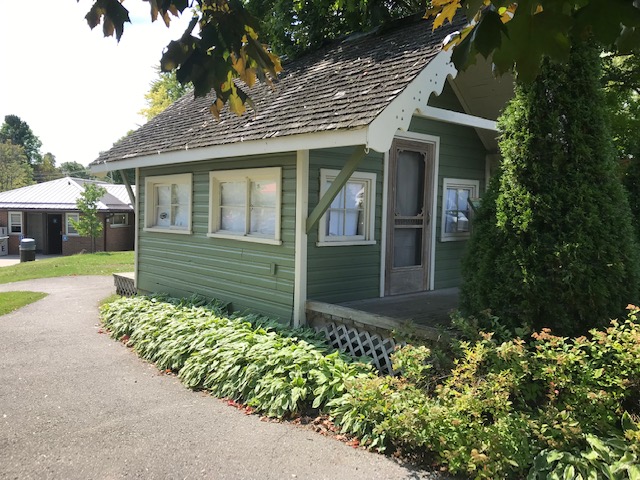
We took a trip to Bobcaygeon, an attractive small town whose historic centre is an island between river and canal and whose lock on the waterway links the two lakes it lies between. My companions discovered what the locally renowned Bigley’s shoes and clothing emporium and the Kawartha dairy had to offer. I meanwhile strolled around, witnessing the island’s access swing bridge in action and peeping in the windows of the preserved former watchkeeper’s lodge dating from a hundred years ago,