Cows on the Crags

What is this life if, full of care /We have no time to stand and stare? / No time to stand beneath the boughs / And stare as long as sheep or cows From ‘Leisure’ by W H Davies
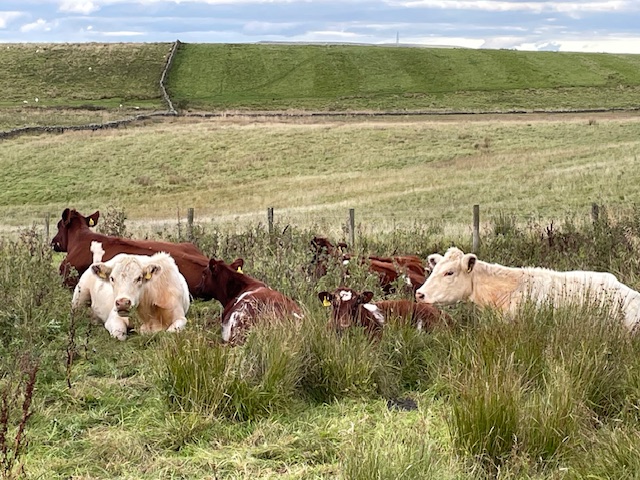
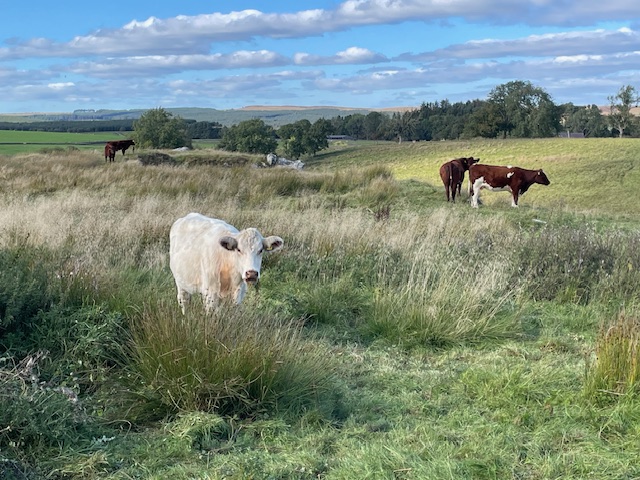
The four acres of rough grazing in before our house – the crags – has had no stock on it since the spring when the Texel tups were taken off so vegetation has grown dense and high. A word with our farming neighbour at Southridge and we wake up last week to a small herd of cows in situ.

They’re beef shorthorn and white shorthorn cows with respective calves. These native bovine cousins are well suited to this environment being hardy foragers on poor grassland, easy calvers and good milk providers with a docile temperament for safer handling. They’re not only happy imbibers of our edible garden waste but their hearing is acute enough to catch the field gate opening, suddenly appearing over the crags as leafy foodstuffs arrive in my wheelbarrow.

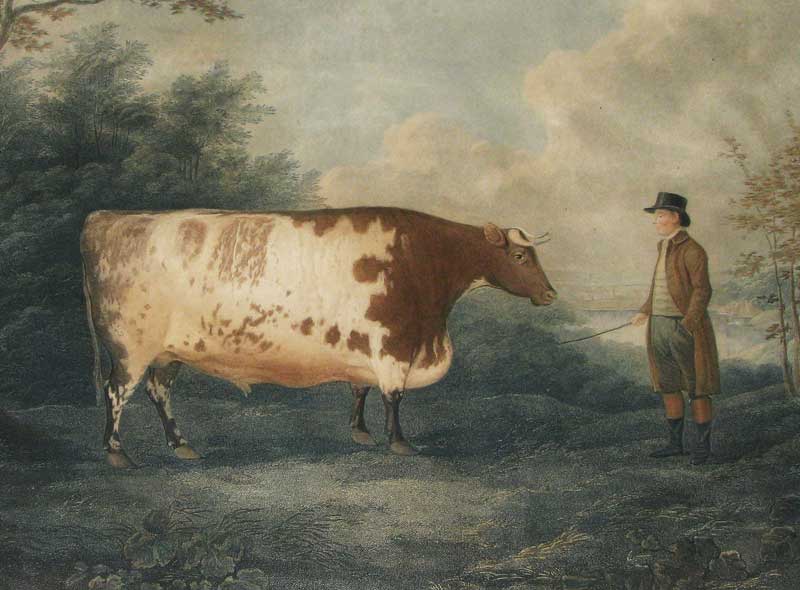
The Durham Ox (1802) by John Boultbee: A national touring attraction weighing 171 stones

Delighted to discover that Shorthorns had their origin over 200 years ago here in the north-east of England through selective interbreeding of Teeswater and Durham cattle. The breeders herd book, dating from 1822, is the world’s oldest and the Shorthorn proved itself as adaptable to milk production as to meat when most farms were smaller mixed use holdings. On a larger scale, from Argentina to Australia and north America the breed rapidly established itself through C19th pioneering settlement and today some 40 breeds of cattle worldwide have their genes.

 It’s the Shorthorn bred for beef that’s best known now, as agricultural history post 1945 has greatly increased specialisation and boosted yields, undermining the mixed farming model. The strains of Shorthorn originally bred for dairy have been vastly outnumbered nationwide by the larger black and white mega milk producers that are Friesian/Holsteins.

We’ll drink to that!

The Higher Stewardship Scheme incentivises hill farmers to return to stocking native breeds. White Shorthorn in particular benefit as it is officially registered ‘At Risk’ by the Rare Breeds Survival Trust. Their endurance is in part due to the cows being put to (black) Galloway bulls, producing the Blue Grey beef cattle often seen across the borderlands. Originally known in the 19th Century as the ‘Cumberland White’  the breed has its heartlands very near us on the Northumberland/Cumberland border where the official society of breeders was founded at The Greenhead Hotel just off Hadrian’s Wall in 1962. Fitting then to have two of those distinctive white cows on our patch with their suckler calves sired in this case by a beef shorthorn bull.

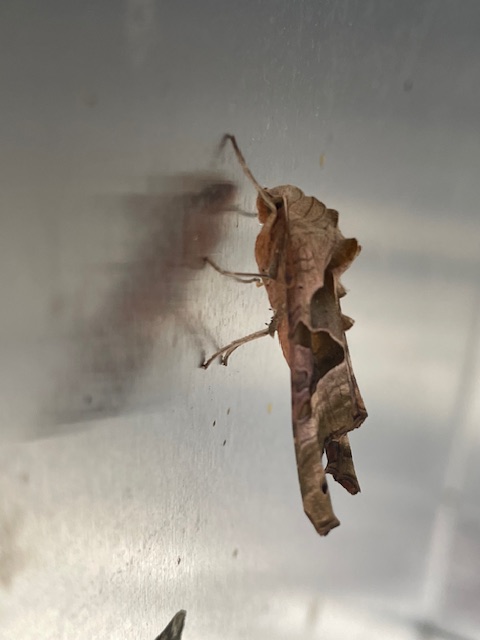
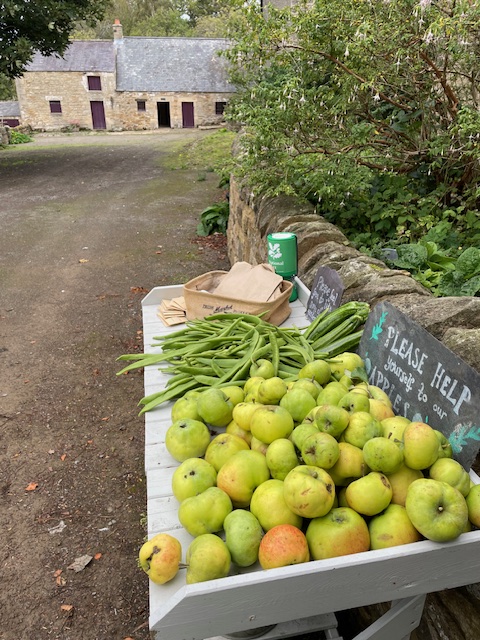
In other news…A bumper year for apples so can hardly keep up at home juicing, pureeing or chip drying our orchard’s output. Recent moth trap reveals a fine example of seasonal camouflage with an Angle Shade demonstrating its October fallen leaf act. Volunteering in the garden at Cherryburn, I leave with some runner beans and a courgette from the take away table.

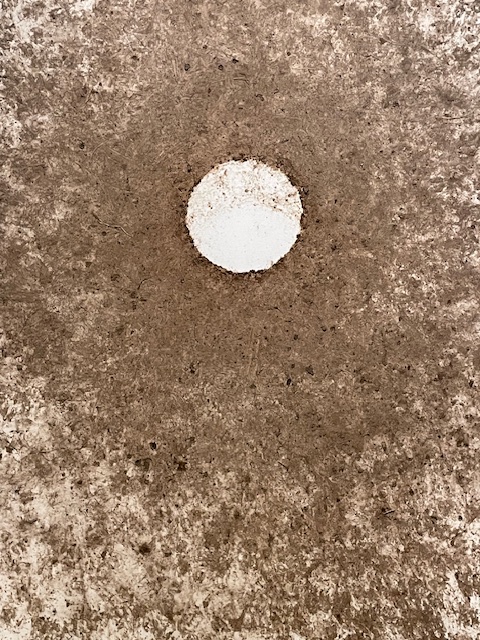
Enjoy a day trip to National Galleries of Scotland in Edinburgh for the wonderful Andy Goldsworthy retrospective. (showing to Nov 2nd). Here’s a detail from a recent ‘Sheep Painting’ of his created in mud and muck on dried canvas by action of flock in field round a mineral block, removed.

Bussaco

‘Bussaco Forest cannot be described, the best is to get lost in it.’  Jose Saramago

Having been told about the Bussaco National Forest by my cousin who had visited recently we were keen to discover it for ourselves during this holiday. An hour and a half’s drive from base by good main roads and testing twisters through mountainous foothills led us to this unique walled in world, one of the botanical wonders of the Iberian peninsula.

We entered from the spa town of Luso via the Serpa gate, one of 11 gateways that punctuate the 5 K (3.1 mile) boundary wall. Only mildly alarmed when the keeper in her lodge warned us that walking any distance into the forest from the centre was entirely at our own risk due to the heightened possibility of wildfire outbreaks.

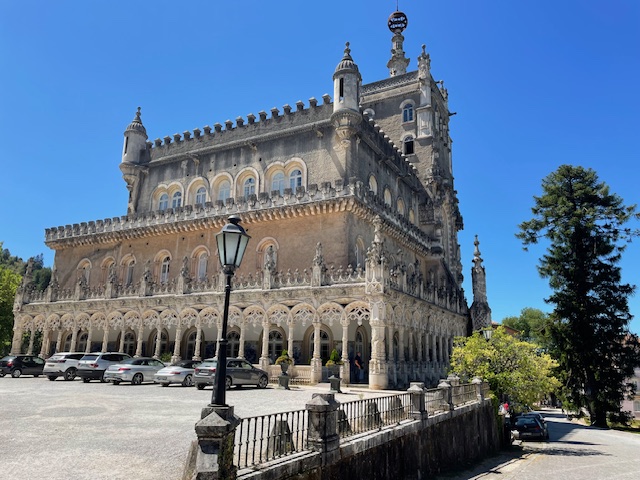
It would have been no great hardship to have spent our time in and around the park’s historic centre, which consists of a former royal palace cum luxury hotel (below), monastery, now a museum (above), formal gardens, café and visitor centre. 

Although Bussaco was originally an early 7th Century Benedictine foundation the one we see today was established by the more austere Barefoot Carmelite order when they took stewardship of the buildings and park in the early C17th.

The brothers zealously set about gradually replicating the Holy Land’s Mount Carmel at Bussaco as a kind of desert, blending nature with God’s spiritual estate.

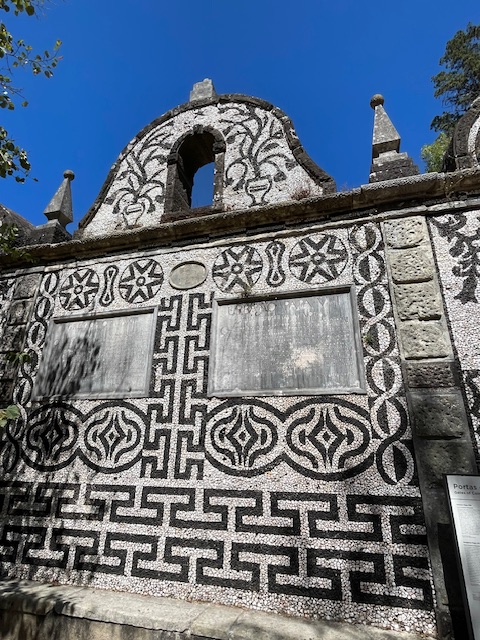
Many of their structures have exteriors distinguished by tessellated designs fashioned from quartz and adhesive tar while the interior of their monastery have coverings of native grown cork freely utilised to insulate walls ceilings and doors against winter cold.

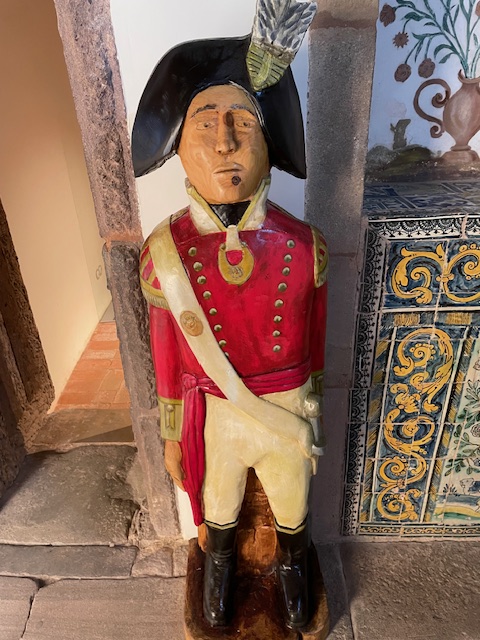
The brothers ordered existence was rudely disrupted in September 1810 when the Duke of Wellington, commanding a combined mass of 50,000 Anglo Portuguese troops, based his command post in the monastery, using the monks cells for offices.

The British general’s army defeated Marshall Massena’s French forces here at Bussaco, halting their advance on Lisbon, a turning point in the country’s campaign of liberation from Napoleonic invasion.

The adjacent royal palace was built between 1888-1905 on part of the demolished monastery. Since 1910 and the fall of the monarchy it has been a luxury hotel, one of the finest in the land. Its initial architect, the Italian Luigi Mantini, also designed sets for grand opera, and it shows. What a brilliantly grand statement of opulence it makes to the world.

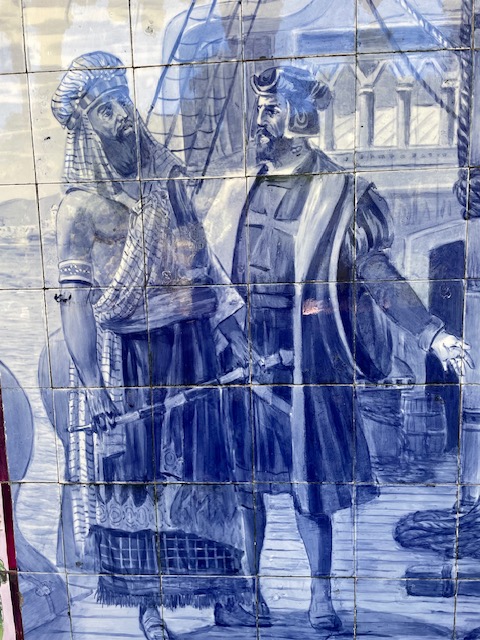
The obliging hotel receptionist let us take a look around the sumptuous ground floor. Large scale blue and white azulejos (tiles) decorate walls and stairs, some displaying the battle of Bussaco and others scenes from Portugal’s ‘Age of Discovery’ in the late 15th and early 16th centuries. At that time Portugal established its maritime trading outposts, stretching from Brazil to southern Africa, Goa in India to Macau off the coast of China.

The formal gardens provide a graceful unifying setting for the two contrasting buildings, although box blight and a certain faded glory added to a suitable sense of gentle decay.

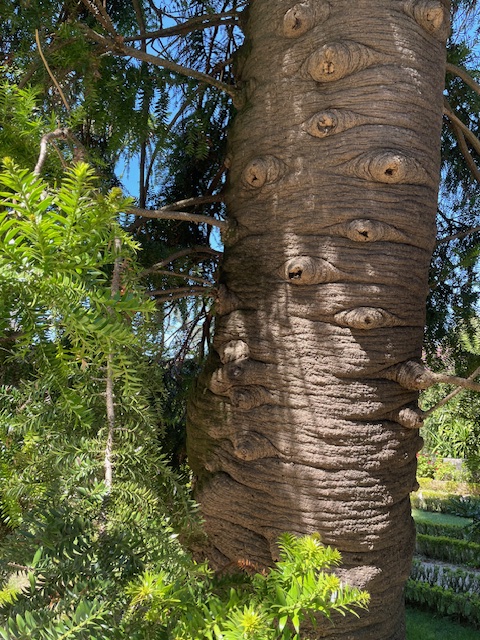
The arboretum remains the true natural glory of the place. Some 400 native trees and shrubs grow alongside 300 specimens brought back home as the result of colonisation and exploration. Mexican Cypress, American redwoods, Chilean pines, many oaks, laurel, holly and ferns to hundreds of Camellia species are set around walks, steps, ponds, fountains, statues and other formal features – we saw just a fraction.

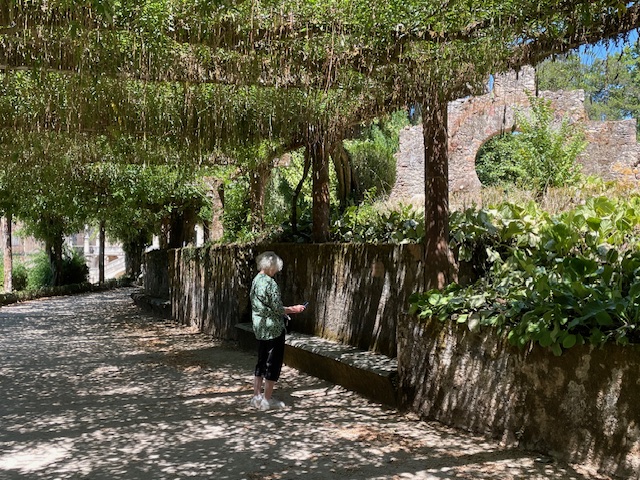
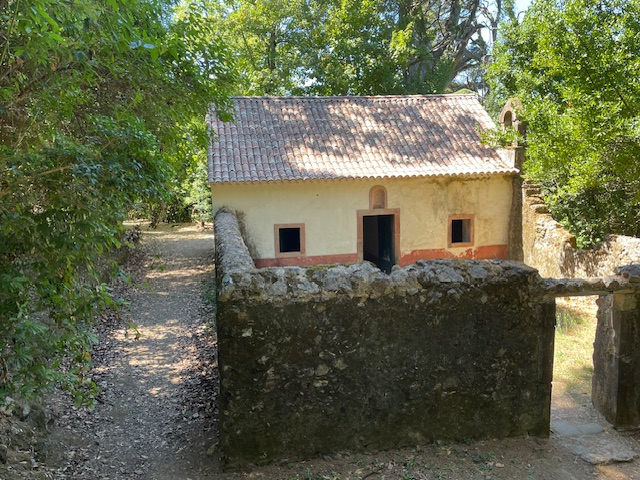
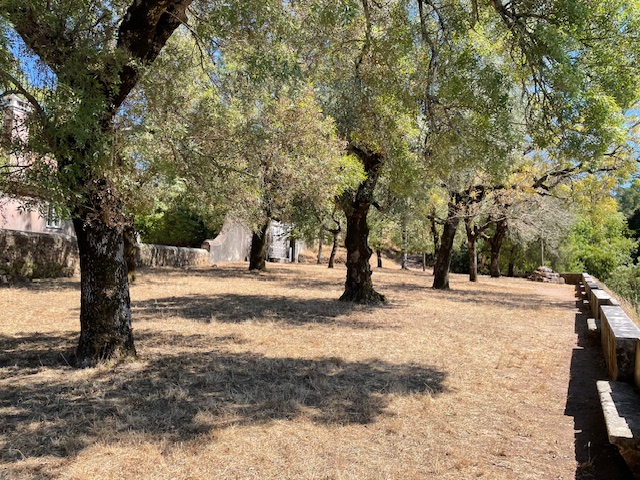
Leaving the formal gardens  for an upper woodland walk, we found ourselves on the Via Crucis- a lane of dappled shade linking enclosed stations of the cross – eventually leading to a purpose built hermit’s house with enclosed yard, now an empty shell, one of three around the domain.

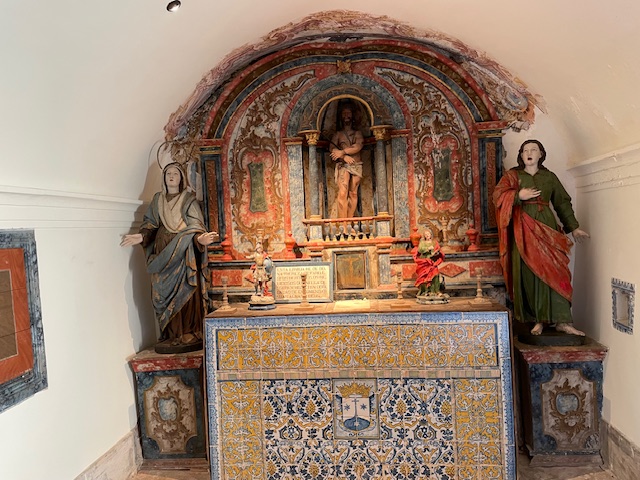
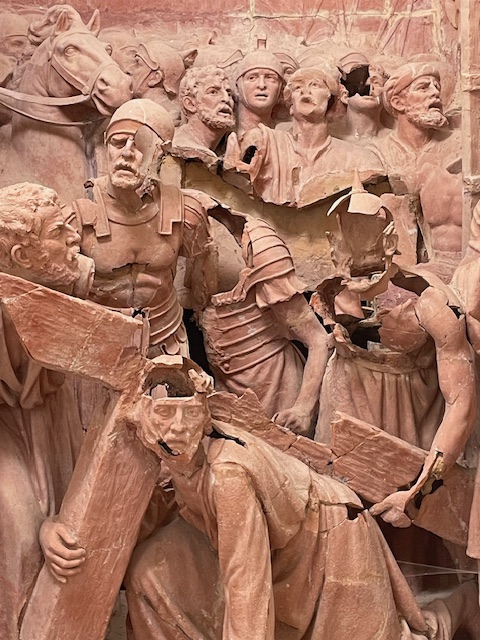
The stations house life size red clay tableaux, vividly recreating scenes from the passion of Christ. Hermit retreats and devotional stations were originally set up by the Carmelite monks shortly after they  took over the estate in 1628.  A number seemed to have suffered damage, adding an unintentional modern feel of abstract dislocation to the dramatic scenes of heightened emotion.

Later learned this damage was caused by a particularly violent storm that struck the area in January 2013, severely affecting both buildings and trees and recovery has been hampered by lack of funds and resources. The state took over Bussaco when Portugal’s monasteries were dissolved in 1834, and today managerial responsibility lies with a charitable foundation, which has had to fundraise widely to painstakingly restore the place.

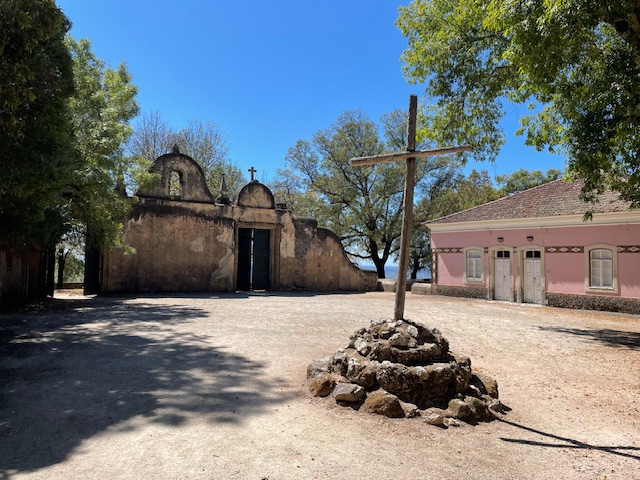
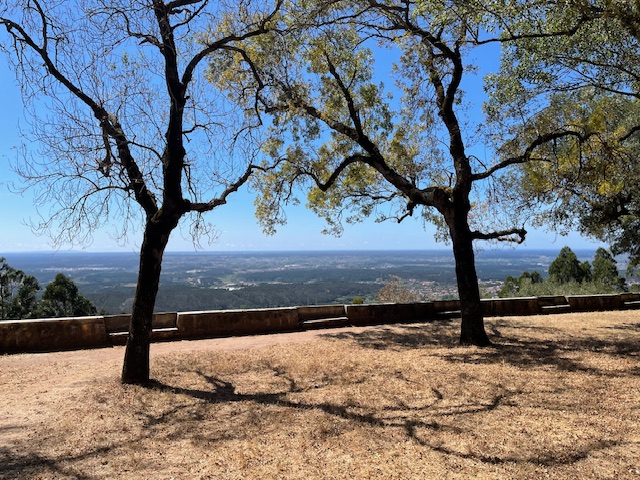
Our stroll took us to another entrance way – not accessible to traffic – the Coimbra gate which yielded surprise vistas beyond the canopy, across the wide plain, to the Atlantic coast.

Lingered by the great doors, now ajar, and the currently unoccupied lodge house (sometime holiday accommodation) with its pink washed walls. Wondered at the wall sign, a papal bull of 1623 forbidding, on pain of excommunication, the felling of trees within the walls or the entry of women!

Historical misogyny apart, I warmed to this early attempt at nature conservation. An atmospheric spot inviting reflection and ease, one where time seemed to have stood still. Stepping out on to the terrace in the full glare of the sun, the bone dry brown grass  crunched loudly underfoot, providing a reminder of the gatekeeper’s words on arrival.

Popular with the Portuguese themselves for its cultural and botanical importance, though less well known to foreign visitors, the Mata Nacional do Bussaco lives up to its reputation, inviting a return to sample further corners, in another season.

Cause for Celebration

John Dubbin’s painting is the basis for this animated panorama at Hopetown

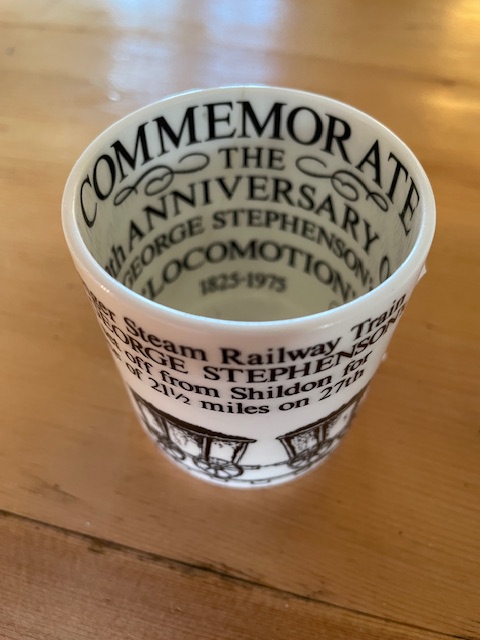
Fifty years ago I was living and working on Teesside as an actor and drama workshops organiser for the Billingham Forum’s Young People’s Theatre Co. We enjoyed free outdoor events marking the 150th anniversary of the opening of the world’s first public passenger steam railway train between Stockton and Darlington. A souvenir from that time is this little China mug, now sadly minus its handle, but otherwise intact and very pretty.

The long train of 1st, 2nd and 3rd class passengers,  preceded by a rider on horseback for safety reasons, set off from Shildon in Co. Durham  on the 27th September 1825 travelling the 21.5 miles to Stockton, via Darlington, at an average speed of 9mph, cheered on by crowds of excited onlookers.

Friend Rob under Skerne bridge

Skerne Bridge, seen in the painting above, is still there today, part of the Hopetown site. The oldest railway bridge in the world still carrying a working rail route.

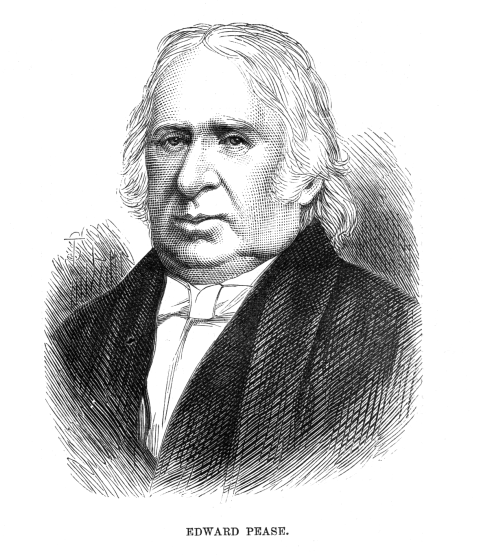
George Stephenson and his son Robert were the Tyneside engineers who gave us ‘Locomotion’, the engine that pulled those carriages on that triumphant day. Edward Pease, a leading Darlington Quaker (member of the Religious Society of Friends), was a retired wool merchant who had the time and capital to head the consortium of local businessmen were behind the scheme. The original plan was for a horse drawn tramway to transport coal from the mines in the Durham hills to the estuary port of Stockton-on-Tees where it could be shipped to the rest of the country. Stephenson Snr. persuaded the money men to opt for his newly invented coal fired steam engine instead. Adding passengers to commercial goods and loads of coal was something of an afterthought, but would have the greatest of consequences.

‘Locomotion’ replica on display at Hopetown

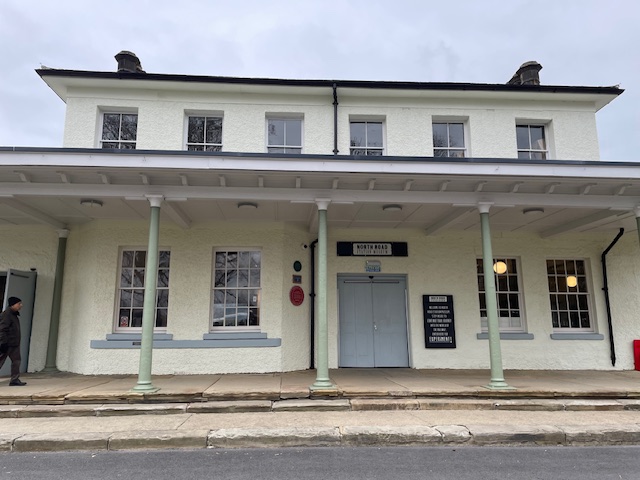
All this and much more my friend Rob and I learnt when we visited Hopetown in Darlington last week, in the year that sees the 200th anniversary of the Stockton & Darlington. Formerly known as ‘The Head of Steam’ museum at North Road railway station, the 7.5 acre heritage site has been transformed with a multi-million pound investment programme to make it a major regional tourist attraction and educational resource. Entry is free (donations welcomed) and the amount of digitalised interactive displays shows the ethos is about engaging with families and school parties to tell a spirited, many layered story. Exterior soft play areas and an adventure playground are other family attractions that help justify the public investment and draw the crowds.

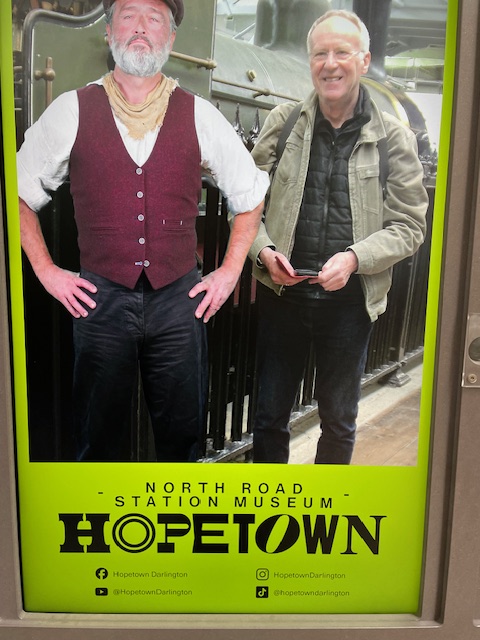
We didn’t quite know what to expect but quickly became engrossed with what was on offer. The interactive stuff – being addressed by station master and engine driver holograms for instance and having our photos taken with them – sparked fun and laughter. Think the planners have got the mix of serious study material and simpler, bold displays about right, opening vistas for the curious and engaging visitors in the interplay of man and machinery.

Railway Pioneers exhibition

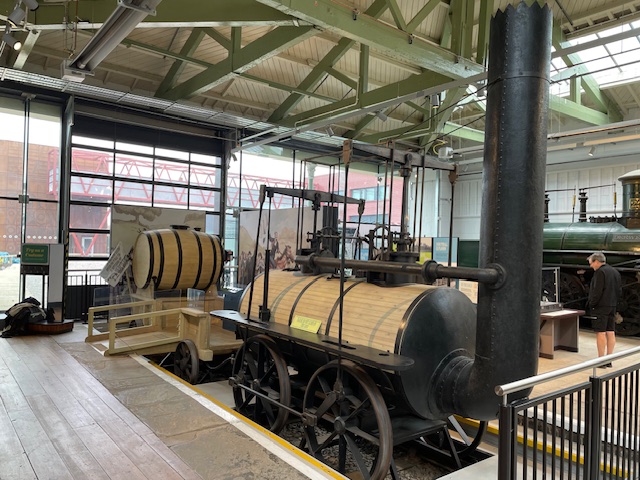
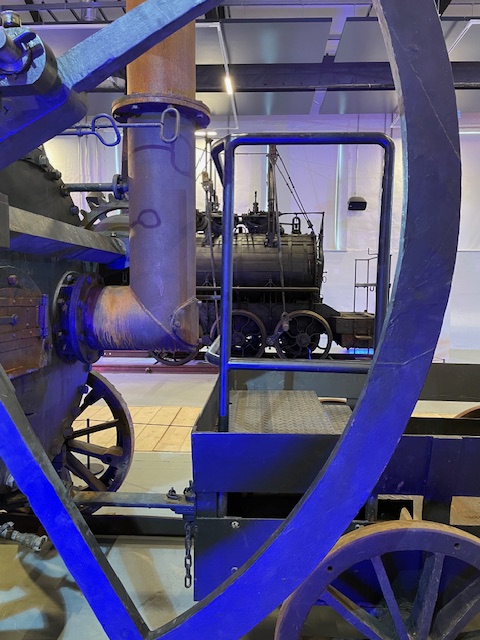
The Hopetown site, roughly triangular in size, consists of the original engine shed (1833) now the shop and café (above); station hall and offices (1842) now an exhibition area with locos and carriages, the Carriage Works (1853) with its huge open archive and large exhibition hall with awesome  replicas of early engines, part of the ‘Railway Pioneers’ exhibition currently showing.

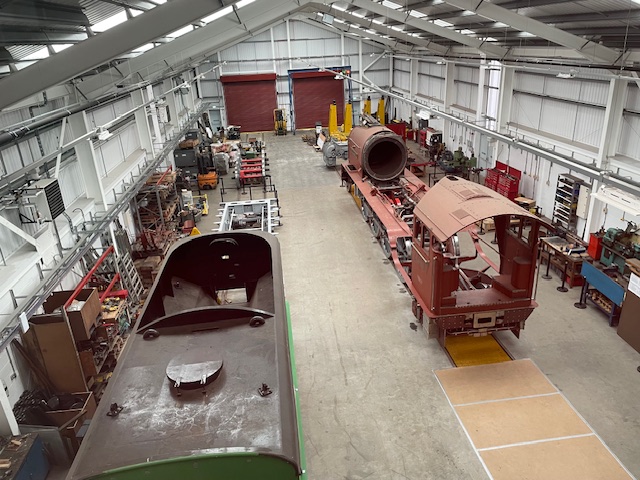
Completing the building line up is the new, purpose built  Darlington Locomotive Works where 21st century steam locos are being made by a charitable trust and volunteers, the workshops overseen from a tower housing public viewing gallery.

Highlights? I think anyone who visits a heritage site is invariably fascinated by the unchanging necessities of everyday living and how each generation deals with them. That’s why the original station toilets were fascinating. Cast iron urinals, tiled walls and cubicles. Throw in the reputed ghost of a porter who committed suicide here in the 1840s that is believed to still haunt the place and you’ve got it made.

The simple elegant design of the original early Victorian station (above) entrance and its extension reflect the world view of those local Quaker company directors. The exuberant emerging Gothic style was not for them.

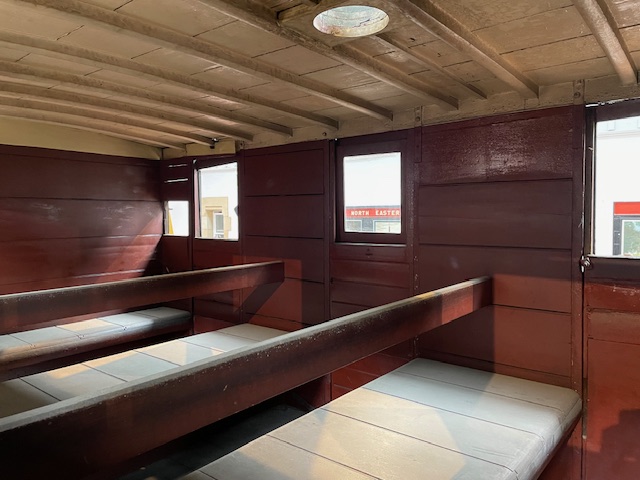
Britain being Britain the three original carriages on display remind us of rigid social and economic classification. First class enjoys padded seating and privacy while third class (above) is an array of hard benches and a hole in the roof to let out smoke and/or let in light. Second class a mix of both.

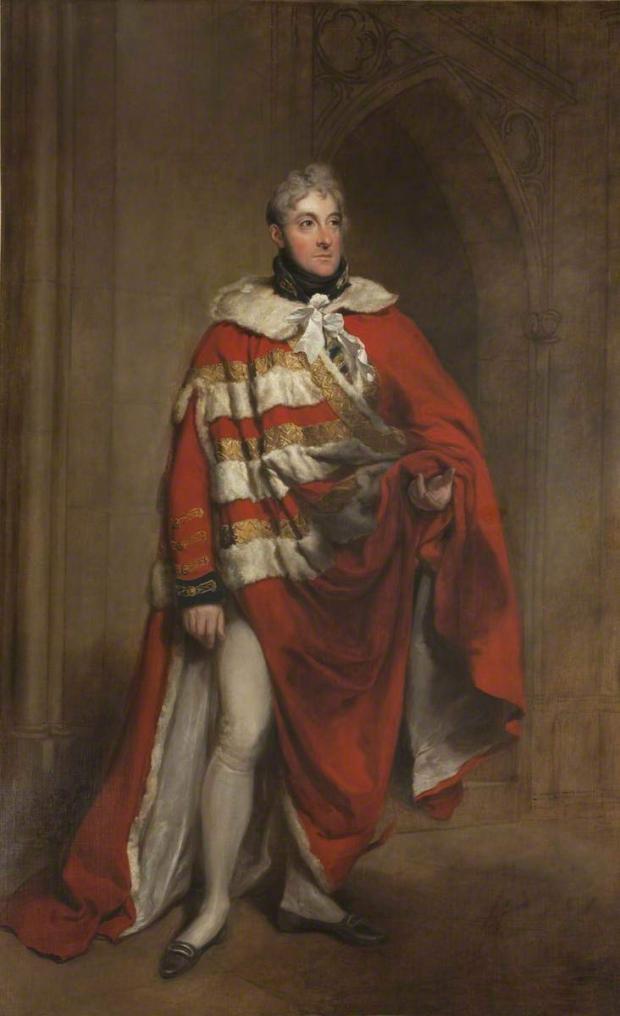
Lord Darlington

My favourite museum story happily fits the ‘Country Diary’ title for these occasional notes. We learned that it took three concerted attempts over many years to get the Stockton and Darlington railway up and running. At its heart was the struggle between the inherited wealth and influence of the landed gentry and the new money of the non-conformist urban business elite.

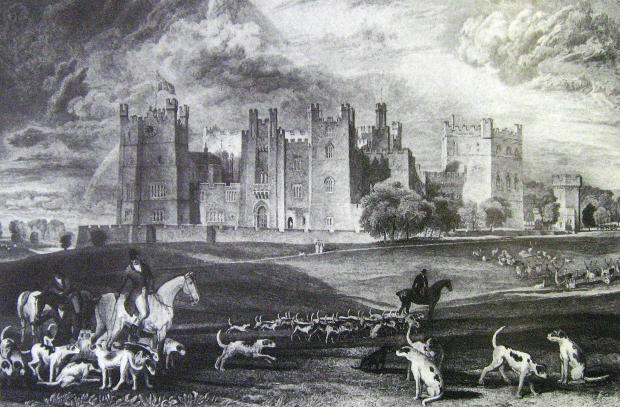
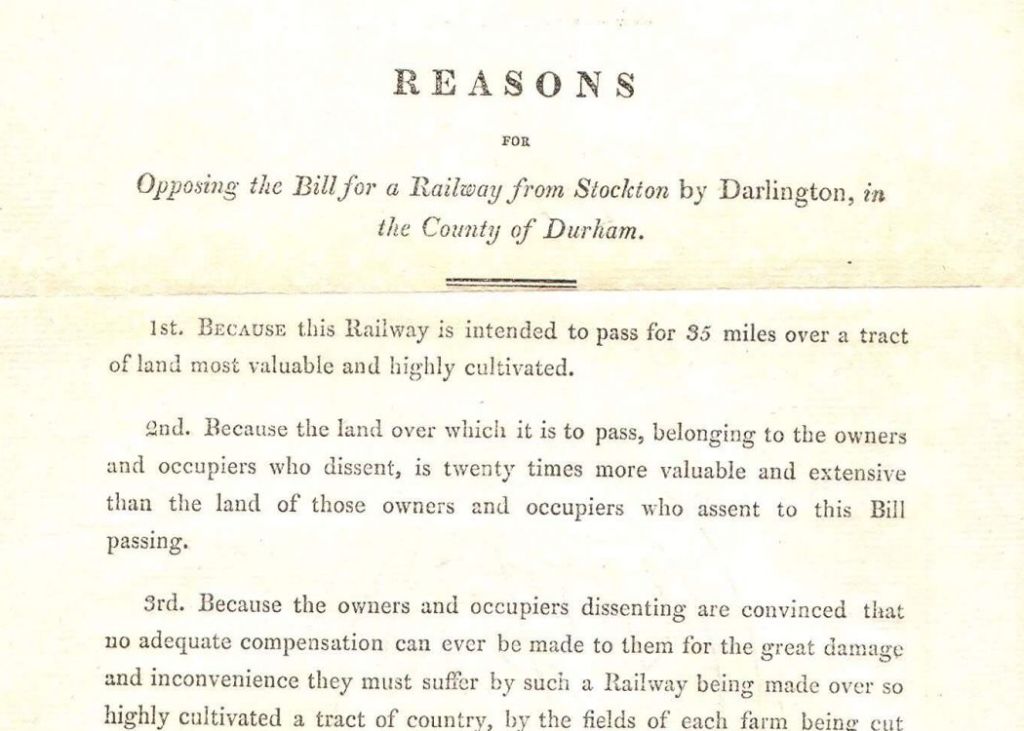
Henry Vane,  Earl of Darlington, resided at nearby Raby Castle, the centre of his great estate. A  fanatical fox hunter who maintained two packs of hounds, he was determined to stop ‘bankers, merchants and others wishing to employ money in the speculation’ from ruining his sport by running their rail road through his fox coverts. He and other country landowners successfully led the opposition in parliament to defeat the initial proposals. A contemporary petition, drawn up by a top London law firm for anonymous clients, makes fascinating reading. It objects to the railway proposal as being ‘harsh and injurious to the interests of the county through which it is intended to pass’ and will ‘spoil lucrative arable land’ splitting profitable holdings in two and be ‘detrimental to the profits of the turnpike road’ running parallel with it.

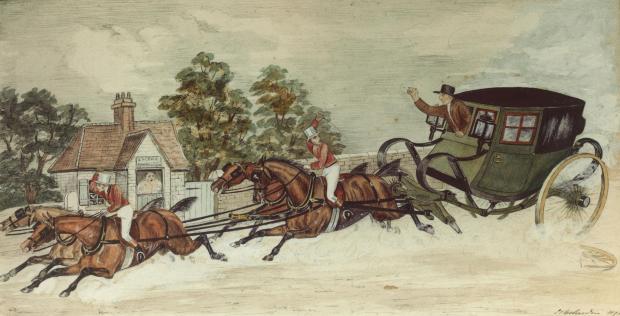
In March 1819 Quaker banker and line supporter, Jonathan Backhouse, got wind of a plot by the earl to bankrupt his business and so de-rail the financiers. Back then a bank’s promise to pay the bearer on demand the value of a note in gold inspired the disgruntled aristocrat to get his tenants and associates to turn up on a set day at the bank to demand just that. The resourceful Backhouse immediately took flight to London and had a whip round with other Friends in finance, loading the loaned bullion into his carriage and returning at fast as they could back up north on the new turnpike roads to Darlington.

He made it as far as the river crossing at Croft, three miles short of home, when the axle on the hard driven coach broke under the strain. The quick witted banker and his servants redistributed the heavy load and slowly hedged their way back into town, with time to spare, before the Earl’s steward came to call at the bank. Backhouse had raised £32,000 worth of precious metal, more than enough to meet the withdrawal threat. He reportedly saw off the Steward with the words ‘Now, tell thy master that if he will sell Raby, I will pay for it in the same metal’….A great story, which no doubt has improved with re-telling down the years. 

The Backhouse family bank prospered greatly thanks to the transformational economic prosperity the railway revolution engendered. Eventually, in the 1890’s, the business would merge with other Quaker founded financial institutions to form Barclays Bank. The bank branch (above) is still there, on its original site in the town centre and about to undergo a refurbishment. Ironically, given the simple design of the original North Road station, this  building is a fine example of imposing gothic architecture by Sir Alfred Waterhouse (1864).

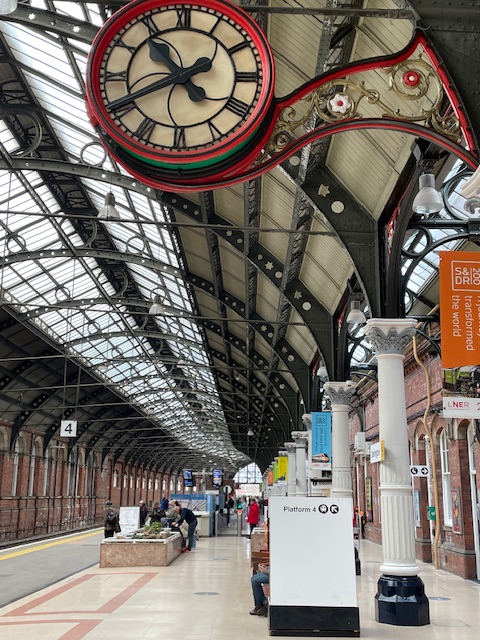
Arriving and leaving Darlington via Bank Top – the mainline east coast station (1887) – we’re delighted to see that it too is getting a long deserved restoration. Looking up we take in the heraldic decoration and rhythmic flow of ironwork gracing the roof of this secular cathedral, fitting tribute to a wonderful railway history and the town’s proud role in it.

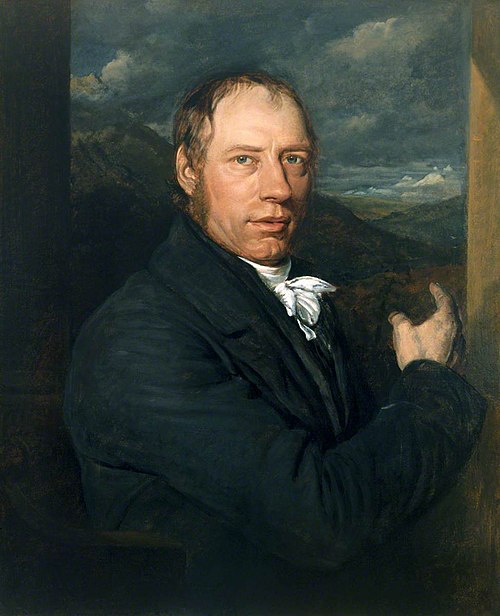
Linnell, John; Richard Trevithick (1771-1833); Science Museum, London ; http://www.artuk.org/artworks/richard-trevithick-17711833-179865

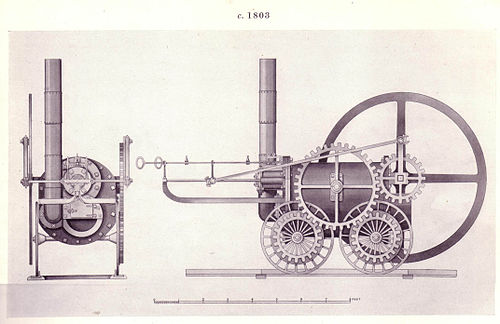
Footnotes: The current ‘Railway Pioneers’ exhibition at Hopetown features superb life size replicas of key early locomotives. One is the unnamed  engine (below) invented by Cornish mining engineer Richard Trevithick to transport iron from the Penderryn works in South Wales in 1804. In 2001 I had the pleasure of playing the obsessive charismatic inventor, in the BBC Radio 4 drama, ‘A Magnificent Prospect of the Works’ by Peter Roberts. The action was set in Coalbrookdale, the heartland of the industrial revolution on the river Severn, where Trevithick developed the prototype engine that would became the world’s first steam railway locomotive.

The Friends of the S & D Railway have produced an excellent illustrated introduction which you can download here: https://www.sdr1825.org.uk/wp-content/uploads/2021/10/stockton-and-darlington-railway-key-facts-booklet.pdf

Stitch in Time

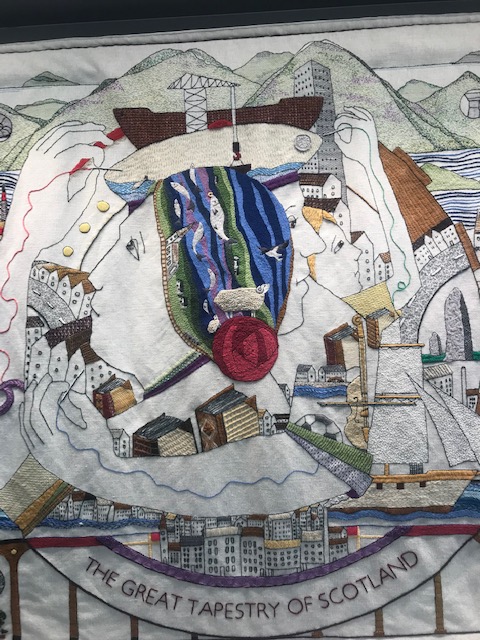
In an hour and a quarter we are over the border into Scotland and our destination of Galashiels. Glad to sense the place looking brighter and more uplifted than on previous visits 15, 20 years ago. The textile industry was once the area’s biggest employer – as many as 20 mills, mostly water-powered, flourished here at its peak in the 1880’s. Those businesses that remain today have had to specialise to survive and the area remains famous worldwide for its tweed and tartan production. A fitting place then to give a home in 2013 to the peripatetic 21st century popular artwork known as The Great Tapestry of Scotland.

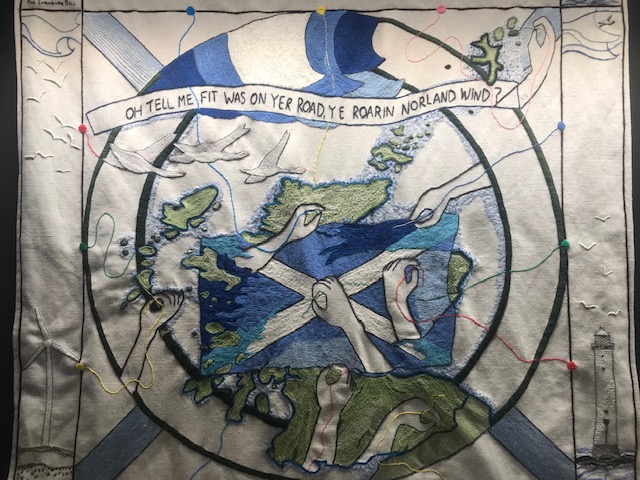
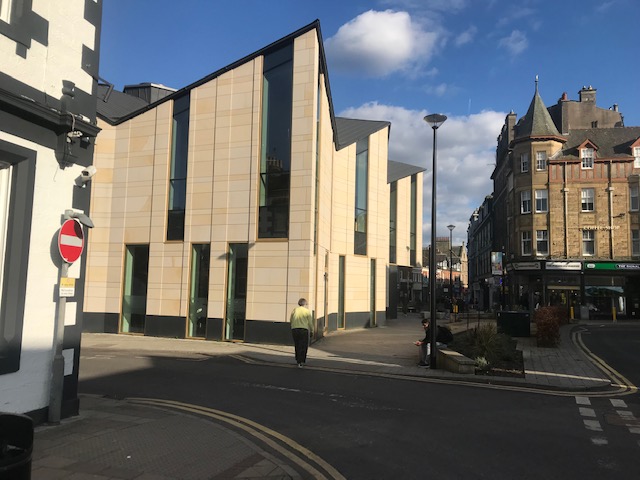
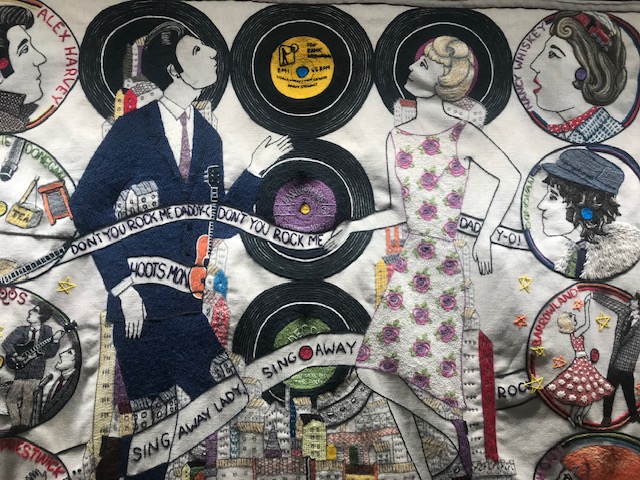
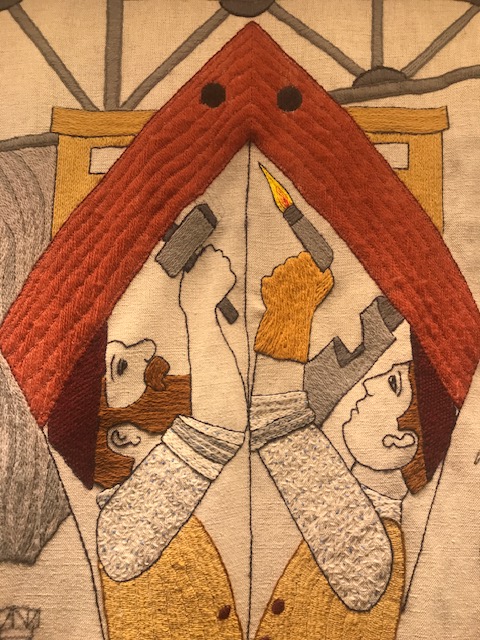
We didn’t quite know what to expect so were delighted to be immersed in what was on offer in the purpose built visitor centre standing proudly in the town centre, which opened in 2021. Having lunch at the friendly café broke down the hours so we could more realistically take in the 160 panel display. It splays across a spacious light filled first floor, depicting Scotland’s story from  prehistory to the opening of the new  parliament building in 1999.

Most panels are a metre/3’ 3” square and because they are not glassed over they appear even more immediate and fresh in their depictions of people, places and events, divided into seven triangular shaped time zones. The whole work stretches for 143 meters/ 469 ft. Informative brief text beneath each work with maker credits.

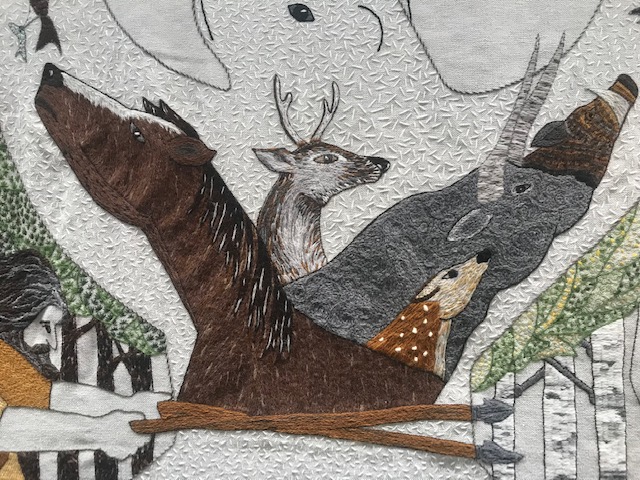
We are struck by how truly this is a people’s project, reflecting all that’s good in the character of the Scottish nation. A meritorious, interconnected, life affirming achievement. The combined work of a thousand volunteer stitchers in a range of community groups from Galloway to Shetland who put in some 50,000 hours of sewing using 300 miles of yarn. The movers and shakers of this national project were the author Alexander McCall Smith, artist Andrew Crummy, historian and broadcaster Alistair Moffat and head stitcher Dorie Wilkie. Between them they set framework for the stitchers to create and their formidable teamwork got the show on the road – literally!

Having the leisure to view the work in such a wonderful permanent setting opened new perspectives on our neighbouring land. This engaging way of presenting that narrative – of individuals, movements, beliefs through a unique synergy of history, culture and art – makes you wonder what an English, Welsh or Irish equivalent would look like. How would they define and reflect themselves through this form of craft based storytelling?

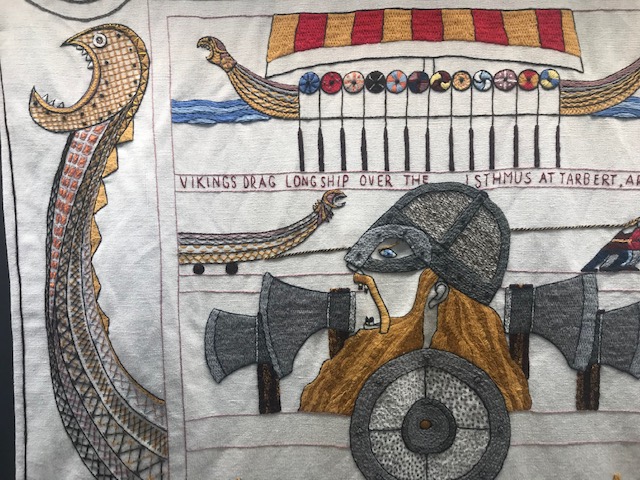
Scenes of conflict and warfare are vividly played out here. The sacking and pillaging of Holy Island in AD 793 in the Kingdom of Northumbria marked the arrival on these shores of the dreaded Vikings in their dreki – dragon ships. Subsequent colonisation along the Scottish coast saw these remarkably adaptable boats being hauled across narrow necks of land between inlets, giving rise to the place name ‘Tarbert’.

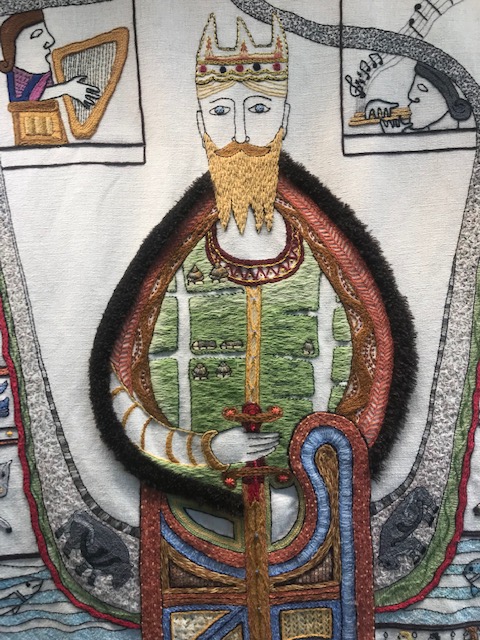
‘Is this a dig at the Bard I see before me?”…One particular panel reminds us how the genius of dramatic licence can run counter to historical truth. The real life Macbeth who ruled in the 11th Century and the character created by Shakespeare to flatter Scots King James 500 years later could not be more different. Macbeth was King of Moray, defeating and killing King Duncan of Alba in battle to become King of Scotland in 1040, ruling unchallenged for another fourteen years. A contemporary source tells of of ‘the red, tall, golden haired one…Scotland will be brimful west and east during the reign of the furious red one’  and that physical description gives character definition here.

Another tableau I liked was the one depicting the Invergarry ironworks. Here in the 1720’s the Englishman Thomas Rawlinson, a Quaker industrialist from Lancaster, encouraged his workforce to adopt a shorter kilt for work purposes. The body wrap style of traditional highlander wear being too encumbering otherwise for industrial labour. A new form of Scottish dress that would eventually become standard wear.

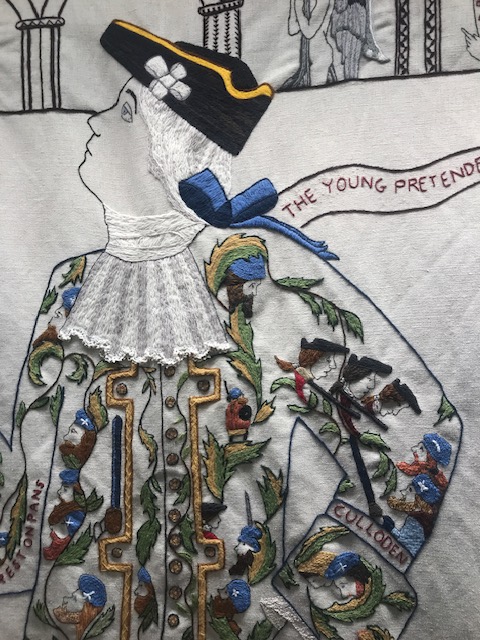
The Jacobite uprising of 1745-6 and Bonnie Prince Charlie’s role in it is a familiar narrative, poignantly and powerfully expressed here in a poignant bitter-sweet design as a ‘vine-line’ linking romanticised landing in Eriskay to final devastating defeat at Culloden.

There’s wit and humour running through the whole exhibition, and that gets more pronounced as the later 20th century chapters unfold with the increasing importance of the arts and popular culture in enriching the national picture, from major festivals to all forms of media .

The exhibition demands a return visit so we no doubt will be back. A great day out for us as borderers on the English side and essential viewing for anyone with an interest in Scots history, art and culture. If you’re planning a visit yourself there’s more info here: http://www.thegreattapestryofscotland.com