Marchmont

A while back we were in the audience for a talk at Newcastle Central library, part of a nationwide book launch, given by the academic, multi-award winning writer and broadcaster Dr James Fox. (https://www.drjamesfox.co.uk/)

James had been all over the UK unearthing the vital if under appreciated role of craft makers in forging our country’s cultural history and local identity. Dry stone-wallers, clockmakers, blacksmiths, weavers, milliners, saddlers, cutlers and coopers are among the array of past and present practitioners who get a mention in Craftland: A Journey Through Britain’s Lost Arts and Vanishing Trades. It has also been broadcast, with the author reading, as a BBC Radio 4 Book of the Week. (Sadly not currently available on BBC i-player)

James’s understanding and eloquent evocation of past and present practices couldn’t fail to draw us into his own well-crafted narrative. Beyond buying the handsomely produced book we were reminded that the best way to ensure a future for today’s craftspeople is by seeking out and, if possible, paying good money for their unique hand crafted products.

John Williamsom is a traditional Devon stave basket maker. We bought one of his baskets a couple of years ago for general purpose use around the garden. https://basketmakersassociation.org.uk/makers/

Earlier this month, we headed north to an open studios event, near Greenlaw, deep in the Berwickshire countryside. The winding 3.5 mile private drive from the village, along a leafy single track lane, hinted at its final destination being a grand one, which duly turned out to be the case.
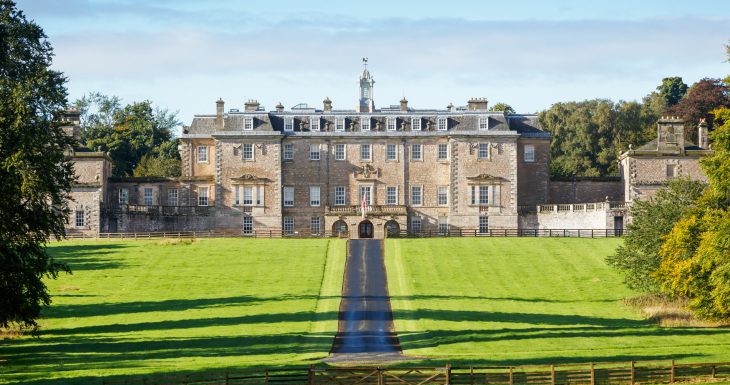
Marchmont is an C18th Palladian mansion at the heart of a 5,500 acre farming estate. The house with its grand Georgian interiors and sumptuous art works is only open to the public for a few days each year, and for staging occasional operatic and other musical events. In recent times, up until 2005, the main building was a Sue Ryder home before becoming a private residence once again.( https://www.marchmonthouse.com/)
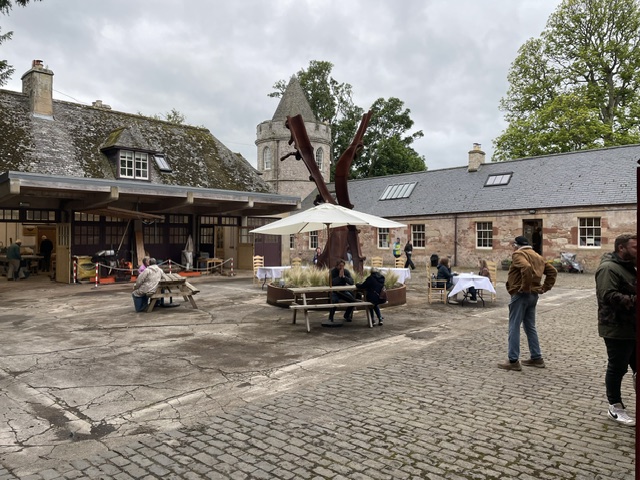
But it wasn’t the house we’d come to see today. Circling its imposing grand frontage we arrived at the equivalent of a town house’s tradesmen’s entrance – the old coach house, stables, garages and adjacent walled garden.
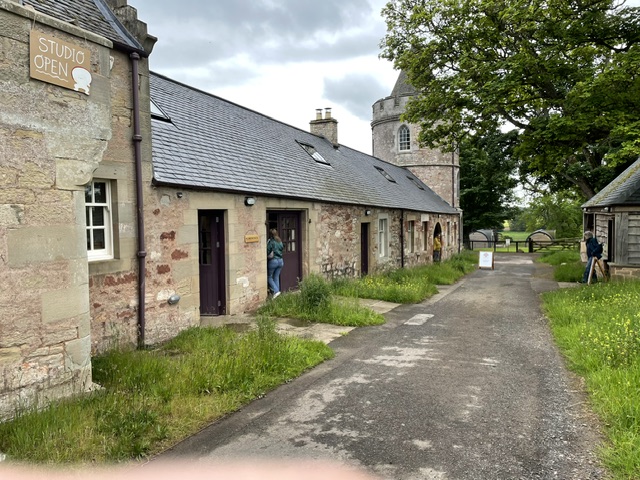
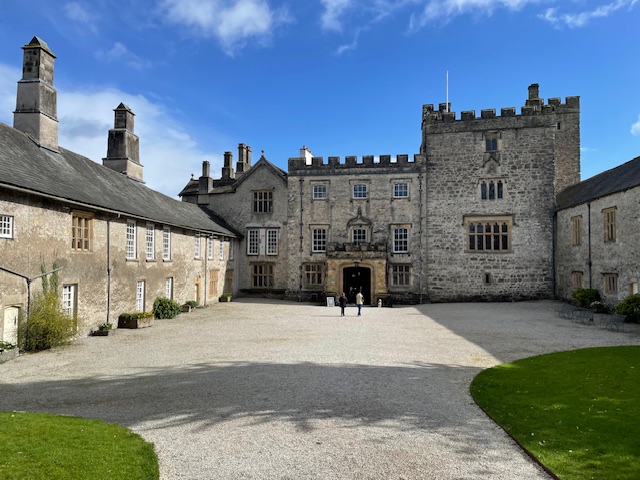
The solidly graceful pink sandstone courtyard was abuzz with activity. This substantial hub is home to the workshops of silversmiths and weavers, furniture makers, potters, artists and illustrators. Converted, managed and given rent free.
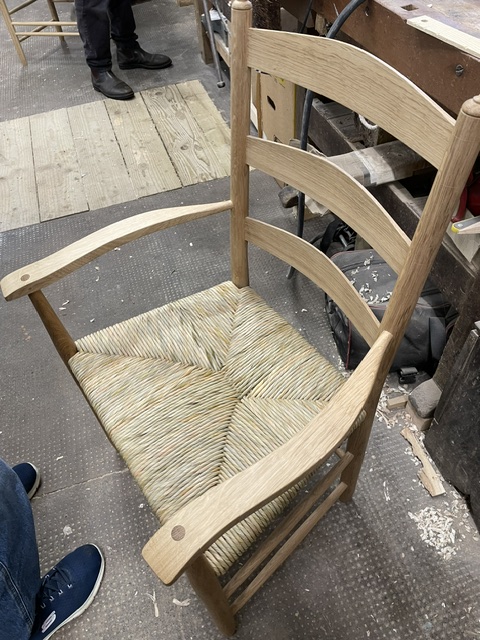
Particularly struck by the beautiful chairs in oak or ash with their rush seats, all worked from locally sourced timber and sedge. The makers demonstrated turning, steam bending and finishing.
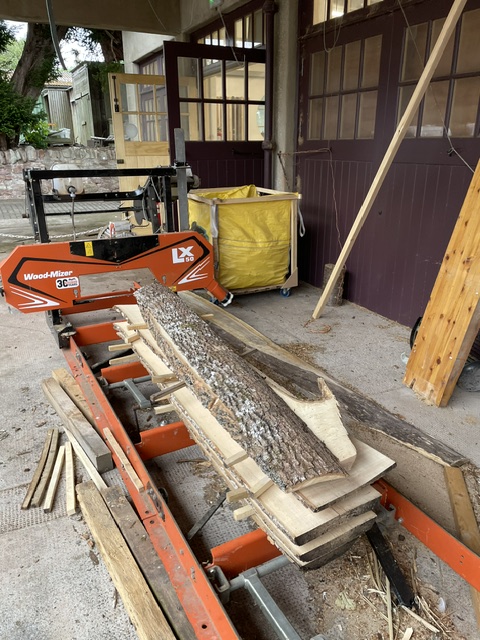
The open day also encompassed the mansion’s former walled garden and its interlinked elegant garden rooms and conservatories.
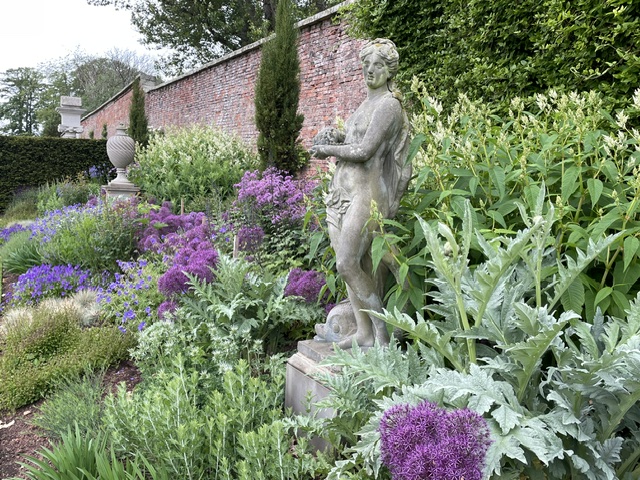
The planting of the expansive garden, contrasting repetitive masses of meadow plants contrasting playfully with the formal lines of topiary, hedging and wide flower borders was a pleasure to explore.
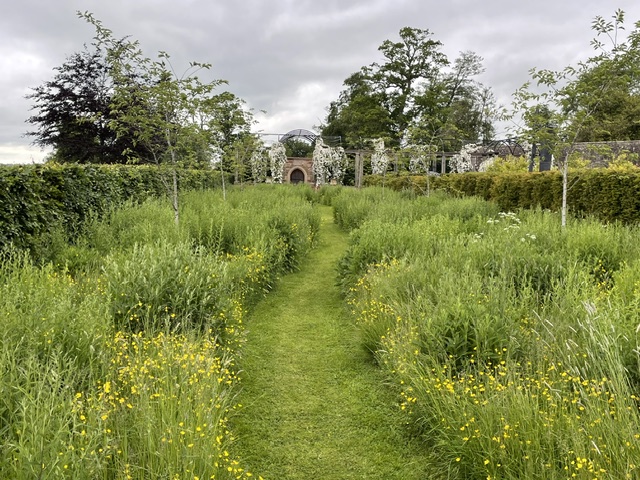
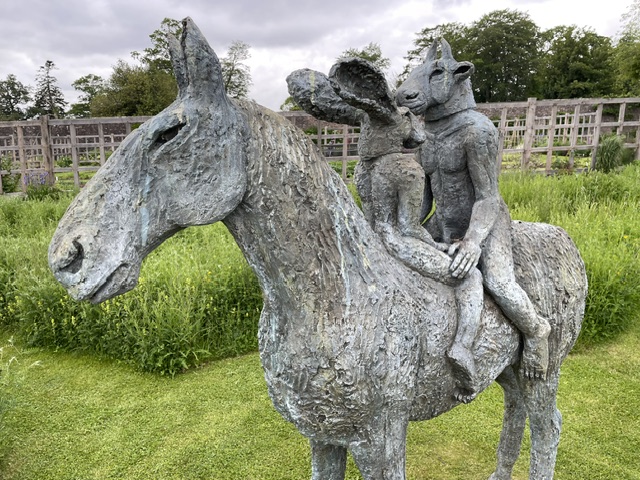
Commissioned contemporary works and the estate’s original classical garden statuary combine to make this walled garden a fine outdoor sculptural gallery.
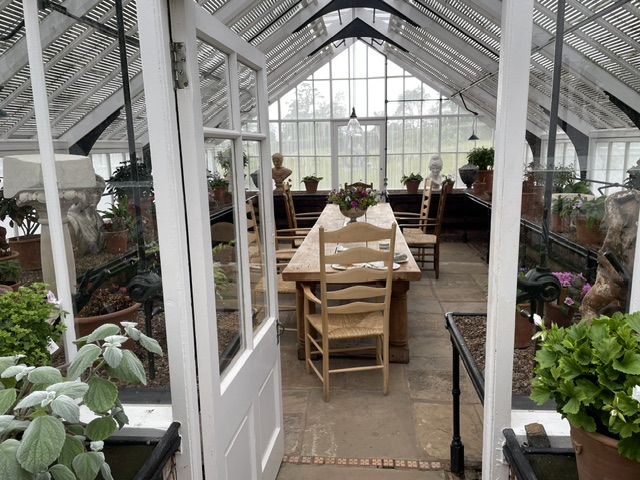
All the above has been made possible by the charitable foundation set up in memory of the late entrepreneur and investor Hugo Burge (1972-2023) whose family trust have run the Marchmont estate since 1988. (https://www.hugoburgefoundation.org/)
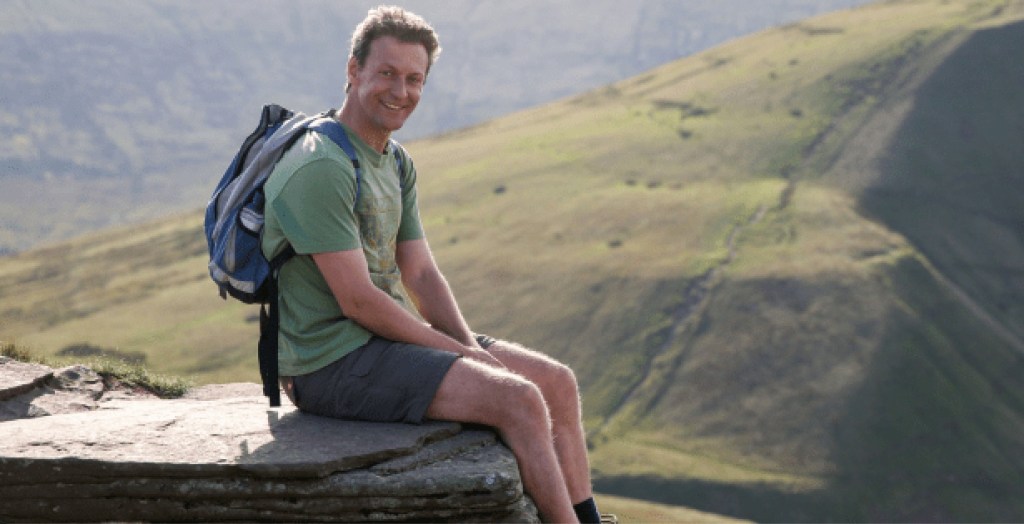
A self-confessed arts and crafts geek this much loved charismatic benefactor did not hold back from putting his money where his mouth was. Inspired by the latent talent to be found here in his adoptive home land in the Borders, Hugo commissioned art works and opened garden and stable block for arts residencies and educational courses.
Which brings me back to Craftland author James Fox who is also the Hugo Burge Foundation’s creative director, part of a management team that is realising the wider ambitions of its late patron in supporting and developing craft based activities.

And not only here in the countryside but further afield in urban settings. I wish them well in their work and hope they can interact with a wider range of lesser known artisan trades before those more endangered craft and their skills pool disappear for good.

‘The wonderful thing about adventures is you never quite know where you are going…’ ( Hugo Burge)

In 2019 we had a section of our dry stone field wall re-built. Here the guys have started work, lining up coping stones before carefully dismantling the wall itself.

Sizergh The Day

I’ve visited a lot of National Trust properties during my adult life. In the 1980s & 1990’s it was as an actor/researcher with their young people’s theatre company, devising and staging immersive dramas. More recently I was a welcome host then garden volunteer at Cherryburn, the Tyne valley farm that was Thomas Bewick’s childhood home. But it’s as an ordinary member that I’d rate a day spent on the Sizergh Castle estate near Kendal in Westmorland as one of the most coherent and harmonious of visitor experiences.

This happy outcome was due to an ideal combination of activities. A fine walk with varied views, seasonal garden delights and characterful castle interiors, rounded off with sampling the scones offer in the café.

The Sizergh estate came to the National Trust in 1950 after centuries in the ownership of one family, the Stricklands, whose Anglo-Norman ancestors inherited it through marriage in 1239. The family still retain part of the house as their private home. The 1,600 acre (647 hectare) estate is commercially farmed by tenants while rangers develop and manage nature restoration and greater access projects in and around the agricultural framework.  

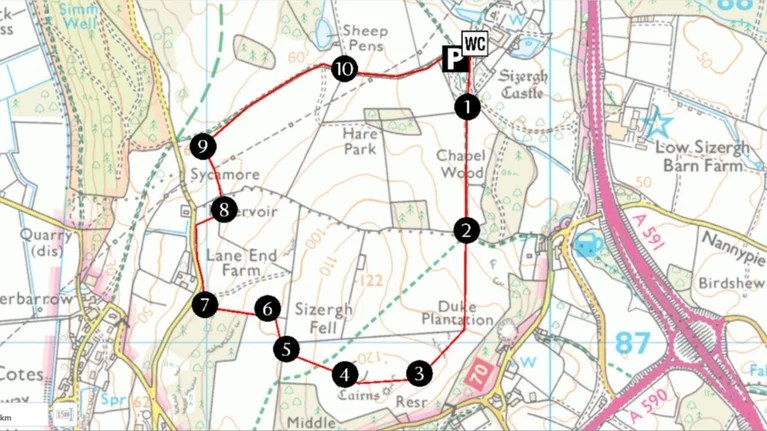
The well signposted Sizergh Fell trail provided lots of interest.  At the 400’ summit, overlooking Morecambe Bay to the south,  we came across remains of neolithic burial sites and traces of Romano-British settlements peeping through cropped turf and brambles at the edge of a huge swathe of tussocky anthills. Traditional British breeds of beef cattle are kept here, well adapted to this kind of upland grazing. Fittingly, the old English derivation of the name Strickland apparently means bullock pasture.

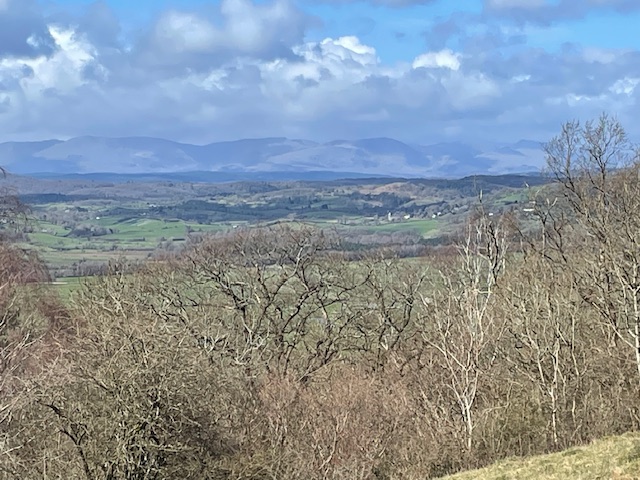
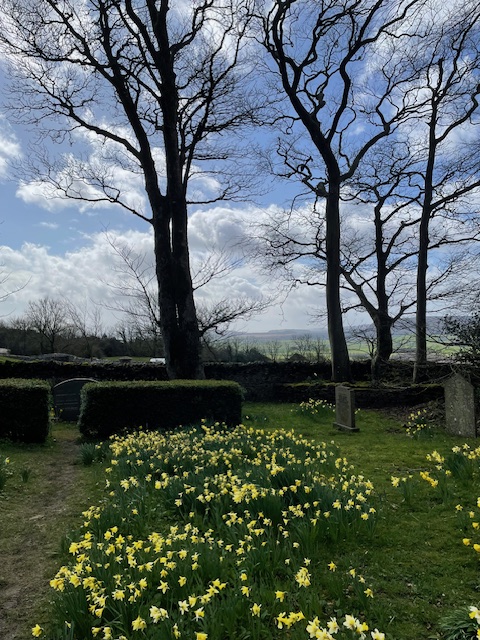
The track dips then rises to follow the limestone ridge, yielding fine views across the Lyth valley levels up into the mountainous heart of the Lake District. A brief ferocious hail storm cleared the grey clouds and let some sunshine in. Emerging from Brigsteer woods we  found ourselves at  Helsington Church, sheltered by its tree bordered burial ground now carpeted by daffodils and white starred wood anemones.

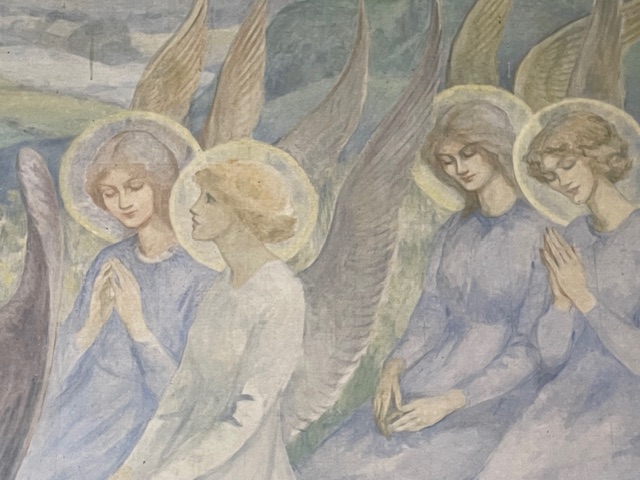
Inside the modest  light filled  interior the Georgian church’s distinctive decorative feature is wonderfully revealed…A whole wall depiction of supplicant female angels in a setting of Lakeland fells framing the altar below.

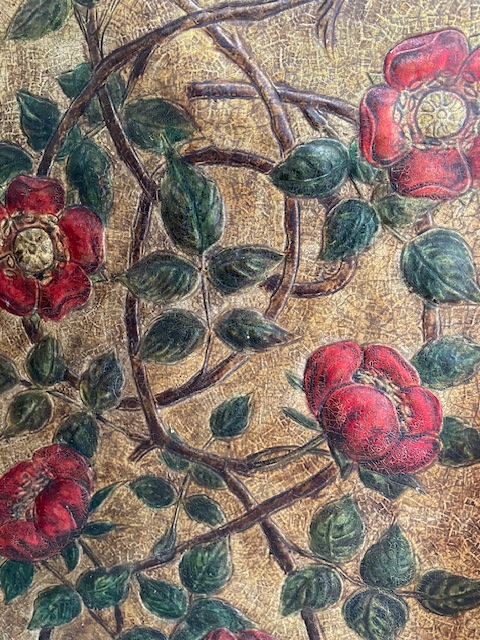
Dating from 1919, the painting commemorates those who gave their lives in the Great War.  Along with the altar paintings depicting flowers and other motifs, it was the work of a  female artist  who lodged at Sizergh Castle, Marion de Saumarez (1885-1978). Executed in oils on canvas the composition was stretched on battens and secured to the wall.

On our gradual descent back to the start we appreciated  the quality work put in by the rangers to make this circular trail so user friendly.

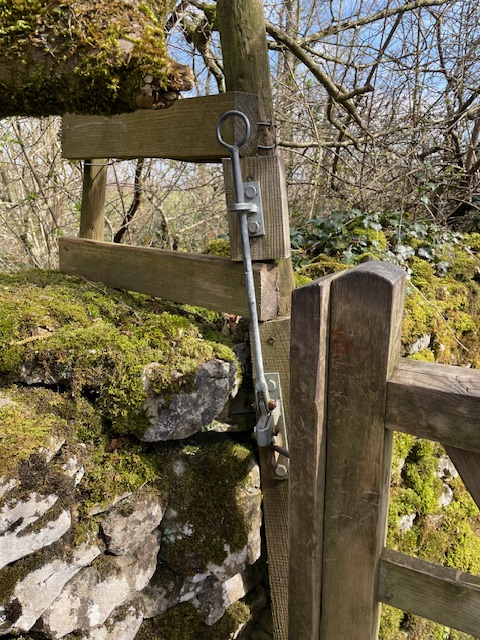
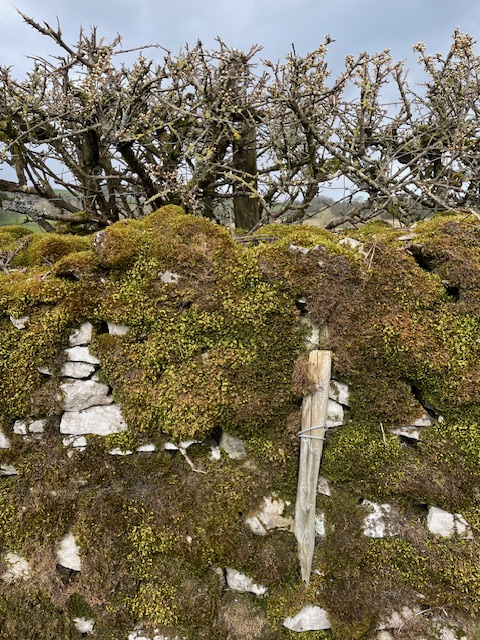
From  bespoke gate latches  to the  limestone dry stone walls strengthened by through ties of metal wire and wood block. This particularly thick wall also had extra stock proofing on the field side in the form of blackthorn hedging, which was just now coming into flower.

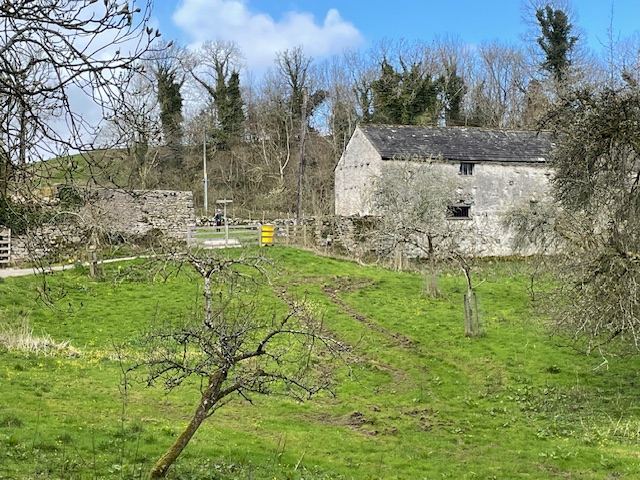
Down at Holeslack farm (now holiday accommodation) new laid hedges framed a damson orchard. In the old barn were bundles of hazel rods harvested from the neighbouring wood, no doubt to be used in hedge laying and other tasks about public parts of the estate.

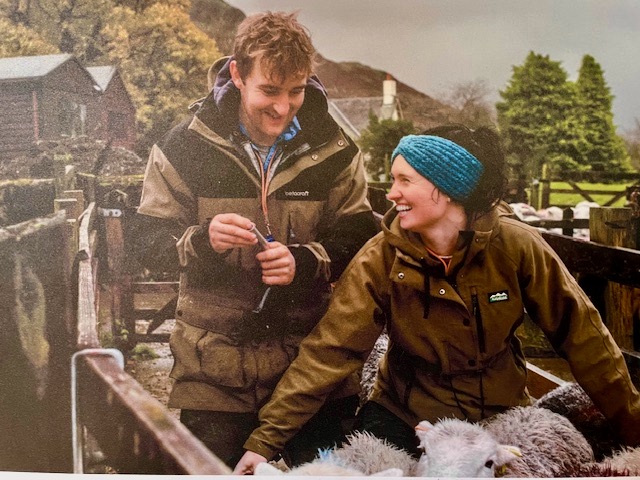
The building is also playing host to a temporary exhibition celebrating the often undervalued and overlooked role of women in upland hill farming in the 21st century. Illustrated by great images of said women at work on their farms, their number including profiled chroniclers of rural life like Andrea Meanwell (Tebay) and Helen Rebanks (Matterdale).

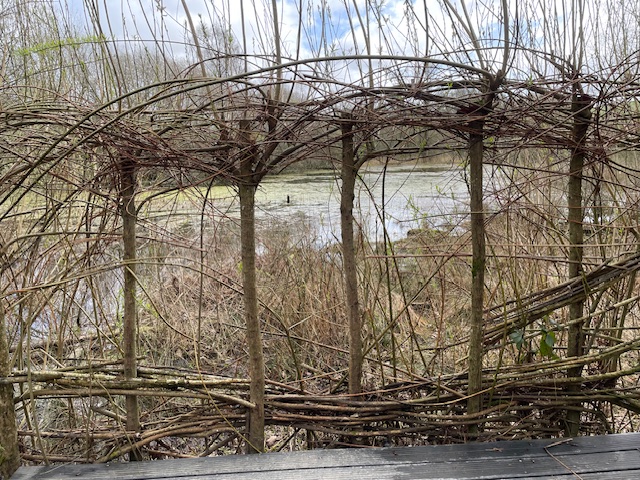
A walk through Holeslack woods revealed the wide paths and smooth surface to allow buggies and wheelchairs easy access. Dogs Mercury – an indicator of ancient woodland – is here in abundance. A branching path led us to a platform overlooking a wildlife pond on the woodland’s lowest edge, framed by arches of live willow wands. A nice touch.

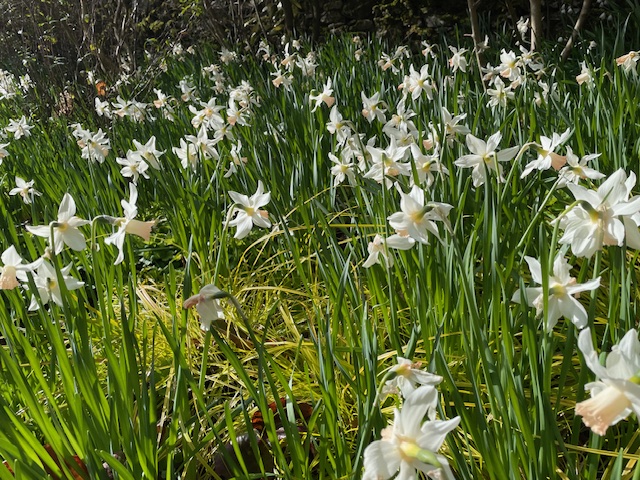
The gardens at Sizergh are a delight. Conversations with one of the gardeners about the narcissi as we strolled through gave extra pleasure to the discoveries.

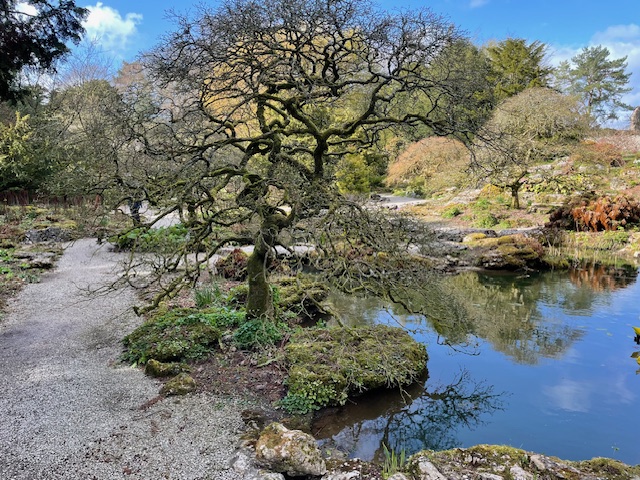
The wide borders, cordons of pears against orchard walls, herb beds framed and sheltered by reflective slate; an extensive sunken limestone rockery with pools, shrubs, trees and alpines giving way to large formal ponds, steps and terraces that frame the castle’s impressive south elevation.

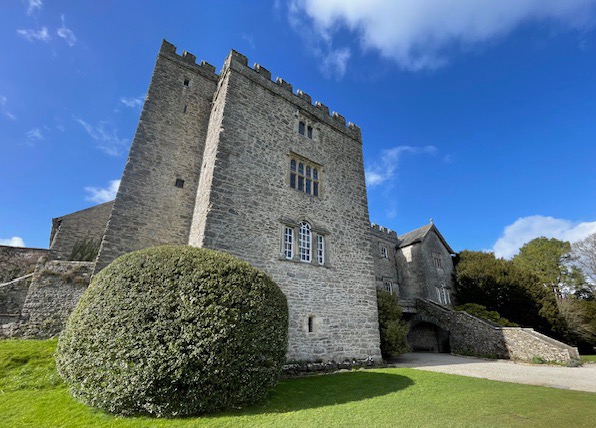
The castle core is the most impressive architectural feature to my eyes.. That’s the oldest section, the 60’ high C14th Pele or Solar tower. It also has the original spiral staircase which the little boy  inside me was quietly thrilled to descend at the end of our visit.

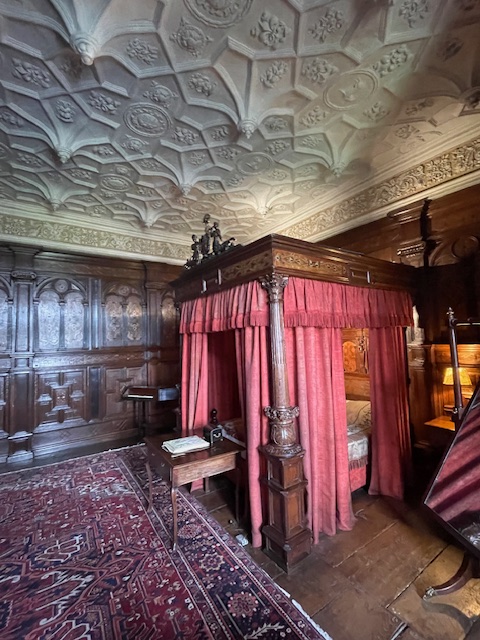
Inside the great square tower and its elegant Jacobean extension the takeaway impression is of dark oak floors and wall panels punctuated by huge sculpted fire surrounds within massively thick walls, enlightened and enriched by fine furniture and hangings. There are also generations of family portraits, alongside those of the Stuart monarchs many of them served. So close an association in fact that Thomas Strickland was forced into exile in France alongside fellow catholic James II after the Glorious revolution of 1688, never to return. His successors were fortunate to retrieve the family seat after protracted legal action.

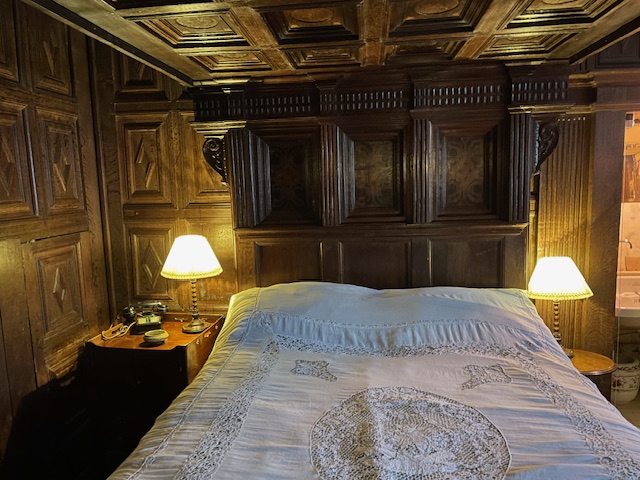
In the 1890’s another dip in fortunes saw the selling off of the inlaid wainscoting that gave the Elizabethan bedroom at the top of great tower its name. A very rare survivor in a country house of oak panelling inlaid with pale poplar in floral and geometric patterns. London’s V&A museum had bought the panels from the family and displayed them throughout the 20th century. The story gets a happy ending when the NT and the V&A struck a deal, facilitating their refit in aitu in the 21st century.  We’d like to return too, to experience the garden in another season and explore those parts of the wider estate we’d not had time to discover this time around.

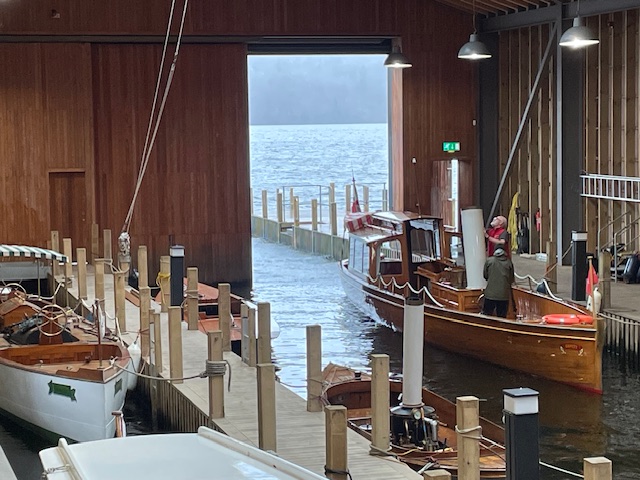
Footnote: returning home next day the weather turned  truly elemental in a way that only Cumbrian weather can. We spent a happy morning out of the biblical deluge, enchanted by the Windermere Jetty Museum in its impressive architect designed home on the lake at Bowness. It houses an extraordinary collection of craft associated with Lakeland waters and also offers – weather permitting – trips aboard steam powered vessels on Windermere.

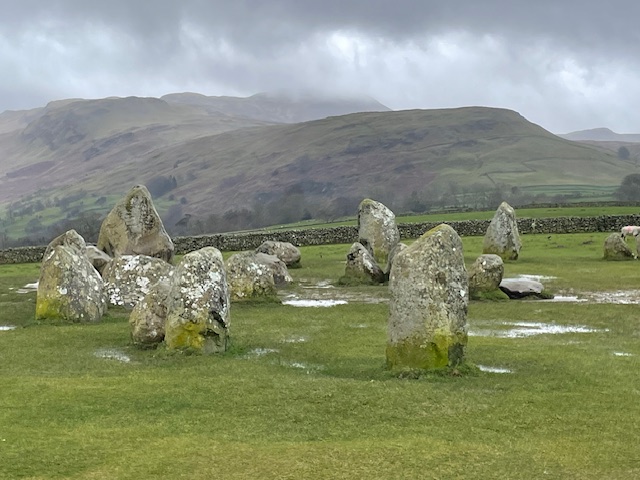
What really made our day though was when we eventually got to Castlerigg. Situated on a shoulder of hillside, between Keswick and the town’s neighbouring mountains this impressive stone circle is estimated to be some 3,000 years old.

Rediscovered by romantic era influencers of the early C19th like Wordsworth and Burns this mysterious round of huge stones then stood marooned within a ploughed field. The most likely reason the circle’s single stone outlier was moved and repositioned in a corner of the field was to ease passage for the plough and team. The ghosted form of rigg and furrow (ridge & furrow) is still evident  in the flattened corrugated ground. A challenge to stay upright when fiercely buffeted by fierce wind and rain but the effect was extra spectacular and – more selfishly – the weather helped keep this spell binding picture free of fellow humans for a while!