‘Bussaco Forest cannot be described, the best is to get lost in it.’ Jose Saramago
Having been told about the Bussaco National Forest by my cousin who had visited recently we were keen to discover it for ourselves during this holiday. An hour and a half’s drive from base by good main roads and testing twisters through mountainous foothills led us to this unique walled in world, one of the botanical wonders of the Iberian peninsula.
We entered from the spa town of Luso via the Serpa gate, one of 11 gateways that punctuate the 5 K (3.1 mile) boundary wall. Only mildly alarmed when the keeper in her lodge warned us that walking any distance into the forest from the centre was entirely at our own risk due to the heightened possibility of wildfire outbreaks.
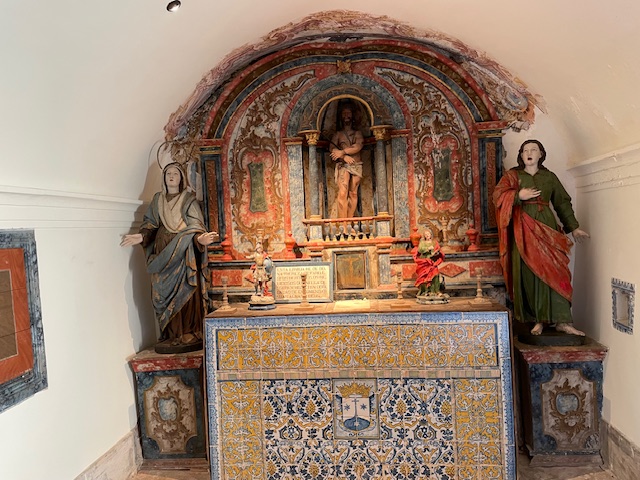
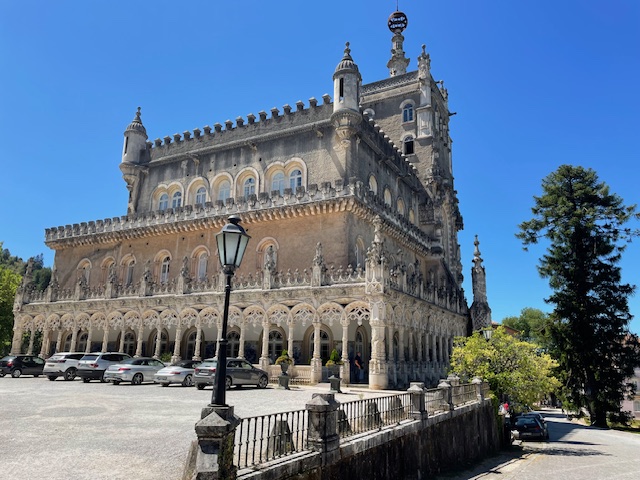
It would have been no great hardship to have spent our time in and around the park’s historic centre, which consists of a former royal palace cum luxury hotel (below), monastery, now a museum (above), formal gardens, café and visitor centre.
Although Bussaco was originally an early 7th Century Benedictine foundation the one we see today was established by the more austere Barefoot Carmelite order when they took stewardship of the buildings and park in the early C17th.

The brothers zealously set about gradually replicating the Holy Land’s Mount Carmel at Bussaco as a kind of desert, blending nature with God’s spiritual estate.

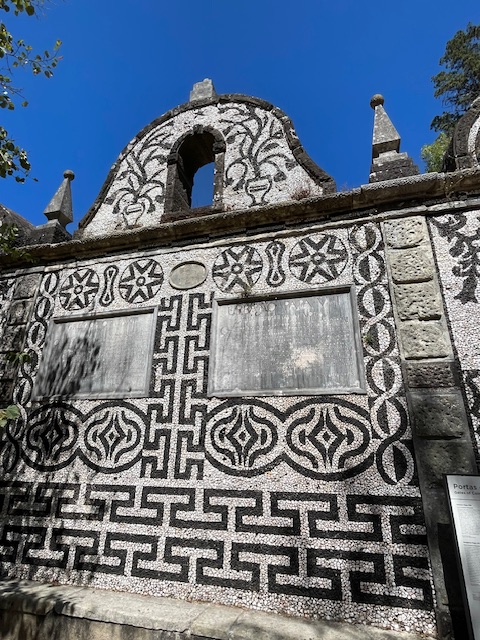
Many of their structures have exteriors distinguished by tessellated designs fashioned from quartz and adhesive tar while the interior of their monastery have coverings of native grown cork freely utilised to insulate walls ceilings and doors against winter cold.

The brothers ordered existence was rudely disrupted in September 1810 when the Duke of Wellington, commanding a combined mass of 50,000 Anglo Portuguese troops, based his command post in the monastery, using the monks cells for offices.
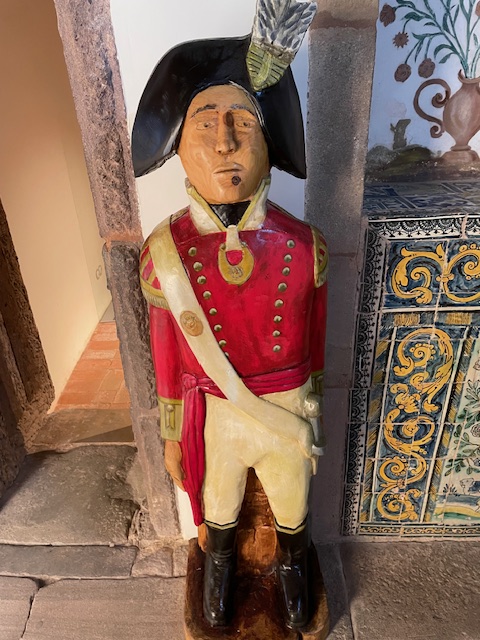
The British general’s army defeated Marshall Massena’s French forces here at Bussaco, halting their advance on Lisbon, a turning point in the country’s campaign of liberation from Napoleonic invasion.

The adjacent royal palace was built between 1888-1905 on part of the demolished monastery. Since 1910 and the fall of the monarchy it has been a luxury hotel, one of the finest in the land. Its initial architect, the Italian Luigi Mantini, also designed sets for grand opera, and it shows. What a brilliantly grand statement of opulence it makes to the world.
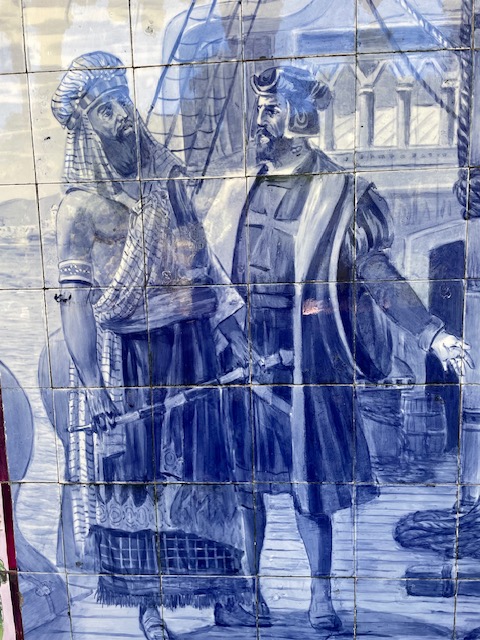
The obliging hotel receptionist let us take a look around the sumptuous ground floor. Large scale blue and white azulejos (tiles) decorate walls and stairs, some displaying the battle of Bussaco and others scenes from Portugal’s ‘Age of Discovery’ in the late 15th and early 16th centuries. At that time Portugal established its maritime trading outposts, stretching from Brazil to southern Africa, Goa in India to Macau off the coast of China.
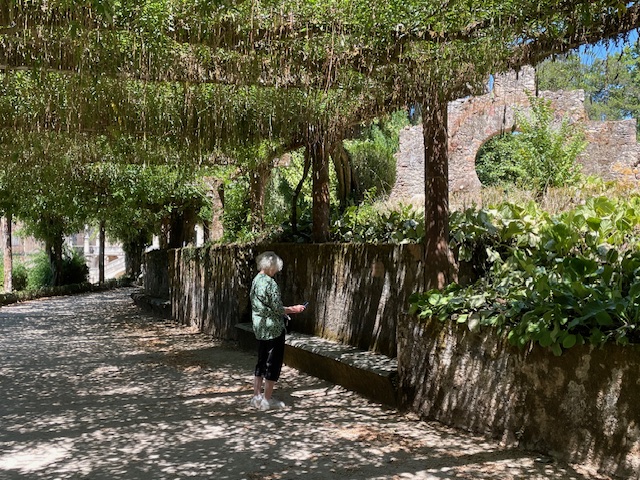
The formal gardens provide a graceful unifying setting for the two contrasting buildings, although box blight and a certain faded glory added to a suitable sense of gentle decay.
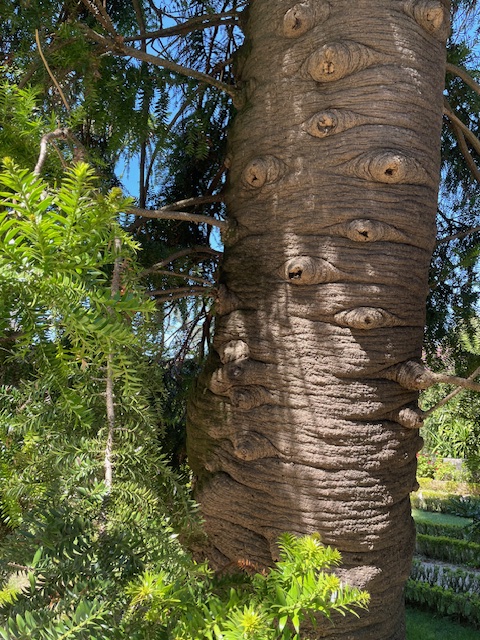
The arboretum remains the true natural glory of the place. Some 400 native trees and shrubs grow alongside 300 specimens brought back home as the result of colonisation and exploration. Mexican Cypress, American redwoods, Chilean pines, many oaks, laurel, holly and ferns to hundreds of Camellia species are set around walks, steps, ponds, fountains, statues and other formal features – we saw just a fraction.

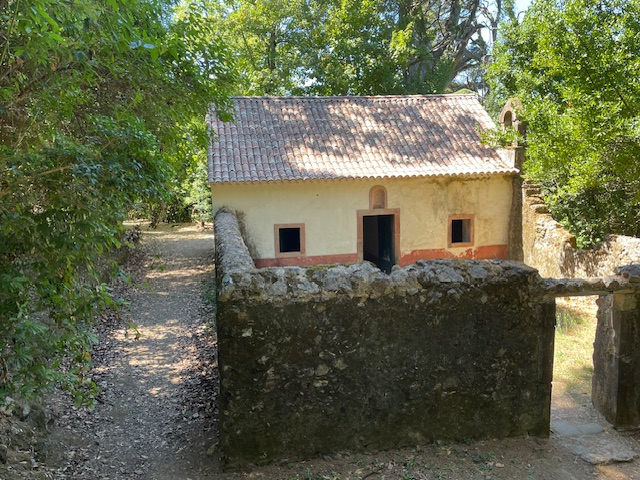
Leaving the formal gardens for an upper woodland walk, we found ourselves on the Via Crucis- a lane of dappled shade linking enclosed stations of the cross – eventually leading to a purpose built hermit’s house with enclosed yard, now an empty shell, one of three around the domain.
The stations house life size red clay tableaux, vividly recreating scenes from the passion of Christ. Hermit retreats and devotional stations were originally set up by the Carmelite monks shortly after they took over the estate in 1628. A number seemed to have suffered damage, adding an unintentional modern feel of abstract dislocation to the dramatic scenes of heightened emotion.
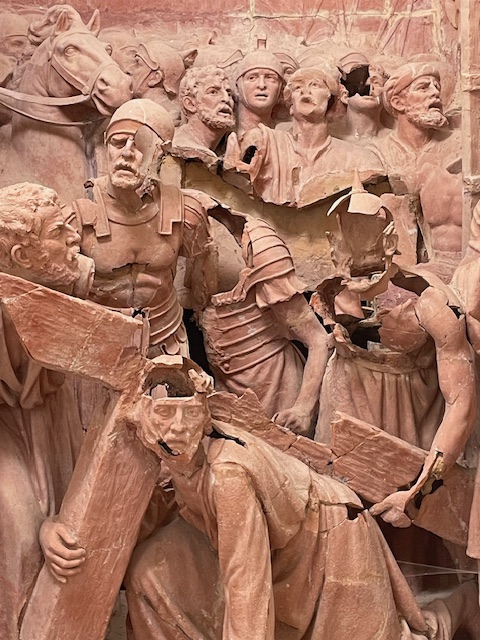
Later learned this damage was caused by a particularly violent storm that struck the area in January 2013, severely affecting both buildings and trees and recovery has been hampered by lack of funds and resources. The state took over Bussaco when Portugal’s monasteries were dissolved in 1834, and today managerial responsibility lies with a charitable foundation, which has had to fundraise widely to painstakingly restore the place.
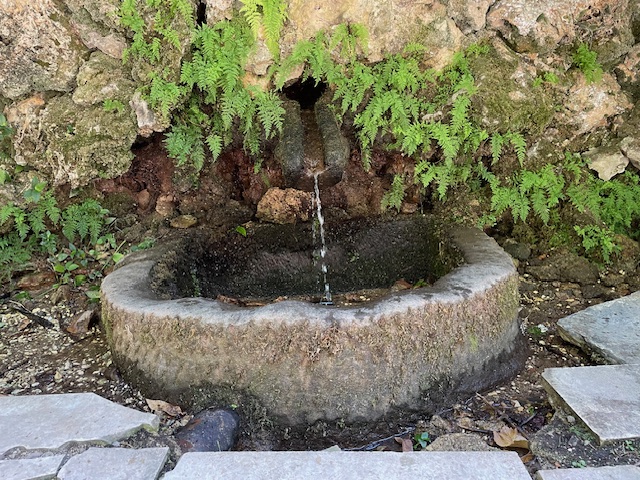
Our stroll took us to another entrance way – not accessible to traffic – the Coimbra gate which yielded surprise vistas beyond the canopy, across the wide plain, to the Atlantic coast.
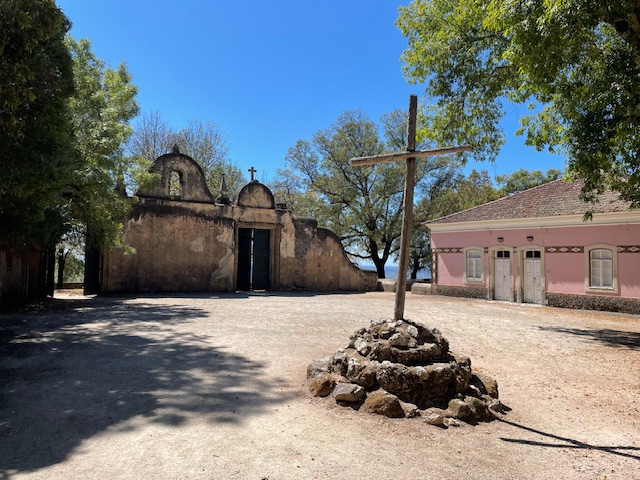
Lingered by the great doors, now ajar, and the currently unoccupied lodge house (sometime holiday accommodation) with its pink washed walls. Wondered at the wall sign, a papal bull of 1623 forbidding, on pain of excommunication, the felling of trees within the walls or the entry of women!

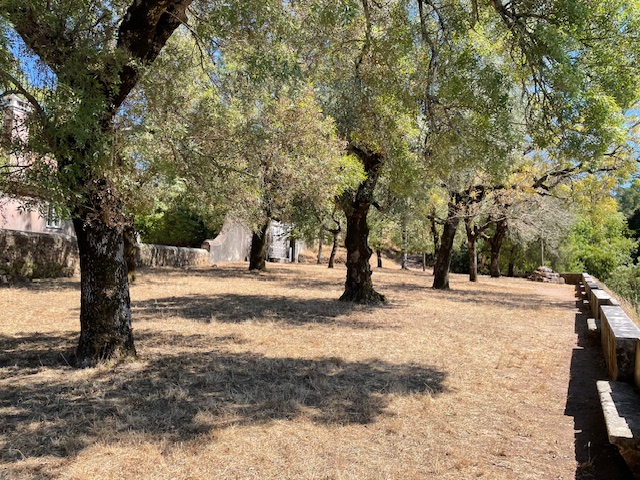
Historical misogyny apart, I warmed to this early attempt at nature conservation. An atmospheric spot inviting reflection and ease, one where time seemed to have stood still. Stepping out on to the terrace in the full glare of the sun, the bone dry brown grass crunched loudly underfoot, providing a reminder of the gatekeeper’s words on arrival.
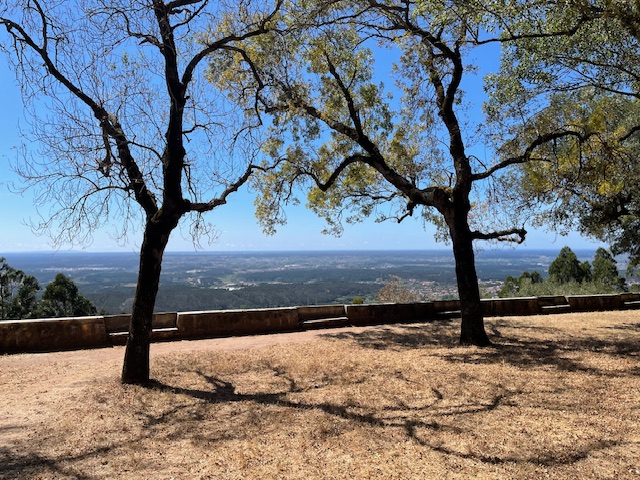
Popular with the Portuguese themselves for its cultural and botanical importance, though less well known to foreign visitors, the Mata Nacional do Bussaco lives up to its reputation, inviting a return to sample further corners, in another season.




 STEPHEN TOMLIN