
‘Years ago every village in England was a nest of singing birds and the folksingers of today are the last of a line that stretches back into the mists of far off days…an unbroken survival of pagan observances and a musical inheritance of priceless worth.’: Cecil Sharp
I love what is termed ‘retirement’ and all the pleasures and opportunities for activities and socialising that it brings. But, every now and then, a work project comes out of the blue and the most recent proved more leisure than work, a unique opportunity to re-visit a happy past and bring it to life in a new way.
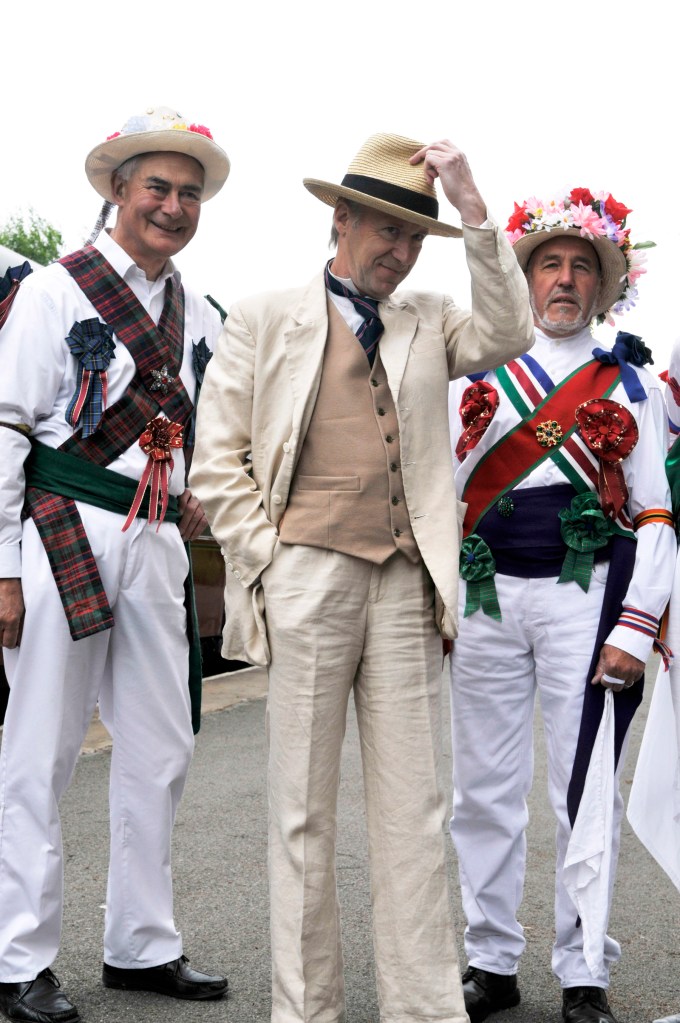
In 2008 I was employed to play the folk music and dance revivalist Cecil Sharp in a Heritage Lottery funded project in the village of Winster in the Derbyshire Dales. Sharp had travelled by train from his home in London in June of 1908 to research the Winster Gallop and other Morris tunes peculiar to the village and practised by the lead miners who made up most of the local dance team.

I was friends with fellow actor David Frederickson, a former resident of Winster. We’d met when working together on an ITV Docudrama about the 1984 IRA Brighton Bombing and he’d also performed as Polonius in my company’s production of Hamlet at Lancaster Castle. David thought me a perfect fit for Cecil Sharp so I joined him and another locally based colleague, Sue Daniels, to put on his play ‘A Nest of Singing Birds’ as part of Winster’s ‘Look Sharp’ weekend festival.

David’s play covered not only the great man’s visit to the village but the story of his interaction with those singers, dancers and fellow travellers who featured alongside in the revival of folk song and dance during the early years of the 20th century. Cecil Sharp (1859- 1924) collected some 5,000 songs and tunes over 20 years and despite the contradictions and personal conflicts over methods, attitudes and philosophy which typified the age he left a priceless musical legacy to the nation.
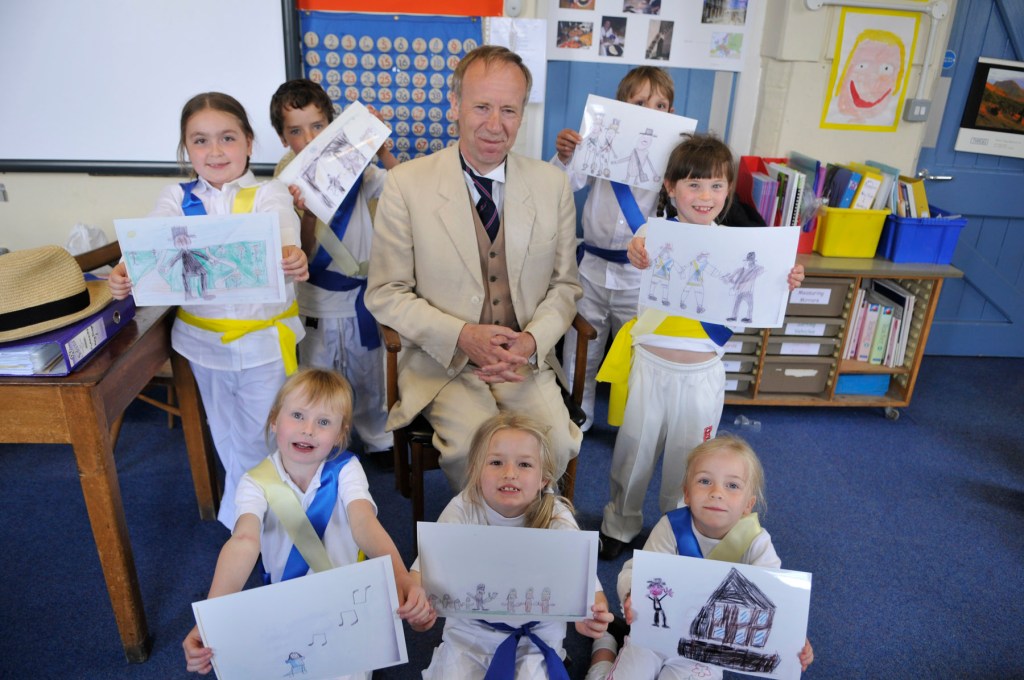
‘Look Sharp’ was a very successful community celebration in 2008 and our fully integrated participation as performers replicated most of what had happened a century previously, including a steam train arrival at nearby Darley Bridge station, Sharp’s introduction to lead mining history, a carriage ride up the hill and visit to the local school. The festival went one better in showcasing not only the village Morris side but five more from around the country who’d travelled to join us.
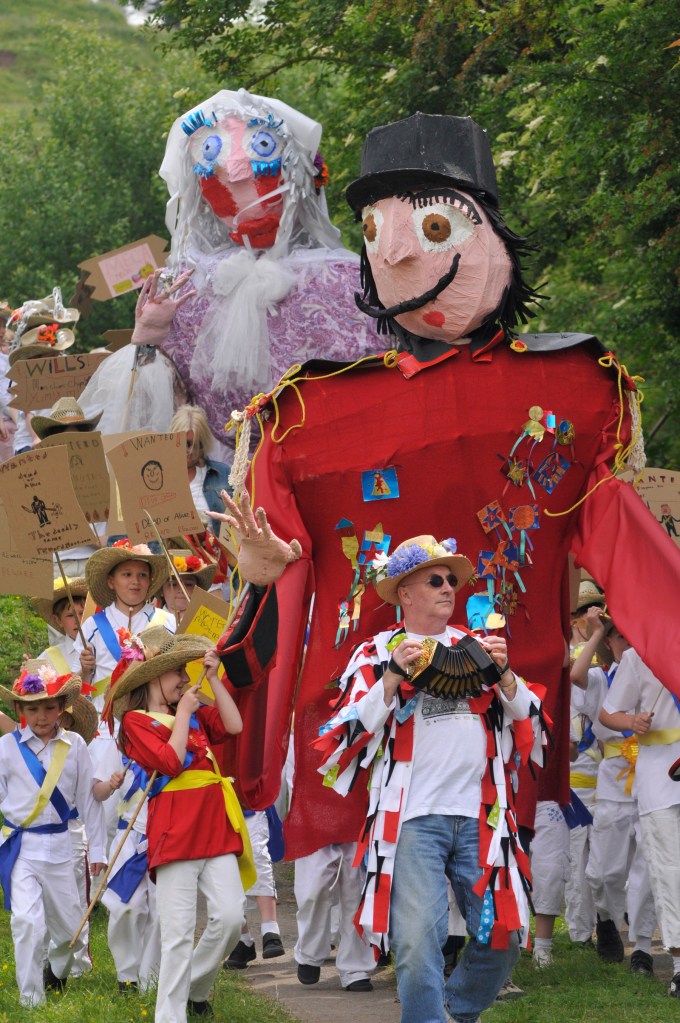
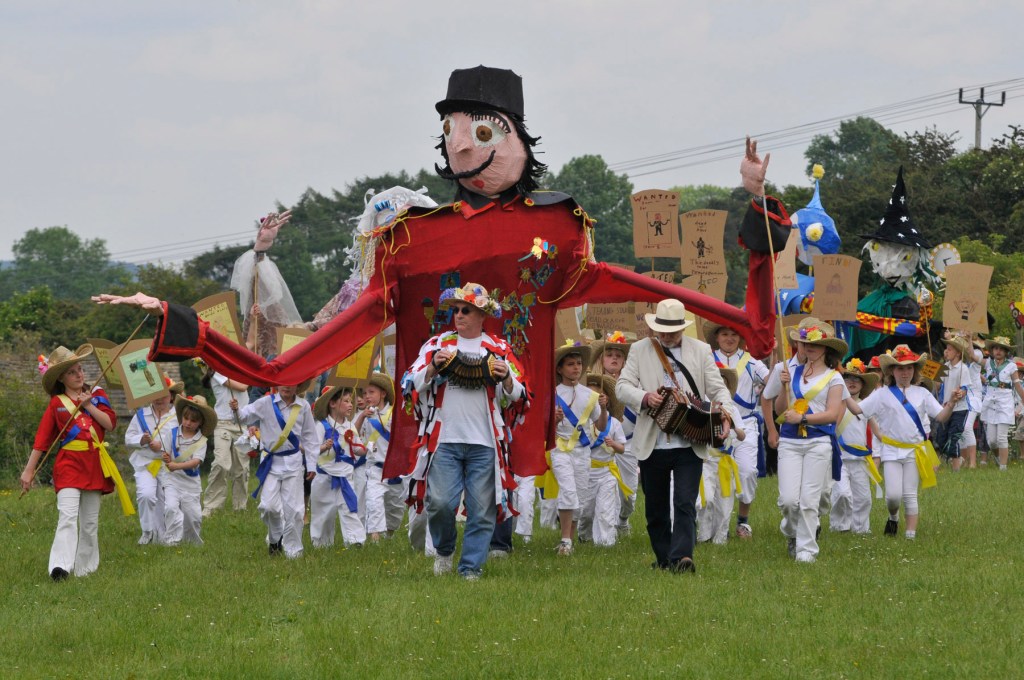
Our good friends and collaborators at Buxton based theatre company Babbling Vagabonds had fashioned the fabulous giant stick puppets, likenesses of traditional characters associated with the Morris, in association with local primary schools, and students from the local secondary school made a great short film documenting the event. The giant puppets headed the street procession to the playing fields where the entertainment, including our play, was performed in and around the big tent.
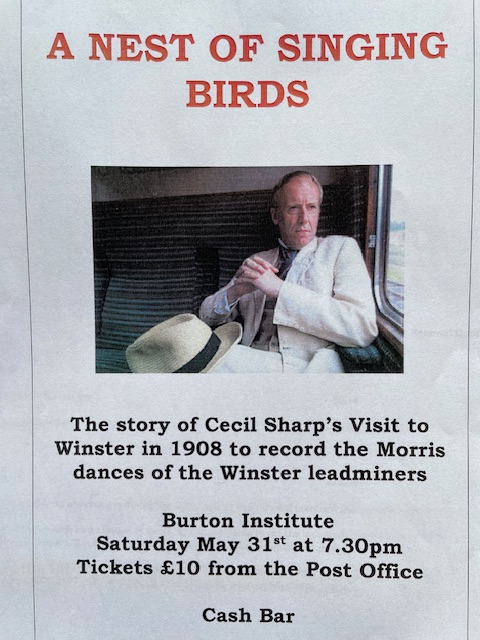
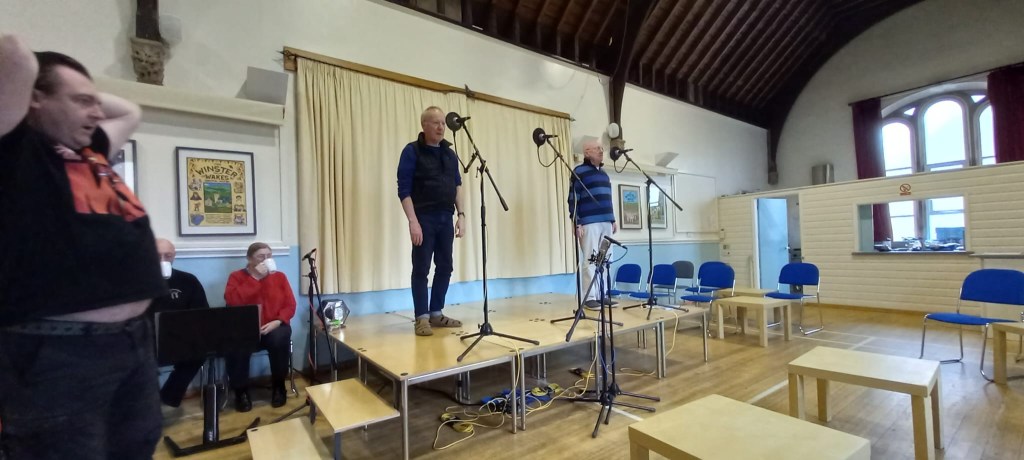
Seventeen years on from 2008 – in late May this year – our company was re-united to make a live recording of David’s wonderful entertainment in front of a live audience in the village hall, the Burton Institute.
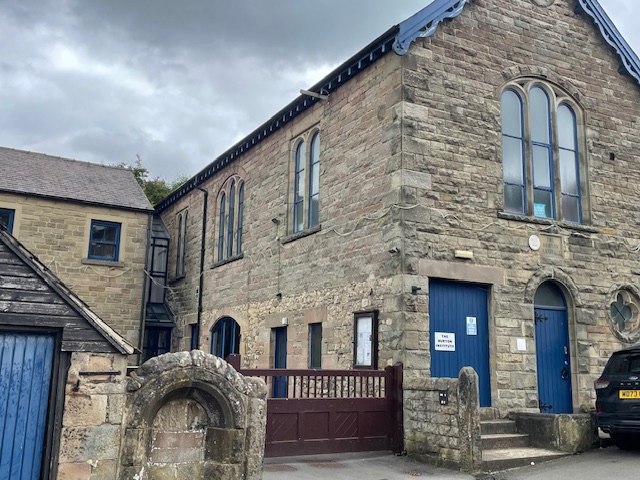
The locals had secured extra Heritage lottery funding to ensure a permanent record of ‘A Nest of Singing Birds’, professionally staged and recorded, would be held in local archives available to all.
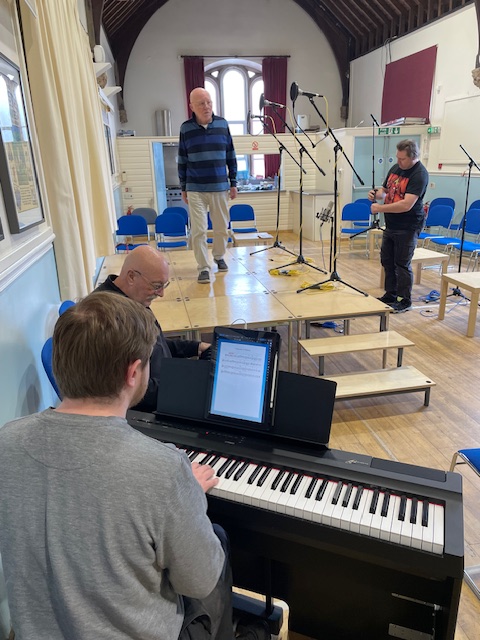
Our brilliant sound engineer, based at an arts centre in Derby, was Richard McKerron and his high spec recording equipment impressed us all, along with the skill he demonstrated as a musician himself rigging and recording our live event on the night of Saturday 31st May..
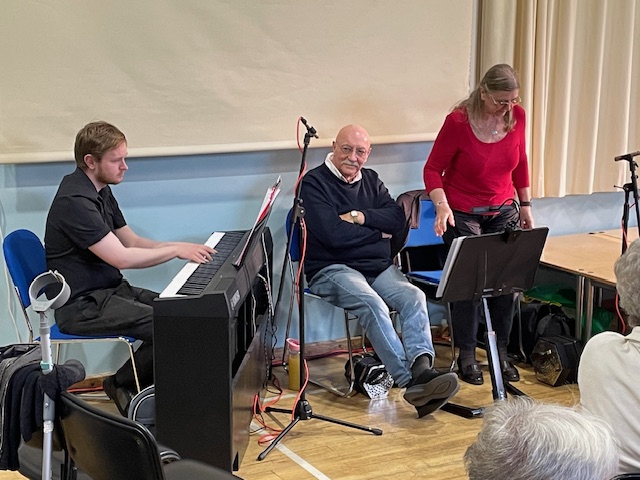
The musical element of our show was of course key. Re-joining David, Sue and myself to perform were our original musicians – folk concertina player Keith Kendrick and partner and co-singer Sylvia Needham. Funds allowed us on this occasion to be joined by Josh Wood. (He as it happens was one of the children involved at Winster school back in 2008).
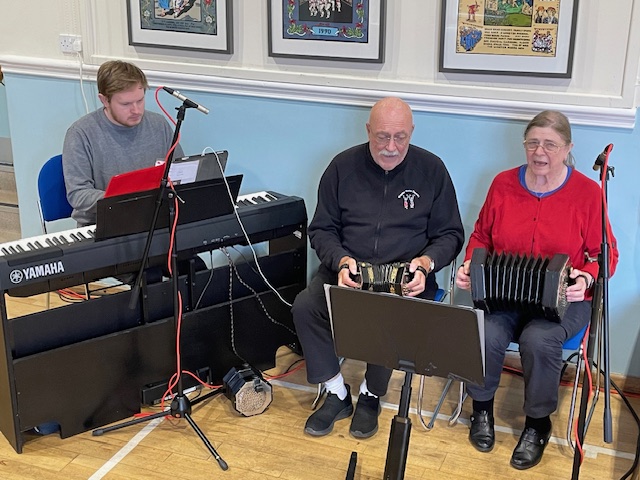
Josh’s piano accompaniment was the perfect companion to Keith’s concertina. Sharp’s dilemma as collector and propagator lay in transposing the authentic folk music accompaniment -represented here by the concertina – to that of the drawing room or classroom, and the piano in our production would speak eloquently to that transition as well as providing underscoring of text at key moments.
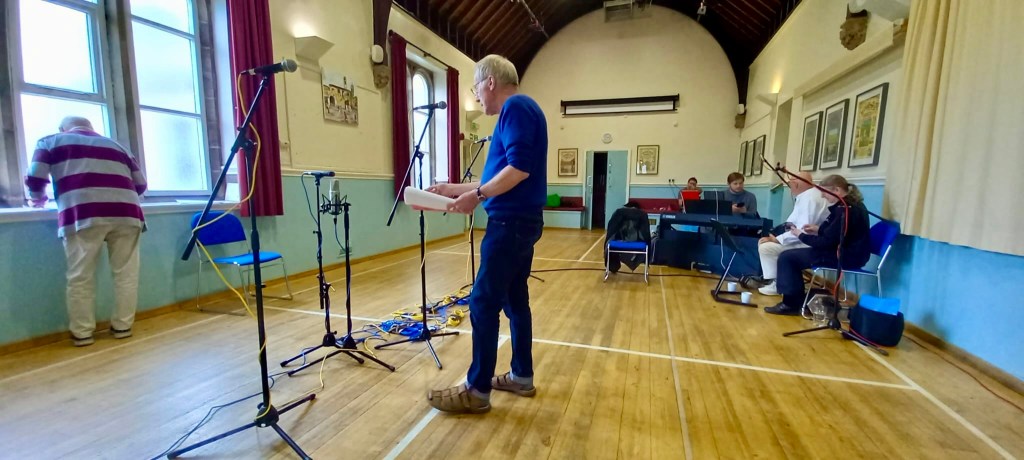

During breaks from rehearsal David – now back as a resident – showed me around Winster. Its attraction for me lies not just in the grander wide main street with its varied multi-storied older properties but in the three dimensional interlocking of domestic buildings on the steeply rising hillside behind.
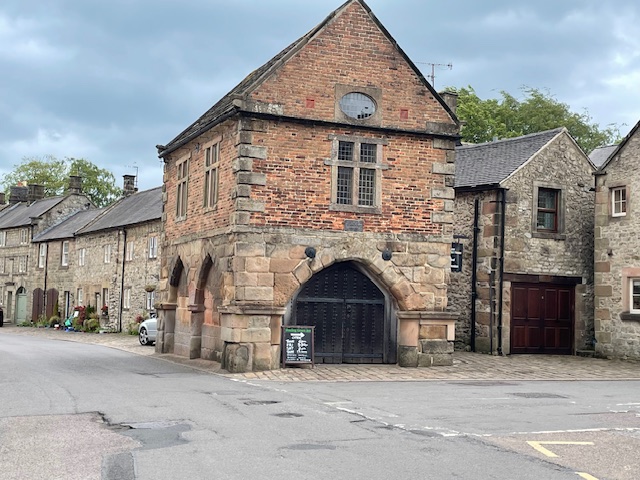
The village has an integrated fabric of stone structures with a maze of lanes, paths & ginnels between them. Today’s restored cottages once housed extensive families of miners, quarrymen, labourers and artisans. The verdant valley location sets the whole off perfectly.
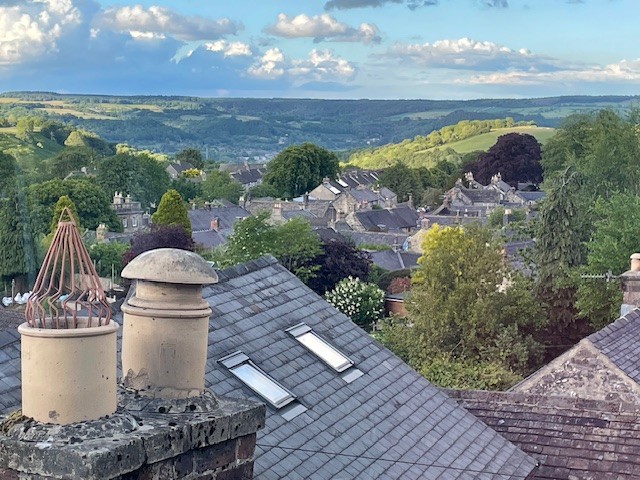
Like many other Derbyshire Dales settlements Winster has a remarkable community spirit. This is exemplified not just by our one off production but by the shop and post office, community run for the past two decades. Wakes Week and Secret Gardens open days were in the offing and David told me that the village used to feature regularly as location in the TV soap Peak Practice.

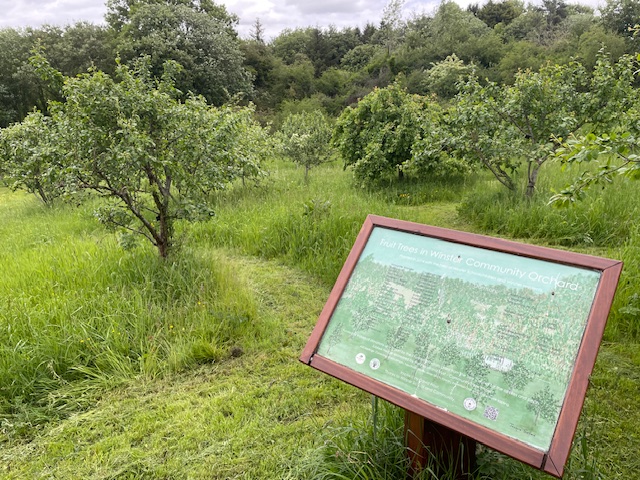
We ambled down a pretty lane lined with terraced cottages to the valley bottom and tried out the impressive outdoor gym equipment (perfect for pensioners like us) and admired the fine community orchard and pond beyond. The former boasts local varieties of fruit, the latter alive with tadpoles wriggling in the shallows while a family of moorhens were splashing over lilies or diving between stands of flag iris.
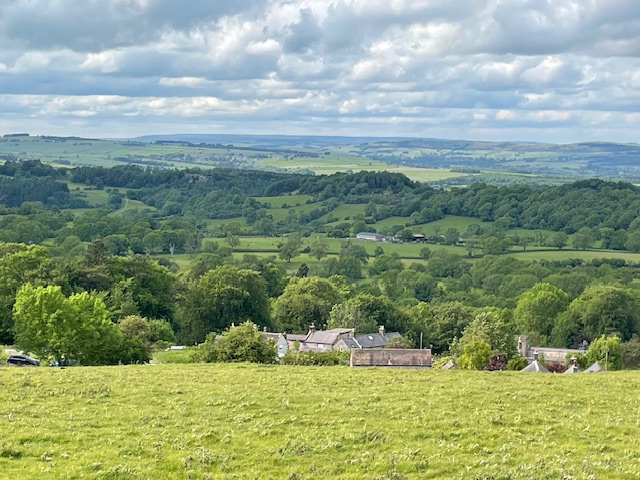
Another ramble of discovery led Sue, Richard & myself above the village to gain panoramic views over meadow rich grazing, tumbled stone walls and ruined barns. Our gradual descent brought us by rambling roses and dense bushy thickets. Nearby were remains of the lead workings which fuelled the 18th century industrial boom that made Winster the biggest, most prosperous town in the Dales at that time.
After three days of rehearsal and setting up we played to a fabulously receptive full house on the Saturday night there in the Burton Institute and despite a couple of technical hitches, which required some re-recording, it went with a swing. Words and music flowed and built beautifully, creating a great atmosphere that left everybody happy as could be, as the applause and sea of smiling faces at the end testified. A pint at the Bowling Green pub afterwards went down a treat as the performance had left us all with a fine thirst!
Bumped into more audience members the next day as we indulged in a leisurely breakfast in neighbouring Elton’s village hall. Local volunteers cooked and served a superb fry up in a bunting draped Victorian hall; visitors and locals alike full of laughter, chatter and general bonhomie.

Later, back in Winster, I joined Keith and Sylvia for tea and cakes outside the parish church. Both catering events are regular Sunday summer dates to raise funds for their respective heritage buildings.

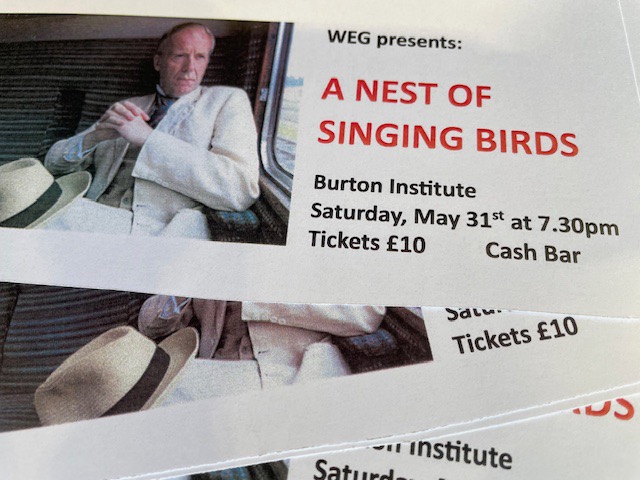
I came home on the train from Chesterfield comforted and grateful for such a joyful and welcoming immersion in community culture, thankful for the rarest of treats as a performer in being re-united with colleagues to record a piece performed all those years earlier. It also amused me that for the first time ever a character I played would feature on the publicity poster and tickets…a career first!
 STEPHEN TOMLIN