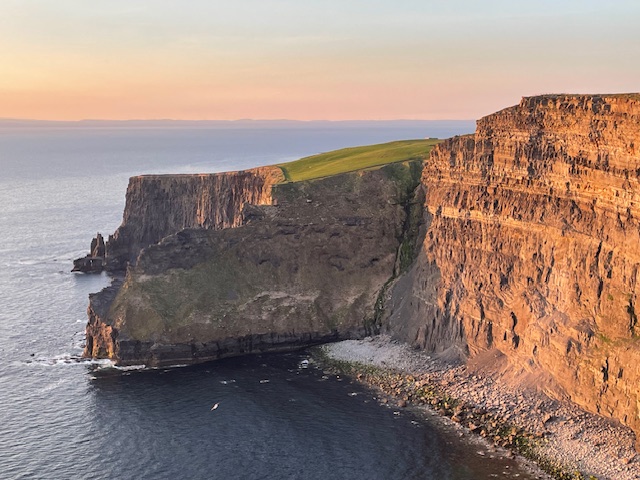
You know that Ireland’s road infrastructure has improved dramatically in the 21st century when you see day trips offered in Dublin to this tourist mecca in County Clare on the ‘Wild Atlantic Way’. That’s a 3.25 hour coach journey to cover the 268k (166m) trip, mostly by motorway, and the same back. One very long day out. And there are no shortage of takers.
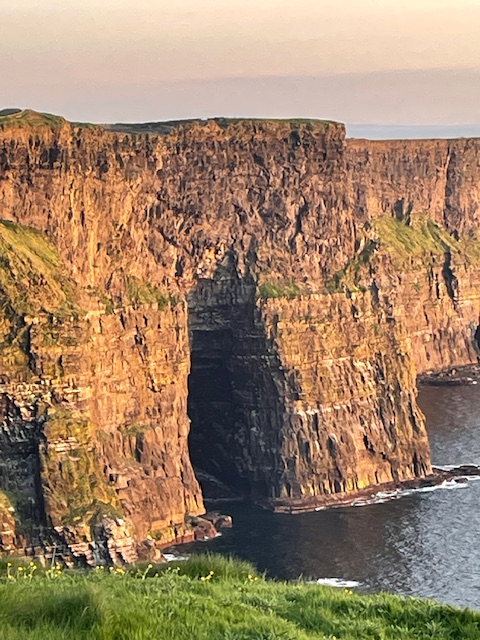
We visited on a weekday evening after the park had closed and crowds had left. To my mind this has to be the best time as the setting sun was starting to illuminate to great effect the 8 Km (5 miles) of high cliff faces, 214 m/700ft at their tallest, to dazzling effect. The place lives up to its hype, especially on yet another glorious blue sky day, offering sublime views over becalmed seas towards America way out west. The sheer cliff faces, eroded by wind and water into caves and stacks in places, providing a wealth of different breeding sites for over 20 species of sea bird and we watched some of them wheel about us in the golden light.

The cliffs consist of carboniferous rock, including shale and sandstone, and once formed part of a delta system 320 million years ago, carried up here from the equator on vast tectonic plates; broken, fractured and stratified on its snail’s pace journey north.
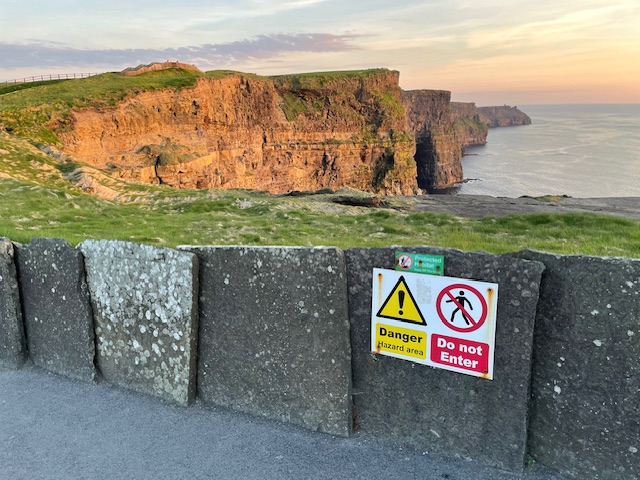
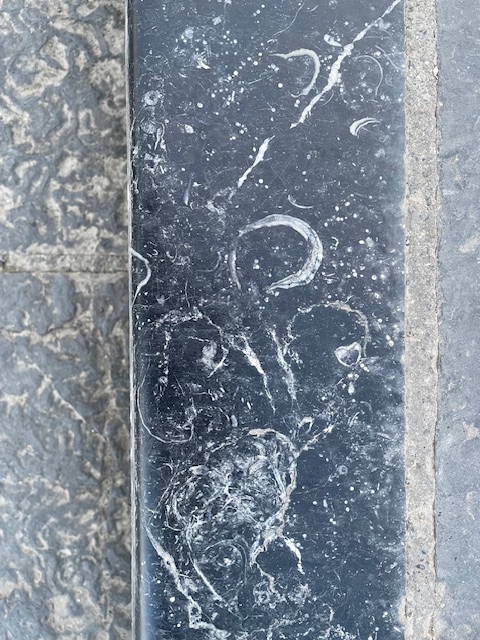
We climbed and descended the cliff tops on wide black marble like steps, tucked in behind a protective barricade of grassed flagged bank, preserved to accommodate the thousands who pay to visit each day. These handsome steps are fashioned from locally quarried Liscannor stone and I loved looking closely at them as they contain a wealth of fossils: crinoids and ammonoids and other unidentified creatures whose trails are preserved for eternity.
The Cliffs of Moher are named for a deserted prehistoric fort on a headland that once stood here before being replaced by a look out during the Napoleonic wars, when national defence was key. In peace time the invasion has been internal and despite concerns about road congestion and overcrowding the locals we talked to welcomed the income tourism brings in its wake.

Reflecting the intrinsic importance of music in the culture buskers have pitches set aside for them at key points along the walks and the nearby village of Doolin is acknowledged as a centre of traditional Irish music.
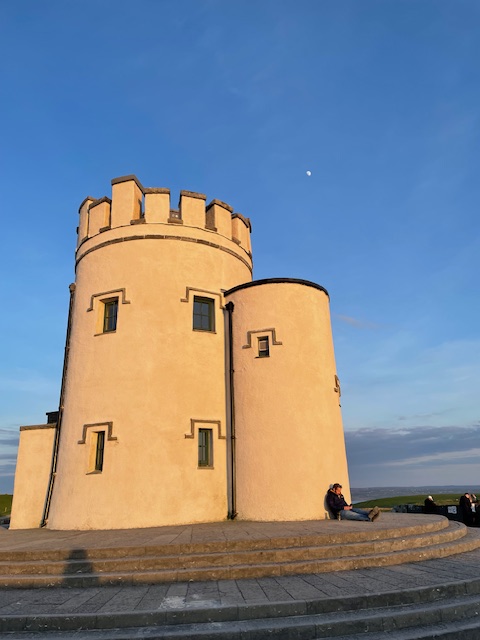
A far sighted local landowner built a viewing place in 1835, now named after him – O’Brien’s Tower – to help foster a growing trend and provide local alternative employment for the remote rural community of the day. Since 2011 The Cliffs of Moher have been part of Ireland’s latest UNESCO Geo-park, along with that most remarkable of internationally renowned landscapes, The Burren….More of which in the next diary.
 STEPHEN TOMLIN