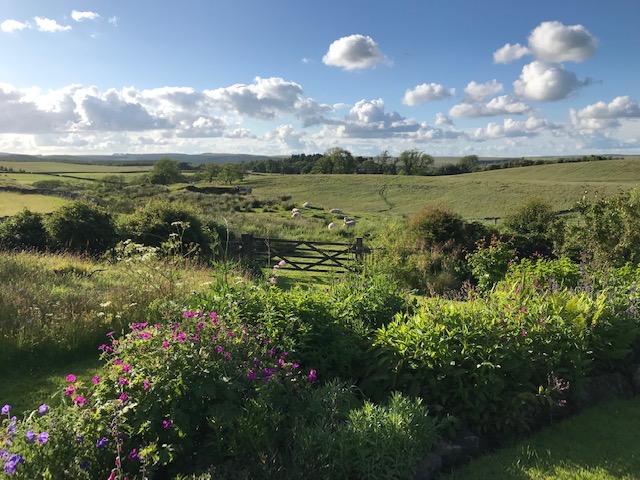
A brief summary of the past month’s wild animal activity in our out-by rural garden. The big advantage of having no dogs or cats on the premises increases chances of encountering wild animals and the privilege it brings of seeing them up close.

Star event has been the up close sighting over three evenings of baby hares – leverets – hanging out in forget-me-nots that have colonised gravel paths between house and hedge. Our viewpoint from the pantry window being just a few yards away. I’ve not the equipment to capture images in near darkness, but the youngsters intimate interaction is engraved in the memory. Best night ‘s observation was the second. Four of the brood bundled together grooming each other’s fur while a fifth, just a foot away, lay facing out into the gathering dark. Was it keeping watch for their dam or on guard duty for predators? Whatever the reason the outrider eventually came back to its brethren and joined in the ongoing grooming process.
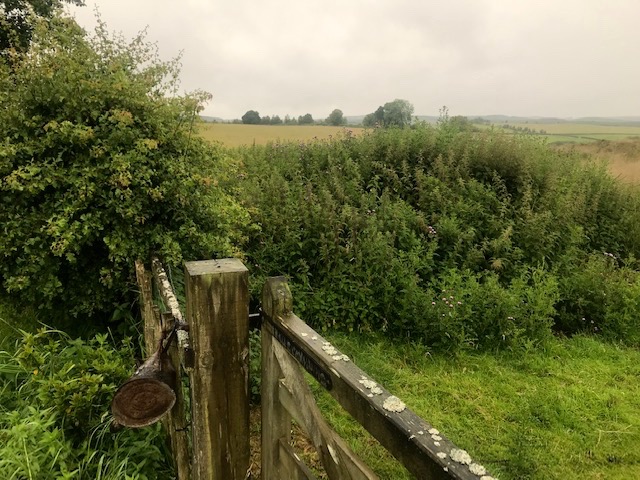
Occasional spotted individual growing leverets since during the day, shooting in and out of close packed flower beds and full leafed copses. The mainstay of family life is their mother, the Jill, who we first saw regularly at Winter’s end. She seemed to have adopted our ever growing garden rubbish tip, t’other side of the fence, as her nursery. Miniature versions of the parents, leverets are born above ground in a shallow depression, or form, and each weighs in around 100 gms (3.5 oz) Unlike rabbits they are fully formed when born, with eyes and ears open. The Jill feeds her litter twice a day but goes foraging, keeping her distance to deter predators like foxes, stoats and weasels from tracking their location. The leverets in turn remain motionless throughout and their colouration helps them blend into the background. They venture out as they grow – as we witnessed – and are fully grown at six months.
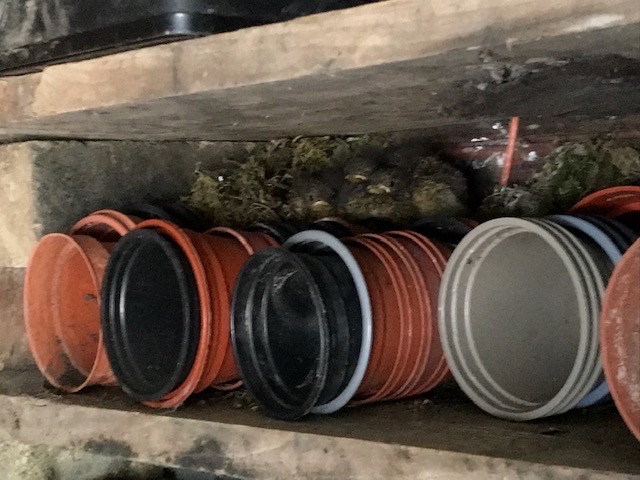
When it comes to seeking out the hidden birthplaces of creatures around the garden we were intrigued to see which of the many wrens nests would be the Jenny’s chosen location to lay her eggs. This one amongst the flowerpots won out. Amusing to see the nestlings sporting top knots of moss wrested from their nest lining. Whirring forms of fledglings often seen since about the place. One’s had to be shooed out of the house and others from under the cars in the yard before driving out.

The railway goods waggon that’s our unusual garden shed has in successive years been home to nesting swallows, blackbirds, robins and pied wagtails, each fiercely protective of territorial space. We have indoor residents and under-the-eaves tenants, and thus they co-exist. The wagtails usually opt for either the suspended metal watering can or bucket. The spill of feather, grass and wool lining indicate eventual fledging. Later came across a second wagtail nest within a tangle of rampant clematis, montana rubens, outside the bathroom.
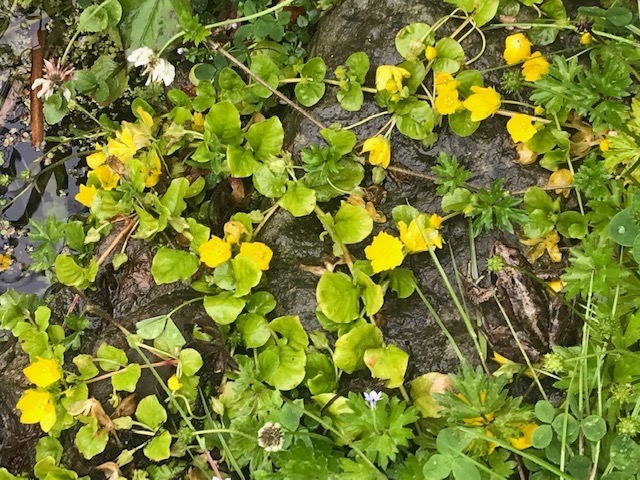
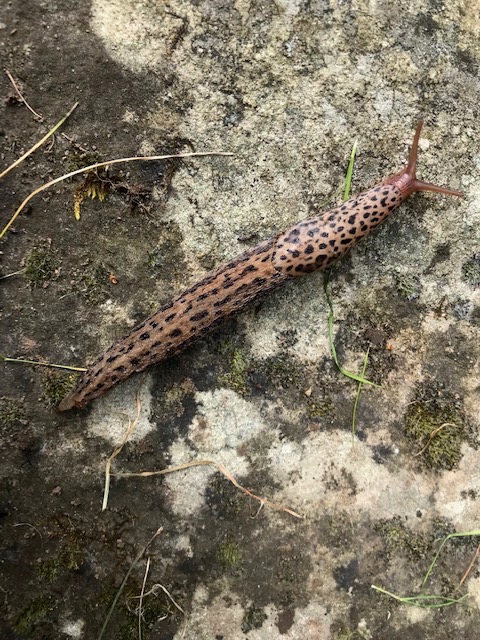
The rain brings amphibians and their ilk out to forage. A frog amongst prostate free flowering lysmachia nummularia at the old pond’s edge one day, or the elegant emergence from cover of a leopard slug on another damp day. There are around forty types of slug in the UK, most of which are not supposed to be crop pests. This one’s beneficial in feeding on a diet of fungi, plant or animal matter and in turn is preyed on by hedgehogs and birds.
 STEPHEN TOMLIN