Hidden River

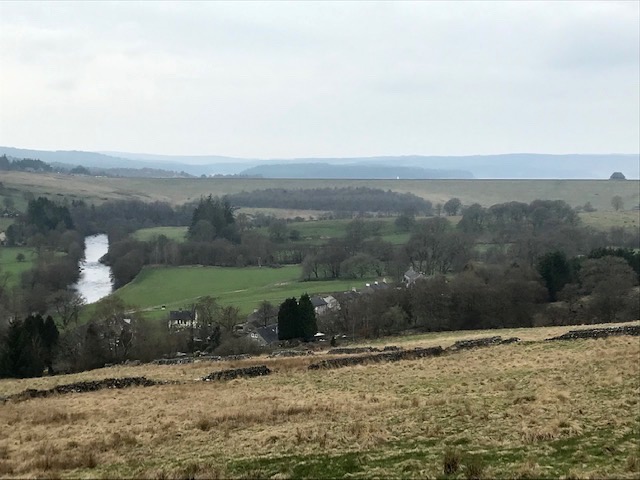
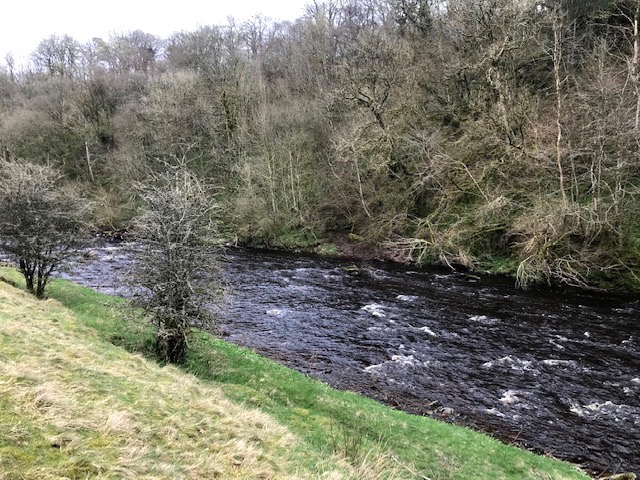
Bound by near roadless swathes of borderland conifer forests to north and east, Hadrian’s Wall and the Longtown Brampton road to the south and the Carlisle to Hawick A7 highway to the west is the remotest corner of Cumbria. Running right through it, to join the tidal border Esk at the Solway, is the River Lyne. Its rapid peat filled waters cut a snaking course through sandstone and its steep banks and remote location have earned it the touristy teasing title of ‘Hidden River’. Lyne in Gaelic means pool or waterway and there are numerous other rivers and lakes with Lynn or Lin in their names scattered through the north and west of the country.

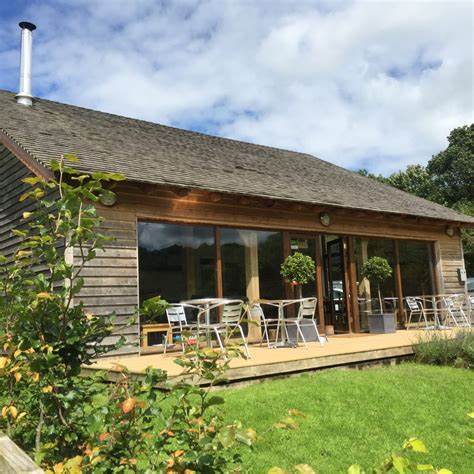
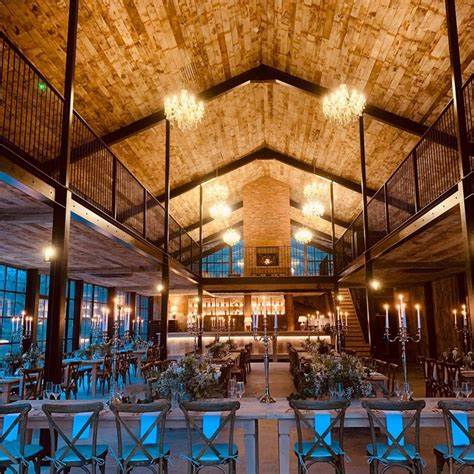
A few years back an enterprising Cumberland dairy farming couple designed and built log cabins on their land here overlooking a particularly attractive stretch of the Lyne. Later they added a log barn for weddings and other events plus a log built restaurant with picture windows and wood burning stoves. In partnership with a resident local chef they set out to woo residents and tourists alike with eclectic, hearty and imaginative menus. A rave write up by Carlisle born reviewer and broadcaster Grace Dent helped boost their reputation nationwide.

Last weekend our Cumbrian based friends invited us over to help discover both food and location on what turned out to be the first official day of spring. Getting there in the first place was a challenge due to the perils of navigating unknown winding lanes through what Ms Dent in her review dubbed ‘miles of rolling green nothingnesss’. We eventually made it and enjoyed a superb Sunday lunch in good company.

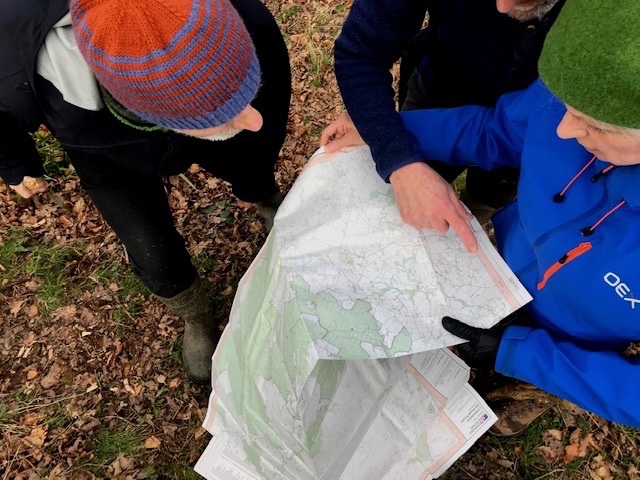
Three hours later, replete and needing that promised exercise, we set off upstream to walk a circular four mile section of the hidden valley.

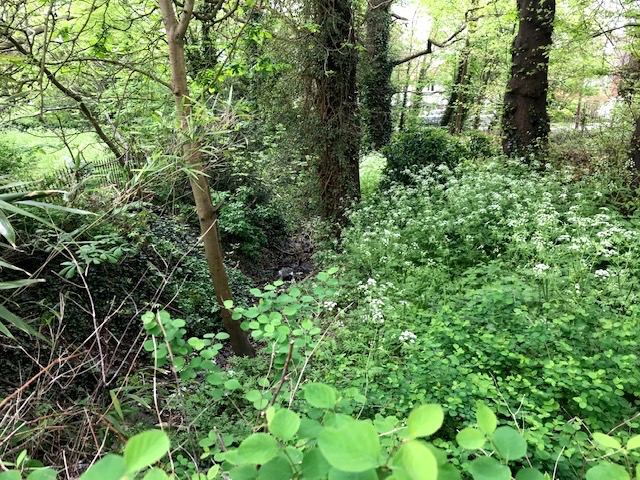
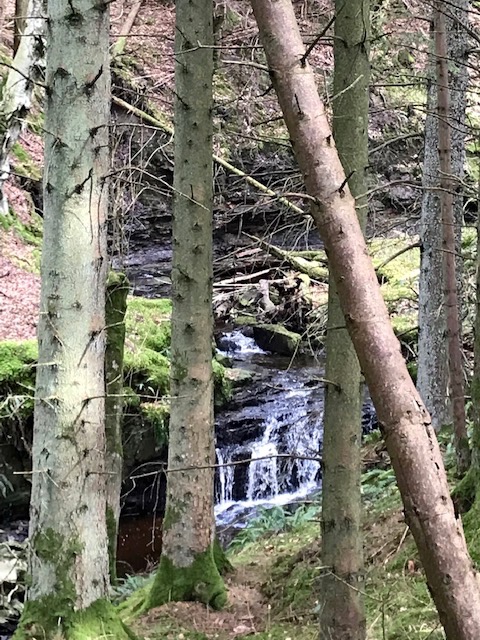
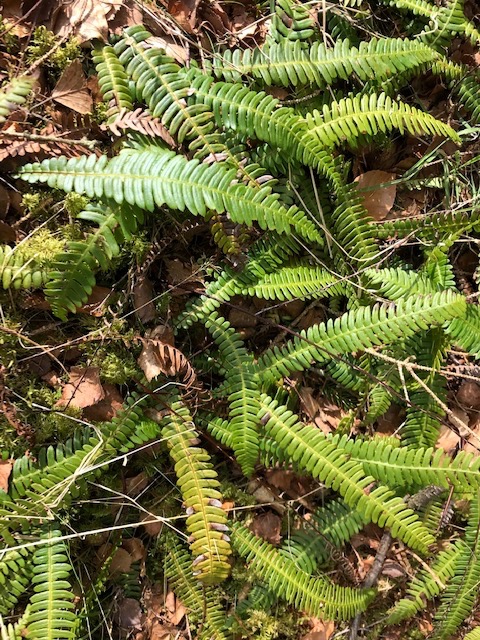
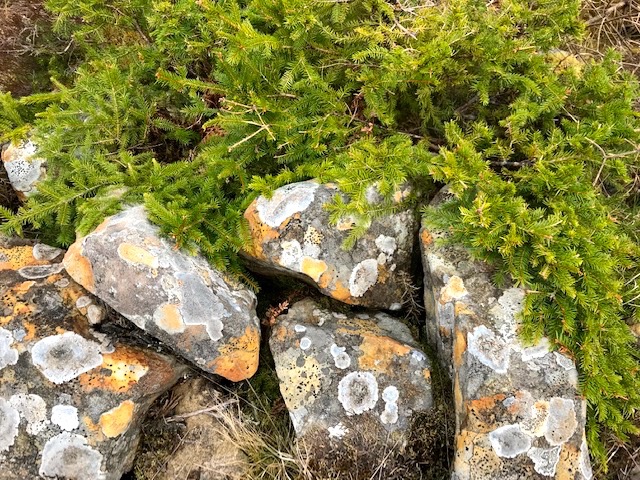
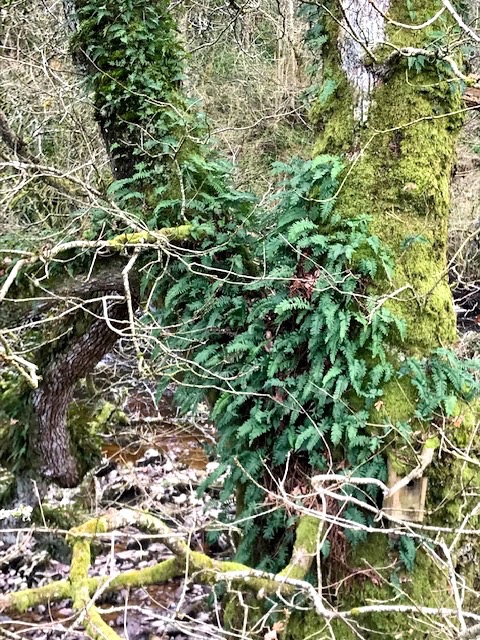
Parking at Stapleton village hall we cut across particularly boggy fields (it had rained prodigiously the day before) before descending to the river Lyne, heard before seen, in dense tree cover. Ferns thriving in the cruck of tree branches and beds of moss on bark and stone indicates the dampness levels here through most of the year.

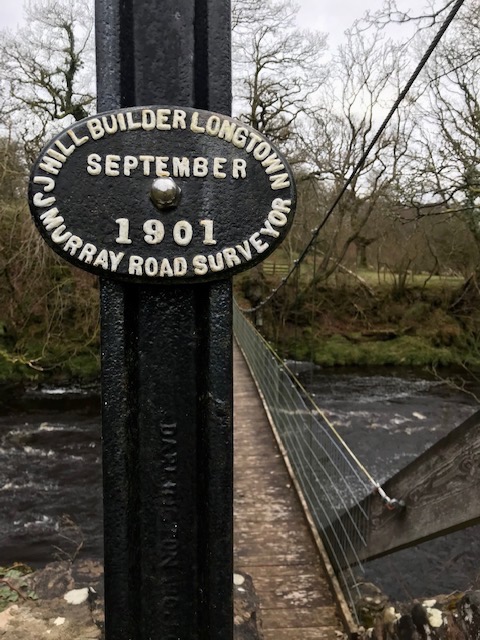
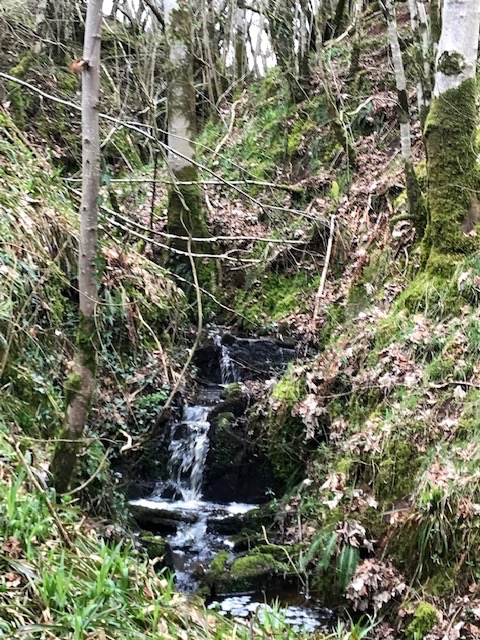
An elegant footbridge spanned the river, proudly displaying its makers seal. Our journey the other side soon brought us to steep sided former coppice woodlands bisected by a series of rivulets, which made progress along the indistinct muddy path potentially perilous in places.

We eventually emerged at height among mature broad leafed trees which gave a fine view over meadows cupped in a wide bend of the river where Roe deer were grazing. Our presence caused them to make their escape, white tails bobbing furiously, with prodigious leaps over fences and hedges.

Greater Wood Rush (Luzula Sylvatica)

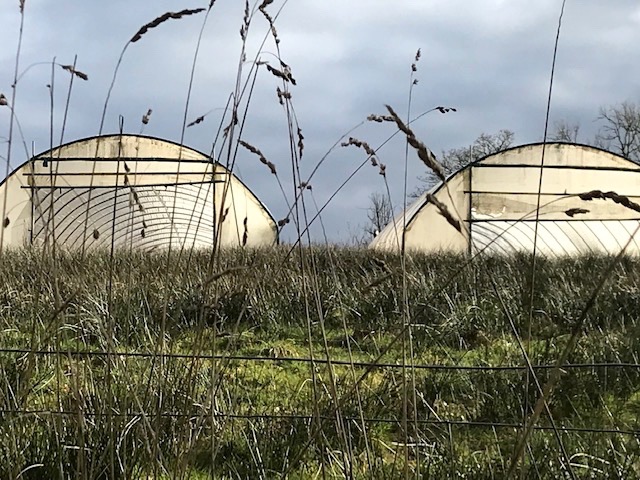
More woodland slopes with celandine, dogs mercury and dense mats of a dominant ground hugger I later discover is Greater Wood Rush, a shade loving plant of acidic soils well at home in woods. We eventually came to a farm housing cows & calves, perched on the valley edge, with an organic side line, growing fruit and veg in a brace of polytunnels.

Soon we came upon a cottage with a tidy kitchen garden and poultry in the dell where a side stream entered the Lyne. The cheery householder was burning wood and waste while his geese were living up to their reputation as guard animals by escorting us through their domain with a chorus of honks.

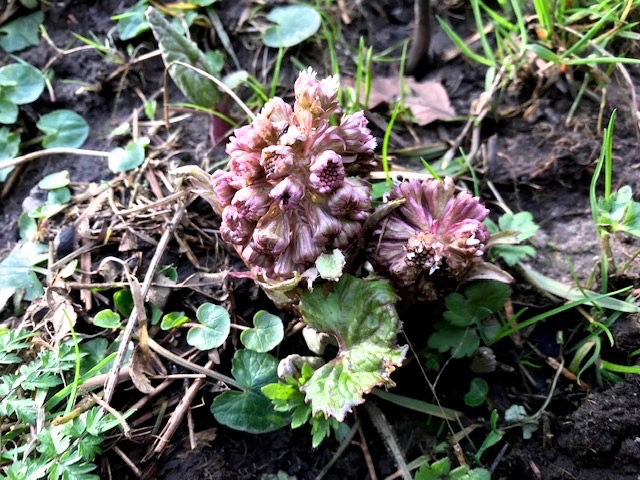
Butterbur

Now back on a concrete access track we could see through the bare trees where the two feeder branches of the River Lyne – termed white and black – converge. A lifebelt indicated a swimming spot in the newly widened waterway. I smiled to see a butterbur, which so loves damp spots, poking its purple coloured flower heads above the soft ground.

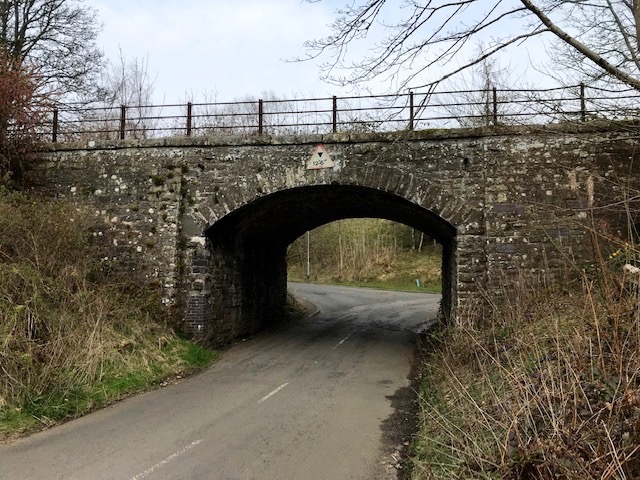
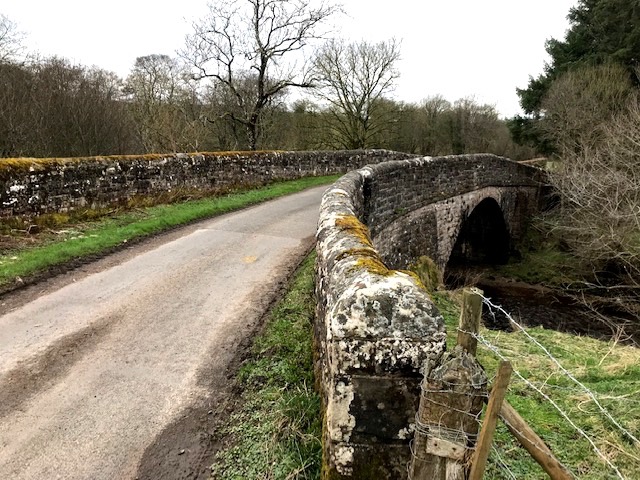
The track joined the public highway where we turned back to cross, in turn, both branches of the exuberant young river. Curious to note the long extended stone walled parapets of the bridge. Indicated to us this design must act as a barrier to the road getting flooded.

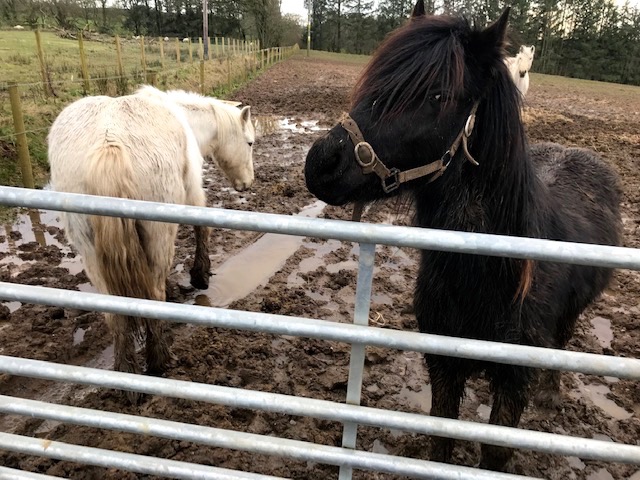
Following the lane up we climbed steadily out of the valley back into the undulating pastureland. Sheep and ponies, thinking we were carrying fodder, tracked our progress and piled in at gates as we passed in hopes of sustenance.

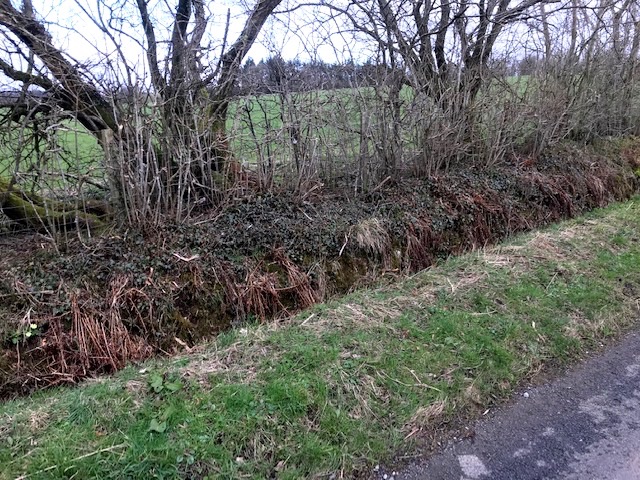
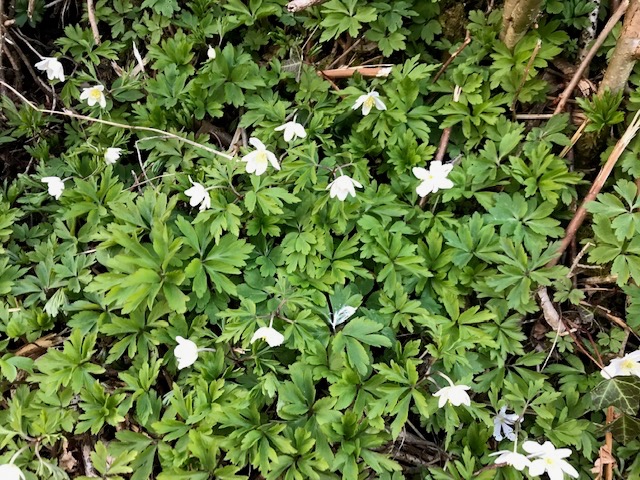
My walking companion, who knows these things, pointed out the ‘Cumberland dyke’ structure of road verge hump, drainage dyke, bank topped with hedge. This stretch was nicely maintained for good off road drainage with primroses and wood anemone emerging along the sheltered bankside. Who doesn’t love these early spring arrivals? Anemone an indicator of ancient woodland, vegatively slow spreading, delicately beautiful and the ‘prima rosa’ living up to its name.

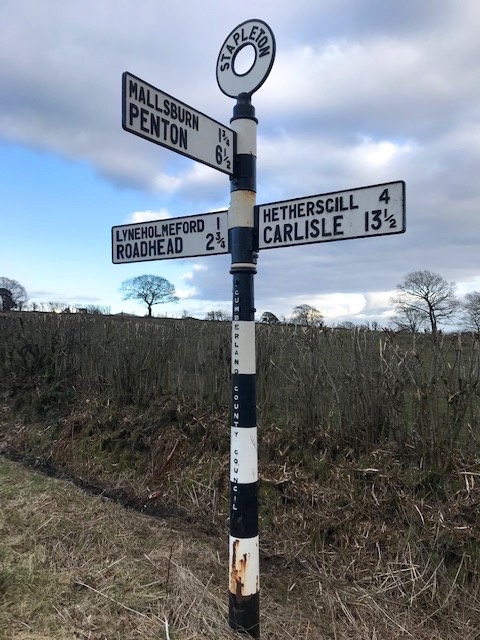
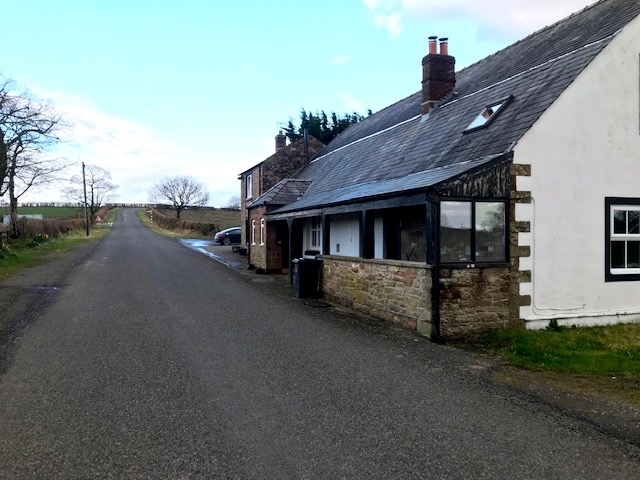
At the incline’s T Junction another fine old Cumberland County Council road sign greeted the eye. Turning right here on the home stretch brought us along what must once have been a drove road. It ran long and straight with wide verges for cattle to graze as they made their journey from the borders to markets in Carlisle or Penrith. We passed on our left an old building which was once a pub, where drovers and countrymen could slake their thirst, but is now a private house.

After bidding adieu we followed our friends car out of the area, glad for the guidance and happy to have discovered more about an out of the way place not so far from where we live but in other ways a seeming world away. A week later and I imagine the flowers we saw emerging will be well on its way to greet the spring in their hidden valley homeland.

Wood Anemone

Pooling Resources

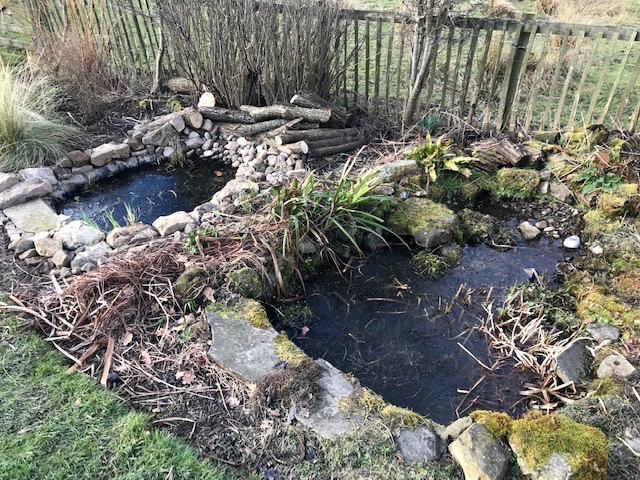
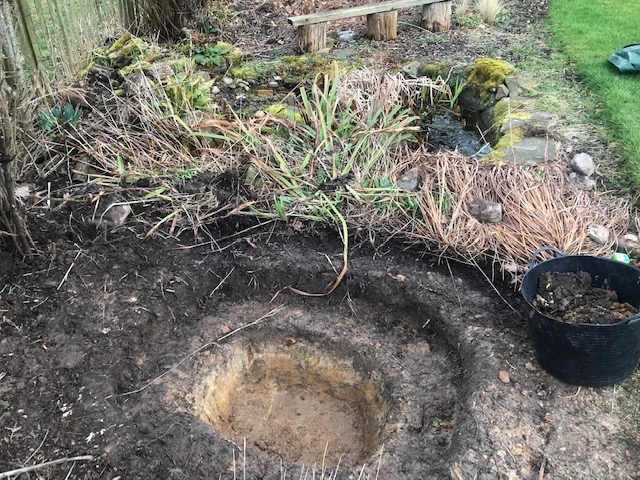
A long held ambition of mine has been to create a second wildlife pond in the garden, next to the original One I built in 2016. I’ve finally got round to doing as winter loosened its grip and spring is making its presence felt here in the hills.

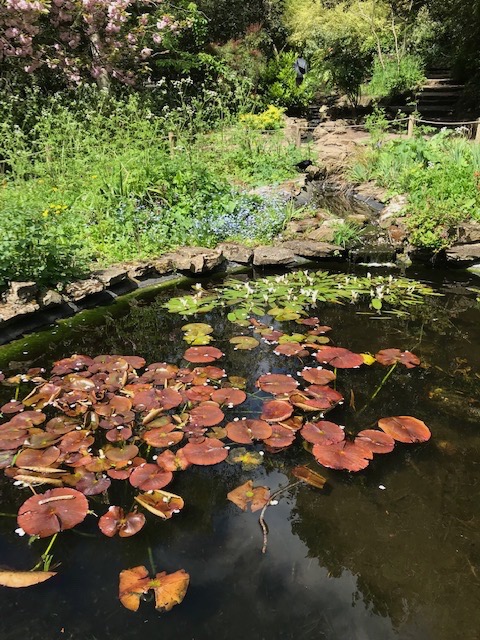
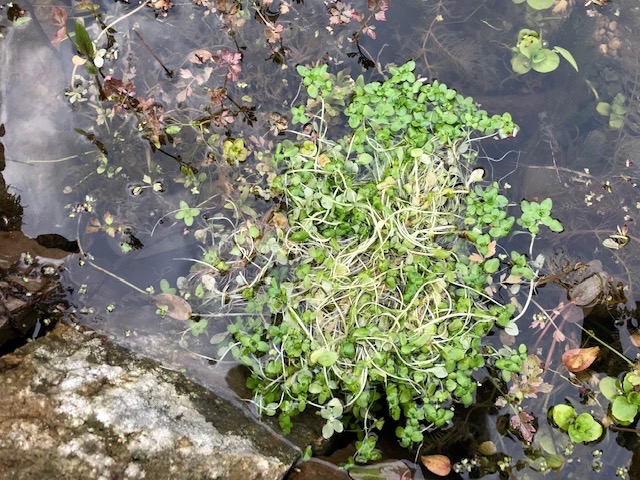
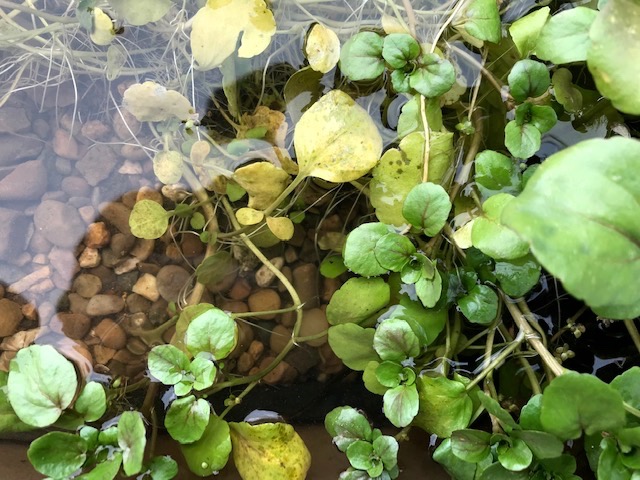
This new pond is a bit smaller and more compact than the old one. I’ve stepped it to house marginal plants all around the edges, with the deepest part reserved for lillies at the centre. Some existing iris and brooklime transplanted for a start.

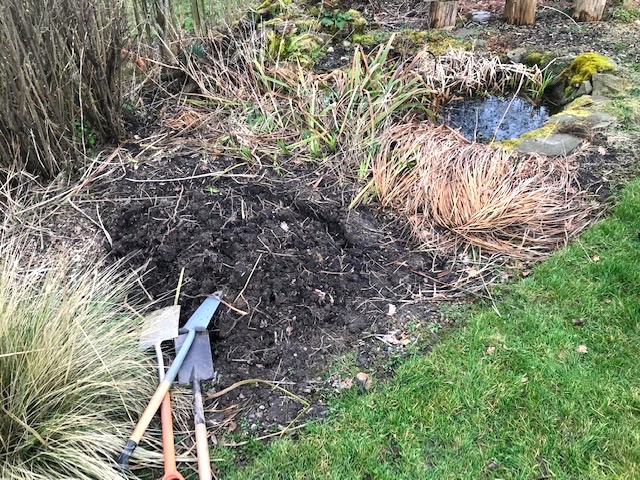
It’s hard work digging into thick impervious clay but that also means the excavation holds its shape well, unlike sandy or light soil which does not. Calculating how much liner’s required is never easy, but of course you need to have more, not less. Glad to say my generous length wise surplus is going to a family member to line a little pond she’s creating in her town garden.

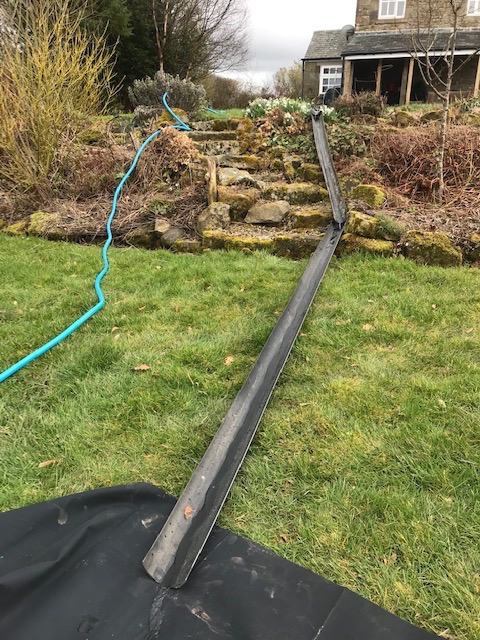
The plan was to run two interconnected garden hosepipes from the two nearest house water butts to fill the pond. Unfortunately, despite looking high and low, I could only lay hands on one pipe. Argh! What to do? Improvise of course!

Found lengths of spare plastic drain and guttering racked in the garage and detached a further short length from the west porch. This got me to the generous apron of spare EPDM pond lining material. Gravity did the rest. Bit more ingenuity needed to empty the second water butt which was further away from the pond but I managed it. Just. 

I’d not properly checked levels with the spirit level prior to filling so some last minute bulking up of edges with excavated clay was called for. Last December’s excavations to replace our spring fed domestic supply (https://stephentomlin.co.uk/2022/12/06/waterworks/) meant there was a stock of unearthed stones about. These I collected in the wheelbarrow to weigh down the liner round the perimeter, thus stabilising as well as hiding it. A couple of nice flat stones made ideal kneeling points for anyone to deal with plants, see what’s going on in the water, net leaves or whatever.

Every wildlife pond needs a beach for amphibian access and for birds to drink and bathe. This pond’s beach is steeper than the former and I’ve pinched pebbles that could be spared from it to provide this essential feature. The lowest point on the pond edge is next to the beach and run off after rain is diverted away, under stones, towards the field beyond. Surrounding plants like the boggy ground here too. Another pond essential is an adjacent shelterbelt that logs and branches can provide. Last December’s diary entry (https://stephentomlin.co.uk/2022/12/03/wood-work/) recorded the felling of an alder and a willow by the kitchen garden. Tree limbs from this operation I’ve used to both secure the liner and provide hiding places for amphibians and other small beasts that use the pond. These logs and branches, as they slowly rot, have the potential to provide excellent over wintering quarters.

It’s just a matter now of restocking with more aquatic plants when they arrive next month in the nurseries. Meanwhile, to help raise oxygen levels and give shade I’ve borrowed generously from the original pool’s varied stock of submerged waterweeds.

Ridgeways and Goatstones

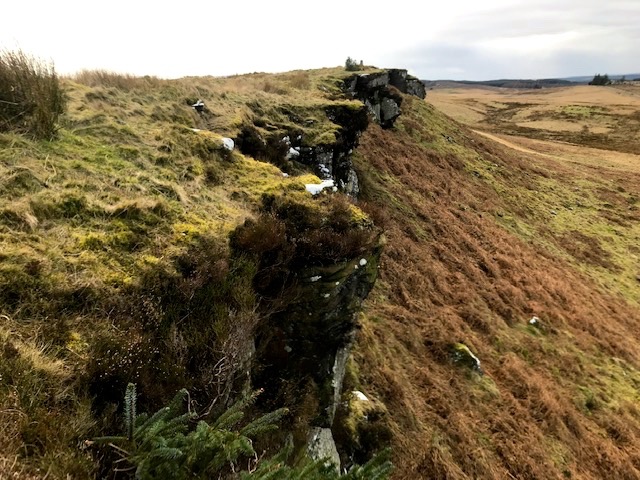
The view from the Corner House northwards is one bounded by the fell that separates us from the big village, while to the south the horizon is defined by a sandstone ridge. The highest and most dramatic part of that scar is Ravensheugh Crags. Easily accessible from a long straight lane that runs along its foot, the crags are popular with climbers. Its extensive face offers some 134 documented climbing routes, from 26 to 79 feet (8 to 24 m) high. Our interest though was not the rocks, quietly imposing as they are, but what lies half hidden beyond its ridge

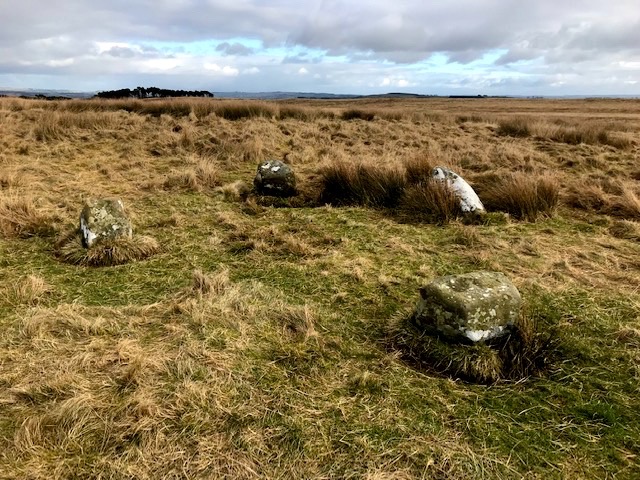
This was only the second time I’d set foot up there and we were keen to discover more about its important Bronze Age history (circa 2,000 – 600BC) by seeking out the Goat Stones. This name derives from the Saxon ‘gyet stanes’ or ‘wayside stones’. In former days cattle were driven to market along ridgeways so a track may indeed have once ran along here before the current public footpath. The Goatstones is a four-poster stone circle and the stones measure some 30 ins in height bedded approximately 13ft apart. What makes them significant are the numerous cup and ring markings, small depressions in the stone, and they’re the most southerly examples of prehistoric ‘rock art’ known in Britain. Most cup and ring markings on four-poster stone circles are found in Scotland, Perthshire in particular.

It’s a site crying out for further excavation and interpretation. Invaluable surveying work was undertaken by the Tynedale North of the Wall Archaeology Group a decade ago, which achieved a lot with limited resources. Reading about their findings and conclusions whets the appetite to know more. In the immediate area of rough grazing and peatbog around the Goatstones they recorded and mapped at least 16 scattered single stones with markings, evidence of both enclosed and unenclosed settlements, stone rows, cairns and remains of fired mounds from the Bronze Age. This high ground may well have had some special significance as a ceremonial site, and was possibly a sacred burial ground.

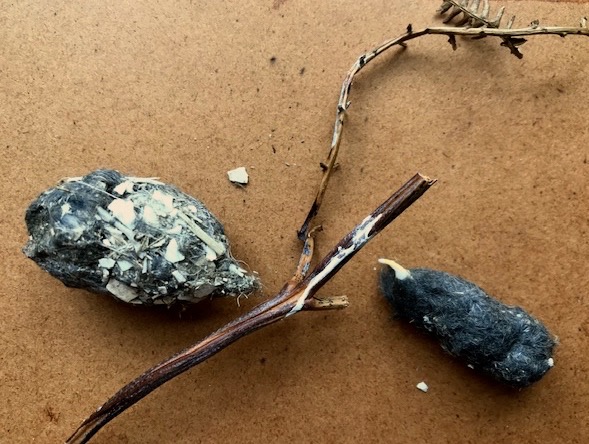
The land immediately behind the crags is bounded by a single strand of barbed wire fencing, a barrier to cattle but easily evaded by sheep and people. Scarred and fissured areas indicate the remains of quarrying in the not too distant past. At its far end the final fence post has provided the perfect look out for a raptor of some description. At foot white splashes of dung and dried droppings reveal  crushed and compressed eggshells, fur, claws among other remains of prey.

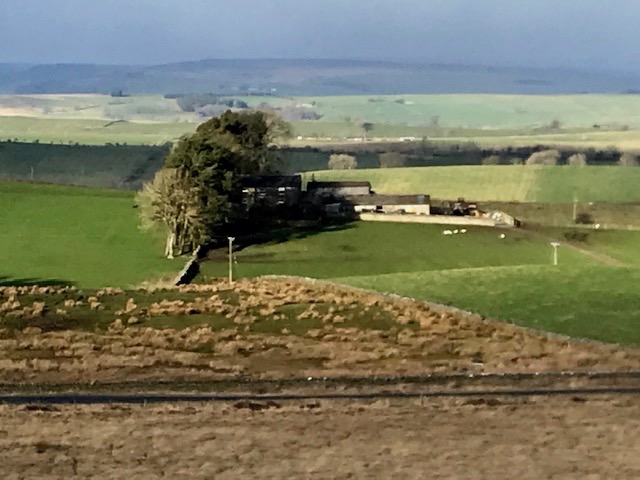
Vistas from the crags are impressive, whether south toward the (unseen) Roman Wall or north to the border with Scotland. Extra delight for us in being able to spy home amongst the scattered farms and dwellings. This is a distinctive landscape of rolling sandstone ridges and outcrops, with narrow valleys either side deepening into wooded gorges, through which peat laden burns rush out of the great conifer forests to join the big river in its arc of fertile valley to the east.

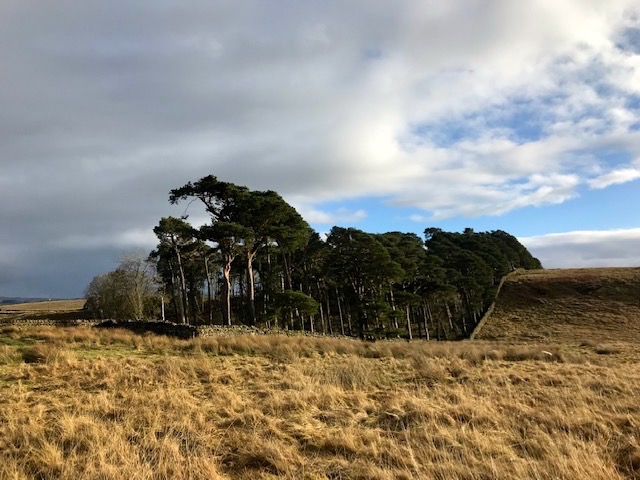
A banked plantation of mature Scots pines acts as windbreak for nearby Goatstones farm. We passed by it on a gentle descent to pick up the isolated steading’s access track which eventually led us back to the lane and our car.

In 2015 a 120 mile long mountain bike cycle path was created to traverse these successive waves of ridges, appropriately named The Sandstone Way. Running roughly parallel with the Scottish border it zig-zags a course through the heart of Northumberland, from Berwick in the north east to Hexham in the south west. Interestingly someone has pinned a note to the cycleway direction marker near where we’d parked. It’s a plea that must reflect a certain tension between some locals and cyclists. It reads ‘ PLEASE Do NOT vandalise this legal waymark. You are damaging rural tourism.’

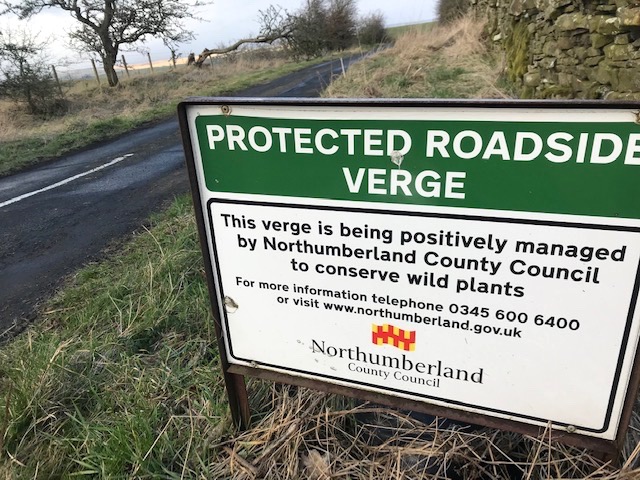
A little further, on a narrow side lane heading into the valley (‘Unsuitable for HGVs’) there’s this additional public notice…Be good to return later in the year to see what the verges look like then. I wish NCC luck as the sentiment is sound and that management will match aspiration. Bearing in mind the cyclists’ addendum I also hope that increased flowering on the roadside provides no extra cause for conflict!

February Round Up

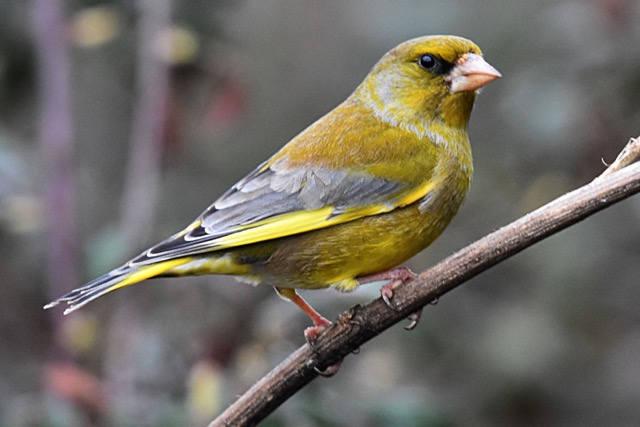
PECKING ORDER. As with humans you need to pitch your food offer right to attract particular avian custom. Putting sunflower seeds on the menu alongside peanuts and fat balls has attracted goldfinch, siskin and greenfinch to join our café regulars of tits, robin, dunnock and blackbird. Greenfinch is something of a threatened species due to their susceptibility to trichomonosis, a parasite induced disease that prevents them feeding properly. Our birds hog the food and brook no fellow diners. The stout beak and dark band across the eyes add to their suitably fearless appearance. Away from the feeding area I watch our resident clan of blue tits pairing off to go about their courtship displays, alternately leaping up and down in the air from a branch followed by an exuberant chase, repeated many times. Truly the joys of Spring.

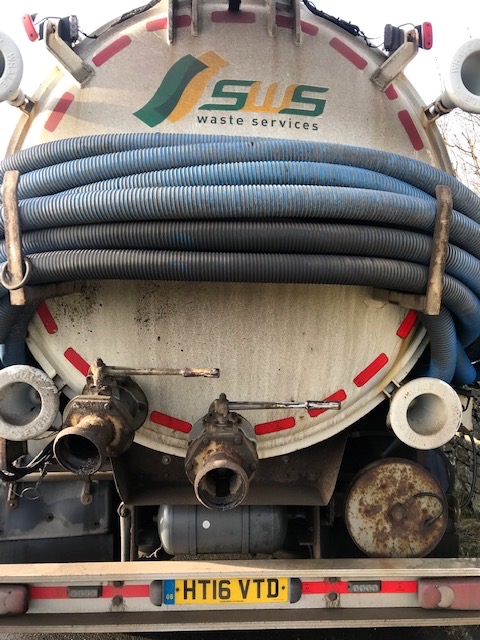
FLUSH WITH SUCCESS. Every five years or so our septic tank at the bottom of the garden needs to be emptied. Jim, our contractor’s gentle giant of a tanker driver, uncurls the suction pipes, links the sections, shifts the concrete slabs that cover the deep lined pit and drops the end in. Engine on and within minutes the load is extracted and will be driven off to the nearest sewage treatment works. We need to replace some of our concrete cover slabs as a few have cracked. Until I’d cleared it for the operation five years of creeping vegetation in the copse had effectively hid the subterranean tank from view.

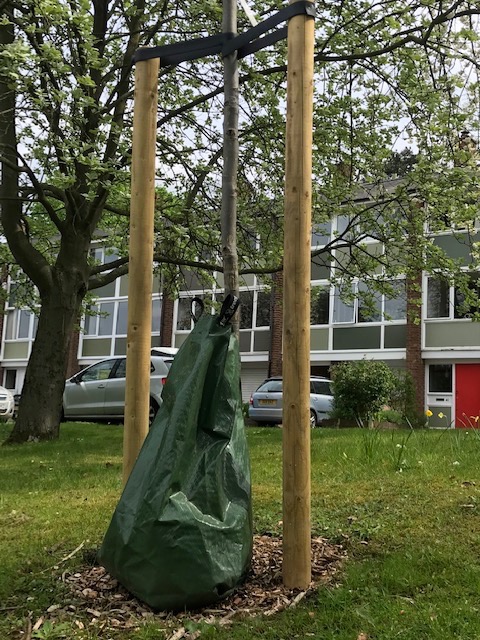
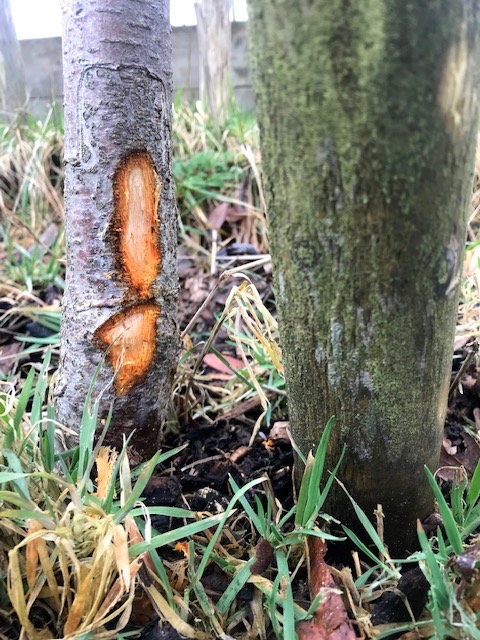
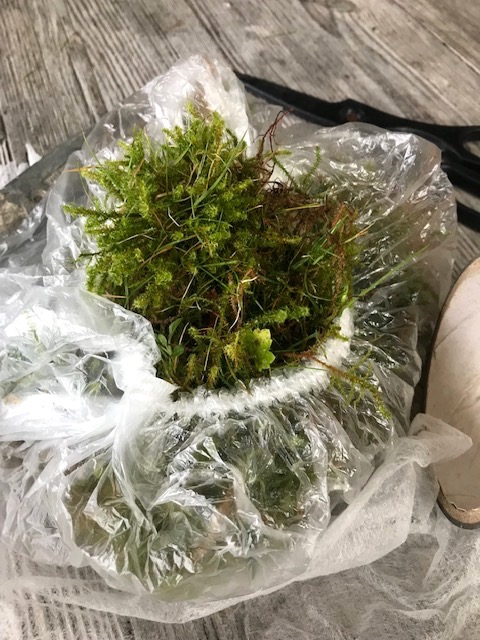
FIRST AID. Re-staking a young apple tree I inadvertently scarred the trunk with the post banger I was using. To avoid infection I gathered moss from the lawn, sealed and secured in a plastic shower cap, then duck taped round the trunk. Hopefully the damp and mildly antiseptic cleanser will help the tree heal naturally over the year to come.

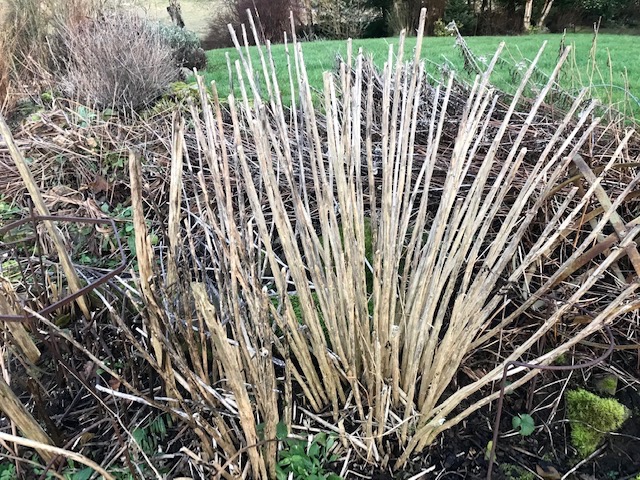
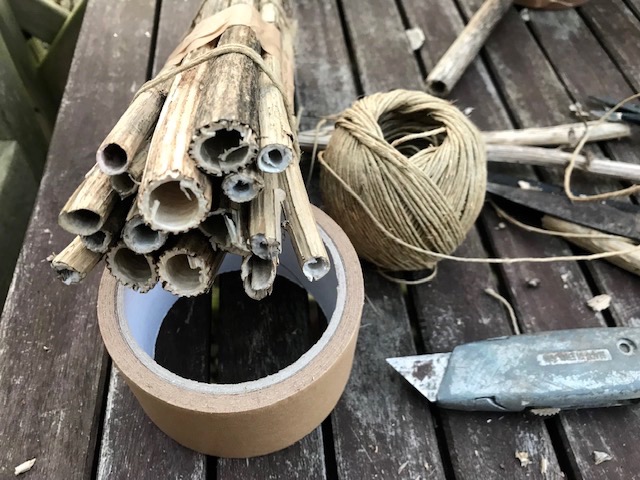
CUT AND COVER. This month we’ve been clipping with sheers the overwintering dried stalks of perenniels like broad-leaved bellflower. The pieces provide a crude mulch for the bank as they fall. Some long stalks I retain to cut, trim and bind in bunches. The hollow stems will make for ideal ‘bee hotels’ when placed in nooks and crannies round the garden.

DISTANT DRUMS. Loud noises off in our rural neighbourhood might be caused by firings at one of the area’s quarries or activity on the military’s vast training grounds to the north, on the moors. Soft repetitive thuds or echoing retorts have been superceded by louder and more resonant booms in recent weeks. In conversation with folk I hear that Ukrainian armed forces are being trained to use heavy artillery up there. In scattered communities even closer to the firing grounds vibrations and noise levels are severely impacting householders but given the war context they duly bear with the disruption.

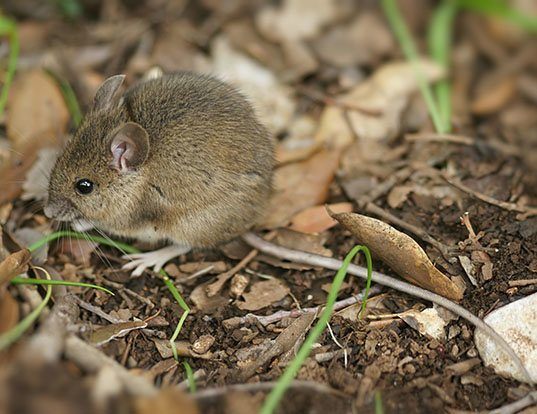
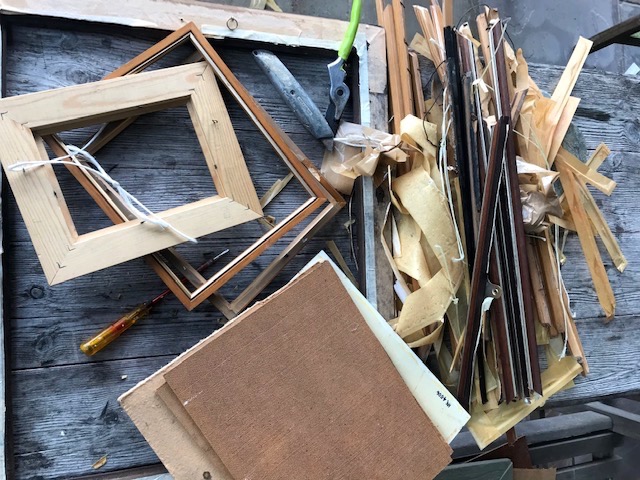
ATTIC CAPERS. Our builder Gordon is back to replace the decaying coroline roof of the workshop/garage with a new galvanised green metal one. That means we need to sort the accumulated circus of stuff stored in the outbuilding’s mezzanine loft. In the process we discover that big oil paintings of landscapes have been cannibalised by mice to make their nests. Lots of mouldy old frames, glass and mounts detached and broken up, ready for a trip to the tip, alongside carpet remnants, pin boards, dead electrical equipment, assorted plastics etc. Best quality prints or drawings that can be reframed are retained but most, sadly, we just have to let go.

POND PREP. Spring’s the best time to create a new pond. I’ve surface cleared a level patch some 2 x 3 metres, close to the existing pond at the bottom of the garden. Fun and games assessing how much butyl like liner needed. (Measure length, breadth, depth and add extra for edging). My earlier order got lost at the manufacturers. A helpful phone call got things sorted and now the big heavy roll of EPDM liner lies on the deck outside in front of me as I write, prompting action! Below the topsoil there’s serious clay so it won’t be an easy dig and I await a spell of good weather to begin my labours.

CRIME TIME. I was invited by a local WI branch to reprise a reading given last year in the village’s Town hall of an entertaining crime story, My Oleander, by Kate Ellis. The welcoming members were an appreciative listening audience in the intimate setting of the small village hall where they hold their meetings. They treated us afterwards to a delicious home made Jacobs Join of a supper, with lots of great conversation. Interactions like this that make my heart sing and remind me why I wanted to be an entertainer in the first place and why this is such a good place to live. Great to have Kim with me too, as she caught up with some of the women known from her own farming days here in the valley.

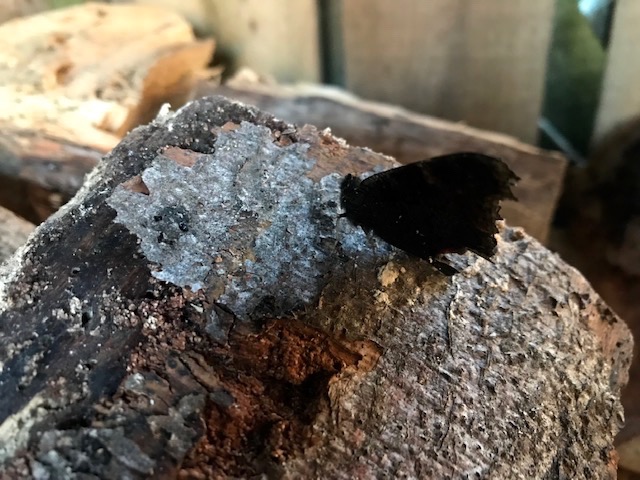
ON THE WING. As the days lengthen and the earth comes slowly back to life the emergence of different life forms continues to surprise. Like drifts of snowdrops, which are always a joy to witness spreading to new locations year on year. When shifting logs in the store I inadvertently disturbed a butterfly that has been overwintering there. A brief open wing moment revealed it to be a peacock. It soon closed up its wings though and hopefully will settle back in its shelter until the true time comes to emerge and fly.

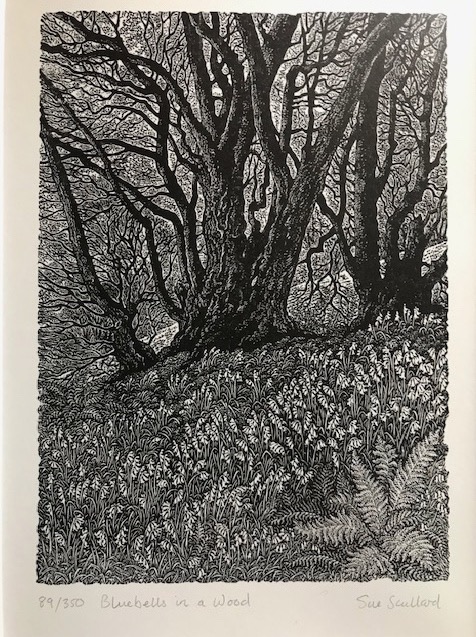
VALENTINE PRINT. Every year the Rheged Visitor Centre off the A66 outside Penrith hosts a print exhibition where some sixty artists work is on display in their extensive gallery space. Part of the Tebay Services family, Rheged has a cinema, shops, café and an adjacent service station. It’s recently had a make over and emerges an even more attractive and welcome visitor facility at the gateway to the north lakes. It’s rare for Kim and I to agree which print in an exhibition is our favourite so when we do (and it’s in the wake of Valentine’s day) then we dive in and buy it. Here’s a detail of ‘Bluebells in a Wood’ by Kent based print maker Sue Scullard. (Print size: 4’ x 5.5’)

Drawn Back

‘Somewhere in Northumberland is the working sheep farm where Kim Lewis writes and illustrates the books for very young children that have been shared by countless parents and boys and girls around the world. She draws what she sees around her and provides us with an intimate portrait of farm life in the remote rural north-east  . . . The natural rhythm of the countryside: the routine of each day, the passing of the seasons, the birth of young animals and their growth to maturity, are all part of the cycle of stories that reflect different stages in the development of very young children . . . . . Kim’s stories and her pictures are one of the best attempts you are ever likely to find at capturing both the magical kingdoms of early childhood and some special places in the Northumberland countryside that are still out there to be rediscovered.’ From: Journey to the Hidden Kingdoms by James H Mackenzie; A Guide to the Children’s Books of Newcastle, North Tyneside and Northumberland

Our most recent walk was a new one for friends staying with us last weekend but not for Kim. Anyone familiar with the children’s picture books she wrote and illustrated for twenty years when farming here in Northumberland with her late husband Flea (Filippo) will have a sense of the upland landscape in which those wonderful stories are rooted. Kim rarely has cause to return to her former home these days so our three mile varied perambulation over fields and fell and by woodlands and along the river was also an emotional immersion in her past.

Weaving through a housing estate on the edge of the big village which is the dale’s main settlement, well supplied with local shops and facilities, we gently ascended a metalled track to reach an old farmhouse and outbuildings. Looking back the horizon hugging wind farm looked closer than it is, revolving arms reflecting low afternoon sun against a dark sky.

A steep ascent followed as we crossed a stile onto the land that Kim and Flea managed and bought up their two children. A thousand acres, mostly rough grazing on open fellside, supporting a herd of suckler cows and 600 Scottish Blackface sheep. The large farmer and stock breeder they worked for in turn rented this farm from the upper valley’s main landowning family in residence at the big house across the river. That family were the principal Reiver clan during the feudal era here in the Borderlands where the Kings of Scotland and England were rulers in name only and localised power lay in the hands of the warlords and their various shifting affinities, bound by blood ties or tenancy, securing life and livestock in fortified stone buildings known as bastles or peles.  

In the wake of near constant rain the ground was soaked and had been widely poached into thick mud by the feet of hundreds of sheep crammed around ring feeders and low loaders where bales of hay had been dropped. A large mixed flock of Blackies and Swales watched our progress with cautious curiosity as we passed through the old quarry with its clitter of abandoned rock, then along the deeply rutted puddled track where generations of carts, tractors and quads had passed. Kim set a number of scenes on this exposed moorland with sheep and border collies in action mode. Like this snow scene with the escaped puppy in ‘Just Like Floss.’

The view from the top of the escarpment was a gorgeous one, albeit part blinded by the lowering sun. We paused by a local landmark, which also features in Kim’s illustrations. The weather worn ‘lone pine’ now has the close company of another, planted by Flea to keep continuity, as the original started to die back.

We descended to pick up a small stream, passing a couple of sheep carcasses picked clean by predators, then through a gate into a field which contains an old oak wood. This covers the site of a Romano-British settlement, at least 1800 years old, consisting of at least four round huts and subsidiary stock pens within an outer ditch and bank. These typical features remain as faintly delineated earthworks and were the subject of a university excavation in 1958 that established the steading’s lay out and structure and lead to its eventual listing in 1973, over a decade before Flea and Kim took on the farm.

The wood in being grazed by stock is unable to fully regenerate. The remaining woodland on the other side of the fence though is ungrazed and can grow naturally. During his tenancy Flea had that part of the woodland fenced off and even transplanted saplings by hand to help the natural process along.

Immediately below the trees lies the trackbed of the former Border Railway, following the valley contour, cutting clean and deep across our downward path. Here a fine old footbridge has been restored and is maintained by National Park volunteer rangers, allowing walkers to cross in style from bank to bank.

Kim set one of her most creatively atmospheric adventures (a personal favourite of mine) in a linesman’s hut just below their farmhouse, entitled ‘The Last Train’ The National Park also restored the hut out of respect for the line & the story.

Reaching the valley road we turned back towards the village and after a few hundred yards left to follow the river along its bank aside the farm’s flat meadow hay field and banks of copses back to where we started.

We enjoyed a view across the water through an avenue of limes of the grey stone fronted Palladian mansion that gives a panoramic view of an extensive landscape in its charge.

A bend in the wide river revealed a local bathing and swimming stretch, a scene captured in illustrations for ‘One Summer’s Day’.

Taking advantage of a fine January day this was a revealing walk in so many ways, and one to savour, made the richer through Kim’s intimate connection with the land and those who work it, which in turn gave life to stories and imagery shared with generations of appreciative readers in this country and abroad.

River Beat, Sugar Beet

‘If God wills it…the summer rains will fill the wadis…and the salmon will run the river. And then my countrymen…all classes and manner of men, will stand side by side and fish for the salmon….And their natures too will be changed. They will feel the enchantment of this silver fish…and when talk turns to what this tribe said or that tribe did…then someone will say, Let us arise, and go fishing’. (From ‘Salmon Fishing in the Yemen’ by Paul Torday)

Living as we do on a high land of permanent pasture, forest and rough grazing it’s interesting to explore the valley below and the river running through it. Not an easy task as most of it is the property of a cluster of landed estates, experts at extracting every available commercial resource from soil, wood and water and keeping public access to a minimum.

We park on a wide verge and follow a private cul-de-sac passing one of the estate farms, isolated cottages and corrugated iron barns, with a modern timber framed anglers rest room at its terminus. We pause to take in the runs and pools on the river where rods will soon be paying top rates to cast their flies. The river here, from a fisherman’s point of view, is a dream come true. It runs wide, fast and free of obstruction, oxygen rich, characteristically chocolate coloured with peat from the bogs of its source on the border with Scotland.

Acknowledged as England’s leading salmon and sea trout river, the Tyne’s restoration to ecological health is a rare success story. The vast majority of our country’s rivers and waterway are in a bad way ecologically, due to scandalously bad management and societal neglect, so what makes this an exception to the rule? The end of toxic heavy industry and clean up on the urban tidal estuary and a purpose built hatchery near the source, that has released hundreds of thousands of fry into the headwaters have worked wonders. Back in 1959 no salmon or sea trout were caught anywhere on the 1,000 square miles of its catchment. Today an average 30,000+ migratory fish pass upstream annually and the average yearly catch along the Tyne’s 100 miles of fishable banks is an impressive 6,000.  

This whole stretch was deserted on the Sunday we visited. The season opens again on February 1st and I discover later that this beat is completely sold out for the year. It will bring considerable income to the estates whose farm and former deer parks frame and define this classic landscape, and their ghillies will be present to police it. This particular 1,000 acre agricultural estate is run from an imposing big house at the valley’s fertile heart. Its core a 14th century Pele Tower – the most impressive and best preserved in the area – fronted by a Jacobean mansion, largely remodelled in the 19th Century.

A short stroll away is a modest 18th century chapel where successive family members are commemorated. One of the most recent plaques is for successful regional businessman turned novelist Paul Torday (1946-2013). He was a renowned fisherman who lived at the big house and knew this river intimately. His first novel, written at the age of 59, Salmon Fishing in the Yemen, became a worldwide bestseller. It was made famous by the feature film starring Ewan McGregor, Emily Blunt & Kirsten Scott Thomas. 

Our winter walk allows for longer revealing views through nature’s architectural forms so more of the landscape and its structures are revealed. A fine view on the opposite bank for instance of an early C19th water powered corn mill, part of the neighbouring estate, in use until 1960. The small stream entering the Tyne there that once powered the undershot mill wheel and much of the old machinery is reported to lie intact within. The miller’s house is occupied and stands a fitting companion next to it.

Our way continues as a public footpath, threading through newly planted deciduous woodland. Eventually we had to divert where a side stream entered, ascending between lines of poplars, up and out of the floodplain onto the back road linking the valley’s scattered settlements.

We turned back homewards along this quiet lane and discovered something tucked into the hedge bank I’d always overlooked when driving by – a stone trough below a spring. In former days a place for draught animals to drink. Shortly after we turned off on a rising farm track to gain the former Borders Railway, running parallel with the road, which once connected the valley to the wider world between 1864 and 1956. We carefully descended the steep worn steps from a bridge, still in good condition, but otherwise marooned in a swathe of estate farmland.

The wooden right of way signs, styles and gates we passed on our walk were all worn and sagging and in need of replacement. Pleased though to see most of the gaps in field hedges had been filled with infant thorn trees in guards, so conservation management measures of a sort are in evidence. The main arable crop being grown here looks like either leaf beat (cattle fodder) or sugar beet. If so then it’s a relatively new cash crop hereabouts, which got me wondering why it may have been planted in such quantity.

Later, I did the research…Most of the world’s sugar is produced from cane grown exclusively in the tropics. Since the mid 18th century the search for alternatives that could be grown on the European continent has seen development and growth of sugar beet on a huge scale to supplement our ever growing demand for the sweet stuff. Some 75% of the actual beet is water, up to around 20% Sucrose and the remaining 5% pulp, a by-product used in manufacturing animal feedstuffs. The world’s largest sugar beet producer is Russia. That country’s invasion of Ukraine has highlighted food security concerns worldwide and put rockets under domestic production. Although banned across the European Union certain key pesticides types are still allowed in post Brexit Britain. For the third year running, HM Government has allowed ‘emergency’ use of Thiamethoxam, a highly toxic neonicotinoid chemical used as a crop pesticide against damage caused by aphids. The RSPB, Friends of the Earth, Wildlife Trusts and other environmental organisations are deeply opposed, citing numerous scientific studies that associate their use with drastic decline in pollinator numbers, especially those of bees. In turn this has fuelled grave concerns over accumulative negative impacts on wildlife and human health.

The old trackbed is virtually all privately owned and consequently became inaccessible to the public after closure. In a progressive and equitable world of course the line, where it still exists, would – through a mix of compulsory purchase and negotiated settlement – be turned into a cycle and walk way. This would open up to  residents and visitors alike a safe, sustainable, healthy and enjoyable way to access our countryside; a way to commute to work or school, and otherwise promote the new green economy that would benefit everybody…But of course I’m merely daydreaming what our 21st century countryside could be like and not what it is like!

We persevere onward, weaving through encroachments of undergrowth and fallen trees. The last part of this return leg entails a gentle scramble down from the embankment, at the point where we meet a fence boundary, to pick up the official path, crossing a little stream emerging from its arched culvert under the raised trackbed, to thread through an imposing avenue of imposing mature trees to reach the lane and our parked car. A quiet short circular walk through highly managed countryside providing plenty of food for thought about our land, its history, culture and inheritance.

Pit Stop

Runner in the race: Image via the organisers

Now in its 10th year the Montane Spine race from the south end of the Pennine Way National Trail to the northern end – some 268 miles – is in full flow. The race is being run all through this week, with waves of well equipped runners with rucksacks packed with essentials passing us by. Being January the weather’s in full flow too, with wind, rain, snow and freezing temperatures setting the bar even higher than usual for the runners.

The record breaking number of 500 entrants this year come from 22 countries and each have paid a £1,000 entry fee for the privilege. (Tickets sold out within three hours of going on sale). Maybe that’s one motive to keep going and arrive within prescribed times. The Spine Race is a huge mental and physical challenge, making it one of the most prestigious competitions of its kind in the world.

Our old friend and farming neighbour Helen is a keen long distance walker and knows what its like to be out in all weathers, for work or leisure. For the last nine years she’s kitted out two of her old farm buildings as rest point bothies for the hard pressed runner/walkers that the long distance path brings past the holding she runs with her husband, retired forester Norman. He makes the soup that Helen serves up for the contestants who call in – some 70 so far and counting. Helen is awake and there for the runners into the early hours. She sees their bobbing headlight torches emerge out of the pitch black off the fell before disappearing into the steep wooded valley of the burn, emerging again up over the field into their farmyard.

There’s a bed for emergency crash outs, toilet, bags of crisps and bars, with a calor gas heater and tea urn always on. The overflow secondary room across the yard, shared with horse tack and machinery, has a table and chairs for that brief but vital rest and morale booster. Next official check point is our main valley village over the fell 5.5 miles away. After that its one seemingly endless severe cross border trek over the Cheviots before descending to the finish at Kirk Yetholm. Hopefully to be greeted by family and friends and a pint at the Border Inn.

Secondary Pit Stop in the Barn

I cycled across at mid day to see the set up. Two middle aged guys, Mark and Jonathan, turned up the same time. Both of them as lean as whippets. ‘Been dreaming about this moment for the last ten miles’ said Jonathan as he sank into a chair, peeled off hat and gloves, and warmed his hands on the soup Helen handed him. A little later, over mugs of tea, they swopped tales of other runners, conditions met en route, and speculated on the way ahead. Hallucinations always a problem for everyone, as much as the amount of mud churned up on the bleakest, most exposed sections. Falling asleep for a few seconds whilst still running also a common occurrence. The two fell in together on this past leg over the north Pennines from Alston and although they might not always stay in lock pace they expect to complete the course anytime between 100 – 120 hours. The leading runners, all veterans of the race, have already got there, clocking in around 85 hours.

Helen in the Pit Stop

Following the damage wrought by Storm Arwen in December 2021 whole swathes of Kielder Forest are still being slowly cleared. The section by Hadrian’s Wall presented problems for the race organisers. Despite work being completed the continuing presence of heavy duty plant and haulage have necessitated a painfully wide detour which has made that boggy section even more challenging. The Spine Race is actually three races. Apart from the main one along the whole length there’s a shorter one of 108 miles from Hawes and a 46 mile sprint at the Derbyshire end. You can find out a lot more about  competition and competitors, or get the app to follow progress, here.https://thespinerace.com/

The Way Ahead

Winter’s Tales

A dull time of year is January here, out in the countryside, with limited daylight hours, mostly wet cold and windy to boot. But there are a series of everyday highlights to lift the spirits and raise a smile.

Our Dinner Venue

In December we’d accepted the hand delivered invitation from one of our farming friends to attend the nearby village’s senior citizens dinner, which took place this week. It’s been the first time it’s been held since before Covid. The committee’s volunteer helpers – a dozen local ladies – get together in the Town Hall and Mechanics Institute to serve parish pensioners a traditional three course meal with wine and coffee. All delivered with efficiency and great good cheer to us happy retirees sat where we chose in rows along trestle tables. Got to know some more local folk and enjoyed the conversations as well as the inevitable tales of ills and ailments. Also liked having a crack at the 20 local and general knowledge questions we’d to complete before the inevitable multi-draw raffle with prizes worth having. We didn’t win anything this time around but were donated a box of mint chocs that a diabetic fellow diner had won, but could not enjoy. A resounding and long lasting round of applause and cheering from the sixty or more of us assembled in the hall drew the catering team out of the kitchen to take a well earned bow.
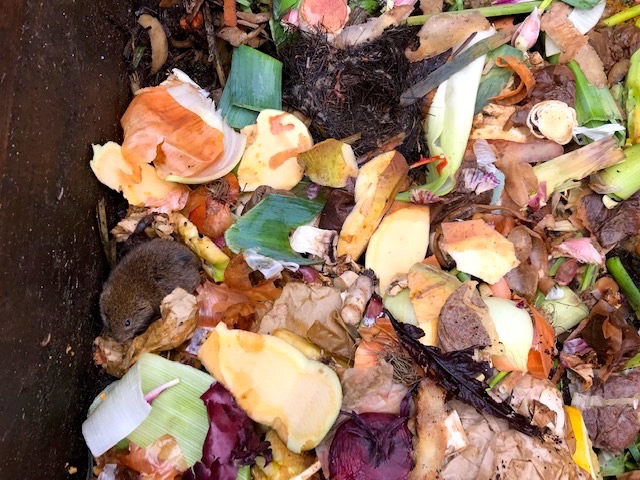
Back home on another day, Chris, one of our regular contract carriers called with some office supplies. He told me he had to sack a delivery driver taken on to cope with the pre-Xmas rush. Apparently this lad had dumped a couple hundred quids worth of seasonal food into the wheelie bin at the end of a customer’s access track instead of at the house and then failed to leave a card saying what he’d done. The householder only found the food days later when she went to put waste bags in the bin.

Town Hall and former village dance venue

Gordon is a retired builder who lives with his wife in a neighbouring parish. He now only works for selected clients and with a lifetime’s skills and extraordinary reserves of energy, we’re incredibly lucky to him at hand. He called by this week to measure up for a new garage roof, replacing weather worn Coroline (bitumen compressed corrugated sheets) with green corrugated steel sheeting. He’ll often stop for a coffee and a chinwag in the kitchen and today was no exception. One story he told me I’ve heard also elsewhere too and it goes like this…Years back, in the early 60’s, the bigger of our two local villages, the one where most of the valley’s shops and services are, enjoyed a reputation as a rock music hot spot would be heaving of a weekend with country lads and lasses from miles around squeezed into the hop held at the Town Hall. Being the Border country they wouldn’t be backward at showing their approval or disapproval of the bands booked to play. An outfit playing one night didn’t please them at all, or rather the singer and lead guitarist didn’t. Not being from the area, he found the reception not to his liking and hard words from the stage were followed by hard blows off it and the evening ended in disarray. The singer ended up in the village’s police station cells for the night, partly to cool off and partly for his own safety. The Victorian cop shop by the river is now a veterinary practice and I wonder if Eric Clapton ever looks back on his early career and remembers anything at all about his gig in rural Northumberland?
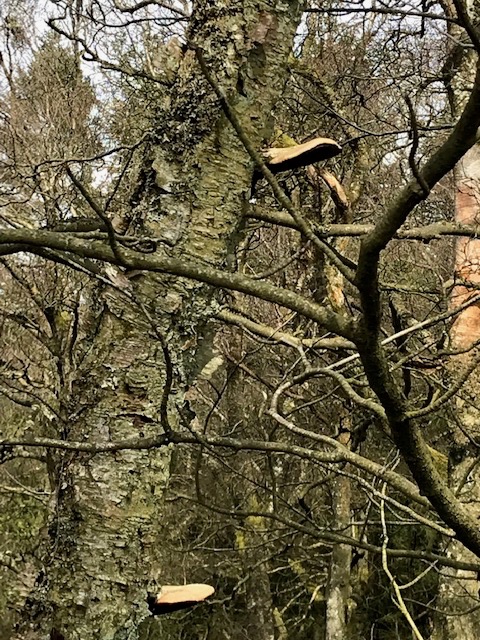
Chris’s choice of holiday getaway

I’ll end with a cautionary tale Carrier Chris told me before he sped off. Last year he’d found a fabulous luxury apartment for rent while on his regular rural round in an attractive village (pop.492) over the hill in the next dale (pictured above). Having promised his long suffering wife a break he thought he’d surprise her with a get- away-from-it-all long weekend. Chris was about to whisk her off there when I saw him last year. ‘How’d it go?’ I asked him. ‘Terrible!’ he said. ‘Why?’ I asked. ‘Well’, he replied, ‘the accommodation was fabulous but we couldn’t go out anywhere without one of the customers recognising me and stopping us for a chat. The missus wasn’t too pleased about that, I can tell you…That’s why we’re off abroad this time!’

Tyne Trek

Visiting friends in Riding Mill at the weekend who introduced us to a linear river walk, starting and finishing at their local station on the Newcastle to Carlisle line.

This coast to coast line is one of the oldest in the country which opened to passenger traffic in 1835, and still retaining many distinctive listed features. In the middle of the current rail dispute it now lay sadly deserted, haunted by the dismembered automated voice from platform tannoys telling non existent travellers that no services were running.

Walk to the end of the Newcastle platform and you slip into a permissive path that leads down to the south bank of the River Tyne, hurrying to keep its appointment with the city and sea. Wide and steep sided at this point in its eastern course, with eddies and strong currents, it’s a great volume of water. On the opposite bank Styford Hall (above) hoved into view, a country house at the foot of the steep escarpment of Abbeybank woods. The 750 acre estate includes arable, pasture, woodland, rented accommodation and fishing rights on both banks.

The Tyne is one of the best rivers in England for salmon and sea trout. Styford share the valuable fishing beats with the Farnley estate on the south bank. The latter is not a syndicate or day let operation but something in between, running 3 – 6 day lets for 2-3 rods in each beat. They’ve also inserted 15 acres worth of ponds and woodlands into the floodplain in recent years, catering for private trout fishing, complete with jetties and boats.

Reminded of Thomas Bewick (1752-1828) whose childhood home at Cherryburn lies just a few miles downriver and about whom I’ve written in these country diaries before. Bewick, like all the menfolk in his family, was a skilled angler who knew the Tyne intimately. The subject of fish and fishermen appeared often in his workshop’s output of woodcuts.

The permissive path we were following upstream crosses the odd minor tributary. Impressed by the sturdy railway architecture, where a simple high arched narrow culvert in the trackbed has been designed to cope with floodwaters.

The joys of a quiet winter walk like this include a good selection of fungi that stand out from the mass of inert foliage. From clusters of honey fungus working its way effectively through dead or dying wood to bracket fungi in tree trunks, looking like stuck axe heads. Burrs on trunks too, benign tumours erupting at points in the tree’s growth and caused by fungi, viruses or other stress factors.

Along the wider grassier bankside wisps of last year’s rosebay willow herb are easily overlooked compared with the denser darker stands of golden rod, which being more closely packed, manage to hold their strong sculptural form.

We saw few people on our walk but in lockdown apparently this pathway was very popular with locals taking exercise or walking dogs. The sandy bank had slipped or was lurching in places so some care was needed. Debris suspended in the bare branches of willow alder and birch along the riverbank spoke of flooding too. A decade ago a combination of prolonged heavy rain and an already weakened high bank where the river turned at Farnley Scar below Corbridge resulted in a massive landslide. The public footpath we were following disappeared with it and has still not been replaced.

Those wanting to continue the walk now have no choice but to technically trespass on both private land and the railway track bed. Some do, in part to keep a public right of way pressure on those in authority to resolve the situation by safely re-routing the path so the two communities can be re-united by foot. Clearly there’s a serious lack of agreement between landowner, Network Rail and the county council as to the way forward. This I suspect boils down to who will pay to reinstate the right of way. This is a sad state of affairs that reflects the greater national inability to properly value and protect public access for walkers and ramblers in our countryside.

The statistic that only 8% of England’s rural landscape is accessible to the public comes to mind. Post Covid there’s a groundswell of opinion to grow that dismal figure but the entrenched interests of property and land ownership are unlikely to accommodate demand without a determined governmental will to improve matters and there’s not much sign of that happening any time soon. Meanwhile it’s left for people to take action themselves to assert their common law rights, whatever the risks. Strolling back the way we’d come we were overtaken by a young woman walking her dog. A brief conversation confirmed they’d come from Corbridge by the forbidden route. She smiled and we gave her the thumbs up.

A brief diversion on regaining Riding Mill railway station took us on to where the village’s meandering March Burn joined the Tyne, crossing it via a set of concrete stepping posts. This in turn brought us to a grassed track embedded in the steep original riverbank (a Holloway) heading for the water where it disappears in scrub. My friend Rob suggested there must have been a ford here at some point. Back home I looked it up and indeed that was the case. The crossing fell into disuse when the modern pumping station we could see a short distance downstream raised the river level by a couple of feet.

The ford originally gave access to the village of Styford. Earliest reference to the settlement, part of the barony of a Norman lord called Bolobenc, Earl of Buckingham, date to the C12th. Border warfare ravages stymied its growth and the great flood of 1771 sweep away much of the remaining housing stock. Three decades after that the remains of the settlement were cleared away in a landscaping operation that saw the building of Styford Hall and laying out of accompanying riverside parkland.

Wild Wall Walk

Moors are a stage for the performance of heaven /Any audience is incidental (Ted Hughes)

Gale force winds, heavy rain showers becoming hail, breaks of blue in rolling mass of grey cloud, kicked through by legs of light picking out roads, glistening roofs and white highlighting far horizons of wind turbines. Just the weather for a post Christmas family outing along Hadrian’s Wall.

Picking up where we left walking the wall with grandchildren (12 & 9) earlier in the year, but this time with parents, we set off east from Housesteads fort heading for Sewingshields farm. Suitably wrapped, heads down, warming by working our limbs, with gusting westerlies riding our backs by way of encouragement.

The Nag Burn runs rapidly from its culvert under the wall, which is here at its widest and most impressive point, some 3 metres plus. This would have been the fort’s main water supply for drinking, washing and bathing. The great two tower gate that once stood here dates from late in the Roman occupation, in the 4th Century AD, and was the principal ‘passport’ at this point in their great border wall. The fort’s nearby north gate gives on to a steep pitch of the dell: fine for cavalry but unsuitable for most everyday through traffic.

We warmed up gaining and losing height over the first two compact ridges that the wall rides. The huffing and puffing stage before you get into your stride. The wall then leans away northwards with a steep twist down past Kings Wicket, where a permissive path swings back westward along the shallow valley. This was once a rural highway in medieval and Tudor times, mainly for moving stock, and a dangerous one it must have been, here in the heart of lawless Reiver country. A branch of the powerful Armstrong clan set up home in the ruins of the fort at that time, hence the name Housesteads for the place the Romans knew as Vercovicium.

This section is mostly well maintained classic field wall, in the care of the National Trust and English Heritage. It is built on top of the Roman foundations as the original is long gone. The sheep and cattle appreciate the stonework as a welcome place of shelter, as a mass of droppings along this lee side demonstrates. Off to the north, isolated on bare moorland and bog a traditional stone walled stell, or sheep shelter could be seen.

Onwards and gradually upwards to attain the proud summit at Sewingshields Crags, with panoramic view stretching for miles and miles in all directions. The reflective waters of Broomlee Lough draws the eye northwest, while the broad scree at one’s feet presents as an awesome tumble of glowing pale rock. I was intrigued by the rebuilt field wall parting company here at the summit from a fragment of the original masonry, which then gradually slides underground and is lost from sight once again.

So strong was the wind force that some of the photos I took with my phone were unusable due the inability to hold a steady hand. We would have progressed further to the modern day farm at Sewingshields, which was in sight, but the family had had enough and were ready to head back. I waved back assent, touched the trig point, absorbed the vista one more time before facing the wind and catching up on the return.

The wild weather and constant atmospheric changes charged this particular outing with a sense of elemental drama, highlighting its stunning setting and harsh beauty. Took a while to get into it but once started I didn’t want it to finish. A fair weather walk would have been pleasant and satisfying enough, but this wild winter walk was exhilarating in exercising both body and imagination.