On the Slate

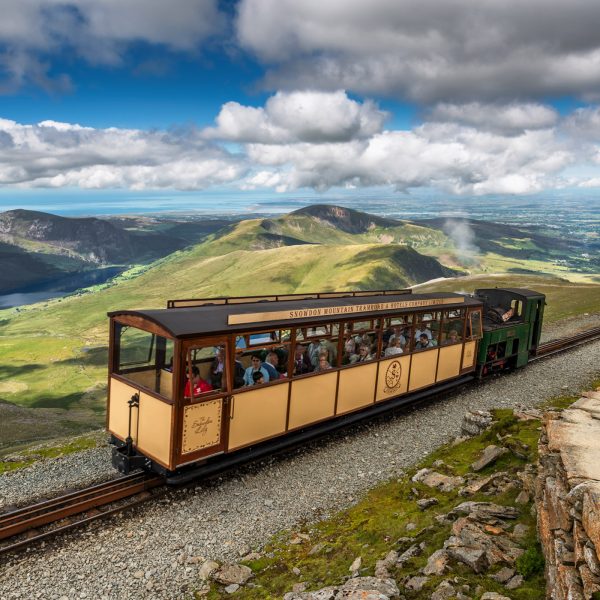
A week away in in late August, based in mid Wales, opened up opportunities for outings to new places. Family made arrangements for us to discover Mount Snowden (Y Eryri), the highest peak in England and Wales. The younger and more adventurous element booked their mandatory car parking slot on the mountain’s lower slopes and headed for the peak on foot while we senior members opted for the scenic route to the top by train, starting at the terminus down in Llanberis.

Photo Image: Adrian Evans

The Snowden Mountain Railway is unique in Britain in being the only one to use a rack and pinion system and was opened as a tourist attraction in 1896. Swiss made engines equipped with toothed cogwheels engage the rack to provide the necessary traction to climb inclines to the summit. A rebuilt modern terminus and visitor centre is tucked away under the peak and visitors have half an hour to enjoy the view before returning. We were really looking forward to the experience, whatever the weather. But our optimism was misplaced. The weather was very wet and windy. The station ticket office advised us that due to these adverse conditions our booked service would terminate three quarters up. We could either have our money back or proceed on those conditions. Having wound our way for nearly two hours on narrow roads over hill and dale to get here we stoically opted for the incomplete journey. Twenty minutes later saw us queuing up to board with the other remaining passengers, with steaming engine and carriage in sight, only to be told that this service was now cancelled. Alas, two thirds of ticket holders had opted for their money back. That left insufficient numbers of bodies on board to safely anchor the carriage, risking our being blown off the track by the high winds currently swirling round the mountainside!

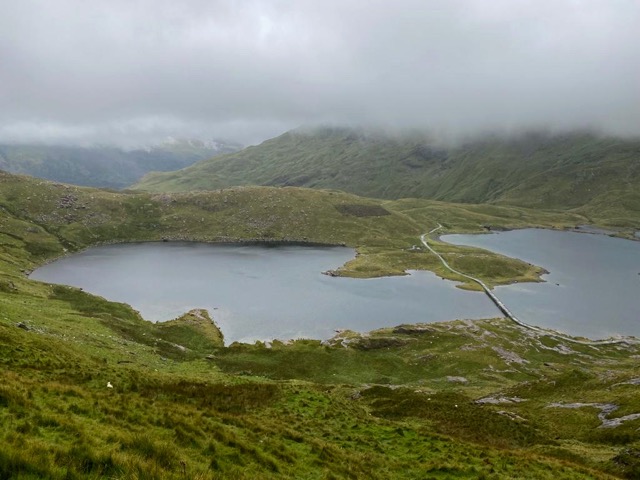
We were refunded of course but were left inevitably disappointed and at a loose end. Also concerned for the rest of the family, with whom we couldn’t communicate as there was no phone signal. It turned out the hardy walkers got a good way there from their starting point and took in views of the lake below the cloud shrouded summit, before turning back after becoming drenched on an increasingly challenging track. We met up with them back at our accommodation near Machynlleth to exchange tales of the day over supper.

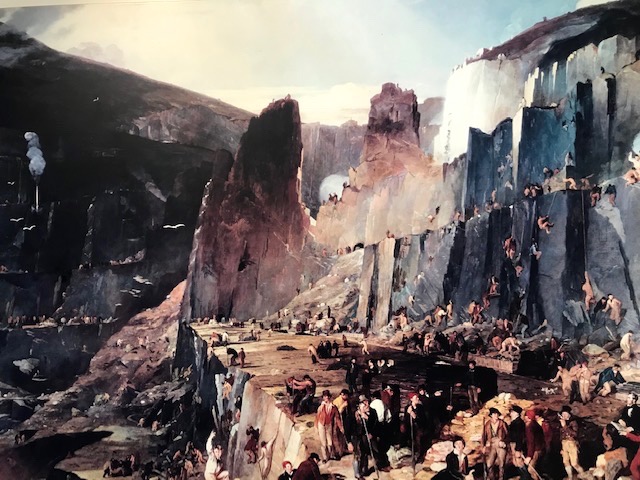
Victorian painting of local slate quarrying

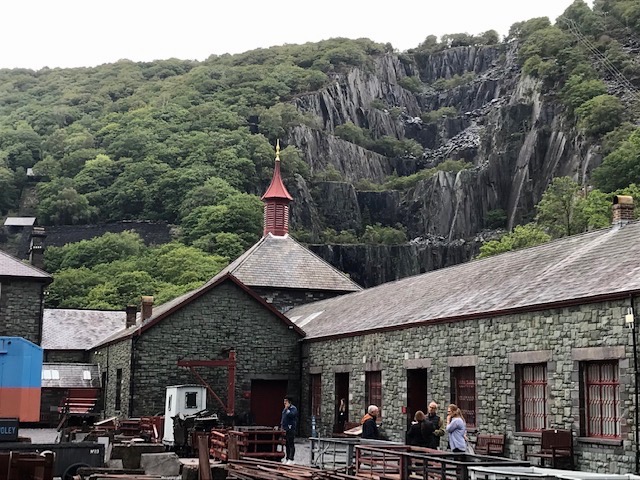
Our day out perked up when we realised what else the area offered. No-one can escape noticing that much of the mountain sides along the northern side of the valley are missing. A stark reminder of a relentless economic activity that has dominated and defined this area for at least two centuries – the mining and quarrying of slate. Turning into a large car park we came upon a barrack like old industrial complex, comprised, unsurprisingly, of slate roofs and walls. These are the Dinorwic quarry workshops, one of the imposing slate processing works that once made this corner of Wales the largest producer and exporter of slate in the world. At its late 19th century peak the industry employed 17,000 men and produced nearly a half million tons of slate a year.

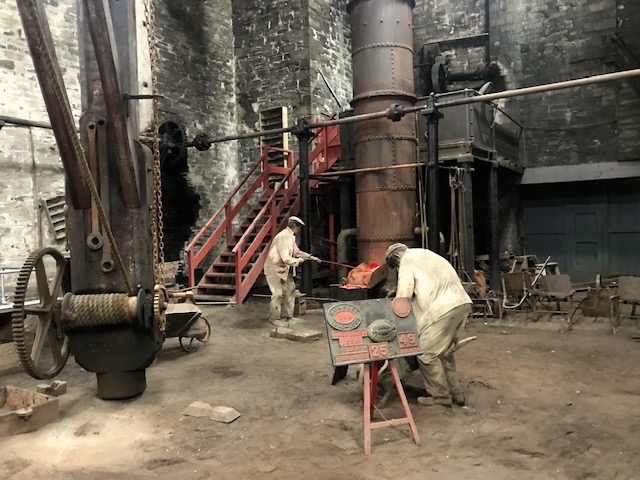
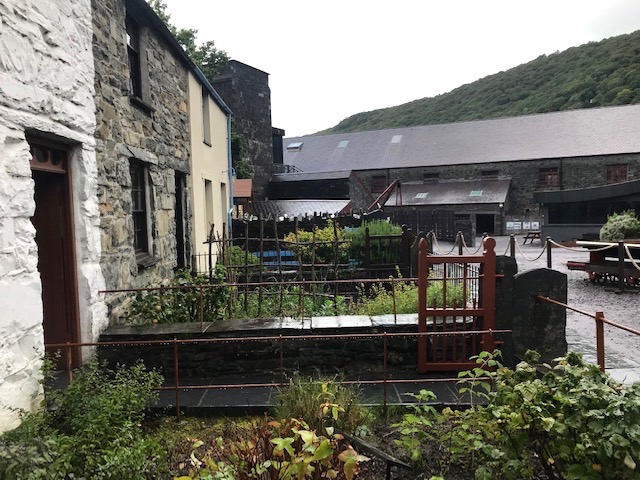
The tall gatehouse of the dark castle like building looked even more fortress like and forbidding with waves of rain from remorseless grey clouds sweeping over it, but the welcome we received was warm and entry free. Dinorwic is now the National Slate Museum of Wales and has been invested in by its custodians the Welsh government since 1972 when it opened, three years after the quarry finally ended production. The site reveals itself as a succession of inter-connected workshops facing onto a large central courtyard, crisscrossed by rail lines. Opened in 1870, eight decades after commercial quarrying had begun on this site, it once employed some 3,000 men to repair, maintain, make and store all the machinery and equipment the vast operation, spread over 700 acres, required for its day to day operation. It even had its own dedicated hospital to deal with casualties on site.

My terraced house in Lancaster is one of the UK’s countless late Victorian homes and institutions roofed with Welsh slate. When I had the property reroofed in 2010, some 130 years after it had been built, 75% of the original Welsh slates were good enough to be reused. On our visit to the museum I discovered there was a regular boat journey from the main port for the slate quarries down at Portmadog to supply the Industrial conurbations of Lancashire, via Preston’s port on the Ribble estuary. This area of north Wales is where the slate for my humble home came from in the 1880’s, perhaps from this very mountainside!

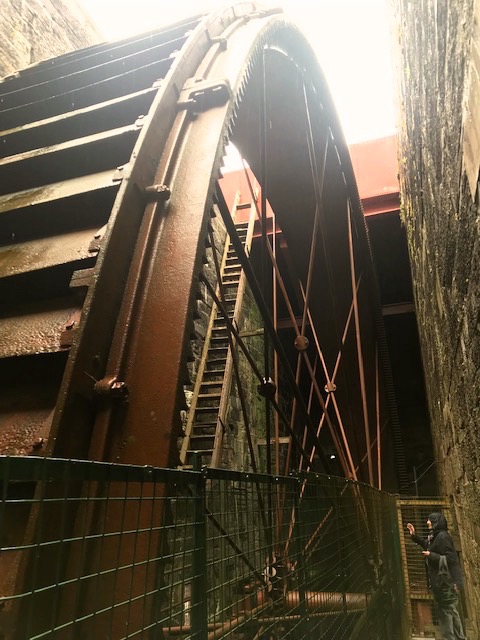
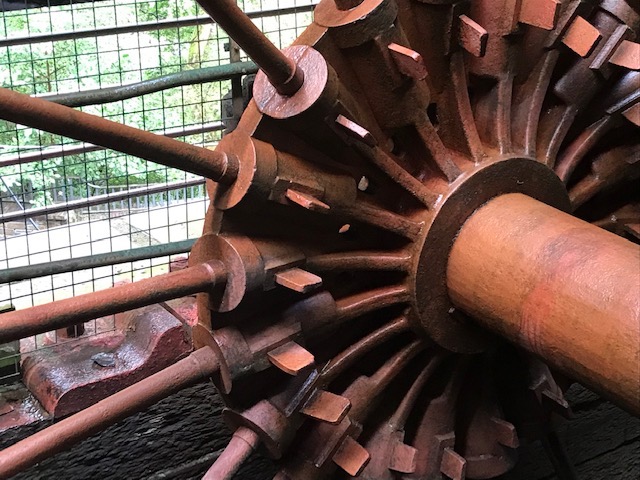
Highlights of our visit included getting up close to the works huge waterwheel, installed in 1870, driven by a stream running off Snowden’s slopes whose waters were piped across the valley. Measuring 50’ 5’ in diameter x 5’ 3” wide with a 12” axle this metal wheel is mainland Britain’s largest and sits confined in a narrow brick structure that makes closer examination a mildly claustrophobic experience.

Everyone loved the featured craftsman demonstration. A skilled former employee showed us assembled visitors how a slate is split with mallet and chisel. A deft act that drew a collective intake of breath in much the same way as a magician demonstrating a card trick might do. The wonder here being the sudden appearance of two perfect slates where there was only one before. We also learned that the traditional industry discarded a staggering 90% of excavation as waste, hence the distinctive landscape. Nowadays, much reduced manpower utilising modern mechanical means reprocess by-product as core material for the building, gardening, chemical and cosmetic industries. Quartz, chlorite, hematite and pyrite are amongst the minerals extracted.

Later, looking up from the courtyard at the scarred face of Elidir mountain towering immediately beyond I marvel at the pace of natural reforestation by native trees on former quarry terraces and into vast screes of slate waste. Oak, ash, hazel, willow and alder thrive and colonise, thanks to the wet climate and perilous slopes largely free from further human activity or grazing animals (feral goats excepted). An expanding nature reserve that’s good for wildlife too.

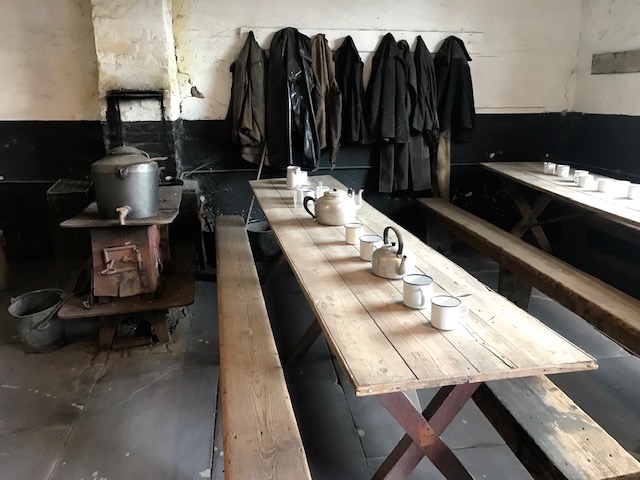
On entering one particular room off the courtyard, set up with tables and butty cans, the air resonated with interweaving conversations in Welsh. An effective audio visual touch. This was the mess room or Caban the men shared at break times. Pressing matters of the day, from religion to politics, sport and music were freely discussed here. At times the industry was convulsed with bitter disputes over pay and conditions. The great slate works were owned privately by gentry families that had been made immensely rich from the slate excavated on their lands while most of their many employees worked long hours in dangerous conditions for little money or job security.

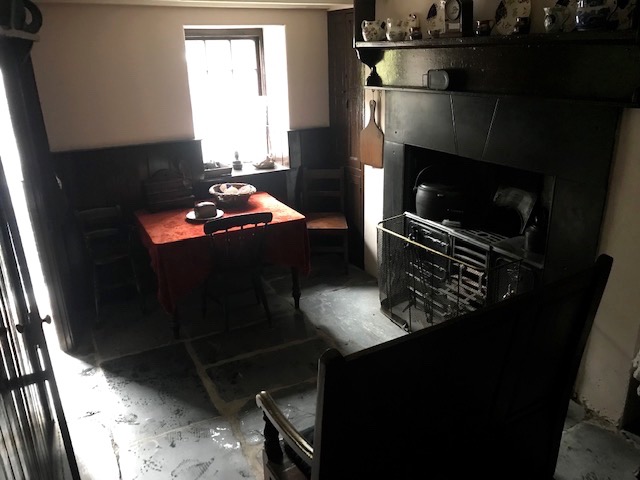
A row of miners cottages, Fron Haul, originally situated near Blaenau Ffestiniog, has been rebuilt at the museum and refurbished to give visitors an idea of what domestic life was like for mining families at different periods, from the 1860s to the 1960’s. Years ago I’d been very impressed with another national museum of Wales – their flagship open air home of resettled buildings at St Fagans near Cardiff. This atmospheric recreation put me in mind of St Fagan’s fascinating row of post war pre-fabs, as furnished through succeeding decades.

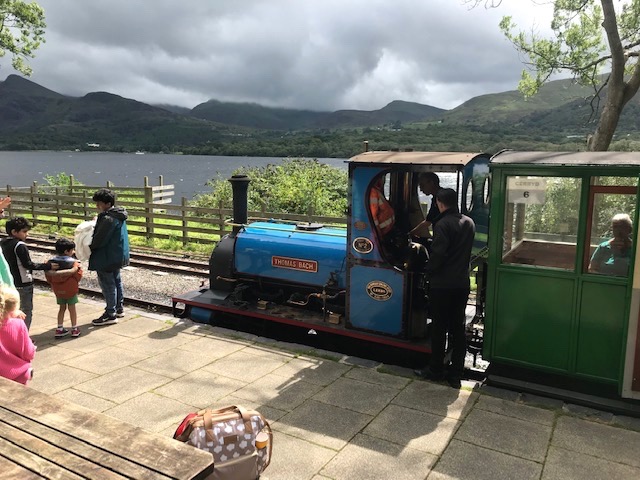
We left the museum and crossed the tracks to take a ride on the former Padarn Railway that ferried finished slate to Y Felinheli near Caernarvon for export overseas. Closed in 1961 this initial section reopened as a heritage line, rechristened as the Llanberis Lake Railway. It runs from the village along one side of the lake, at the foot of the mountain. We enjoyed an hour’s leisurely ride, in tiny cabin carriages, five miles there and back, with the odd stop to take in the views and stretch our legs.

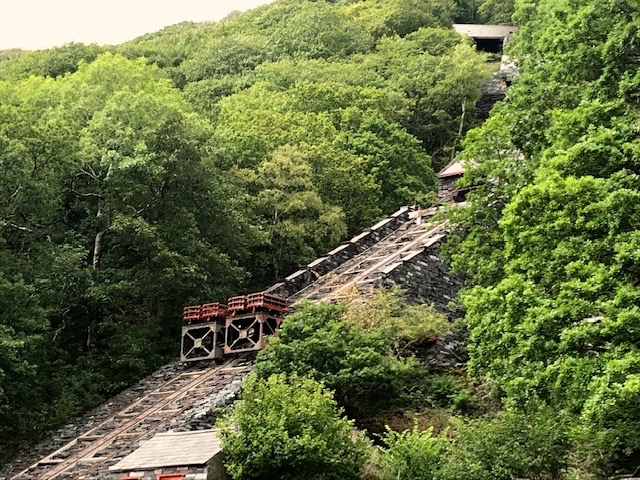
Caught a glimpse when trundling the rails of the quarry’s former inclines and terraces, a part of which has been recently restored. Powered by gravity, wagons full of slate travelled down the mountain, using their weight to pull empty wagons back up to the workface.

A totally different railway experience to our cancelled trip up Snowden but appreciated none the less for the modest delight it brought all aboard! The unexpected discovery of the slate museum in its country park though made our day. A place where nature, engineering and culture interact to offer curious visitors a surprisingly atmospheric and inclusive experience…whatever the weather!
Saunter-on-Solway

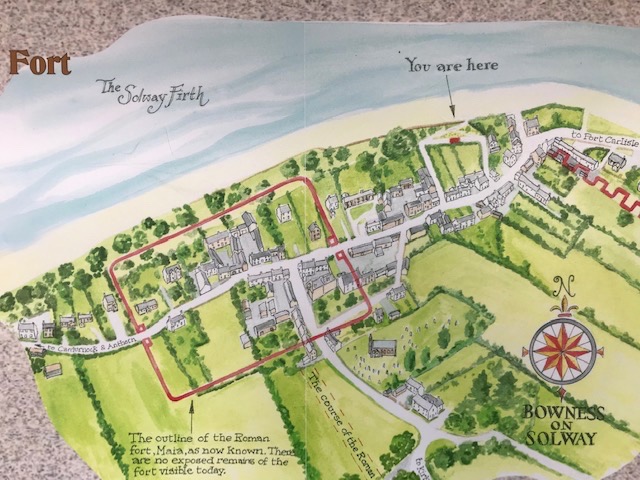
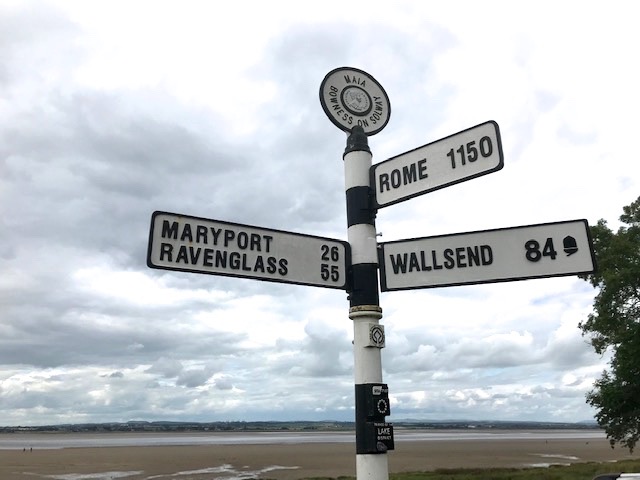
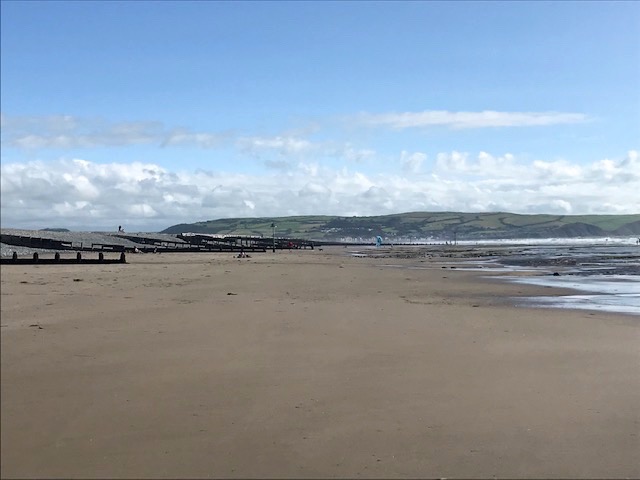
It’s a tonic when a younger generation inspire you to share an adventure with them. In our case it’s 13 and 10 year old grandchildren who want to do the 84 mile long Hadrian’s Wall National Trail. Happily for all concerned we’ve been gradually doing it in sections, in no particular order, as and when.  As we inhabit the eastern half it’s something of an adventure to roam west, on beyond Carlisle, to the official start/end of the coast-to-coast trail at Bowness-on-Solway. This was where the port and fortress of Maia stood, guarding the estuary and marking the western end of the Wall.

It’s a very British thing to promote a world heritage site like Hadrian’s Wall and then provide no public visitor facilities at its western end. Luckily for us, after a long car journey and traffic jams in Carlisle, we could negotiate a trip to the loo for everyone at the commercially run visitor centre that dominates the village centre. (B&B, bar, bistro, apartments & luxury gym) For either a donation or a purchase access to the toilets is granted. We were told by one of the locals that there used to be public toilets in the village until recently but they closed because the local authority could not afford to maintain or clean them.

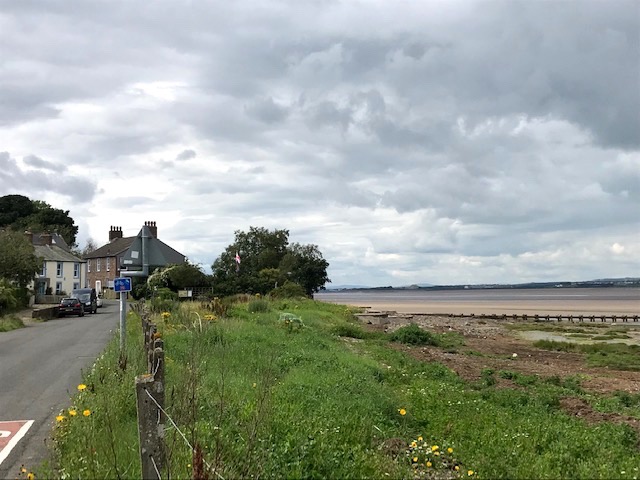
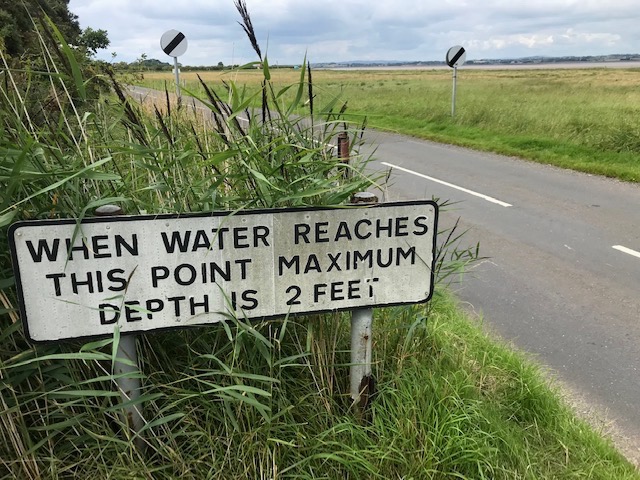
A sign on the wall of a ginnel (alleyway) off the narrow through road gives access to an open bankside with a wonderful view over the estuary of the River Eden to Scotland. Crossings on the ‘wath’ pathways have been made here for centuries by those knowledgeable or desperate enough to brave the shifting sands at low tide. Early Christian saints spreading the gospel, invading medieval armies or marauding bands of Reivers all have their place in the history of the Solway. From 1869 when it opened to 1934 when it was demolished, a mile long railway viaduct physically connected both shores. Now all you see are the pier head remains on either bank.

The local community have created a delightful space here to give an encouraging send off (or welcome) to walkers on the official long distance trail. A wooden framed pavilion, floor mosaic, artist designed bench, information board and a secular blessing ‘ Good Luck Go With You’ carved into the apex.

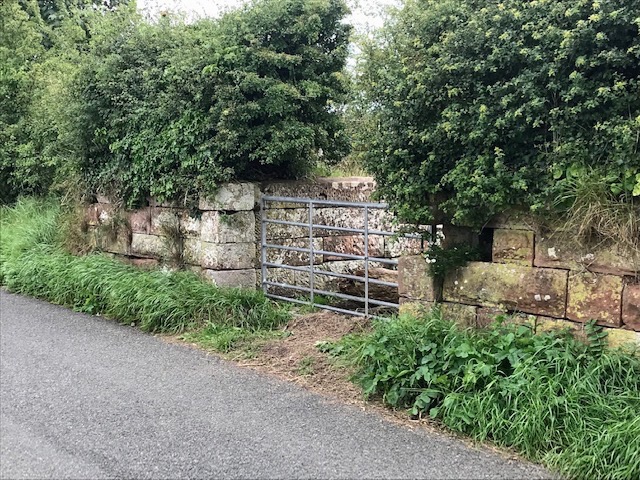
Setting off on the trail via the only road in or out I noticed a long straight length of large sandstone blocks below a thick hawthorn hedge marking the field’s edge. A reminder that a single track branch line once ran along here and a stone embankment was needed to front high tidal ingress. The Solway Junction Railway closed to goods traffic in 1899 and was finally done away with in 1932.

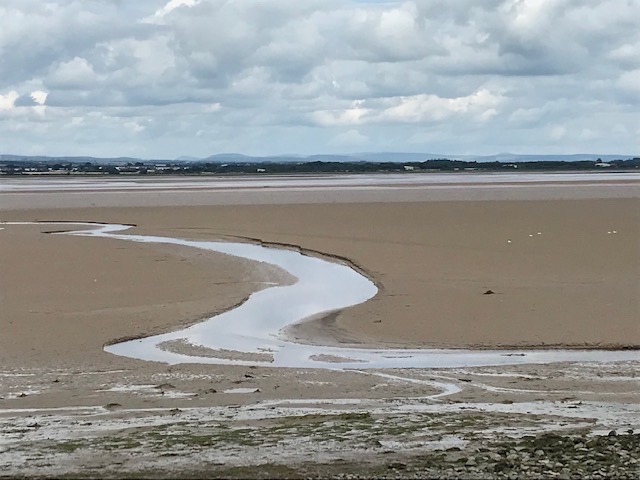
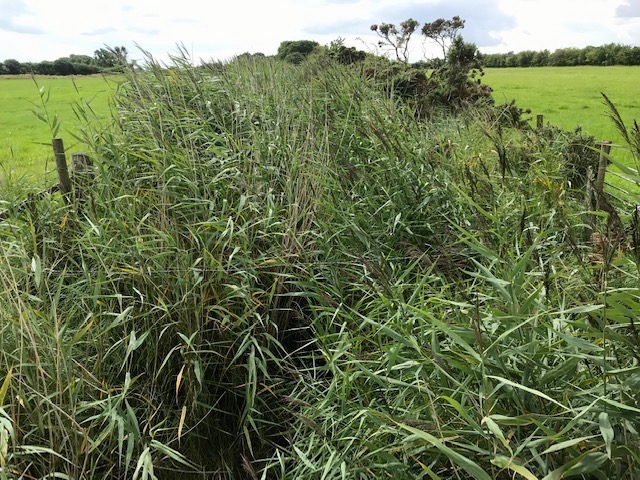
A stream we crossed spilled out on the seaward side, through grass covered settled mud banks above the tide line, carving a final course through the sands. On the other side of the road its hidden bed between grass pastures was characterised by dense high reeds merging into the hedge lines. It must provide a good hiding place and highway for wildlife.

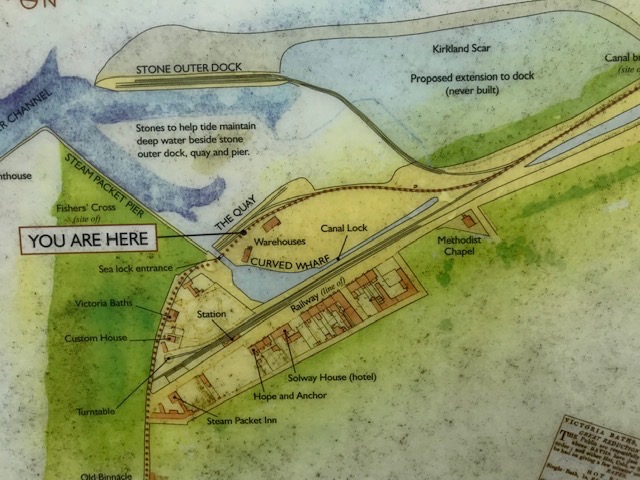
The initial mile of road walking brought us to Port Carlisle. It’s a fascinating settlement whose very existence is a testimony to the rapid changes brought about by the industrial revolution. Before the coming of the railways Carlisle’s growth as a regional centre at the lowest bridging point on the River Eden depended on it having a port outlet. This was the driver in transforming the tiny fishing hamlet of Fishers Cross into the new settlement of Port Carlisle in the 1820’s by digging an 11.5 mile canal from sea to city centre. Designed by the Newcastle based engineer William Chapman it was cut deep and wide in order to take smaller seagoing vessels.

The purpose built harbour and canal basin facilitated turn around and storage and could also accommodate larger vessels so cargoes either way could be transferred. Passengers soon followed coal and grain as the main freight with boats sailing to Whitehaven, Liverpool and the Isle of Man.

Bough, Samuel; The Solway at Port Carlisle; National Galleries of Scotland; http://www.artuk.org/artworks/the-solway-at-port-carlisle-209830

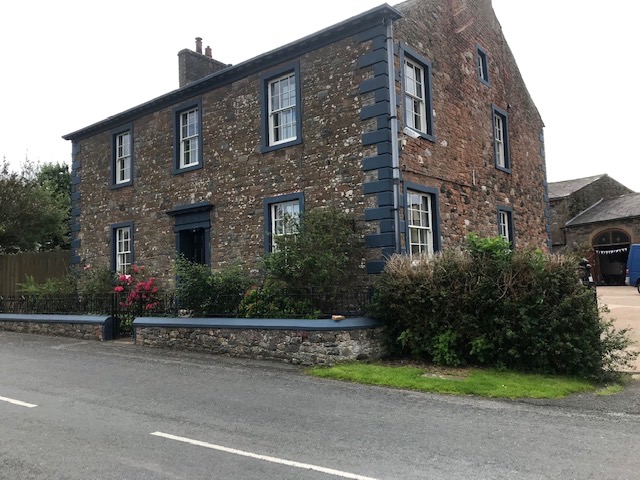
Hot and cold sea bathing facilities opened and all the new settlements brick built houses and merchants provided services of one kind or another for visitors as the Victorian era dawned. Many north America immigrants passed this way. Most famously the Carlisle born mother of Woodrow Wilson who would become the 28th US President (1913-1921). The former hotel where her family and many other migrants stayed overnight awaiting passage is now a private house. (Below)

Within three decades inland waterways – as a means of travel communication and commerce – were overtaken by the arrival of the railways. By the early 1850’s Port Carlisle canal had been filled in and replaced by a branch of what would become a new line from Carlisle to Silloth further down the Cumbrian coast. That town rapidly developed as a deep water anchorage so Port Carlisle’s fortunes declined, its infrastructure silted up and fell into disuse.

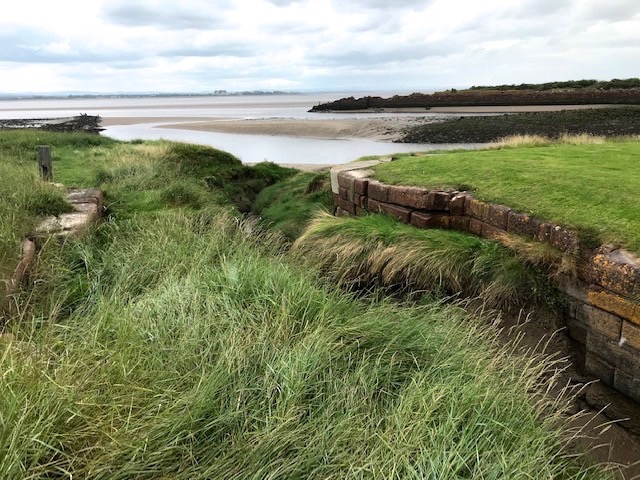
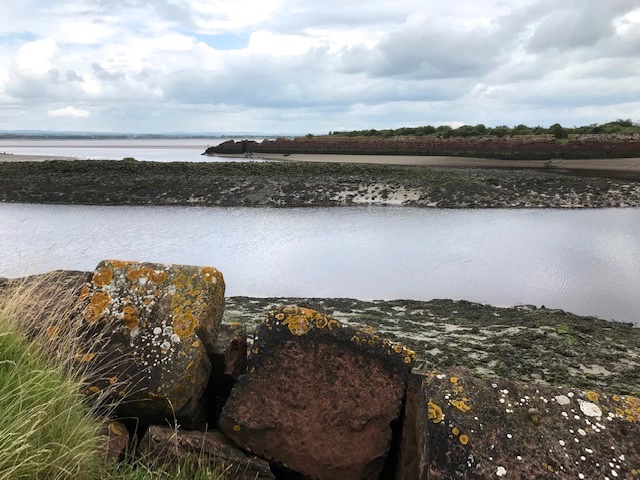
Talking about this history with the kids, we had our picnic just off the path, perched on dislocated blocks of red sandstone that once made up the massive canal and quayside wall, overlooking the abandoned headland and harbour. A quiet peaceful spot now, with oystercatchers nearby and other wading birds too far off to identify with any certainty. The Solway is the third largest continuous intertidal habitat in the UK and home to many thousands of migratory birds in winter. So at least one migratory tradition continues on this esturial shore.

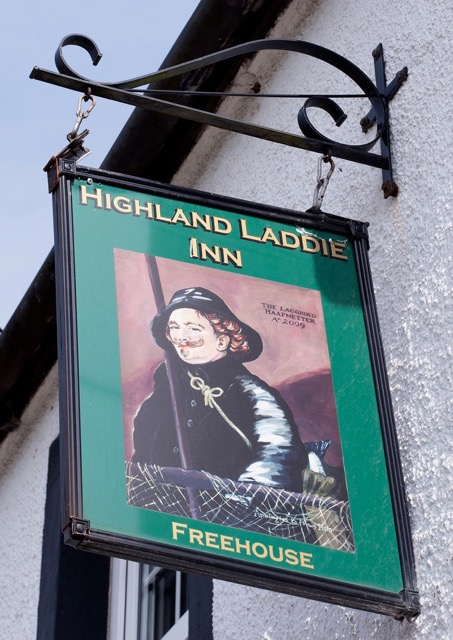
I left the family to continue following the trail and wandered back to Bowness to pick up the car where we’d left it at the RSPB reserve. I then drove to meet them on the green at Glasson, opposite the recently closed village pub, now being converted into a private dwelling. The hostelry was called ‘The Highland Laddie’, a reference to the clansmen of the 1715 and 1745 Jacobite uprisings, who would have crossed the estuary here on the ancient wath ways.

Whether caused by the Covid crisis or something else the pub’s demise is a sad loss to walkers (open all day, every day) beer lovers (CAMRA branch met there) and local fishermen. The tradition of haaf netting for salmon survives here and the pub’s former sign board (2009) humorously reflected both the art of pub signage and the practice of sustainable small-scale fishing. (I’ve been fortunate in the past to see this ancient netting technique in action on the Lune at Sunderland Point and the Tamar at Cotehele, between the Cornish and Devon banks.)

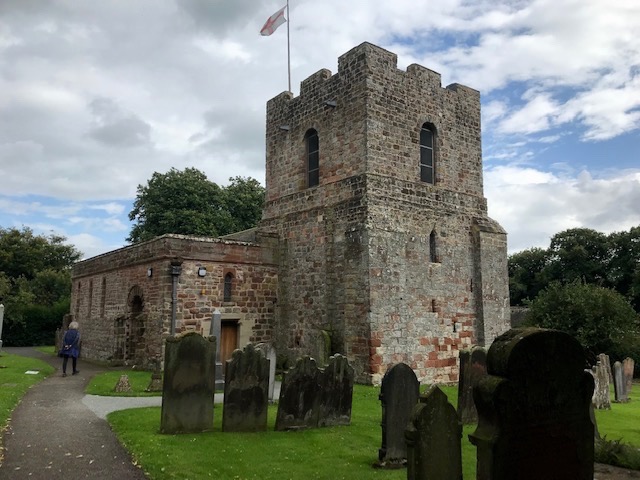
England’s fearsome warrior king Edward I, known as ‘the Hammer of the Scots’ died of dysentery while on campaign at Burgh-by-Sands on June 7th 1307. A dying wish for his body to be taken into battle at the head of the invading host was quietly ignored by his successors and the late king was solemnly processed back to London for burial in Westminster Abbey. I couldn’t resist stopping here briefly on the way home to see the parish church of St Michael where the king’s body lay in state.

There’s an excellent display about the event in the church tower whose ground floor you enter through massive thick walls by a narrow passage gateway known in the dialect as a ‘yett’. Like most religious and secular buildings in these parts St Michael’s was constructed of dressed stone taken from the Roman wall fort of Aballava on which Burgh is situated. (Named from the Old English ‘Burh’, meaning fortified settlement) Like the Roman fort of Maia (modern day Bowness) there’s virtually no sign it ever existed today, so widespread and thorough has been the recycling process!

Edward I’s imperial expansionist campaigns in Scotland and Wales had a huge effect on cross border life. The long-term instability left isolated communities to fend for themselves against cross border raids. In Burgh’s case the church’s defensive western tower, dating from 1361, gave clear views  over the Solway, its bells warned villagers of attack whilst the nave sheltered their livestock. At one time there was also a defensive tower at the other (eastern) end, which explains why there is no window behind the altar. This is the region’s best example of a church doubling up as a ‘bastle‘ or defensive house.

What a pleasure it is to discover places where layers of history overlap or lay half hidden and to see how geography has defined its character and development. Though shorn of Roman structures this stretch of the national trail is rich in re-formed buildings and industrial heritage as well as being an internationally important haven for wildlife.

Postscript. A friend has sent me this link. It’s an evocative account of fording the Eden and the Esk by David Livermore led by local guide Mark Messenger, starting at Burgh.

Three Viaducts

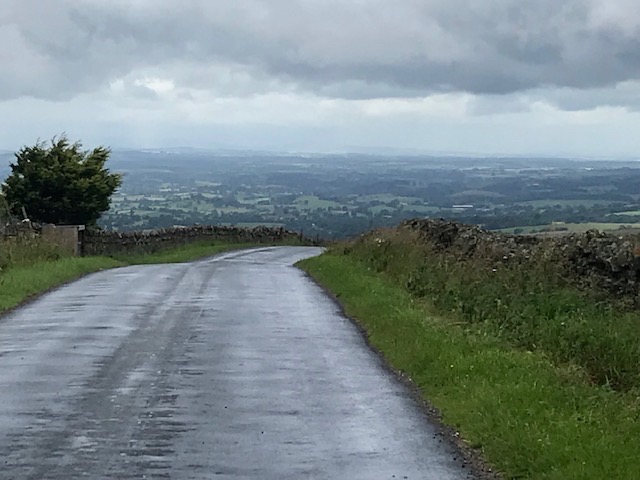
You can’t help but wonder that if the redundant rail line was still operational today would the village’s former community facilities be here too – the pub, shop and café? Staying in a redundant Methodist chapel in the Yorkshire Dales last weekend I mused about the possibility. This particular settlement’s old station has been converted into luxury accommodation with plate glass windows to take in the extensive views west. The line itself is still traceable on its level round the curves course, appearing then disappearing into the mizzling distance.

The South Durham and Lancashire Union Railway opened in 1861 and was operational, under different names, between Barnard Castle and Tebay for the next century. Generally known as the Stainmore line, after its highest and bleakest point, it was designed by leading railway engineer and native of Cumberland, Sir Thomas Bouch (1822-1880). This cross Pennine track transported coal mined in Durham to smelt limestone and iron ore in the furnaces of Barrow-in-Furness. At its peak in the 1880’s a million tons a year passed this way. In the wake of industrial decline after World War II the line closed to passenger traffic in 1962, as part of the infamous Beeching cuts.

Thanks to the extraordinary efforts of the Northern Viaduct Trust (www.nvt.org.uk) the Stainmore line’s trio of magnificent viaducts around Kirkby Stephen have been saved from demolition and maintained for public access free of charge. In addition, local enthusiasts have restored Kirkby Stephen East station, which sadly we didn’t get chance to visit on this occasion (www.kirkbystepheneast.co.uk) Over two days, despite high winds and rainstorms, we explored sections of the track between and across these wonderful engineering structures.

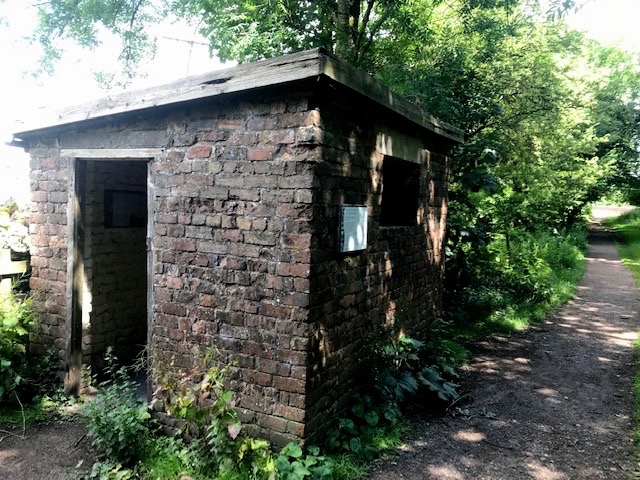
There’s an all weather path – a section of the coast to coast walk – from Kirkby Stephen town centre to the village of Hartley where a steep incline gains access to the old line in woodlands by an active limestone quarry. (The last section of line continued to serve it until 1975) At this point the Merrygill viaduct’s nine arches crosses Hartley beck, 78 feet below. A platelayers hut by the ruined signal box provides visitors with shelter and information about the line and quarrying.

Walking further east you pass under road bridges in cuttings on to the ravine of Ladthwaite beck, spanned by the eleven arches of Podgill Viaduct. Originally built to carry a single line it was widened to double in 1889. There are fine views west over the Eden valley and the Lake District, while to the east a line of dark fells marks the boundary of the Yorkshire Dales National Park.

This public section ends a little later where the Stenkrith road bridge crosses both line and River Eden. Since the Millennium a metal and concrete footbridge below it gives walkers mesmerising close ups of naturally occurring holes in the river’s bedrock, through and around which the rushing waters swirl.

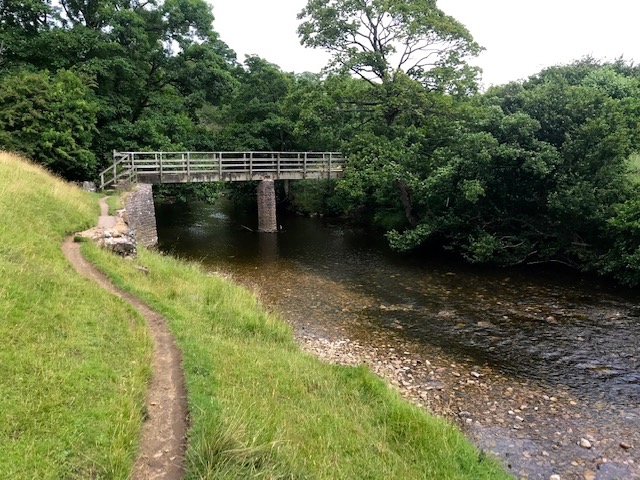
Returning to Kirkby at this point we followed the Eden downstream through woods and fields, eventually crossing it by a wooden footbridge.

Onwards by hedge hugging paths, which eventually led into a broad riverside field, featuring a large limestone bank barn.

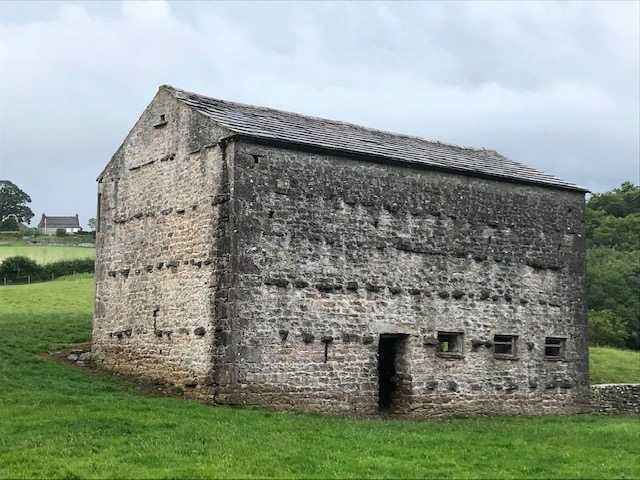
Locally known as ‘cow’uses’ (cow houses) these field barns are distinctive features in the traditional dales landscape. Mostly dating from the C19th, they were used for storing hay and overwintering cattle whose muck was spread over the field each spring to fertilize the next hay crop. This one, being built into the slope, had upper and lower entrances that farm carts could utilise.

The second leg of our viaduct walk took us a mile or two further westwards along the high line to Smardale, starting and finishing at a car park provided by Cumbria Wildlife Trust. (https://www.cumbriawildlifetrust.org.uk/)

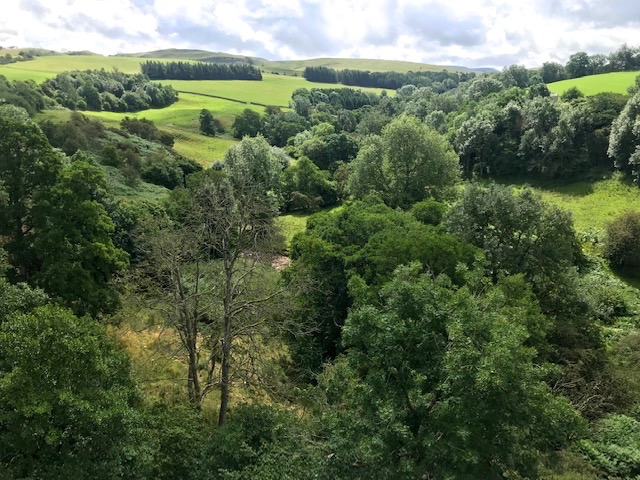
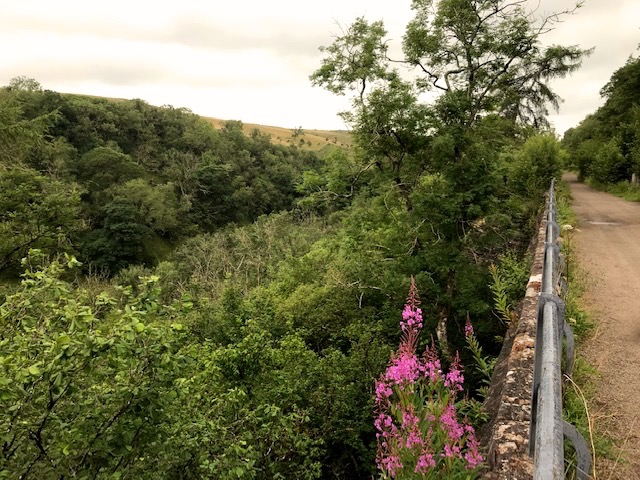
The next mile and a half of track bed passes through their delightful nature reserve. Dense swathes of oak, ash, hazel, birch and sycamore cover the steep hillsides and embankments. Former boundary walls, their coping stones covered in dense coats of moss, are glimpsed between the trees.

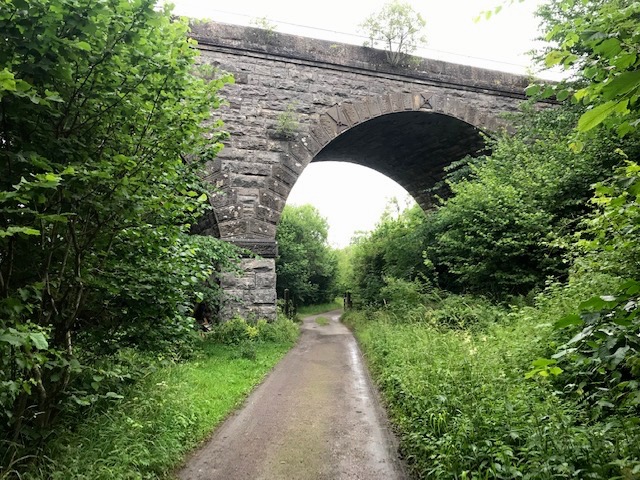
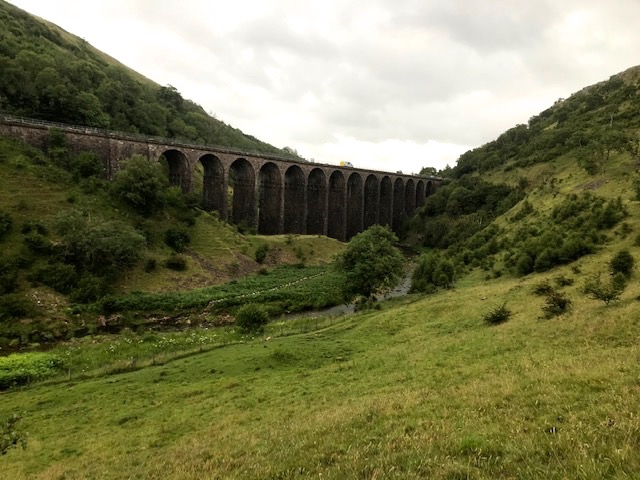
Shortly after passing under an arch of Smardale viaduct (the rest of it lost to view in the treeline either side) we heard the welcome rumble of an unseen passing train. The famous Settle & Carlisle line, crossing over north/south. The country’s highest  route passing over what was once the second highest. Being rival enterprises back in the 1860’s they didn’t interact and this point was their one and only passing place.

Arrived at Smardale Gill Viaduct to discover contractors in a fleet of vans doing major maintenance work, upgrading the parapet railings and re-pointing the old trackside limekilns further on. This meant we couldn’t cross as planned but needed to divert off track, on to open fell side, free of woodland cover.

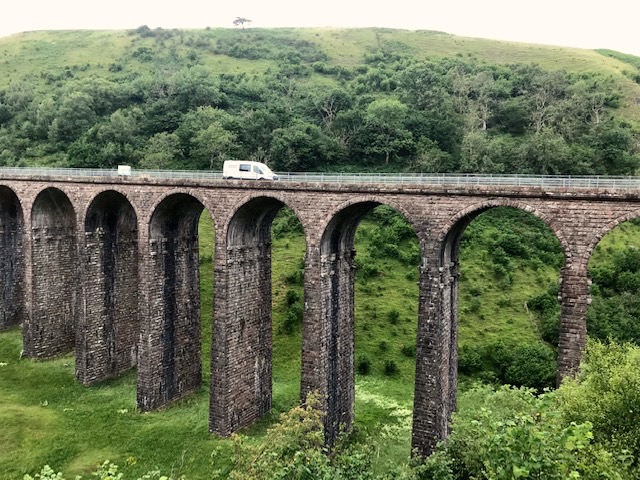
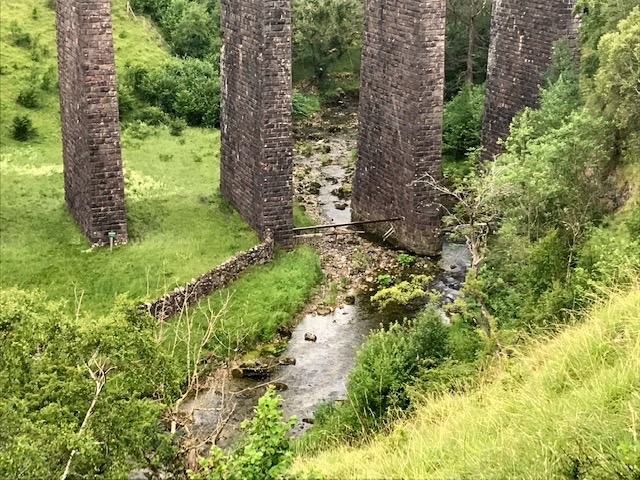
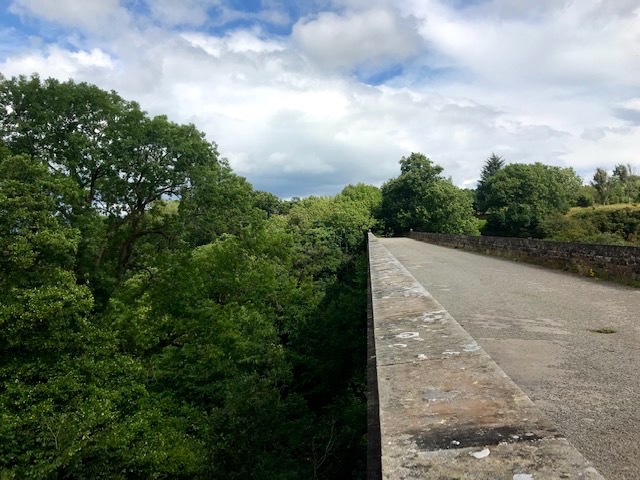
That diversion was a great bonus, focusing attention on the impressive structure of the curving construct, all fourteen arches at a height of 90 ft. above Scandal beck below, flowing over rocks millions of years old. So confident is the design that the footing of one pier is planted not either side of the water but right in it. 

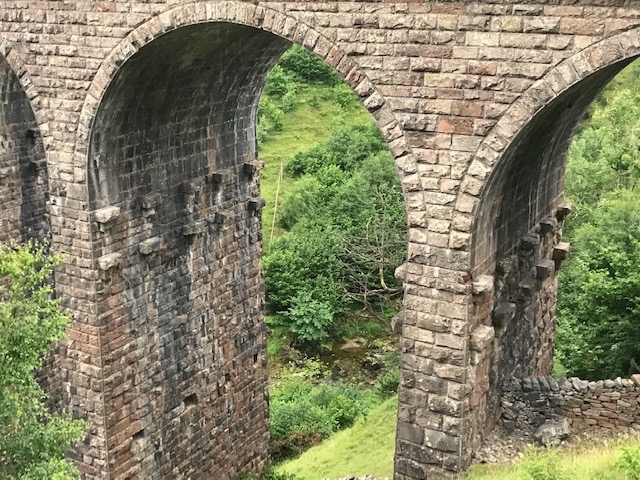
The path also allows you to see courses of corbels on each pier that secured the rough wooden platforms where Victorian navvies once toiled to build the structure skywards to completion.

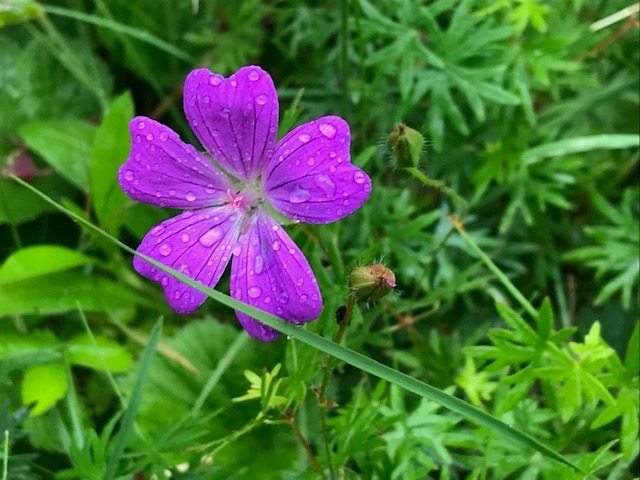
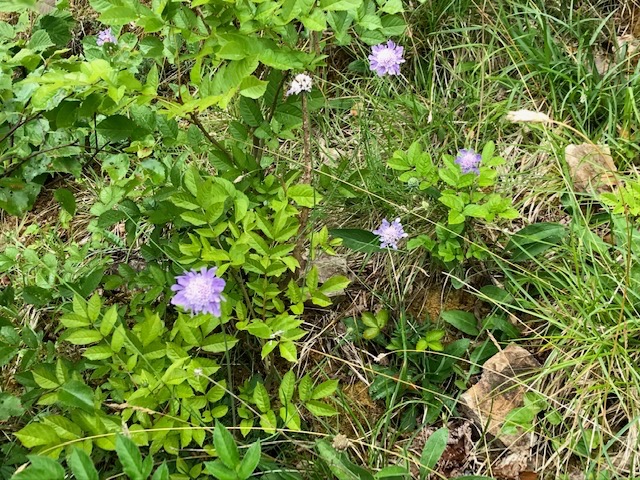
Worsening weather meant abandoning the planned return leg over the exposed flank of Smardale fell and instead we retraced our steps, past track bed verges of many wild flowers the reserve protects and promotes. I particularly liked the mauve tints of field scabious and the bold magenta of bloody cranesbill.

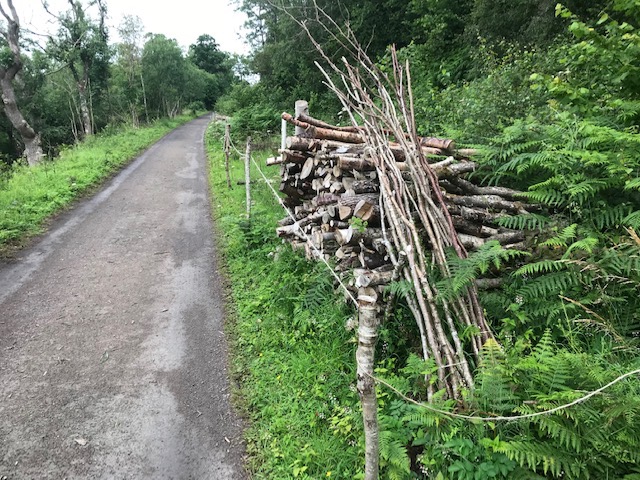
Unsurprisingly, given the inclement weather, there were no signs of the rare Scotch Argus or Northern Brown Argus butterflies that have a welcome safe haven hereabouts. Plenty of fruit flies though which buzzed continuously around our heads as we walked and landed en masse once stopped! Piles of logs and coppiced wood mark the way – perfect habitat for a wide variety of insects that in turn provide food for birds like redstart and pied flycatcher.
A lovely sojourn in a beautiful remote part of England where nature and historic transport history are valued and enhanced by their interlinked existence.

Beverston

NORTHUMBERLAND: I am a stranger here in Gloucestershire/ These high wild hills and rough uneven ways /Draws out our miles and makes them wearisome.

The Cotswolds is an AONB (Area of Outstanding Natural Beauty) graced with buildings using the locally quarried stone that gives even the humblest structure an added attractiveness. My old friend took me to a spot where this was amply demonstrated which I’d otherwise not have known about.

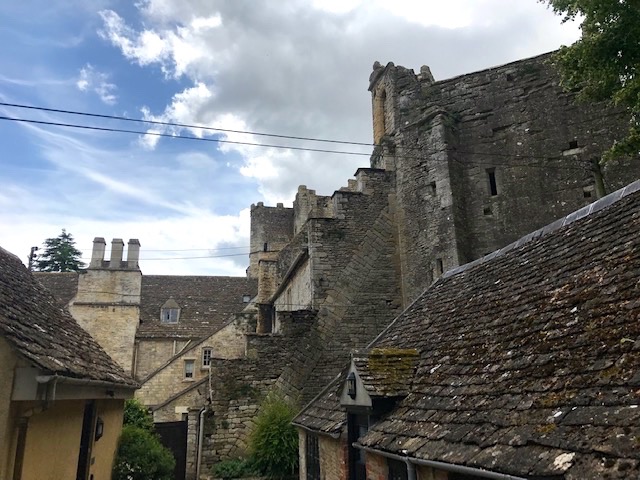
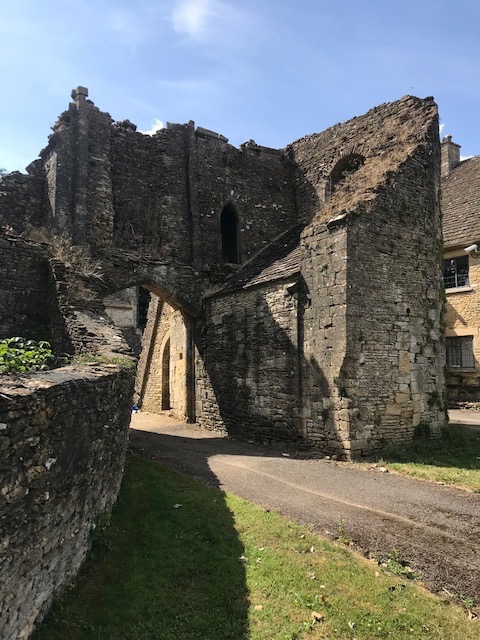
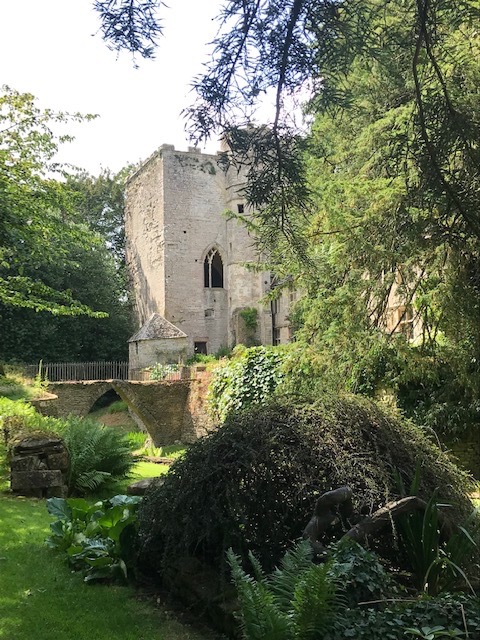
Driving through Beverston the clusters of uniform style cottages immediately tell you this is an estate village. Dating from the mid C19th, the quality of materials and vernacular design show the care that went into their creation. The big house and parish church were not so obvious, being shy of the road, cocooned by old walls and mature trees, now in full leaf. A short drive down a bumpy track brought us to a shady deserted square between the two historic fixtures. And what a pairing they have made over eight centuries of neighbourly companionship.

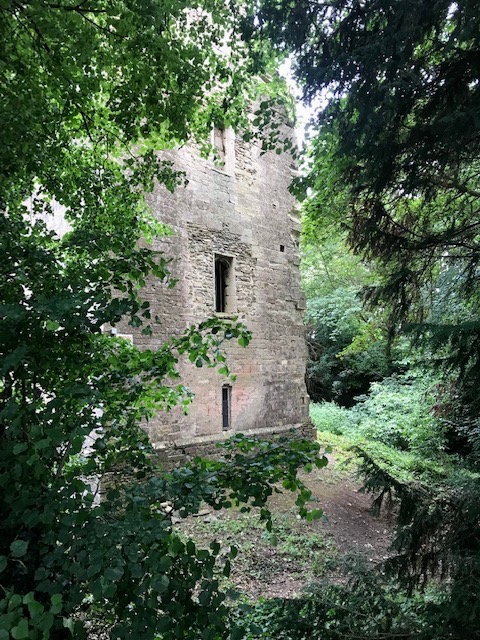
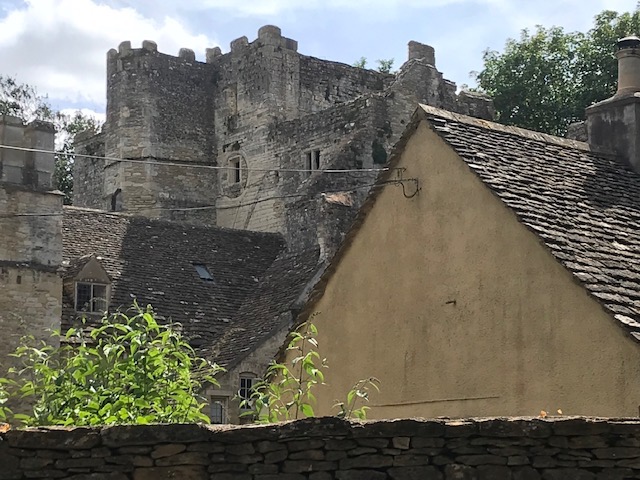
It was said of the Berkeley family that in riding to London from Berkeley Castle, down the road from here in the Vale of Severn, they never left their own land. Beverston would have been an initial stage of that cross country progress as a castle was erected here by one of their founding number in 1229 and further extended & reinforced by them in the C14th. As with many other castles it last saw serious action during the English Civil War and was subsequently ‘slighted’ by Parliamentary forces. In other words, made unusable by having walls and other defensive features demolished.

Fortunately Beverston castle’s substantial remains were not abandoned, as so many were elsewhere, but recycled over the following century to transform a military stronghold into a substantial manor house and ornamental gardens.

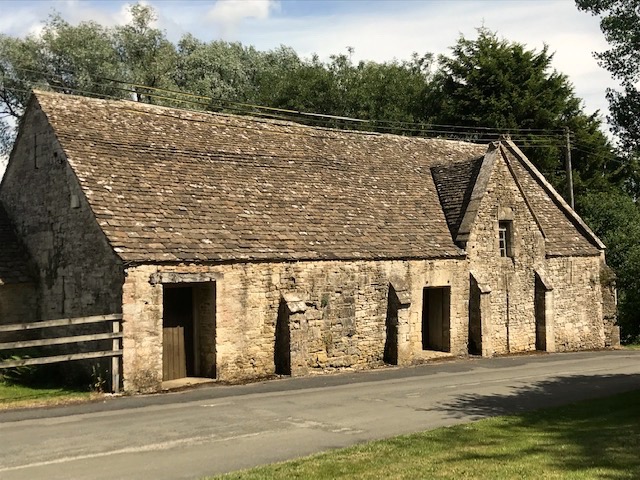
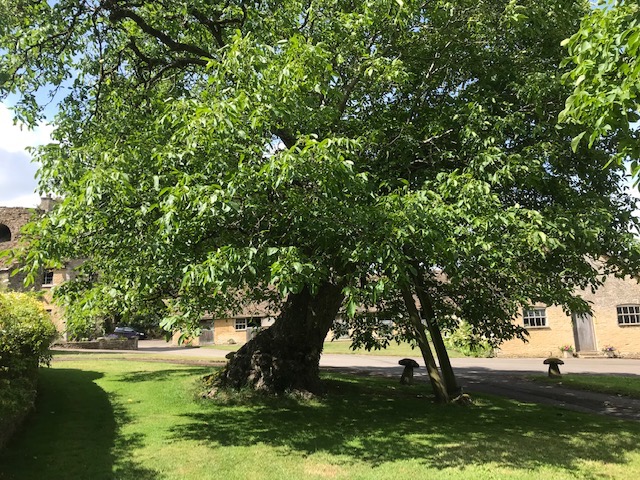
It remains at the centre of a 693 acre farm estate today, complete with venerable buttressed barn and more modern stables, grouped nearby around a green with specimen trees of some vintage, one propped up by timbers.

We marvelled at the architectural interaction of Cotswold stone on the different planes and levels. A Grade I listed building and scheduled ancient monument it remains a private residence, not open to the public.

Glancing through a rusty iron bar gate in the wall we could see that the dry moat has been incorporated on the garden side of the house as a kind of ha-ha feature while the grassland beyond apparently boasts an array of orchids.

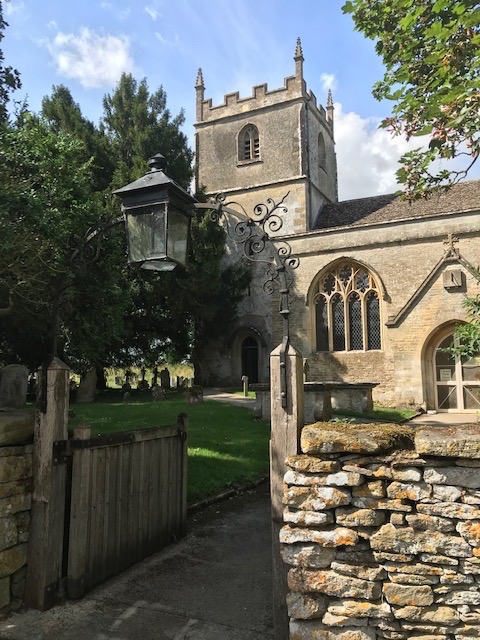
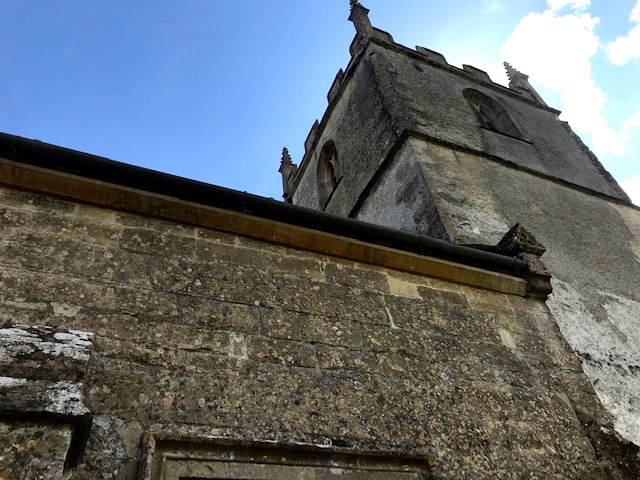
As in many other places once the feudal lord’s secular needs were met in the form of a castle a church would be built or improved to secure the eternal souls of himself and his kin. Here in Beverston, St Mary’s has an attractive stocky Norman tower, partly rebuilt in the C15th. The graceful metal lamp arch adds picturesque charm to the churchyard entrance.

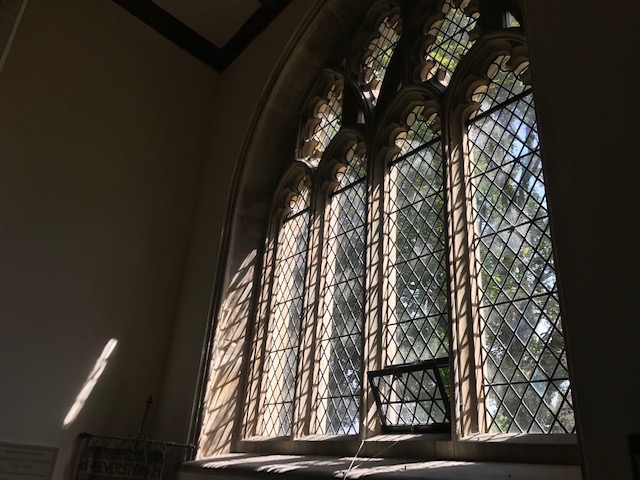
It didn’t always look so spruce. The dilapidated church was renovated, not just once but twice in the course of the C19th century. The end result is a pleasing and vibrant one and the parishioners are still fundraising to bring social facilities in line with C21st needs. The airy building we entered was flooded with soft summer light thanks to the large windows of plain glass, plain white washed walls and effect of the restful honey coloured stone.

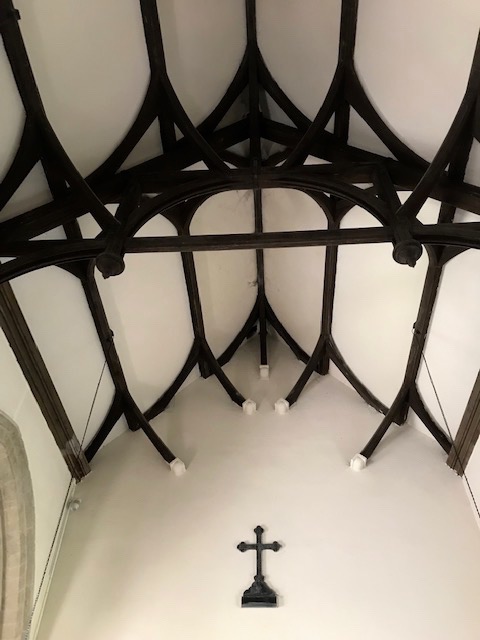
The church fabric boasts a number of fine medieval features but the one that impressed me most was the problem solving technique devised by the Victorian architect Lewis Vulliamy to secure the nave roof – a bespoke arrangement of trusses and corbels used sideways on the supporting walls. It struck me as an architectural version of that one time popular family fun game ‘Twister’.

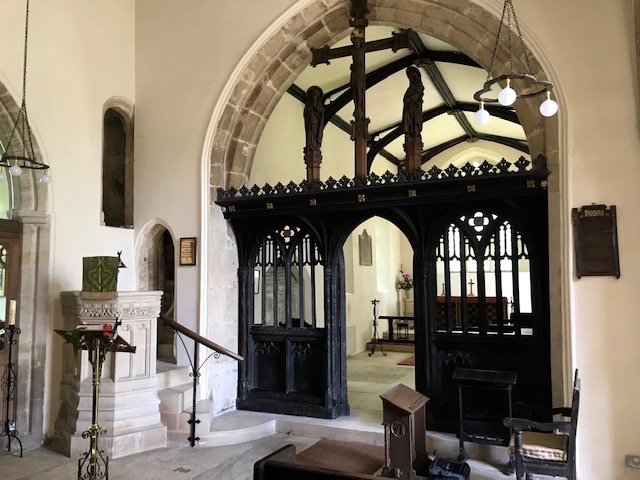
Loved the fact that the medieval rood screen, discarded in the first Victorian restoration, was rescued from the rectory garden where it’d been used as a pergola and put back in its original rightful place, between nave and choir.

Alerted by the guide notes we went looking on the outside for four medieval stone grave covers with incised chamfered crosses and spotted them where they’d been incorporated into the masonry high above. Three of them in line to form a top course, the fourth on its own embedded into a lower section of wall.

Intrigued to learn that the parish registers contain references to the families of Shakespeare and Hathaway. William Shakespeare undoubtedly knew this part of the Cotswolds well and describes the district in Richard II, as quoted in part above. If you’re interested in knowing more the parish has a good website: https://www.beverstonparishcouncil.org.uk/

Roman in the Cotswolds

The Cotswolds is an area of England that conjures up images of postcard picture perfect villages, many inhabited by second home owners, blond stone buildings nestling in folds of rolling estate farmland and densely wooded hillsides. A recent visit to catch up with an old friend allowed me to discover how much of this stereotypical view was for real. As a long time resident he knows the area well and was keen to share some of its treasured features with me.

1500 years ago, when under the benign rule of imperial Rome, the area around the administrative centre of Cirencester (Corinium) was home to some 50 villas. These palatial homes were at the heart of rich agricultural estates. Their wealthy owners, with extensive land and mercantile interests, lived a luxurious lifestyle and imported goods from all over the Roman world…So plus ca change on that front!
One of the best preserved of these Roman villas open to the public is near the village of Chedworth, just off the ancient Fosse Way. It nestles at the head of a coombe below sheltering woods. The spring that rises here provided a vital water supply. The villa’s owners revered spirits of place and made a feature of the pure waters emergence with a shrine to the resident nymphs (nymphaeum).

It wasn’t until the 1860’s that the historic site was rediscovered and excavated by the family of the local aristocratic landowner. An arresting feature of one room is the remains of a tree trunk embedded in a dividing wall that shows the ground level at the period of excavation.

The museum and warden accommodation, now offices and storage, dates from then and stands, somewhat incongruously, on the dividing wall of the villa’s central courtyard.

A scale model made of metal gave us a three dimensional overview of the building in its 4th century prime. The excavated ranges of single storied interlinked rooms is now mostly roofed over for preservation and interpretation.

Our meander there led us along raised walkways over and around a series of fascinating floor mosaics, the largest collection in the country still in their original positions. Ploughing and other disturbances in later ages have damaged the original fabric but the remnants in the luxury dining room and baths sections remain substantial enough to impress.

Underneath the floor lies an elaborate hypocaust system that provided dry under floor heating. Millions of tesserae made from pieces of coloured stone sourced from far and wide make up the mosaics. Some are local (white, off white, olive), others from Somerset (blue, greys) and the Forest of Dean (purple, browns) with broken brick or tile for reds. There’s some dispute, centered on the mortar used, whether Chedworth’s mosaics were assembled on site or prefabricated elsewhere.

How the interlinked bathing areas were developed and used is also still up for interpretation. Sauna like arrangements, hot semi-circular baths and a cold plunge pool with steps all feature in the arrangements.

Modern research indicates this villa survived the withdrawal of Roman troops from the province of Britannia in 410 AD, albeit as a purely agricultural holding, for at least another century before being finally abandoned. Roofs fell in and its valuable dressed stones were recycled into other buildings or used in making limestone for mortar in a nearby kiln. Living as I do near the empire’s military boundary on Hadrian’s Wall, that part of the story is familiar.

The finds museum is small but has some fabulous items on display in glass cases, including jewellery, tools, ceramics and an altarpiece. Particularly liked this tiny copper alloy figure of a deity, which would have been part of ritual practice.

A collection of spindle whorls. Rods with weights used for twisting wool into  yarn. A large part of Roman women’s work would involve clothes making for their families.

The villa’s clay tiles were most likely made in Cirencester where they were laid out on the ground to cool straight from the kiln. Two on display here present accidental indentation, one of a human hand and the other an ox’s hoof.

An outdoor feature I loved were the mini-meadows, literally garden rooms, developed in some of the partially excavated spaces in the north range. Alkaline loving meadow plants thrive here in the thin soil and mortar. These include oregano and marjoram, Mediterranean herbs first introduced by the Romans.

Best of all we came across some snails. No ordinary molluscs but large, edible snails (Helix pomatia) originally brought to this country by the Romans and still very much at home here, as they hibernate in the walls. Apparently the site also supports a remarkable number of bat species, including the rare barbastelle.

A great place to visit on a summer’s day, and the interpretive staff we met were particularly well informed. The National Trust has been the site’s custodian since 1924. More at: https://www.nationaltrust.org.uk/visit/gloucestershire-cotswolds/chedworth-roman-villa

By Field and Lane

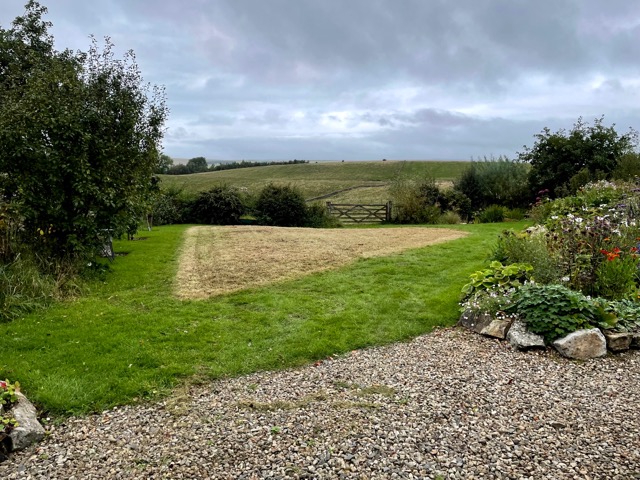
We marked the first of July with some much needed exercise on a circular stroll nearby, along a bridleway through fields by the forest’s conifer crowded edge, returning home by footpath and single track lanes. 

Moody westerly weather gave us great variety of view over the high land, set off with constant shifts of light and changes in temperature. There are a lot of cattle out on summer grazing now but luckily we only had one field of cows with calves at foot to navigate. Not having a dog with us helped. Utilising hazel walking sticks a welcome assurance too in such circumstances.

The winding low water burn, emerging from the forest, carves a shallow valley for itself and at this time of year has meadow grasses aplenty with patches of yellow flowering Lady’s bedstraw and hawkweed in its banks.

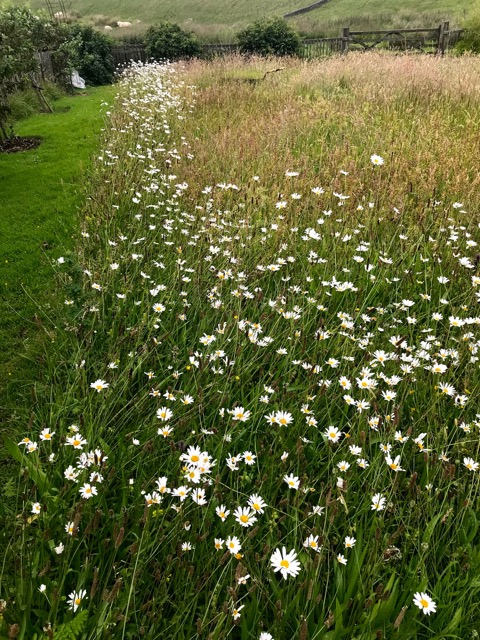
One plant seen in amongst the predominant clover and buttercups of the grazed fields is self heal. As the name suggests it has a long tradition of use in herbal medicine. Found in shorter swards that have not been chemically treated this low lying creeping plant is adaptable to longer grass too. It has the prettiest of small violet flowers. (At home I leave clumps of the nectar rich flower unmown in the lawn areas, and rejoice to see the bees visit).

A tractor and cutter was laying a crop of grass for  silage as a flock of seed seeking finches followed in its wake, with a scattering of corvids working the newly exposed turf for worms.  This being a bridle path a jump for horses embedded in the stone wall makes perfect sense. At the next field an exultation of skylarks treated us to their etheral singing. Like John Clare we ‘listen to its song, and smile and fancy’.  

Attempts to follow an OS map marked footpath convinced us it’s never, or rarely used.  We passed an abandoned footbridge over a stream and wonder if the path originally went that way. Instead we’ve to make our way uphill to peer down through the gorge’s leaf canopy to find where the track should drop again.

A fallen ash blocked our passage and necessitated some nifty leg work over a barbed wire fence and a scramble back down the steep bank to where woodland gave way to field again. To our relief he footbridge we sought suddenly revealed itself. That in turn brought us up to the narrow lane and more easeful sauntering along its quiet lengths to join the wider road for home.

Meadowsweet

The generous verges and drainage ditches here are largely untroubled by man or beast so remain home to a rich variety of plants. Some I spotted were hedge bedstraw and burdock, silverweed and vetches, with a mass of Meadowsweet just starting to break into fluffed up creamy bloom.

Followed the weak winged but restless progress of a number of ringlet butterflies and finally catch a picture of one resting on yarrow.

Pleasantly surprised to spy a dozen or more common spotted orchids, their beautiful pinky white flowers peeping out between the grasses. Even more pleased to have one (for now) back home growing in the patch of roadside meadow by the yard gate. Fingers crossed it spreads is seed for next year.

Sign of the times. A supplementary official notice needed to remind scramble bike riders and 4×4 off road drivers that public footpaths are not BOATS (Byways Open to All Traffic)

On the higher and drier stretch of the road home the vegetation is coarser and dominant umbilifers are in the process of change over. The cow parsley now well over and seeding freely as the stouter hogweed, with its irritant hairy stems, beaks into flower.

Our front garden wall boasts more biting stonecrop this year than ever.  Wonderful splashes of yellow emanating from the gaps between grey stone.

Dungeness

Busie old fool, unruly Sunne,/Why dost thou thus,/Through windows, and through curtaines, call on us?/Must to thy motions lovers seasons run? From: The Sunne Rising (Donne’s poem is lettered on the side of Prospect Cottage)

Unique is a much over used word. Applied to Dungeness though it is spot on. The outing here was aided and abetted by a good old friend of ours who lives up on the Sussex Downs and had visited many times before. He also had wheels so no need to get the bus from our base in Rye over the county border to this corner of Kent.

Often referred to as England’s only desert Dungeness is one of the largest shingle banks in Europe, a result of coastal longshore drift over the centuries. This triangular bulwark defines and protects Romney Marsh behind it. The etymology of ‘Dungeness’ makes the association between the two topographies clear as it means ‘head of the marsh with manured pasture’ in Old English. The marsh has long since been drained to become fertile farmland where native Romney sheep and Sussex Red cattle graze, which we had admired when crossing it by rail on the line to Rye from Ashford.

Vipers Bugloss & Poppies

Both a national nature reserve and SSSI, Dungeness today is home to 600 different types of plant, an astonishing third of the total found in the UK as a whole. We were thrilled to see plants that are rarities elsewhere thriving here.

Nectar rich beauties such as vipers bugloss, sea kale, mouse eared hawkweed, horned yellow poppies (above), sea pea etc freely colonising beach and roadsides.

An Anglo-Swedish scientific programme has recently re-established a population of short-haired bumblebees here, where they were last logged in the UK back in 1988 and officially declared extinct in 2000. They need species rich grassland to survive and Dungeness has no shortage of food plants.

We watched a kestrel hovering in the clear blue sky above as our friend recalled seeing harbour porpoises hunting through channels between shingle banks exposed at low tide.

We called in at an artisan weaver’s studio then watched a tractor delivering a trailer full of produce to a roadside shack doing a brisk trade in fresh fish and shellfish. Our lunch destination though was a local landmark, the Pilot Inn.

We duly sampled ‘the best fish & chips in England’ outside the bustling hostelry, watching the world go by while guarding our grub from a raiding party of starlings. The engine wreckage of WW2 planes and memorials to killed aircrews stand poignantly nearby.

Across the way men were rebuilding and extending one of the original shacks. Many of these simple dwellings were converted railway carriages and goods waggons occupied from the 1920’s by workers from London seeking an affordable rudimentary home by the sea. These days such places are snapped up by the well healed seeking a get away in what remains the most remote and least populated part of south east England. We saw one place – a cool black wood cube with swish interiors and panoramic windows – reportedly being rented out for £1700 a week.

What attracted Kim & I here initially was Prospect Cottage (Above). Built in 1900, and the former home of a local fishing family it was bought by film maker and gay rights activist Derek Jarman. A beloved home from 1986 to his death in 1994, it was made famous by his writing.

The iconic garden the artist created, intermingling native plants with found and organic objects in a seemingly boundless state, has been influential on garden design ever since. After a national fundraising campaign Prospect Cottage was acquired by a charitable trust and is now managed as an artists retreat, although I expect getting any privacy or peace here in the height of summer to work would be problematic.

We circled and explored the garden with the remaining art forms time and tide had gifted its famous occupant. A lot of the original sculptures are elsewhere for safekeeping as they would surely have been nicked by now, as there are no defining fences, hedges, walls or other formal boundaries hereabouts.

Dungeness itself is a formal entity in being an estate. It extends to 468 acres (190 hectares) and contains some 100 homes on 99 year leases, although only around a third are occupied all year round. It’s not hard to imagine this as a bleak exposed place to live in winter, that would make or break the will to be a seriously committed resident. For many years a family owned and run business, in 2015 the estate was put up for sale and was bought by the French energy giant EDF for a sum in excess of £1.5 million. This is no lucrative development opportunity as Dungeness is highly protected, but as the buyer also happens to be the area’s biggest employer it makes business sense.

Britain’s nuclear power stations are all situated on our coasts because they need huge amounts of water to cool the reactors. EDF own and run Dungeness power station, the dominant landmark that defines the ness’s western horizon. Built in stages from 1965, andgenerating electricity by 1983, it was due to close in 2018 but is now scheduled to remain operational ‘til 2028. The company had previously been paying up to £100,000 per annum to the estate to move shingle from the other (eastern) side of the ness to stabilise and reinforce the sea defences on its western flank.

This special environment being only an hour and a half’s drive from London makes it a magnet for visual artists and has featured on a host of album covers, music videos and dramas, like this 1981 offering from Pink Floyd. The cost of running the estate is partly met by issuing filming rights, currently £1500 a day for commercial film or photography or £300 for students.

It can be hard work walking over the shingle. We took our time though, to absorb the sights and sounds of the great gravelly bank as we followed its coastal crest westwards. In the old days locals attached short planks to their feet to gain easier traction. These days orange plastic mats ease passage for pedestrians to reach the shore.

Fishing boats are hauled up the strand by winches and their gear secured in boxes by the boats or in tar coated wooden huts, some of which are liberally decorated with a collection of signs. Incidental art works in the spirit of the place.

Wind, rain, waves and salt laden air take a terrible toll of wood and metal. Abandoned boats and collapsed winches, even a rusted out bulldozer punctuate the steep sided bank. As it recedes inland the shingle rises and falls in gentle swells, colonised with more vegetation the further back it goes.  

Our constant way marker was the former lighthouse. There have been seven buildings on the ness since 1615 and this one, now a museum, opened in 1904. The white buildings are former lighthouse keepers cottages.

The Southern Maid in action. Image Gerry Balding / Creative Commons

Sadly time and logistics did not allow us to incorporate a return trip on the UK’s smallest (15” gauge) regular passenger steam train line, all 13.5 miles of it. The Romney, Hythe and Dymchurch Railway, operational from 1927, is a major tourist draw today and just hearing and seeing the immaculately preserved engines steam and whistle their way through the landscape was a pure delight.

They’re not obvious to find and when you do discover them they’re not  really accessible. As befits former military sites they don’t render up secrets willingly. I’m talking about the acoustic mirrors or ‘listening ears’ now protected from incursion – except on special open days – by a moat. Extensive extraction of  gravel in recent years has created a wildlife lake and the three experimental concrete structures are marooned on an island where they sit, like ancient monoliths, peeping skywards over trees towards France some 30 miles away.  

Acoustic Mirrors Image by Paul Russon (2005)

Built between the wars on what was then Ministry of Defence land the 200ft long wall and two circular dishes equipped with microphones were designed to pick up the sounds of approaching enemy aircraft. An early warning system that was soon to be made redundant by the invention of Radar in 1938.

The waters here were remarkably clear, green weeds waving from the depths beyond its cool shore. Resting from the heat on the escarpment I saw a great crested grebe dive and swim to catch a small fish before resurfacing. Elsewhere mallards and their ducklings sailed in and out of reed beds. Shags, goldeneye and coots were out there on the lake too, with swallows slicing the air above them.

Beyond that still planes were coming in and out of Lydd airport (AKA London Ashford Airport). Controversially the former RAF base is earmarked for runway extension to take bigger, heavier commercial traffic. Beyond that, and dating from 2008, stretches the largest onshore wind farm in the south of England, generating 60 megawatts of electricity for the grid.

Sea Kale

Nukes, planes and turbines exist cheek by jowl at Dungeness with an incredible richness of flora and fauna. A treat for curious creatives or lovers of life on the edge, providing us with one of the most fascinating and rewarding of walks yet.

The moon is even more spectacular. The sunset turns the seashore into a rosy mirror, with streaks of pink cloud. Then the moon comes, and casts a silvery path across the waves, a shimmering carpet for the stars. Dungeness, Dungeness, your beauty is the best, forget the hills and valleys. (From: Derek Jarman’s Garden)

Great Dixter

The word paradise is derived from the ancient Persian – ‘A green place’. Paradise haunts gardens, and some gardens are paradises….Christopher Lloyd’s Great Dixter (for one). It’s shaggy. If a garden isn’t shaggy, forget it. (Derek Jarman)

We are always on the borderline of what it’s most sensible to attempt. Such gardening may be silly, but on the other hand, it can be the most exciting. (Christopher Lloyd)

First it was Covid then the uncertainty caused by rolling rail strikes but third time around we finally made it to Rye in East Sussex this month. The trip was spurred by a wedding present of free entry to one of the UK’s most famous and best loved gardens, Great Dixter.

We arrived on the south coast from Northumberland by rail and the next day caught the regular service bus to the pretty village of Northiam. The subtle range of old red brick and white painted clapperboard houses put Kim in mind of Quebec’s eastern townships from where her mother’s family hailed and where she spent many a happy summer vacation.

Our way took us under some of the magnificent great oaks this corner of England is famous for. Trees that once provided the timber to build naval and merchant ships as well as local farms and manors, including the one we were about to discover.

Great Dixter was the family home of the famous gardener and gardening writer Christopher Lloyd OBE (1921-2006). His father Nathaniel was a retired wealthy businessman with a love of the arts and craft movement. In 1910 he bought the C15th farmhouse with its oak framed great hall (the largest of its kind in England) and commissioned Sir Edwin Lutyens to design a complimentary wing in brick and tile. At the same time a derelict Tudor timber house at nearby Beneden was bought for £75, dismantled and re-erected to form a further part of the enlarged home.

The garden plan was initially sketched out by Lutyens and implemented to the designs of George Thorold who, working closely with the Lloyds, converted yards, hedges and fields into a series of interlinked garden rooms bound by the existing great barn, stables and oast house. It was Nathaniel’s wife Daisy (1881-1972) who oversaw the planting and evolved its development under the influence of leading practitioners like William Robinson and Gertrude Jekyll. Christopher (Christo) was the Lloyd’s sixth and youngest child and he spent an idyllic childhood immersed in the bucolic world his loving parents had created for the family at Great Dixter. His mother Daisy supported and encouraged him in his stewardship of the gardens up to her death in 1972.

After leaving for university, then war service and further study in ornamental horticulture Christopher finally returned home in 1954 and started a nursery and began experimenting in the gardens. In so doing he pioneered the dense mixed flower border using colour, foliage and structure, in contrast to the purely herbaceous formal border that was then the norm.

He loved using seed raised annuals, prizing them for their vibrancy and vigour, and would eventually grub up the rose garden to replace it with an exotic one, another influential step.

Christopher Lloyd was as an eminently readable writer and his horticultural leadership role at Great Dixter is carried on today by Fergus Garrett, head gardener since 1993, under the auspices of a charitable trust. The two men had become firm friends, generating a creative synergy, ensuring it continues to be a place of experimentation and change.

The nursery, cafe and shop are clearly thriving businesses. Young gardeners from around the world study here and thousands visit every year to be inspired or challenged by what they find. Us included.

I confess to that floral bathing in the tall yew topiary bound Orchard, High and Peacock Gardens felt more combative than contemplative for my taste. After a while it all began to loose distinctiveness and become simply a glorious abstract blur. A sense of being on the outside as opposed to being drawn in was probably accentuated by the exuberance of growth and sheer numbers of fellow visitors.

Being a lover of garden ponds I appreciated getting a view of the farm’s former horse pond but would have liked to got nearer to it than we were able to from the approach road.

What I did love though was the escape offered in meandering along mown paths through the peripheral orchid rich meadows. Fine views too of the house afloat on its surrounding sea of trees shrubs, topiary and flowers.

Found myself captivated by the bold contrasts of stone paths, low wooden outbuildings, sculptural forms and slim beds of swirling foxgloves that define the topiary lawn quadrant between the great barn and plant nursery. Perhaps the sense of potential outdoor theatre setting it evoked was the key to that feeling.

Great Dixter has a stated mission to further unlock the ecological potential of its ornamental gardens. A 2017 audit identified 2000 species within the estate. That tally included 270 types of moth, 148 species of spider and the rare Mining Bee.

Resting from our wanderings in the heat we sat on a shaded bench, watching the birds flying backwards and forwards from their nests under the eaves of the grand house. That and the simple pleasure of following meadow brown or gatekeeper butterflies weaving their erratic courses through the meadow flowers in this, one of the most quintessential of English garden sanctuaries.  

Caveats notwithstanding I was very glad we’d visited Great Dixter to understand its unfolding history and inspirational legacy. One that continues, as all great gardens do, to find renewed meaning in our own time.

College Valley

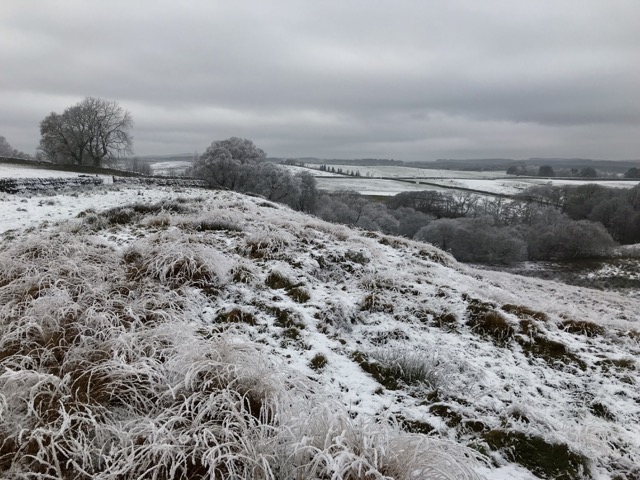
The College burn rises at the foot of the Cheviot itself, the highest point of the range of hills named after it that straddle the border of Scotland and England. Likely word origin here is a pairing of ‘col’ for cold or collar as in a gorge + ‘letch’ slow moving stream in marshy ground.

The College valley is at the centre of a 12,000 acre upland estate that has passed through a succession of wealthy owners down the centuries. The last, Sir James Knott MP (1855-1934) was a Newcastle born shipping and coal magnate. He created a trust with a board of directors that cares for the estate today. (www.knott-trust.co.uk) They work closely with the Northumberland National Park, within which the valley and hills sit, to secure its natural capital and enhance public access.

Vehicular access to the valley is via a single track road which attracts a licensed daily toll of £12 but like the vast majority of visitors we parked (for free) at the NNP Hethpool site and walked from there. This is the point where the narrow valley emerges from steep enfolding hills, many of whom boast iron age hill forts on their lofty summits. Thanks to funding from the national park a series of signposts opens up permissive paths to those hills for the more adventurous rambler.

The road up from Kirknewton to the farming hamlet of Hethpool led us through the cooling shades of a lovely fellside sessile oak wood. This was planted more than 200 years ago with the noble aim of providing wood for the Royal Navy to help replace oaks felled in the rush to build more ships for the extensive sea war against Napoleon. The estate’s then owner was Admiral Lord Collingwood, a proud son of Northumberland and naval hero, who had acquired it through his wife Sarah. It was she who started planting acorns at this spot to honour his memory, ‘enriching and fertilising that which would otherwise have been barren’.

Within just a few decades steam and iron would replace wood and sail so the need for oak as a shipbuilding material fell sharply away. On top of that the Collingwood oaks never grew tall and straight enough to provide the right quality of timber needed. The much greater environmental gain over time would be nature’s, and the woods today are greatly valued for that alone as oak trees support more wildlife than any other native tree.

The early part of our leisurely amble up the vale took us past modern day forestry in action and we paused to admire a harvester hard at work on precipitous slopes, its driver skilfully taking out and stripping tree trunks before loading them on piles for later collection by timber trucks.

Previous clearances had enabled masses of foxgloves to flower in between fresh leaved shrubs hiding stumps of sitka spruce. Before leaving the sparkling College burn, on a corner where the access road bridged it, we came across a young deciduous wood thriving where once a block of featureless softwoods had stood. Oak, hazel and alder planted in the spirit of that original Collingwood oak wood.

We enjoyed a picnic lunch overlooking the handsome former farmhouse at Trowupburn. After this current long spell of warm dry weather the water levels were low in the burns we passed. Consequently the pools held restless shoals of young brown trout and I watched them with interest. As children living on the edge of Dartmoor looking out for brown trout with a view to tickling them ashore from the bank was a particular pleasure.

None of that activity today though and I was wakened from my reverie to re-join my companions going uphill through flocks of ewes and lambs over into the next valley of Elsdonburn, eventually to join St. Cuthbert’s Way that would take us back to where we started.

What other breed of sheep would you expect to see here on these hills but Cheviot? Today there are only two tenant farms operating in the valley where once there would have been dozens, with single story cottages clustered round them to accommodate the shepherds. The combined flocks today amount to some 2,500 sheep and the lambs are highly prized as breeding stock as well as for the quality of their meat. Recognised as a hardy sheep since 1372 the breed is indigenous to the Cheviots either side of the border. The wool, which was once the base for the Border Tweed industry and could pay the tenants’ farm rent, has now declined to only marginal importance. But it still commands the best price, compared to other breeds, from the British Wool Board. It is chiefly used in the Harris tweed and carpet industries.

Intrigued to come across a lone Wych elm among the blossoming hawthorns between track and burn…A rare survivor of Dutch elm disease. Perhaps the remote location saved it from succumbing to the deadly pathogen that all but obliterated the once common elm from our land in the last century.

We saw a couple of stells (sheep shelters) on fellsides. One had a small cast iron Dutch barn nearby. The dry stone walls are the size and shape of a circus ring allowing the animals to find shelter from whichever way the wind blows snow or rain. From the Victorian era onwards the cattle and sheep stayed up here all year round so such places were essential to survival but these days they are taken off to lower pastures in winter. Conservation wise that fits with the older pattern of summer grazing (shielings) where the stock feed on the coarser grasses which would otherwise swamp the more delicate vascular alpine grasses and flowers. These rare plants can now once again start to thrive in the highest area of 5,500 acres, around the Cheviot itself. Approximately half that area is an SSSI (Site of Special Scientific Interest)

We descended gradually on the track following the Elsdon burn, past intake fields and under a fine avenue of trees to Hethpool’s impressive row of arts and crafts style workers cottages and gardens. A great walk of less than four miles, a wonderful taster that demands a return to discover more of this distinctive land.  

Sculpture Gardens and Falls

Sculpture Gardens and Falls

The Western Isles, sitting in the transatlantic gulf stream, can boast some unusually verdant coastal gardens within their sheltered nooks and crannies. We discovered two such special places on the coast of Mull. Both with sculptural forms and clever landscaping at their heart, which added to the attractiveness.

Colonel James Macleod of the Royal Canadian Mounted Police spent a very agreeable time on holiday in the 1870’s as a guest of the Calgary Castle estate on Mull’s north west coast. On returning home the Colonel, who was also a lawyer and politician, re-named a new fort in Alberta after this corner of the old country he’d left as a child. We visited on a distinctly damp day but that didn’t prevent us soaking in the atmosphere as well as the remorseless drizzle.

This corner of the island was once widely farmed and highly populated but a series of C19th clearances put an end to that. It remains a distinctly beautiful and singular landscape though. A mix of ancient and recent woodlands overlooking sweeps of protected machair grasslands behind a white shell beach, sheltered from the worst of weathers by imposing headlands of dark igneous rock.

We had a great lunch at the café/studio complex – Calgary Art in Nature – situated in a handsome converted farm complex tucked away in a narrow wooded valley. Afterwards we explored the sculpture trail through its grounds, encountering art works in metal and wood, plus a distinctive self-contained eco holiday let on the hillside. (https://www.calgary.co.uk/art/art-in-nature/ )

A large shady deep pond at the rear of the former farmhouse holds stream water that once powered a saw mill operational up to seventy years ago and whose scant remains of pillar and pit we picked out in deep greenery by a gravel track.

Interesting to find refugee Spanish bluebells and three cornered leeks in close company under a mixed canopy of oak, beech, sycamore and scots pine. Both are invasive plants originating from Mediterranean countries. The bluebells are toxic but the leeks (Allium triquetrum) as the name implies are edible and much favoured by foragers. The triangular title references a cross section of its stem.

Later we motored down to amble the wide sweep of deserted beach, parking by a charmingly idiosyncratic ice cream shop – Robin’s Boat – sadly not open for business today. We’d like to return when it is open and the sun is shining.

Lip na Cloiche is a garden and nursery set on a precipitous south facing hillside, surrounding the owner’s house, and overlooking Loch Tuath and the isle of Ulva. (www.lipnacloice.co.uk) Owner gardener Lucy Mackenzie Panizzon – whose bustling lean form we caught unloading deliveries on arrival – created her eccentric arboreal wonder over a decade and, of course, it is still a work in progress. Unsurprisingly, lots of articles have been penned for gardening magazines about Lip na Cloiche, and some of these were displayed at the gate.

The fine rain had continued most of the time driving from Calgary, hugging the coast for much of the way. Consequently even more care needed in ascending the narrow footpaths through luxuriant dazzling vegetation. The tumbling burn that defines the garden’s western field boundary was awash with damp loving perenniels, shrubs and trees. Zig-zagging upwards along the narrow paths was experienced as a positively Amazonian experience.

Lots of found objects encountered as we turned each corner; rusted metal boxes, ceramic tiles, driftwood, farm and garden implements, glass balls etc added greatly to the garden’s charm and playfulness.

In gaining the dizzy heights of the garden’s ultimate viewpoint the terraced strips became an imagined equivalent of the Andes.

The steep winding descent brought us to a cottage garden, greenhouse and stores by the resident owners cheerful blue and white house, with its front porch display of locally produced cards and crafts.

Two long display tables in the former drive were filled with home grown hardy nursery plants in pots. 25% of takings go to local charities. The honesty box for payments has had to be seasonally adjusted to fit residential requirements….

After leaving the gardens we stopped to admire the area’s most striking natural wonder, a gift from the mountain behind to the sea loch in front. Appropriately this was our third port of call that day and the rain had only served to swell its tumbling volume.

The name Ears Fors Waterfall is tautological as all three words are synonymous. Eas is Gaelic, Fors Norwegian (Viking) and the third English. The dramatic drops of white water materialise in three distinctive stages too….Wonderful happenstance!