These Things Also Are Spring’s

But these things also are Spring’s – / On banks by the roadside the grass / Long dead that is greyer now / Than all the winter it was; / The shell of a little snail bleached / in the grass; chip of flint, and mite / Of chalk, and the small birds dung / In splashes of purest white. (Edward Thomas)

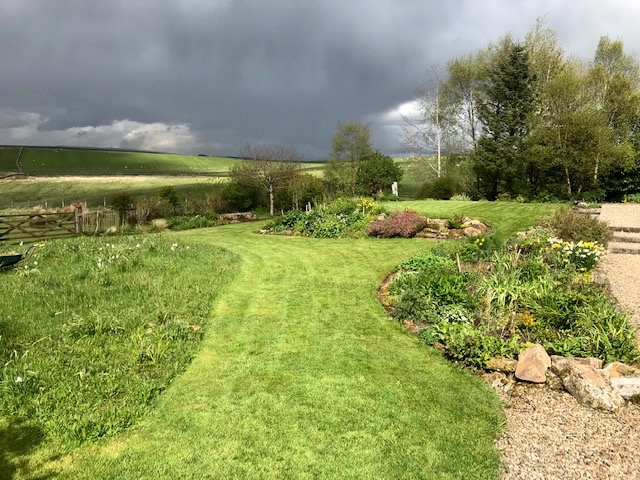
The rites of spring are evident in and around all our gardens right now. A sustained period of warm dry weather is welcomed with open arms, although the cold still nights that bring late frosts are capable of wrecking withering havoc on bloom and blossom or tender plants and bean seedlings in the (unheated) greenhouse. Our farming neighbours pray for rain to bring on the sward in their pastures to feed the swelling numbers of turned out lambs and calves.

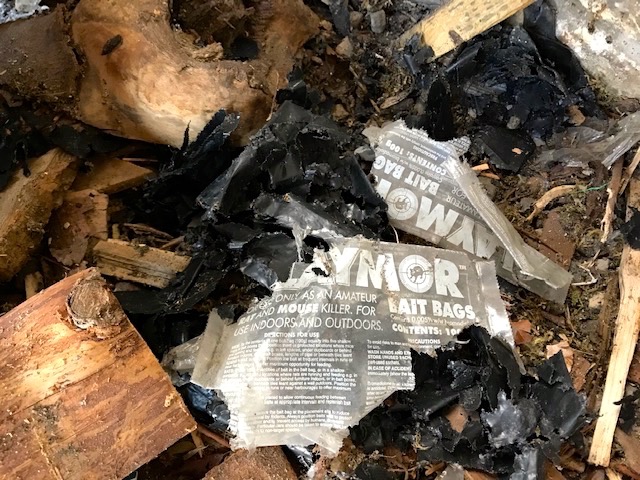
Clearing out the last of the logs from the east end store I discover an abandoned rat’s nest of chewed up pieces of black plastic bags mixed with shredded rodent poison bags! These labelled bags must be old as not bought by us so the nest may have been here some time. A perfect place for them with easy covered access back of the coal bunker one way to get under the deck and round the corner to drains the other way. We suspect from observation the cavity walls and old walls must hold both rats and mice. I sometimes put bait down for them but mostly desist as I don’t want to undermine nature’s food chain and inadvertently poison the weasels and owls or occasional cat that feeds on them in turn.

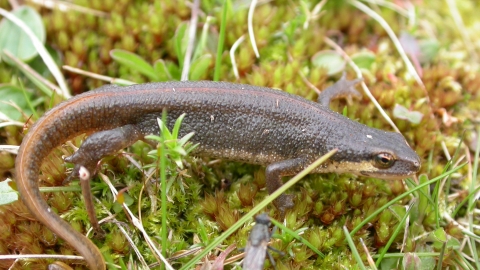
Highlight of the week was the sight of residents returned from winter quarters to the garden pond. A glimpse of sashaying tail under the floating weeds drew my attention. Sitting to watch I was treated to a sight never witnessed before – palmate newts paired for mating. A very tender thing it was too. Vertical integration with gentle stroking and languid unhurried motions, whether post coital or not I could not tell, as all this was part obscured by the tangle of oxygenating weed in which they were embedded. The female will protect her eggs from predators by wrapping fertilised eggs in the leaves of of pond plants that inhabit the margins and shallows….forget me not, brooklime, water buttercup, creeping jenny, globeflower, water dropwort, lesser spearwort etc.
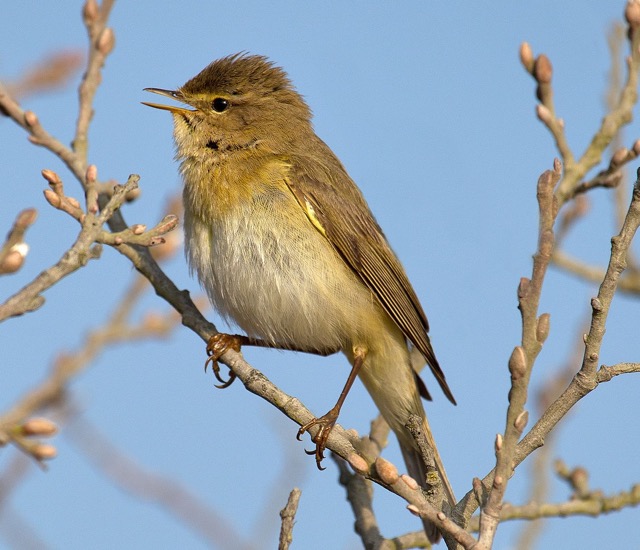
Doing our best to tune ears to the calls and refrains of garden birds so we can distinguish blue tit from great tit, robin from wren. Some are easier, like the combined chatter of house sparrows or the unmistakable calls of head chorister the male blackbird, while some are almost impossible to pin down with certainty when you can’t see the songster. Kim delighted when out walking to be told by a naturalist writer friend with an attuned ear that willow warblers are present, back from Migration in Africa. Their tuneful melancholic descending trill heard at our field’s end, coming from somewhere in the neighbouring willow carr. Still no sight or sound of willow or marsh tit though sadly, despite my wishing otherwise.

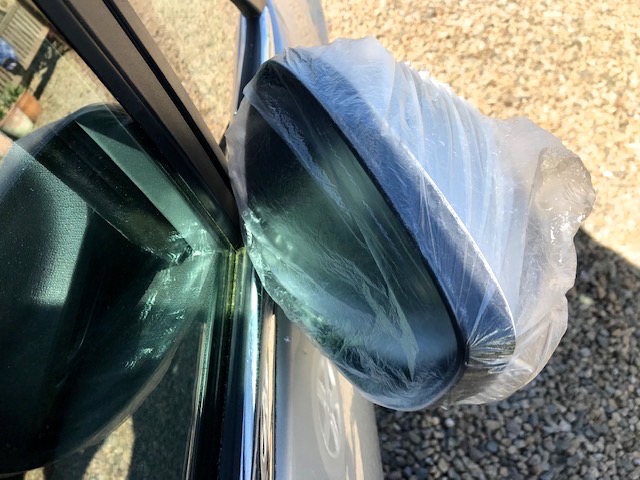
Last spring a male chaffinch saw his reflection in the glass panes of the front garden door every morning and took to attacking it vigorously with his beak. This year either the same bird or another (who can tell?) is back to repeat the rat-a-tat morning reveille. Out in the yard I’ve taken to covering both our cars wing mirrors with shower caps to stop birds scratching the glass and pooping on the paint work in the process! Up the road at Southridge, with its wonderful new garden room at the granary’s gable end, our friends are driven to distraction by the unwelcome attention of pied wagtails who are doing much the same, on a bigger scale over a greater surface of glass.

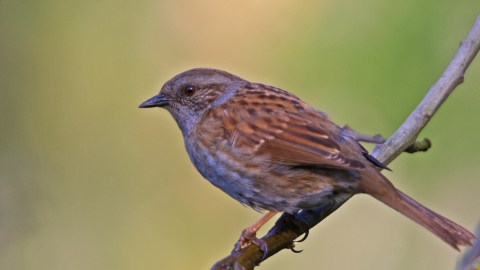
The dunnock ménage a trois that has formed in our garden this mating season is the most active of all the avian species present, zipping about all over the place at great speed. The little bird’s behaviour is singular, as this extract from the British Trust for Ornithology (BTO) website explains;

‘For many years, a peculiar piece of Dunnock behaviour had been noted by many people – vent or cloacal pecking. One Dunnock was seen to peck under the tail of another but there was no explanation of what was happening. A few years ago, Nick Davies, working in the Cambridge Botanical Garden, found out the absolutely stunning explanation for this behaviour. Dunnock breeding behaviour has evolved into an amazing melange of systems, with monogamous pairs, pairs with two males and one female and even pairs with two males and two females. Many males were trying to father chicks with females in other territories, pecking at the female cloaca to displace any sperm from a previous mating before mating themselves. Cloaca pecking was all about the cock bird trying to ensure that he was going to fertilise as many eggs as possible’.

One early evening we observed two of our trio going about this intimate business, just a few yards away, on the ground. Quite a sight! Another advantage of this unique reproductive system is that both cock birds, uncertain of paternity, will feed the female at the nest during incubation, thus increasing the breed’s survival chances.

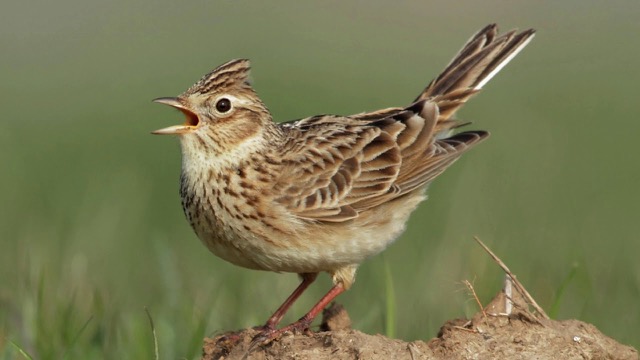
There’s always a strand of tragedy present, of death in the midst of life. From stillborn lambs to a hen blackbird drowned in one of the garden water tanks. Fortunately most repeating tropes of spring just simply delight and enhance. From the lemon slice of a moon slung hammock like in the night sky; yelps of foxes and hooting owls; the soft thrum of hoof beats when lamb gangs in the field repeat through yet another generation those mad chasing games in and out of hollows by the wall; the spreading yellow carpet of shining celandines under coppice trees thinned last year, skylarks heard before seen over the crags; a crystal clear night sky ablaze with a thousand million pricks of light, reminding us of the region’s officially designated dark sky status. These things also are Spring’s.  

The Greatest of my Pride

Sir, I am a true labourer; I earn that I eat, get that I wear; owe no man hate; envy no man’s happiness; glad of other men’s good, content with my harm; and the greatest of my pride is to see my ewes graze and my lambs suck. (As You Like It III/ii)

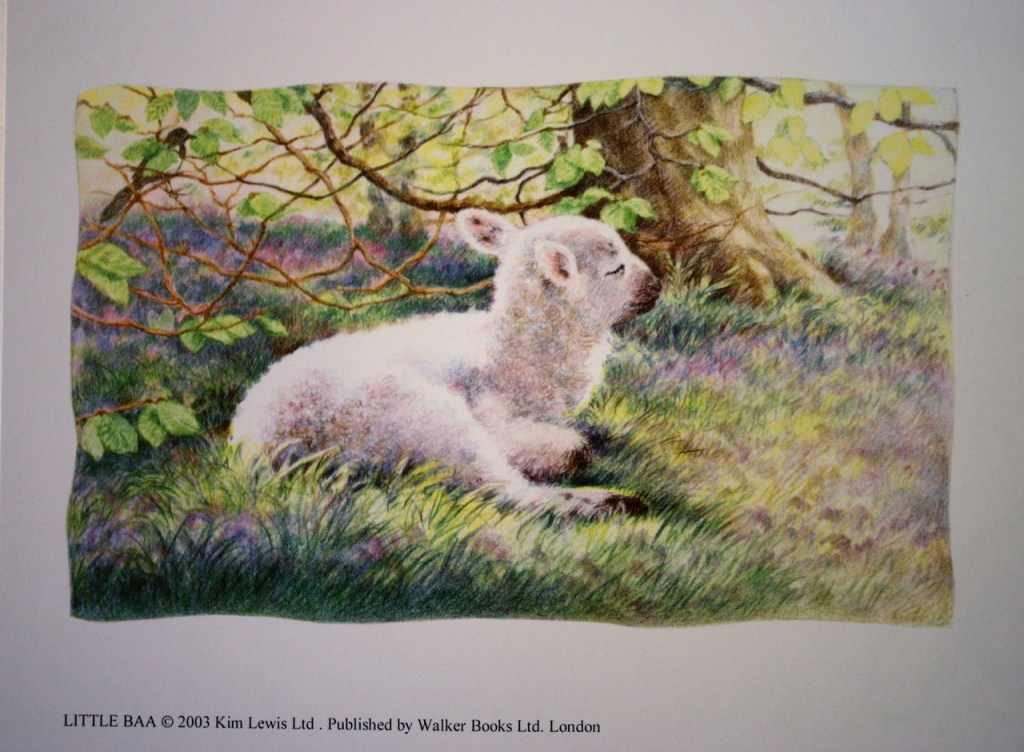
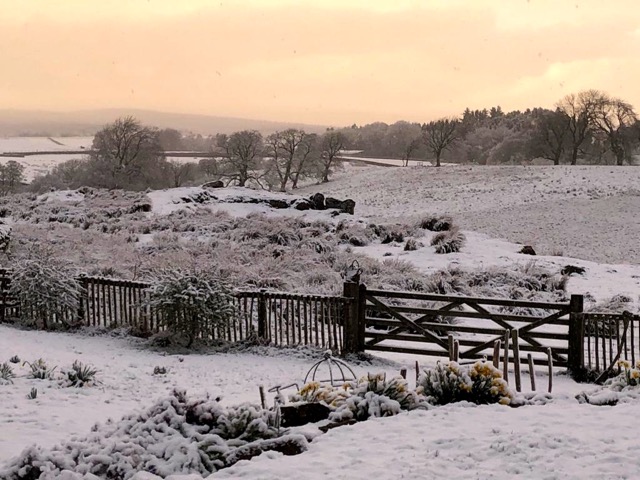
They usually lamb late each spring in this northern hill country, for obvious reasons. An out of joint weekend of sneaky snow came and went, marked by a plaintive night time of baaing from the wide open pasture next our house. Yet they all seemed to survive this sudden yet brief reversion to winter with few casualties.

Our neighbour comes by on the quad next day with supplement pellets in a hopper. Eldest grandson Joe, just turned 17 and keen to explore the possibilities of a career in agriculture, is staying with us in order to gain work experience with our friends up at Southridge as well as with other good friends over the hill at Hazelford. Everyone wishes for more grass; it’s been slow coming on this springtime. Once out and about a sharp eye needs keeping on lambs looking for novel ways to die, like drowning in a fallen land drain or getting stuck in a culvert.

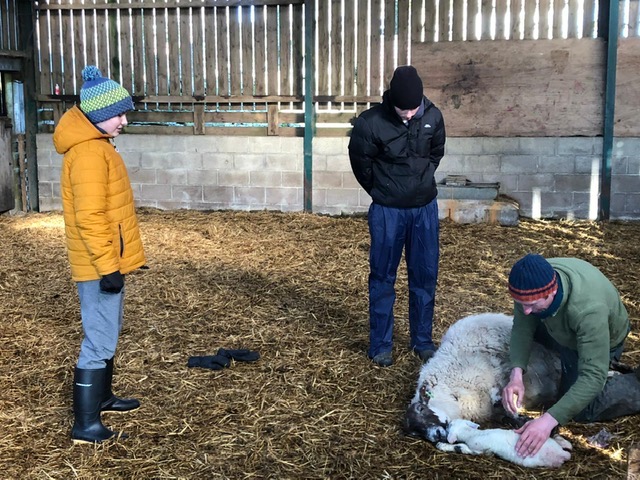
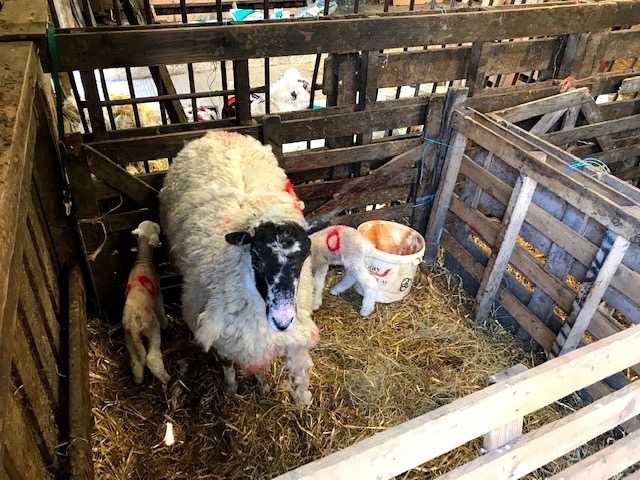
Younger grandson Harry (11) is also here with his younger sister, and he’s up next door for one morning too, in the ‘hospital’ shed doing the rounds of the various ‘casualty’ lambs, helping with feeding and other routine tasks. Joe’s observing calving as well as lambing, seeing and hearing first hand all that’s involved in the various processes and how the farmer’s hands on skills dealing with difficult deliveries makes all the difference to an animal’s survival.

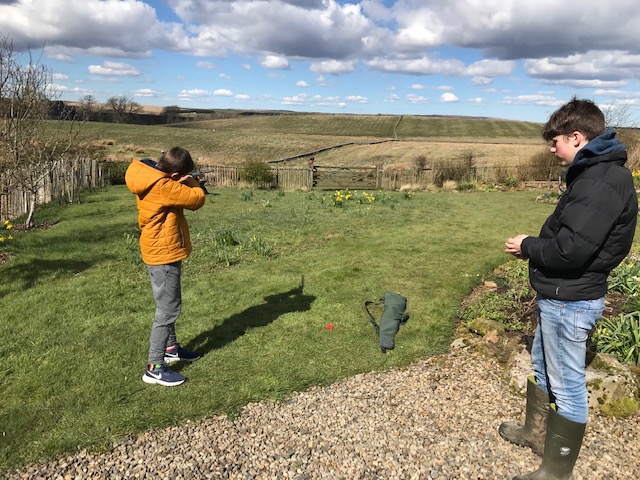
After work I oversee the boys shooting in the garden with my old BSA air rifle. We set an old watering can up on the gatepost to our field and pop away from increasing distances. It turns out Harry is as good, indeed on some sessions, better than Joe or me.  I remember my older brother doing all this sort of stuff with me at his age and what fun it was. 

We go down to the other end of our field to put a new New Zealand style latch on the gate, refill the bird feeder, watch for avian visitors with the binoculars, pick up and haul back more branches to feed through the chipper or logs to extend the established hibernation habitation for amphibians around the garden pond. One day Harry & I see three roe deer does break cover from the willow carr below to lope across the open field, white rumps bouncing away as they flee.
Emily (8) has no interest in sheep or shooting, but loves making art. She also helps out Kim, planting seed potatoes, arranging flowers picked in the garden or watering in the greenhouse. She also helps me re-paint the old metal garden seat. And a day drawing or painting in the studio on her own or with her friend, our neighbour’s granddaughter visiting, is never wasted.

A combined family walk over at Hazelford a few days later on a fine sunny afternoon is good for us all in different ways. We’re shown where the orphaned or rejected lambs are ‘put to’ adoptive ewes, penned by bales and hurdles in the lower barn, until the smell and presence bonds them (or not as the case may be).

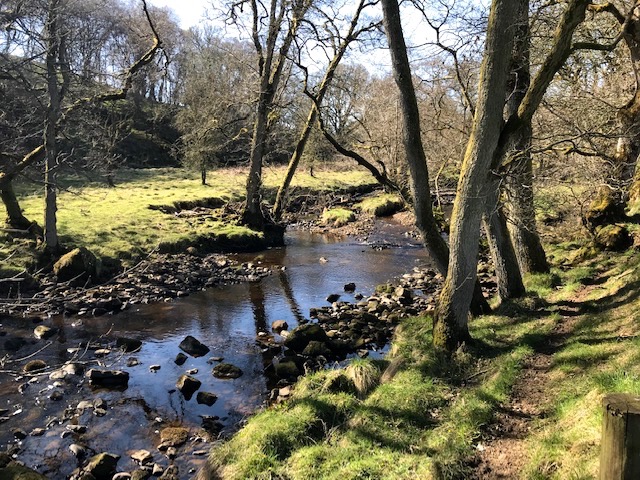
I peel off track from time to time to take in the lie of the little valley. Star bursts of spring flowers in the banks; free mingling celandines, primroses, violets and wild strawberry enriching the vision with their delicate colour mix. Alders, willows and ash define the river along its boundary banks.

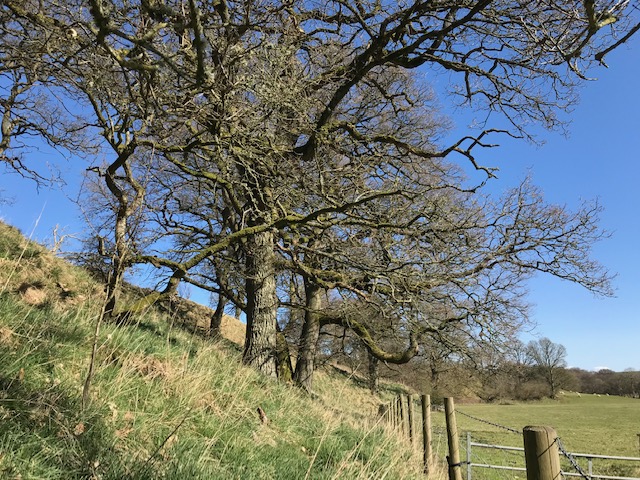
Further off I admire the mature trees, mainly oaks, along the steep bank that defines the northern edge of meadow. These are remnants of ancient woodland (officially defined as being at least 400 years old). Now protected by fencing, up until 40 years ago when our friends tenure started, it was still being felled for timber. Today an understory of hazel gleams in the sun, hawthorns are shortly to burst into leaf while grey discarded boughs gently rot on the ground below the giants that shed them. Fencing doesn’t stop deer predating oak saplings while summer’s rampant grasses and weeds will likely choke them. Our friends are planting oaks from home grown acorns as and where they can.

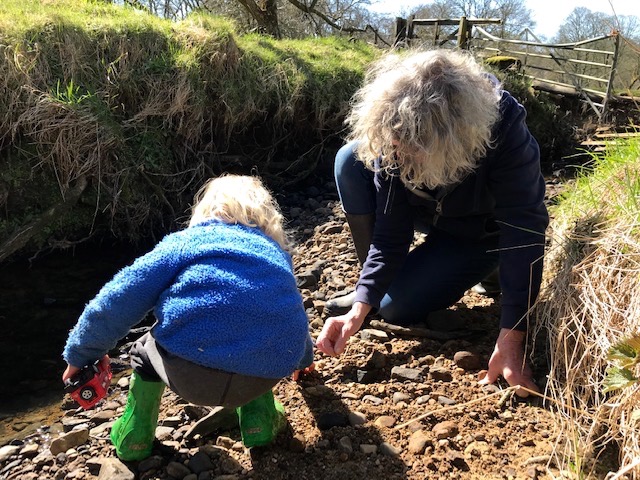
The four younger grandchildren we have between us and our hosts, aged from 2 to 11, had played well together down the track, in the fields and at the stream, while the mule ewes and their new lambs gaze or graze as we pass. There was tea and homemade shortbread, bread and jam to be had in the farmhouse garden on our return, with a gymnastic display from the kids by way of entertainment, before the return of the parents.

Bat, Trap and Trail

A week of warm days and spurts of Spring growth, the next week frost, high wind and hail. No wonder flora and fauna are confused and often discombobulated. The daffodils were flattened and other plants left punch drunk. Luckily there’s no blossom out yet so fruit setting will not be affected.

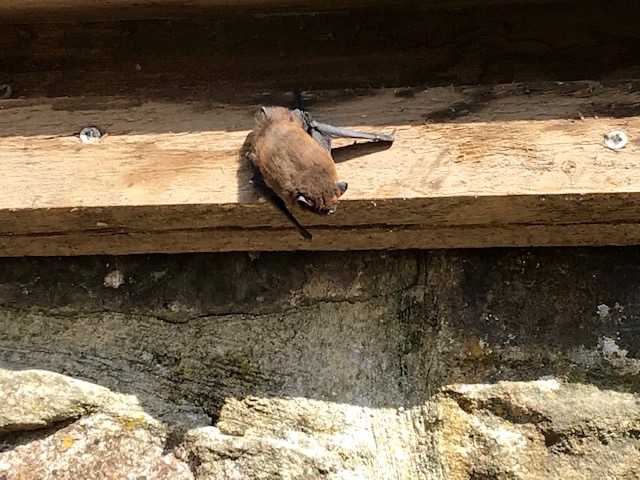
Sitting out in the open sided porch in the good weather phase we were startled by the sudden appearance of a bat – a common pipistrelle as it turned out – awake from hibernation in a thumb width gap between porch roof beam and stonewall. 

A fair weather walk on open access fellside a drive away yielded fine views over the valley and beyond, with a pall of static smoke hugging the northern horizon. Almost certainly heather moorland being burnt to stop it getting leggy and to encourage new growth which in turn favours the game birds kept upon it by the landed estates and shooting syndicates. Swaling, as it’s called, is a practice attracting increasing opposition from environmental and anti-field sports bodies. Carbon capture and storage is a major concern in combating climate change and this once widely accepted process on upland peat soils – especially in National Parks – is a controversial issue in the debate on land management in the 21st century.  

A little later we came across another reminder of rural practice that’s far more disturbing to most people. Our attention was caught by what looked like a chicken coop, made of battens and wire, but with an inverted V shaped top. Following off road tyre tracks we approached for a closer look. The coop was populated not by poultry but by a dozen or so corvids – crows mainly I think – flapping their wings, calling, rising & falling. It dawned on me what I was looking at – a Larsen trap, named after the Danish gamekeeper who developed it in the 1950’s. Banned in that country today but perfectly legal here apparently, if done under licence, with water and food placed into the cage in order to make it legal. A live decoy bird – often with clipped wings – is set as bait and the other birds are lured by its calls. Landing on the inverted top they fall through its trap. At some point the keepers will come back in their vehicle, enter the trap and screw the necks of the inmates and dispose of the bodies. Further research reveals that these traps are normally placed near private woodlands, off the beaten track, in use during the game breeding season to control predators like these corvids, so it was unusual to see one here on open moorland off a bridle path, albeit on private land owned by somebody with gaming interests.    

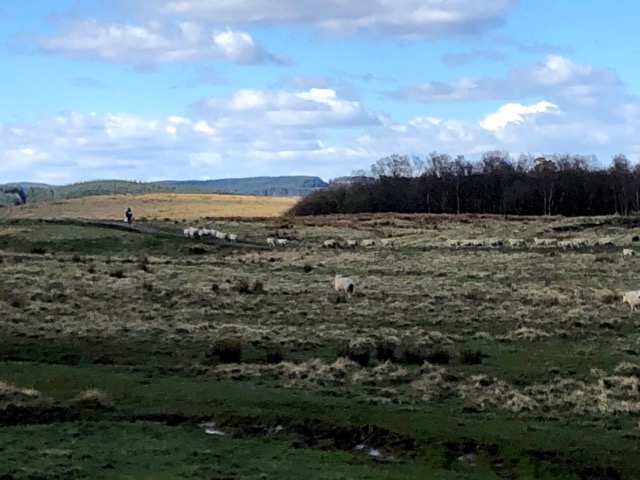
Away from the darker side of country life we were bemused another day when out on a local stroll from home by the sight of a flock of sheep abandoning their rough grazing, with hopes of being fed, trailing behind that rarest of sights these days – a long distance walker on the national trail – after he had stopped to take bearings before trudging on. Unusually he looked rather ill equipped as beside the obligatory rucksack on his back he was also bearing carrier bags in either hand. Later, we spied him back on track and about to cross the lane near home. Intrigued I engaged him in conversation at a style. Turns out our young hiker, a South African based in Derbyshire, was turning his furlough from work into a walking holiday of a lifetime having set off from the north end of the Pennine Way at Kirk Yetholm to get back home at the south end. (A 268 mile trek). He said that the worst aspect was his terrible guidebook, and that so many places en route were closed, due to the pandemic. He was a cheerful soul though and must be tough enough to have done the 45 miles already covered. The bags got lighter as he progressed he assured me. Kim appeared with another shopping bag to replace one that was badly ripped but otherwise our young friend refused our offers of assistance by way of water or nourishment. He was looking forward to finding a good place to bed down by the forest’s edge and enjoy his first cup of tea for days, due to a mix up over camping gas fittings and cartridges which he’d only just that day manage to sort. Our hearts went out to him as his weary figure disappeared from view, but felt enriched by his words. ‘ I didn’t want to spend  my spare time moping about, watching Netflix all day and being bored’ he joked. Now, that’s the spirit!
Down to Earth

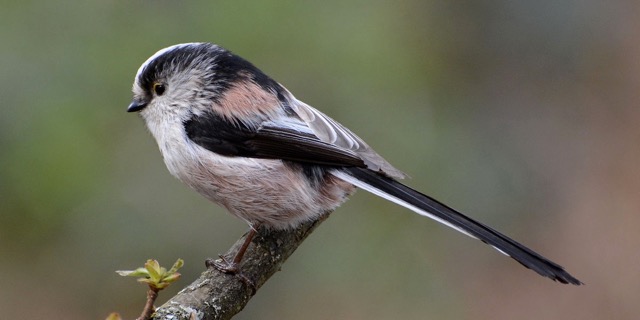
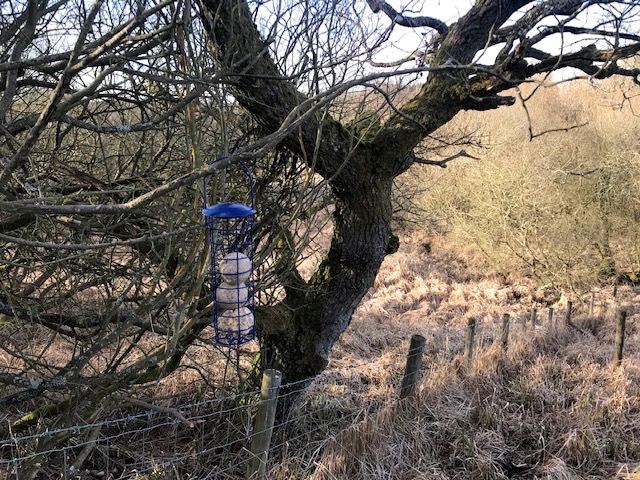
Further to my last post on 1st March I put two types of bird feeder at our field end, on our northern neighbours overhanging willow branches. The hope was to see if endangered species of willow or marsh tit might be present in this type of environment, and if so, might they be attracted by this food. Daily visits reveal the fat balls are a hit but the Niger seeds are not. No sign of marsh or willow tits alas but we’re well compensated by the sight of a flock of pretty long tailed tits enjoying the feast. Insectivores, they are clearly also partial to fat balls. Until this point I had seen more of these endearing creatures stopping off at the feeder in the yard of my terraced home in Lancaster than I had here in the rural heart of Northumberland. Rick Thompson in his delightful book Parklife, A Year in the Wildlife of an Urban Park, memorably describes a long tailed tit as being like a ball of wool with the knitting needles sticking out.

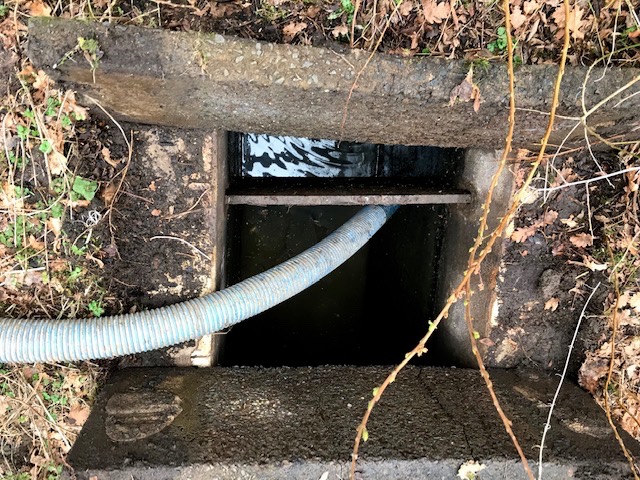
Big Sean showed up this week with his tanker and pipe to empty our septic tank. Gentle giant of a guy, shaven headed, covered in tattoos and a true countryman, we had fun testing pipe inflows into the tank and he showed me some tricks of the trade to handle future blockages, should we be unfortunate enough to have them!. Our brick and concrete settling tank, hidden in the ground, lies at the bottom corner of the garden, a decent fallaway from the house. Surrounded by blackthorn, gorse and briar, it’s a prickly mini-wilderness to deter human ingress and provide a haven for birdlife. We discover on lifting that some of the concrete slab covers are cracked so will need replacing soon. Must needs get hold of some railway sleepers and cut them to fit across its length.

Everyone is aware just how much lockdown has affected ways we communicate. Because we can’t be with the far off youngest broods of grandchildren I’ve taken to sending them videos shot on the mobile phone when out and about. Given their fascination with all things mechanical that’s invariably the subject matter; from the septic tank suction pipe in operation to contractors banging in field fences, to diggers and tipper trucks clearing a town centre construction site…I’ve had great fun keeping the clips coming for this select but appreciative audience of under 7’s. The other form of entertainment I’ve sent them has been home recorded stories.

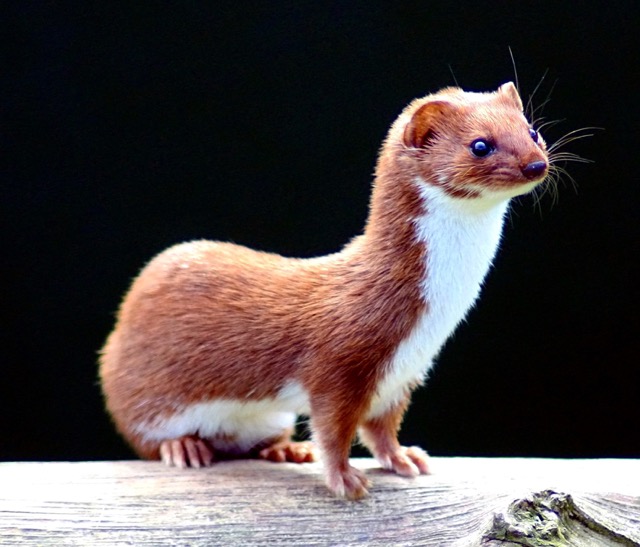
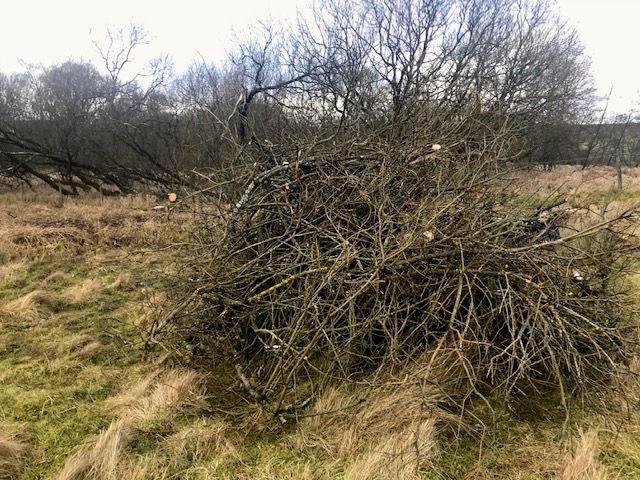
The compact electric powered shredder I bought in the farm supplies store sale has proved really useful for recycling cut wood. Branches too thick to chip (over 35 cm) I’m slowly stacking in the spinney as another refuge, beside logs, for wild animals to shelter in or explore. In the past I’ve seen weasels and stoats in and out of such hideaways. We’re excited to have a weasel in residence somewhere about the place. It’s been spotted raiding the vole colony in the rockery after we’d initially suspected its presence from seeing footprints in the snow in February. Likewise a hare will occasionally make a welcome appearance in the garden, unconcerned at our presence, yet maintaining distance. Still surprises us that seen up close a weasel is as small as it is and a hare as large.

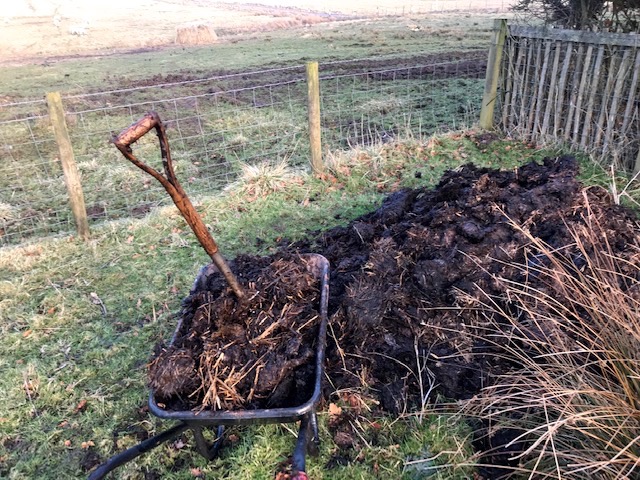
After a clean out of their stable Southridge gifted us a digger bucketload of horse manure & straw over our boundary fence. I’ve been commuting back and forth with the wheelbarrow ever since; spreading it on flower beds, round fruit trees and bushes, topping pots and bolstering compost boxes. With the Spring offensive under way at last we’re increasingly involved in garden renewal and maintenance…Winter’s nature friendly dead foliage is cleared, some frost killed shrubs dug up and replaced with other more hardier varieties. The pond, I’m cheered to note, is stirring to life as yellow globe flower heads swell and floating strands of veronica leaves green up.

Willow

‘With a shake of his poor little head, he replied / Oh willow, titwillow, titwillow’

The Mikado / Gilbert & Sullivan

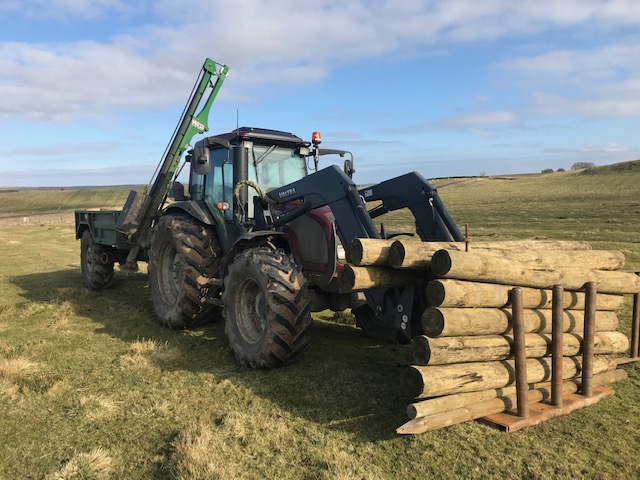
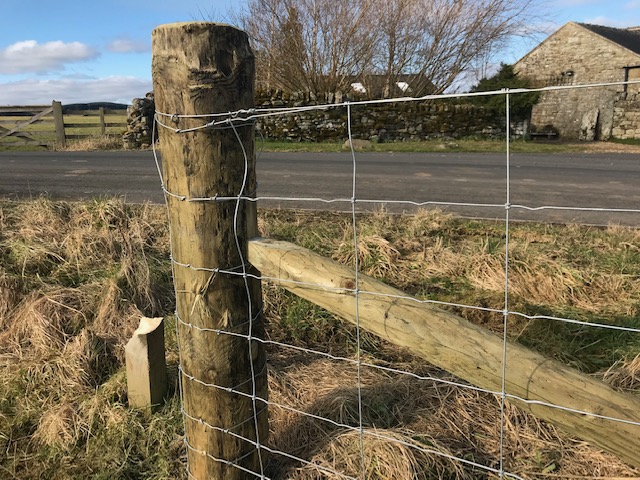
The contractors that put in a length of field fence for us three years ago returned to replace one of Southridge’s this week. Last year there were lambs escaping regularly to roam the road & cause traffic problems so this year our neighbours have  the guys in ripping out the old rotten stuff and putting in new treated posts and stretchers top wire & netting. The hydraulic post banger they use packs a punch.

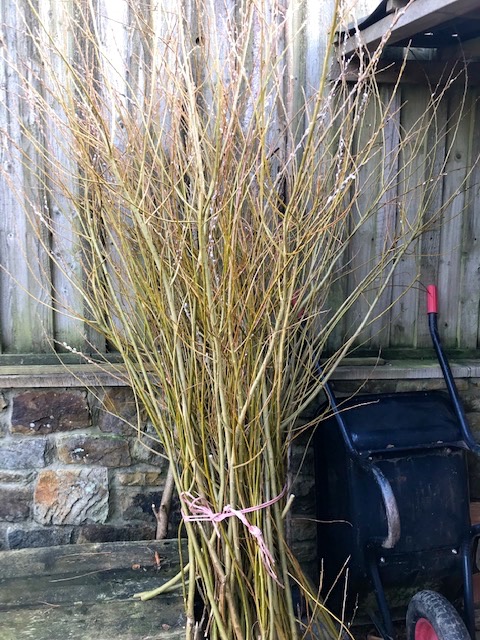
Five years ago friends in north Devon allowed us to cut some whips from coloured willow they’d planted in the wet end of a field newly planted as an orchard for their juice making business. They took well here in Northumberland and every year we harvest from them to make wreaths and stars or give to our crafting neighbour for her flower arrangement business. Here’s this spring’s bunch, tied in the yard, waiting collection.

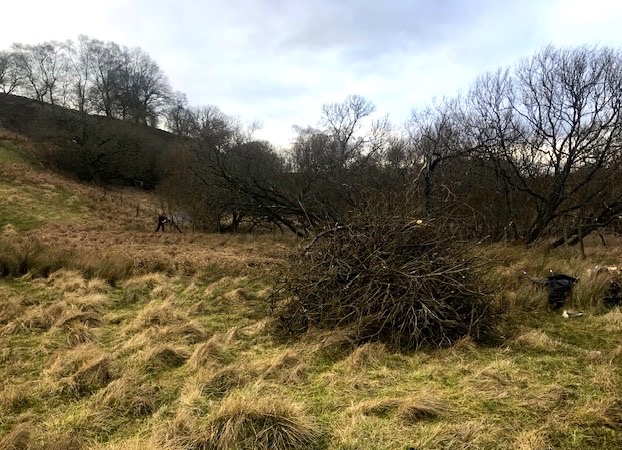
My good mate Dave & I have returned to the bottom of our four acre patch of rough grazing to carry on where we left off before the snow came. We traced the barbed wire in the wreck of dead grass and sedge and set up half dozen new fence posts. The soggy ground quaked but received them well. I wore out a pair of padded gloves straightening & pulling the vicious metal strands to get stapled to the posts. This ‘pole and barb’ will keep cattle, as well as sheep, away from the fence dented by the sagging trunks of our northern neighbour’s willows that we had previously trimmed or felled. My friend is accurate and suitably safety conscious with the deadly saw as he goes about his work and we soon have a high pile of branches and logs for a future bonfire. Willow’s not a wood that burns well, being steeped in damp, but once dried it should light with artificial combustible help.

Willow carr (wetland wood) is no longer as common as it would have been centuries back. Draining and agricultural improvement have gradually seen to that, while post war urban expansion and fracturing of ecosystems into disconnected blocks has severely threatened the survival of much dependent wildlife.

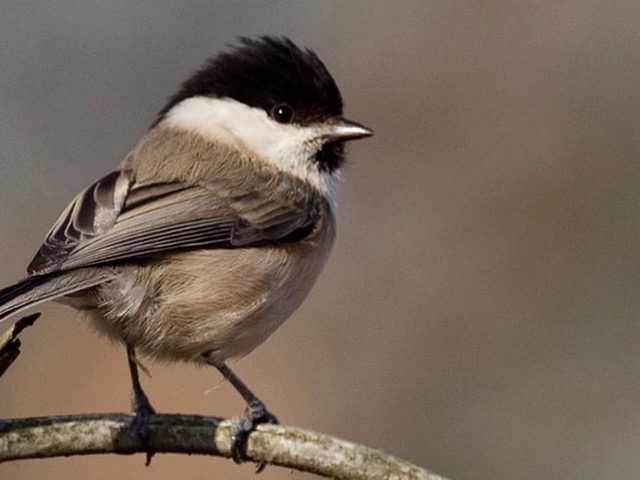
The willow tit is one such affected species. The latest annual RSPB ‘State of the UK’s Bird Report’ records a staggering 94% decline in their numbers since 1970, making it the most threatened ‘Red List’ native UK bird species. If you were to draw a line from the Severn to the Wash, nearly all the densely populated land to the south east of it has become a virtual desert for this wee flyer. Land lost to housing, new roads and other infrastructure projects have hit woodland species like willow tits particularly badly. They are sedentary birds, less able to adapt to climate and other changes and need a particular stable environment to flourish in. For them that’s dense wetlands or scrub where they can work their nests in decaying wood, preferably willow or birch, which also provide the insect life on which they feed. Modern agriculture and construction mitigate against such environments. Another factor may be the effect of deer. Their numbers have greatly increased in recent years and they’re believed by some to be eating out many remaining retreats of dense thicket and woodland understorey. Ironically, where willow tit populations have stabilised, and even increased, are on former industrial sites, like coal workings, in Derbyshire, Lancashire and Yorkshire that have been allowed to ‘re-wild’ or have become official reserves.

By way of experiment I am going to try hanging a variety of feeders from the willow branches overhanging our bog and see what birds, if any, they attract. Marsh & willow tits are virtually identical to look at but have distinctly different songs and calls. If  fortunate enough to see either of these lovely little birds I would be quite made up. Will report back here if successful, or not, as the case may be.

Winter Pass

Over the land freckled with snow, half thawed / The speculating rooks at their nests cawed / And saw from elm tops, delicate as flower of grass, / What we below could not see, winter pass. [Edward Thomas]

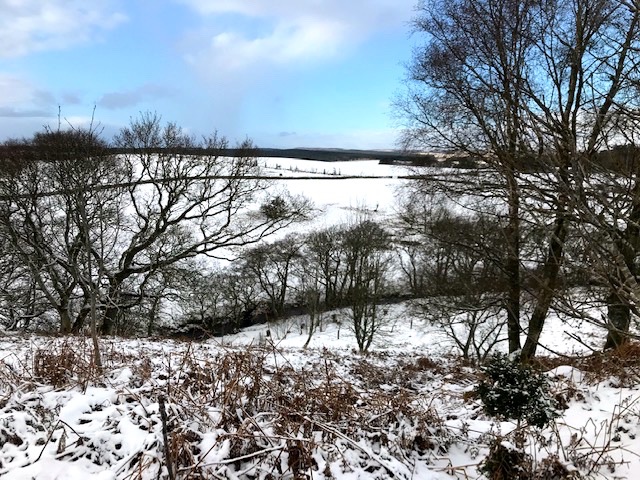
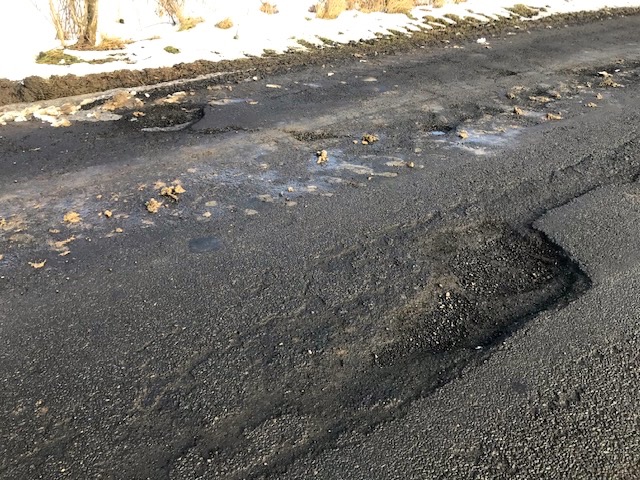
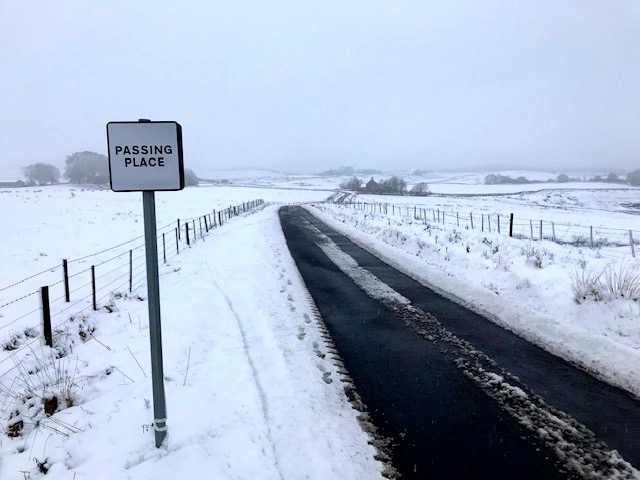
The snow lingered a week and more, alternating days of bitter easterlies with those of utter calm, broken only by occasional traffic on our winding rural C road. Driving to the village for supplies is characterised by cautious evasion of potholes that a deadly combination of harsh weather and log lorries has caused to emerge on stretches of road not resurfaced 18 months ago. I register a complaint to the county highways authority and trust others will too so we might see some remedial action. (Don’t have much hope that that’ll be any time soon).

Bump into a friend in the street whilst down there who tells me her bronchial problems have been made worse since the lockdowns began. That’s due, she holds, to a big increase in the burning of logs and coal, day and night. The village, snug in the sheltering dale, holds by-products of home heating only too effectively. Another friend, a nurse, says that pulmonary complaints, along with rheumatoid ones, feature strongly in many residents’ health profiles.

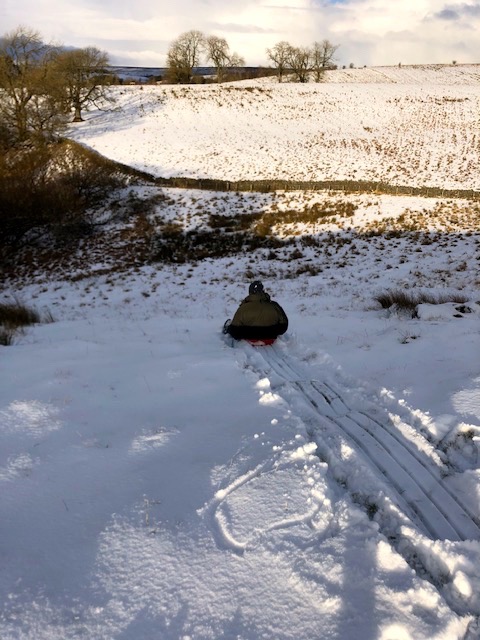
Being under virtual house arrest in an environment like ours is not ideal but it is bearable. Revived childhood excitement when I dug out the red sledge from the garage and took it to the end of our field. On that steepest of slopes I managed to hang on and avoid the worst bumps caused by stones and rushes. Huge fun, much laughter generated, plus good exercise in clambering back up top for another go.

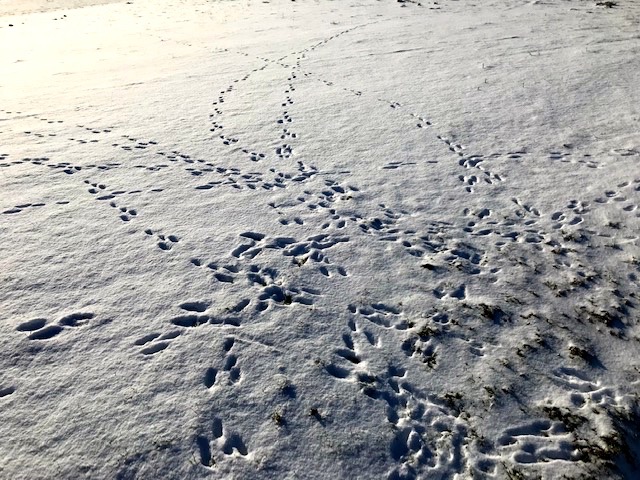
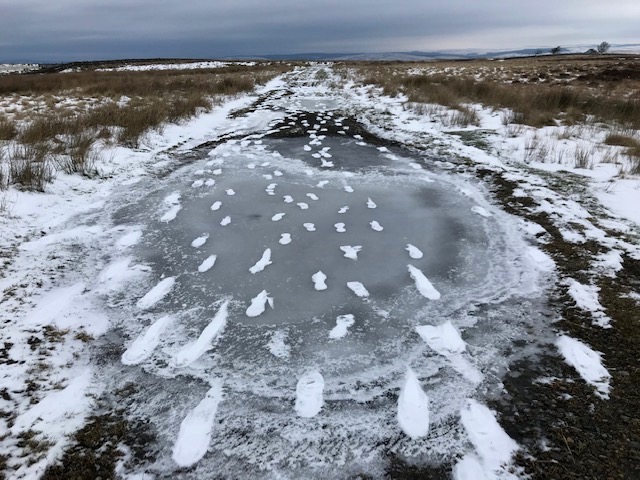
Our daily circular strolls from home over the whiteness provided extra interest in following tracks and intersections of various wild animals. Foxes, hares or rabbits, possibly a stoat or weasel all identified. And not just their varied paw prints but arrangements of limbs and tails, pressing or brushing the snow. In the garden too we could see where the rodents trailed from house to rockery.

Walking further afield, atop our nearest fell, drew intakes of breath when we came across the effect of alternating freezes and further snowfall in preserving ghostly marks of passage along the well trod bridleway. We drink in the vista over miles and miles of moors, fells, fields and converging dales; grand on any clear day but even more so now without a soul to be seen anywhere.

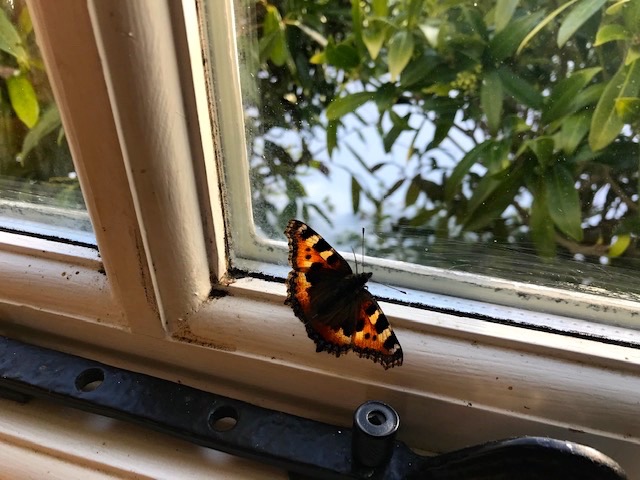
In the wake of freezing rain came a sudden increase in temperature and the landscape was once again transformed, with most of the snow and ice melting rapidly away. Indoors, the odd flutter of small tortoiseshells awakening from hibernation, brought on by extra heating when the weather was at its worst.

Outside, helibores, snowdrops and daffodils greet lengthening days. I resume spreading woodchip in the woodlands and Kim starts clearing around borders. We both get our NHS letters today, offering the Covid-19 vaccine. So yes, the year is turning and Spring has come.

Winter and Rough Weather

Here shall he see / No enemy / But winter and rough weather  (As You Like It)

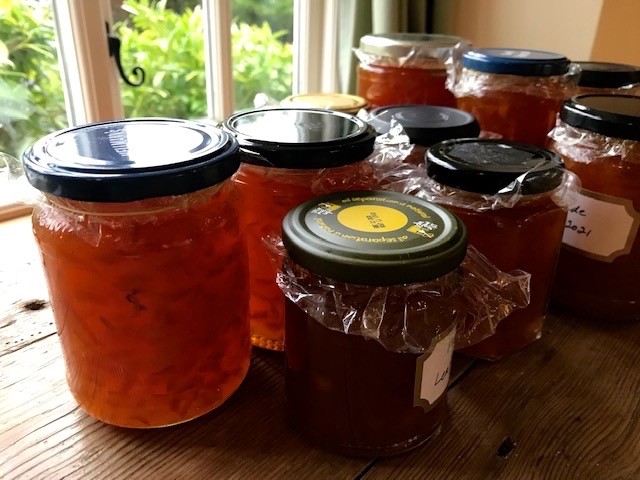
The annual marmalade making was last month’s culinary highlight. Seville oranges import a touch of far away sun into the kitchen and two extra lemons in the mix gives it the 2021 taste. Previous years keynotes have included black treacle and whisky. Usually our visitors depart with a pot at the end of their stay so currently we have a year’s backlog to get through (or prepare for a giveaway bonanza) when things are back to something like normal.

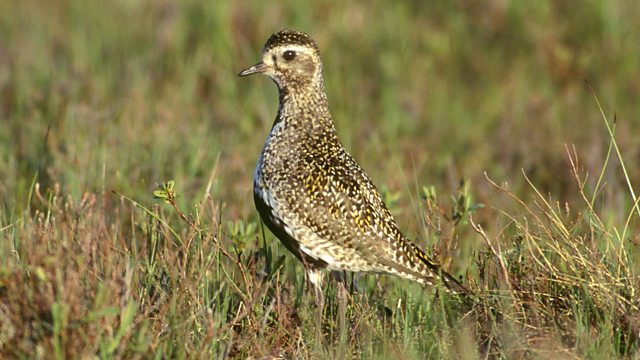
A naturalist friend had said it was the place to see them, up on the south facing slopes of the fell between us and the big village. But it was a couple we passed while out walking the lane leading to the telecoms mast who pointed them out and lent us their binoculars to get a better view. Golden plovers. That first time they were hanging out with starlings when quartering the fields. Looking rather like lapwings but with more distinctive pointed wings. The second time we saw them, a week since, they were on their own, a flock of some 40 – 50 birds, calling and flashing out on the turn, not settling for long, always moving. A beautiful, mesmerising sight and sound to lift the spirits on wet grey winter days.

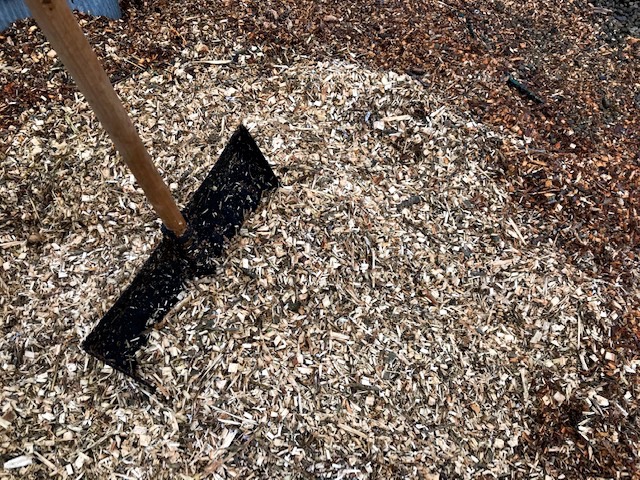
The unchanging spell of mean weather ensures we get a lot done indoors. Glad one morning in the yard to catch up on news when taking delivery of a log drop and an unexpected gift of woodchip from our friends in the forest. Days later, determined to do something constructive outdoors, I start to spread the chippings in our mini woodlands and feel better for doing so.  The woodman tells me they got bogged down on the grounds of a school in the city where they were contracting and had to use his climbing ropes to pull their truck out of the mire. That’s £150 of ropes ruined, but a garage rescue would have cost a lot more.

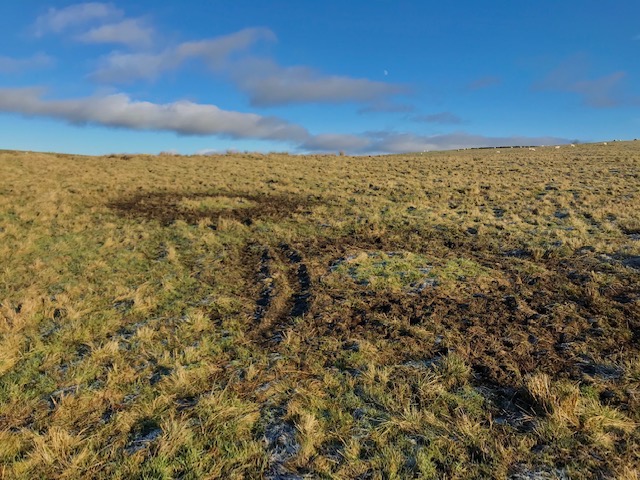
Our farming neighbours too have no option but to be out and about, whatever the weather. Through the days of snow and then constant rain Southridge’s tractor has delivered round bales of hay to each and every ring feeder. They also rotate the metal frames to avoid the wear and tear of a flock’s hoof marks. Stock poached ground, when seen in isolation, puts me in mind of crop circles and UFOs.

All the neighbours have been getting their cattle sheds cleared of accumulated muck and straw and spreading it on their fields. The lucky ones did this while the ground was hard enough to more easily accommodate the combined weight of tractor and spreader. Southridge are pleased their Texel tups have exceeded expectations – all ewes being scanned and nearly all in lamb. They’ve put a flock of singles out on the rough grazing next to us. They’re less pleased with the price of hay. Last summer was so wet that some of the traditional hayfields failed and now they have to buy in, and prices are high.

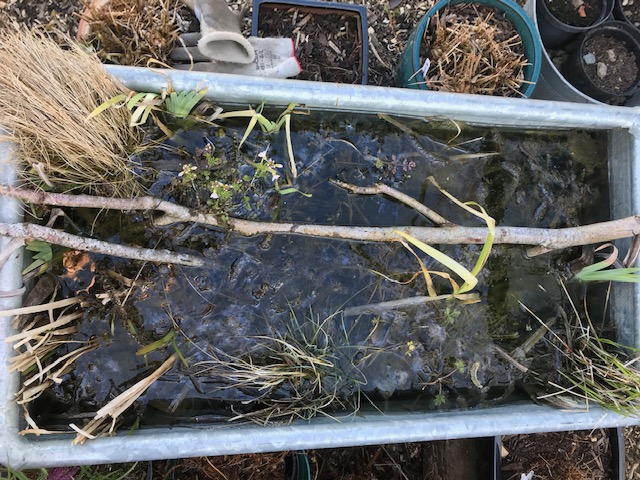
Taking a short walk from the house each day, by field or lane, we came across this floating mass of bright greenery in a water trough. No flowers of course but plenty of healthy looking leaves. Can’t put a name to this winter wonder. Can you?

Due Delivery

Our tribe of regular and seasonal home delivery drivers have given great service this winter. Frenetic peak activity over the Christmas and new year holiday period saw them driving even longer hours over vast routes, bounded by our regional market town to the south up to the wild Scottish border. It’s a mix of high open fells, steep valleys and dense coniferous forest with many a rough and ready off road track leading to isolated hidden properties. One of the drivers told me he works to a broad figure of eight, enabling return visits that same day to customers if called for. Running against the clock and wedded to their Satnavs they curse the US developed GPS system many have to use, which takes no account of localised UK geography. Another tells me he’ll make as many of the easier in by drops to villages first thing in the short day, leaving more flexitime to crack the hard to access places out by.

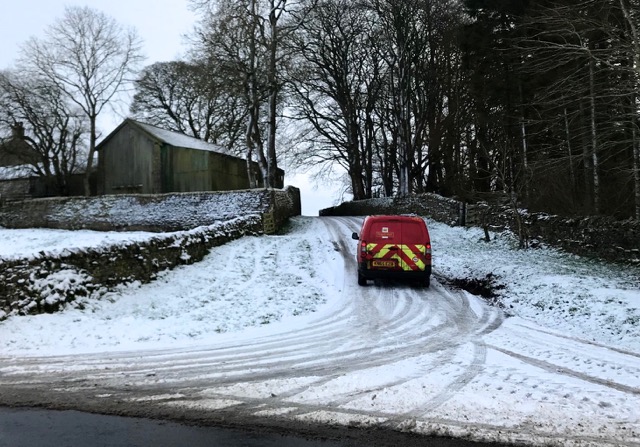
The regular Royal Mail drivers know their large rural runs inside out of course. Where to safely leave the stuff that won’t go through the letterbox, which place harbours the pathological ankle nipping pooch; where the potholes lurk or lanes where ice never melts, and so on. Since privitisation these stoical souls have been left more exposed and pressurised than ever in the name of efficiency, with vans that aren’t always up to the rigours of rugged rural rounds. In recent periods of snowfall and sub zero temperatures we’ve clocked a van unable to get up a sloping tarmac drive. Covid has taken its toll too and under-staffing has been an issue. We all love our posties though, as they often make for an eyes and ears social service when out in the sticks. For many isolated and potentially vulnerable individuals he or she may be the only person they meet for days. One welcome advance the Royal Mail has made in recent times is the picking up of post when delivering. That’s proved particularly useful, especially during lockdown. 

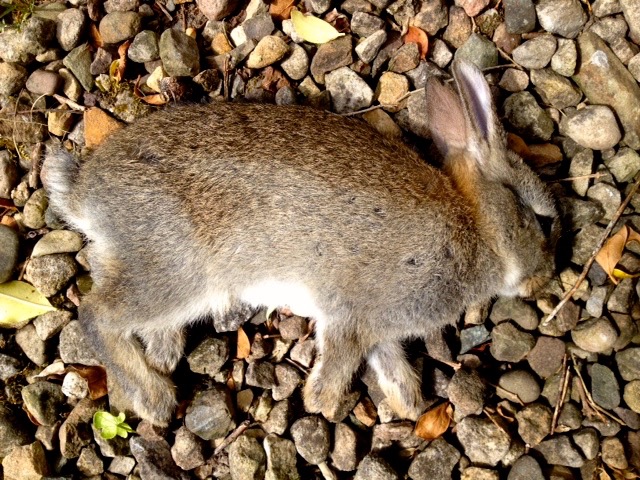
Other deliveries are nature’s own. Over the years we’ve had some puzzling drops. An unmarked recently deceased young rabbit, still soft to the touch, inside the east end field gate; an open mouthed weasel, its lithe little body showing puncture or possibly claw marks, in the west end yard; the headless lower half of a mature salmon in the back garden. The latter was not as surprising as it sounds. This early morning find was in the wake of autumn spawning in the big river, three miles distant. The bodies of spent mature salmon often wash up and are carried off by all manner of birds and beasts. We may have accidentally interrupted such a predator about their work. Our beloved old, but still fiercely active, cat Pip was alive then, so she may well have dragged corpses found elsewhere back home…Who knows!

Food To Go

We have feathered friends aplenty in our garden every winter and feed them regularly from November to the end of March. Three different stations in place at peak periods, offering fat balls, peanuts and a mix of seeds. I also top up water in the stone birdbath, as garden ponds and water troughs are often frozen. The usual suspects appear without fail after each refresh of rations. Top of the pecking order – in numbers and disposition – is the tumultuous tribe that inhabits the dense cover I call Sparrow Towers…A ferocious chirping emits from that corner of hawthorn hedge, crab apple and privet. The ability to feed on holders as well as the ground ensures they cover all bases. Hard to believe that nationally there has been a dramatic drop in house sparrow numbers of up to 71% when they are so noisily numerous here round houses and farms.

The extensive tit family are next. The ubiquitous blue tit and great tit maximise their superb acrobatic skills, giving them the edge in extracting food from otherwise hard to get to angles, as well as being great fun to watch in the process. I particularly like the smallest of their kin, the coal tit. Perhaps it’s because of their masked faces and dainty habits; darting in quick, before the chunkier birds can retaliate, wheedling out a nut with their needle beak, then flying off to a quiet spot to safely feast on it. Recent studies by the British Trust for Ornithology (BTO) have shown that both blue and great tits lose up to 5% of their body weight each night in winter. An 11g blue tit must eat almost it’s own body weight every day in order to survive (the equivalent of 300 insects) and that non stop forage will take up to 85% of daylight hours.

A visit by that most colourful of seed lovers, the goldfinch, always cheers. Unlike many other small birds its population has increased year on year over the last decade. Elegant Siskin and thick billed greenfinch come calling too, lured from their home territories in the great conifer forest a short flight away. Sunflower hearts and tiny black Niger seeds are their favourite fodder by far.

Of the ground, a battery of beaks sweeps the frosty ground, between shy clumps of emerging snowdrops, picking up debris flung out of the feeder above. Prominent among these foragers are dunnock (hedge sparrow) blackbird and robin, all of which remain resident the year round. The sparrow gang and many of the tits absent themselves from our winter hangout for their summer getaway destinations. From observation I’ve concluded that they shift base to the broadleaf wooded valleys of the burns to our immediate north and south. (above) Those environments offer the best selection and supply of insects to feed their spring hatched broods.

One lone visitor is in a class of its own. Watching a greater spotted woodpecker on a peanut holder is like witnessing an adult swinging on a child’s play seat. Fascinating to note this bold bird’s posture – tail as anchor point, body stock still while head hammer drills into the nuts. There’s a huge punch there, so little wonder all the small birds wing clear and leave him to it. Last autumn our rural community had an arranged power outage over two mornings while BT contractors, in a complex co-ordinated operation, removed and replaced telephone poles along our road. The reason? Over the years woodpeckers had exploited holes in the timber to excavate the interior tissues for food and to nest, rendering the poles unstable and prone to collapse.

A reminder, if you need one, that the annual RSPB Big Garden Birdwatch will be upon us weekend 29-31 Jan. More information here https://www.rspb.org.uk

Let it Snow

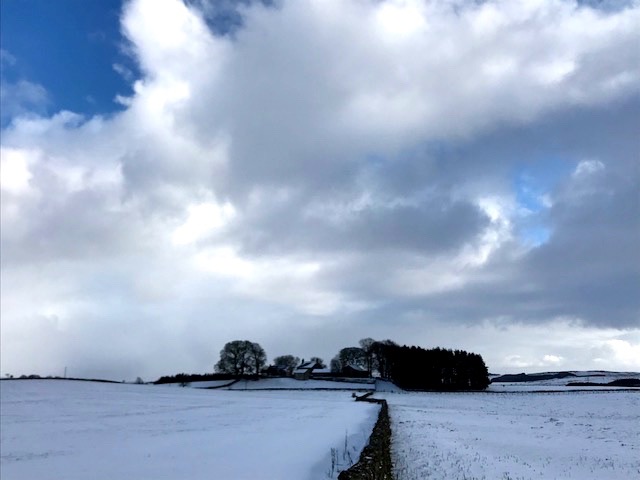
Silently, softly but nonetheless surprisingly, the morning light delivers a wide awake vista of snow covered field, woods and forest as far as the eye can see. And around here that’s quite a way, with more flakes flowing gently earthwards. Light traffic has forged ribbed tracks along the C road that angles the house and the occasional lit up log lorry looms out of the settling mist to creep cautiously by or neighbouring farmers in tractors ferrying round hay bales on mechanical forks for feeding stock, nothing much is moving at all over this beautiful winter white landscape.

We remind ourselves the snow will not be settled long so we walk out, well wrapped up, taking in the detailed highlights and recording them as images. If any of the grandchildren were here we’d be sledging on our field but as they’re not one mustn’t let that stop one from having some seasonal fun so I dig out the red plastic sledge from the garage and head out. Zig-zagging a wild course down tussocky slopes, I end up a laughing heap before a sprawl of recently cut timber.

A few weeks back a friend, with me labouring, took his chain saw to some intrusive leaning willows. The edge of a dense Carr (willow bog) here in the north burn’s valley, part of our neighbour’s land, where ducks gather and the guns can sometimes be heard hunting them. The trunks of these succouring trees have been gradually breaking down the boundary fence that secures stock kept on our land from wandering. When time and weather allow my mate and I will finish the job, staking out new poles and re-fixing the fallen strands of barbed wire. We’ll break down felled boughs into portable branches, which, back in the yard, I’ll gradually feed through the shredder. The resulting material makes for great garden mulch, especially in the copses and spinneys where it will intensify and quicken the woodland cycle of decay, fertility and growth.

On one of the local wanders in the snow up the lane I clock a mature cream coloured cat furtively hunting the verges opposite Easterhouse’s yard.  I know such a distinctive feline does not claim any of our immediate neighbours farms as home. The next day, crunching across the yard, cat and me come face to startled face in the old rail goods wagon that serves as our garden hut. With no obvious route of escape the panicked puss leaped backward into the far corner, diving head first into a pile of flowerpots and sacks where it remained motionless, rear legs and tail stuck up in the air. Bemused, I stepped back and retreated. Later I put food in a bowl out to encourage our hungry visitor to return, but it did not, and like the snow a few days later disappeared from view, at least for now. A pity, because since our dear little Pip died in the autumn of 2019 we were half expecting a replacement to pad its way in from somewhere to claim vacant territory. We would value such a creature for its necessary vermin control role, in return for board & lodgings. Without any other agency a suitable cat has to find us and not the other way round.