A Weekend to Remember

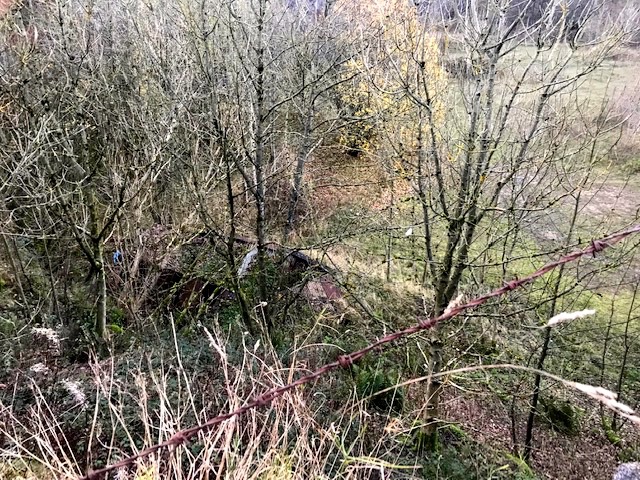
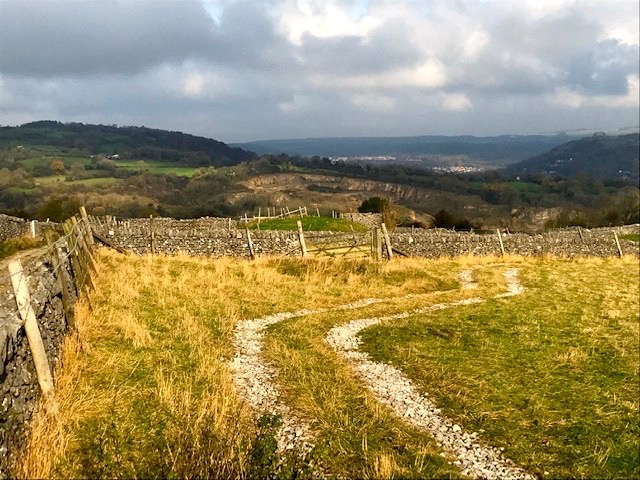
Just returned home from a long lovely weekend based at hillside village of Middleton-by-Wirksworth Derbyshire, where we were catching up with family and friends. The White Peak’s highlands and steep valleys are characterised by large quarries, many disused and self seeded with ash, hazel, birch and scrub. The abandoned rusted sheds and stores are being slowly absorbed into the landscape, becoming near invisible to the naked eye, as noted here, from the path above.
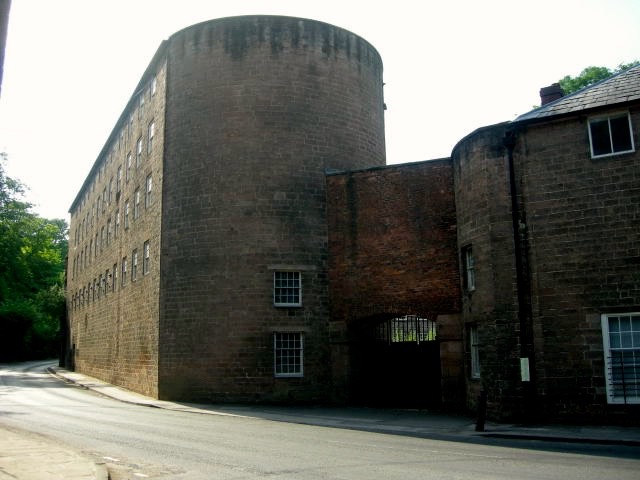
Middleton’s limestone quarries once supplied the stone for thousands of war memorials erected in the wake of WW1. The limestone produced here was of the highest quality, akin to marble, ideal for carving and polishing. We were told by the owners of our rented cottage that in 2018, to mark the centenary of the end of WW1, on Remembrance Sunday a hearse drawn by horses with black plumes transported a dressed block from one end of main street to the other, stopping off at the church for a blessing, before installing it on the hill top green as a permanent memorial.

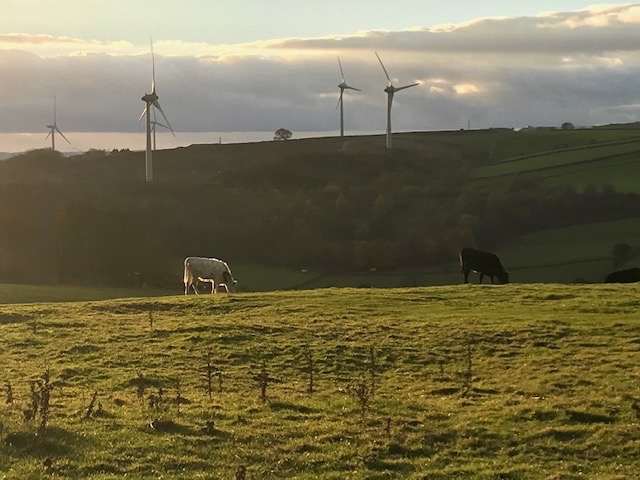
Took a walk with the family one afternoon up on to Middleton Top, the plateau above the village, which afforded us extensive views over the Derwent River valley down to Derby and the Midland plains beyond, and in the opposite direction northwards to the Dark Peak ridges. The circumference and depth of the worked out quarries becomes more obvious seen from above. Nearby, 21st technology presented itself as wind turbines on quarry company owned land, generating the industrial power to meet the industry’s current energy needs.

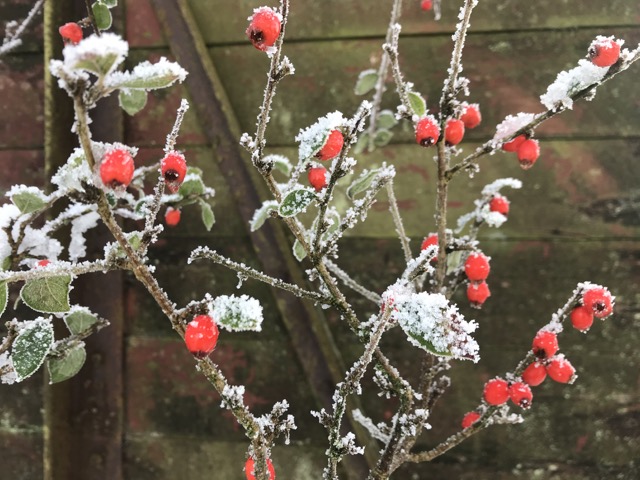
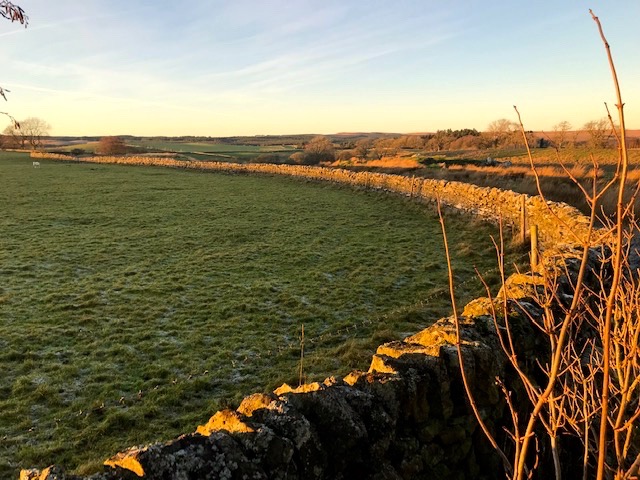
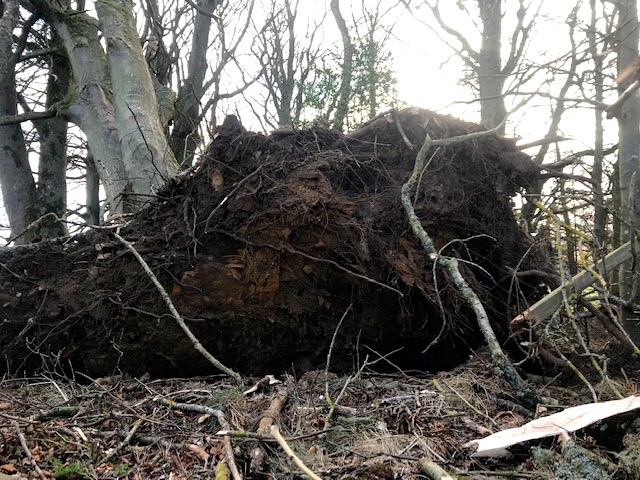
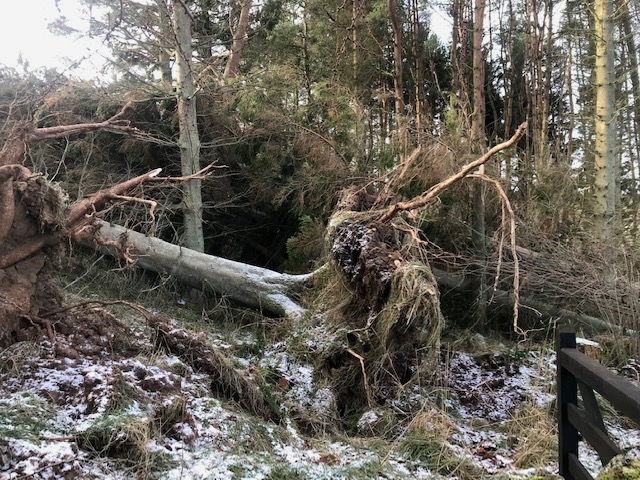
Sycamores and sizeable berry laden hawthorns dot the farmland hereabouts. The imposing mature trees of the sheltered valley woodlands are still sporting leaves of flame, russet and gold but these hardy exposed trees have been stripped of their remaining foliage by autumn gales. The grey dry stone field walls at their feet are nearly all tumbledown and serve no purpose other than to mark former boundaries where now cattle and sheep range at will.

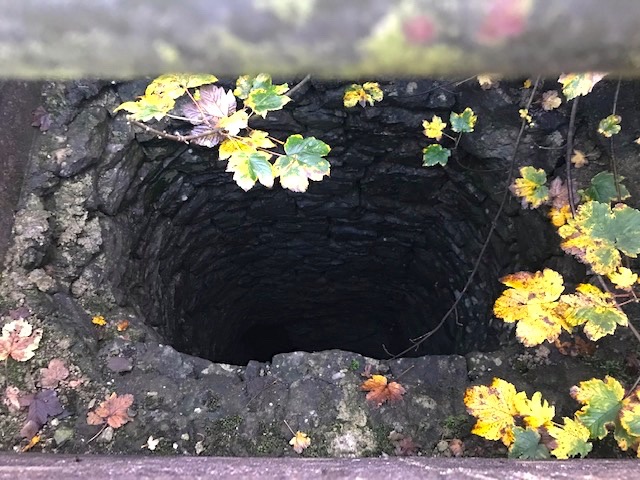
Fascinated by a ventilation shaft in the middle of one of these old fields, recently re-capped with a sturdy cattle grid style cover. The grandchildren, aged 4 and 8, delight in dropping small stones down the rock lined ovoid shaped gaping hole, counting the seconds as the pebbles descend, bouncing off the walls as they disappear from sight before landing in a tunnel far  below. Apparently there are some 25 miles of road tunnels on three different levels down there, linking Middleton and Hopton Wood, effectively making them more like mines than quarries. Now largely unworked, sections have collapsed, radon gas is present and access is strictly controlled or barred entirely..

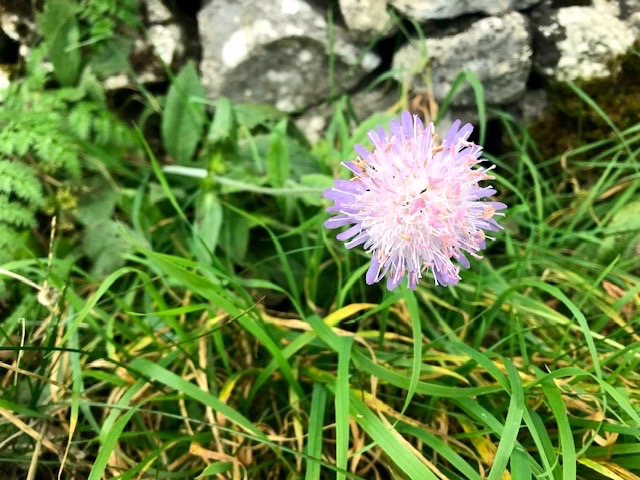
Another walk, but this time we’re strolling in the opposite direction with clear weather views of fells and yet another quarry, hillside fields and patchwork of valley woods. The lane’s tarmac gives way to rock and mud then rutted grass track between maintained stone walls. I smile at the sight of a washed out lilac coloured scabious flowers (lover of limestone soils) holding on in the narrow grass verge.

Either side are a clutch of smallholdings, with sheds, caravans, piles of gear under cover, with 4x4s or a lorry or two wedged in where space allows. We stop to chat to a friendly local couple on their patch. There’s a Jacob ram – with a prize set of horns, ready to go off to do his duty by a neighbour’s flock – while they continue to the needs of their fine looking Jacob ewes. Learning we’re down from Northumberland there’s further chat about their small flock of Cheviots, kept on pasture elsewhere. We all agree the price of wool is abysmal and this wonderful natural rich resource is both underrated and underused.

Sunday night spent in the Old Bowling Green pub in the postcard pretty, former lead mining village of Winster, in the heart of the Derbyshire Dales. We’re guests of old friends & creative colleagues David and Pat for supper and catch up at their home before marking this particular Remembrance Sunday with a words and music commemoration down at their local. I’d last performed in and around the village back in 2008, playing English folk dance & song revivalist Cecil Sharp, in a special lottery funded weekend of community celebrations marking the musicologist’s 1908 visit.

David, a long standing local resident, had thoroughly researched his subject and one of the most touching moments of the evening was when audience members read out the names and stories of those men from the village who were killed in action during WW1. (Approximately a quarter of the 125 who enlisted). David opened with a powerful selection of famous and lesser known contemporary poetry from both world wars, and told us how they came to be written. Meanwhile Pat read Buxton born Vera Brittain’s account of the wartime loss of her fiancé Roland, as related in her 1933 biography Testament of Youth.

It was a pleasure, and indeed a privilege, to read passages from the biography of local man, Horace Johnston, written in the 1970’s. He was a private fighting in the disastrous Dardanelles campaign against the Turks in August 1915. The old soldier’s artless and harrowing account was cleverly counterpointed to maximum emotional effect by David’s reading of contemporary verse by Sassoon, Owen & other soldier poets at key points in the narrative. The programme’s different sections were evocatively opened and closed through the close harmony rendition of wartime songs performed by Winster based folk music stalwarts Keith Kendrick and Sylvia Needham.

Hedges, Ovoids and Late Fruit

The summer nests uncovered by autumn wind, /Some torn, others dislodged, all dark, /Everyone sees them: low or high in tree, /Or hedge, or single bush, they hang like a mark. (From Birds Nests by Edward Thomas)

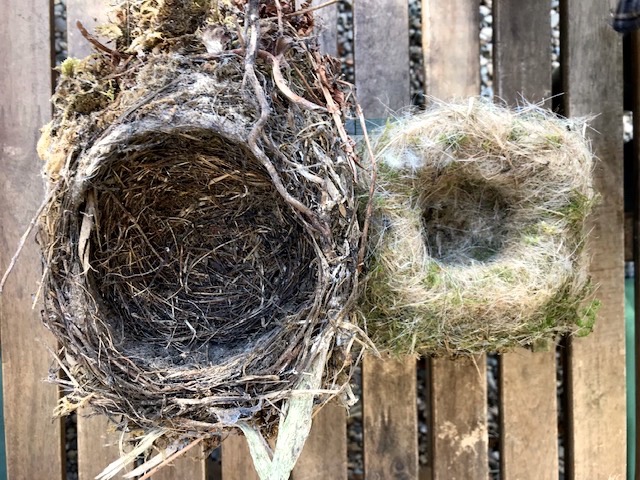
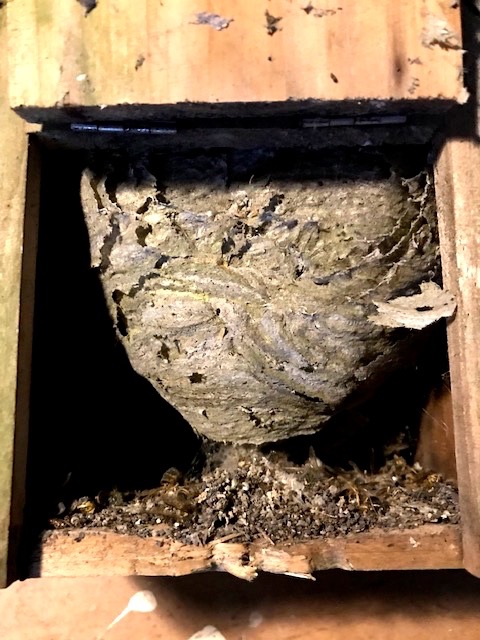
‘Nests’ is a new large format hardback to be found on bookshop shelves. Susan Ogilvy’s contribution to the study of birds’ nests is a beautifully luminous volume with obvious appeal. Her finely detailed paintings are matched with pithy companionable observations of birds and their building means and methods. I’ve collected our garden visitors seasonal homes over the years, as and when they’ve fallen vacant. Clearing a creep of ivy that threatened to dislodge a drystone wall revealed two moss moulded wren nests a few autumns back. An opened bird box threw up a blue tit’s nest snugged square to fit. Pied wagtails had lodged themselves in an open sided box under the eves of the railway hut behind the bean stick stash. A blackbird’s wonderfully sturdy woven nest was mudstuck to a log in store. The swallows sturdy mud masticated old nest had fallen from the iron hoop of the railway hut’s interior. Occasionally boxes are comandeered by wasps and I love the delicate paper tissue cocoons they create within the captured space (below).

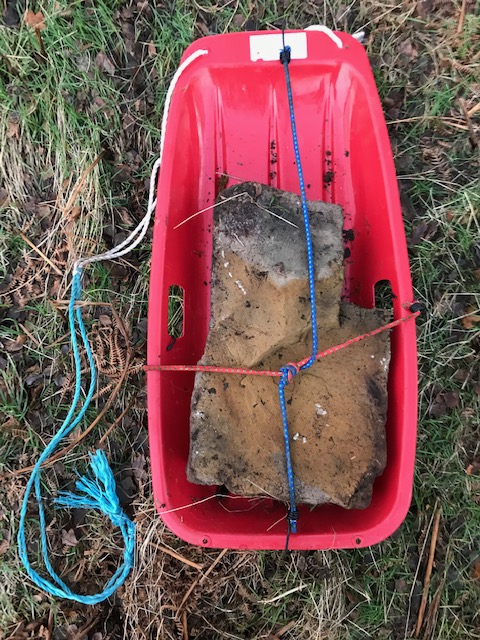
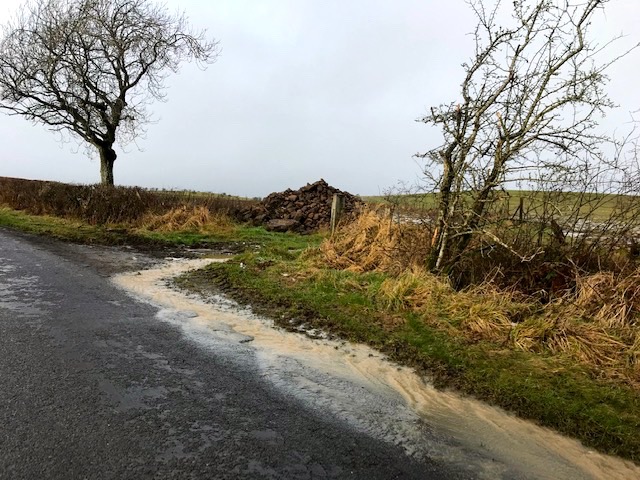
From joy to sorrow. A growing mound of rocks, that might otherwise hinder the plough’s progress, have been extracted from this upland pasture a few miles from us, owned by one of the local landed estates. It has turned what had been permanent grassland into marginal arable land with alternate year fallow rest in order to maximise returns under the current subsidy system. Former hedgerows which subdivided the sloping pastures – home to birdlife and endangered species like hedgehogs – were grubbed out a few years back and replaced by fences with only a few straggly hawthorns left to show they had ever existed. Hedges would’ve shaded input heavy cereal crops and impeded the big machinery needed to work it. In turn that heavy plant has compacted the increasingly rock free soil, leading to even greater amounts of run off and yet more soil erosion. Those silt laden waters run off down the lane to pour into the stream below, which when in spate, increasingly breaks its banks to flood the downstream village street and threatens to enter the terraced houses off it. 

Here, as on their other fields where hedges act as boundaries of arable land, they are machine flailed almost to the point of non-existence every back end, depriving wildlife of winter food and shelter in order to gain even greater yield from unshaded crops. Nature is a nuisance and must be put firmly in its place. Just how disconnected can our current farming and environmental policies be? We’re promised, post-Brexit, ‘public money for public good’ via ELMS (Environmental Land Management Schemes) and a greener, more coherent, agricultural policy. When I witness outdated dysfunctional practices like the ones described come to an end I will rejoice. But I’m not holding my breath just yet.

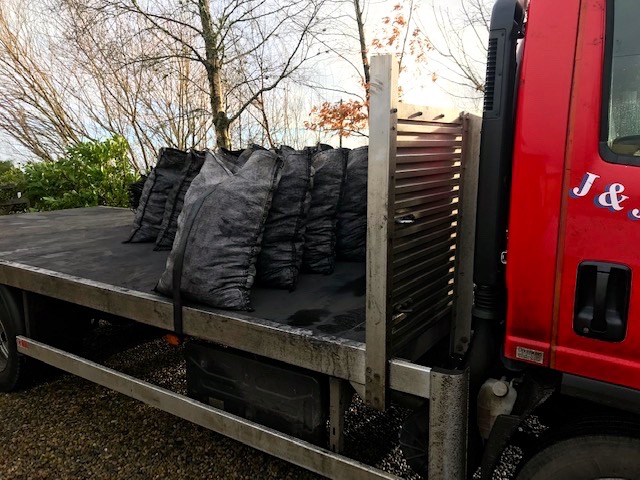
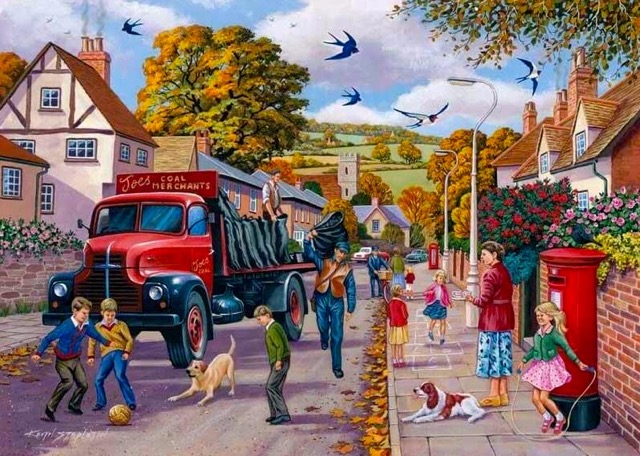
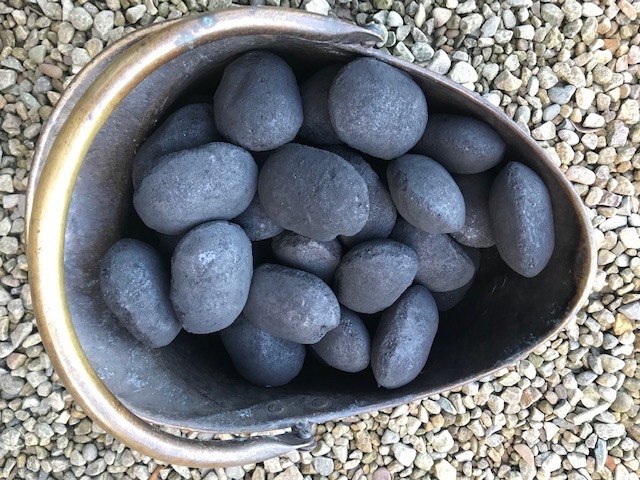
Carbon compromise. Like a lot of country people we still use coal for domestic heating. When your elderly farming neighbours both independently swear by then make a sample present of ovoids you take notice, as they know value when they see it. We duly put our order in and the coal merchant delivered. Ovoids, or ovals, are constituted from anthracite and have to meet DEFRA definitions for smokeless fuel (with less than 2% sulphur content). They certainly last longer and give out more heat compared to untreated coal, and are comparatively environmentally friendly for use in in multi-fuel living room stoves like ours.

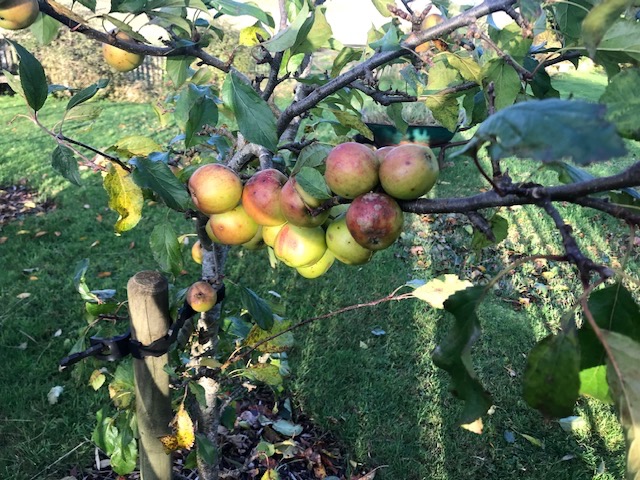
Fruit favours. Am becoming increasingly fond of our Christmas Pippin apples. Despite its exposed position this little free standing tree is a good cropper. A dessert cox-style variety – an accidental roadside find from Somerset and only put to commercial use a decade ago – neatly small, a firm keeper that tastes crisp and sweet. Best of all, as the name implies, this late producing fruit brings cheer to any late Autumn kitchen garden with a promise of being still fit to eat by Yuletide.

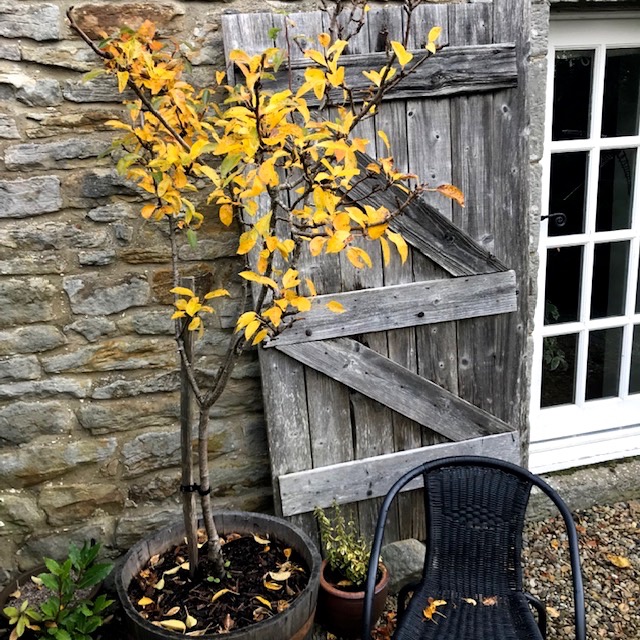
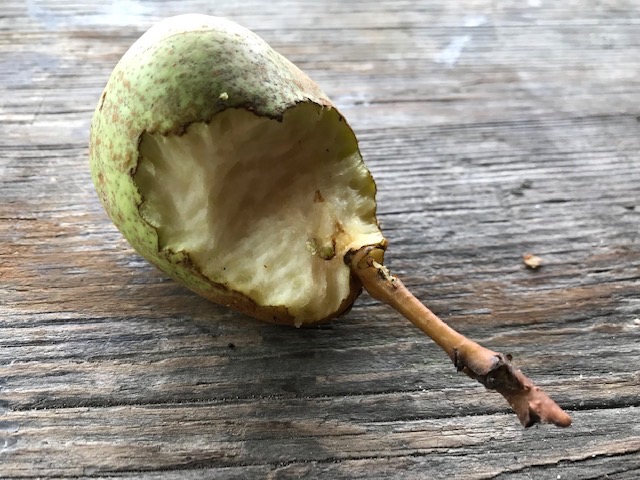
Our Williams Bon Chretian Pear continues to thrive in its wooden tub in the south facing walled part of the garden. Despite its French name this variety is actually of C18th Berkshire heritage. Its spring blossom couldn’t be prettier and the autumnal lingering gold leaf is equally delightful. Yield is low, but you can’t have everything from being so confined. The last of this year’s three pears dropped to the gravel below and I found it one morning part consumed by some creature. I suspect most likely a rat, but I may well be wrong. Any ideas?

Bags of Fun

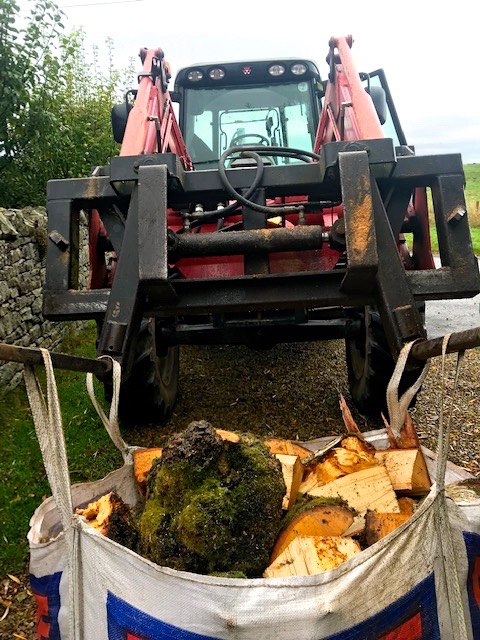
We had a lovely surprise last weekend when some farming friends came for a long delayed lunch at the corner house. They turned up in the tractor bearing gifts at forks end. In with the newly felled birch tree logs was a branch with large moss covered burr to add to our wood form collection set around the garden. They also bought us a special gift to mark recent celebrations, a baby oak tree from the fine ancient woodlands on their land. Where we’ll put that little beauty to grow on our more modest patch is yet to be decided.

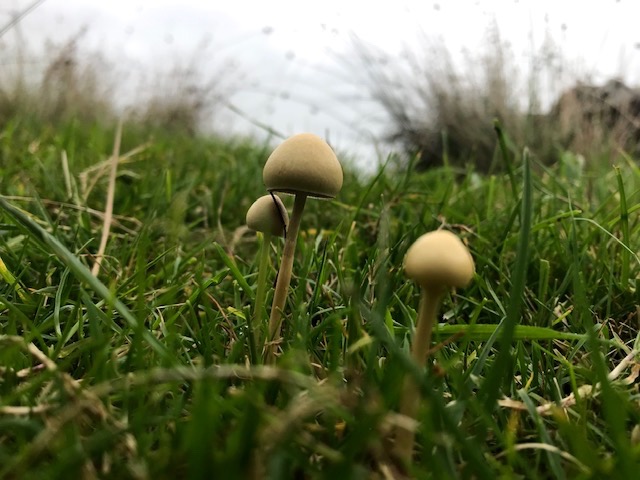
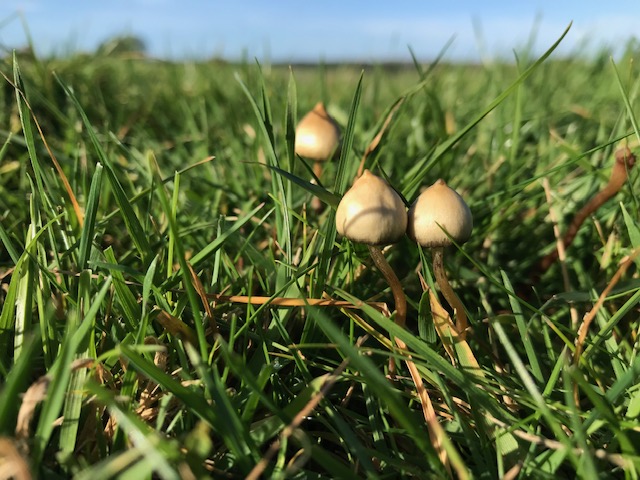
Fungi are everywhere this autumn, a good year for them. Apart from field mushrooms, gathered to add extra flavour to a Sunday breakfast fry up or grace a supper dish, I spy non edibles which I believe to be Protostropharia semiglobata (above) These are small (10-30mm high) slender mushrooms with yellow to pure white caps, common on land like our neighbour’s sheep dung enriched permanent pasture. In youthful years I’d have been far more interested in cropping the similar looking fungi of the Psilocybe genus, (below) otherwise known as magic mushrooms.These days I leave them strictly alone but wonder in passing what effect, if any, they might have on flocks of grazing stock at this time of year.

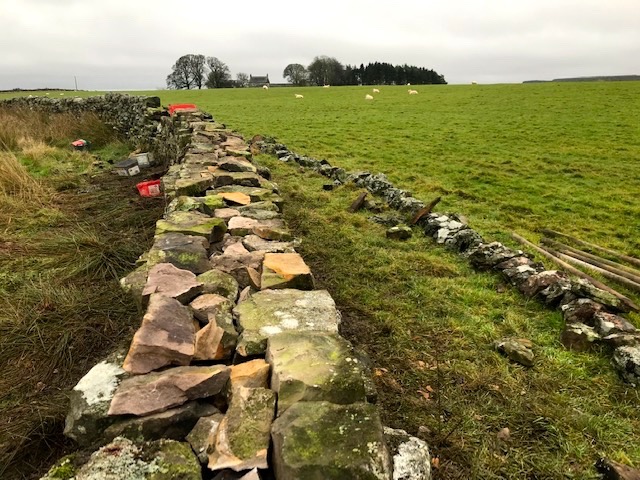
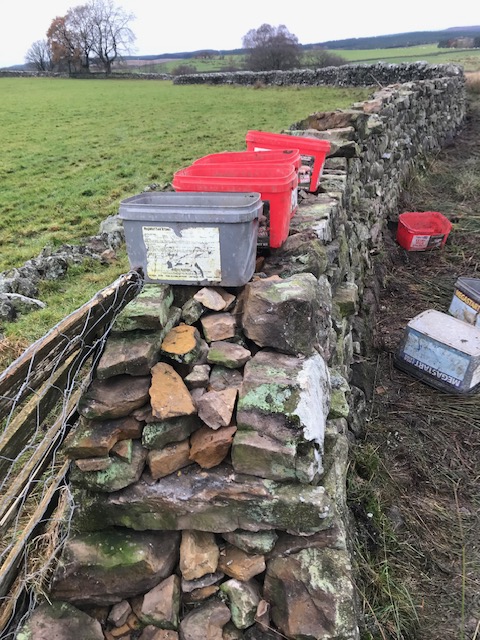
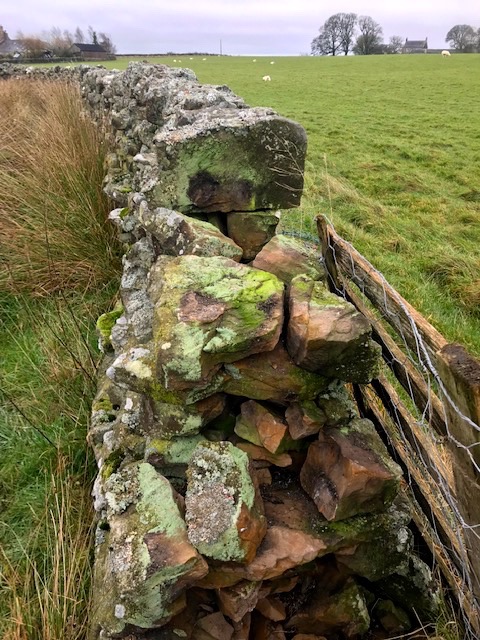
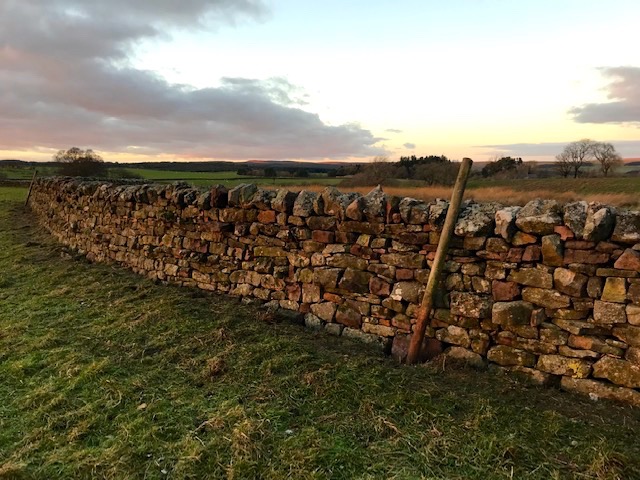
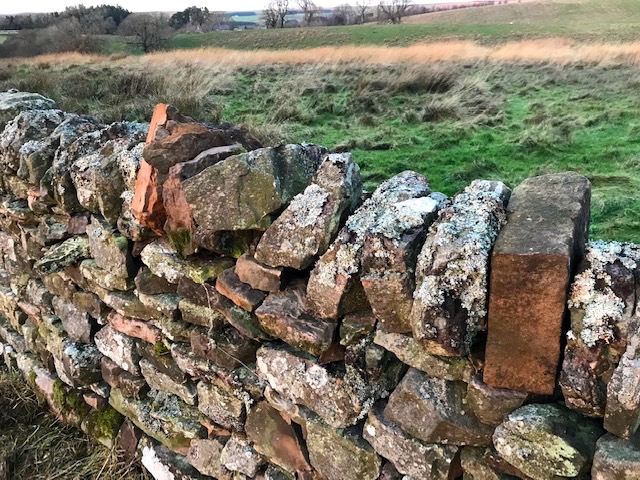
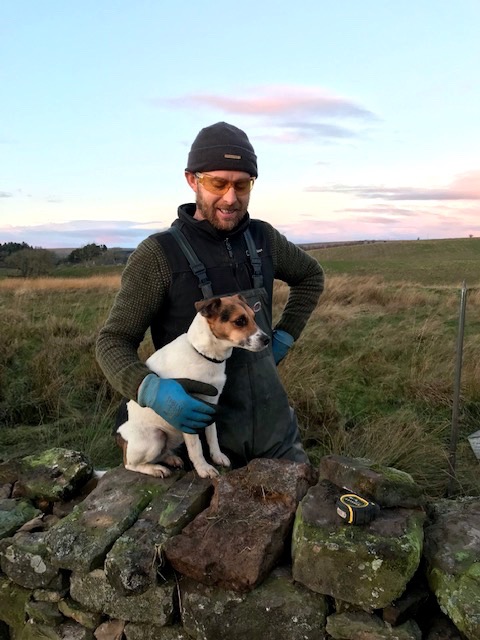
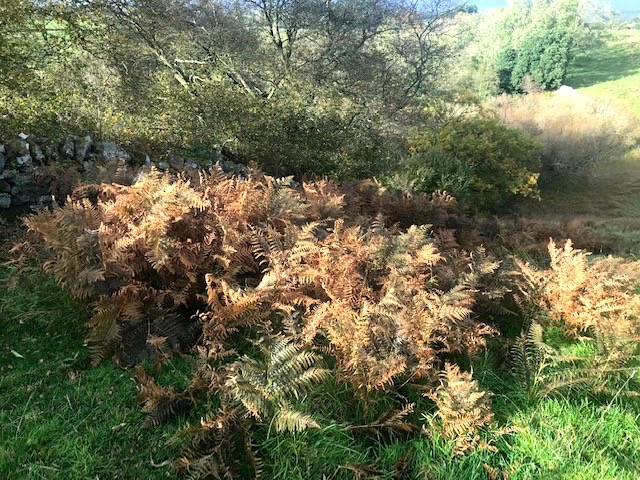
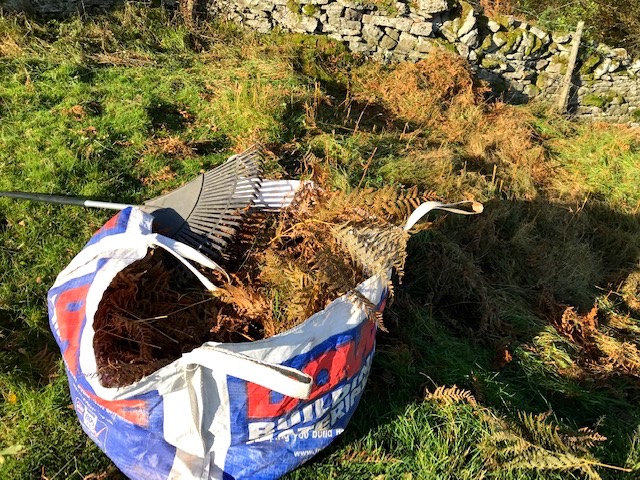
Our own field needs attention. We’re still waiting for the waller to come to patch our stretch of drystone boundary. Meanwhile invasive bracken from our northern neighbours wood has been steadily increasing its claim on our better grassland so I’ve been down and taken the scythe to it. Makes for hot work and given its carcinogenic reputation have had to wear a mask to prevent inhaling any spores from the dying fronds. The following day loaded and dragged two dumpy bags worth up to the house to spread as ground cover under the mixed tree cover of our eastern shelter belt.

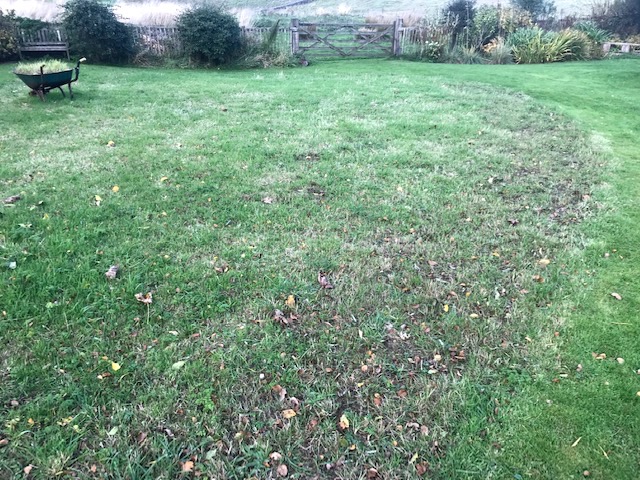
Last grass cut of the season. Hurray! Put the machine away now until next spring. Do a final scarify and rake around the meadow’s east border. Pleased to see the west side is now firmly fixed with plantain and other perennial plants established over the previous two seasons of wild flower sowing. In late September I did another, smaller seeding of annuals; more yellow rattle and a ‘butterfly mix’ that included foxglove, red campion, knapweed and scabious. I’ve collected burnet, fleabane, meadow vetchling and common tare seeds from walks along the lane and have broadcast them in the harder to colonise heart of the meadow. Next Spring should bear witness to the results of these labours.

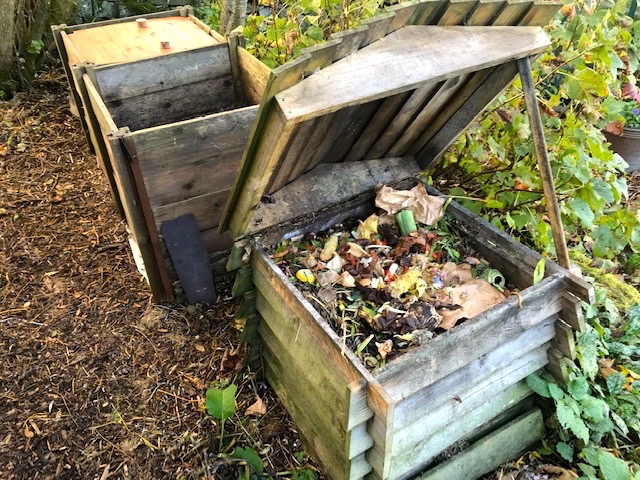
Every morning I religiously do 10 minutes worth of warm up exercises before breakfast (a hangover of drama school training). Have now added to that routine an occasional wander into the kitchen garden to ingest the get-you-awake autumn air and then empty my bladder over the contents of the compost bins. The body’s liquid waste is high in nitrogen which stimulates breakdown of composting matter and uric acid levels are at their highest after a night’s sleep. Also balance the bins ‘green’ input of kitchen scraps and plant material by adding carbon in the form of ‘brown’ or dry matter like cardboard, paper, leaves and wood chippings. Forking over the rotting mass as much as possible helps air the mix to speed the process. Nothing beats the satisfaction of knowing you’ve made your own dry, rich, crumbly compost ready to add to raised beds and borders.

Going for Water

The well was dry beside the door, /And so we went with pail and can / Across the fields behind the house / To seek the brook if still it ran. From ‘Going for Water’ by Robert Frost

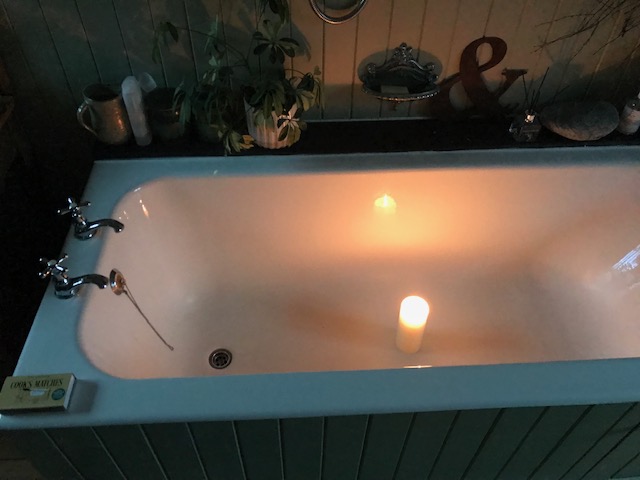
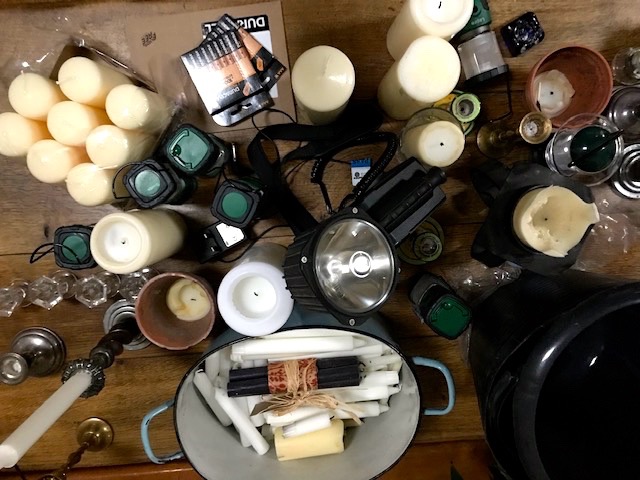
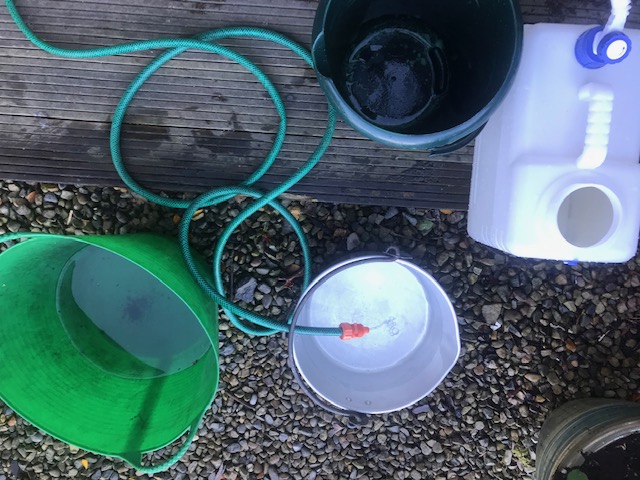
We recently had a power outage. The electricity company gave notice before setting to work replacing old telegraph poles in fields nearby. It was only a couple of days later we (literally) woke up to an unwelcome side effect. With no electricity to run the internal pump that shifts our spring water up to header tanks in the loft we’d unknowingly exhausted supply through the usual round of baths, showers, laundry, dishwashing etc. Cue buckets, filled from the garden water butts, lugged up and down stairs, boiling of kettles and neighbour’s help filling containers.

This little emergency prompted us to consider getting a borehole sunk in our own field or getting an engineer in to check the pipe between home and the spring in the neighbour’s field opposite that supplies us and the family households at Southridge. Ominously, in recent years the supply tank that retains the water at source has had a reducing average capacity. Hence our neigbours move in sinking a borehole to secure enough supplies for their sheep and cattle. Our own problems stem from airlocks in the system, either generated by stop/start issues like the recent outage or from overuse where demand outstrips supply. The latter reason was the case in the wake of this Summer’s garden party, compounded by hosting a houseful of overnight guests. At least we’re now adept at running off water from the pump in the kitchen out onto the garden gravel in order to free airlocks before reconnecting the pipework.

Our scattered rural community is not unduly plagued with theft so it was a bit of a shock to hear that Southridge had had their quad vehicle stolen overnight from the home barn. The National Farmers Union (NFU) Mutual Insurance company reported in August that rural crime in 2020 was down by an average 20% as Covid-19 effectively locked thieves out of the countryside. (Dog attacks on livestock and rural fly tipping however soared during the same period, which saw a surge in pet ownership and countryside visits alongside the closure of recycling facilities). Thieves are back this year with new tactics and targets. Top of the ‘must have’ nick list are Global Positioning Systems (GPS) fitted in tractor cabs, while the latest means of criminal access and escape are silent electric scooters that can speed off unheard along quiet country roads.

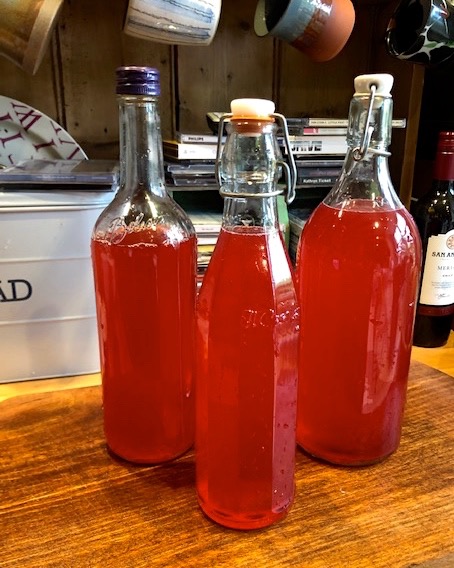
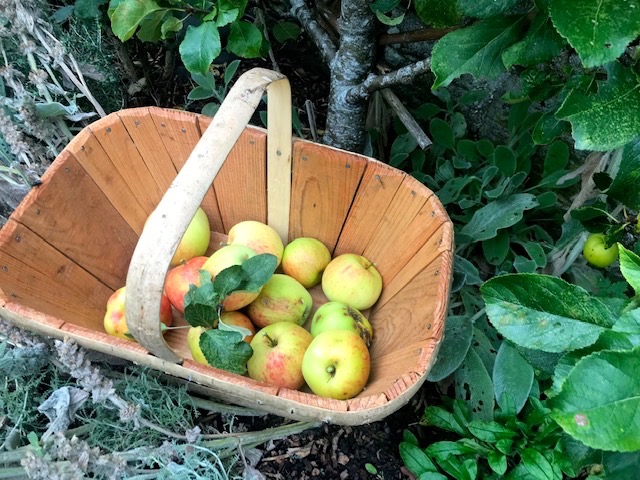
Last of the apples are being gathered for juicing. From the pink colouring bestowed by sweet red Katy & Discovery varieties to the sharper notes of James Grieve they all make for simple welcome refreshment. In previous years we’ve shared our crop with ever opportunistic blackbirds. No peck attacks from them this year but much increased attention instead from gangs of wasps who mine the produce while still on the bough. They scramble from their burrowing to fall earthwards or fly drunkenly off when I (very gingerly) pluck the fruit to drop into my basket.

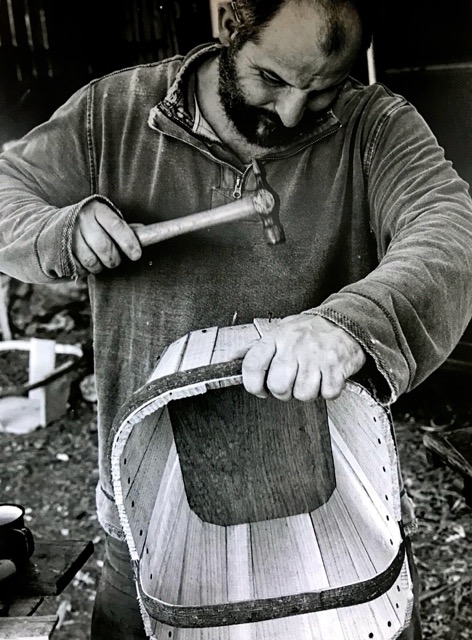
Utilise a size two Devon stave basket for this task – my birthday present for Kim this year – made to order by John Williamson, a charcoal maker and woodworker who lives and plies his craft in the Teign valley. Fashioned at the work bench from locally grown ash (handle & trim) douglas fir (staves) and oak (bottom) these heavy duty baskets were traditionally used across the county for the carriage of goods produced in kitchen, dairy, garden and orchard.

Wandering Wonders

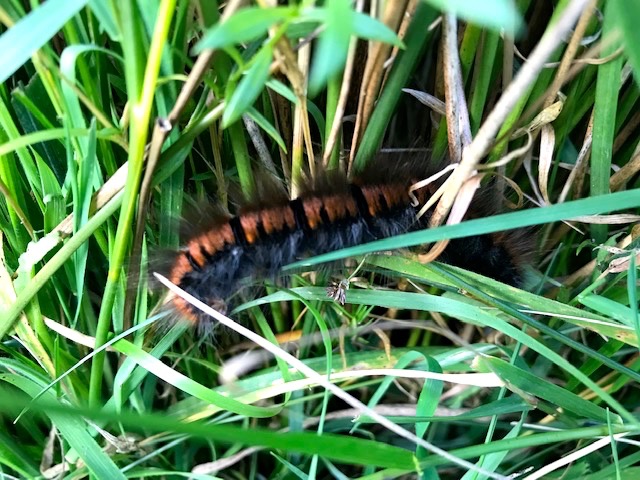
Spotted a couple of caterpillars on walks near the house recently. Here’s a picture of the first, found under some soft rush in our field. Looking it up I discover it to be the caterpillar of the fox moth, named for its colouration at this larval stage. Up to 7cm long and commonly found on variety of grassland habitats across the country from June to April.

The second caterpillar encountered was much smaller and a more uniform brown. It was sashaying across the tarmac when we came upon it. When it changed direction to go up, as opposed to across, the lane I attempted to chivvy it gently with my walking stick towards the verge, away from obliteration by passing vehicles. However, it would not be interfered with and promptly rolled into a ball; then the breeze lifted and wheeled the little creature rapidly off and away, depositing it in the verge further up. This amused me greatly and prompted speculation. Do caterpillars deliberately harness the power of the wind to travel  distances, or was this just an instinctive emergency escape measure accidentally aided by air lift? The creature’s curled form and cushion of fine hairs make it remarkably light and aerodynamic, that’s for sure.  

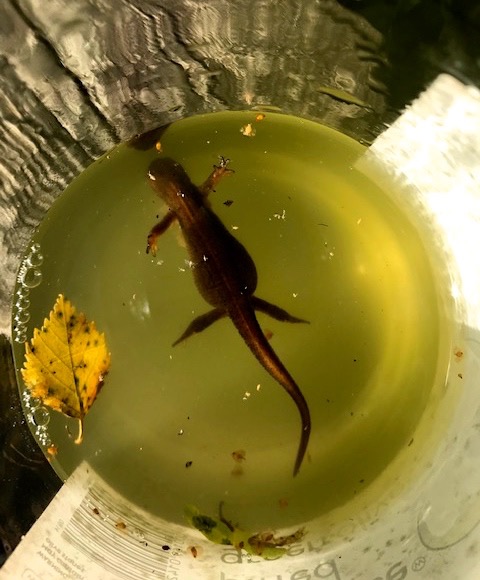
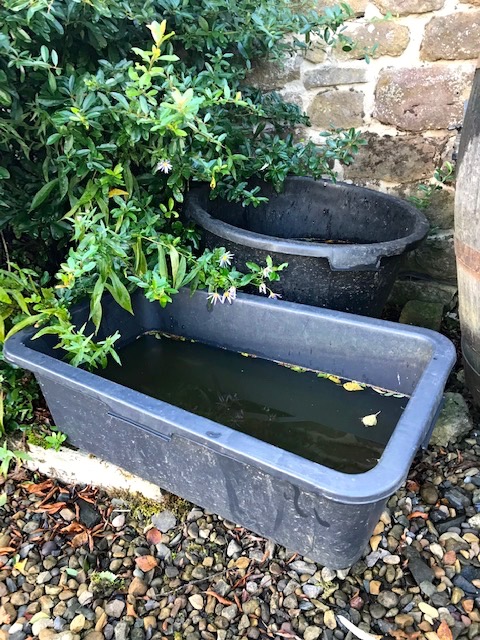
Another small wonder of the natural world that made me wonder in turn occurred this week. As I’ve mentioned in these columns before we have a number of closed and open rainwater containers about the garden, from old wooden whisky barrels to plastic plant troughs. My eye caught slight movements in one of these low troughs as I passed. It was an adult palmate newt, floating near the surface.

Closer examination in the net used to lift it out with indicated this was a pregnant female. Had it migrated from the pond at the other end of the garden to get to an alternative water world? And if so, how had it managed to get into this particular container? Given the trough was low lying yet sheer sided with an extruded top the only way must have been by climbing the dense berberis bush, whose prickly stems reach over one end, then dropping in. The lone amphibian would have eventually perished for lack of food and inability to ever extract itself. I returned the wanderer to the shallow beach of the pond, where its dark still form merged perfectly with pebbles and water. Try again. Returning 10 minutes later it had disappeared. Better luck next time, I thought.

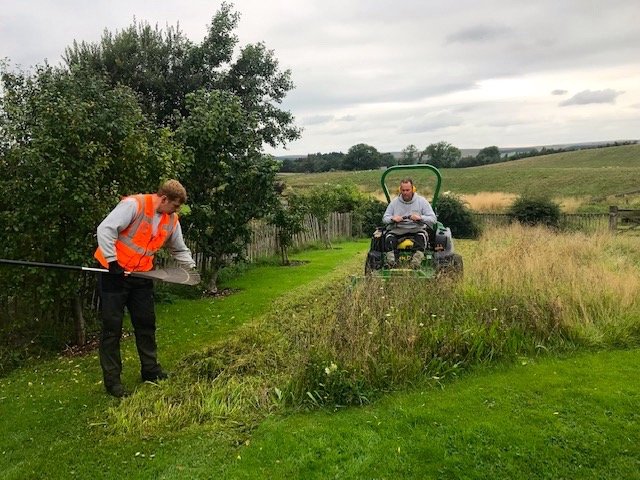
And finally…another small creature story to end with. Once a year in late August or early September Chris the landscape gardener comes to cut the mini-meadow, or Jungle as he calls it, being a no nonsense local man. Usually it’s just his trainee lads that turn up in the van to cut our garden sward with strimmers. This time around it was the boss himself who showed up to do the job, with just one helper to clear. They arrived with a ride on tractor to do the cut, as pictured.

At one point Chris stopped the engine, walked forward, leaned down and cupped his hands over the tall grasses. He then strolled across me on the sidelines with his catch – a small tortoiseshell butterfly. ‘You’re more of an old softy than I thought’ I said, as he smiled and released the delicate flutterby from his mighty hands.

Colonsay

On a small island, the feeble purchase that the land obtains between the sea and the sky, the drifting of mist and the intensity of light, unsettles the intellect and opens the imagination to larger and more liquid configurations.

(From the poem Riasg Buile by Thomas A Clarke)

Our recent five day sojourn here was well spent. Lazing, walking the shores and hills, dining out at the hotel and pantry, swimming at Kiloran Bay (above), or exploring the environs surrounding Colonsay house where we were staying, in the former nursery, with a view over the extensive sheltered gardens & woods.

Colonsay is home to some 130 permanent residents, with we visitors coming mainly from Oban, a two hour ferry trip away. The elongated isle measures roughly 10 miles by two and lies west of mountainous Jura, out of the highland rain shadow and along with the island of Tiree it enjoys Scotland’s highest number of sunshine hours. An avian paradise, with more than 100 breeding species of birds and many more visiting. Its extended mild climate, non intensive agriculture and range of environments makes for interesting and diverse plantlife.

The winding high track from Kiloran over three miles to Balnahard Bay took in some distinct and thrilling sights. The wild goats we caught grazing on the mountain side above us are reputed to be descended from animals that came ashore from a wrecked Spanish vessel, part of the invading armada in 1588. Later we saw a golden eagle perched on the ridge, surveying the scene below before lifting off and circling, its massive wingspan not failing to impress.

A lively flock of twites accompanied us along the approach through new mown meadows to Balnahard farm. Seed eating finches, often confused with linnets, they’re a bird of the Celtic fringes, little seen outside the north Wales and west of Scotland coasts where they live and breed all year round.

A section of the rough farm track we followed had ditches and rough grazing lined with bog myrtle. Common in the highlands, if rarer elsewhere, this dwarf deciduous shrub thrives in wet acid soils and supports many insects. More importantly its distinctive smell and antibacterial properties have seen it used traditionally to help deter midges! These days its essential oils are a key ingredient in skin conditioners and soaps. (An alternative name is sweet myrtle). 

Machair is the Gaelic term for low lying coastal land. Formed from sand and shell fragments, it is the mainstay of traditional crofting agriculture in the Hebrides. A unique habitat and one of the rarest in Europe. A delight then for us to discover some less common flowers there, most of which we’ve had to look up in identifying. No bad thing of course in extending knowledge and awareness!

Bugloss. Half the size of, and with smaller flowers than, its more exotic sibling Viper’s Bugloss. Apparently packed with alkaloids too so rather poisonous. A member of the borage family and distinctly bristly the leaves resemble an ox’s tongue; hence its name origin, from the Greek. Love the pretty sky blue flowers nevertheless.

Common Storksbill. Attractive pink flowers and a typical member of the Geranium family with distinctively long pods like a crane or storks bill that will eventually explode, scattering the seeds within some distance. A sprawling, low lying plant with finely divided fern like leaves it is the main food plant of both  common and brown argus butterflies. 

Scarlet Pimpernel. Once a common weed of arable land around the UK this member of the primrose family is now a rarer sight due to modern intensive agricultural practices. This one’s flowers are more salmon pink than the bright red seen elsewhere. The other common name I remember from childhood days is ‘shepherd’s weatherglass’ on account of the plant’s responding to atmospheric pressure in closing up its flowers on the approach of bad weather.

Hawkbit is a cheery ubiquitous presence in the grassland by the coast as well as inland.

Red Bartsia, An attractive small plant suffused in redish pink which thrives in the well drained low fertility soils of the machair. Maybe even more so, as it is also semi-parasitic, feeding on the roots of grasses.

There are no snakes, moles, squirrels, hedgehogs, foxes, stoats, weasels, badgers, frogs, toads or deer…but there are lots of rabbits, with fewer predators to control them, and their presence in the sandy soils is obvious in many places.

We came away with samples of Colonsay’s finest home produced products, along with gin, whiskey and honey. It’s perhaps no surprise that as this nature rich and temperate isle has over 50% of UK flower species present it makes for a fabulous diversity and range of nectar for bees over an extended period. Best of all the producers here have some 50 colonies of the native black bees, an officially protected species in Scotland. Hardier and more adaptable than the yellow or Italian species on the mainland these bees are perfectly adapted to and thrive on the conditions here. The rich produce of their labours speaks for itself, as we can testify!

Fledglings, Field walk and Hawkers

This season’s second swallow brood hatched earlier than last year’s and of course fledged sooner so chances of survival on the great migration begin to look better. Their departure from the nest under the eaves of the garden door deck took place the very Sunday morning we held a celebratory outdoor party, which saw some 60 – 70 family and friends in attendance. Perhaps some sixth sense told them that they better get flying now or else they’d be crowded out. Guests were later entertained to catch the parents feeding their young – beaks agape and wings fluttering – while perched on the rungs of the access ladder between roof and chimneystack. Some days, at certain times, the skies above and around us are filled with the frenetic activity of family flight schools, 30 birds or more.

The fledglings return to their nest of an evening to roost. Initially heads in and tails out. (Something of a comedy turn it has to be said). Only three could be accommodated in this fashion and we witnessed a short scrap to see who of the four would lose out. Since then the quartet have given over trying to fit back in their mud and straw cup and currently snuggle up together in a row along the supporting beam.

For one reason or another our four acre field has had hardly a visit from either Kim or myself during the summer. Southridge’s Texel tups, shorn of their fleeces, are back in residence this past two weeks, which is welcome. I followed paths they and wild animals like hare and fox have made, by fences and through the verdant foliage, getting slowly and happily soaked in the soft rain.

My delight was in seeing oaks and willows in lush leaf at the foot and a widespread dusting of yellow flowers everywhere else. Starry ground hugging Tormentil, alongside two members of the pea family; meadow vetchling and birds foot trefoil, just falling to seed. Hundreds of weak flying crane flies on the wing clinging to the long grass stems.

Some umbellifers too, standing proud in the marshy bottom among the swaying mass of bog grasses and meadowsweet. Not sure what variety these purple stemmed damp loving plants are, as seen here….Suggestions welcome!

The crags at the high end give our rough grazing land its name. Here’s the defiant rowan, displaying like a banner and already in berry, rooted in a crevice of the rock face. This vertical surface is a safe haven for tree, fern and heather while the lesser grazed slopes nearby shelter the delicate looking but tough harebell flowers from ovine grazing.

Casually lingering by the garden pond recently I got a big surprise. Came within a couple of feet of a large dragonfly, of a type I’d never seen before. Returned too late from the house with a camera as it had helicoptered off by then so here’s Ian Worsley’s fine image from the British Dragonfly and Damselfly Society’s website….A female Southern Hawker. Research tells me it prefers ponds to rivers, is particularly curious and will investigate at close quarters, is common down south (hence the name) but localised elsewhere. Using its powerful jaws to hunt prey on the wing gains this type of dragonfly the appellation of hawker. Knowing that dragonflies as a species have been around for at least 250 million years is a sobering thought. What beautiful finely engineered creatures they are with huge compound eyes, transparent two paired wings and multi directional high speed flight abilities. Awesome indeed.

Room With A View

On my first visit to the Cornerhouse, fresh (or not so fresh) from camping at friends wedding in the Lake District, I was glad to take a shower upstairs before joining the company. The glorious view I took in from the bathroom that hot August day has not changed eleven years later, here once more at the height of Summer.

No, actually the garden is much improved since then in having two of us servicing its needs, seeing it (literally) bear fruit. Apple trees by the vegetable garden out of sight to the left, plus the improved mini-meadow and creation of a wildlife pond with complimentary planting off right. Delightful to see garden birds bathing here or coming to drink. Kim’s plantswoman’s skills have gradually extended the wonderful variety of flowers and shrubs in all the borders.

The five bar wooden gate gives onto our four acre field, the Crags. The remains of a small quarry are evident. I think it likely this house (a former shepherds cottage, barns and shippen) was built back in the 1870’s with stone extracted from there. Between garden and rocks do you see that patch of tall grass heads? That’s tufted hair grass aka tussock grass, which thrives on wet, poorly drained soil. Their dense clumps of basal leaves are deceptively rough. Handled the wrong way the aligned fibre of the upper leaf can deliver a nasty cut. Yet the long round stems and seed heads appear gossamer light and graceful as they wave in the cooling breeze.

Clumps of soft rush are everywhere else. It spreads by rhizome and seed and does so very successfully, as do patches of creeping thistle. You also see stinging nettles claim space each summer ( a food plant for butterflies) colonising our garden rubbish heap, part hidden from view by roses and hawthorn. This raggedy pile usually gets put to the torch – or rather a very slow smoky incineration – when Chris the contractor comes to mow the garden meadow in August, when grasses, yellow rattle and other flowers have finally seeded.

Where our stretch of rough grazing falls away towards the burn below we’ve secured walls and fences so Southridge’s sheep can graze, keeping it from reverting to scrub. That field stonewall curving away to the left is our responsibility to maintain, not our neighbour’s. I’ve recently walked it with Jason the waller, who’ll try to get the necessary patch & repair work in hand by back end. We saw and heard the ascending skylarks that have been nesting in the Crags. The field may be pretty poor agriculturally but it undoubtedly benefits wildlife.

Beyond the valley and its sheltered wood of oak, ash, alder, willow and sycamore our northern neighbour has had perfect weather to cut then ted (turn) frequently before rowing up and baling for hay on his south facing meadow. He leaves the round bales to dry further, taking advantage of the long run of sun kissed days. Livery and the farmer’s own horses are kept in adjacent fields, grazing alongside recently shorn sheep. woodland shelters and hides the farmhouse and yard. Behind it all is an arm of the great commercial forest, England’s biggest.  You see a margin of replanted conifer and broadleaf at front, some eight years in the growing, backed by the darker mass of mature trees.

Straight ahead lies a rise of yet more rough grazing, with swathes of tall creamy meadowsweet flowering at its damp foot. In this big field the rushes are mechanically topped before they can seed and the eastern farmer’s herd of stabilizer bullocks put to graze and further slow their spread. Just discernable, threading through, is the long distance national trail. Occasional forays of walkers – short haulers and those committed to the full stretch – appear or disappear over the rise. Our neighbours in the house whose roof you see planted the deciduous wood to the right, which has added wonderfully to the picture. In contrast, those mature ash trees at the top of the slope are not in great shape, having fallen foul of die back. One has already been felled, the others, to greater and lesser degree, present as stag headed (bare branched) and will go the same way within the decade. The house and granary are of some antiquity with small windows and outside steps. At its core is a former 16th Century bastle (fortified farmhouse) and the buildings all perch above the burn in its steep sandstone gorge, curving a protective arm around.The view continues beyond; with more small farms, steep wooded valleys and rough pastureland, before being defined by the long stretch of open fell. Beyond that, unseen, the region’s big river flows from its source on the high Scottish border down to the great conurbation at its mouth.

Farming, Flowers and Flutterbys

Literature and butterflies are the two sweetest passions known to man. (Vladimir Nabokov)

Our postie, John, told me an amazing story the other day. Out on his deliveries driving along Stanegate – the old Roman road that linked Vindolanda and Corbridge – he encountered its martial spirit in an unexpected way. Surprised by an odd undulating movement ahead he brought his van to a halt. What he’d witnessed was a weasel escorting her young kits across the road. The fearless jill came up to the driver’s side and sat up on her back legs, stock still, watching him with a ‘don’t you dare open that door’ look. A few seconds more, turning to check her brood were all safely across, she turned tail and vanished into the hedgerow after them.

The Texel tups have been taken off our crags after a long residence and the ewes and their fat lambs let loose to graze and fertilize the newly mown emerald green meadow over the wall. I’ll miss the rams for their utility in consuming waste green material we’d no room to compost. They were such unfussy eaters and the ready meal packages of fresh grass cuttings in particular always appealed. As soon as I got the mower out they came up to the fence, ready to snack.

Exactly a year ago our garden meadow was radiant with red poppies. This year there’s ne’er a one but instead it’s bursting with marguerite daisies. Such unexpected succession planting, with different germination patterns playing out, makes for constant interest. What will dominate, or appear for the first time, next year? We’ve never had so many yellowrattle flowering before as we have this year and that should affect future grass fertility as they seed and spread.

Our local plant nursery, operating seasonally from the old walled garden of an estate house, closed recently on the retirement of the nurseryman. We turned up to buy some interesting plants in the weekend sale. My choice was this handful of orchids which I’ve  slotted into different parts of the meadow. I’ll be watching out next year to see how they have subsequently fared.

The market town’s annual book festival is always a treat. Kim & I spent an enjoyable hour listening to James Rebanks in conversation in the exuberant surroundings of the speigeltent, pitched outside the abbey. JB comes from a long line of Lakeland farmers and his home patch of Matterdale has in recent years been quietly transformed with the help of a small army of volunteers and advisers into a model environmentally sustainable hill farm. Former canalised water courses re-aligned and allowed to wander to help prevent flood prevention further downstream in towns and villages; hedges, woods and walls restored to boost nature and restore declining native species that were once common; favouring hay over silage to restore balance with nature. Restoring mixed rotational farming practice integrating (belted galloway) cattle, (herdwick) sheep and crops to underpin and develop soil health…Lots of small actions that add up to something big and meaningful. It’s subsidy driven, and profit margins remain low. Luckily for JB he has another income source to support his wife and family of four young children – writing.

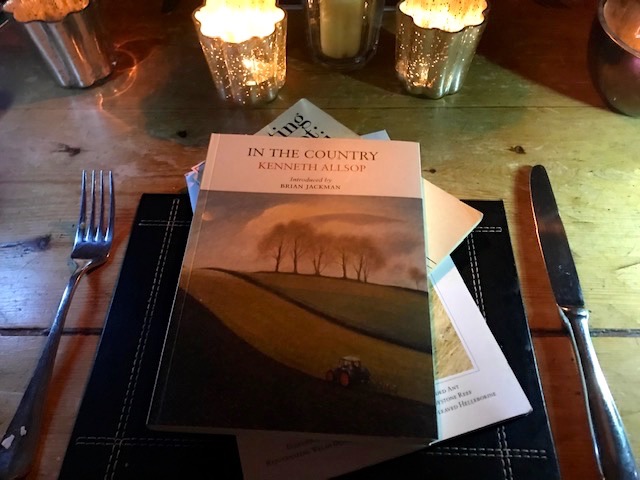
The Shepherds Life (2015) and English Pastoral (2020)have deservedly gained its author an impressive reputation. An authentic individual thinker, James Rebanks analytical insight and lived experience as husbandman and shepherd might come as a revelation to most of the 99% of the population who do not make their direct living from the land. He writes – as he spoke to us that evening – with terse lyricism, mixing anecdote with observation, recollection with revelation, disarmingly honest and prescient.

English Pastoral unfolds its powerful narrative in three parts, and in mood and tempo it’s something akin to a pastoral symphony. The first section (Nostalgia) reveals the rural world Rebanks grew up in from his birth in 1974, peppered with telling portraits of family, especially his grandfather, whose Lakeland farm he would eventually inherit. The second chapter (Progress) deals with the drastic changes brought about by the wholesale industrialisation of farming to secure a cheap food agenda, and the widespread consequences. The third section (Utopia) restores hope and explores interconnected ways back to true sustainability in food production and farming’s re-integration with nature and the wider landscape.

Another day and a late afternoon stroll up the lane to revisit sights I’d only but glimpsed from the bike earlier. Road works of recent years, resurfacing and clearing or putting in of drainage ditches has – as I suspected at the time – opened up the wayside to new plant possibilities. I stopped to admire the colour combinations of these three common grassland perenniels at the nearest passing place.

Particularly love the lavender blue flowers of the harebell. Their numbers have definitely increased along the dry poor soil margins where deep but narrow ditch meets lush grass verge. Likewise, there’s seems to be more lesser stitchwort about as they like dry meadows and grassy places too. As the name implies the folk medicine canon had a place for it as relief from the pain of a stitch. Surprised to learn that the pretty white flowers only last three days. Luckily, the plant is a prolific producer through the summer months. The delicate looking flowers (only five petals but heavily indented so appear as ten) float serenely above the ditch, reinforcing its star like imagery. Most obvious though is the frothy yellow presence of ladies bedstraw, which is another coloniser of the mini-cliff face here. A hardy perennial of grassland it gives off a subtle scent somewhere between honey and hay. Traditionally the plant was used to strew floors and stuff mattresses, as its astringent qualities deterred fleas and was thought to aid safe delivery for women in childbirth. The dense clusters of tiny yellow flowers were used in cheese making apparently as a coagulate of milk and that the original Double Gloucester owes its rich colouring to the plant!

Returning home from photographing the flowers something caught in the corner of my vision…a moth? Turned and followed its tiny form along the wayside. The fluttering creature finally alighted briefly and I managed to snatch this image before it flew off again. A butterfly. But which one? A dive in a reference book provided the answer. I’d been privileged enough to encounter a small blue. It has widespread UK distribution but is very localised, and sad to say, in serious decline. The small blue is the country’s smallest resident butterfly, whose food plant is kidney vetch and its relatives found in unimproved pastures. Colonies are often only a few dozen in numbers although it can increase to a few hundred in favourable conditions. I thought I saw another on my walk before identifying this one so we may well have a small colony in the grassland and waste places hereabouts. Let’s hope so.

Correction. Having dropped a line to charity Butterfly Conservation.org today, accompanied by the butterfly image above, I was disappointed to learn it was not a Small Blue but rather a Ringlet butterfly I’d seen. Oh well, can’t win ’em all. Lovely creature to spot anyway, and a timely reminder to check more thoroughly before publishing in future!

At Rest

This old stone ark / moored on the hump back / of the Whin Sill, is rock / is rainbow, is anchor / Buttressed against weather, / like hands arched in prayer… From ‘Throckrington Church’ by Linda France.

What do the following three outstanding individuals have in common?

William, Lord Beveridge (1879 – 1963). Liberal politician, economist & social reformer whose 1942 report laid the foundations for the post war welfare state.

Tom Sharpe (1928 – 2013). Satirical novelist and anti-apartheid activist in 1950’s South Africa. Based on his teaching experience in Cambridge, Sharpe’s darkly comic romps – the Wilt series, Blott on the Landscape and Porterhouse Blue – becamebest selling novels in the 1970’s & 80’s, and were filmed for TV.

Constance Leathart (1903 – 1993) Daughter of a wealthy Tyneside industrialist, A pioneering inter-war aviatrix, aircraft repairer; later an officer in the Air Transport Auxillary, delivering planes from factories to airfields during WW2.

All three are buried in the churchyard at Throckrington, Northumberland.

Actually, that’s not quite true. Tom Sharpe died, aged 85, at Llafranc in north-east Spain, his home for the previous 20 years. Close friend and associate Dr Montserrat Verdaguer fulfilled the author’s wish for his ashes to be placed near his father’s grave at St Aiden’s. Unfortunately this was done without permission and a consistory (ecclesiastical) court held in Newcastle found against her. The ashes – along with the author’s favourite pen, a Cuban cigar and bottle of whisky – were removed. Unsurprisingly this bizarre saga got a lot of media attention.

Beveridge was briefly MP for Berwick-upon-Tweed and had family ties with the area, and his wife Janet is buried next to him. Connie Leathart, who became increasingly eccentric on retirement, moved to live at a nearby farm, where she ran a donkey sanctuary. Her grave is a simple stone, easily overlooked, with the letters CL engraved in it. The churchyard is graced on one side by a carpet of heath bedstraw which adds a glow to the ground. The church porch noticeboard displays a wonderfully worded missive from the vicar that made me smile…

‘This Church is open at all times for the curious or anyone in need of shelter, a breather, inspiration or reflection. Please close the door after you because the swallows haven’t worked out how to lift the latch to get out, and please close and bolt the gate as tups (male sheep) want to be with their mates, not stuck in the graveyard’.

St Aiden’s is one of the oldest churches in the county, dating from 1100. Sitting proudly on an outcrop of the great whin sill, it overlooks wide swathes of open pasture and woods, as well as plantations and wind farms on the far ridges. The chancel walls and its impressive arch survive. Of the medieval settlement at its foot, where a farm and host of sheds now stand, there is no sign, having been long abandoned or simply built over. Legend has it that a sailor returning home in the mid 19th century brought typhus with him, and that eradicated the already declining population of Throckrington village. Today’s parishioners are drawn from the closest clusters of hamlets, farms and an old family run estate or two.

Our exploratory ramble took us (and a number of cyclists) along a little used metalled lane through big fields of rough grazing. After a mile or so we broke away to circumnavigate Colt Crag reservoir, one of a series of interconnecting Edwardian reservoirs supplying Newcastle/Gateshead starting at the headwaters of the River Rede, just below the Scottish border at Carter Bar.

The water level at this remote and peaceful site, after a prolonged period of little rain, was decidedly low. Set in a hollow, the natural feed stream at its highest point snaked down through residual mud to the depleted still waters below. Scrub plants were establishing between stone slabs of its recently exposed apron. The stoic figure of a lone fisherman in waders, standing thigh deep in the shallow waters, was casting his line for trout.

Sheltering woodland and the sandy soil perimeter vehicle access track allow a lively array of various meadow plants to thrive, like this mix of thyme and trefoil.

Returning on a gentle amble along the gated lane to Throckrington we had our picnic on the grass verge after exploring church and grounds. Further entertained in watching the farm’s shepherd co-ordinating quad and border collies to shift a flock of sheep with lambs off on to distant broad pastures.