Shore Thing

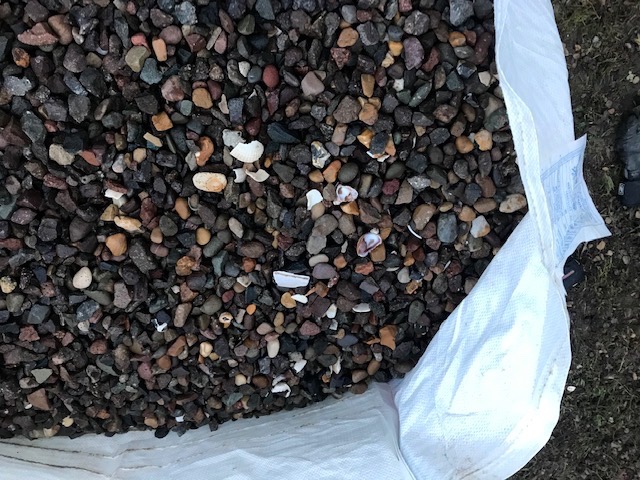
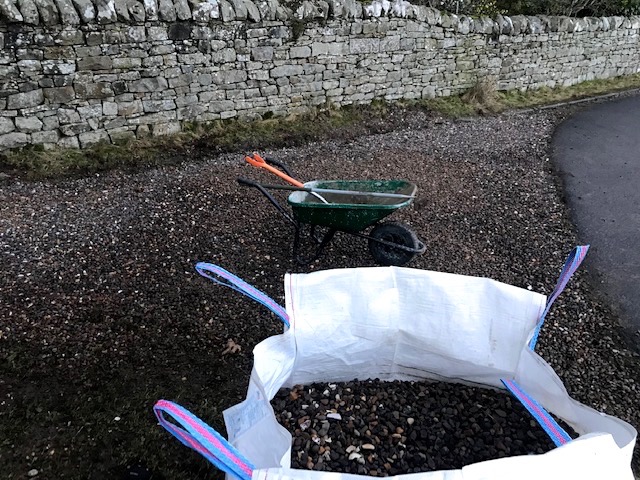
Post waterworks excavations we took delivery of two dumpy bags of gravel to resurface the yard drive entry. The driver showed me the stones before using the hydraulic crane to lift and drop the load. They’ve recently changed suppliers to one that sources its stones from the beach at Seaham on the Durham coast. There is a very small amount of crushed shells amongst the aggregate. (Less than 1% by my calculation) Consequently some very fussy customers have refused to take delivery. Our young driver was bemused as we were. He’d even joked with one such customer that she should look on the bright side and encourage her children to look out for fossils that might be in there too. She was not amused.

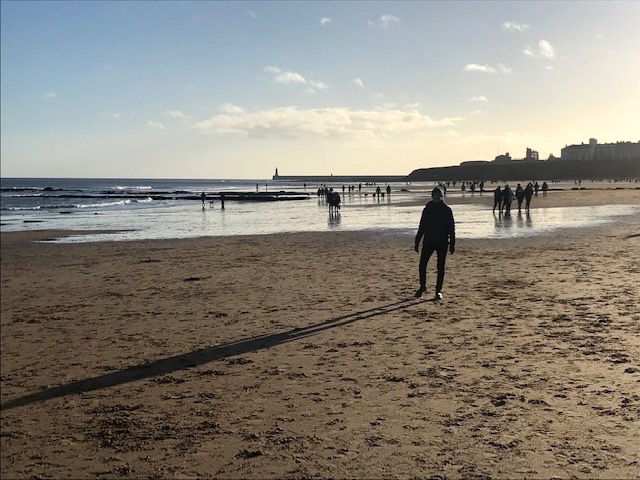
Boxing day saw us in company with the Newcastle branch of our extended family taking to the coast road on an impromptu trip to the seaside at Tynemouth. Not being the only folk to have the same idea we were lucky to find a parking space on Grand Parade. Wearing sunglasses against the sharp low light, we descended the narrow set of concrete steps to the welcome freedom of Longsands beach.

A panoramic picture captures a mass of walkers and only the fact that everyone was dressed for warmth would differentiate us from a mid-summer crowd of holidaymakers. A group of hardy surfers in wetsuits were out among the gentle waves, optimistically seeking enough impetus for the ride back to shore. Spotted a lone metal detectorist in conversation with one of the scores of dog walkers striding the strand. A lone oil tanker riding out its wait before coming in to dock on the Tyne, was the focal point to all this human perambulation, set on the calm sea under a near cloudless sky.

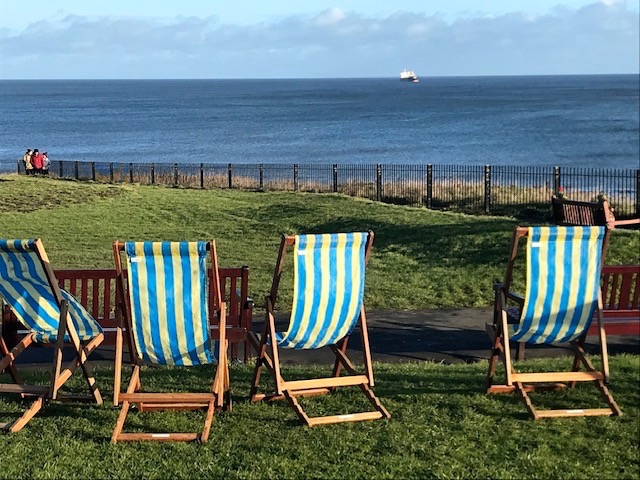
At the other end of the long wide beach we climbed back up, overlooking the old tidal lido, to emerge by the silhoutted remains of castle and priory that dominate the headland here. A clutch of deserted striped deckchairs and varnished benches cluster here with commemorative bunches of flowers strapped to them.

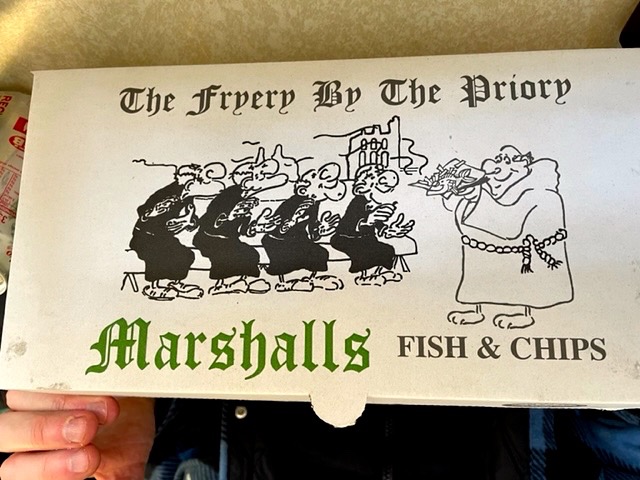
We ambled down one side of the old high street before returning on the other. Cue fish & chips. A well practised team of cheerful Geordie lasses dispensed them to the a patient queue at Marshalls and we elected to eat in. I loved the formica tables and green plastic bucket seats, not to mention their old great packaging (above) Most of all, the elegant round plaque in the window put up by the town’s historical association. It informed us that ‘ Rock star guitarist Jimmi Hendrix bought fish & chips here to eat on a bench outside after playing the Club A-Go Go in Pilgrim Street Newcastle on 10th March 1967’…. Enough said.

Fox and Hair

‘There is one, even Jesus Christ, who can speak to your condition’ George Fox

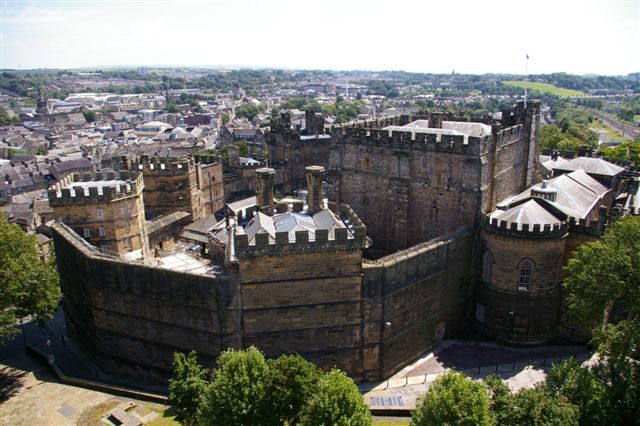
In my former day job, tour guiding at Lancaster Castle, I’d often explain the place’s connection with George Fox, the C17th religious revolutionary who faced trail at the assizes and was subsequently gaoled here for being ‘troublesome to the peace of the nation’. The firebrand preacher and his followers were viewed as underminers of the class system who thee’d and thou’d everyone regardless of rank; treated men and women as societal equals; refused to recognise the authority of the established church and wouldn’t swear oaths or bear arms. Self styled ‘children of the light,’ they were seen as extreme non-conformists who suffered persecution and imprisonment until religious toleration from the late 1680’s eased their condition and helped merge them into mainstream society.

The movement’s charismatic founder George Fox (1624-1691) was a self-educated itinerant preacher with extraordinary self-confidence and resilience. Inspired by God given inner light or ‘openings’ the charismatic young man must have found his apprenticeship as a cobbler useful in effecting running repairs after travelling on foot over for many miles on terrible roads, staying at safe houses hosted by followers. Despite many setbacks the weaver’s son from Leicestershire effectively founded and led until his death a highly organised grass roots movement that would become known as the Religious Society of Friends. The contemporary name of ‘Quakers’ derived from the elated physical state of its most devoted followers at meetings. Forbidden by law to establish themselves or preach in towns Fox and his associates concentrated operations in the remoter parts of the north of England where it was more difficult for civil or church officials to monitor or suppress them. Hence the great outdoor gatherings on Pendle hill in Lancashire and Firbank Fell in Westmorland in the summer of 1652, during the Republican Commonwealth, which would mark the body’s establishment.  

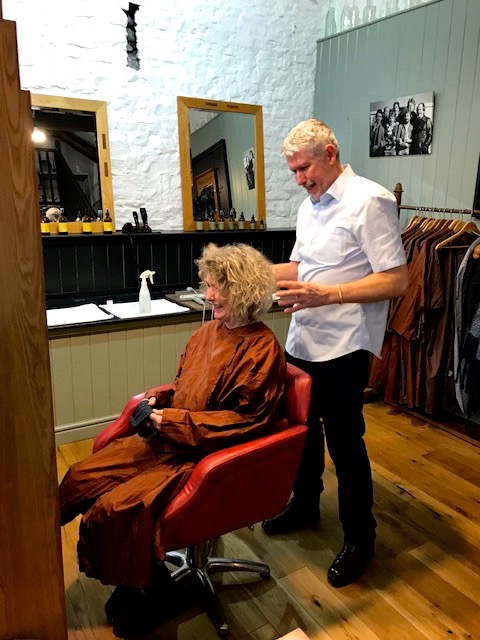
The young Fox abhorred the licentiousness, earthly vanity and wanton entertainment of performers he witnessed in his youth. With a wry smile I suggested to Kim we visit Firbank Fell on the way back home from a recent day trip to Kirby Lonsdale. The Old Smithy in that attractive Lunesdale town is a well preserved listed building that dates from Fox’s time. Odd as it may seem, this is where we travel two hours to in order have our respective hair expertly cut every three months or so by an old associate from Lancaster days Alex Toubas, whose salon now occupies this wonderful barn like space. En route home we’ll often go for a country walk, drop by a favourite nursery, garden or gallery, discover a new historic site or call in on old friends.

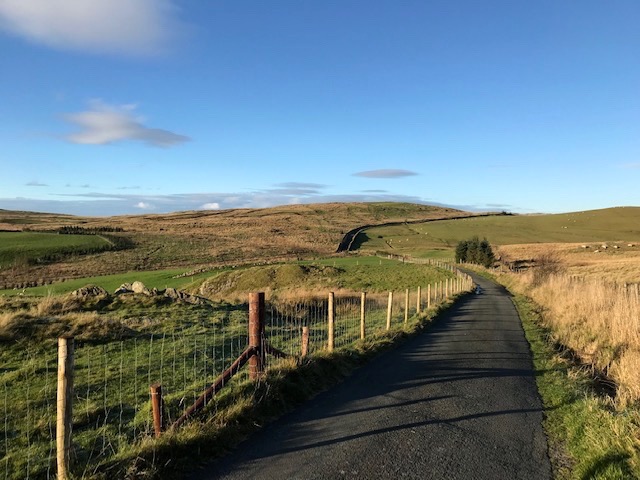
I wanted to introduce Kim to an unusual and little known heritage site, taking advantage of the good weather, before predicted snow and ice arrived. ‘Fox’s Pulpit’ on Firbank Fell where he preached to a huge crowd is still a remote spot, accessed by an unmarked lane off the Sedbergh to Kendal road that climbs and twists its way up past a farming hamlet to the fell summit.

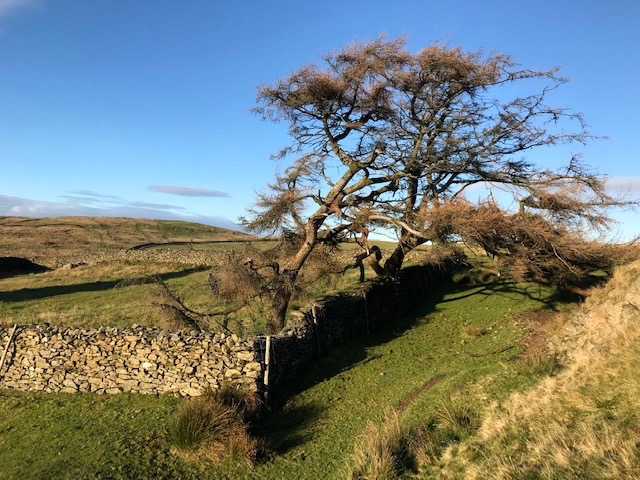
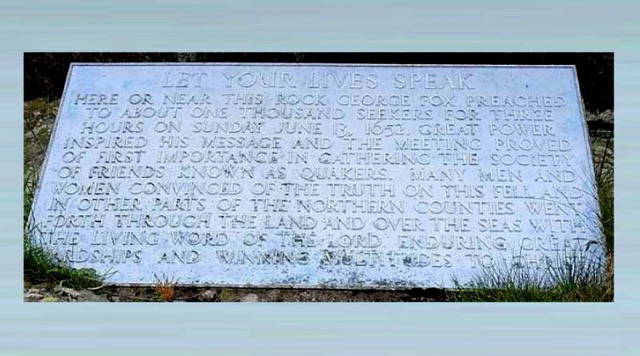
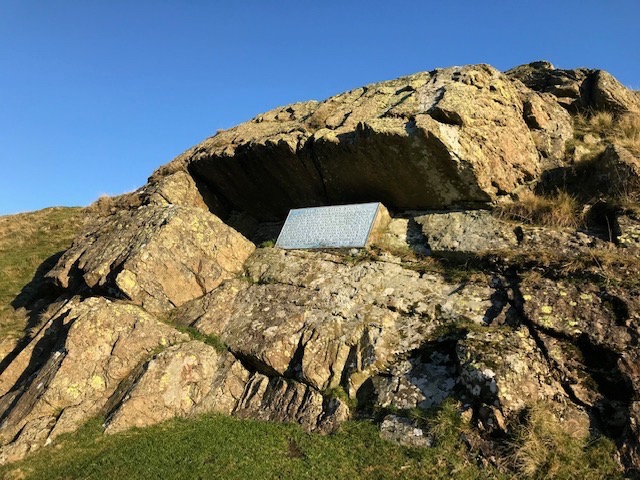
There’s little room on arrival to park on a laneside hemmed in by drystone walls. The small field here reveals itself as an abandoned graveyard, with one lonely gravestone the only obvious clue to its origin. The little chapel that once stood here was demolished following a violent storm in the winter of 1839-40 and was rebuilt on the other side of the fell. The rock from which Fox addressed the mass of ‘seekers after truth’ on that summer’s day is an impressive natural feature, now marked with a memorial tablet, erected to mark the tercentenary in 1952.

Fox later described the event in his ‘Journal’. While others were gone to dinner, I went to a brook, got a little water, and then came and sat down on the top of a rock hard by the chapel. In the afternoon the people gathered about me, with several of their preachers. It was judged there were above a thousand people; to whom I declared God’s everlasting truth and Word of life freely and largely for about the space of three hours.

We enjoyed a clear sky view over the lush wide valley southwards. In the other direction stretched a landscape of further slopes and hill tops with no discernible habitation in sight. Our ears became attuned to today’s multitude – not people, just sheep and the faint steady hum of unseen far away vehicles. The subsequent lonely drive from here to join the motorway down at Tebay is a fabulous scenic drive to match any other, whatever the season. A backdrop of the distinctive Howgills to the west and the eastern extremities of the Lake District hills the other side, with west coast railway, motorway and river Lune overlapping and threading through the gorge alongside us, all on different levels.  

Painting by Caroline Snow (2020) A Friend attending Brigflatts Meeting House

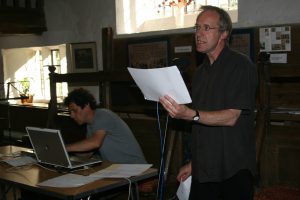
No time today to introduce Kim to another highlight of ‘Quaker Country’ in the valley below Sedbergh, where the country’s second oldest Quaker meeting house (1675) is found tucked away by a farm at Brigflatts. Years ago I gave a reading in that beautiful peaceful spot, partnering the recorded voice of the late Basil Bunting, co-reading his celebrated poem Brigflatts, a work inspired by his time living here as young man. Our live event was part of the town’s annual arts festival, the brainchild of locally based sound sculptor and graphic designer Andy Chapple, who mixed and played the live and recorded soundtrack on the day.

Waterworks

Life shorn of essentials – heat, light, food and water – makes for a grim state of affairs. On the macro scale that’s the reality that is facing so many people this winter. On the micro, personal scale we faced our own domestic emergency last week. When Kim ran a bath on Thursday night and no water came out the taps we knew we were in trouble. Like most of our rural neighbours The Corner House is on a private water supply. A spring in the hillside, some 400 yards away, in our neighbouring farmer’s field, across the single track C road that links us to the world. The spring supplies two family households at the farm as well as us. As Southridge has just had a new borehole sunk to meet the increased needs of supporting their beef herd so we immediately wonder if the two events were connected. But no, they were not, of course and it’s only our place that’s affected.

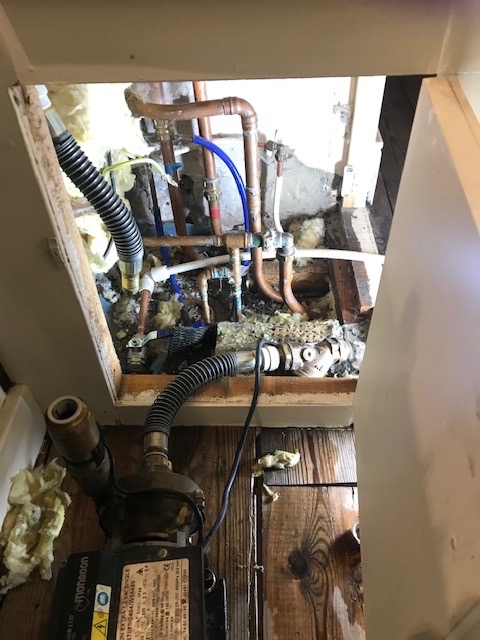
Gravity alone delivers the water to the kitchen, from where it has to be pumped to the holding and header tanks up in the loft. The pump runs through a litany of sounds each day and the one it was making that morning was not sounding good. That’s because the supply, never strong, must have dwindled to a trickle causing the poor old pump to overheat and die. We disconnect and start dialling. Next day Lady luck brings salvation in the convivial form of local plumber Nigel to our door.

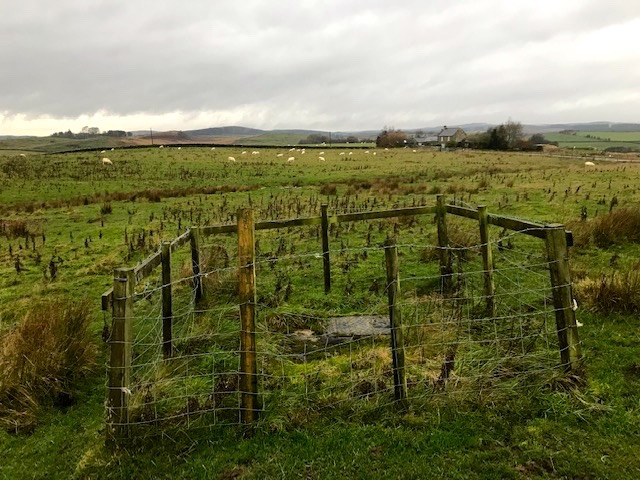
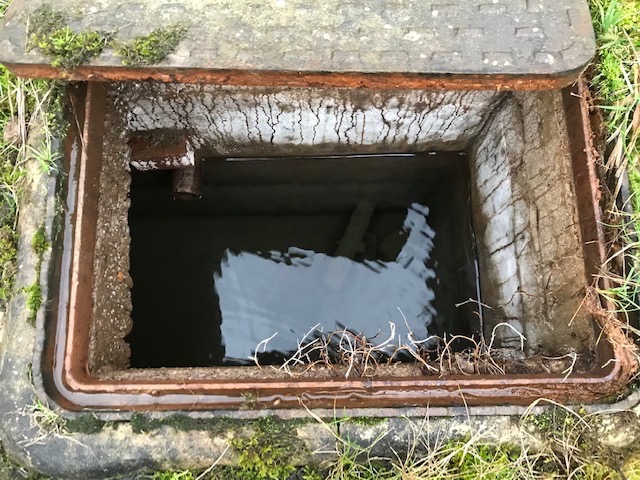
After a brief Q & A he and I go up to the tank, set in the ground below the hill crest where the spring water is stored. I say hill, but in reality it’s more of a gradual incline. And that could be part of the problem, as there’s little gravitational force at the best of times. Stepping over a corral of barbed wire we lift the metal cover and discover the 2,000 litre capacity tank to be full and the water clear.

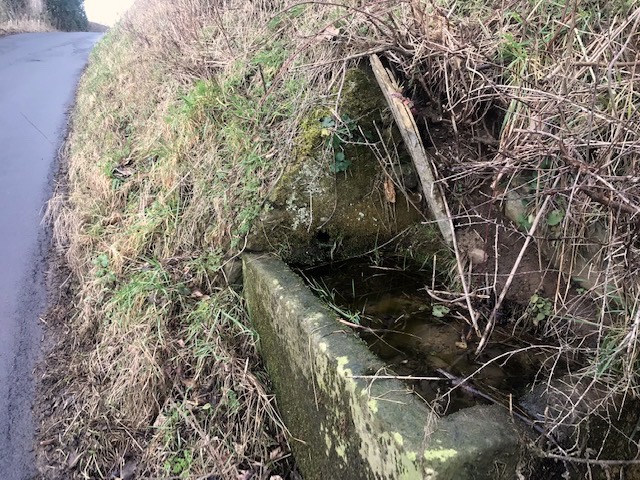
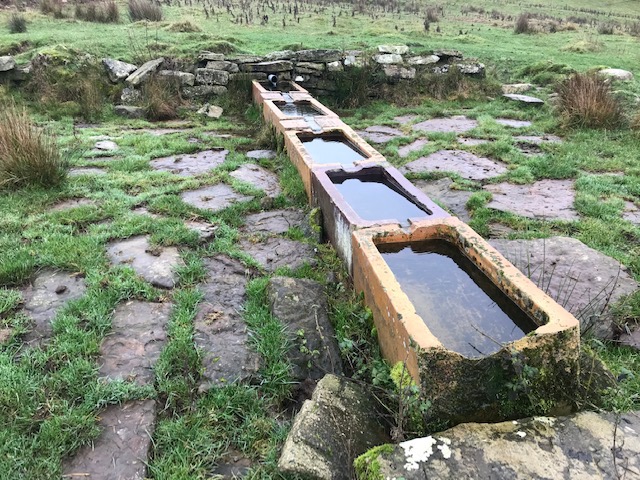
At the top of the concrete chamber there’s a ceramic pipe outlet, acting as a run off to supply veteran ceramic watering troughs for stock just downhill. In summer the line often runs dry and animals – frog or mole – have been known to creep up the pipe’s course to fall and drown in the tank, sometimes even blocking the outlets. But no, there’s no discernible blockage now. We lower the metal lid and return to the house to puzzle it out.

Clearly it’s a pipe problem. A leak, or more likely, leaks somewhere. Chances are it’s a metal pipe in the field. Jamie, our old school farming neighbour, gets involved. The pipework could conceivably date to when the cottage was built, as the farm’s shepherd accommodation and barns, back in 1878. Next day I help Jamie search for any giveaway extra wet spots, find none but he goes on to mark the course with wood poles, and suddenly a continuous slight indentation in the ground is revealed. Is it straight all the way? Did modern material replace metal where it crosses the road and/or enters the house? Has the accumulated weight of loaded timber wagons and gravel lorries back and forth from the forest damaged the pipework under the tarmac?

Nigel gets on the phone. He’s direct and talks the technical talk. ‘I’ve a house with no water’ he starts and it goes on from there. (He’s not really the sort of guy to take no for an answer). Twin brothers from a local water engineers business drive up in a Landrover, pulling a compressor, and between them they blast 700 litres of water back up through the system. Disturbed fine silt clouds the header tank on the hill but nothing gives otherwise. The lads pack up and go.

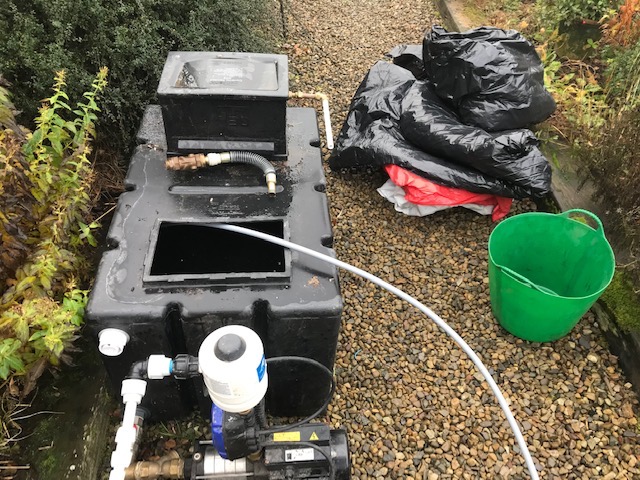
Meanwhile we carry on as we did during the blackout caused by last winter’s storm. (See ‘Arwen and After’ December 2021 entry) We’re back utilising water from the garden and house butts and filling our carriers with drinking water from the yard tap up at the farm. By Monday Nigel and his electrician Kevin (another neighbour from down the road) have taken out the old pump and rigged us up with a temporary plastic tank and second hand pump out on the garden path with pipes feeding in and out, which we’re shown how to work. This way we maintain a daily supply. Takes 2.5 hours to fill and only 12 minutes to empty.

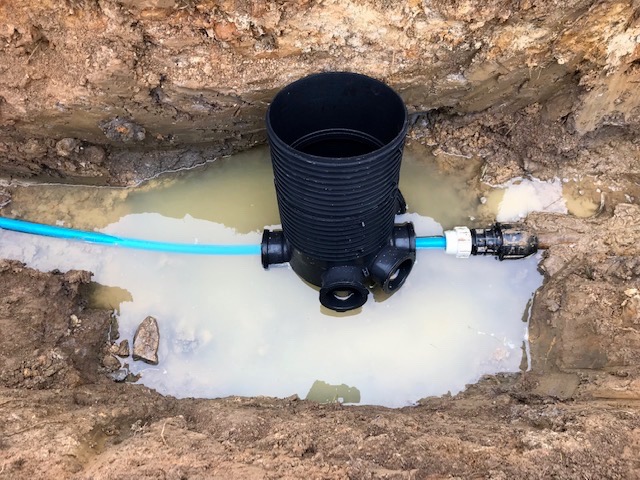
Jim arrives with an all singing all dancing mini-digger he’s borrowed from a family member to do our job. Exploratory excavation at the field edge where it meets the corner road verge reveals a join of metal pipe and MDPE (a.k.a. Alkathene) blue pipe that carries the supply under the road. Phew!
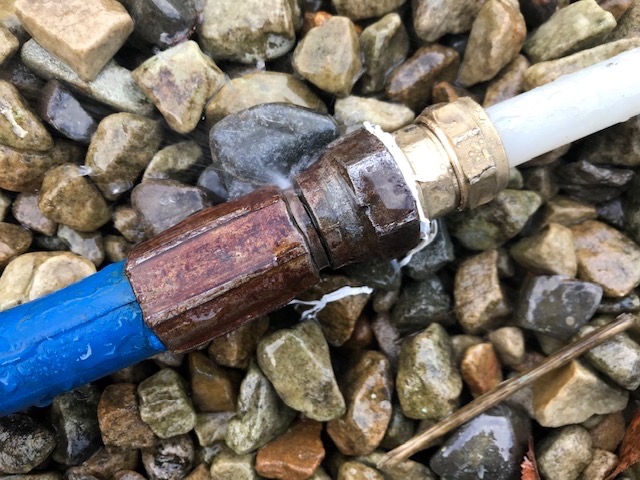
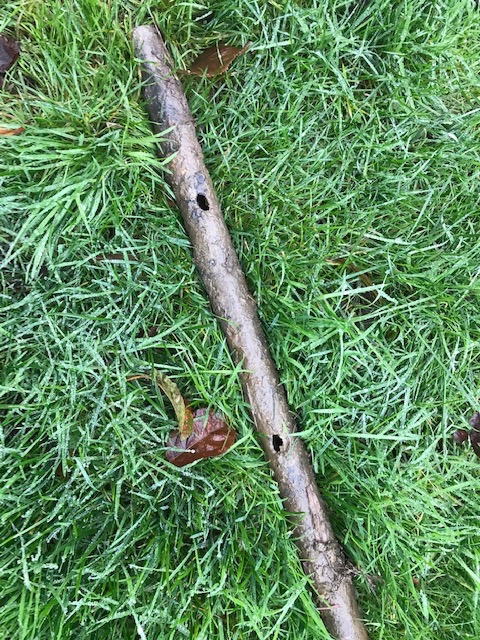
This excavated final length of metal pipe is like a flute – lined with holes! It’s a wonder we’ve received any water at all in recent times. If it had been metal under the road they would have had to try sleeving the new pipe through the old one or got special kit in to ‘mole’ a new tunnel through, which would have been very challenging. The worst case scenario would have involved a road closure order and didn’t really bear thinking about.

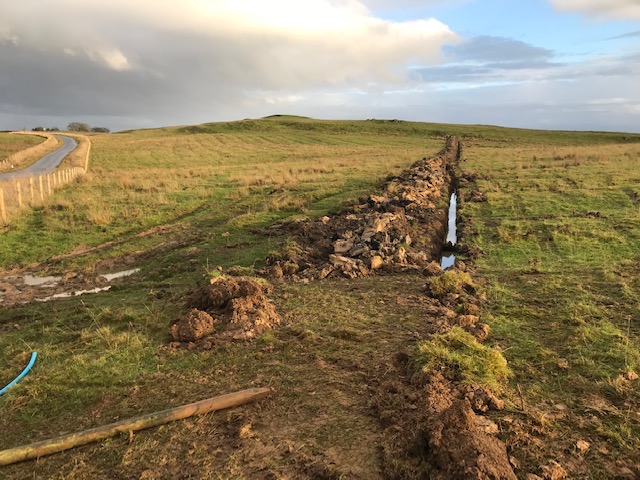
The small bucket of the digger in Jim’s expert hands made for rapid trench work across the field. Luckily there were only a couple of buried rocks in his way. Below a thin layer of topsoil the ground is revealed as a shield of dense clay.

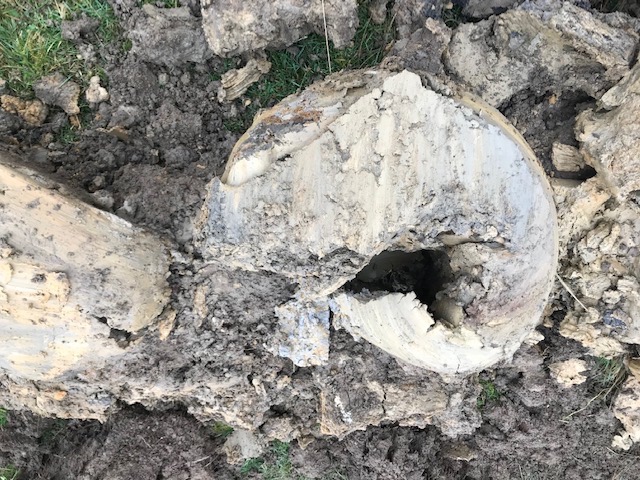
Curled slabs of it, like scoops of butter or ice cream, start to bank up either side as the machine on its caterpillar tracks advances and the new blue pipe is laid in its wake up to the tank. At that end a bend in the old metal pipe is unearthed, dense with years of accumulated limescale, a metallic hardening of the arteries, restricting free flow. An occupational hazard of hard water areas like this one.

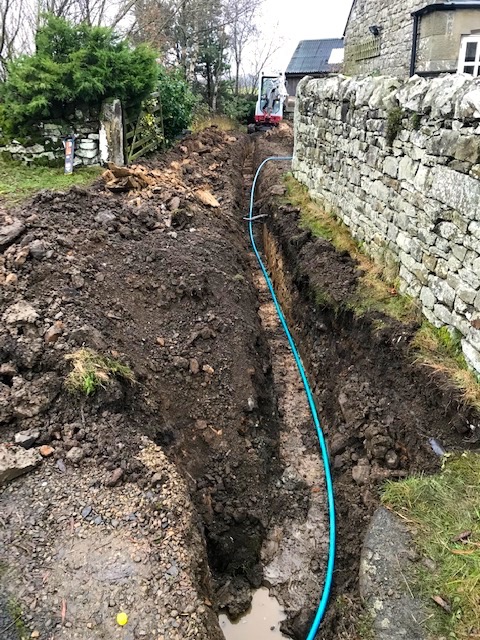
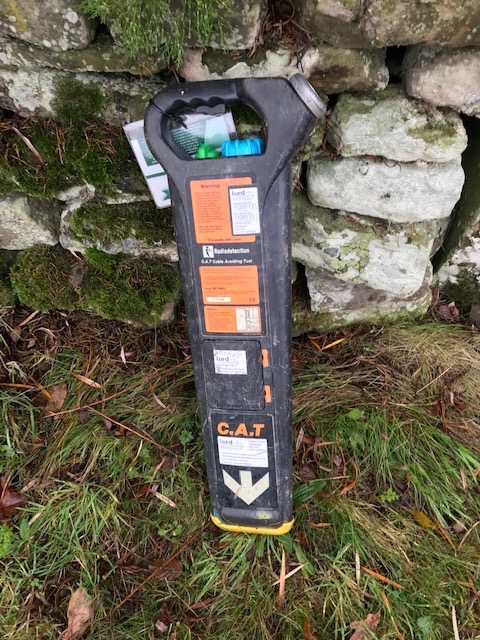
The road is at its widest outside our house where it turns sharp left and Jimmy has just enough room where tarmac meets our side’s kerbstone to intercept the pipe and divert the new alkathene piping through the yard to the garage, where ta pump and storage tank will be set up. In the process he uses a sonic detector to locate the underground electric supply cable and carefully works around it with a shovel.

Nigel is not just a skilled plumber and problem solver but also a canny project manager and negotiator who puts everybody’s minds at rest as to what’s happening and why. (‘It’s a pig of a job alright’) We agree between us all that the new junction he’s proposing to fit will be a joint affair at the lowest point in the tank. Previously ours was lower than the farm’s meaning their two households (father’s & son’s) would run out of water first in a drought. Jamie is subsequently happy to contribute to the cost. This whole operation will be a dear one, with all the necessary major work involved spread over many days.

The immediate crisis passed we are reconnected within the week and with a significantly increased flow of spring water. We now no longer have a noisy pump in the kitchen, that could be heard labouring away all over the house, but instead we’ve a more powerful pump, with a big tank, set up out of earshot, in the workshop/garage. The internal reservoir means we can check the flow at this end for the first time ever. Electrician Kevin’s put in a new circuit for the garage and laid cabling up to the loft to power a new float switch to regulate the stop and flow.

After a full week of activity there’s still work to complete, most of it concerned with making good after all the disruption and re-routing to and from the garage. This week Jim returned to fill in the field trench, made more challenging by the weekend’s rainwater that’s drained into it and the intractable nature of the great lumps of clay that will take an age to settle, even after being tamped down by the digger’s wide bucket head. Three dumpy bags of gravel were delivered last week and Jimmy will spread the stones across the yard – skillfully using the widest bucket as a brush – once the last of the new pipe has been laid in its trench, in the front garden, outside the house.
In my latter life lived in ‘This Other Eden’, despite the odd exception to the rule, am always happy to be reminded of what makes our rural community so special. In manifests itself in the form of old fashioned virtues, tried and tested on the tenets of good neighbourliness and mutual self interest, where expert artisan skills are coupled with humorous and open dialogue to get things done.

Jim, Kevin and Nigel have been our three musketeers. When thinking through and suggesting solutions to the problems of last week Nigel said that as country people he knew we understood where he was coming from (we did) and that whatever he proposed to do for us, he would do if it were his place. And you know you believe him, count your blessings, and smile.  

Wood Work

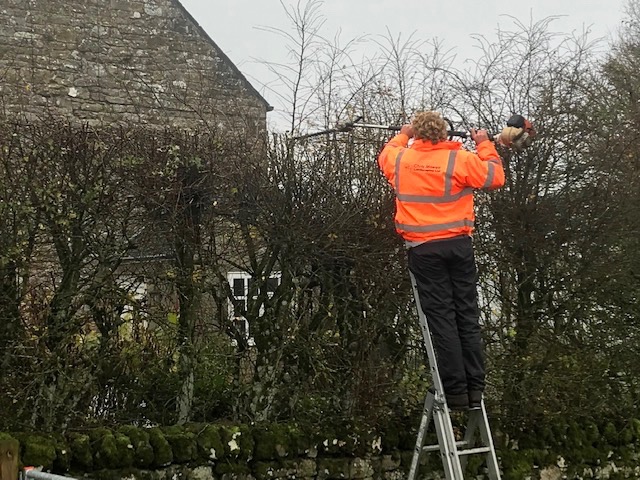
Our landscape contractor, Chris, came to give the east end’s hawthorn hedge its annual trim recently. We keep it high, not just for privacy but as a windbreak for the rest of the linear copse, house and garden. Didn’t want a formal agricultural straight topping but a softer more undulating one instead, which assistant Charley managed with his long blade electric trimmer.

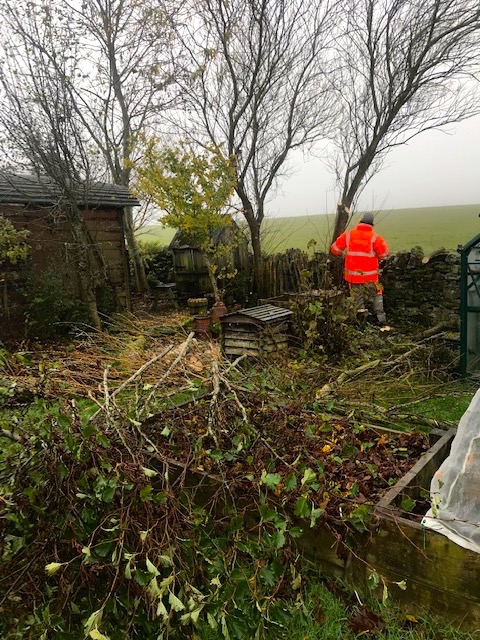
Kim wanted to give the vegetable garden and greenhouse more light and space so we sacrificed some tree cover at the top end. The willow was starting to push the field wall out too. A severe cut of the two main trunks leaves just a few shoots and these will thicken and develop over the next few years to gradually replace the lost limbs.
More reluctantly, we took the neigbouring alder down and its trunk is now cut into logs and stacked to dry. The exposed grain has a distinct orange/red appearance and once dried are rated a good burn for any stove. Like the willow alder will pollard but growth will be much slower.

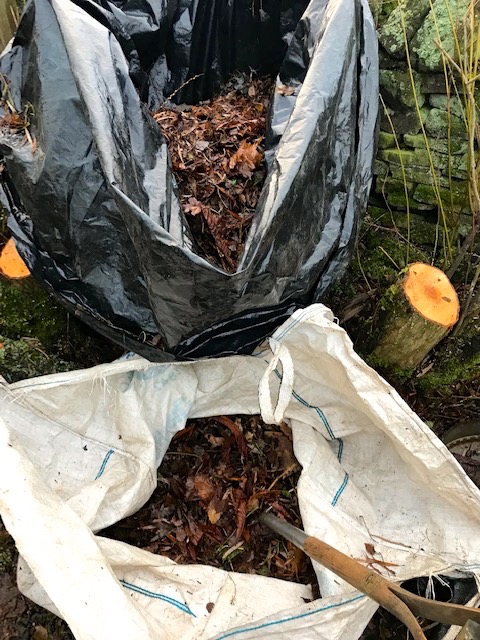
Raked and brushed most of this year’s leaf fall where it had piled up over gravel and grass and shovelled them into an old gravel dumpy bag, and dragged it to my leaf mold pile next to the newly decapitated willow tree. The idea was to first take the two years worth of leaves that had been composting to hummus under its cover and put that on the vegetable boxes. Alas, it was not to be. My fork bit into a fibrous tangled mass of fine roots…the willow had long since beat me to this food source! Lesson learnt I now re-bagged the new leaf crop into a cavernous black plastic bag and sealed it down. That will both warm it, help break the tissue down and most importantly stop the leaves being devoured by the hungry roots.

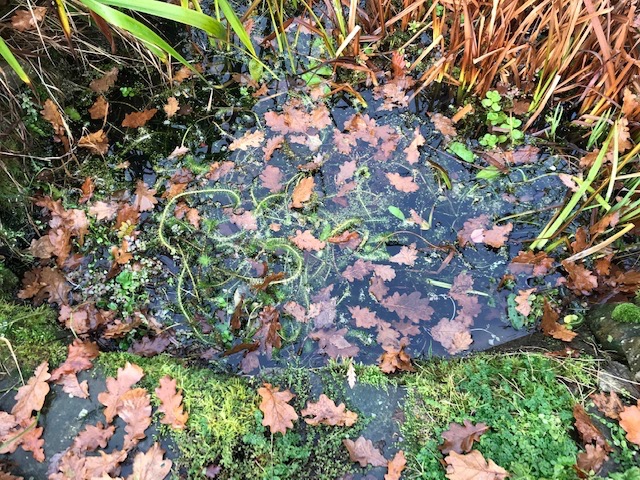
Have also donned the wellies and wielded a net in the wildlife pond to fish out leaves from the neighbouring oak that have fallen into it. Too many of them in a pond quickens the gradual silting up process when they sink to the bottom to rot. 

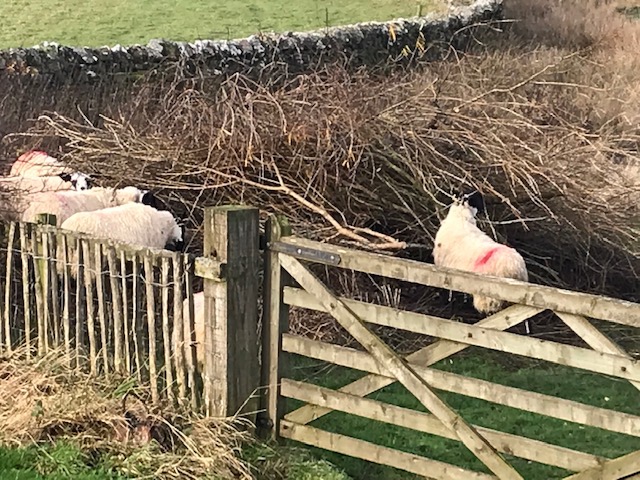
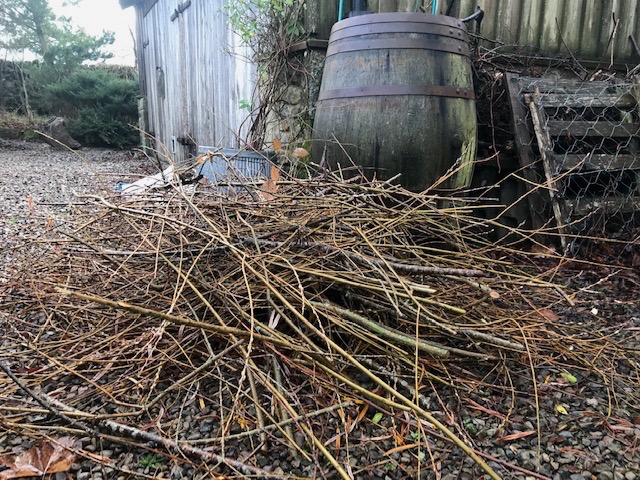
All the cut willow stems are now on the bonfire pitch in our field. The birds have done a strip search for grubs and insects while the current flock of our neighbour’s hog ewes have been assiduously nibbling away at all the buds and leaves they can stretch to.

Willow accumulated from the latest cull will make easy work for the chipper, as the wands and branches being slender, straight and knot free go down its throat as smoothly as ice cream down a human’s. I’ll continue to fill the dumpy bag with these good quality easy chippings which will be used for mulching round the garden and occasionally adding to the compost mix.

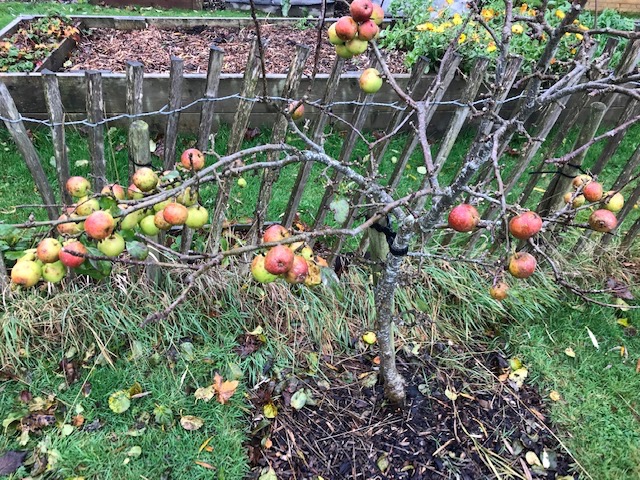
As we move into December I pick the last fruits of autumn, the little Christmas pippins, getting them in before birds finish them off. Nothing much to look at and they still cling to the bare branches. I love these cox like apples as a daily snack – they’ve a superb crispy sweet bite.

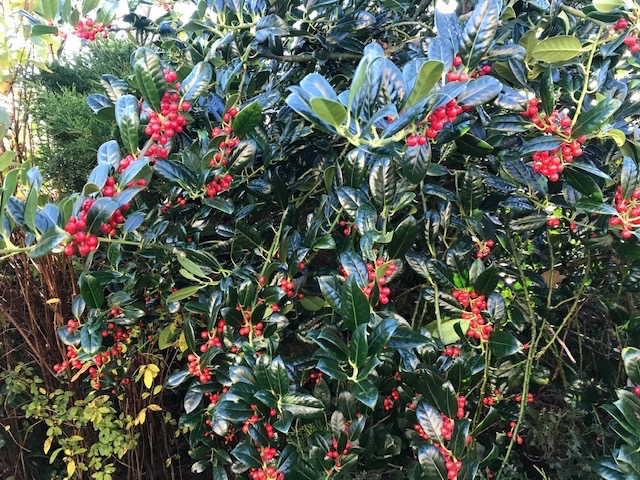
Out front, the crop of red berries shine out against the dark leaves of the holly, a cheering sight when the hours of daylight are so rationed.  Not until they are starving will the birds venture to devour them.

Countryside Questions

Welcome to the quiz!…Here’s are 5 of the questions.

1] On 2nd October 1948 the RAC staged the country’s first ever grand prix at a recently decommissioned wartime RAF station in rural Northamptonshire. Today the course still hosts the British Grand Prix. Name it.    

2] Alauda arvensis has been celebrated in an ode by Shelley and a musical composition by Vaughn Williams. By what common name do we know this bird?

3] The Meade family founded England’s leading organic dairy. The grounds around their Somerset creamery and farm have also become a tourist attraction, as the country’s biggest certified organic gardens. Name the geographical location that gives its name to both the product brand and gardens.     

4] Which traditional countryside craft centres round the skill of ‘pleaching’?

5] Two of the 39 historic English counties contain English rivers in their name. Name both rivers. Clue: One is tidal, the other a freshwater tributary.                                                                                                                                                                                                                    

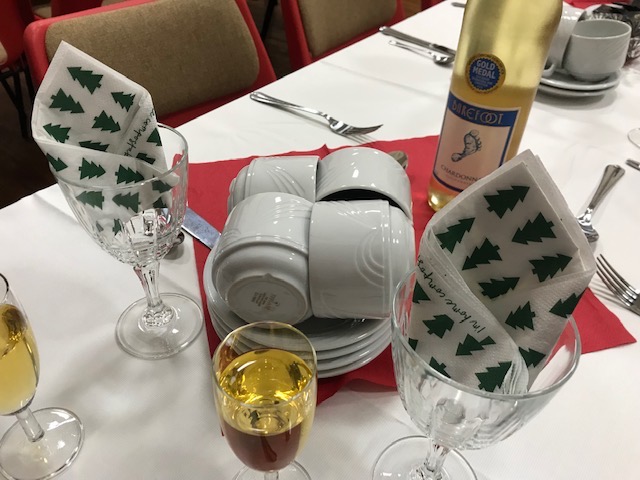
I recently gave the 2022 ‘England and the English Countryside’ table quiz to the Northumberland branch of the Campaign for the Protection of Rural England – CPRE (est. 1926). The setting was the Badger Inn at Ponteland, near Newcastle.  A large yet homely venue with great staff who helped us set up the function room for the evening’s entertainment. Delighted we had such a good turn out, despite the filthy weather, with all tables taken and teams sorted.

Medieval house re-sited at the Weald & Downland Museum Sussex

Best of all, once we’d got going and the scores started to come in, I was relieved that having a long lead in time, with chance to revise and re-balance, had properly paid off so I could now relax and enjoy the experience. The average score was an all round high across all five rounds, with questions covering history, geography, art and science, sport, entertainment, natural history and literature.

The picture round asked teams to identify 12 popular attractions in England – from the Jurassic Coast (pictured) to Kew Gardens – all of which are UNESCO world heritage sites. I like my quizzes to be challenging, accessible at best, guessable at worst, calling on teams to pool their collective knowledge. Best of all the participants seemed to enjoy the whole experience and were absorbed by it. There was a dead heat for first place and we left it at that, with the honours shared. Laughter, applause, conversations and new friends made. Perfect!

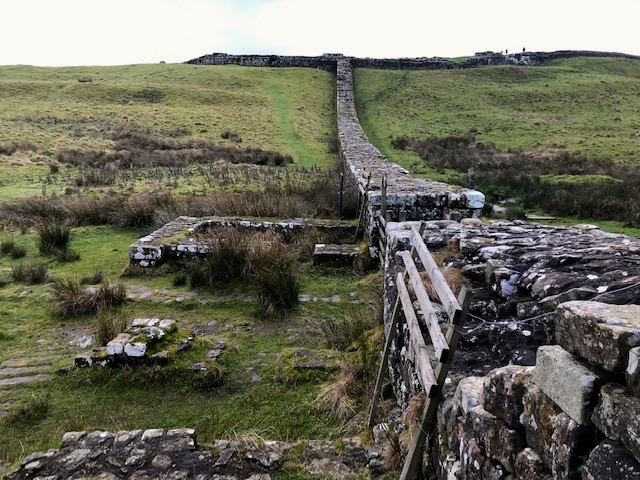
Hadrian’s Wall, Northumberland

I’ve been a member of CPRE for some years now and on moving to Northumberland I wanted to do something that would help, other than being a member, so after attending a CPRE organised talk I offered my services as a quiz setter and presenter. The offer was gratefully accepted and I set to work, finding a venue and sorting the questions.

That first quiz was held in Hexham, at the County Hotel, just before the first Covid lockdown in February 2020 and proved very popular. After that they were reformed and held online during the pandemic. This then was the first real life pub quiz since and – like live performance – it proved a welcome return to good old social interaction. Team quizzes did not work half as well online when at a time when you could not socialise outside your own household and team numbers were lower, with less of wider shared knowledge to draw on.

The Garden House, Devon

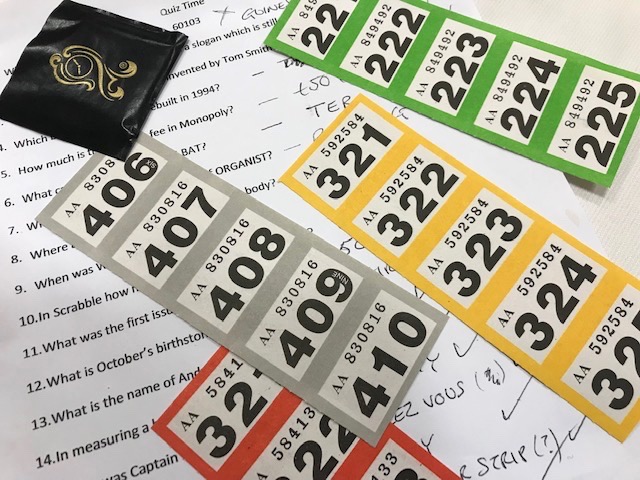
Annie, the part time branch secretary, is a powerhouse who gets work actioned with charm and efficiency and is always a joy to work with. She and husband Steve alongside other committee members got everything sorted front of house, organised a raffle and prizes, and Annie also said a word or two about the charity and its work both nationally and locally.

Having Kim by my side to do the scores and help co-ordinate with our hosts made a big difference to the quality of the presentation. Everyone left the pub in the best of spirits and I’m already starting to devise and log more questions, on the same theme, for next years quiz.

Gate, Yeo Valley Gardens, Somerset

Answers: Silverstone / Skylark / Yeo Valley / Hedgelaying (Partial cutting & laying of stems to promote growth) Northumberland (Humber) & Cambridgeshire (Cam).

Haunted Sheep

Jan reading at Blyth Library

Just finished this autumn’s extended county wide tour of Haunted. (See the ‘Ghost Story’ blog). The Border Readers first tour post Covid. Core company readers Grace, Janine and I were joined by guests John Cobb, Stefan Escreet and Roberta Kerr at different venues. Our good friends not only brought read brilliantly, they also offered a different take on the stories and added to our offer as an association of regionally based professional actor/readers.

This year’s story line up featured Oscar Wilde’s The Canterville Ghost. I particularly enjoyed reading this classic as it’s one of a rare breed of ghostly tale, combining wit and morality, comedy and satire to fashion the great writer’s own brand of Gothic romance. Originally a novella, I’d edited and abridged the work so it came in at a listenable 45’. A class act from a master storyteller, a delight to read and to hear being read by John at Cherryburn, for the National Trust, and Stefan at Hexham for Northumberland  Library Service.

Grace & John at Cherryburn, the birthplace of artist & naturalist Thomas Bewick, looking on in the portrait.

A couple of years ago we premiered Christine Poulson’s short story Safe As Houses, a gripping dystopian take on contemporary living in a smart home. As a result of that collaboration her publisher at Comma Press commissioned another modern horror story for a new anthology. The result was Teeth and Hair which I was delighted to have in the line up for this tour. That 40’ tale of modern unease played out in its isolated rural setting opened our evening’s entertainment.

Elizabeth Bowen (1899-1973)

Elizabeth Bowen’s reputation and popularity is once again in the ascendancy. Her short stories are highly atmospheric and psychologically disturbing narratives, and those set in the Second World War – in which she served as a London fire warden – are particularly powerful. The Demon Lover, written in 1942, is probably her most famous story and one most often admired by other writers of the genre. The shortest of our offerings at 20’ its finale leaves a powerful visual impression and proved the perfect tale to send audiences homewards in the dark.

Roberta Kerr

Bobbie (Roberta) and husband Graeme are amongst my oldest friends and they joined us at Felton village’s Gallery Forty5. It’s a place where we’ve built a following so enjoyed a particularly appreciative full house and afterwards we joined locals in the nearby Foxes Den bar before heading off to our respective homes, cross country. Very glad to have Graeme that night as a passenger – just like Jan on other nights – because they both had GPS systems on their phones. The A1 seemed permanently closed for works, in different places, every time we were travelling back so we were regularly diverted into Newcastle’s suburbs with little idea of where we were going.

Gallery Forty5, High Street, Felton

Half our ten venues were urban and half rural. We were warmly received and looked after in both and our audiences, small and large, really appreciated what was on offer. With fewer listeners we were able to chat, before, after and in the interval and that added extra pleasure to the experience.

Another plus was seeing the life size sheep at our handful of Northumberland County Library venues, part of the ‘Illuminated Sheep’ art project partnering the Lindisfarne Gospels exhibition at The Laing Art Gallery in Newcastle and part of the Hadrian Wall 1900 Festival.

At Ashington the staff creatively dressed and set their sheep in a football setting, reflecting the town’s great footie heritage (This former coal mining village was the home of Jackie Milburn, Bobbie and Jac Charlton). Blyth’s librarians advertised our event with a ‘Rosemary’s Lamb’ in a corner of the fiction library while Bellingham’s ewe was content to simply graze in the limelight on the lawn outside the Town Hall, where we were performing that evening.

Waiting for the event to start at Bellingham

Pests Tups and Pets

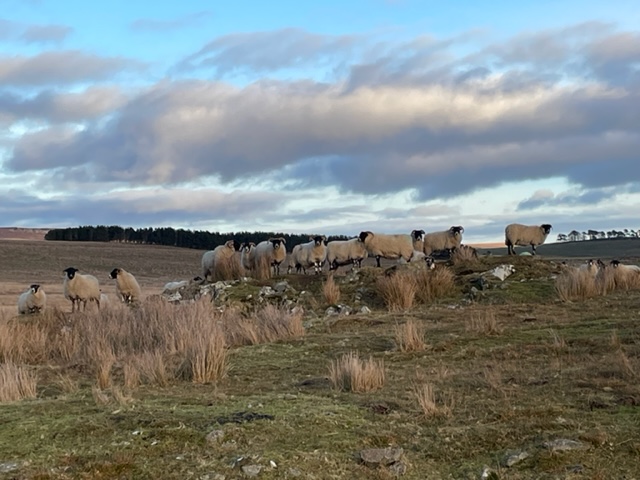
A walk up the road brings us to a field where Easterhouse’s Suffolk ram has been harnessed with its chest marker and put to their flock of texels and mule ewes. As the name indicates Suffolk are a lowland breed originating from the county of that name in the south of England, prized for their quick maturing fat lambs. He’s not easy to overlook either, being dyed yellow as a result of the latest farming fad for colouring tups. Suffolks grow their wool short and dense so can take a dose of dye while a long rough staple northern breed like Blackface or Swaledale would prove nigh impossible to colour up in this manner.

Strolls or bike rides along the lane inevitably means finding an empty red bull tin. The tosser responsible for littering the verges with them is probably either a log lorry driver, delivery driver or local resident. Luckily it’s not a serious environmental problem compared with more densely populated areas by busier roads but it’s still annoying and of course unnecessary. I continue to collect, stamp down and add the cans to our recycling.

After a few weeks of inaction we’ve once again been troubled by the remaining member of our resident mole family. Have had to reset both the half barrel and clip type traps in the garden meadow area they colonise. This roughly triangular patch has a labyrinth of tunnels established by earlier intrusions from our field the other side of the fence. It troubles me to see their dead velvet coated forms gripped by metal wires or claws but it hurts even more to see the damage the remorseless burrowers will cause throughout the garden if left unchecked.

All the apple varieties in the garden – with the exception of Christmas Pippin – have now been gathered in and I’m still processing them as puree or dried fruit for winter use. Old sweet jars, like the one seen here, are great for this. An end of seasonal fare for birds, rodents and slugs to feast on. I witnessed for the first time a crow fly off with a large windfall apple in its beak. The general ingenuity of the corvus family should never be underestimated and I wonder if they’ve developed this technique or learnt it from parents.  

Pondering on pets and predators, we still miss Pip, our little black and white Geordie cat. She lived to a good age and now rests in peace in the garden below the wooden henge. Three years on and her role as rodent population controller becomes more obvious than ever. I hate having to use poison to limit rat and mouse numbers but until another cat comes along that’s what we’ve had to do.

The rats do us a good turn (literally) in the main compost bin, as their wall of death circuitry is effective in mixing up old, decaying and new material. To ensure being spared seeing them at work I always knock on the wood lid before lifting. Have now added bait to a bowl on top of the mix and should soon see results. A field mouse (or mice) has been seen about the house and their preference for avocados in the larder shows discerning taste at least. Sadly not for much longer as the little dishes of granular bait secreted under store cupboards and other hideaway places have been consumed overnight.

I spend a happy morning re-clipping the string of fairy lights around the upper edging and wooden rafters of the recently rebuilt garden porch. In the process I reach up to feel in the nest that the swallows built this year and discover four perfect little eggs. That second brood only produced one fledgling so these infertile unhatched eggs, measuring some 13 x 20 mm, are a poignant, beautiful reminder of our summer visitors. The photograph shows the clutch in a new setting – an abandoned goldfinch nest I found in the garden, that now sits on a shelf on the porch.

I retain a soft spot for parsnips as a vegetable. A dependable grower in harsher climes, we appreciate its sweet delicacy of flavour in the darkest months of the year. Our less favourable soil conditions mean smaller crops but when chopped and turned into soup, served with fresh home made bread, they make for a warming and wholesome autumn meal.

A glance out to front yesterday caught a thrush on branches eyeing up the bumper crop of red berries on the holly bush. Closer examination revealed it to be a redwing. Same family, smaller than a song thrush, with distinctive yellow eyebrow and the namesake red patch under the wing. A reminder that these overwintering visitors from the far north have already arrived. An odd feeling when temperatures are currently remaining stubbornly high for November. Another reminder, if needed, that climate change is affecting seasonal weather patterns.

Everything Is One

Enjoyed an unusual cultural night out last Friday. Had an invite to a private view of a friend’s art exhibition, hosted in a tiny parish church tucked away in the countryside just off the A68 to the south of us.

Matilda is an artist of our generation, based near Hexham, whose practice covers collage, painting, drawing and monoprinting, largely influenced by art history. The work on show this weekend, suspended in front of the altar, is a towering 6B pencil drawing on paper of a Nootka Cypress tree that grows in Jesmond Dene, Newcastle. It was originally displayed, pre-Covid, in the park’s deserted banqueting hall courtesy of the Armstrong Studio Trust in April 2019.

Nootka Cypress is a native tree of northern America. The Nuu-chah-nulth people of Vancouver Island hold to the belief ‘hishuk’ ish tsawalk’ or ‘Everything is One’; everything in nature is interconnected, inseparable. The work measures 4 x 3 metres, took five months to complete and is hung here in the chapel in a more advantageous position, being on level ground, unlike the banqueting hall where it was on display at the bottom of steps. Everyone took turns to get up as close as we could to see things in detail. Scrutiny revealed horizontal parallel lines made as the artist, unrolling the paper as she progressed, picked up the grain of the wooden tabletop she was working on.

Matilda told me she was very grateful to the specialist installer for the skill and patience it took to safely erect scaffolding within the Grade II listed building and to secure the work with magnets onto its frame. Sadly Kim and I weren’t free to attend the following evening when our mutual friend Linda France would be giving a reading from her latest collection Startling and other work, reflecting the spirit of the natural world that inspired the drawing’s creation.

The chapel of St John lies is in the small village of Healy. It’s a parish of less than 200 souls in the area known as The Shire, between the valleys of the Tyne and the Derwent rivers, where Northumberland meets County Durham. Healey parish was originally a holding of the Knight Templars and later the Knights Hospitallers, and the neo-Norman design of the chapel pays homage to that medieval inheritance.

Built 1860, with tower added thirty years later, the chapel (which is also the parish church) boasts an unconventional three light pattern window in circular surround at its west end, and its illuminated presence cheered our arrival in the failing light. My eye was also taken by the (no-you-can’t really-sit-in-me) topiary yew chair by the entrance porch.

Adding to the building’s architectural charm, in 2011 it won an award from the charity Art and Christian Enquiry for two stained glass windows by Newcastle based Danish artist Anne Vibeke Mou and Durham born James Hugonin. These permanent additions to the fabric were commissioned by local landowner (and our host this evening) Jamie Warde-Aldam. Hugonin’s striking abstract work Contrary Rythmn consists of small rectangles of transparent and translucent glass in which a double helix can be traced in the colour patterns.

We left in high spirits, having enjoyed an unusual cultural treat, with a long overdue chance to catch up with old friends and make some new ones. It was also a rare opportunity to experience and reflect on the fluid interplay of religious space and creative expression in the company of artists and patrons.

Wall Drama

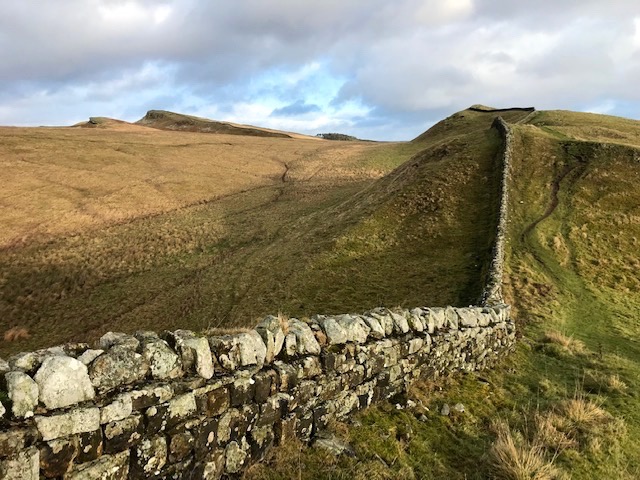
We crossed the county border into Cumbria recently to do a walk with friends encompassing Hadrian’s wall, starting and finishing at Lanercost in the valley of the River Irthing.

Lanercost Priory (English Heritage) and the historic parish church, fashioned from its preserved ruins, attract many visitors. My picture of the abbey is from an earlier visit in Spring of 2017, but it captures the peaceful spirit of the place. In its heyday however the place was far from peaceful. Founded by Augustinian canons in the 12th century the order here was often plagued with money troubles aggravated through pillaging of its properties by raiding Scots armies. In the winter of 1306 – 07 Edward I of England and his invading army heading for Scotland were forced to billet at Lanercost, putting even greater financial strain on the foundation’s stretched resources.

Starting from the car park at Lanercost we ascended out of the sheltered valley on quiet lanes working our way gradually uphill, passing this handsome Cumberland County Council black and white road sign at an intersection.

Did our first crossing of Hadrian’s Wall, or rather a rise in the path with its vallum (ditch) a mere dip in the land, all that’s visible of the 78 mile long world heritage site at this point. The monks happily demolished and carried off the red sandstone ready dressed blocks from here, 700 years after its abandonment by Rome, in order to build their priory in the valley below.

Many mature oak trees marked our walk. This one, marooned in pasture, caught my eye. Thought of it providing essential shelter and shade for countless generations of stock as well as sustaining many species of birds and insects.  

We traversed boggy pastureland and B roads that ascended a ridge, yielding views of far off fells to the south lowering under a leaden sky.  Turning off the tarmac, after a few twists and turns, we regained the wall path proper.   

Just below a small farm we came upon Hare Hill – a protected fragment and  tallest remnant of the Roman wall remaining today. A mere hint of the formidable structure the great wall once was. Experts think this little stretch survived because it was incorporated as part of an outlying medieval farm building while the rest of the lowered section at this point would have been retained as a property boundary by Lanercost Priory.

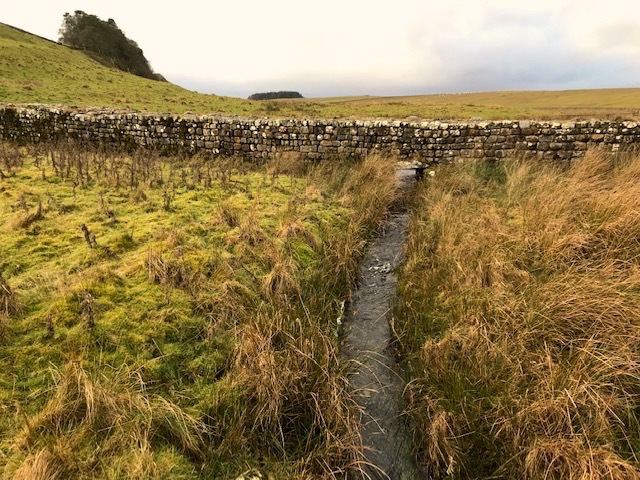
Beyond Hare Hill the views westwards were extensive, encompassing the Solway estuary and Lakeland fells. At our feet the foundations of the Roman wall jutted out supporting the narrower dry stone wall subsequently built on top. The vallum, much more distinct at this point, running parallel on the northern side, in a field of ranging bullocks, the reason for the contemporary wall being flanked by pole and barb.

We descended to a narrow lane bearing left and followed it back to where we’d started. Amused en route by a simple ‘W.C’. sign with arrow underneath pointing to a portaloo half hidden in a fringe of woodland. A thoughtful and welcome rustic convenience for walkers nevertheless.

Our quiet lane also sported outcrops of shaggy ink cap mushrooms along the verges. Edible fungi, they turn everything cooked with black, and need to be consumed shortly after picking. As the name implies these delicate mushrooms can be used as ink after mixing with a little water and cloves (to fix the colour) according to Wild Food UK.

Back at Lanercost we browsed the gift shop before having a late lunch in the café. Both facilities are housed in single story converted farm outbuildings. Nearby the former farmhouse stands, now appearing to have been transformed into private apartments or holiday lets. I remember this farm from filming here decades ago, when it was a working stead with cattle and sheep and lots of muck in the yard. In our drama it was the home of a dysfunctional family and I was playing the distracted dull witted farmer, always bickering with his wife (played by Caroline John) while our truanting son Kevin’s total absorption in his science fiction comics leads to a life changing encounter with an alien visitor up on the fell…’The Alien’ was a 30’ Dramarama episode from ITV (Border Television), written by David Simpson and directed by Kay Patrick, filmed entirely on location here back in 1988. Our seriously funny morality tale also featured performances by two old Lancaster based actor friends of mine, no longer with us, Ian Blower and Will Tacey.

Dramarama was a ground breaking series of separate stories for and about young people made between 1983 – 1989. Significantly they were stand alone dramas, not continual dramas or soaps. They explored issues around identity and relationships, often through science or the supernatural, and were an important part of the public service remit in the days before market commercial dictates had overrode all other considerations. The historic contractual compact with government meant the independent regional broadcasters had to provide a quota of original home produced content for younger audiences. Halcyon days for young peoples TV drama we’re not likely to see again!

Leaving for home the modern road bridge bypasses an impressive older bridge. This structure’s flood resistant multi-span arch, just wide enough for a cart to pass over, soars above the abbey mill stream where it meets the Irthing. One of only 200 such listed bridges left in the UK, this one dates from 1723 when it was built by local masons re-using stone from an earlier medieval structure, which in turn would most likely have been taken from the Roman Wall. And so it goes… (Bridge Image c. Simon Cotterill)

Ghost Story

Stephen in 1972: An early publicity picture

In 1972 I qualified from Central as a speech and drama teacher. Life and work then began for real, on every level. Here I am now, in a happy place, still learning, still curious, settled at home and engaged with The Border Readers project. Post Covid we’re preparing once again to play community arts venues across rural and urban Northumberland with another Halloweentide line up of classic, modern and contemporary ghost story readings.

Chances are you won’t be able to join us at a gig but if you’re interested in sampling remotely what’s on offer you can hear one of these fabulous tales – Oscar Wilde’s ‘The Canterville Ghost’ – on a free to view You Tube channel ‘The Art of the North’, set up by our company designer Terry Walsh earlier this year. Narration is by me with music and sound effects by Terry.

‘When a golden girl can win / Prayer from out the lips of sin  / When the barren almond bears / And a little child gives away its tears / Then shall all the house be still / And peace come to Canterville.’

Along with a few other ghost stories by masters of the genre, from M R James to Edith Nesbit, this fun exercise in home studio recording seems a fitting way to mark those five decades. It also reminds me just how very fortunate I’ve been to have had such a wonderfully varied career in all aspects of the business, blessed in the company of so many creative and exceptional good companions.

Here’s the link:

https://www.youtube.com/channel/UC5L6Qqq488jAQqgwab6p3rg

Happy listening!