Back End Notes

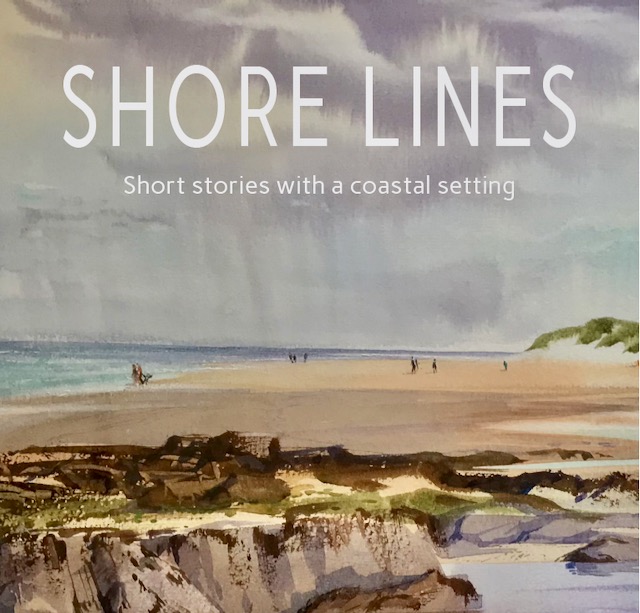
Experienced the usual emotional mixture of pleasure and relief that this year’s ‘Shore Lines’ tour for The Border Readers had ended earlier this month. A pub’s not a bad place to come to the end of the road in and The Pheasant at Cumwhitton in the Eden valley is an exceptionally warm and welcoming hostelry.

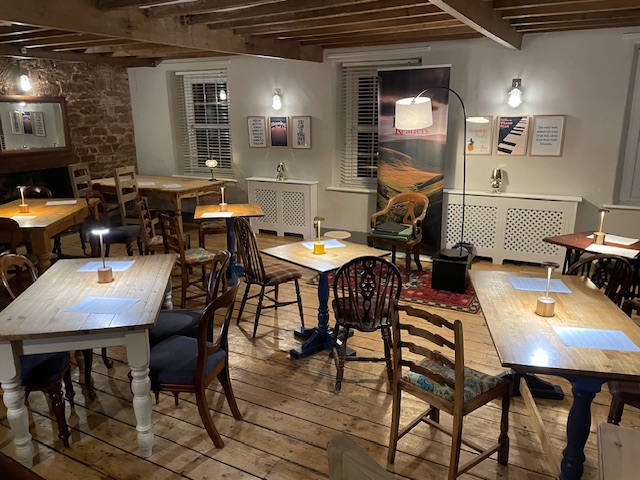
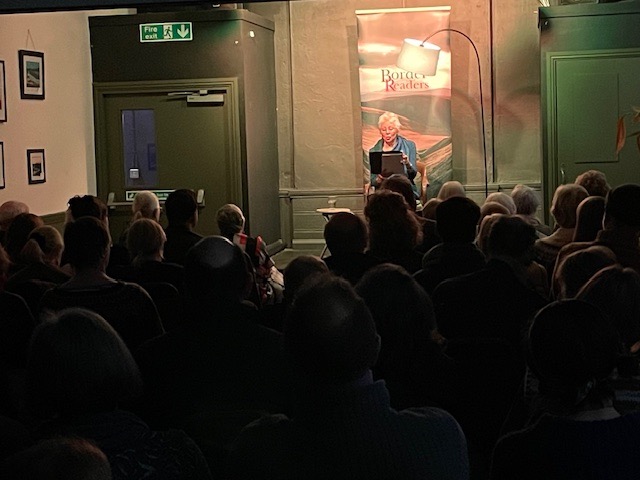
The function room upstairs set out with tables and chairs proves the most intimate of surroundings for this final gig for myself and fellow readers Grace and Wynne. A bonus in having writer Linda Cracknell and her partner Robin with us. Linda’s short story, ‘Crossing the Bar’ was originally  commissioned and broadcast by BBC Radio 4 in 2018, and was inspired by Tennyson’s classic poem ‘. I picked them up earlier from Armathwaite station on the fabled Settle – Carlisle line a few miles away. A beautifully preserved Victorian village station, wreathed now in a swirling mist, my friends the only passengers getting off here, who were more than pleased to see me emerge from the gloom. Very atmospheric indeed.

Other highlights of the tour included a sell-out debut at The Gregson Centre in my former home town of Lancaster. A lively celebration, with family in the audience and readings shared with old pals and demi-paradise associates, Roberta and Helen. I use to captain the Gregson bar’s ‘B’ team, part of the city ‘s pub quiz league, so it’s a place dear to my heart.

I always assume our annual themed literary event to be a cost neutral production but this year, to make sure I was not kidding myself, I crunched the numbers and, lo and behold, that was indeed the case. Those calculations make no account of hours spent  as producer – this is after all a retirement passion project – but in every other way it continues to pay for itself as a non for profit community based  cultural venture.

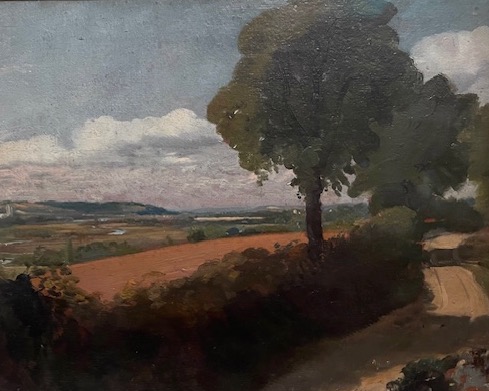
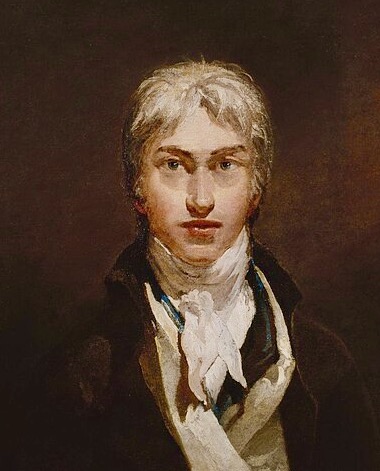
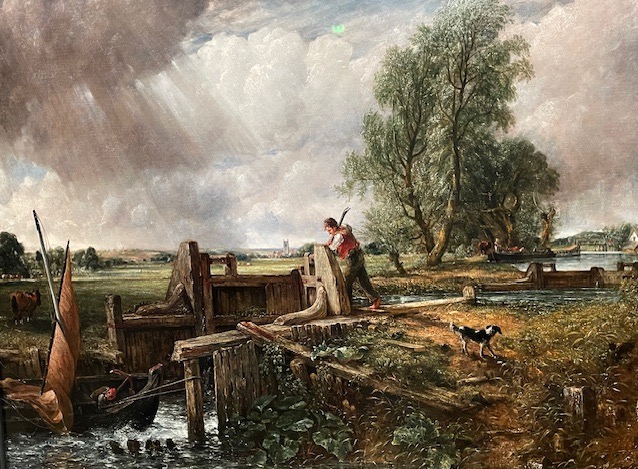
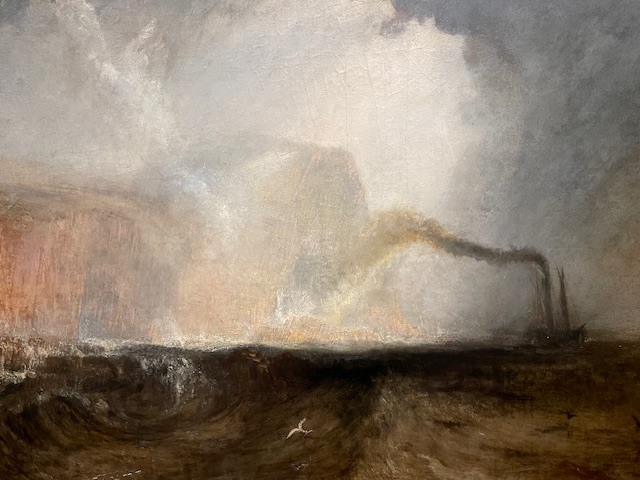
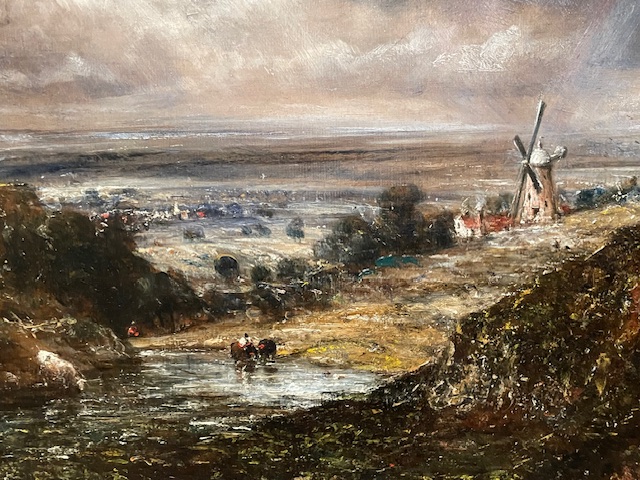
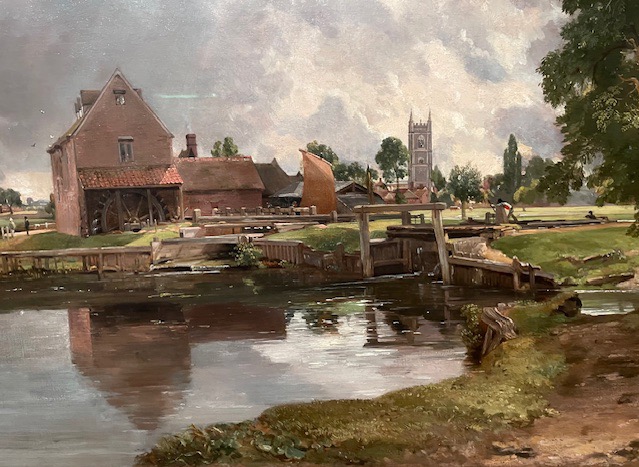
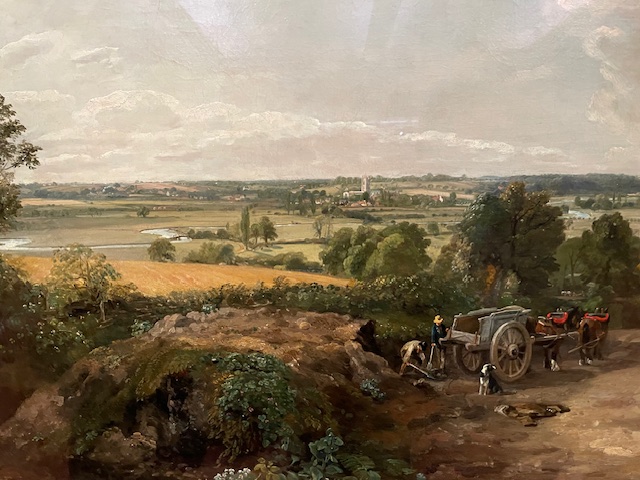
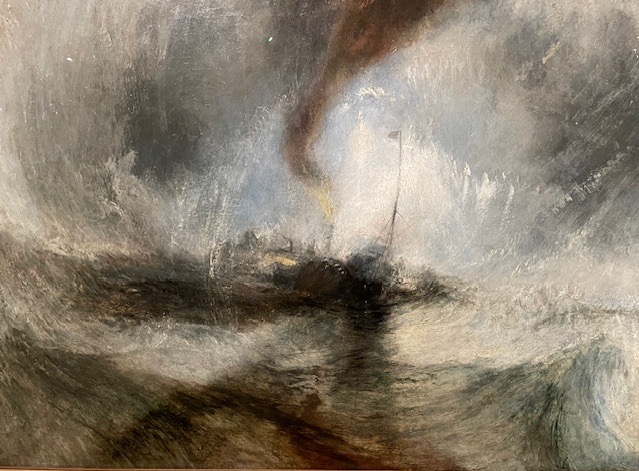
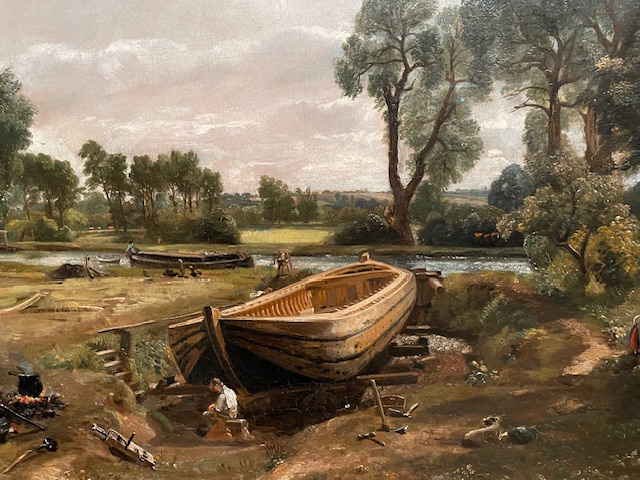
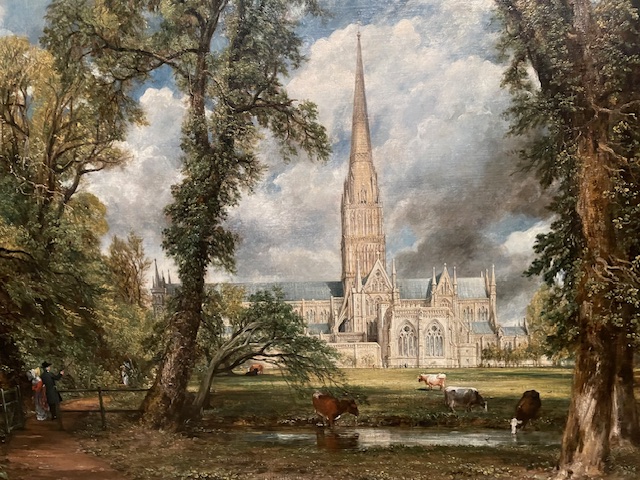
Caught  ‘Miniature Worlds’ the latest exhibition at the Laing Art Gallery, Newcastle a few weeks ago. It explores the intricate beauty of small-scale landscapes across three centuries of British art. (Intro at https://www.youtube.com/watch?v=dgQf9zt3x7o&t=59s) There is work by Thomas Bewick (1753 – 1828) a particular favourite, thanks to my association with Cherryburn, the farm which was his childhood  home in the Tyne valley, and which I’ve written about here in the past. Bewick’s exquisitely executed  borderless wood cut vignettes and ‘tale pieces’ that accompanied his text about birds and animals he depicted were hugely influential in both artistic and natural history terms.

Other favourites took me back to an early love of literature gained through the great childhood classics, like Jon Tenniel’s unforgettable illustrations for Lewis Carol’s ‘Alice’s  Adventures in Wonderland’.

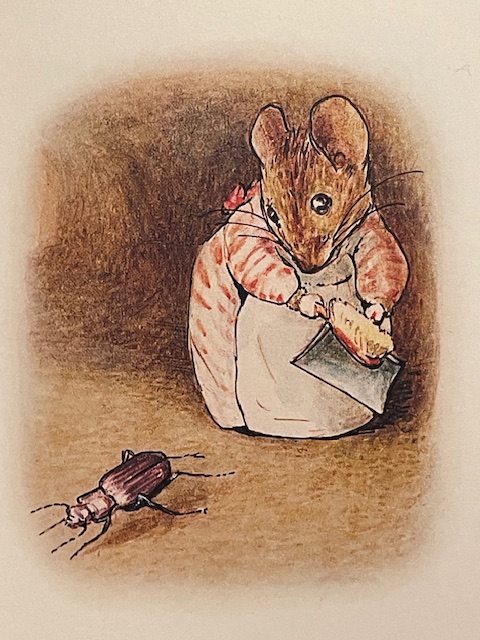
And who can resist Beatrix Potter’s charming animal character studies in watercolour for those love-to-handle little books published by Frederick Warne in the early C20th.

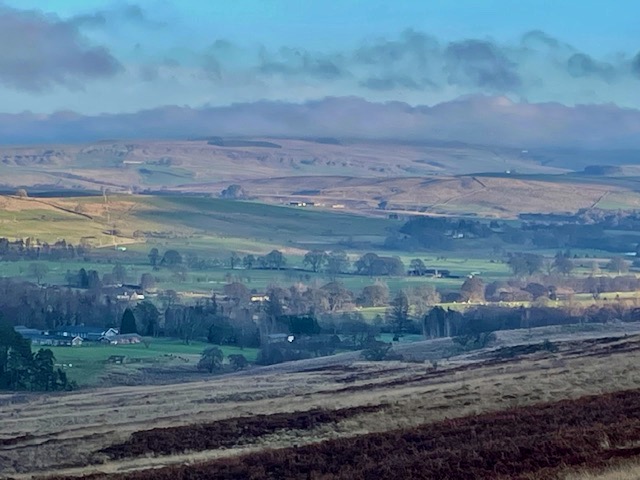
The countryside around  lies dormant now but the play of weather over it never ceases to impress. The changing climate has brought with greater unpredictability, with milder winter days and heavier rains. Bare branches reveal last year’s tiny nests of moss, feathers and grass.

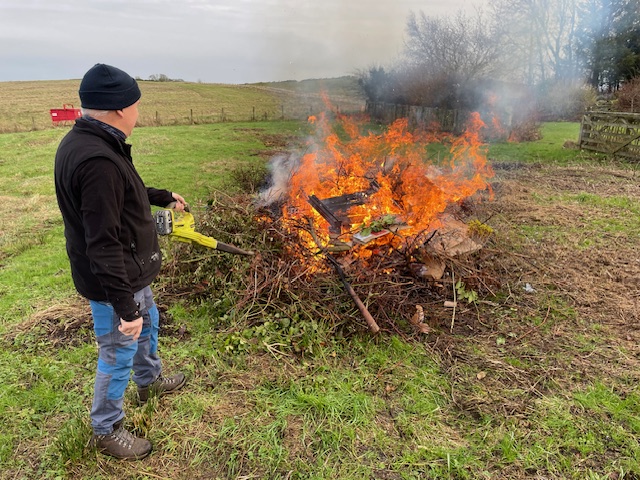
Gardening tasks undertaken when weather permits include clearing banks of dead foliage, starting to prune, nourishing compost heaps, fishing surplus leaves from the ponds. With the help of a neighbouring friend, who brought his leaf blower to push the necessary oxygen, we had fun setting a bonfire in the field with cautious use of petrol to ignite the damp mass.

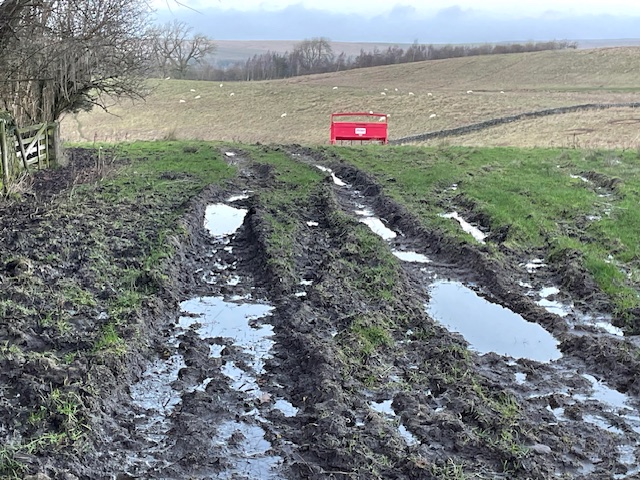
Neighbouring farms’ cattle and sheep  are rotated around sodden pastures. My eye  caught by the substantial red metal creep feeder which allow the shorthorn herd’s calves dedicated access through metal bars to get their fill of hay. A foretaste of Spring and the lambs to come. Flocks of ewes graze, rumps raddle marked by tups in harness. A Suffolk lords it  in one neighbour’s  field, A Texel in another and an old favourite from past years, Southridge’s Border Leicester in the field opposite us. BLT I call him. He’s always fearless and inquisitive when we meet so suspect he’s been used to handling from an early age. Curiously, there’s no harness on him, but has obviously been hard at work.  

Bumping in to friends out and about we are related some hairy tales, disarmingly told with great humour. One person, out walking on remote hills to the north of the county succumbs to a heart episode caused by arrythmia which floors him. Ringing 999 he’s told to text a number. Rescue services precisely locate through GPS and a stand by air ambulance helicopter is swiftly dispatched to hoist and whisk him away to hospital in Berwick.

Our egg supply is down. The neighbour who supplies them says a badger dug a tunnel into the coupe overnight and wiped out over half the hens and ate what eggs it could find too. 

A walk over the fell leads us to an artistic friends household selling home-made artefacts for Christmas, all on display in a cosy made-to-order shepherd’s hut next their cottage. We pop into the kitchen to pay and are invited to stay for another hour or so for a long overdue laughter loaded catch up over coffee and home made mince pies.

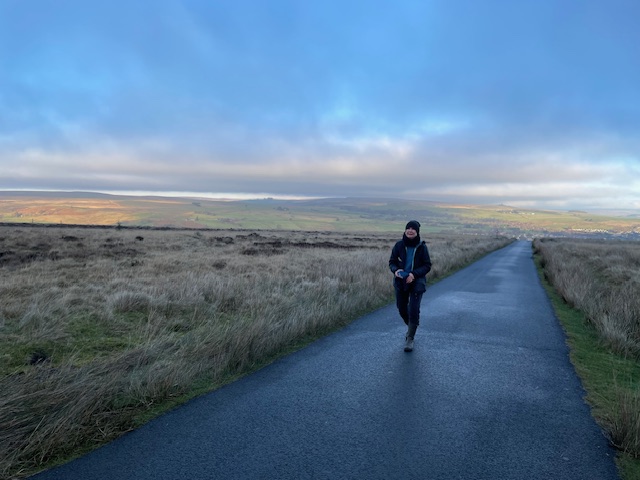
There’s a nearby lane, along which the long distance trail runs, narrow and undulating with dry stone walls, trees and shrubs either side. It boasts a good crop of haw berries popping red against a thick crusted layer of lichen. Benefits of not cutting back means a vital food source for birds while the presence of the lichen proving pure air quality in these uplands.

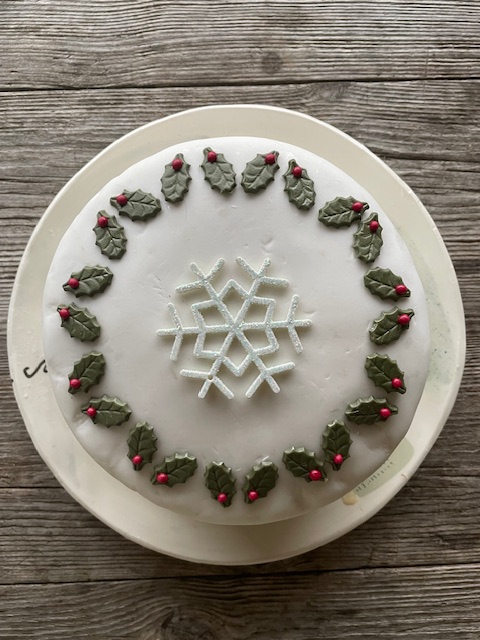
Kim in a flurry of home baking and making for Christmas so really looking forward to sampling what’s on offer. Here’s our Christmas best wishes to you and yours. Look forward to having your company on this occasional country diary page through 2026!

Cows on the Crags

What is this life if, full of care /We have no time to stand and stare? / No time to stand beneath the boughs / And stare as long as sheep or cows From ‘Leisure’ by W H Davies

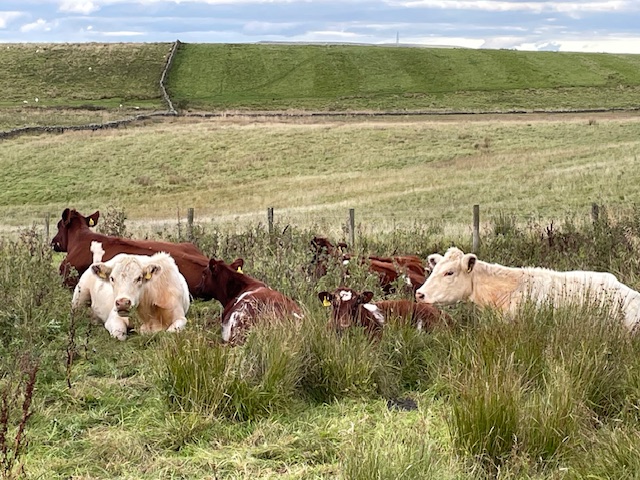
The four acres of rough grazing in before our house – the crags – has had no stock on it since the spring when the Texel tups were taken off so vegetation has grown dense and high. A word with our farming neighbour at Southridge and we wake up last week to a small herd of cows in situ.

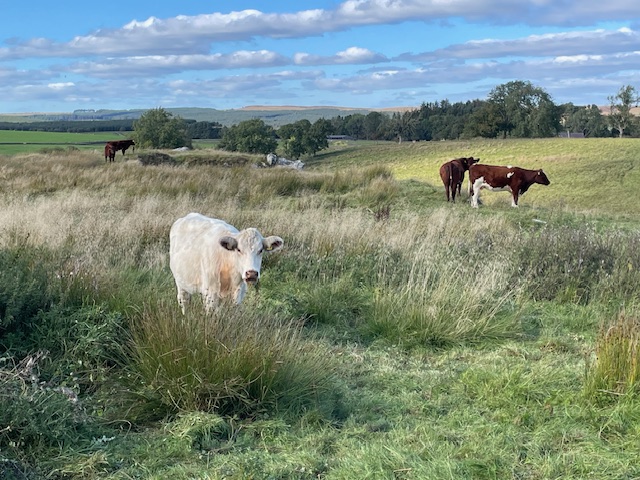
They’re beef shorthorn and white shorthorn cows with respective calves. These native bovine cousins are well suited to this environment being hardy foragers on poor grassland, easy calvers and good milk providers with a docile temperament for safer handling. They’re not only happy imbibers of our edible garden waste but their hearing is acute enough to catch the field gate opening, suddenly appearing over the crags as leafy foodstuffs arrive in my wheelbarrow.

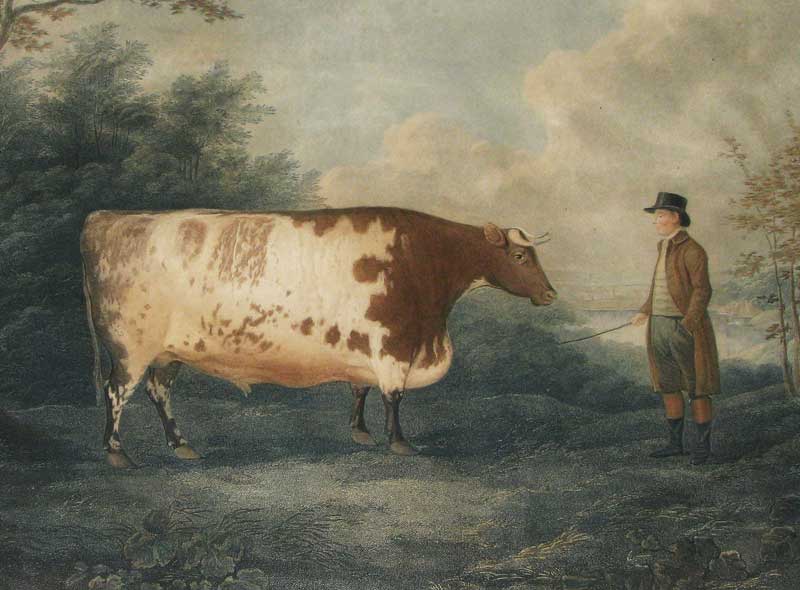
The Durham Ox (1802) by John Boultbee: A national touring attraction weighing 171 stones

Delighted to discover that Shorthorns had their origin over 200 years ago here in the north-east of England through selective interbreeding of Teeswater and Durham cattle. The breeders herd book, dating from 1822, is the world’s oldest and the Shorthorn proved itself as adaptable to milk production as to meat when most farms were smaller mixed use holdings. On a larger scale, from Argentina to Australia and north America the breed rapidly established itself through C19th pioneering settlement and today some 40 breeds of cattle worldwide have their genes.

 It’s the Shorthorn bred for beef that’s best known now, as agricultural history post 1945 has greatly increased specialisation and boosted yields, undermining the mixed farming model. The strains of Shorthorn originally bred for dairy have been vastly outnumbered nationwide by the larger black and white mega milk producers that are Friesian/Holsteins.

We’ll drink to that!

The Higher Stewardship Scheme incentivises hill farmers to return to stocking native breeds. White Shorthorn in particular benefit as it is officially registered ‘At Risk’ by the Rare Breeds Survival Trust. Their endurance is in part due to the cows being put to (black) Galloway bulls, producing the Blue Grey beef cattle often seen across the borderlands. Originally known in the 19th Century as the ‘Cumberland White’  the breed has its heartlands very near us on the Northumberland/Cumberland border where the official society of breeders was founded at The Greenhead Hotel just off Hadrian’s Wall in 1962. Fitting then to have two of those distinctive white cows on our patch with their suckler calves sired in this case by a beef shorthorn bull.

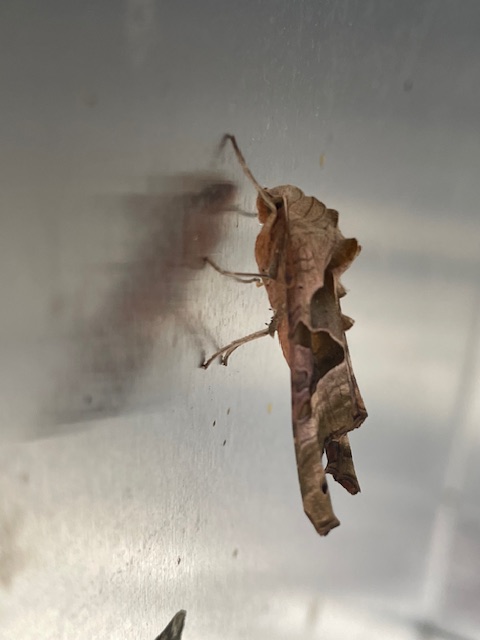
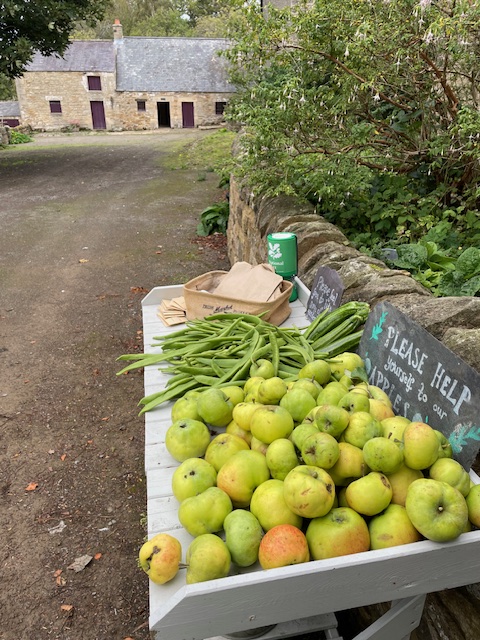
In other news…A bumper year for apples so can hardly keep up at home juicing, pureeing or chip drying our orchard’s output. Recent moth trap reveals a fine example of seasonal camouflage with an Angle Shade demonstrating its October fallen leaf act. Volunteering in the garden at Cherryburn, I leave with some runner beans and a courgette from the take away table.

Enjoy a day trip to National Galleries of Scotland in Edinburgh for the wonderful Andy Goldsworthy retrospective. (showing to Nov 2nd). Here’s a detail from a recent ‘Sheep Painting’ of his created in mud and muck on dried canvas by action of flock in field round a mineral block, removed.

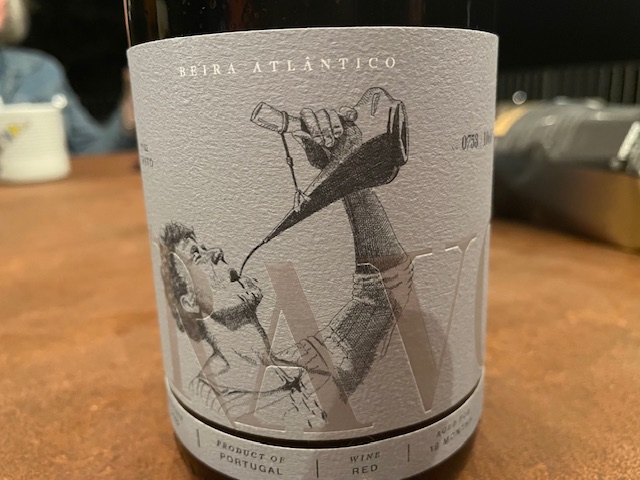
Cabeco Trigal

‘The colours, aromas, flavours, textures and the melody of laughter’  

(Cabeco Trigal wine bottle label).

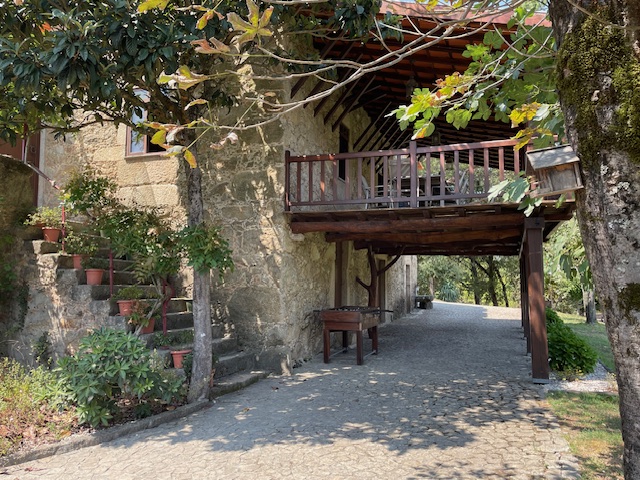
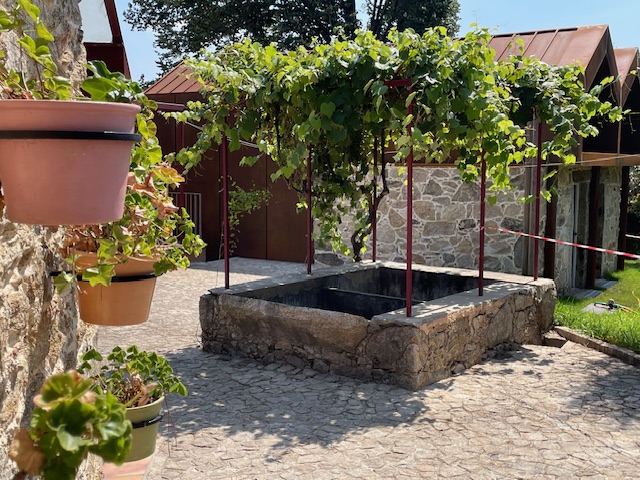
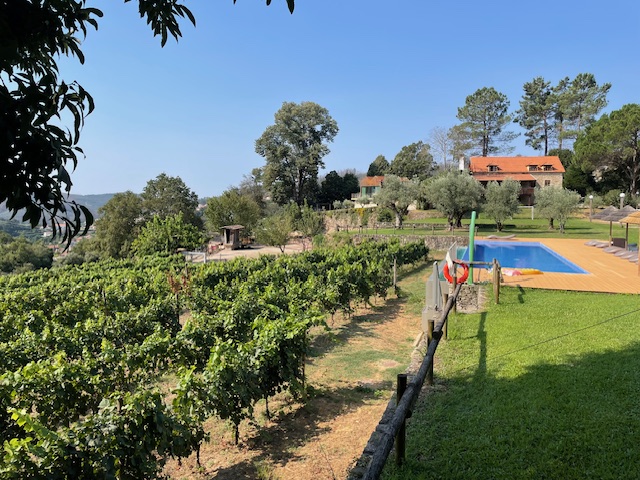
The Air B&B we stayed in had some very attractive features, being a modernised traditional dwelling with all mod cons, lovely outdoor open pool and extensive private grounds.

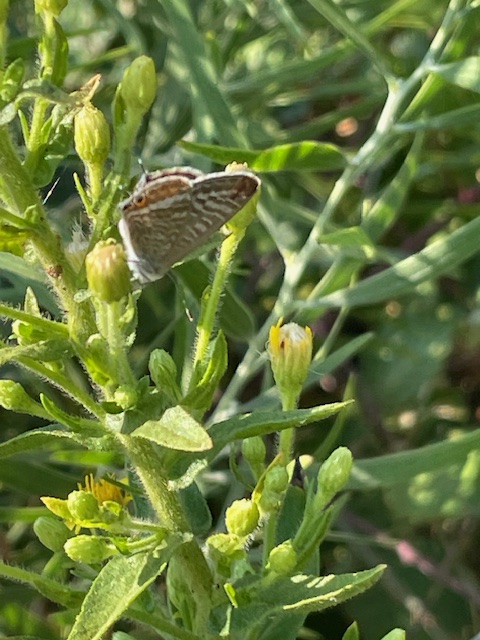
The lawn between house and pool had remained green despite the punishing heat, being the toughest of varieties refreshed by evening sprinkling and morning dews. Many long tailed blue butterflies were about while squadrons of house martins dived, dipped and sipped from the pool water, most thrillingly while I was in it, swimming alone. Jays were seen in the surrounding woodlands. Our lovely accommodation apart, the other aspects of the place had particular rural interest that made this establishment stand out from the crowd.

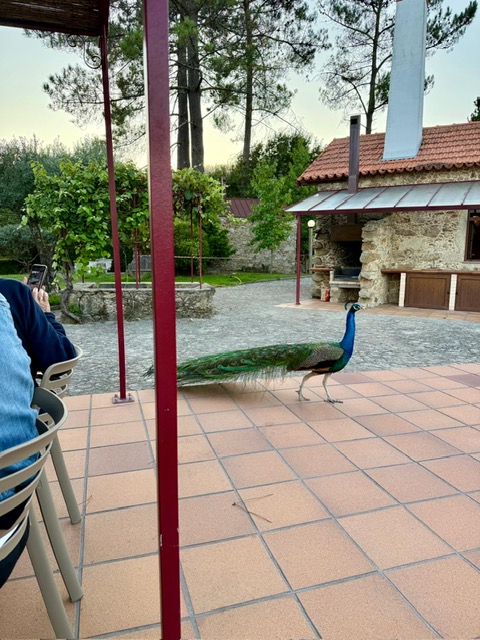
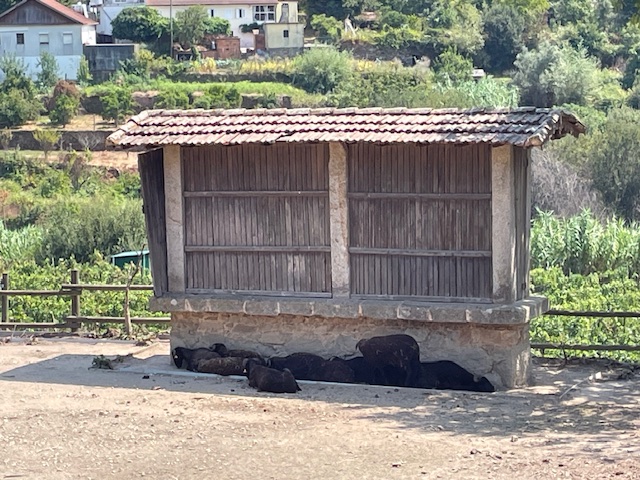
Cabeco Trigal is also a quinta (winery) and a smallholding with traditional breeds of sheep and pigs, alongside horses and llamas. The last features as the estate logo. Animal grazing being sparse it is subsidised with hay and grain. Sheep sheltering from the sun in the shadow of trees or the traditional horreo (granary). Pigs wallowing in mud pools, free roaming male peacocks punctuating the air with their screeches.

Tiago, the owner and our genial warm hearted host, is an architect by profession who lives with his family nearby. He specialises in repurposing industrial buildings and the tasteful conversion of this his family farm complex, including extra bedrooms in the adjacent barn cum workshop, succeeds splendidly in effectively blending old and new materials.

As temperatures climbed we appreciated even more the cool retreat three floors of indoor space provided, as well as the welcome shade of its wide wooden balcony overlooking the wider estate, with views across the hillside.

What especially endeared it to me was that house and barn were originally constructed of the light grey granite which defines the local topography. Growing up on the edge of Dartmoor this was a comforting reminder of that happy connection of time and place.

Our host is proud of his family’s long history in the Vouga valley. To honour the patrimony he embarked earlier this century on a multi-faceted passion project to reinvent what remained of a once grand estate, here at the cabeco (high place).  Modernising the old farmhouse and repurposing the remaining land by switching away from arable (Trigal means wheat field) to develop and extend the existing wine production on artisan lines was central to that vision. Holiday rental income is the third aspect underpinning the enterprise.

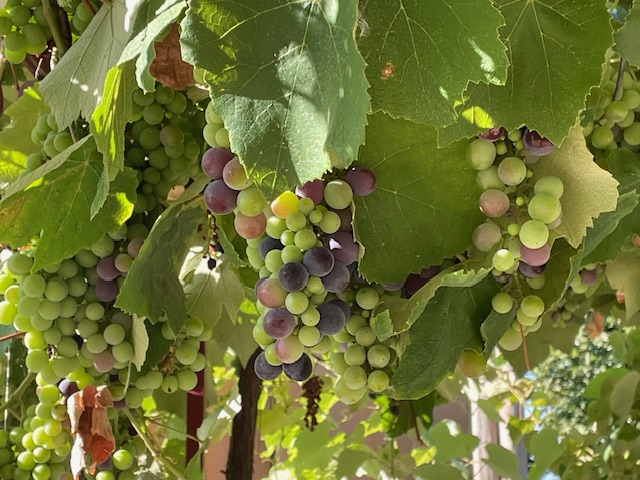
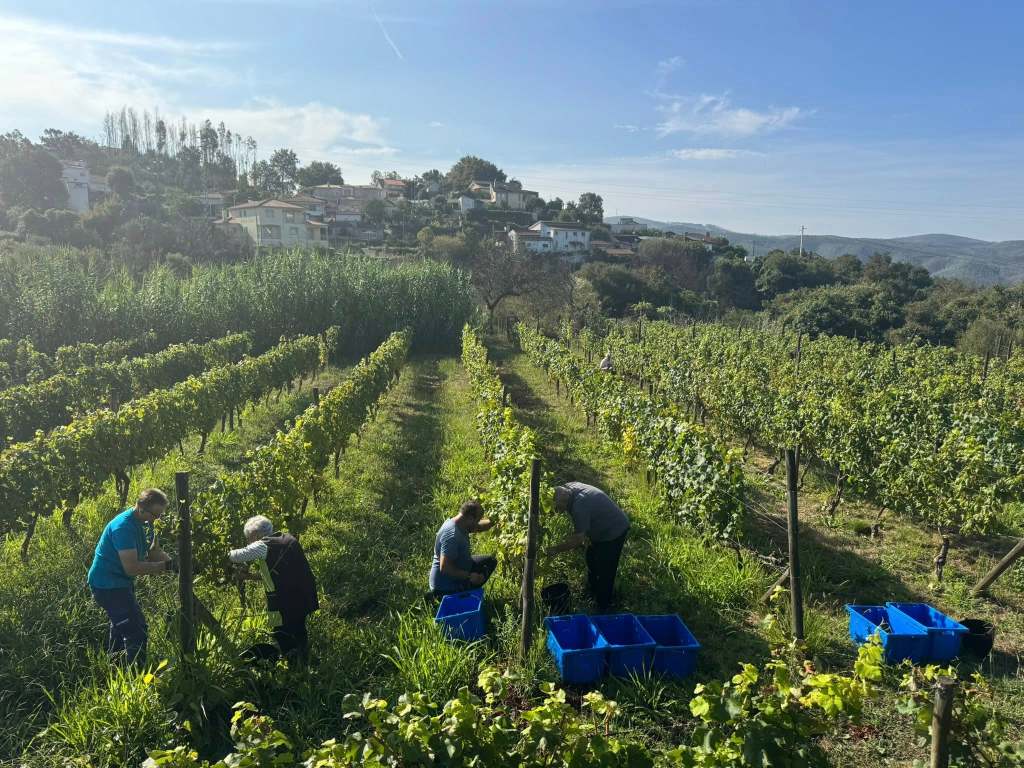
Intense cultivation here, fully utilising the land’s south facing terracing, involves controlled animal grazing in the aftermath of harvesting and again in the spring to control weed growth. Tiago told us that the land here is not ideal terroir for wine production, being rich enough for grain but not for vines which thrive best on impoverished soils. And that’s the reason they cannot go organic. Minimal, though essential, chemical treatment is necessary to ensure successful growth of the new varieties of grapes they’ve planted.  

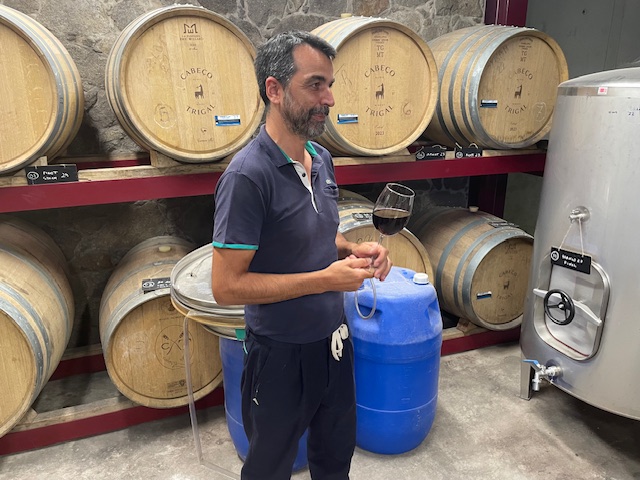
We joined Tiago early in our stay in the workshop underneath the barn, standing amongst the stainless steel vats where the ‘22 and ‘23 harvests of merlot, pinot noir etc stand alongside the French oak barrels the vintages will eventually be transferred to for maturation. He consults  throughout with Louis, his business partner and wine maker, who oversees the whole process.

That day Tiago was testing the grape juice to calculate how far off harvesting they were. His sampling tool logged a 10.5 degrees alcohol strength, not the 12 or 13 various varieties need to be at harvesting. (At the time of publishing that would be now.) Friends and neighbours join in to pick, sort and trample the grapes, earning their just reward in produce!

The metal press is used for processing  the chardonnay, sauvignon blanc and other native Portuguese white grape varieties. Interestingly, the actual pressing utilises minimal weight to ensure longer extraction and subsequent subtly of flavour. It’s in the final balancing  process that the skill of the experienced winemaker comes to the fore.

We understood there to be some 6,000 litres currently in production, which makes for approximately 8,000 bottles. These are individually sealed with wax by hand after labelling at the bottling plant.

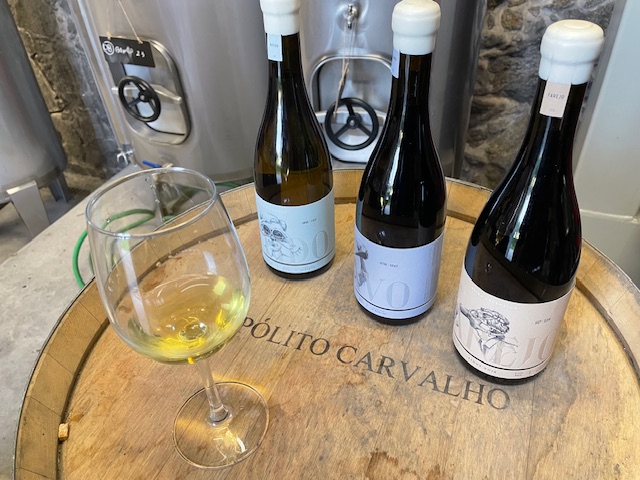
Unsurprisingly you don’t find Cabeco Trigal wines on the shelves of local supermarkets where we noticed the average price of the country’s home product is around €8. Portugal’s main wine producing regions lie to the south and they produce  there industrially at scale. No, these bottles cost around €20 if retailed locally and Michelin starred restaurants are the main customers.

We loved the distinctive quirky line drawings employed for each label. A bottle’s appearance should be an entree for the eyes and these do that. Here’s a translation of one of the key sentences on each label, which neatly sums up what they have set out to achieve.

‘On a hillside where the ancient wheatfields turn to lush vineyards that colour the bucolic mountain landscape, these are our wines in an environment of perfect co-existence with our people and farm animals’.

The much anticipated wine tasting with Tiago on our penultimate night was a convivial affair. The final evening we followed through on his recommendation and enjoyed delicious traditional specialities on the riverside terrace of a local restaurant. it was a pleasure to end that last evening with the remaining bought samples back home. Toasts was raised to the spirit of Portugal in general and one enterprising wine producer in particular.

You can see more pictures of this year’s harvest at https://www.facebook.com/QuintadoCabecoTrigal

Bussaco

‘Bussaco Forest cannot be described, the best is to get lost in it.’  Jose Saramago

Having been told about the Bussaco National Forest by my cousin who had visited recently we were keen to discover it for ourselves during this holiday. An hour and a half’s drive from base by good main roads and testing twisters through mountainous foothills led us to this unique walled in world, one of the botanical wonders of the Iberian peninsula.

We entered from the spa town of Luso via the Serpa gate, one of 11 gateways that punctuate the 5 K (3.1 mile) boundary wall. Only mildly alarmed when the keeper in her lodge warned us that walking any distance into the forest from the centre was entirely at our own risk due to the heightened possibility of wildfire outbreaks.

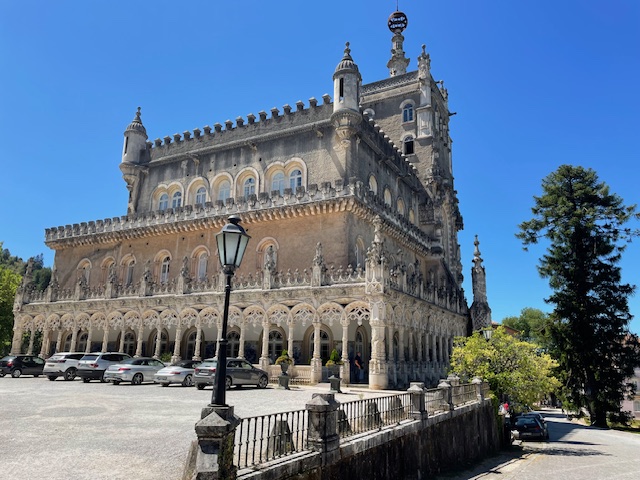
It would have been no great hardship to have spent our time in and around the park’s historic centre, which consists of a former royal palace cum luxury hotel (below), monastery, now a museum (above), formal gardens, café and visitor centre. 

Although Bussaco was originally an early 7th Century Benedictine foundation the one we see today was established by the more austere Barefoot Carmelite order when they took stewardship of the buildings and park in the early C17th.

The brothers zealously set about gradually replicating the Holy Land’s Mount Carmel at Bussaco as a kind of desert, blending nature with God’s spiritual estate.

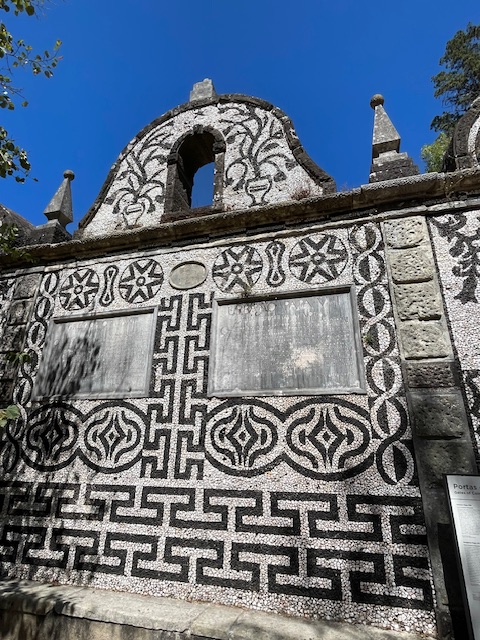
Many of their structures have exteriors distinguished by tessellated designs fashioned from quartz and adhesive tar while the interior of their monastery have coverings of native grown cork freely utilised to insulate walls ceilings and doors against winter cold.

The brothers ordered existence was rudely disrupted in September 1810 when the Duke of Wellington, commanding a combined mass of 50,000 Anglo Portuguese troops, based his command post in the monastery, using the monks cells for offices.

The British general’s army defeated Marshall Massena’s French forces here at Bussaco, halting their advance on Lisbon, a turning point in the country’s campaign of liberation from Napoleonic invasion.

The adjacent royal palace was built between 1888-1905 on part of the demolished monastery. Since 1910 and the fall of the monarchy it has been a luxury hotel, one of the finest in the land. Its initial architect, the Italian Luigi Mantini, also designed sets for grand opera, and it shows. What a brilliantly grand statement of opulence it makes to the world.

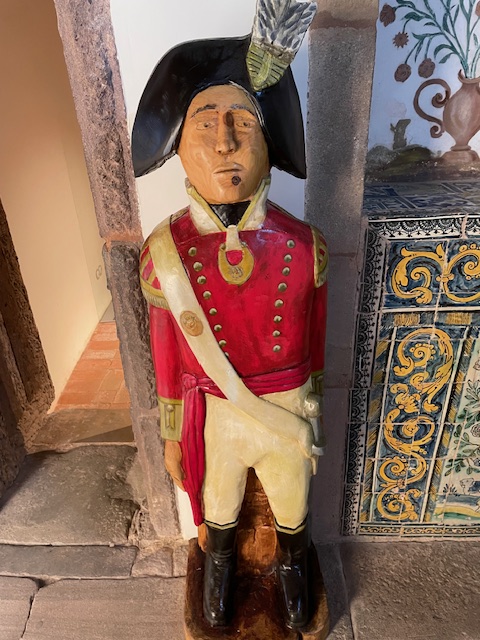
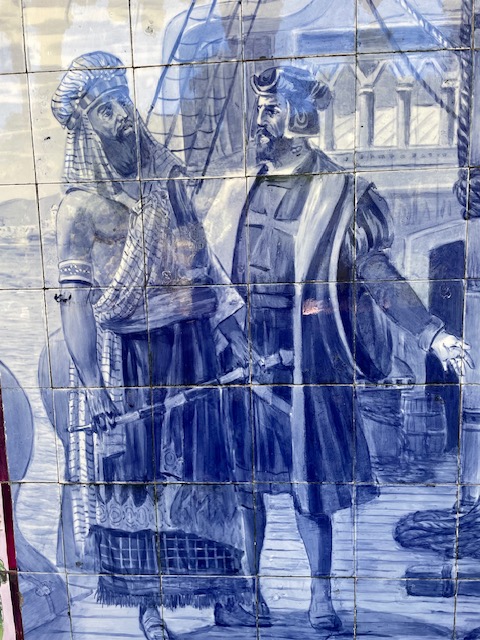
The obliging hotel receptionist let us take a look around the sumptuous ground floor. Large scale blue and white azulejos (tiles) decorate walls and stairs, some displaying the battle of Bussaco and others scenes from Portugal’s ‘Age of Discovery’ in the late 15th and early 16th centuries. At that time Portugal established its maritime trading outposts, stretching from Brazil to southern Africa, Goa in India to Macau off the coast of China.

The formal gardens provide a graceful unifying setting for the two contrasting buildings, although box blight and a certain faded glory added to a suitable sense of gentle decay.

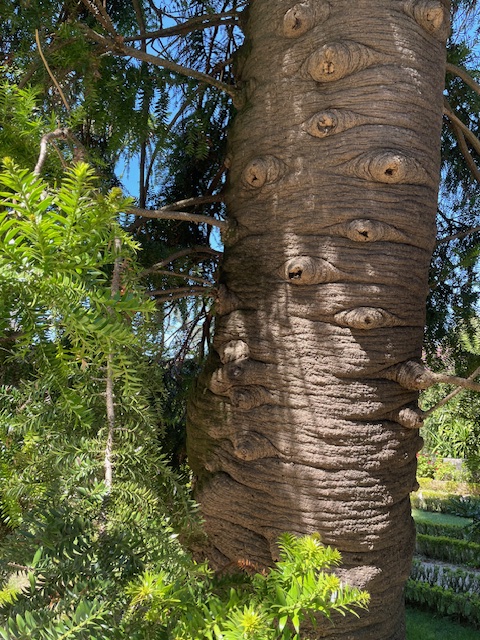
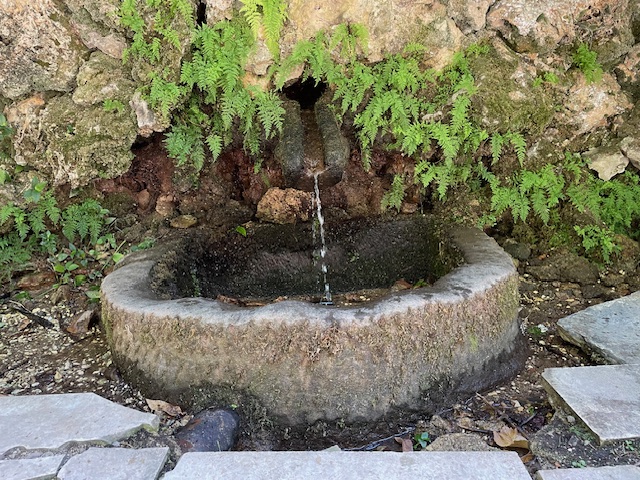
The arboretum remains the true natural glory of the place. Some 400 native trees and shrubs grow alongside 300 specimens brought back home as the result of colonisation and exploration. Mexican Cypress, American redwoods, Chilean pines, many oaks, laurel, holly and ferns to hundreds of Camellia species are set around walks, steps, ponds, fountains, statues and other formal features – we saw just a fraction.

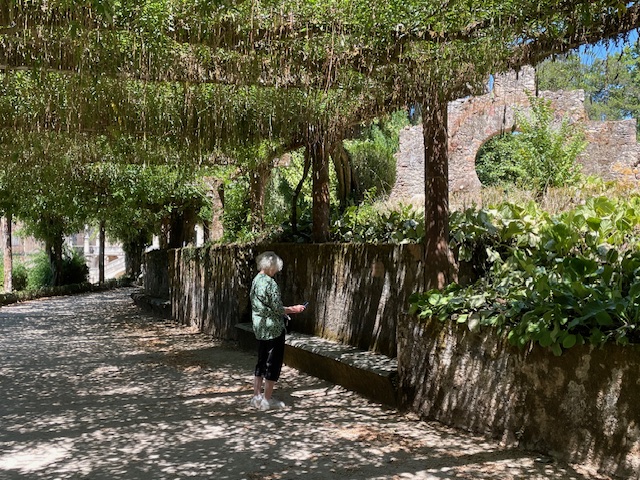
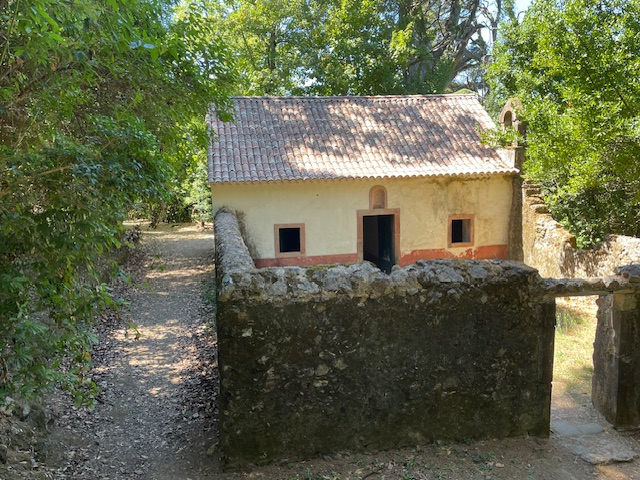
Leaving the formal gardens  for an upper woodland walk, we found ourselves on the Via Crucis- a lane of dappled shade linking enclosed stations of the cross – eventually leading to a purpose built hermit’s house with enclosed yard, now an empty shell, one of three around the domain.

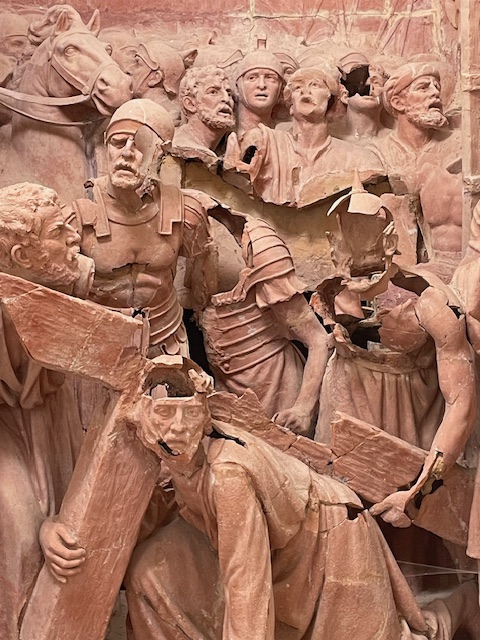
The stations house life size red clay tableaux, vividly recreating scenes from the passion of Christ. Hermit retreats and devotional stations were originally set up by the Carmelite monks shortly after they  took over the estate in 1628.  A number seemed to have suffered damage, adding an unintentional modern feel of abstract dislocation to the dramatic scenes of heightened emotion.

Later learned this damage was caused by a particularly violent storm that struck the area in January 2013, severely affecting both buildings and trees and recovery has been hampered by lack of funds and resources. The state took over Bussaco when Portugal’s monasteries were dissolved in 1834, and today managerial responsibility lies with a charitable foundation, which has had to fundraise widely to painstakingly restore the place.

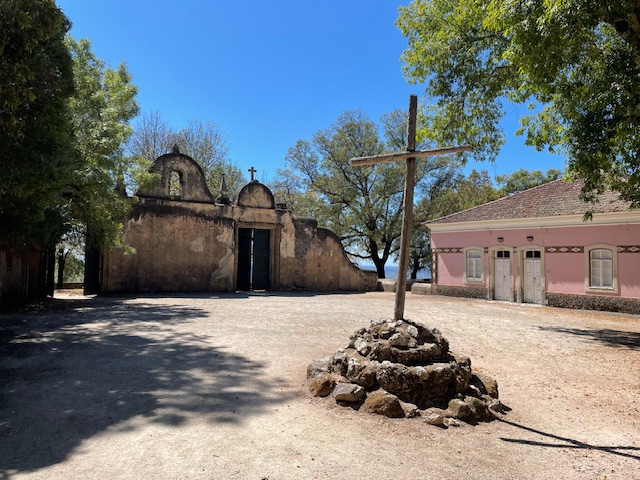
Our stroll took us to another entrance way – not accessible to traffic – the Coimbra gate which yielded surprise vistas beyond the canopy, across the wide plain, to the Atlantic coast.

Lingered by the great doors, now ajar, and the currently unoccupied lodge house (sometime holiday accommodation) with its pink washed walls. Wondered at the wall sign, a papal bull of 1623 forbidding, on pain of excommunication, the felling of trees within the walls or the entry of women!
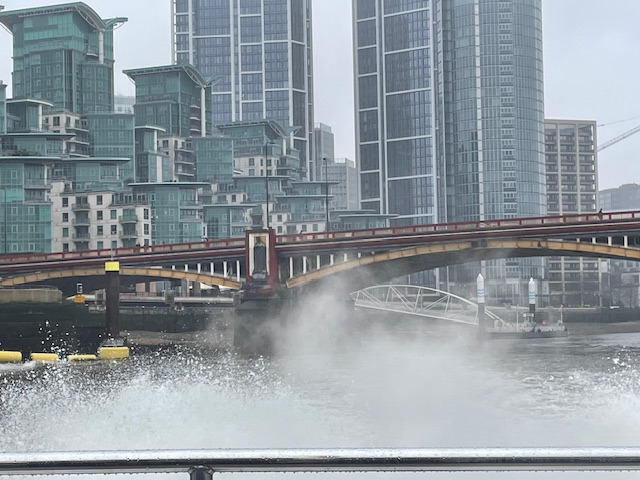
Historical misogyny apart, I warmed to this early attempt at nature conservation. An atmospheric spot inviting reflection and ease, one where time seemed to have stood still. Stepping out on to the terrace in the full glare of the sun, the bone dry brown grass  crunched loudly underfoot, providing a reminder of the gatekeeper’s words on arrival.

Popular with the Portuguese themselves for its cultural and botanical importance, though less well known to foreign visitors, the Mata Nacional do Bussaco lives up to its reputation, inviting a return to sample further corners, in another season.

Vouga voyage

Recently returned from a week’s holiday in the valley of the River Vouga, mid-way between its outlet at Aveiro on the coast and the city of Viseu near its source in the Serra Lapa.

Like the other major rivers of Portugal The Vouga runs its 148 KM course from east in the mountains to the Atlantic in the west. It was once a major transport route for countryside produce; from wines, granite, metals and timber to fruit and other agricultural produce. (In the 17th Century most of their oranges were exported to England) By 1913, a train line had replaced the inland river boats, which in turn gave way to EU funded new roads that twist and turn above the Vouga’s sinuous green waterways. We enjoyed three separate outings sampling distinctive phases of the river’s flow and topography.

Took a fun day out to swell the ranks of other tourists milling around ‘The Venice of Portugal’, as the city centre of old Aveiro is dubbed. A major port in late medieval times it later became famous for commercial salt abstraction, fishing and seaweed harvesting.

Ria Aviero ecosystem image credit: CESAM

The extensive lagoon and dune ecosystem of the Ria de Aviero, as this estuarial stage of the Vouga is known, now enjoys international status as a major bird sanctuary, home to some 20,000 overwintering wildfowl, the most photogenic of which being pink flamingos.

Trips around the centre’s canal system are a must and the colourfully decorated flat bottomed barges – Molicheiros – that once carried seaweed, salt and general goods now carry human cargo on 45 – 60’ guided excursions.

Unsurprisingly, the last fishing lofts lining the canals have finally closed and are being developed into luxury waterside apartments.

Back on land we visited an Art Nouveau house, now a museum with fine decorative detail, one of many tasteful villas that reflect an early C20th era of increased wealth and pride amongst its leading merchants.

The other end of the Vouga could not be more different. Foreign tourists like us were in short supply here in the mountains, probably because of the limited visitor attractions to lure people up from the popular coastal strip and dangerously high summer temperatures. The Upper Beira  region suffered badly last September from wildfires, causing evacuations and widespread disruption, and we sensed a nervousness even now, lest they return.

We stopped off at the Ribeirado dam and looked along the 14km long reservoir it created. It was built earlier this century to supply hydroelectric power, ease flooding and increase scarce water reserves. The road runs along the broad arc of the high dam wall, the power station and its infrastructure far below, where the river re-emerges. With the sheer valley walls either side the whole presents as a peerless study in concrete.

The brightest objects encountered in this uniformly grey spot were the red, blue and yellow recycling bins in the car park. Ominously, the control tower in the reservoir emitted flashing light and warning noises every few minutes. If this location were to feature in a future James Bond film or dystopian TV drama it would not surprise us. A perfect setting of its kind.

Another day we walked the middle reaches of the river. Was keen to access an upper trackway I’d clocked above the road while driving to our holiday accommodation nearby.

As suspected this was once a single track railway. Built just before WW1 it closed in 1980 and its repurposed state, the former Vale Das Voltas line offers superb viewpoints of the valley.

Our parking place by the road revealed a picnic table made from a single slab of local granite set under the awning of a mature horse chestnut tree. Masses of richly purpled convolvulus – bindweed – curled around the wood  rails.

The track is understandably popular with cyclists, yet we only encountered four other pedestrians on our amble to and from the route’s spectacular highlight, the Santiago rail bridge at Pessegueiro do Vouga. It’s one of the highest stone masonry bridges in Portugal, with eleven arches and 165m high deck, gracefully spanning river and wooded slopes.

Our walk revealed a stark reminder of last year’s big burn. Blackened trunks and boughs in abundance. A contentious issue in these parts is the preponderance of silvery leaved eucalyptus trees, commercially planted to supply nearby works with biomass and extracted oils. That process is also understood to cause environmental air pollution.

This alien tree, of Australian origin, successfully sustains itself on steep slopes with minimum moisture and burns easily. Eucalyptus rapidly colonises cleared land post fire and is hard, if not impossible, to eradicate.

Our walk ended ‘off line’. Carefully crossing the white walled switchback of a highway, we descended to the quiet stillness of river bank and cooling shade of willow and alder that thrive here on its stony floodplain.

This middle stretch of the Vouga is officially designated a ‘Site of Community Interest’. That means minor blockages like weirs that present obstacles for migrating species of trout, eel, shad, barbel, lamprey or mullet are being gradually removed and in some places fish passes are being installed. Otters, birds of prey and many other species of birds and insects are also able to thrive here where human habitation is scarcer.

Delighted in encountering dragonflies and butterflies I waded barefoot in and allowed the hundreds of trout fry mingling in the sunlit shallows to continue feeding and flitting around my feet. A cooling calm end to our lovely lone amble under the afternoon sun.

Bountiful Berwickshire

We’re recently back from a celebratory weekend away, organised in secret as a gift to share with the significant other. Found a place near enough to drive to easily but far enough away to make for a proper countryside adventure. Some highlights then, as follows.

We arrived in Berwickshire, in the wide valley of the River Tweed and its tributary the Whiteadder, for our stay in the village pub at Allanton. All around the area huge combines, tractors and trailers were cutting, winnowing, baling and carrying off barley and specialist wheat. They continued late into the night, headlights glowing, growling over wide rolling fields with the lanes alive to traffic up to midnight. A fascinating contrast for us who live in the grassy uplands of west Northumberland where log lorries and tipper trucks loaded with gravel for forest roads are the big beasts of rural transport.

We sat out in the pub’s pleasant back garden with a refreshing pint before supper gazing over a scene of blond stubble and waving grain, shadows stretching to far woodlands, the land glowing warm under a setting sun. The Allanton Inn really is at the heart of its rural community. A family run business, part of an ecosystem of small independent local producers and suppliers, proud of their good food offer – from honey and ice cream to meat and eggs – as we were to partake of it. The perfect relaxed hostelry from which to explore this side of the border.

This is a land of big estates and large farms, the metal and concrete barns mostly modern and huge enough to properly house mountains of grain and straw. The population is much sparser now than it would have been in the pre-machine agrarian age. It’s extraordinary to note that within the radius of a couple of miles some of the great figures of the Scots enlightenment were born and grew up. These include the moral philosopher David Hume, geologist James Hutton and botanist and populariser of the tea plant, Robert Fortune.

Most touchingly of all is the story of the least known of these worthies and the revolutionary device he freely gifted to agriculture, one that would help fashion the arable landscape around us today. In the 1770’s local engineer James Small used a smithy on the  former Blackadder estate at Allanton, using mathematics to experiment on different mouldboards, curvatures and patterns to produce his improvement on the ‘Rotherham’ cast iron swing plough. Previously many men were needed to work teams of oxen to pull a flat wooden plough while Small’s only required a pair of shire horses and a single ploughman to operate. Small even demonstrated his invention to ‘Farmer’ George III and his ‘Scots Plough’ was rapidly copied and developed by others as he not wish to profit from his invention by taking out a patent and sadly died in 1793 of overwork and poverty. Modern day embroiders have honoured his memory as James and the plough feature as one of the wonderful metre square panels in the Great Tapestry of Scotland, on permanent display in Galashiels.

Situated on the eastern edges of the Lammermuir hills, below the lofty summit of Cockburn Law and overlooking a steep valley sits Edin’s Hall Broch. It was the high point of a circular five mile walk we took over fields, through woods, along tracks and heathland paths.

We made two separate crossings of the infant River Whiteadder by ford and footbridge. Summer picturesque as the scene was, one could imagine the place when the waters were in spate. The road sign at Abbey St Bathans reminds drivers of the risks.

Brochs – ancient fortified tower houses – are usually found in the highlands and far north of Scotland so the one here is something of a geographical oddity. Our slow climb to reach it enhanced by seeing male wall brown and small copper butterflies basking in the sun and fluttering ahead as we climbed through swathes of tall bracken.

Dated to the 1st century AD what really lends Edin’s Hall broch a sense of wonder is that so much stone remains to define its walls, wide enough to incorporate chambers and stairs. The centre point gives a 360 degree experience of what was once a whole community’s secure home and stores, standing at least two levels high and probably roofed with timber. Hard by  the broch are remains of later hut circles, ditches and ramparts. Awed as we were we couldn’t help wondering though where its inhabitants would have sourced their water supply, with not a spring in sight.

Picking up a metalled lane diving down into the wooded valley bottom we came upon this weathered sign at a hairpin bend. The only thing near a toot we heard on the descent was from the occasional whirr of spokes or tinkling bells as racing cyclists shot by with friendly waves. Like them we appreciated a rest break at the friendly informal tearooms in the old stables of the original village woodyard by the river. We can testify that the home baked fruit scones are superb.

Every few years sees us on a return visit to Berwick. A preamble along the massive Elizabethan ramparts leads literally ‘off the wall’ into the multi-storied Granary gallery, a former Georgian warehouse on the quay overlooking the three great bridges, monuments of different centuries, that carry road and rail links across the great border river.

The retrospective exhibition we’d come to see at the Granary was of the respected artist, teacher and plantsman Cedric Morris (1889-1982). We found it something of a mixed bag. His flower painting, especially of Irises, remain glorious testimony to his knowledge and ecological awareness. The best known self-portrait and studies of Parisian café life in the 1920’s insightful and sensual. 

The art that really moved us though was on the seafront across the border at Eyemouth. In October of 1881 a terrible storm wreaked havoc on the Berwickshire coast, and 189  local fishermen were drowned, leaving behind 78 widows and 182 children. The town’s fortunes went into long term decline in the wake of this, Scotland worst recorded fishing disaster.

‘Widows and Bairns’ represents real people, arranged in groups above the name of their boats. Sculpted by Jill Watson and cast by Powderhall Bronze it opened in 2016. We watched visiting families stop and talk about the story. The best kind of public art, rooted in people’s history, powered in this instance by tragic drama to command our attention and stimulate conversation.

In the 21st century, the community here has been embracing eco based industries and sustainable tourism and this attractive harbourside town – like Berwick across the border – seems on the cusp of change for the better. The broader Eyemouth story is well told in the delightful volunteer run museum housed in a former church.

We also enjoyed taking a leisurely stroll along the narrow harbour around the mouth of the river Eye with its working fishing boats, quayside  processing plants and local produce stalls. (kipper rolls anyone?) These merge with an array of smart locally based retail businesses (excellent Italian ice creams), the sandy town beach and restored stone jetty with its bright red handrails and fine prospect.

A little further up the rocky coast lies St Abb’s Head, named for a Northumbrian princess who founded a monastery here, now long lost, following her safe delivery from shipwreck. Fittingly a lighthouse, dating from the 1860’s and built by the Stevenson family (who else?), still casts its powerful light from the head. Unusually, it is tucked into the cliff below the lighthouse keepers cottages (now holiday accommodation) as the higher ground above and beyond has always been prone to mist and rain, obscuring vision at sea. Hence the red painted fog horn, seen below.

If we’d been here in late Spring we’d have witnessed the vast flocks of gannets, razorbills, gannets, kittiwakes and other seabirds that crowd the nursery rockfaces and for which the bird reserve is nationally renowned. Their guano, whitening the masses of red blue sandstone rocks, is striking but the birds and their fledglings were no longer in evidence this bright breezy morning in August. Instead masses of house martins dominated the clear blue skies above small bobbing boats filled with visitors tasking in the awesome sea level view of this spectacular headland.

Our return leg, mostly along the single track lighthouse access road, revealed a stunning surprise vista of more cliffs running northwards. Once out of the severe wind tunnel blast between those cliffs and St Abb’s head, the path drew us away into the calm serenity of a narrow fresh water loch in a ravine fringed with reed and sheltered by woods. The National Trust for Scotland run the excellent visitor centre in an old farm complex where we parked to start and finish our wonderfully rewarding  four mile trek.

Recently shorn cheviot sheep at St Abb’s head

Marvellous Moths

Humming bird hawk moth. Image credit: Butterfly Conservation /Graham Mounteney

Mention the word ‘moths’ to people and I suspect the majority are likely to think about those nasty critters whose larvae consume clothes or chew carpets. I confess to being a bit indifferent to moths in general until I saw a humming bird hawk moth in my town garden years back. That remarkable encounter made me sit up and take note yet it wasn’t until I moved back to the country that I eventually got actively involved this spring in entering the world of the amateur lepidopterists.

There are some 50 species of butterflies and 2,600 species of moth in the UK. Roughly 900 of those are macro moths and the rest a bewildering range of micro moths, many virtually indistinguishable one from t’other to the non-expert eye.

Light Emerald Moth

Where to start when trapping and identifying specimens? Online research around the options makes for a good start. Thinking through what best suits your situation when matched with what’s affordable and you’re ready to proceed. There are three main types of moth trap, named after the experts who devised them. The Heath trap consists of a collapsible rectangular metal box with a funnel and fluorescent UV bulb. The larger Skinner trap has a slot entrance below the light. The Robinson is a large round, non-collapsible trap, most likely to catch and retain the largest number of moths. It’s also the most expensive to buy. I opted for the Heath model.

I nearly got a version powered by an extension run from the house mains. On reflection thought that a daft idea as the more places to set the trap of an evening around the garden (or beyond) would be a much better proposition. So I also bought a battery and charger. It’s proved a great investment, not only giving me pleasure as well as visiting friends and family, young and old alike.

My first and most numerous species caught, back in April, was ‘Hebrew Character’; so called from the dark marks on its forewings that look like letters in Hebrew script. They’ve now been replaced as most numerous by a scrum of large yellow underwings, clustering in a gang around the egg boxes I’ve furnished the floor of the steel box with.

Although Latin nomenclature is essential in classification worldwide it is surely the common names, reflecting archetypical characteristics, that catch the imagination and lodge in one’s mind. Here are a few favourites:

Burnished brass. Small, widely distributed, lover of damp places, feeds on low lying plants like red valerian, honeysuckle and buddleia…all of which we have in the garden. The wonderful metallic sheen on the forewings is a entrancing sight.

Wainscot. Named for resemblance of wings to the ribbed wood raised panels of interior walls, introduced in Tudor times. The caterpillars of this common moth feed on grasses and our meadow and surrounding pastureland provides ample acreage.

The Herald. Scalloped broad forewings and splashes of orange colouring give this medium size moth a distinct dynamic appearance hinting at speed with a purpose. It overwinters in barns and outbuildings and we have both. The caterpillars feed on willow trees and again no shortage of them hereabouts. Small resident birds like tits and robins we see working wands of willow in the spring are probably feeding on the larvae of the many species of moths and other insects that live there.

Riband wave. I love the poetry of the name reflecting the subtle patterning of its wings displayed when at rest, drawing on the imagery of a sandy seashore.

The Antler. The pale markings on the forewings resemble deer antlers. This medium size moth is at home here in upland moorland country, its caterpillars feeding on acid grasslands. The antler also flies in the daytime, feeding on thistles and ragworts.

Poplar Hawkmoth. Sure to wow any observer when first sighted. Varieties of hawkmoth, like their avian namesakes, spread their wings and the large size and studied stillness never fails to impress. Most of my specimens (or the same ones recaptured) feature when the trap is left near the mature poplar tree in the east end copse.

As spring turned to summer the moth count increased in variety and number. Warm, still, humid nights with good cloud cover tended to produce the greatest number of captives. I discovered that when the trap was set in amongst shrubbery and trees it upped the number and variety even more. Some species flew off immediately on opening the container in the morning but the vast majority remained static, happy to linger, having to be emptied out at the same collecting spot once recorded.

One morning one of the parent swallows nesting in the eaves above the porch where I’d parked the open trap, flew down and snapped up an unfortunate escapee as it fluttered skywards. Daytime insect feeding birds apart, bats are the main nocturnal predators, and these we see regularly so the numbers of insects must be high enough to sustain populations, which is good. Nationally, the situation is not so good. There’s been a worrying decrease in UK macro moth numbers in recent decades, much of that due to human activity, and that has had a knock on effect in the wider ecosystem.

So far I’ve identified around 50 species in this Northumberland garden. Use of the phone camera has proved invaluable as it utilises AI to help identify a subject by family or common name; a real boon to beginners like me. Bernard Skinner (he of the trap) produced ‘Moths of the British Isles’ handbook, a definitive colour identification guide, back in 1984. My updated ex-library copy is still invaluable too, with 1,600 of the UK’s moth specimens recorded, with very useful notes. There are lots of good guidebooks out there so well worth investing in one. Triangulate by visiting excellent online sites too, like Butterfly Conservation charity https://butterfly-conservation.org/ or joining a Facebook moth trapping group.

Buff tip and bark chips

A fascinating element of moth survival technique is camouflage. Some species I’ve come across when trapping are past masters at the art. The Buff tip for example. At rest its wings are held almost vertically against the body with two buff area in front of the thorax (body) at the tip of the forewings. Looks like a twig or chipping. Colouration varies but its favoured tree is birch, into whose bark it merges. On the wing from May to July, it’s one to marvel at.

A problem gardeners like us who have an orchard is probably more alarming than deadly. The apple ermine moth lays its caterpillars on apple trees. The ghostly tent like web that surrounds the larvae give protection from bird predation but the caterpillars devour the leaves and can denude the tree and restrict budding. I’ve had to carefully peel off and destroy the tent caterpillars found in our trees each spring.

Apple ermine moth and web

When I came across the handsome white ermine moths in the trap I mistook it for its cousin causing the problem so was relieved to discover the difference when looking it up. Appearances are more obvious when you see them together.

White ermine moth

The white ermine’s caterpillars live in webbed tents feeding on nettle, dock and other common vegetation. Apparently this medium size moth has few predators because it is highly poisonous. (But not to humans if touched). Like some other moth species they have another defence mechanism against predators; dropping, seemingly lifeless from their perch, into undergrowth beneath.

I’ll look forward to what the autumn brings to the moth mix. As one observer remarked, ‘trapping is like a lucky dip for adults’. For me it’s yet another strand to an understanding of the wonders that surround us in the world wide web of nature and the farmed environment.

Hanging Stones

When it comes to rest and recreation it pays to walk. The health and wellbeing benefits are obvious. It’s not so often though that you pay to walk. But that’s what we did a few weeks ago. And for a very good reason.

The Hanging Stones art project is unique. Ten restored or rebuilt former agricultural buildings, each containing a bespoke art installation, situated in the heart of the North Yorkshire Moors National Park, all linked by a 6 mile walk. It’s the creation of one of the UK’s – and indeed the world’s – leading sculptural landscape artists, Andy Goldsworthy. His long working relationship with stone dates back to time spent as a teenage farm labourer, maintaining and repairing dry stone walls in his native Yorkshire.

Our party of five was one of four groups of no more than six members booked each day. The trail begins and ends in the village of Roseland Abbey. Parties set out every two hours along public paths, tracks and bridleways into the increasingly steep sided valley that is Northdale, defined on both sides by high bare moorland. At the highest point we saw the group ahead descending and those behind us ascending.

In his 2018 prospectus Goldsworthy wrote: ‘The walk is an integral part of Hanging Stones, the artery by which people will give life to the buildings….It will be both discreet and dramatic. Visible to those who know it is there and hidden to those that don’t’.

The Roseland Abbey area has a long history of mining and quarrying although tourism, agriculture and field sports appear to provide most employment income these days. The highest part of our walk was on a permissive path that threaded through the source waters of the north beck, on whose steep bracken and heather clad slopes stand a dozen or more shooting butts. Returning along the lower valley floor we skirted an immaculately kept shooting lodge, currently under wraps, awaiting the open season in August.

This project clearly could not have happened without the approval and financial backing of the area’s main landowner, the Rosedale Estate, a 4,000 acre commercial grouse moor. Most of the North York Moors is owned by the King as Duke of Lancaster but this particular holding belongs to Carphone Warehouse founder David Ross. His philanthropic foundation supports arts, educational and sports activities. http://www.davidrossfoundation.co.uk/

With the buy in of the local community, the foundation and the National Park Authority, Goldsworthy’s vision and consummate skill has harnessed all the necessary elements to produce an outstanding example of renewal within a protected upland landscape. Work started in 2019 after a struggle to accommodate the proposal to the strict planning laws governing national parks it was given permission to proceed. The result is emotionally charged and thought provoking in its playful linked exposition.

 Goldsworthy says: ‘One of the rationales for working with buildings is that sound, atmosphere and materials are amplified when experienced inside a confined space’ That sense of theatre, which also invokes the atmosphere of a shrine or chapel, is the hallmark of the most effective of the interiors. Dramatic use of natural light and intense application of materials or textures onto the building fabric is fantastic.

From weave of rusted barbed wire to powdered ochre paint, burnt boughs to woven logs or light bending thicket of poles in gravel – each environment works its rough magic, drawing you into a sensual response.

The barn that displays the eponymous hanging stone – all 11 tonnes of it – is brilliant testimonial to structural engineering that teases visual perception of mass in space.

Elsewhere a new build barn traverses the ruin of an old farmhouse floor where the mosaic of concrete and broken flags yield clues of former occupation. This put me in mind of Thomas Hardy’s poem ‘The Self-Unseeing’ whose opening lines run: Here is the ancient floor / Footworn and hollowed and thin,/ Here was the former door/ Where the dead feet walked in.

We enjoyed our packed lunches at the ramble’s half way point, following a steep upward scramble through swathes of bilberry covered moorland slopes. Here a large table sits in a little house perched on the open moor’s cusp. Through the open door on a clear day we enjoyed fine views across the high moorland plateau and cleave of dale spread out below.

Passing the shorn trunk of a wayside ash at one point I noted the cut section and wondered if this was an incidental wayside art work or just some essential tree surgery.

Goldsworthy’s attention to detail helps seal the overall impression. His way markers are subtle oval metal markers set into stone gateposts, some of which also feature small square through holes.

We spoke to a friendly farmer who asked if we were enjoying the art works. Later we saw him rounding up sheep with his collies astride a quad. I suspect he, like many here, are pleased to see redundant buildings restored and repurposed. Later, passing by another farm, we were presented with a picture book collection of ducks, geese, lambs, calves, dogs and goats, all putting up a cacophonous chorus of sound, much to our delight.

Cistercian nuns founded a priory in 1258 at Roseland, establishing the wool trade which sustained them up to dissolution in 1539. In more recent times, from the 1850’s – 1920’s, high quality magnetic iron stone mining became the principal industry. On leaving we passed abandoned roasting kilns atop the valley’s precipitous Chimney Bank road, but with gradients of up to 33% it felt wise not to stop. 

I came away from this remarkable walk with a deeper understanding of how Goldsworthy and his collaborators created these amazing site specific art works, utilising natural local materials to complement and enhance a sensitive and highly protected rural environment.

It proved a memorable  immersive experience in which we as visitors are part of the synergy generated within each of those boxes of delight. Like all great art the effects are cumulative, resonating and lingering in the imagination long after actual contact.

The complex, often contradictory issues and compromises involved in the planning, funding and execution of this project has intrigued me almost as much as the actual installations themselves. I feel that’s worth a tenner of anyone’s money, to allow one the chance to walk in wonder, to witness and reflect on a particular genius of place and time.

If you are able to experience Hanging Stones for yourself I’d urge you do so. Along with a set time on the allotted day you get a map and key that unlocks each building. Moderate map reading skills and stamina are needed, depending on seasonal weather conditions. Demand is high though. We hear that there’s no availability until February 2026.

More information and to book: https://hangingstones.org/

Apart from Plants

But the Glory of the Garden lies in more than meets the eye. (Kipling)

My wife’s the gardener and I’m staff. It’s an old joke and together we love and care for our horticultural patch all year round. The never ending work generates pleasure and many rewards in its wake. Small corners of our spread add up to a whole box of garden  delights, especially now in mid-summer when everything is so lush. Ornamental additions enjoy a special status, being either useful or decorative and are rooted in time and place.

Garden seat. There are a few different sorts set around the place which get used regularly. This old metal one I moved to the ponds earlier this year has not been used, as you can plainly see. Nevertheless the incidental invasion of monkeyflower and woundwort in a benignly neglected corner draws and cheers the eye.

Julius Ceaser We go back a long way, from when I bought my last house in Lancaster a quarter century ago. His handsome bust, made of something akin to coade stone, is a class act and he remains eternally contemplative and unfazed. The emperor cheered my tiny terraced house yard garden in Lancaster and here a few miles north of the Roman wall he lives discreetly amongst fern and hosta under a potted apple tree by our own stone wall.

Stave Basket. A gift for the gardener a few years back to remind us of times together in my home county of Devon. The maker has his workshop and 10 acres of ancient coppice woodland which he works with heavy horses on the other side of Dartmoor from where I grew up. Traditional Devon stave baskets come in different sizes for different tasks. This one has ash for handles and fixing of fir splints. We gather apples and other fruit with it, or in this case a mixed cut of elderflowers for the annual making of cordial.

Wooden Henge Another pressie for the gardener. This I got from a friend whose garden was playfully adorned with wood and metal salvaged pieces. I asked him to keep an eye out for something grey and weathered which I knew would appeal and he turned up one day with this jointed piece of oak beam from a ruin. It now stands embedded in the lawn bank border by stone steps. It’s favoured by opportunist robins keeping an eye on gardening activity in hopes of a juicy worm or two surfacing.

Watering Can I was thrilled to inherit a vintage BSA air rifle a few years back and have subsequently relived those far off days with my brother shooting tin can targets with his identical gun. Visitors these days  – especially the younger males – like to try their chances hitting the old watering can,  which resides on the field gate post. It gives a satisfying resonating ‘thung’ when hit and doesn’t topple over.

Green Man. Like Julius, he sits tight in a mass of greenery and represents the spirit of nature and seasonal renewal in our happy half acre. Delighted to come across him when last on holiday in the county of my birth, in an artisan workshop cum gift shop at Polperro.

Heart’s Wave We were blessed with a lovely range of thoughtful generous wedding presents in 2021. This distinctive gift was extra special because the young forester, son of one of our farming neighbours, tasked with clearing dead timber at work cut this section for us as he could see the heart and/or wave in the stump and thought we might like it. Like it? We love it and it’s out there every day, weathering nicely….A little like the pair of us, I hope

A Nest of Singing Birds

Left to Right: David, Keith, Stephen & Sue in the 2008 production of ‘a Nest of Singing Birds’

‘Years ago every village in England was a nest of singing birds and the folksingers of today are the last of a line that stretches back into the mists of far off days…an unbroken survival of pagan observances and a musical inheritance of priceless worth.’: Cecil Sharp

I love what is termed ‘retirement’ and all the pleasures and opportunities for activities and socialising that it brings. But, every now and then, a work project comes out of the blue and the most recent proved more leisure than work, a unique opportunity to re-visit a happy past and bring it to life in a new way.

In 2008 I was employed to play the folk music and dance revivalist Cecil Sharp in a Heritage Lottery funded project in the village of Winster in the Derbyshire Dales. Sharp had travelled by train from his home in London in June of 1908 to research the Winster Gallop and other Morris tunes peculiar to the village and practised by the lead miners who made up most of the local dance team.

I was friends with fellow actor David Frederickson, a former resident of Winster. We’d met when working together on an ITV Docudrama about the 1984 IRA Brighton Bombing and he’d also performed as Polonius in my company’s production of Hamlet at Lancaster Castle. David thought me a perfect fit for Cecil Sharp so I joined him and another locally based colleague, Sue Daniels, to put on his play ‘A Nest of Singing Birds’ as part of  Winster’s ‘Look Sharp’ weekend festival.

David’s play covered not only the great man’s visit to the village but the story of his interaction with those singers, dancers and fellow travellers who featured alongside in the revival of folk song and dance during  the early years of the 20th century. Cecil Sharp (1859- 1924) collected some 5,000 songs and tunes over 20 years and despite the contradictions and personal conflicts over methods, attitudes and philosophy which typified the age he left a priceless musical legacy to the nation.

 ‘Look Sharp’ was a very successful community celebration in 2008 and our fully integrated participation as performers replicated most of what had happened a century previously, including a steam train arrival at nearby Darley Bridge station, Sharp’s introduction to lead mining history, a carriage ride up the hill and visit to the local school. The festival went one better in showcasing not only  the village Morris side but five more from around the country who’d travelled to join us.

Our good friends and collaborators at Buxton based theatre company Babbling Vagabonds had fashioned the fabulous giant stick puppets, likenesses of traditional characters associated with the Morris, in association with local primary schools, and students from the local secondary school made a great short film documenting the event. The giant puppets headed the street procession to the playing fields where the entertainment, including our play, was performed in and around the big tent.

Seventeen years on from 2008 – in late May this year – our company was re-united to make a live recording of David’s wonderful entertainment in front of a live audience in the village hall, the Burton Institute.

The locals had secured extra Heritage lottery funding to ensure a permanent record of ‘A Nest of Singing Birds’, professionally staged and recorded, would be held in local archives available to all.

Our brilliant sound engineer, based at an arts centre in Derby, was Richard McKerron and his high spec recording equipment impressed us all, along with the skill he demonstrated as a musician himself rigging and recording our live event on the night of Saturday 31st May..

The musical element of our show was of course key. Re-joining David, Sue and myself to perform were our original musicians – folk concertina player Keith Kendrick and partner and co-singer Sylvia Needham. Funds allowed us on this occasion to be joined by Josh Wood. (He as it happens was one of the children involved at Winster school back in 2008).

Josh’s piano accompaniment was the perfect companion to Keith’s concertina. Sharp’s dilemma as collector and propagator lay in transposing the authentic folk music accompaniment -represented here by the concertina – to that of the drawing room or classroom, and the piano in our production would speak eloquently to that transition as well as providing underscoring of text at key moments. 

During breaks from rehearsal David – now back as a resident – showed me around Winster. Its attraction for me lies not just in the grander wide main street with its varied multi-storied older properties but in the three dimensional interlocking of domestic buildings on the steeply rising hillside behind.

The village has an integrated fabric of stone structures with a maze of lanes, paths & ginnels between them. Today’s restored cottages once housed extensive families of miners, quarrymen, labourers and artisans. The verdant valley location sets the whole off perfectly.

Like many other Derbyshire Dales settlements Winster has a remarkable community spirit. This is exemplified not just by our one off production but by the shop and post office, community run for the past two decades. Wakes Week and Secret Gardens open days were in the offing and David told me that the village used to feature regularly as location in the TV soap Peak Practice.

We ambled down a pretty lane lined with terraced cottages to the valley bottom and tried out the impressive outdoor gym equipment (perfect for pensioners like us) and admired the fine community orchard and pond beyond. The former boasts local varieties of fruit, the latter alive with tadpoles wriggling in the shallows while a family of moorhens were splashing over lilies or diving between stands of flag iris.

Another ramble of discovery led Sue, Richard & myself above the village to gain panoramic views over meadow rich grazing, tumbled stone walls and ruined barns. Our gradual descent brought us by rambling roses and dense bushy thickets. Nearby were remains of the lead workings which fuelled the 18th century industrial boom that made Winster the biggest, most prosperous town in the Dales at that time.

After three days of rehearsal and setting up we played to a fabulously receptive full house on the Saturday night there in the Burton Institute and despite a couple of technical hitches, which required some re-recording, it went with a swing. Words and music flowed and built beautifully, creating a great atmosphere that left everybody happy as could be, as the applause and sea of smiling faces at the end testified. A pint at the Bowling Green pub afterwards went down a treat as the performance had left us all with a fine thirst!
Bumped into more audience members the next day as we indulged in a leisurely breakfast in neighbouring Elton’s village hall. Local volunteers cooked and served a superb fry up in a bunting draped Victorian hall; visitors and locals alike full of laughter, chatter and general bonhomie.

Later, back in Winster, I joined Keith and Sylvia for tea and cakes outside the parish church. Both catering events are regular Sunday summer dates to raise funds for their respective heritage buildings.

I came home on the train from Chesterfield comforted and grateful for such a joyful and welcoming immersion in community culture, thankful for the rarest of treats as a performer in being re-united with colleagues to record a piece performed all those years earlier. It also amused me that for the first time ever a character I played would feature on the publicity poster and tickets…a career first!