There is a world apart, / of elemental beauty carved by glacier, / where tiny wildflowers/ pierce through limestone. (From The Breathing Burren by Maureen Grady)
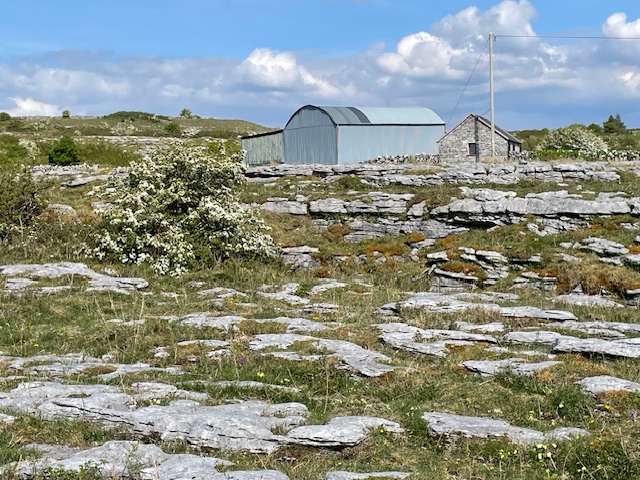
Living as I did for decades near the Silverdale & Arnside AONB on the Lancashire/Cumbria border I got to appreciate limestone pavements and the flora and fauna that thrive there. Coming to the Burren in County Clare for a day gave an even greater appreciation of such a landscape at scale and extremity. What at first looks like a barren and otherworldly landscape is in fact quite the opposite.
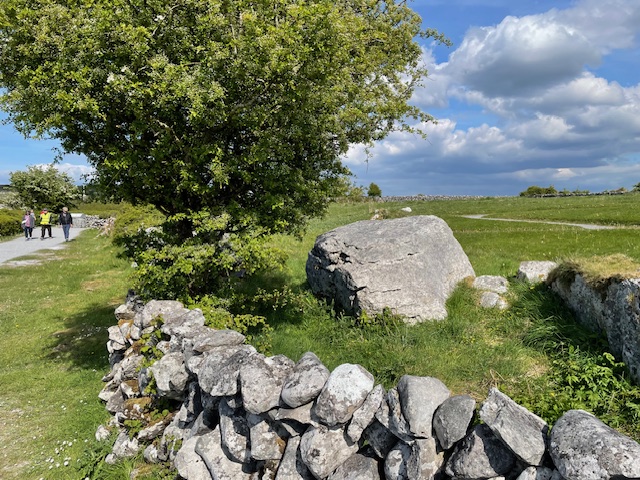
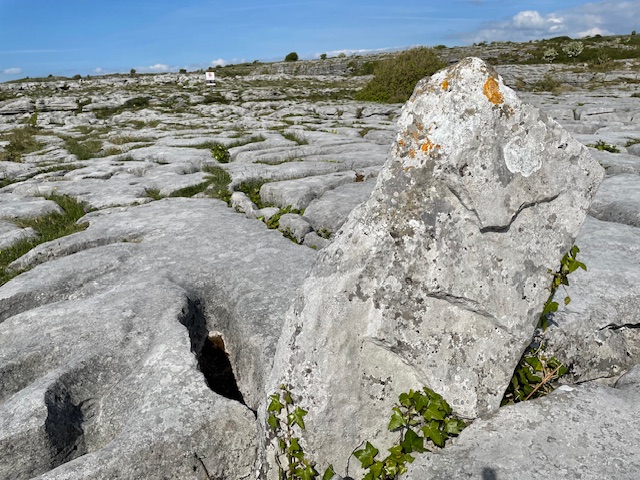
Much of the Burren (Irish Boireann for a rocky place) is a national park, part of the UNESCO Geo-park along with the Cliffs of Moher. 1500 hectares of karst limestone, calcareous grasses, hazel scrub, turloughs (lakes) petrifying springs, cliffs and fens. Limestone formed from sediments millions of years ago has been further ground and compressed into fractured state by glaciation. In those gaps or grikes plants thrive in their mini eco chambers.
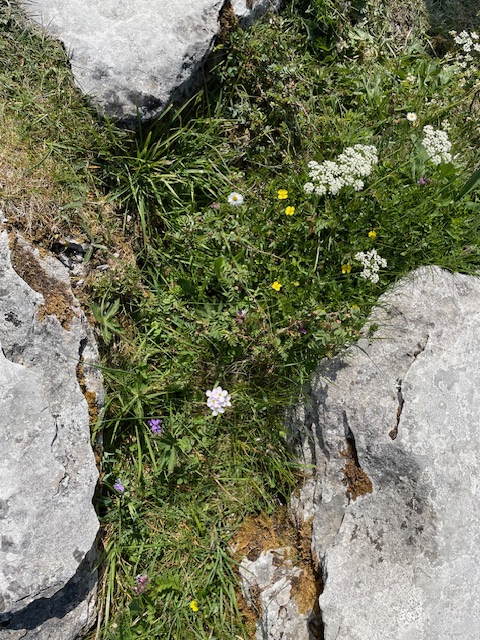
Some 70% of plant species found in the island of Ireland are represented here and 23 of the land’s 27 native orchids too. Most excitingly for botanists it’s party time for the world’s plants as flora from Arctic, Mediterranean and Alpine environments all thrive here and the grasses between rocks are species rich, providing quality grazing.
People have lived on this plateau for many thousands of years, and the wider area boasts some 3,000 registered ancient sites. We were fascinated to find out more when visiting the Burren’s best known dolmen, or burial chamber, at Poulnabrone. This striking structure is the oldest dated megalithic monument in Ireland. A portal tomb type it has two capstones, although at some point in the past the rear one had collapsed.

Archaeological excavations in the 1980’s revealed that 33 people had been buried here and that the tomb was in constant use between for 600 years between 5,200 and 5,800 years ago. This visit to Poulnabrone put me in mind of another dolmen of similar design and age I have visited often in the past; Pentre Ifan in Pembrokeshire.
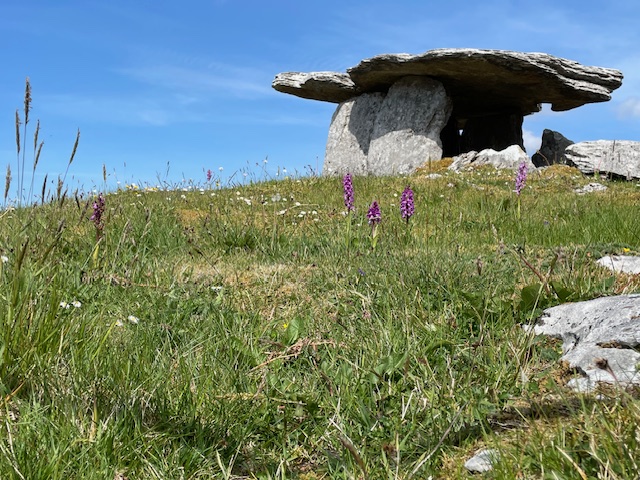
Early purple orchids were growing in abundance through the short wiry sward around the tomb and the grikes were full of ferns grasses and other calcareous loving plants. The land about was also dotted with erratics, large rocks left by glacial action. These are mostly limestone but some, being carried from a distance away, are of gritstone and granite.
A local we spoke to bemoaned the huge rise in tourism in the age of social media and the problems caused by it. Although the majority of the thousands of visitors here each year respect the place a significant minority do not, he said. They camp here, leave rubbish or worst of all attempt to make offerings or cremate remains in the tomb. One such misguided event a while ago caused cracks in the structure and visitors are urged to tread lightly, with care, less we damage the things we’ve come to admire.
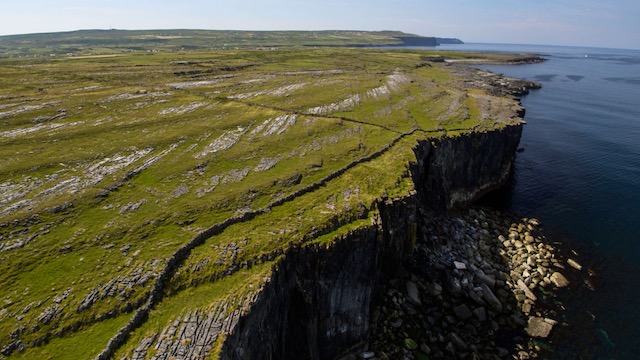
A Cromwellian officer in 1651 captured the paradoxical nature of the Burren when he reported ‘A country where there is not water enough to drown a man, wood enough to hang one nor earth enough to bury one… yet their cattle are very fat’. I was fascinated to read up later about the ways that traditional agriculture and contemporary conservation have learned to partner here in the 21st century. Farming families on the Burren practice husbandry that runs counter to conventional cattle management in putting their beef herds – mainly shorthorns, but also Herefords, Dexter and other breeds – onto the exposed high land in winter as opposed to taking them off. In so doing they are key maintainers of an eco-system famous the world over.
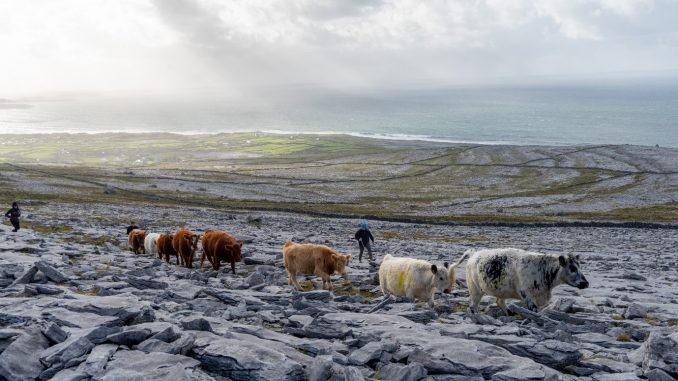
Winterage, as this practice is known, ensures dead herbage is grazed off and creeping hazel scrub contained, thus preparing the ground for spring flora to flourish. The calcium and mineral rich grassland pockets between rocks provide healthy bite, with water from renewed springs and the well-drained stone ground, heated through the summer months, giving a dry lay for the beasts. The cattle have clearly learned to be nimble footed too, avoiding leg breaking crevices as they forage and roam.
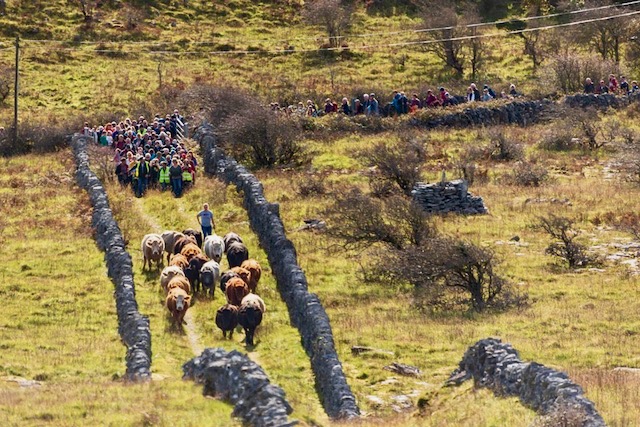
Today this outstanding example of transhumance is increasingly appreciated by the wider public and acknowledged by the authorities through a custom made subsidy basis. Every October The Burren Winterage Weekend Countryside Festival culminates in the participating crowds following farmers as they herd their beasts up along the ancient drove roads to those winter pastures. What an unusual and heart-warming sight it is.

 STEPHEN TOMLIN