Once again I see / These hedgerows, hardly hedgerows, little lines / Of sportive wood run wild… (Wordsworth)
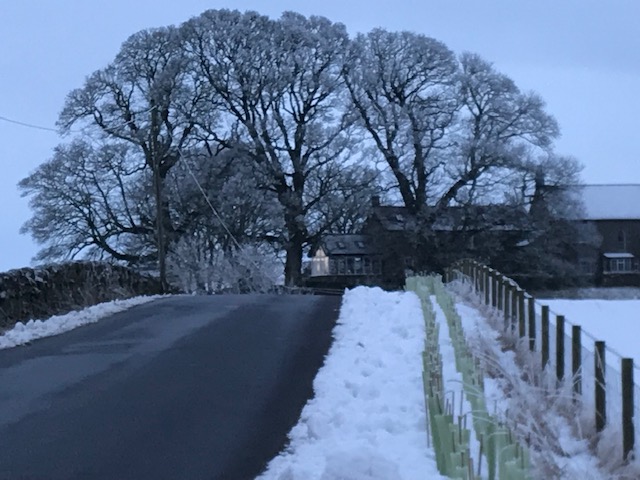
Like many walkers who want to combat littering on their local patch I pick up rubbish – mainly drinks tins or bottles – from the verges of our lane. Lately I’ve taken to adding another duty – voluntary hedge warden.
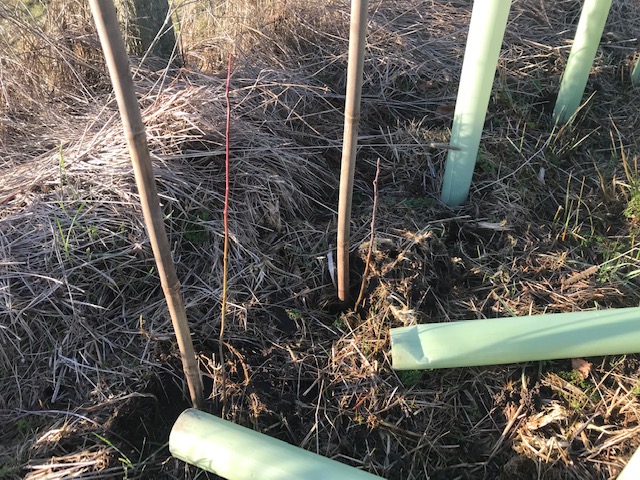
I was delighted by our neighbour’s efforts in bordering roadside boundaries with the planting of hedges last autumn (See previous diary). Recent bouts of snow followed by a severe storm took a toll of the stripling plants in their plastic covers, staked with bamboo. Reuniting all three elements when taking daily constitutionals has been a satisfying thing to do. Stretching or leaping across roadside drainage ditches in places adding an extra fitness testing edge to the exercise.
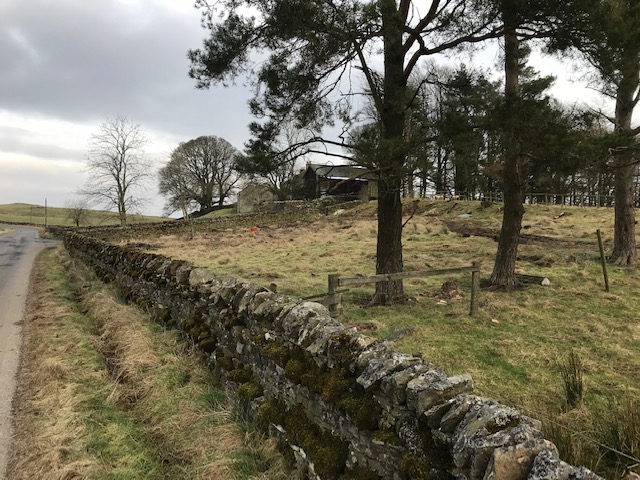
Southridge will also be getting a new shelter belt planted soon by the steep farmhouse lane. Lime, oak, chestnut and hazel will be going in to replace Sitka and Norway spruce harvested over a year ago, complimenting the remaining line of handsome Scots pines at the field wall. It’s only a small block but having native hardwoods back on the scene is as encouraging as the planting of new hedgerows and shows genuine commitment to long term landscape recovery. Many such actions replicated around the country must give cause for cheer.
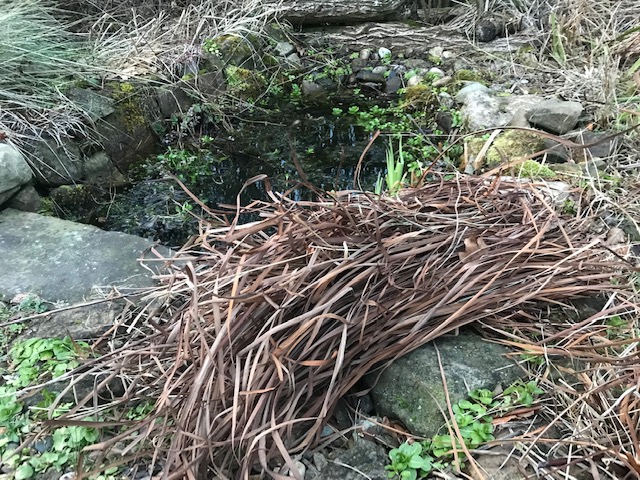
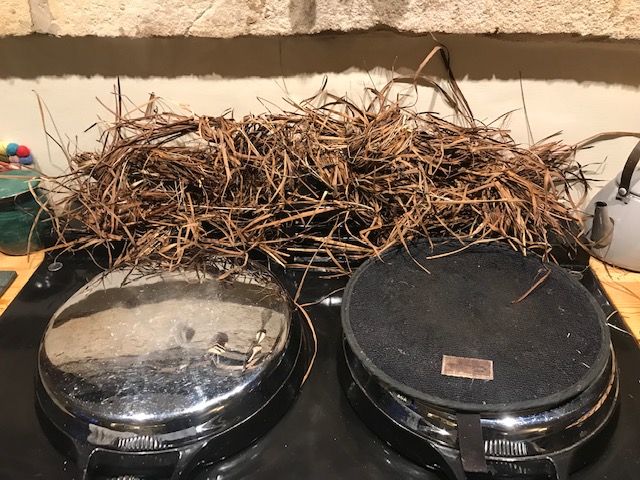
Clearing last year’s dead foliage round the garden ponds has spurred a bonus product. The brown leaves of Iris sibirica make for good material in soft textile basketry weaving so I cut and dried this bundle by the kitchen Aga to pass on to Sara, the family’s natural fabric worker of fine pieces.
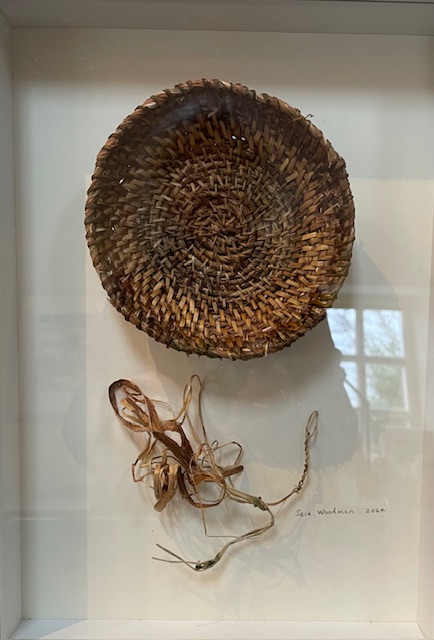
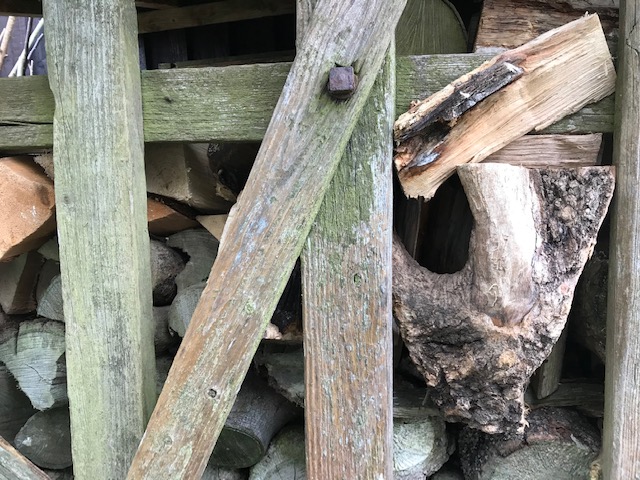
Cleaned out all the old nest boxes and added a couple in strategic places about the garden. Always fascinated by the shapes of trunks and boughs so I rescued this one with its cavity from the log pile and slotted it into the side of the west end log store. Maybe a pied wagtail or robin will take advantage of it this year as both species like this quiet corner.

On bad weather days Kim has been turning her attention to sorting material for another quilt. (A long family tradition down the female line) When decent weather allows she’s been getting the kitchen garden ready to receive this year’s crop of seed potatoes and other bulbs and seeds. Also been clearing flower beds and drains before top dressing with mini-bark. I meanwhile continue to chip branches to add to the nourishing protective layer.

Who doesn’t love snowdrops? Nothing cheers a drear February day more than the cheering sight of these freewheeling waves of white blossoms. We love it that they are so at home, spreading year on year to grace more corners of the garden with their welcome presence.
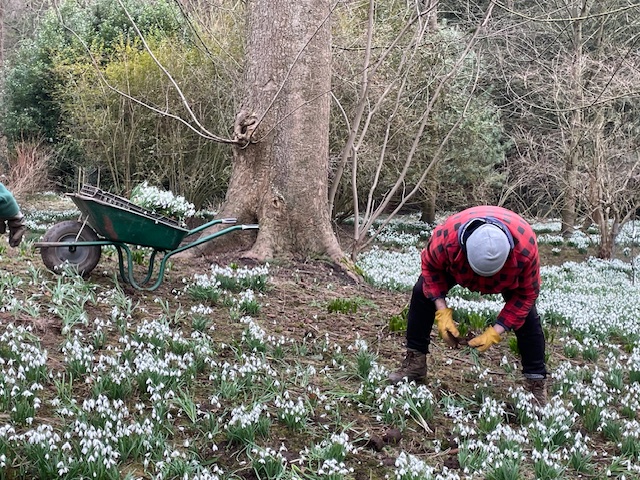
Some of the family took themselves off for a guided walk in the grounds of one of the county’s big houses and saw the gardens team plant flowering snowdrops ‘in the green’ as they have done for decades, so the vast swathes of them multiply year on year. Most are common snowdrops (galanthus novalis) but amongst them are a distinctive form of the common variety – the Sandersii Group’ – named after the man who discovered them at Chillingham, James Sanderson.
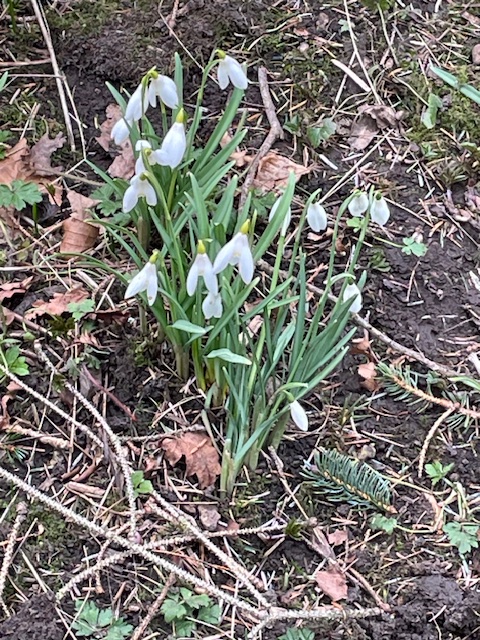
Commonly known as ‘The yellow buttercup’ and sometimes ‘the Northumberland snowdrop’, Their leaves too often take on a paler colour due to differences in the levels of chlorophyll within the plant. Because these unusual plants are coveted by unscrupulous collectors their exact location must remain anonymous.

The moles have been active wherever one looks. The bare open landscape dotted with their prodigious eruptions of soil. Andy, our window cleaner, tells me that a straight line of molehills indicate the male’s subterranean course while isolated clumps are most likely to indicate the presence of females with their nests and stores close by. Not sure if that’s right or not bit I like the sound of it.

 STEPHEN TOMLIN