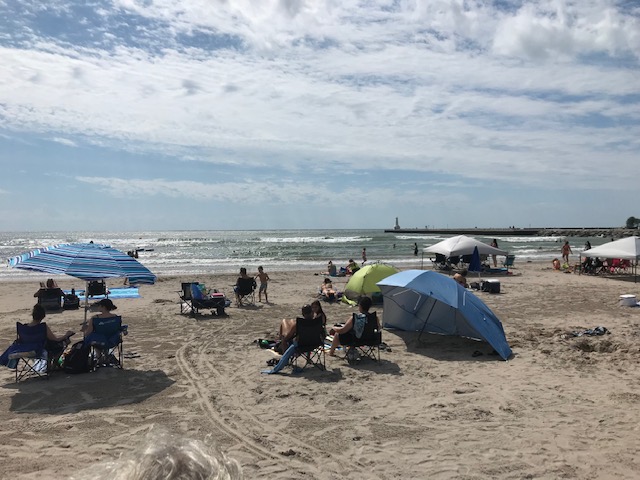
Our first stop out of Toronto was Cobourg, a town and beach resort further east on Lake Ontario in , of all places, Northumberland County. Still a matter of some fascination for a European to see a lake so big it powers breakers like the proper seaside!
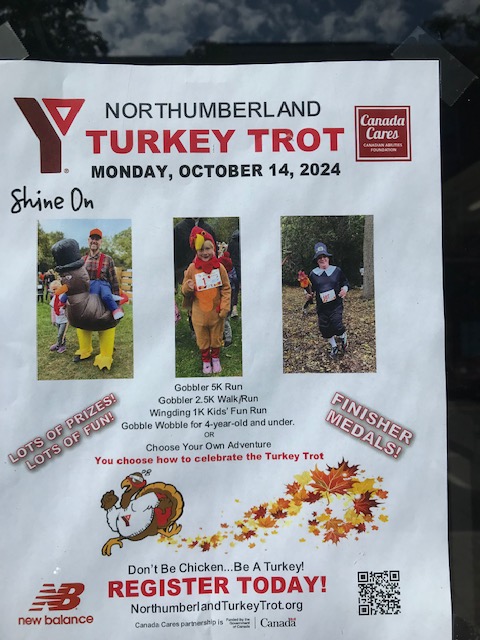
Not sure if Turkey trotting would ever catch on in our home county of Northumberland, but it certainly seems to be a popular entertainment hereabouts.

The old pleasure steamers are long gone although the marina was full of pleasure craft while the beach and adjacent playgrounds were buzzing with happy family groups making the best of the Labour Day vacation weekend.
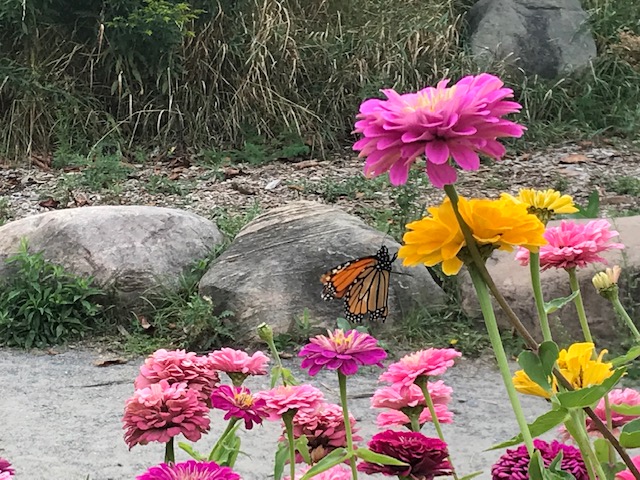
We stumbled upon a pocket park purpose built as a pitstop for migrant Monarch butterflies They are as big as a small bird big – 9-10 cms wingspan – and get their name for their main colour, after King William III of Great Britain, the Dutch William of Orange. This handsome creature is notable for its mass migration from the northern US & Canada to Florida or Mexico. The larval stage feeds on a variety of milkweeds while the migrating adults – as we were excited to witness – fill up on buddleia, goldenrod, chrysanthemums etc.

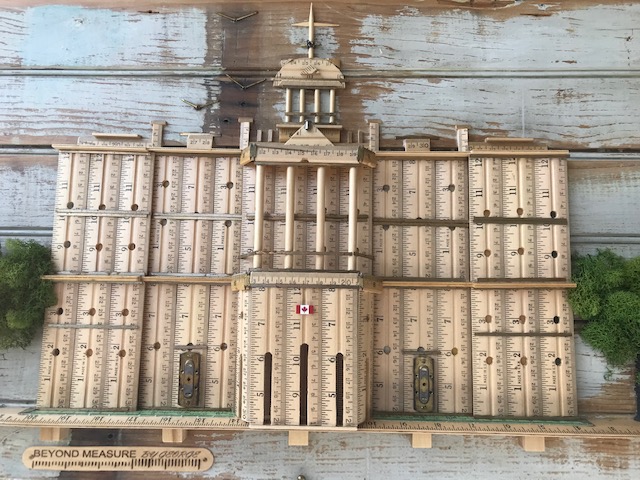
Later, having wandered down the main thoroughfare with its wide sidewalks spaced with shade giving trees and cheering swags of flowers on lamposts, we had lunch outdoors at a café. It stood opposite the Victorian town hall, and we’d earlier admired a local craftsman’s model of the grand building, fashioned from old rulers, displayed in a shop widow next to our café.
Everyone surprised and delighted when a male praying mantis alighted at each table in turn. Rather disconcertingly we observed Its green triangular head turning right round. pity I couldn’t have used a ruler from next door but I reckon this chap was around 6-7 cms in length, with enlarged forelegs perfect for catching and gripping a wide variety of insect prey. The locals love them when they feast on mosquitos and blood sucking black flies that can plague the lakeland areas in Spring, we were told.
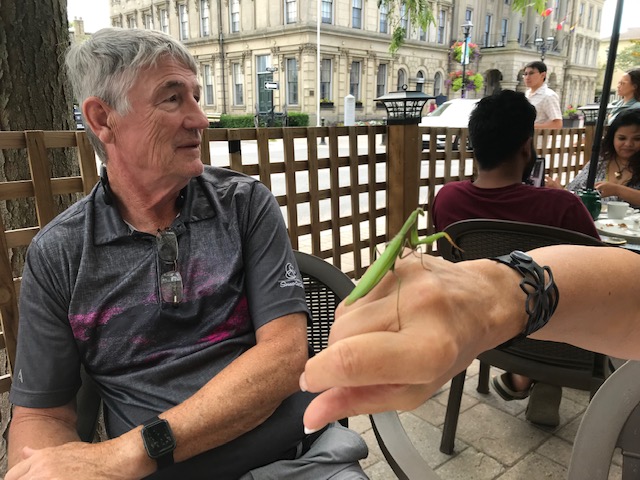
Mantis are chiefly remembered though for the (larger and more sedentary) female’s habit of eating the male after mating. Introduced from Europe to the eastern seaboard in the 1890’s, in a rather misguided attempt at biological pest control, their population is now well established in North America.

 STEPHEN TOMLIN