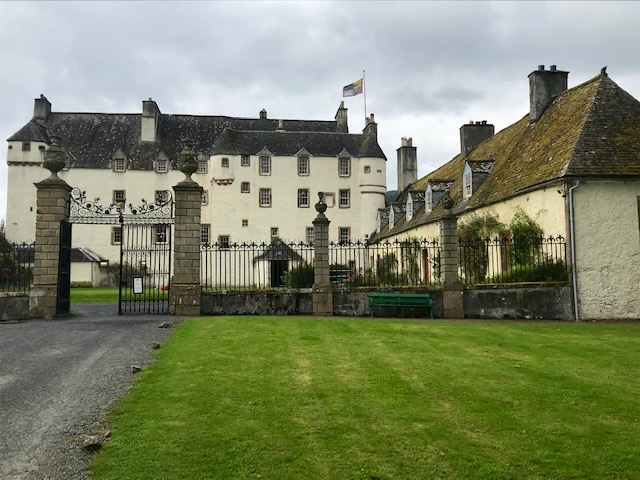
Of all the historic properties visited as a tourist, as opposed to the ones worked in as an actor, Traquair remains a firm favourite. For centuries the home of the Stuart (now Maxwell-Stuart) family it exudes an authentic sense of history while still being accessible to the world. It draws you in to its lively story as Scotland’s oldest inhabited house, with the colourful characters who inherited, extended and developed the place down the centuries.

The Stuart family, kinsmen to the Scottish monarchy have been resident at Traquair since 1461. The family rose to national prominence as their wealth and influence grew, as visits by twenty seven monarchs bear witness. The Catholic Mary Queen of Scots amongst them and her bedroom furnishings here are particularly striking. You see the oak cot her hosts had made to accommodate that tragic monarch’s infant son James, who would become king of both Scotland and England in 1603.

The family paid a protracted heavy price both as Catholic recusants after the reformation and for their later loyalty to the exiled Stuart cause after the revolution of 1688. How the family managed to hang on to remaining land and property given their fiscally challenged state and Jacobite sympathies was a wonder in itself. The most famous legend attached to the house is that of the elegant ‘Bear’ gates at the top of the long straight grassed over drive. Closed in 1745 after the departure of Bonnie Prince Charlie and his army, they are never to be reopened until a Stuart monarch is restored to the throne.
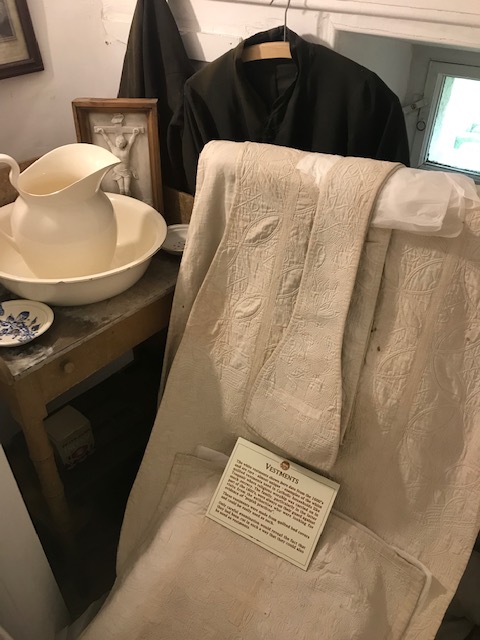
In the wake of one failed Jacobite rising Traquair was attacked and part looted by a mob of angry local protestants. The Priest’s room here on an upper floor has a secret passageway enabling the incumbent to flee to safety in the neighbouring woods. Liked the detail of the incumbent’s vestments, unique in being plain white and quickly convertible to bed covers when such an emergency disappearance arose.

The museum is worth the climb with guide rope up a steep winding stone staircase to the highest level of the original medieval former hunting lodge. The plaster walls with faded C16th frescoes of hunting scenes is the backdrop to well displayed family memorabilia and object d’art.
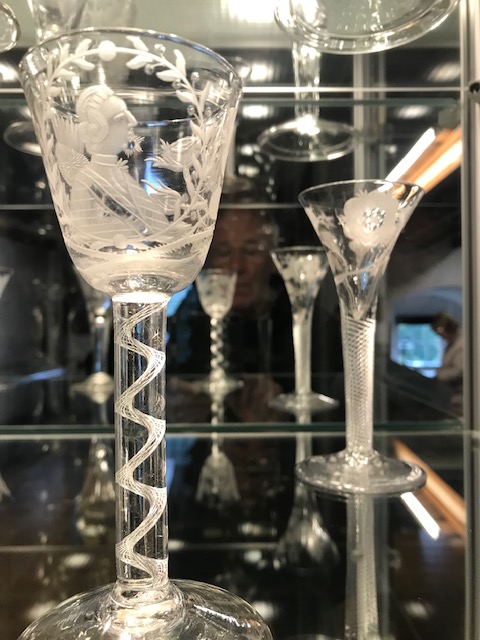
Curiosities range from Jacobite drinking glasses and miniature sets of C18th travel essentials to an intriguing set of ‘Napier’s Bones’ for calculating logarithms.

The organic nature of Traquair house adds greatly to the charm as you walk seamlessly from one century’s habitation to another, over different floors, through rooms adapted to time and place, marking the family fortunes. These rose and fell and would rise again through enterprising ways as the place opened up to the world in the modern era.

The title passes through both the female and male lines. In 1875 Lady Louisa Stuart died childless, aged 100, and the estate passed to the nearest relative who happened to be a Maxwell. The current, 21st Laird, Lady Catherine and her husband Mark, run the house and its 100 acres of grounds today through a charitable trust. Their programme of events has one unusual festival – Beyond Borders – coinciding with the final week of the mega festival up the road in Edinburgh. The marquees for which were being delivered as we arrived.
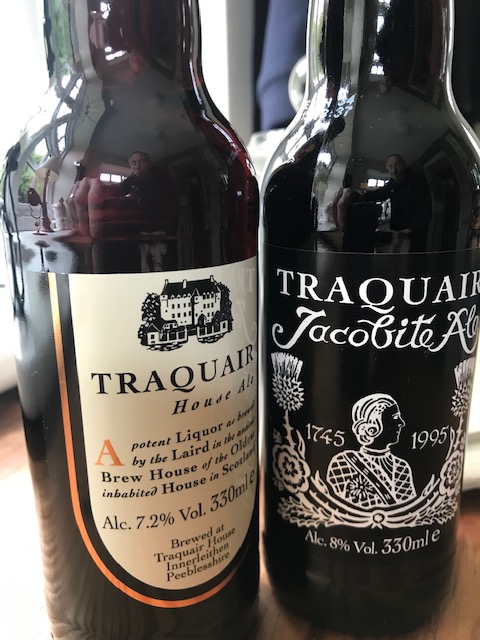
In the 1950’s Lady Catherine’s father Peter re-discovered the abandoned C18th brewery and gradually renewed the craft on a commercial basis, a forerunner of today’s micro-breweries, that’s now a thriving business exporting nationally and internationally. Naturally we stopped in the shop to buy a sample or two.

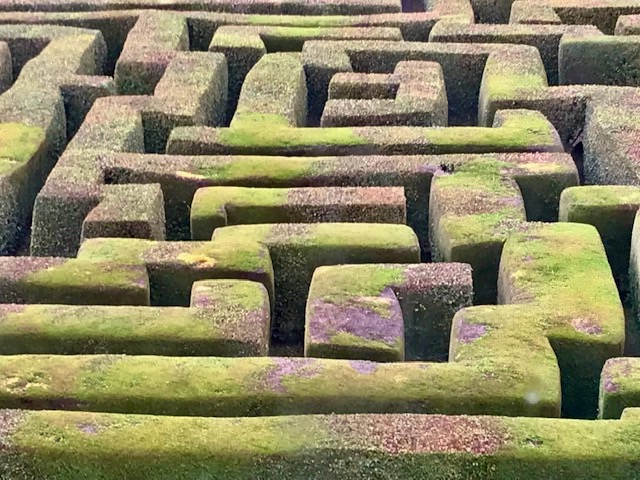
A pleasant café in the former gardeners cottage, part of the extensive walled garden, now largely grassed over, complete with a pond and mature orchard. Particularly loved the sculpture of a life size heavy horse made up entirely of agricultural machinery and ploughs, painted black. Entitled ‘Epona’, it was made in 1999 by Rachael Long. We didn’t visit on this occasion but there’s also a beech tree maze created in modern times, with paths leading through the woods to the children’s playground and river beyond.

 STEPHEN TOMLIN