In honour of the printers – past, present and to come…the multipliers of recorded thought, carrying down knowledge…the preservers of art, the promoters of culture. (Printers Association of Chicago, 1914)
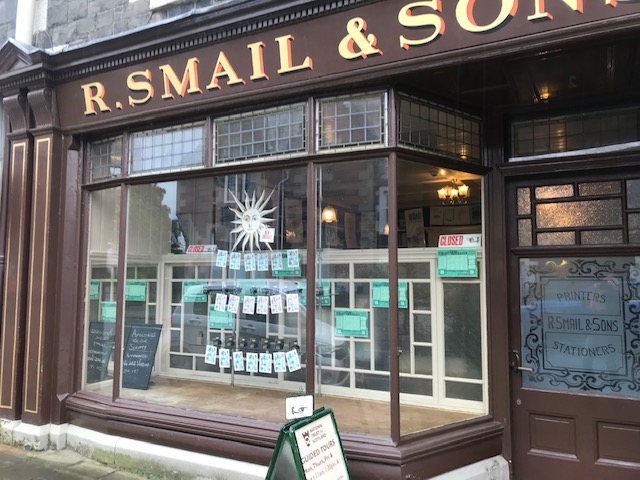
Traquair House apart, Innerleithen in the Scottish Borders has an historic time capsule within its purlieu at R. Smail & Sons printing works on its high street, in the same premises it began business in 1866. Three generations of the family ran the firm up until 1986 when Cowan, the grandson of founder Robert, retired. By a stroke of great good fortune the whole premises, complete with all the original printing presses, equipment and archive came into the possession of the National Trust for Scotland (NTS) who moved to restore and reopen the business as a working museum. Staff and volunteers still print commercially for customers near and far using that original machinery, as well as operating daily tours and running courses out of season. This was our second visit, we enjoyed it so much when visiting for the first time years back with the grandchildren who live locally.

Our 90 minute guided tour, was led in turn by two experienced printers, Being engaged as apprentices, here to learn the trade, was a neat way of engaging our interest and involvement.

For most of its working life the premises were powered by a race off the burn that threads through this attractive Tweed valley settlement, formerly known as St Ronan’s Well. A mid Victorian boom town, water powered a host of mills in Innerleithen, and there was a lot of work out there for an enterprising printer. Between 1893 and 1916, when labour shortages due to wartime conscription ended circulation, Smail’s also produced the local newspaper. What a demanding job that must have been as a huge amount of rapid typesetting by hand was required to produce the weekly four page ‘St Ronan’s Standard and Effective Advertiser’ for up to 800 subscribers, while staff also doubled as reporters and salesmen.
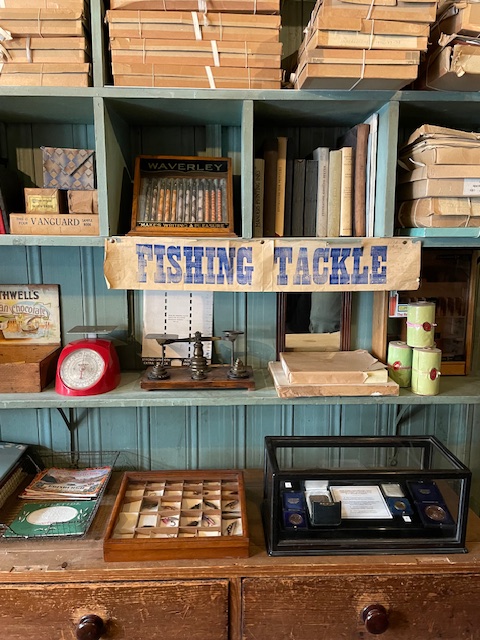
Emigration to Canada, Australia, Africa and the U.S. was a common occurrence in Scotland back in the day and Smail’s ran a booking agency for shipping lines up until WWI. The company office where we started the tour, illuminated by the acid etched shop front windows, has paperwork aplenty stacked in every nook and cranny. Keen fishermen, the Smail’s also stocked a range of flies for sale!
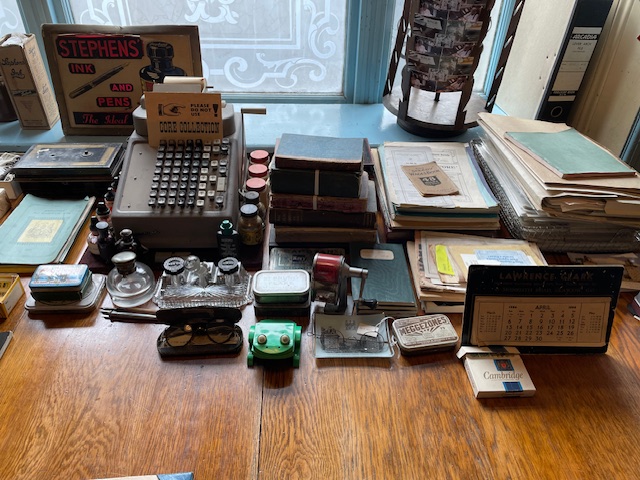
As we were to discover the family never threw anything away and their 52 hefty volumes of ‘Guard Books’ holds samples of every job produced between 1876 – 1956…advertising leaflets, posters, dance tickets, police reports, letterheads, concert notices, order forms, invoices, hymn sheets, menus, postcards and so on and so on. (After 1956 they kept job samples in files)

We were shown the original undershot water wheel in its casing as we entered the paper store. Quirky highlight here was the home engineered machine for dusting silver and gold leaf excess from finished print, utilising locally sourced fur and feathers from game.
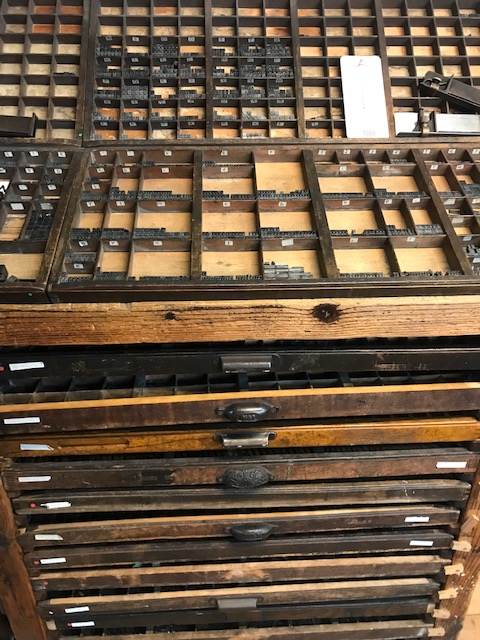
Ascending the stairs we were inducted into the business that went on in the case room situated under sloping overhead windows, maximising the light. Here Robin, our guide, instructed us apprentices how to pick letters from the big wooden galley case. ‘Upper Case’ capital letters from the top, the rest from the ‘Lower Case’. We then compiled them, back to front, right way up, into our metal setting sticks, ready to hand over for individual framing and printing by our compositor in the great C19th Columbia eagle press.
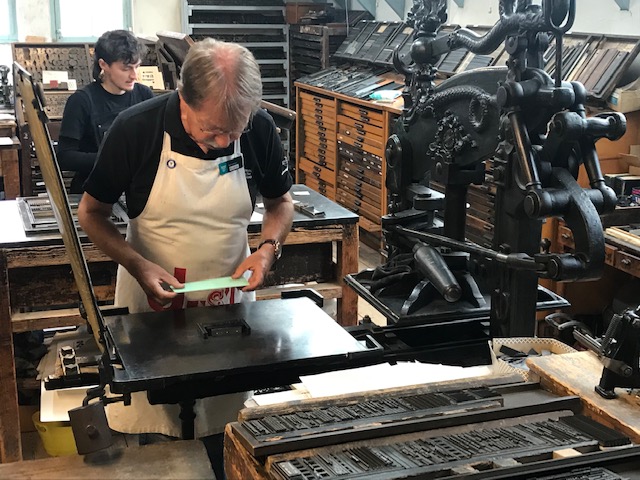
Everyone – especially the children in our tour party – loved being handed back the souvenir bookmarks printed with our names. Task completed, we’d ‘made a good impression’. Other expressions born of the letterpress tradition started by Guttenberg in the 1450’s were explained here. Particularly liked to ‘Quoin a phrase’ which refers to the quoins, plain metal pieces of various thickness, that separate, frame and secure a phrase within the hand held stick. We saw the soft leather rounded stick or ‘dab’ used with practised skill to ink the set type thinly and evenly. Hence the reference to someone doing a job well as ‘a dab hand’.
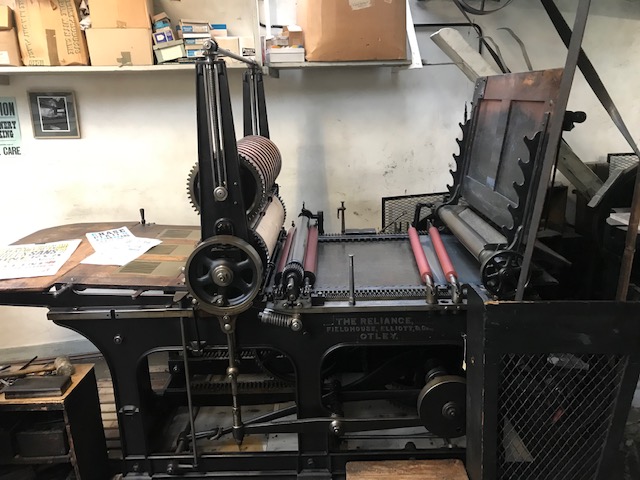
The tour ended back down in the ground floor machine room. We were handed over to printer Colin who gave live demonstrations of the 19th & 20th century working printing presses still in their original positions. The oldest, biggest machine for the largest paper size runs was a cast iron Wharfedale Reliance roller press made by Fieldhouse, Elliott and Co in Otley. Watching and hearing it in motion printing a run of A3 posters, driven by belts that would originally been powered by water, was quite something.
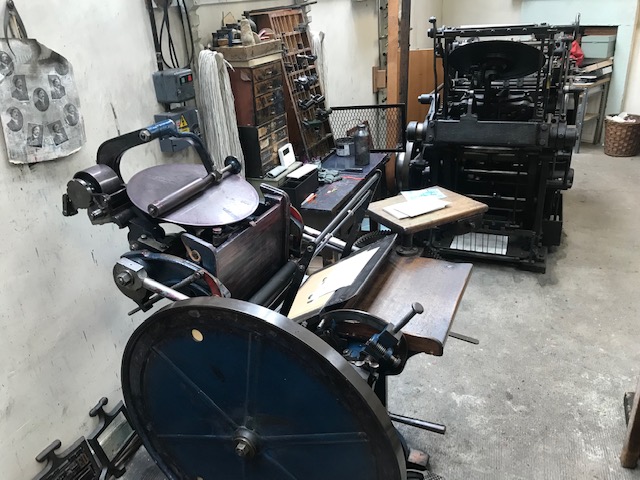
Seeing the smaller but no less impressive pedal powered ‘clam-shell’ machine in action proved fascinating too. Depending on the operative’s skill and concentration around 1,000 copies of small jobs – like bills, tickets or leaflets – could be printed every hour. Great hand eye co-ordination not to mention stamina required! Small wonder that a similar machine designed without guards, called The Cropper, caused many life altering accidents. Hence the expression ‘to come a cropper’.

Gift shops at heritage sites often fail to excite great interest but in this case our browsing produced a flush of sales, from a fabulous guide book with sample print pullout and wrap, to letterpress postcards, greetings cards, facsimile calendars and posters.
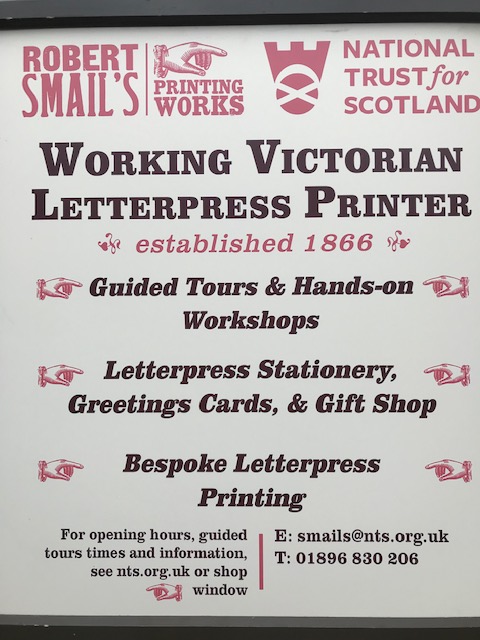
Smail’s has restricted opening days and tour numbers are limited so pre-booking essential. More at nts.org.uk

 STEPHEN TOMLIN