
Drum and Crathes castles are neighbouring estates on the north bank of the Dee between Banchory and Aberdeen. Both remarkable for the long unbroken history of occupation by their respective families. The Burnetts at Crathes, the Irvines at Drum. Both owe their early fortunes to Robert the Bruce, as each family had their fiefdoms in a vast hunting forest granted by that monarch. Their respective fortunes rose and fell in the turbulent centuries that followed, producing characters aplenty, amongst them rebels, gamblers and adventurers, fighters for crown and country, cultural benefactors and patrons. In one way or another playing their parts in regional and national events. In the late 20th Century both families called time on their ancestral piles and, along with hundreds of acres of estate acres, handed them over to the care and management of the National Trust for Scotland.
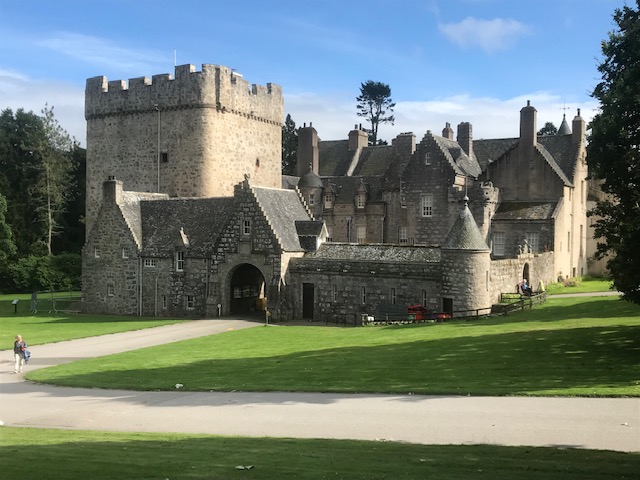
At 70’ high with walls up to 12’ thick Drum Castle’s central tower is one of the oldest in Scotland, an awesome construction dating from the 13th Century, which dominates the fine Jacobean mansion house and Victorian extension. The former common hall of the tower now a library with over 3,000 books, with many rare early editions, reflecting the family’s literary and cultural interests. The rooms throughout speak of a comfortable, comforting existence in more recent times, with elegant furniture and many beautifully crafted fittings.

Drum’s large walled garden is divorced from the castle at the edge of venerable woodland and rich pasture. A public appeal raised funds in the early 1990’s to turn it from its original function of kitchen garden into four garden rooms, divided by evergreen hedges, reflecting four centuries of rose growing and display.

One part of the garden surprises and delights with a human sundial where by standing on the edge of the current month marked the sun’s shadow will fall on the hour in the surrounding circle. Had the place to ourselves at afternoon’s end and its simple uncomplicated tranquillity conferred a sense of wellbeing.

I was surprised and willingly seduced by the presentation of Crathes, the showiest of the two castles. Garden and adjacent building combine to enchant visitors with contrasting colour, structure and texture. A series of way marked trails explores the woodlands and wider estate beyond.
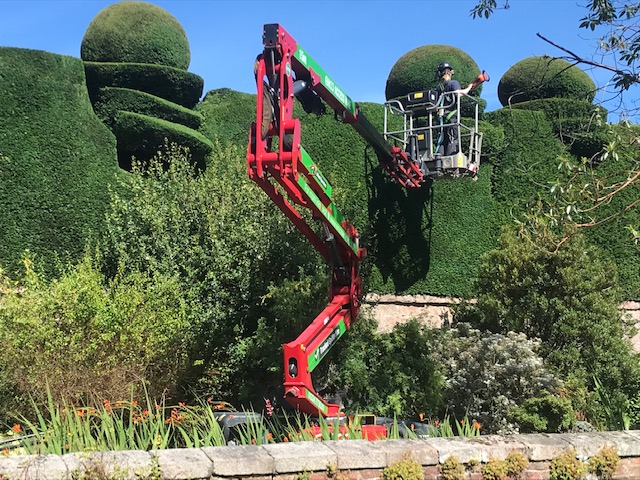
The prize topiary put me in mind of Levens Hall in Westmoreland and dates just a little later, around 1702. Despite the use of modern machinery – which we were lucky enough to see in action – the whole trimming process can take up to nine weeks to complete. There are eight individual gardens on two levels (including Victorian greenhouses) within its 3.75 acres of walled garden, divided by borders and hedges and graced by specimen trees.

A doocot (dovecot) with steps and decorative stonework is an eye catching feature of one corner. The rose garden its most contemporary feature, where we lingered on benches to soak in the atmosphere by a bubbling fountain carved out of local hard black stone.
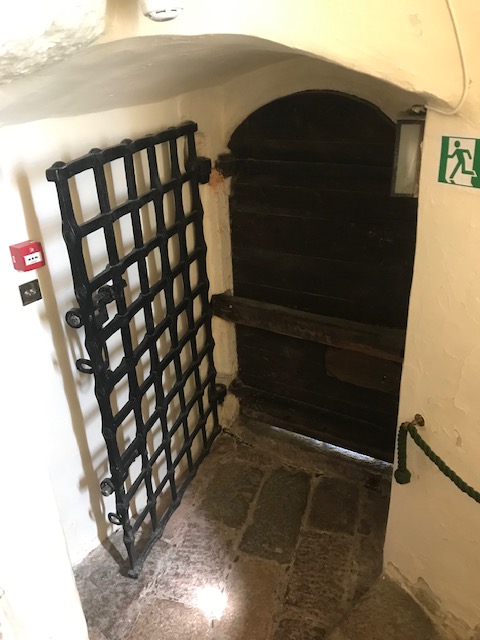
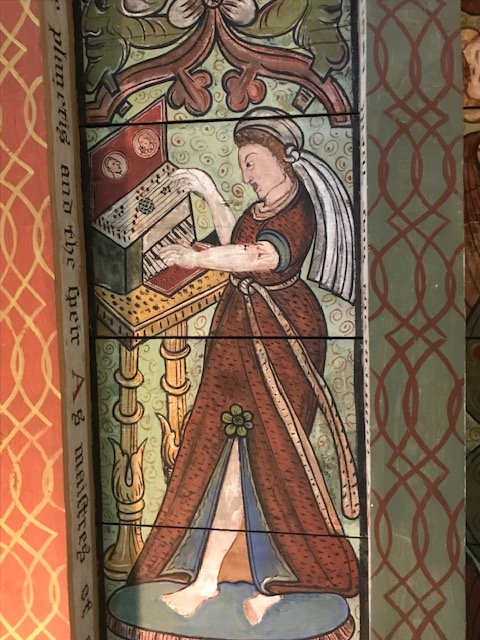
Crathes castle is a classic tower house that dates from the 16th/17th century. I loved the original stout wood door and iron gate behind it so typical of this sort of construction in uncertain and violent times. There were domestic comforts too by contrast. Only the Laird, his lady and VIP guests could expect a room of their own and a bed to lie on, so looking up from below at brightly decorated figures and lettered rafters on the ceiling was intended to entertain and distract by the light of candles and lamps.
Nearly all Crathes furnishings and contents were left to the trust by the 15th laird along with the house and estate in 1952, which adds authentic resonance to its domestic setting. Only the first floor is accessed by the addition of a wooden staircase in Victorian days, which means one must ascend the rest by the set of original granite steps spiralling upwards, linking one small room after another, floor after floor, until the wooden framed long gallery at the top is reached, which yields an overview of the gardens and wider estate.

Another set of spiral stairs then leads one down through more levels, bedrooms and private chambers. Dizzyingly wonderful stuff, especially when combined with ceiling art gazing.

Enjoyed good conversations with the warm and welcoming staff at both these properties. Find out more about Drum and Crathes and the stories of the individuals who lived there at www.nts.org.uk


 STEPHEN TOMLIN