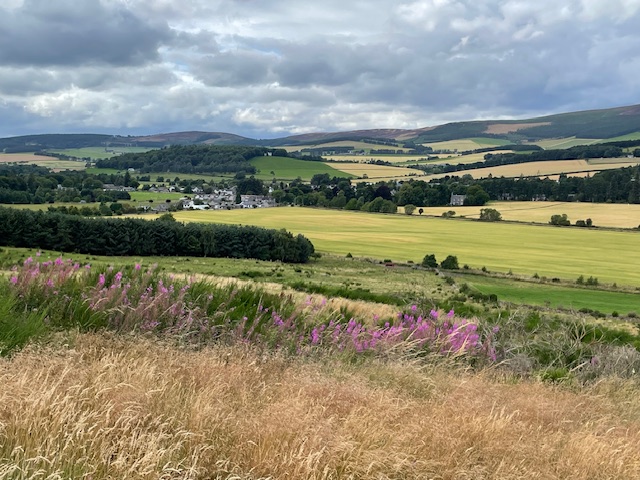
Arriving in Aberdeenshire the main road follows the stately River Dee downstream. We passed the huge car park that accommodates hordes of visitors for Balmoral, with police signs on the road prior saying ‘No stopping’. Our destination was one less called on, the village of Tarland, a few miles north of the main highway. The villagers have been enterprising in promoting sustainable green tourism by establishing a network of paths and trails through their district, although sadly we didn’t have enough time on this visit to explore them further.
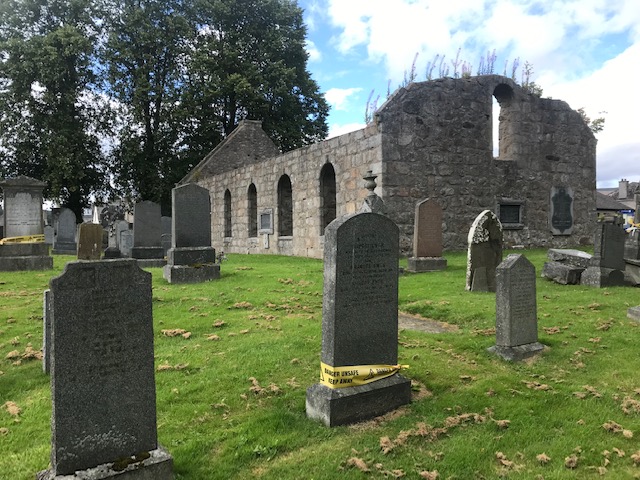
Our priority this initial visit, to explore the tree lined churchyard where the old abandoned Kirk stands, fronting the village square. Tarland was the rural settlement from where one of Kim’s forebears departed as a soldier in the Royal Engineers for Canada in the 1860’s, ending his career as the chief of police in Montreal.
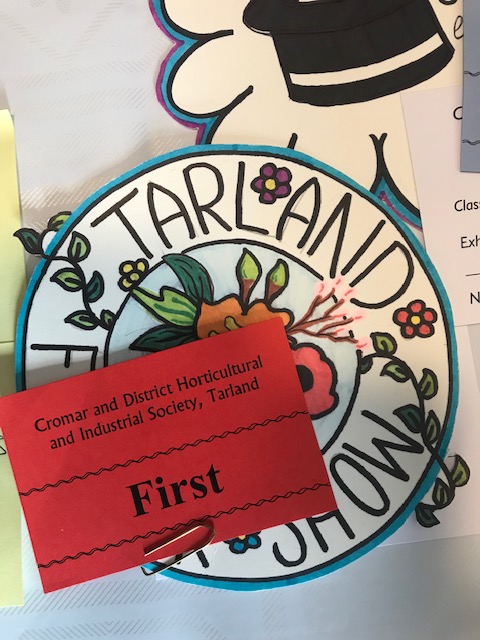
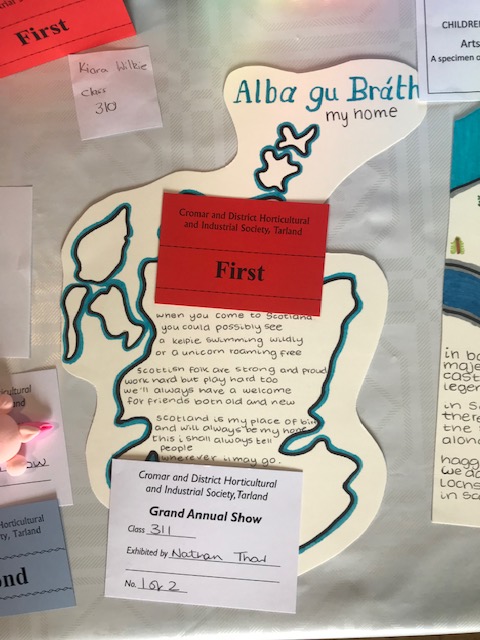
After a time scanning granite gravestones for family surnames we refreshed ourselves with tea and cakes in the café on the square. Then popped into the institute opposite to join the throng viewing an abundance of produce and prizes, courtesy of the local horticultural society at their annual show.

Leaving Tarland we stopped off on a gentle hill a couple miles distant to visit Tomnavirie Stone Circle on its fine view point of a summit. This atmospheric site dates from some 4,500 years ago. The key feature being that its biggest stone lies recumbent, flanked by tall uprights, framing a view of Lochnagar in the distant Cairngorms range. This circle’s inner kerb of stones once held a low cairn with a hollow centre. Amazingly, there are as many as 69 known structures like this, unique to north-east Scotland. The significance of all these features remain objects of speculation but were obviously of great existential meaning to the Bronze age farmers who constructed them.
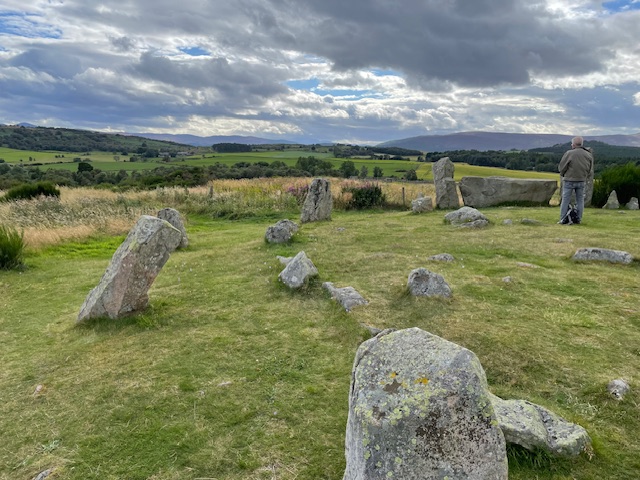
The symbols of existence and survival in ancient times and in the 20th Century are juxtaposed here with a nice touch of irony, as an abandoned cold war bunker lies just a stone’s throw south west of the stone circle. Its stairway entrance is still visible and below ground local members of the Royal Observer Corps would have hunkered down in the fully equipped bunker in the event of nuclear warfare, only venturing out to take samples of fall out to send to CHQ. How that would have actually worked in practice is rather dubious to say the least.

 STEPHEN TOMLIN