I recently learnt a wry lesson about the perils of attempting to quarter cattle in a field. Some weeks ago, over coffee in our kitchen, I suggested to our friend and neighbour up at Southridge farm that he put some cattle on the crags – our four acres of rough grazing. The stone walls have supplementary fencing topped with barb and the spring at the bottom could provide enough water for cattle.

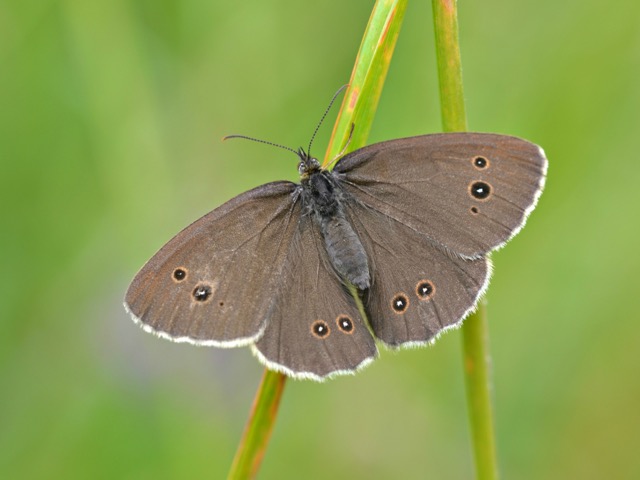
The family usually park their handful of Texel tups there after they’ve done servicing the ewes and they’re usually taken off for shearing and pastured elsewhere before returning in spring. It’s a good arrangement whereby our grass is grazed rested and kept serviceable and they get free pasturage. I thought a few cattle there, grazing it differently, might improve the quality of pasture. Subsequently walked the boundaries, wading through grass and rushes waist high in places. Ringlet butterflies flutter around me, dancing over dense patches of tormentil and bedstraw. Slipped a few loose capping stones back into place on the walls. All fences and walls reasonably secure.
Some six years ago our neighbours invested in suckler beef cattle to partner their sheep operation. A new shed was built for winter housing and another borehole sunk to supplement stock water supply. They opted for Stabilisers. An odd name for a scientifically bred and patented animal conceived to fit modern market requirements. Originating from a specialist research centre in Nebraska in the 1970’s, a conglomeration of Yorkshire farmers brought the breed to the UK in 1997 and have done well out of it since as you see increasing numbers of them on British hill farms.
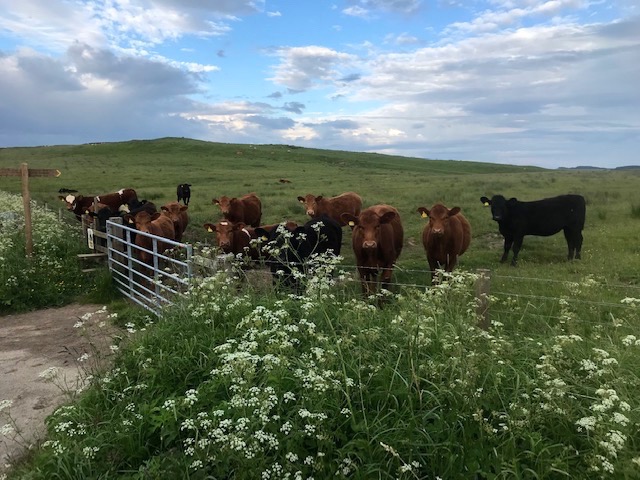
Stabilisers usually present in a range of colours from black through shades of brown to deep red reflecting the fact that they are a four way cross between traditional Hereford, Angus, Simmental and Gellbrich breeds, harnessing the best traits of each. Small and hardy, easy calvers, gentler temperaments and easy to handle with good growth rates. The lower cost, lower labour equation makes them attractive to farmers while the quality, marbled and tender meat has a guaranteed bulk buyer in Morrison supermarkets. On a more mundane level I found them attentive listeners when I talk to them, perched on the wooden style opposite, or watch them from a distance lick and nudge each other.
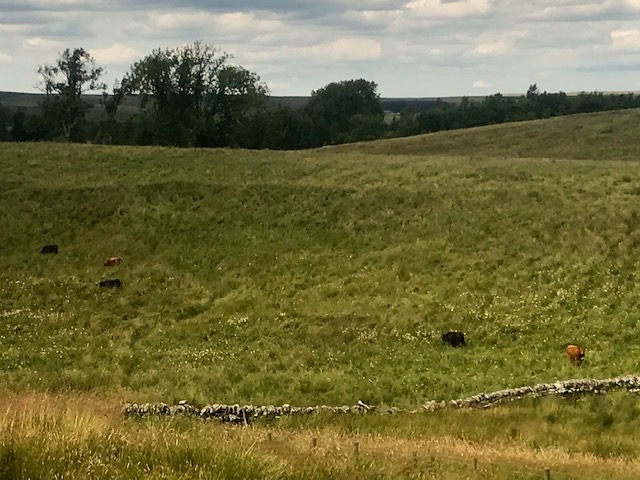
Our farmer turns up one weekend before last to say he’d just put a lame cow with her calf on the crags, so I was thrilled. Later I went out with the camera to record them in situ, only to find mother in our neighbour’s big pasture next door and her calf mooing inconsolably wandering the long grasses. Rang Southridge and our neighbour arrived on his quad to steer the reluctant mother back to our patch. Meanwhile – and this is the real mystery – the calf had somehow slipped between fence and dry stone wall into the other neighbours hillside field to join their separate herd of older stabiliser steers on the hillside belly high in swathes of meadowsweet, grasses and reeds!
Mother meanwhile evaded all efforts to get her back onto our side of the fence. She must have jumped over it to get to the big field. A metre high barrier is clearly not enough to deter a determined cow. Our good neighbours – father and son – eventually managed to retrieve both beasts from the different fields and drove them back up to the farm. We humans laughed it off in passing. Watching their retreating figures up the lane caused me to reflect with a rueful smile that I should have listened more and talked less to those curious bovines in the field. After all they know what herd instinct is and follow it to the letter. Fences can be jumped, walls walked around, company found and humans confounded.
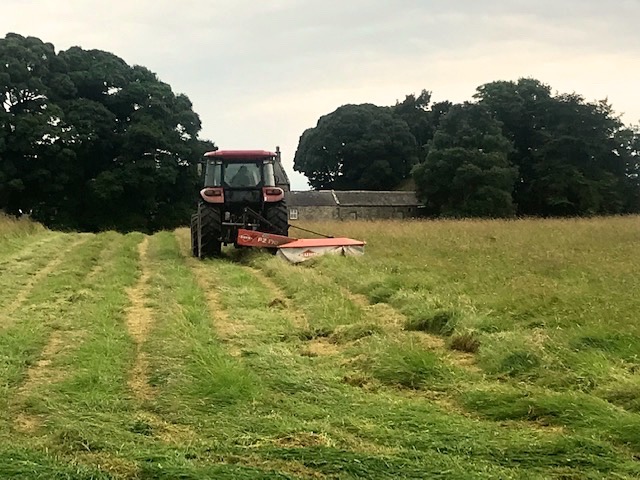
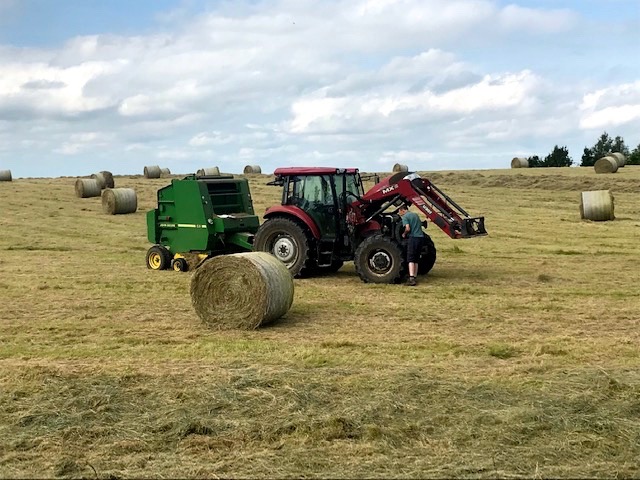
Finally….We wake every day this week with the divine scent of new mown hay wafting over the wall from the meadow named after our house. It’s the farm’s largest and flattest pasture and the one that provides the best haul of hay, year on year. One day it’s cut, a few days later woofled, (turned to help dry). After a few more days, with the gorgeous weather holding, the cut grasses are turned again then rowed up for collection by the baler which deposits those big rolls you see randomly about the place like so many giant draughts pieces.

Crows and gulls move in to quarter the newly exposed ground for worms and insects. Age, heat and dust take their toll on the old tractor so progress is slowed when it demands attention. There’s a new hay barn up at Southridge and over the next few days the tractor will stack and pull trailer loads up there to store in preparation for the long winter ahead.
UPDATE: On returning from holiday in Scotland at the end of August I was surprised and delighted to find a small herd of cows and calves grazing in our field. Our good hearted resourceful neighbour had put them there, knowing that company would help confine them. As an added precaution against escape he also used baler twine to extra secure our garden field gate. Later tells us that because the bottom spring doesn’t provide enough water he’s put a bowser (water tank) in at the gateway to his neigbouring field. We hope now that once they’ve munched through the grass the cattle will move on to graze the tougher stuff that sheep avoid like sedges, young thistles and soft rush.


 STEPHEN TOMLIN