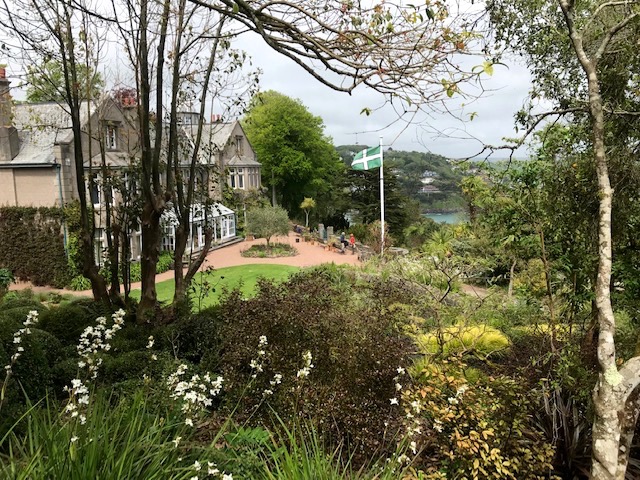
Now in the care of the National Trust, Overbeck’s consists of 3.5 acres of terraced gardens set on a precipitous rocky hillside outside Salcombe, giving fabulous views over the extensive Kingsbridge estuary – a great example of a sunken river valley, or ria. Its sheltered position allows semi-tropical and tender plants to flourish and a team of three gardeners backed up by volunteers do an effective job in both maintaining and enhancing this special horticultural haven.

Each garden room opens to another as you rise up or step down to enter them. The contrast of tall semi-tropical trees and native foliage is striking. The green, white and black County flag reminding us of the Devon Riviera location.Trees planted more over a century ago in the woodland area, laced through with winding paths and hidden viewpoints, have added more privacy as they’ve grown to maturity, as well as providing extra shelter.

The garden created around the house known as ‘Sharpitor’, built in the 1890’s, was used in WWI as a convalescent home for wounded soldiers. The estate was left to the Trust in the will of wealthy scientist and inventor, Otto Overbeck (1860 – 1937) who had retired here in 1928. He had made a fortune through his patented medical therapy of ‘electric rejuvination’ and this funded further development of the garden complex that bears his name today.

Our attention was drawn to an example of puya chilensis, a member of the pineapple family, flowering now for the first time in twenty years. In its native South America small birds and mammals seeking nectar act as pollinators, and sometimes they end up feeding it too. The leaves have vicious inward facing barbs so any unfortunate creature getting caught by them only adds to its diet.
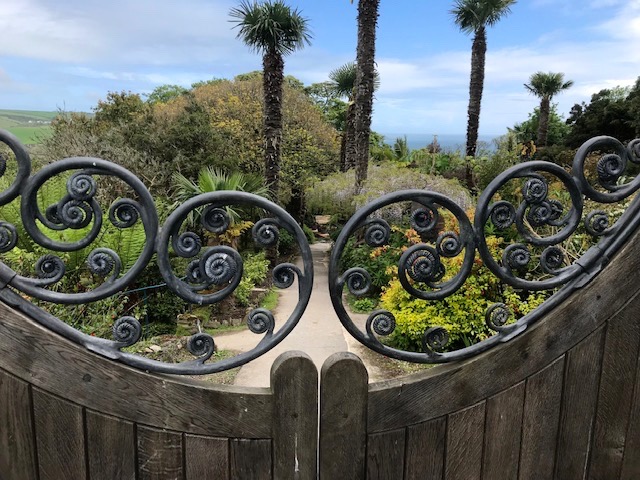
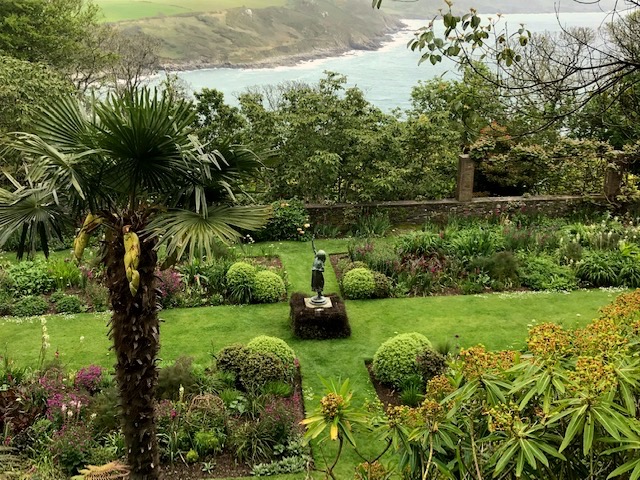
Liked the decorative ironwork that around the place, that adds a distinctive playful touch, the creation of a local blacksmith. His work ranges from curly-wurly handrails to concave gate toppings and stencilled sign over the steps leading down from the entranceway. Another graceful touch is the century old bronze figure known as ‘First Flight’ in the garden’s largest flat area – a former tennis court – now appropriately enough known as the statue garden.
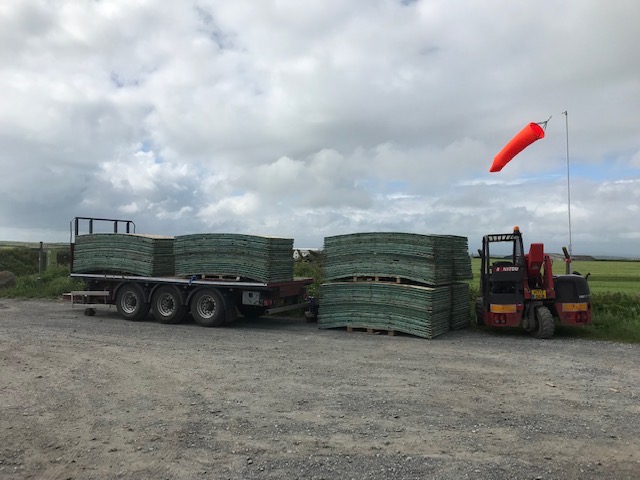
Parking at Overbeck’s is very restricted so we walked a mile or so there and back from the car park at east Soar, inland out on the headland, which opened our eyes to other fascinating aspects of the topography. The car park was doubling as a depot for all manner of trucks bearing the full range of kit needed for filming a major motion picture on location. We worked out that it was ‘The Salt Path’.
The book by Raynor Winn tells the story of her and husband Moth’s trek along the length of the south-west coastal path from Minehead to Poole at a time when they were homeless, and he had an illness diagnosed as being terminal.

A publishing sensation it is being filmed over the course of a year, starring Gillian Anderson as her and Jason Isaacs as him. What you’re looking at above are a stack of interlinking flooring used to minimise impact of equipment and facilities on a protected landscape like the coastal path.
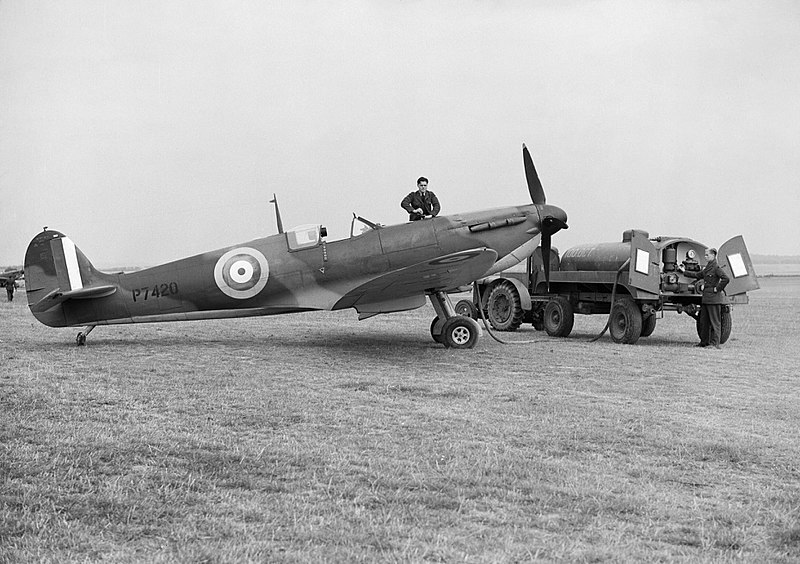
Wide farm fields today stretch towards the sea but this place was once a hive of activity after RAF Bolt Head was constructed here in WW2. This fighter base on the English Channel, home to spitfires and typhoons, was at its busiest in the lead up to D-Day – Operation Overlord – whose 80th anniversary we will be marking on June 6th.
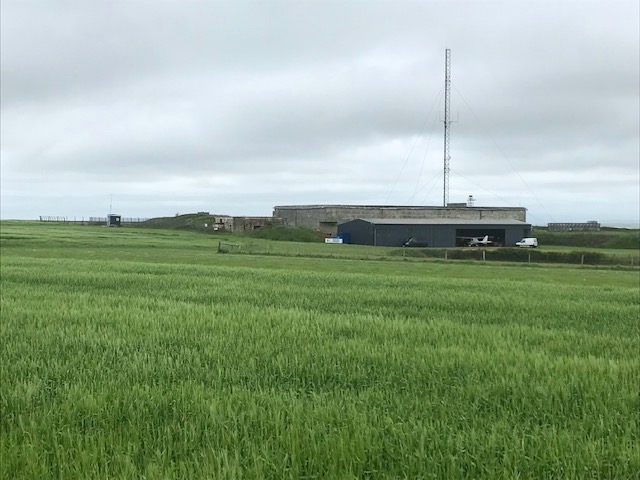
The military aerodrome closed in 1947, replaced by a smaller private facility for light aircraft. We were amused to see a Range Rover pulling a cutter at speed, back and forth, along the strip bordered by a cereal crop, maintaining peak grass performance. The original strip was built on a layer of sheep’s wool overlaid with metal grid. I’m wondering if that’s still in place under the grass.
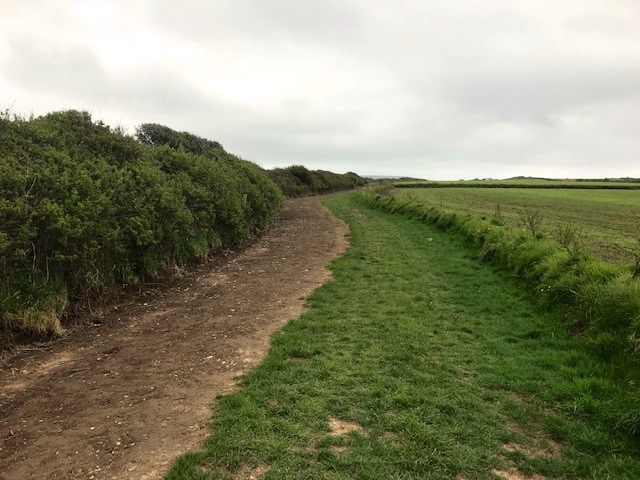
Heartened to see the NT rangers have been reconstructing lost hedge banks. These would have been original field boundaries, grubbed out to accommodate the construction of the wartime air base. With native varieties of shrub planted on top, in time the traditional deep hedge banks should look as if they’ve always been there.
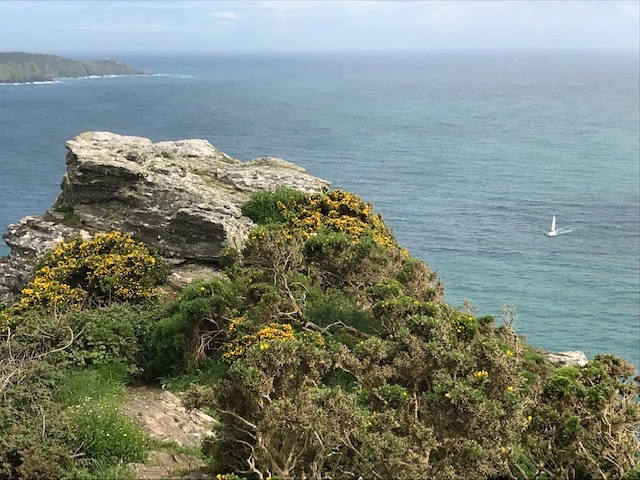
Leaving Overbeck’s we climbed steeply by path and steps to gain the high open spaces skirting Bolt Head. And what an impressive stretch of coastline it is. A simple plaque on a viewpoint overlooking the estuary reminded us of how fiercely powerful the elements can be and the immense bravery of those who risk their lives to save others from natural disaster.
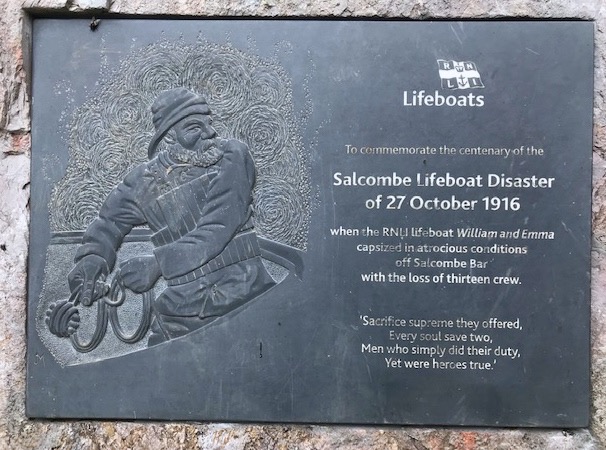
There are fantastic views from the coastal path to be enjoyed on a lovely clear day. Turning off for the car park inland, we threaded through traditional meadowland. A welcome stop off and chats with fellow ramblers at East Soar’s barn.
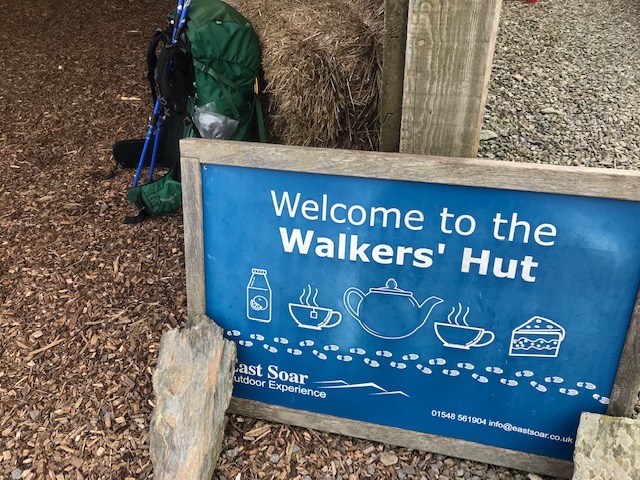
The farmstead is now run as an outdoor activity centre for young people and other groups, with goats, sheep and other farm animals for the young people to encounter and learn about. They even host weddings in the barn. A last stretch back along the straight access track to the car and we were away. Another wonderful day on the Devon coast, with special thanks to the National Trust for helping making it so at every turn.


 STEPHEN TOMLIN