Once or twice a year we head south on the train into the maw of the metropolis. London of course is entrancing and aggravating, enlivening and brutal by turn. We’re fortunate in being able to stay with family, one household in Forest Hill, the other ‘tween Kew and Richmond. Both are leafy inner suburban enclaves with environmental and historic attractions of their own.
The nearest we got to being back home in the country on this visit was in the heart of Dulwich village, the morning that Bell House opened its many roomed interior and two acres of garden to the general public. https://www.bellhouse.co.uk/
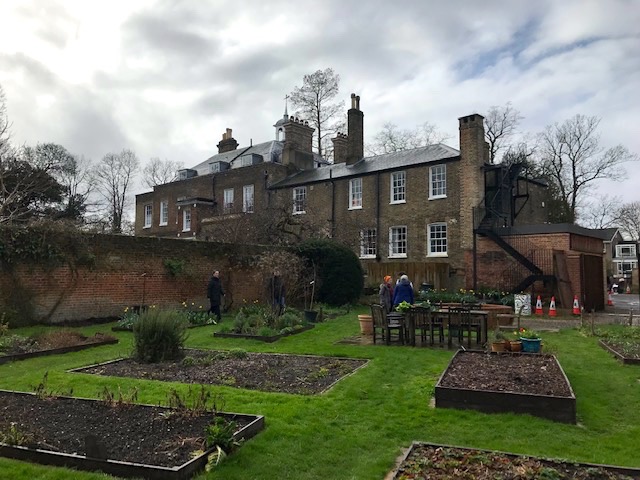
The mansion was built in 1767 by wealthy printer and publisher Thomas Wright, a former High Sheriff and Lord Mayor of London, as his country retreat. We got to ring the eponymous bell on our tour of the house, led by a volunteer guide. Community minded Mr Wright installed it to give warning on the outbreak of fires, when the fire fighters whose activities he subsidised would turn out to tackle any blaze.
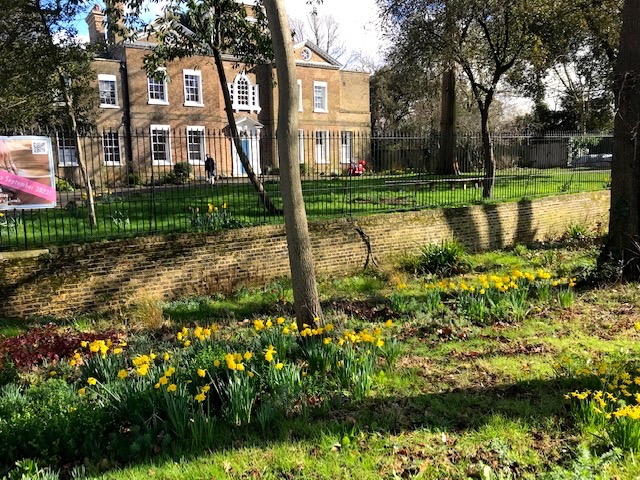
We also got access to the cellar rooms and saw the original household water pump. The spring below that it is a source of the little river Effra, a tributary of the Thames, that flows unobtrusively through Dulwich. There’s a hint of its subterranean existence at the front of the house between the grounds and College road, where the sunken ditch or ha-ha regularly floods with its waters.
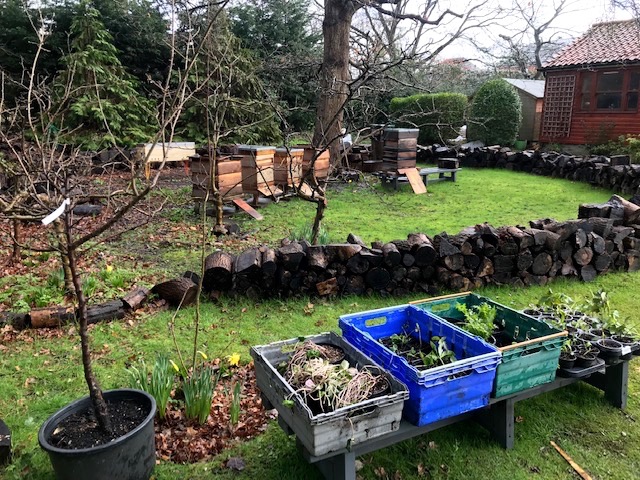
Another famous occupant of the house in the early 19th century was Anthony Harding, a silk merchant who opened the world’s first department store, in fashionable Pall Mall, in 1789. Bell House today is home to a registered charity which hosts a department store’s worth of community activities, including printing, which would no doubt have pleased those original occupants. The many upstairs rooms are workshops and home to gardeners and artists in residence.We explored grounds of mature mixed woodlands, kitchen and walled garden, orchards, lawns, flowerbeds and shrubbery plus enclosed stable yard and neighbouring cottages. The sun made an appearance after rain and the spring air was resonant with bird song, the unseen urban world seemingly far away.
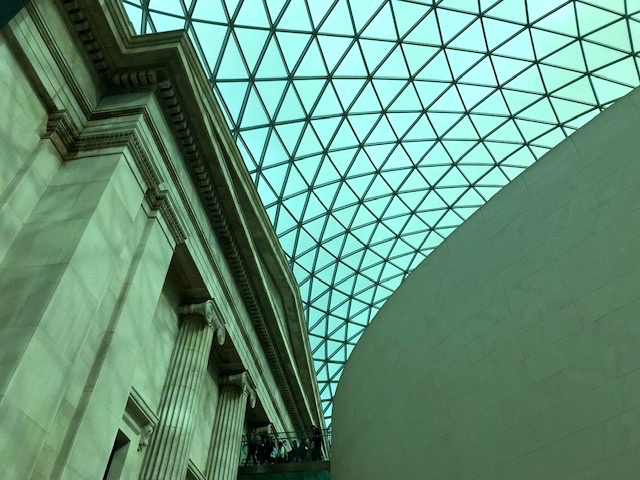
When not experiencing the vernal delights of affluent Dulwich or Richmond our long weekend in London was packed with cultural activities around the centre. Years have passed since either of us has been to the British Museum. A great magnet for visitors from all over the world, the queues are a little longer these days as security checks are now standard in marquees outside. The special exhibition we’d come to see was Legion: Life in the Roman Army. https://www.britishmuseum.org/exhibitions/legion-life-roman-army
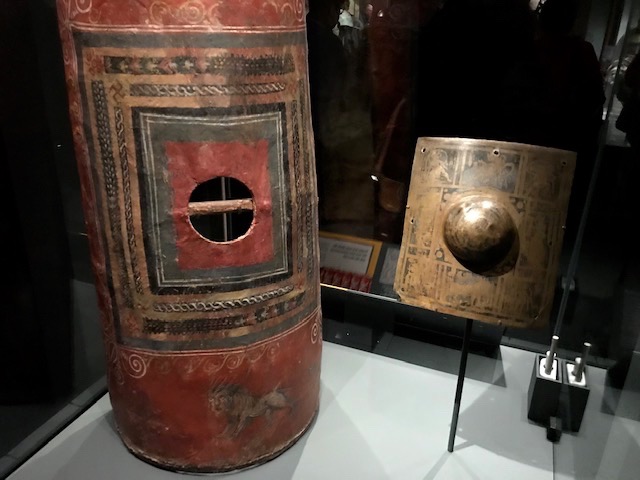
A very thorough and well-curated show it was too, rounded out with audio-visual immersive displays. A comprehensive review of the soldiers lot, made remarkable by the quality and range of the artefacts on display, from cavalry masks, armour and shields to gambling games and even marching socks.
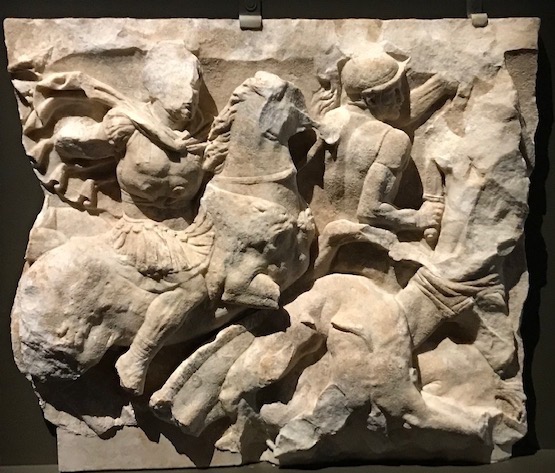
Proud too that many of these treasures were sourced from Northumberland; the Roman forts and settlements of Vindolanda, Chesters, Housesteads and Corbridge.

After a leisurely lunch in the excellent restaurant up aloft we went exploring in nearby streets. Love the way the biggest and constantly coppiced of pollution resistant plane trees, dating from Victorian times, manage to enhance the compact high sided buildings, like this one in Russell Street.
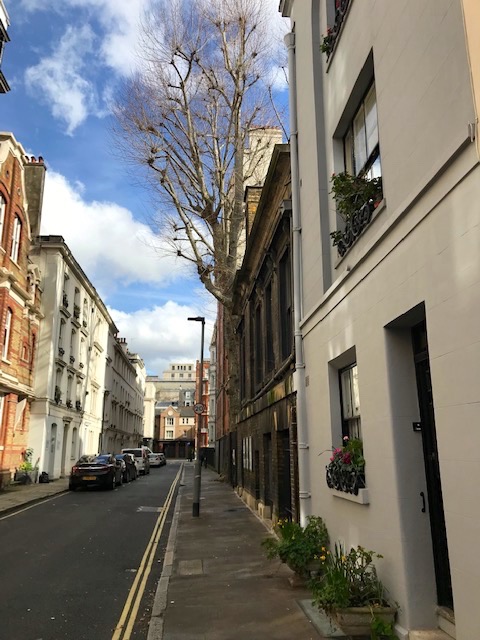
I’ve a special fondness for Bloomsbury and Covent Garden, not just for their rich architectural and cultural history but for the nomenclature. Much of the area was owned and developed over the centuries by the dukes of Bedford, who also enjoyed sizeable income from former monastic estates gifted them at the Restoration by Henry VIII. Those extensive mineral rich estates in Devon included my hometown of Tavistock, the moorland hamlet of Taviton, the family’s hunting lodge at Endsleigh. Along with the dynasty name of Russell, all are are commemorated here in the names of the elegant squares and streets, places and rows.
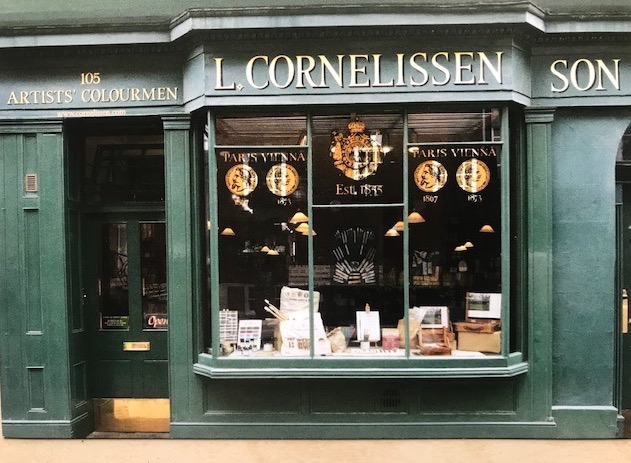
For many years Kim’s been sourcing professional art materials online from http://www.cornelissen.com and took this opportunity to introduce me to the actual shop at 105 Great Russell Street. Cornelissen’s retain the original 1855 shop front and internal layout, which attracts customers from all over the world.
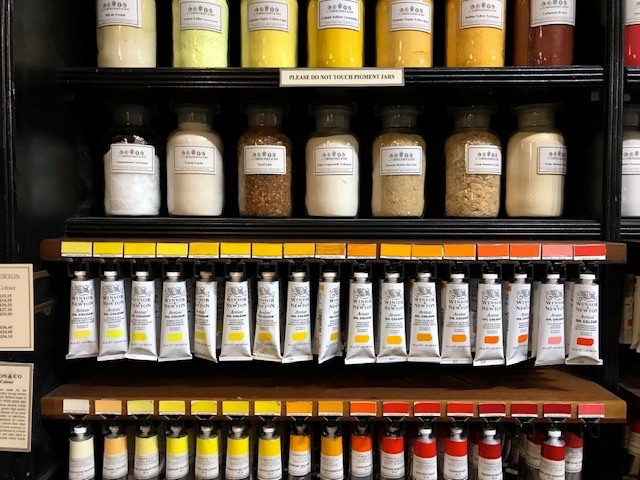
Browsing while Kim shopped, I marvelled at the paint crystals and pigments stored in glass jars above a huge range of oil paints in tubes hanging in racks.
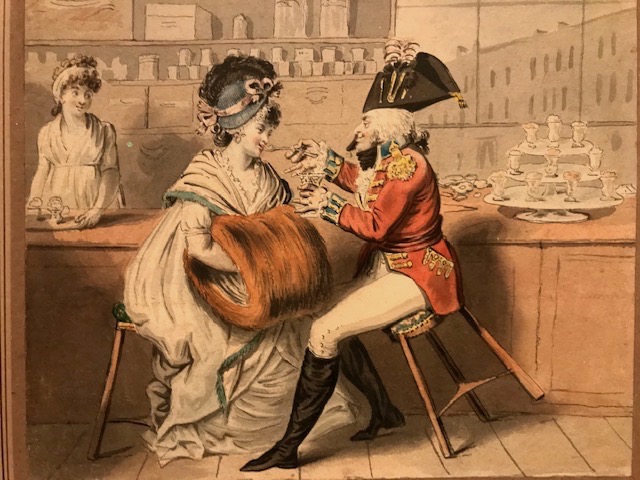
The Cartoon Museum used to be in Little Russell Street, but moved some seven years ago to larger premises in the basement of a modern building in Wells Street (off Oxford Street). Have been meaning to visit for ages so good to finally do so on another of our days out in town. Something of a hidden gem it hosts a wonderful selection of British cartoons, caricatures and comic art from the 18th Century to the present day. https://www.cartoonmuseum.org/

Wallace & Gromit fans would delight in the section devoted to the making of that stop animation classic The Wrong Trousers. My favourite works though remain the earthy satiric imagery from the skilled pens and brushes of Gilray, Rowlandson and their contemporaries.
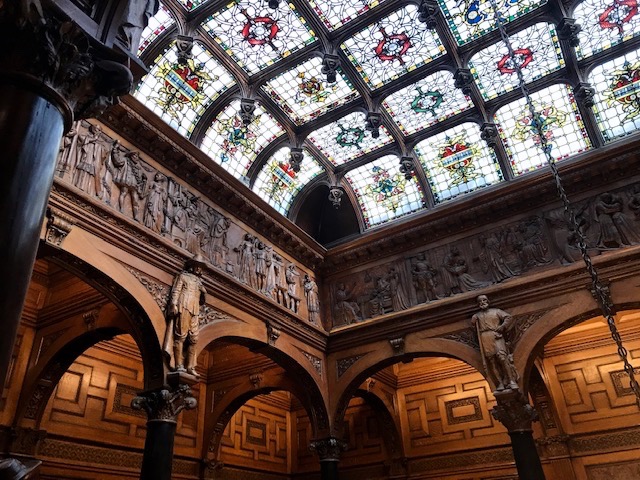
That same day we re-visited a favourite artistic haunt discovered in recent years. 2 Temple Place was completed in 1895, a singular gothic cum arts and craft building, the creation of hotel and property magnate William Waldorf Astor. Part estate office and part private residence, the building expresses the eccentric American multi-millionaire’s lifelong love of craft, literature and decorative arts.
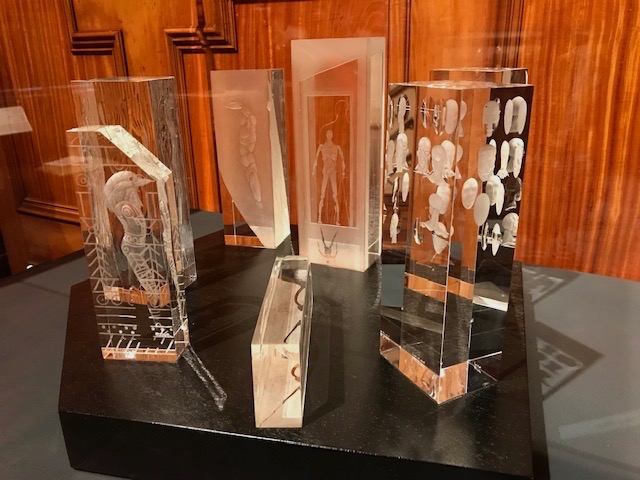
The Bulldog Trust is a charity that mounts changing exhibitions of arts and crafts in the magnificent oak panelled rooms at Temple Place, curated from regional museums and galleries on particular themes.
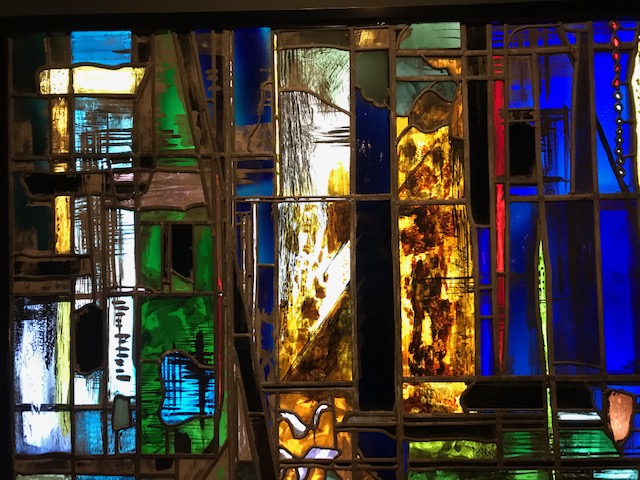
This one was centered on centuries of glassworks, entitled Heart of Glass, and included work from traditional glass making centres like Sunderland and Stourport. Remarkably for a non-institutional organisation entry is free of charge, although donations welcomed. More about 2 Temple Place here: https://twotempleplace.org/
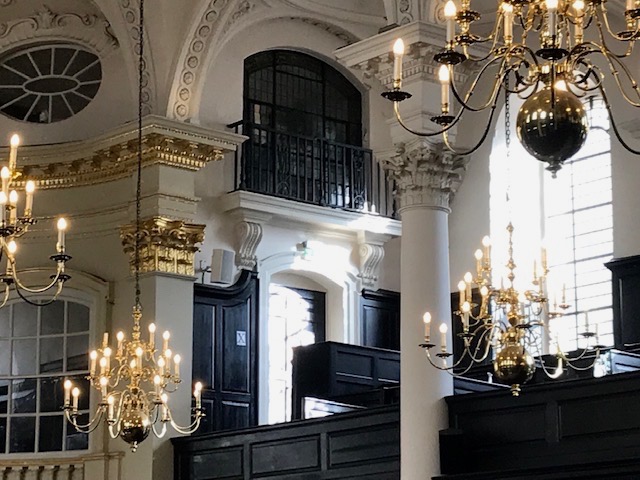
En route from Temple Place to the Cartoon Museum we had lunch in the bustling brick lined crypt of St Martin-in-the-Fields in Trafalgar Square. https://www.stmartin-in-the-fields.org/ This elegant architectural jewel, designed by James Gibb in the 1720’s, is now a multi-purpose inclusive space playing host day and night to a wealth of musical concerts as well as being a major charitable institution tackling the problems of homelessness in the capital and beyond.
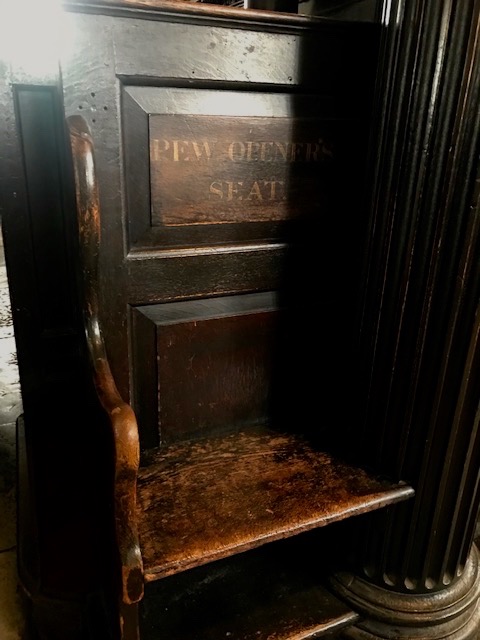
Loved the detail of the beautiful light filled interior, like this seat set aside for the official pew opener. As the church website states ‘It’s a place of encounter between God and humanity, the wealthy and the destitute, culture and commerce. We welcome you into the warmth of this vibrant community’.
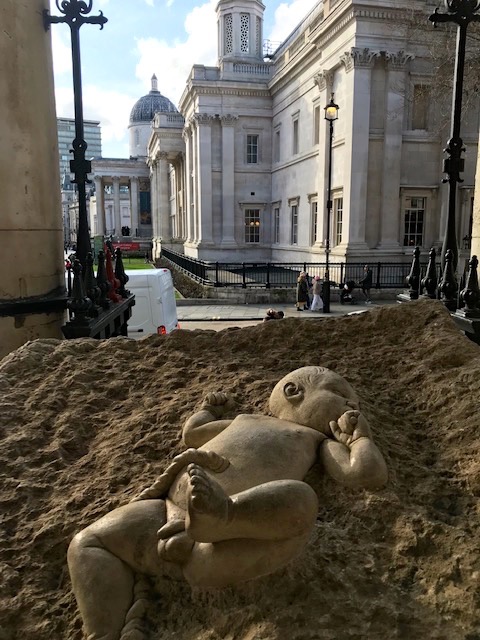
Mike Chapman’s powerful sculpture of a Christ like new born babe swaddled in a large bed of Portland stone, made to celebrate the millennium, installed under the portico overlooking the square, sums it all up well…In the Beginning.

 STEPHEN TOMLIN