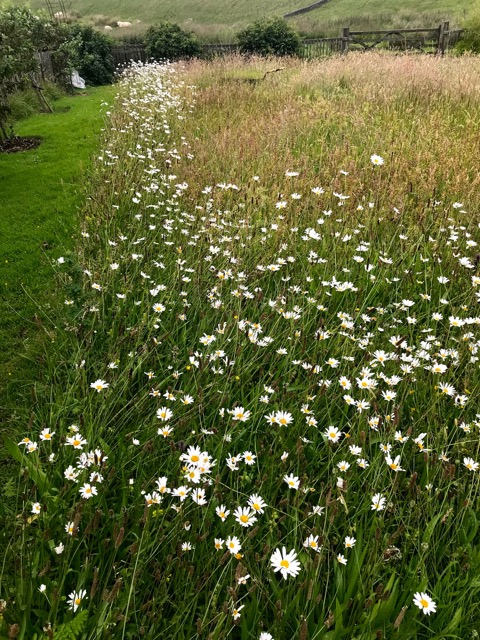
With my main preoccupation being the current extensive tour of ‘Murder They Write’, October’s garden works centre on meadow maintenance. Our patch is a roughly triangular one on a gentle north facing slope. I started converting it from original field pasture on coming to live to live at the corner house in 2017. The signature ‘meadow-maker’ of yellow rattle (Rhinanthus minor) has done a steady pioneering job to date, thriving as it does on the roots of rampant grasses, weakening them and allowing less robust meadow flowers to follow in its wake. That and a few extra annual sowings of meadow flowers with the establishment and spread of grass suppressers like plantain has established good growth round the lawn bordered perimeter and sections of the hinterland.
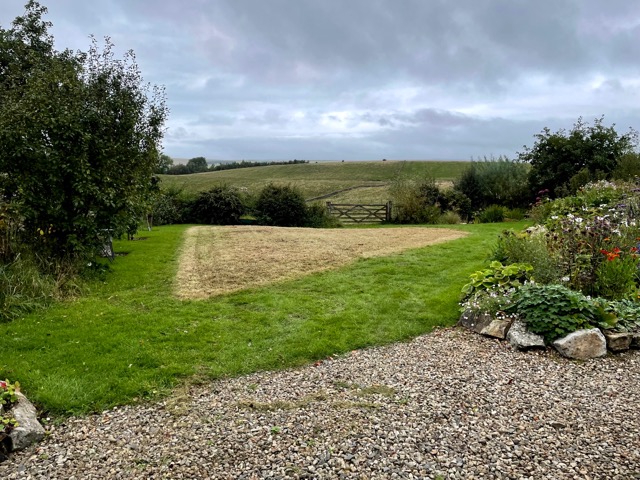
Last year I relied on plants self-seeding to promote the gradual dominance of flowers over grasses but this has proved an ineffective strategy in the lower quadrant. The indigenous grasses mounted a comeback this year so I decided to go for a scorched earth policy come the back end. As the sward had been mowed and cleared by the contactor, later than normal in September, it allowed me more time to hand harvest and dry a greater range of flower seeds, including yellow rattle.
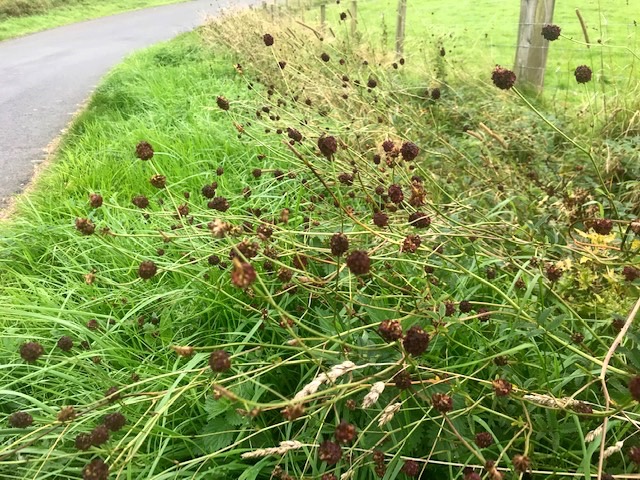
Added to that I gathered the seed heads of great burnet (sanguisorba officinalis) from a nearby lane side verge. From a wildflower nursery I ordered yet more yellow rattle seeds and what was termed a ‘restore & enrich’ mix, comprising some two dozen meadow flower seeds.
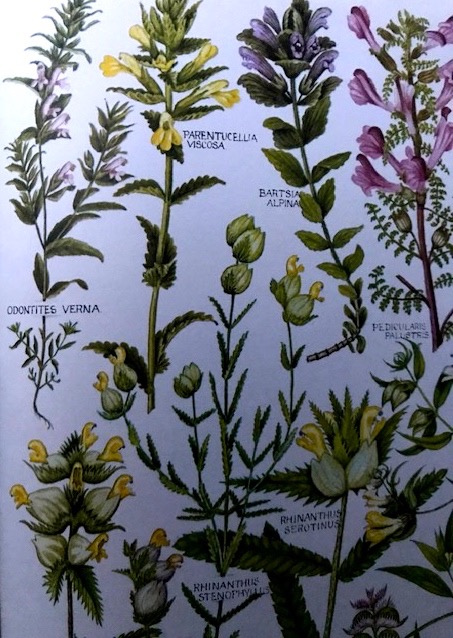
The final component in this broadcast batch of seeds was red bartsia (odontites vernus). I’m surprised how few online nurseries in the UK supply the seed. It’s a native annual found on low fertility wasteland noted like yellow rattle for its semi-parasitic qualities. The minuscule white seeds come with sowing instructions that say ‘apply directly to grass’ which is great news as most other meadow flowers require a minimum 50% bare soil surface to take root.

Scarifying the grassland is essential for all seeding, to one degree or another. Hopes of successful propagation require one to break into the matted roots of tough rampant grasses like couch and rye. I hired a petrol driven scarifier from contractor Chris, and spent three afternoons in succession going over and over the target ground with it, finishing with sweat inducing old fashioned raking by hand to finish and clear the detritus.
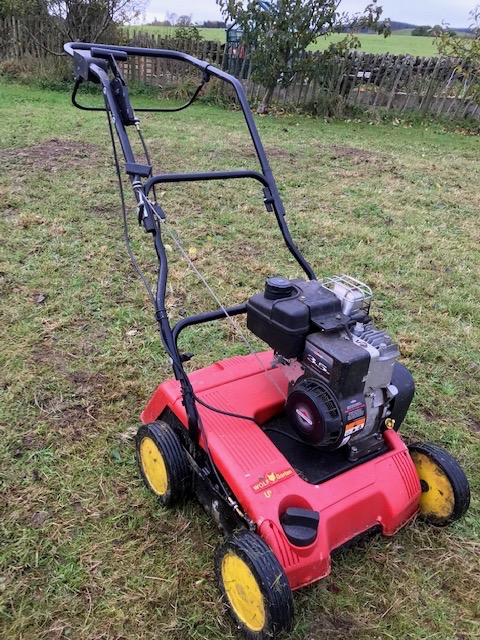
The newly exposed patches of earth were now ready to receive a broadcast by hand of the grand mix, followed by crude tramping to fix them into the muddy ground. I noticed one of our resident robins eyeing me up as I did so and the little opportunist flew in on my departure to seek out any loose pickings or worms.
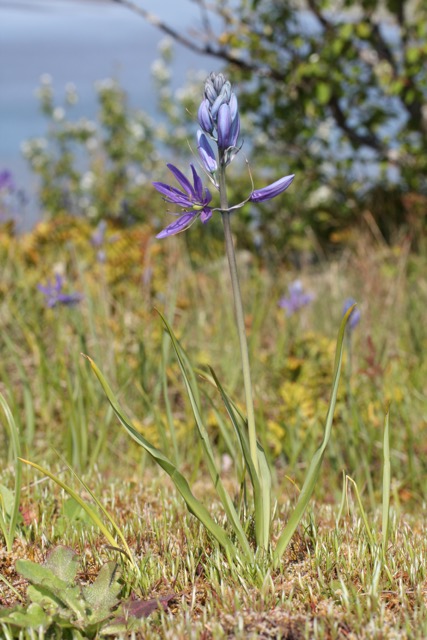
Can’t wait to see if these labours will pay off next season, once winter has played its part in the germinating process. I also planted 50 camassia (quamash) bulbs and half that number again of small native daffodil bulbs in the meadow and they will be next season’s floral harbingers. Previous plugging in of camassia two years ago was initially disappointing as year one’s plant height was restricted. Last year though they were noticeably taller so success is clearly a gradual process. In much the same way all the management and prep just undertaken should have a result that makes it looks as though there has been no management and prep undertaken. That it was the work of nature and providence alone!
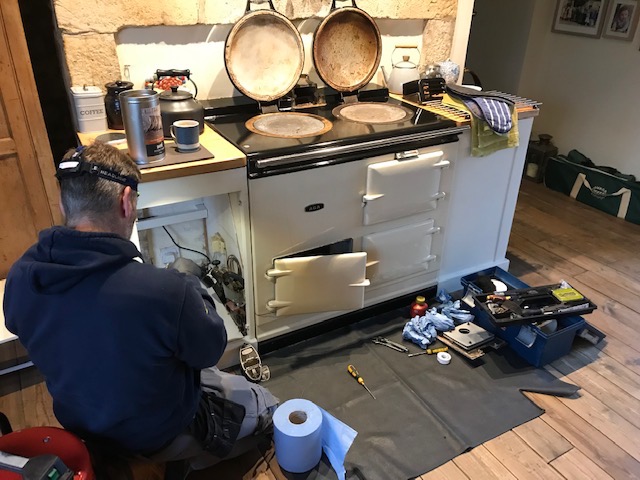
And finally… With winter approaching our rural readiness is underpinned by the stacking of logs in the lean to, replacing sealant cord round the doors of the living room stove, and getting both boiler and the oil fed kitchen Aga serviced. The latter is very much the warm heart of house and home, as it will be in most of the neighbouring out-by properties.
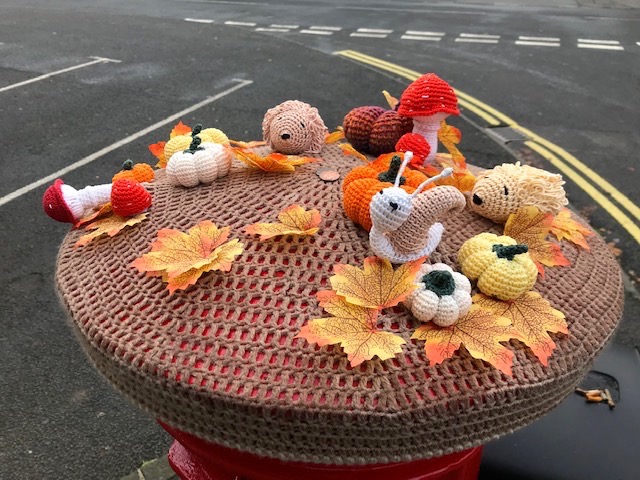
A trip to the bottle bank, with a shop at the co-op and greengrocers in the big village is usually a good social event. Bumping into friends and acquaintances or passing sights like this, where the community knitters provide a seasonal theme to grace the post box, always raises a smile.

 STEPHEN TOMLIN