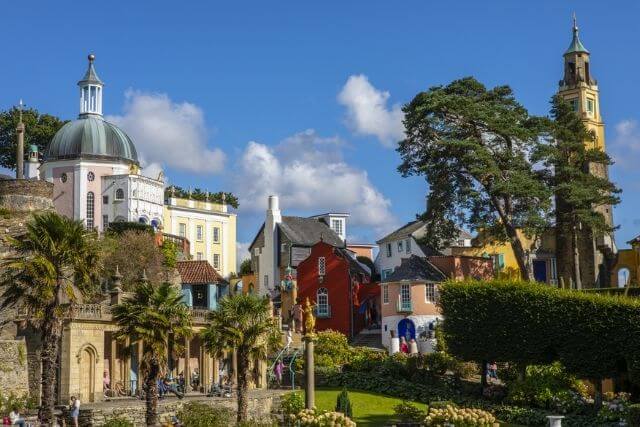
As a teenager in the 1960’s I loved The Prisoner, the ground breaking TV mini-series filmed in the Italianate coastal village of Portmeirion near Portmadog. Patrick McGoohan’s various attempts as ‘Prisoner Number 6’ to escape captivity was a surreal cult favourite for our generation. I visited the place in the 1990’s and could further claim to recognise Portmeirion pottery when I came across it. Apart from that I didn’t know much about the family responsible for creating both village and decorative earthernware until I discovered their ancestral home in the hills of Gwynedd.
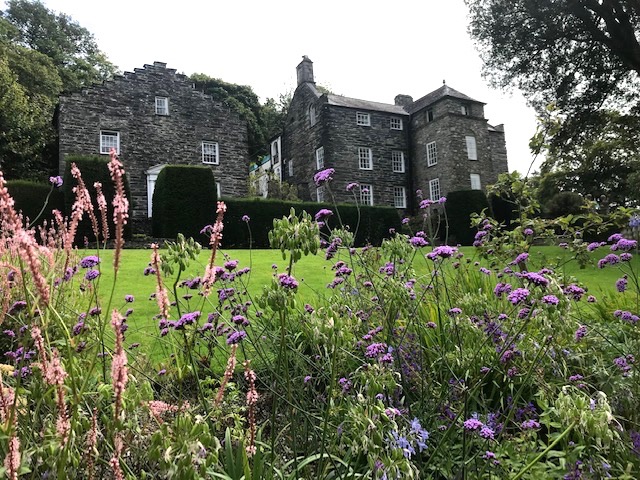
Plas Brondaw is a manor house built in the mid 16th century, with a new wing added in 1666. In 1904 the young architect Clough Williams-Ellis (1883-1978). inherited the, by then, run down property from his grandfather, a sort of 21st birthday present. In his autobiography Clough wrote “….it was for Brondanw’s sake that I worked and stinted, for its sake that I chiefly hoped to prosper. A cheque of ten pounds would come in and I would order yew hedging to that extent, a cheque for twenty and I would pave a further piece of terrace.’
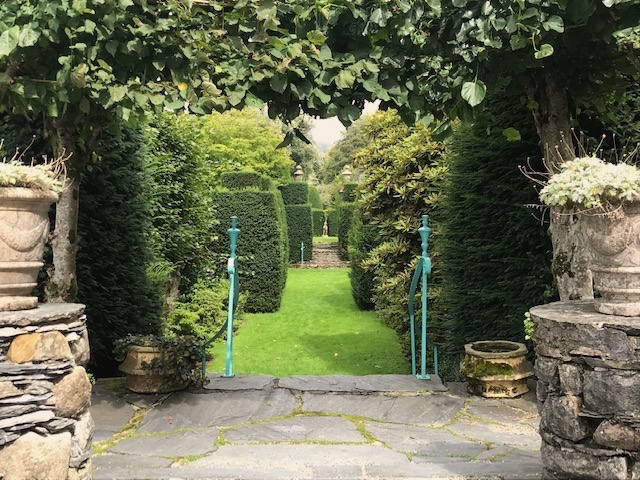
The result of all his life long labours at the family home are the wonderful gardens we visited last month when on holiday in north Wales. The world famous Portmeirion village – begun 1925, finished 1973 – had its genesis in the private experiments in garden design Clough and his wife Amabel carried out here at their much loved home early in his career. Clough was co-founder in 1926 of the countryside charity CPRE and was instrumental in helping establishing National Parks in general and the Snowdonia National Park in particular.

As a landowner Clough was fortunately wealthy enough to buy the site at Aber la – which he renamed Portmeirion – giving him the freedom to implement his extraordinary settlement from scratch, starting in arts and crafts style, then merging to classical and art deco as the century rolled on. Clough was also ahead of his time in including re-purposed structures from the original site and elsewhere round the UK, providing what he called a ‘home for fallen buildings’.
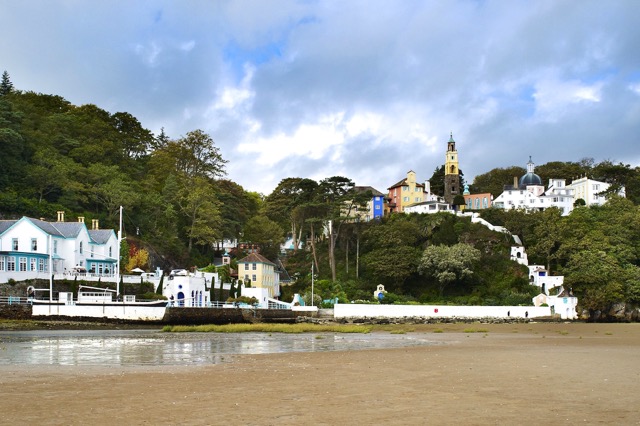
Portmeirion is today an upmarket holiday village complex housing two hotels and a host of self catering accommodation, and one of the most popular daytime visitor attractions in Wales. Brondanw (at least on the day we visited) was happily bustling without ever being uncomfortably crowded. Long may that continue.
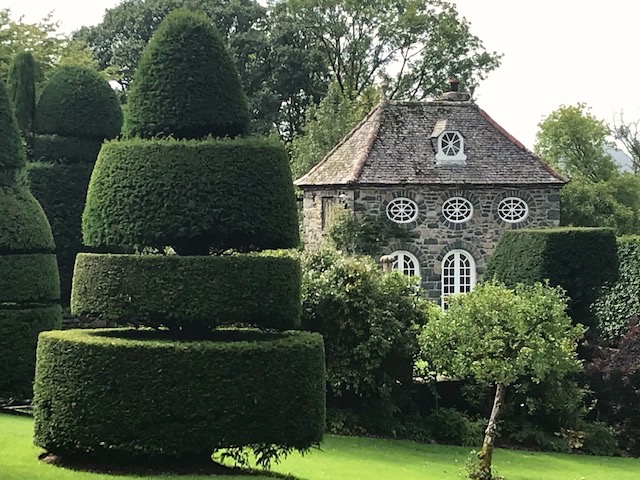
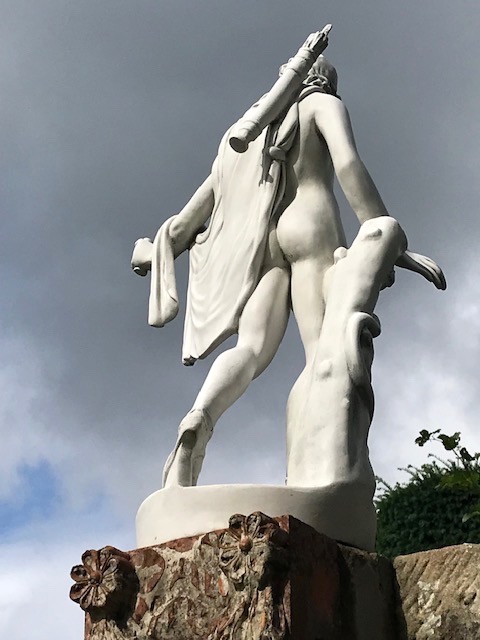
Formal and playful by turns the terraced garden boasts cleverly interlinked rooms, avenues, embankments and viewpoints defined by hedges and topiary, Italianate statuary and stone paving, all framed by a ring of mountains.
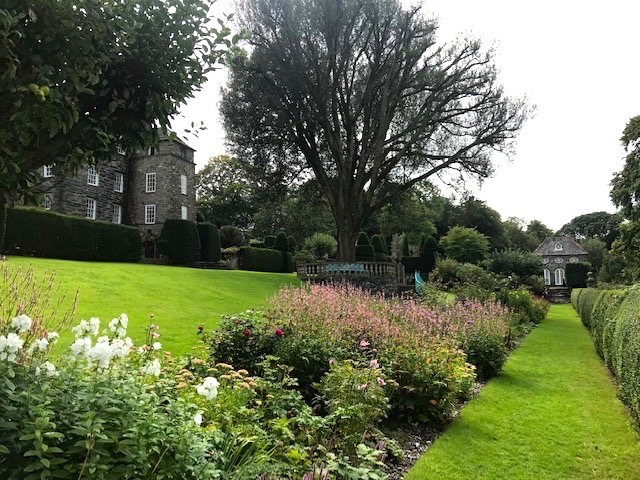
We found the whole enterprise exercised a grip on the imagination that won’t let go. A Grade I listed garden and one of the most interesting I’ve had the pleasure of experiencing.
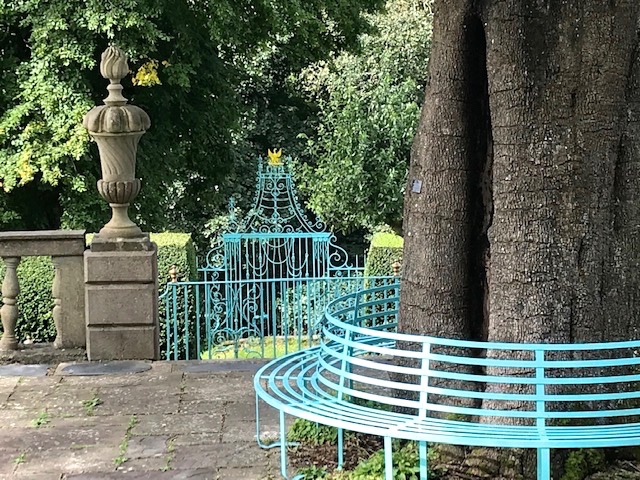
Plas Brondanw sits on the hillside within its own estate village while the 4,000 acres around that includes five farms, mixed woodlands, former slate quarries and wild river valleys. All the forty odd rented residential properties (including the pub) in the village of Llanfrathan, like the big house itself, sport the distinctive ‘swimming pool’ aquamarine shade of pale blue livery.

Clough Williams-Ellis saw active service throughout the First World War and he and Amabel lost their only son Christopher on active war service in Italy during the Second. Llanfrothan’s distinctive listed war memorial, built in 1922, was designed and built by Clough.

One garden viewpoint looks to distant Snowden, with head in the clouds, while another points to the distinct mass of mount Cnicht. That and another mountain Moelwyn Mawr were added to the family lands in 1940’s. There aren’t that many 20th century gardens where its owner/creators can bring their own mountains into the picture.
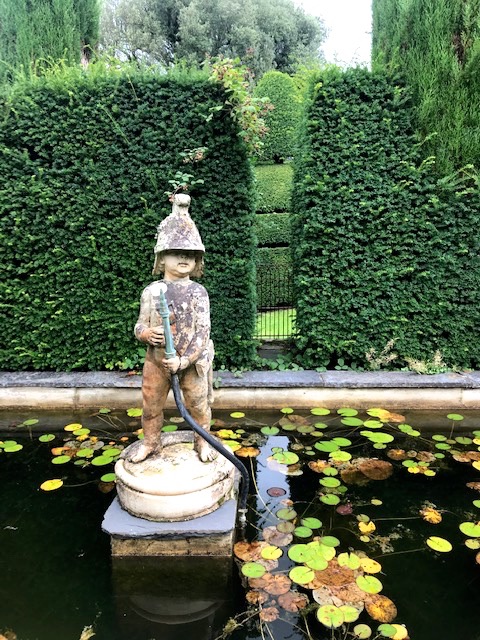
Today gardens and house are run by through separate charitable trusts. The onsite café, managed by a local lady, had lots of home made produce and her staff were welcoming and helpful. We sat out in the courtyard with coffees by a formal lily pond with its fireman putti fountain, a witty touch that typifies the place.
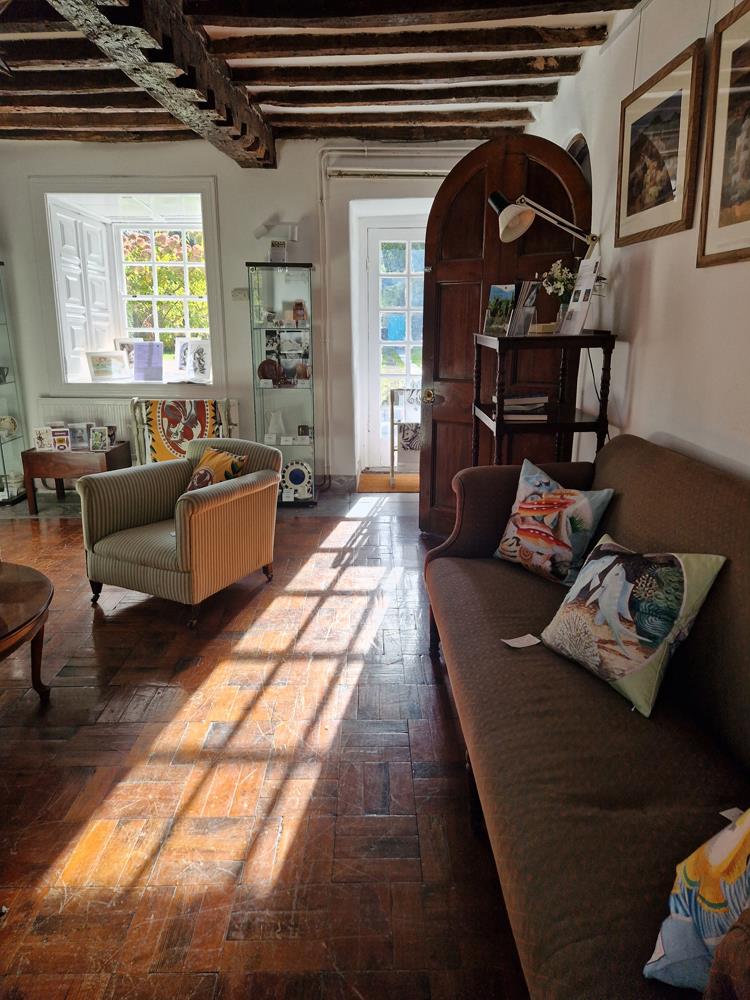
The manor house suffered a terrible fire in 1951 that destroyed nearly all of the interiors and contents including silverware, estate archives and architectural diaries. You wouldn’t know that today as we explored its various corridors and rooms on different levels.
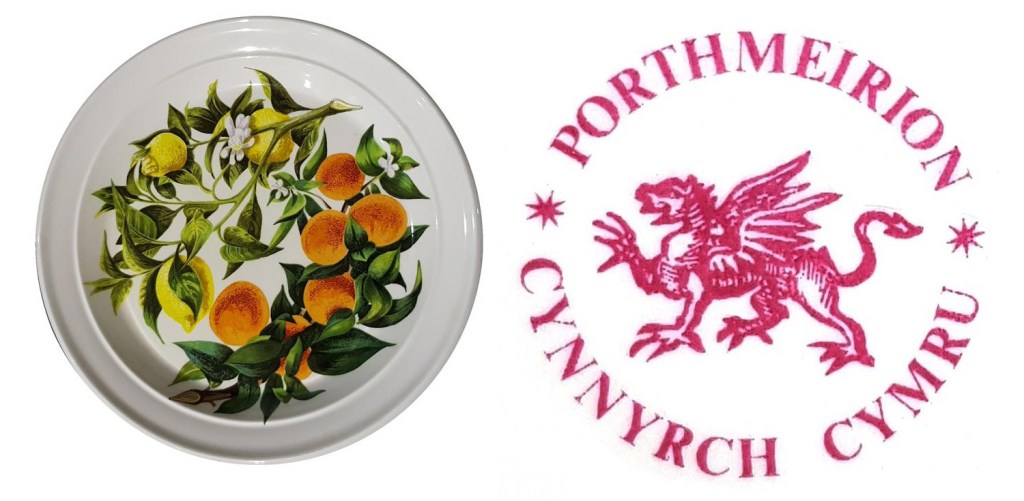
Half of Plas Brondanw remains private family apartments while the other half houses an art gallery (Oriel Brondanw) with changing exhibitions and the fascinating archives of Clough and his daughter Susan (1918-2007). She was the co-founder, with husband Euan Cooper-Willis, of Portmeirion Pottery, now the Portmeirion Group. The couple started their enterprise running the original pottery selling shop in Portmeirion village just after their marriage in 1945. Due to her flair as a designer coupled with commitment to its employees the brand has been for many years a British export success story, still in family ownership, now incorporating one time rivals Spode and Royal Worcester, with factories based since 1960 at Stoke-on-Trent.
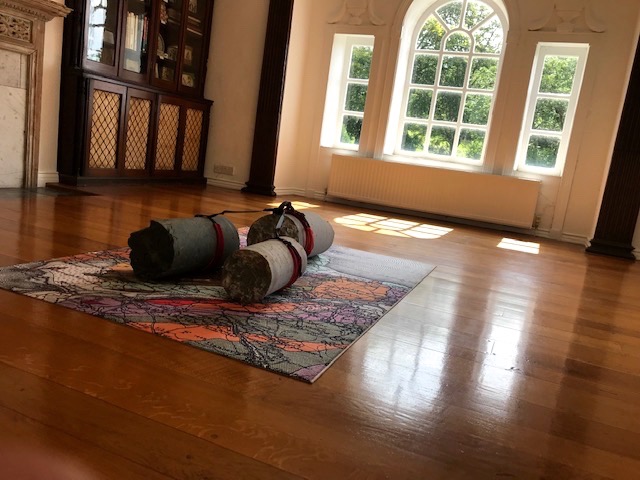
Plas Brondanw’s main first floor gallery and library are light filled spaces with views north over the flat bottomed valley. Traeth mawr (big beach) was once shallow seas and peat bog of great botanical value, until drained for agricultural improvement in the early C19th.
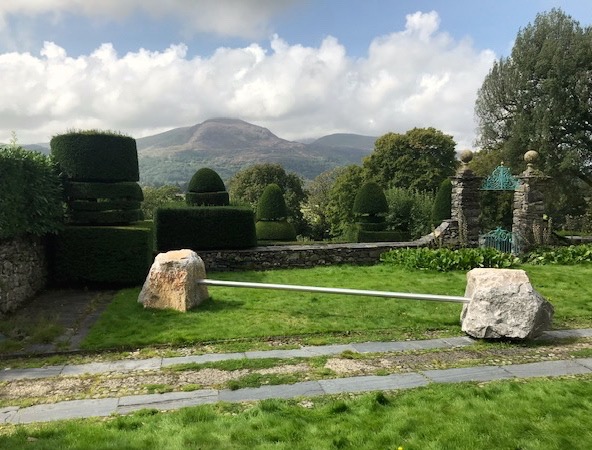
Their loss, and those of similar areas on nearby Anglesey, are the subject of the current exhibition, ‘Wetland Dreams’ by locally based artist Sarah Bristow, topographic art expressed through collage drawings and sculpted models, displayed indoors and outdoors on the entry lawns.

Another surprising day in a special environment where its characterful creator’s presence is still alive and well. Highly recommended to any visitor open to its uncanny ability to raise the spirits and engage head and heart in the process. The spirit of Clough is here distilled in his aims to Cherish the past, adorn the present, construct for the future.

 STEPHEN TOMLIN
Brought back memories both of the day we visited and our later visit to Portmerion itself. Love Sue x
LikeLike