The Cotswolds is an area of England that conjures up images of postcard picture perfect villages, many inhabited by second home owners, blond stone buildings nestling in folds of rolling estate farmland and densely wooded hillsides. A recent visit to catch up with an old friend allowed me to discover how much of this stereotypical view was for real. As a long time resident he knows the area well and was keen to share some of its treasured features with me.
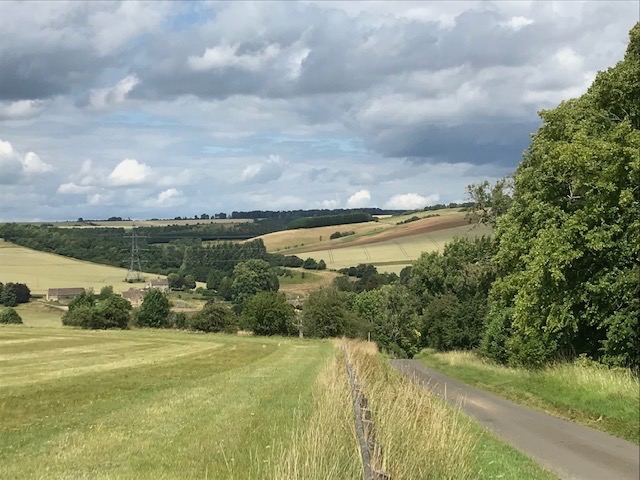
1500 years ago, when under the benign rule of imperial Rome, the area around the administrative centre of Cirencester (Corinium) was home to some 50 villas. These palatial homes were at the heart of rich agricultural estates. Their wealthy owners, with extensive land and mercantile interests, lived a luxurious lifestyle and imported goods from all over the Roman world…So plus ca change on that front!
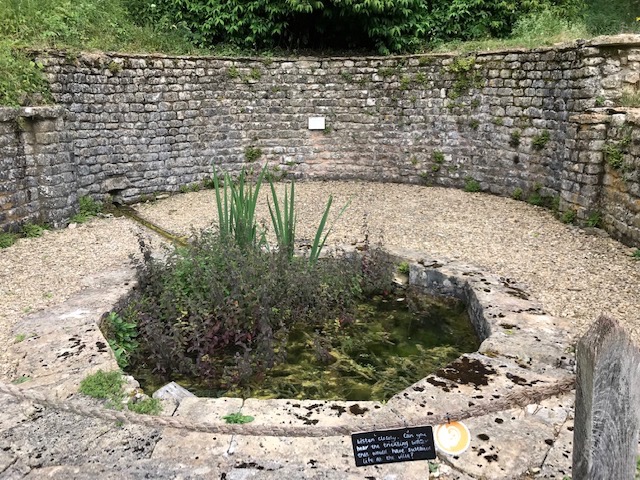
One of the best preserved of these Roman villas open to the public is near the village of Chedworth, just off the ancient Fosse Way. It nestles at the head of a coombe below sheltering woods. The spring that rises here provided a vital water supply. The villa’s owners revered spirits of place and made a feature of the pure waters emergence with a shrine to the resident nymphs (nymphaeum).
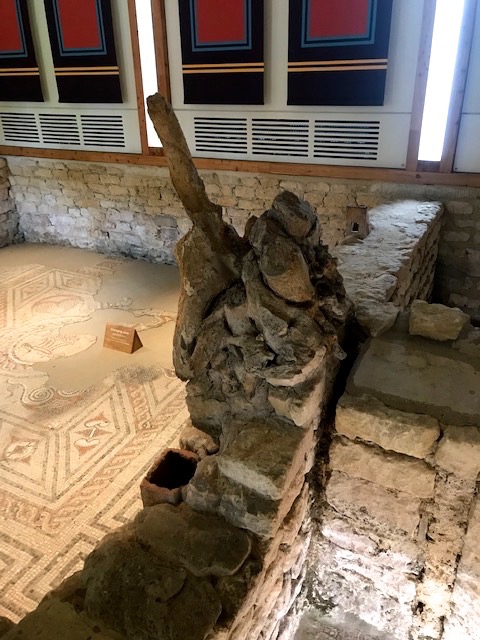
It wasn’t until the 1860’s that the historic site was rediscovered and excavated by the family of the local aristocratic landowner. An arresting feature of one room is the remains of a tree trunk embedded in a dividing wall that shows the ground level at the period of excavation.
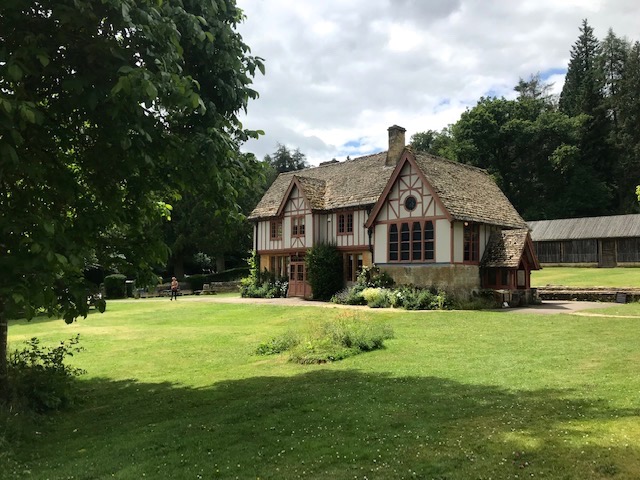
The museum and warden accommodation, now offices and storage, dates from then and stands, somewhat incongruously, on the dividing wall of the villa’s central courtyard.
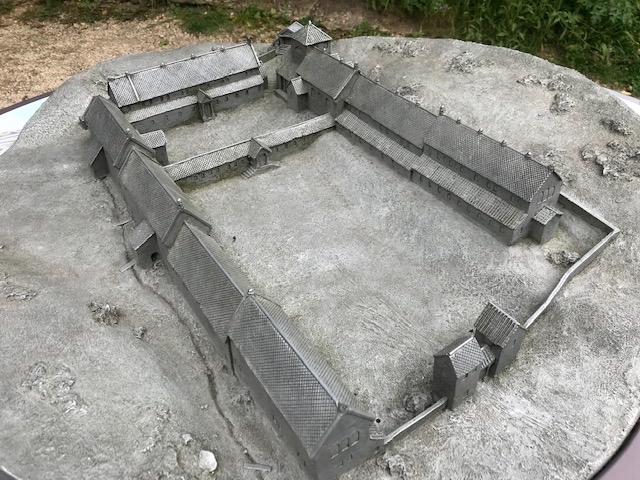
A scale model made of metal gave us a three dimensional overview of the building in its 4th century prime. The excavated ranges of single storied interlinked rooms is now mostly roofed over for preservation and interpretation.

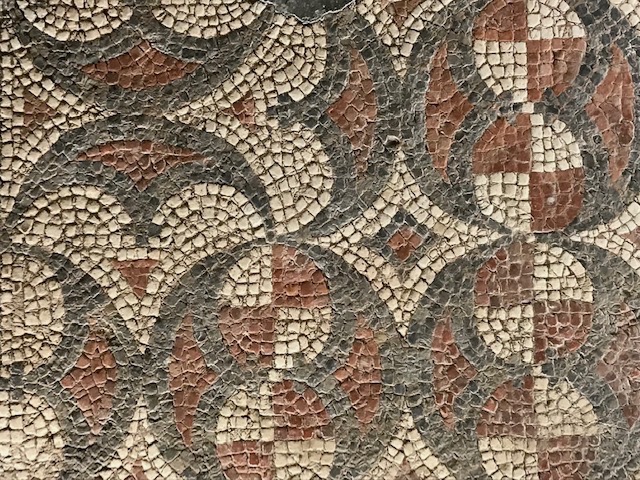
Our meander there led us along raised walkways over and around a series of fascinating floor mosaics, the largest collection in the country still in their original positions. Ploughing and other disturbances in later ages have damaged the original fabric but the remnants in the luxury dining room and baths sections remain substantial enough to impress.
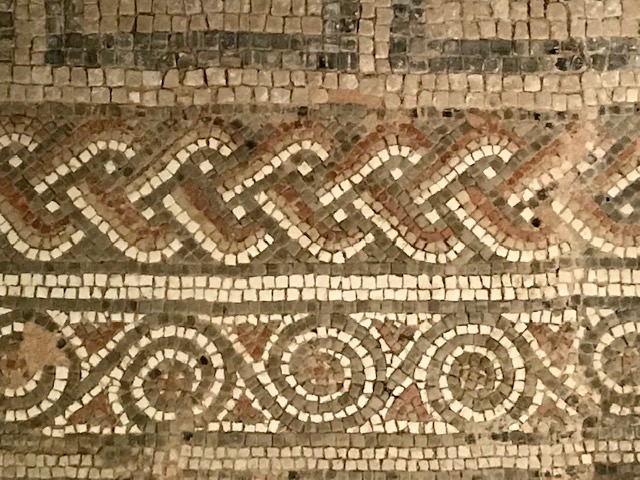
Underneath the floor lies an elaborate hypocaust system that provided dry under floor heating. Millions of tesserae made from pieces of coloured stone sourced from far and wide make up the mosaics. Some are local (white, off white, olive), others from Somerset (blue, greys) and the Forest of Dean (purple, browns) with broken brick or tile for reds. There’s some dispute, centered on the mortar used, whether Chedworth’s mosaics were assembled on site or prefabricated elsewhere.
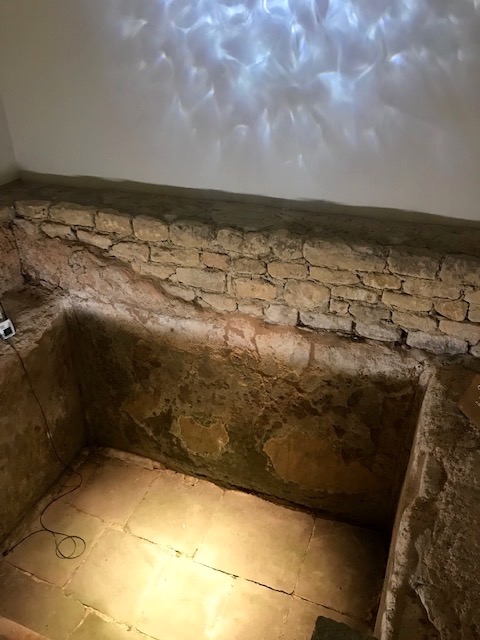
How the interlinked bathing areas were developed and used is also still up for interpretation. Sauna like arrangements, hot semi-circular baths and a cold plunge pool with steps all feature in the arrangements.
Modern research indicates this villa survived the withdrawal of Roman troops from the province of Britannia in 410 AD, albeit as a purely agricultural holding, for at least another century before being finally abandoned. Roofs fell in and its valuable dressed stones were recycled into other buildings or used in making limestone for mortar in a nearby kiln. Living as I do near the empire’s military boundary on Hadrian’s Wall, that part of the story is familiar.
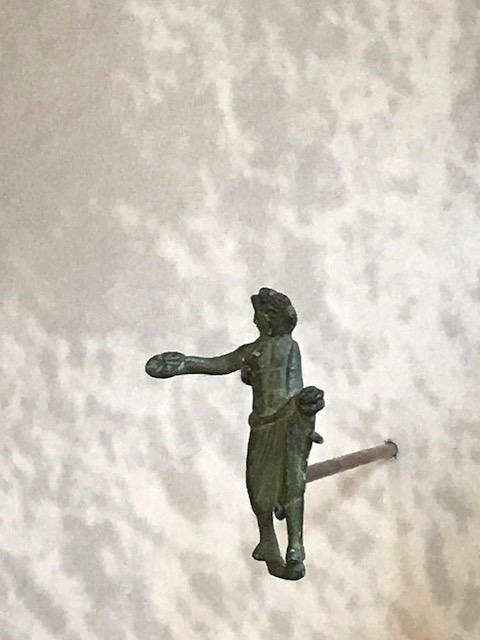
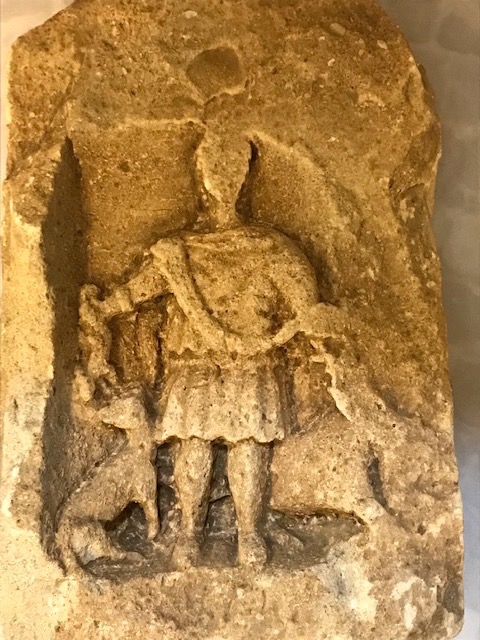
The finds museum is small but has some fabulous items on display in glass cases, including jewellery, tools, ceramics and an altarpiece. Particularly liked this tiny copper alloy figure of a deity, which would have been part of ritual practice.
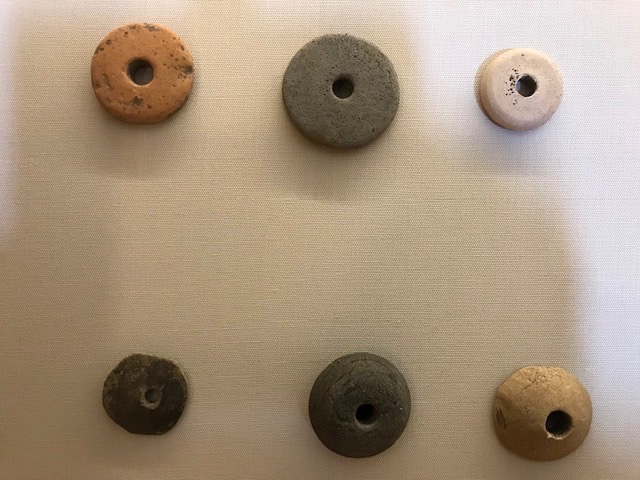
A collection of spindle whorls. Rods with weights used for twisting wool into yarn. A large part of Roman women’s work would involve clothes making for their families.
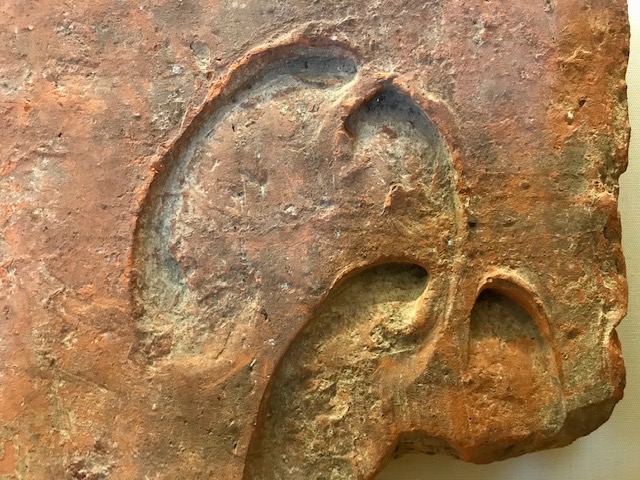
The villa’s clay tiles were most likely made in Cirencester where they were laid out on the ground to cool straight from the kiln. Two on display here present accidental indentation, one of a human hand and the other an ox’s hoof.
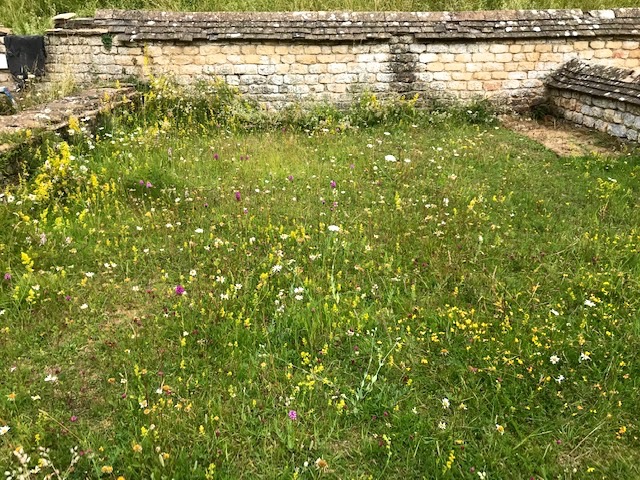
An outdoor feature I loved were the mini-meadows, literally garden rooms, developed in some of the partially excavated spaces in the north range. Alkaline loving meadow plants thrive here in the thin soil and mortar. These include oregano and marjoram, Mediterranean herbs first introduced by the Romans.
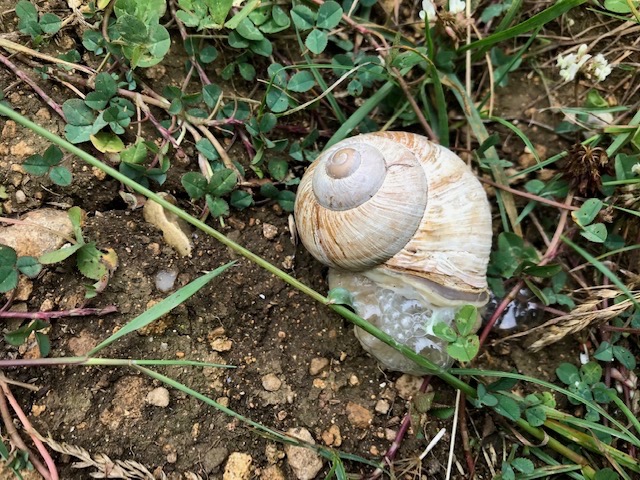
Best of all we came across some snails. No ordinary molluscs but large, edible snails (Helix pomatia) originally brought to this country by the Romans and still very much at home here, as they hibernate in the walls. Apparently the site also supports a remarkable number of bat species, including the rare barbastelle.
A great place to visit on a summer’s day, and the interpretive staff we met were particularly well informed. The National Trust has been the site’s custodian since 1924. More at: https://www.nationaltrust.org.uk/visit/gloucestershire-cotswolds/chedworth-roman-villa

 STEPHEN TOMLIN