The College burn rises at the foot of the Cheviot itself, the highest point of the range of hills named after it that straddle the border of Scotland and England. Likely word origin here is a pairing of ‘col’ for cold or collar as in a gorge + ‘letch’ slow moving stream in marshy ground.
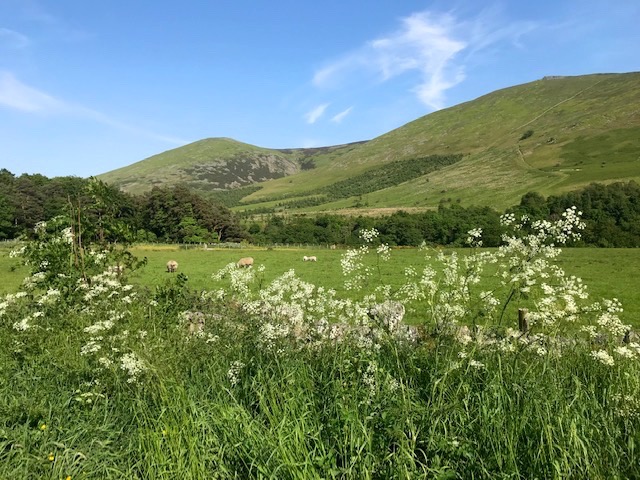
The College valley is at the centre of a 12,000 acre upland estate that has passed through a succession of wealthy owners down the centuries. The last, Sir James Knott MP (1855-1934) was a Newcastle born shipping and coal magnate. He created a trust with a board of directors that cares for the estate today. (www.knott-trust.co.uk) They work closely with the Northumberland National Park, within which the valley and hills sit, to secure its natural capital and enhance public access.
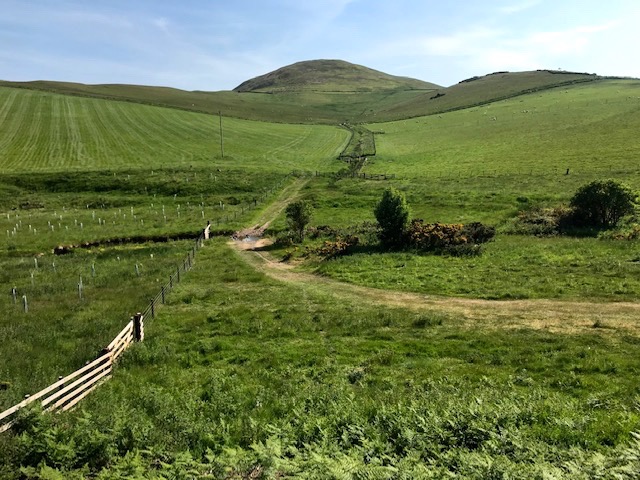
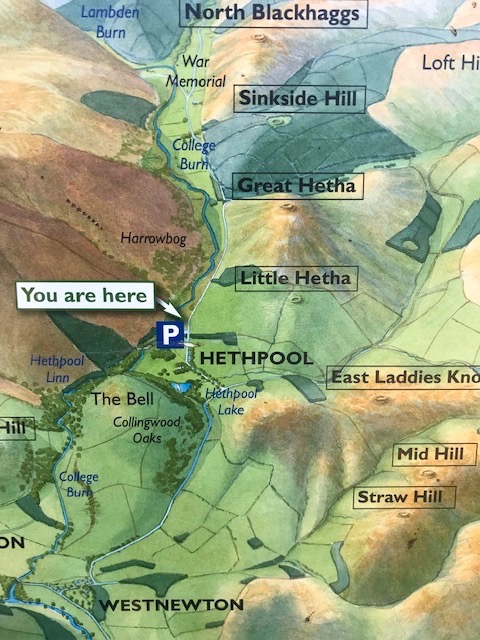
Vehicular access to the valley is via a single track road which attracts a licensed daily toll of £12 but like the vast majority of visitors we parked (for free) at the NNP Hethpool site and walked from there. This is the point where the narrow valley emerges from steep enfolding hills, many of whom boast iron age hill forts on their lofty summits. Thanks to funding from the national park a series of signposts opens up permissive paths to those hills for the more adventurous rambler.
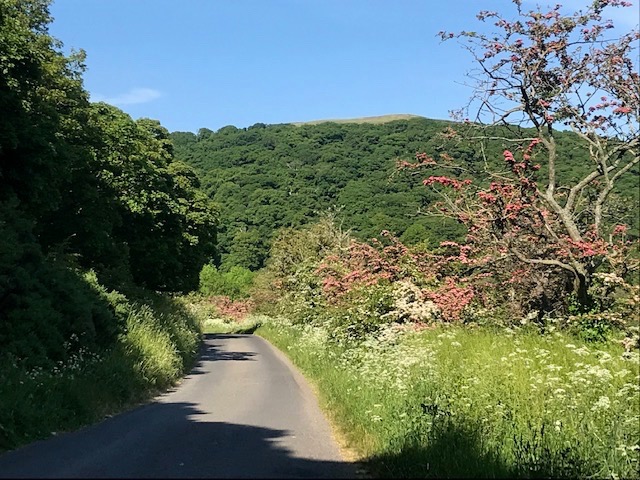
The road up from Kirknewton to the farming hamlet of Hethpool led us through the cooling shades of a lovely fellside sessile oak wood. This was planted more than 200 years ago with the noble aim of providing wood for the Royal Navy to help replace oaks felled in the rush to build more ships for the extensive sea war against Napoleon. The estate’s then owner was Admiral Lord Collingwood, a proud son of Northumberland and naval hero, who had acquired it through his wife Sarah. It was she who started planting acorns at this spot to honour his memory, ‘enriching and fertilising that which would otherwise have been barren’.
Within just a few decades steam and iron would replace wood and sail so the need for oak as a shipbuilding material fell sharply away. On top of that the Collingwood oaks never grew tall and straight enough to provide the right quality of timber needed. The much greater environmental gain over time would be nature’s, and the woods today are greatly valued for that alone as oak trees support more wildlife than any other native tree.
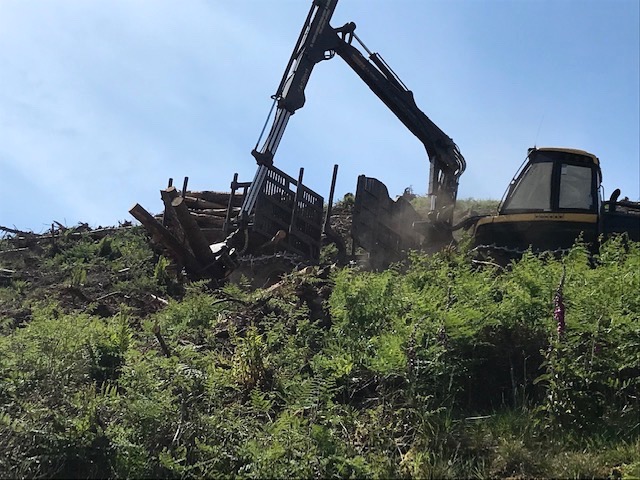
The early part of our leisurely amble up the vale took us past modern day forestry in action and we paused to admire a harvester hard at work on precipitous slopes, its driver skilfully taking out and stripping tree trunks before loading them on piles for later collection by timber trucks.
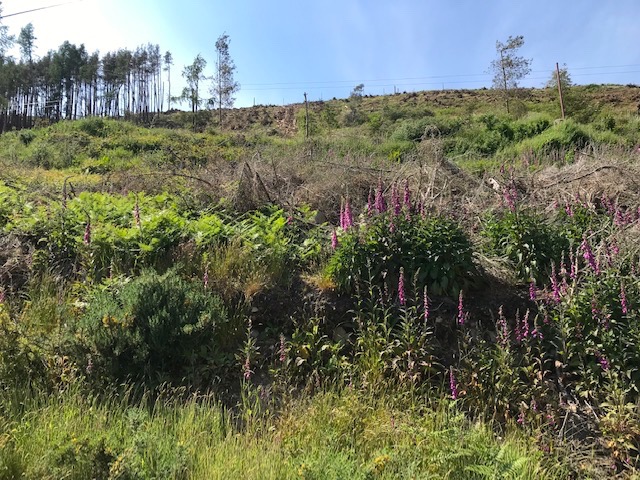
Previous clearances had enabled masses of foxgloves to flower in between fresh leaved shrubs hiding stumps of sitka spruce. Before leaving the sparkling College burn, on a corner where the access road bridged it, we came across a young deciduous wood thriving where once a block of featureless softwoods had stood. Oak, hazel and alder planted in the spirit of that original Collingwood oak wood.
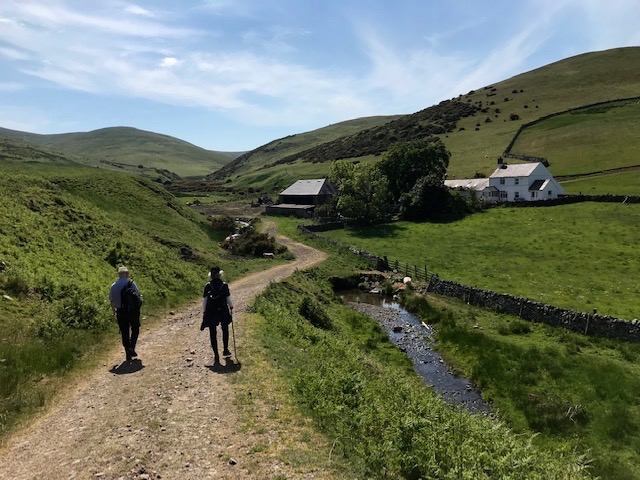
We enjoyed a picnic lunch overlooking the handsome former farmhouse at Trowupburn. After this current long spell of warm dry weather the water levels were low in the burns we passed. Consequently the pools held restless shoals of young brown trout and I watched them with interest. As children living on the edge of Dartmoor looking out for brown trout with a view to tickling them ashore from the bank was a particular pleasure.
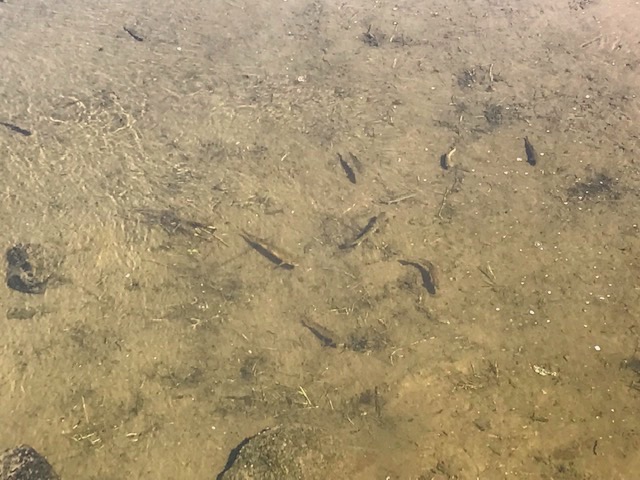
None of that activity today though and I was wakened from my reverie to re-join my companions going uphill through flocks of ewes and lambs over into the next valley of Elsdonburn, eventually to join St. Cuthbert’s Way that would take us back to where we started.

What other breed of sheep would you expect to see here on these hills but Cheviot? Today there are only two tenant farms operating in the valley where once there would have been dozens, with single story cottages clustered round them to accommodate the shepherds. The combined flocks today amount to some 2,500 sheep and the lambs are highly prized as breeding stock as well as for the quality of their meat. Recognised as a hardy sheep since 1372 the breed is indigenous to the Cheviots either side of the border. The wool, which was once the base for the Border Tweed industry and could pay the tenants’ farm rent, has now declined to only marginal importance. But it still commands the best price, compared to other breeds, from the British Wool Board. It is chiefly used in the Harris tweed and carpet industries.
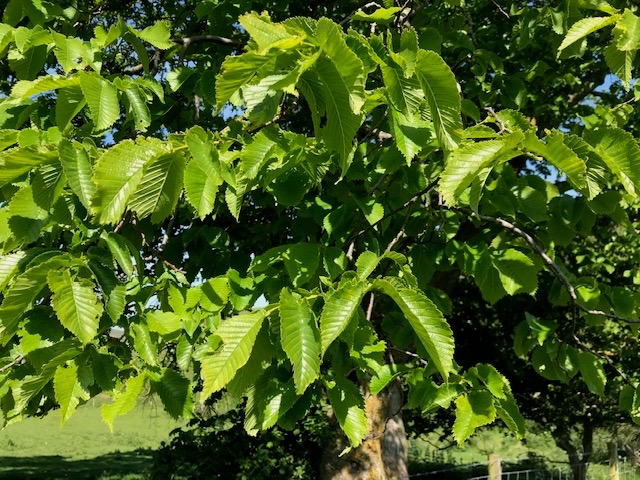
Intrigued to come across a lone Wych elm among the blossoming hawthorns between track and burn…A rare survivor of Dutch elm disease. Perhaps the remote location saved it from succumbing to the deadly pathogen that all but obliterated the once common elm from our land in the last century.
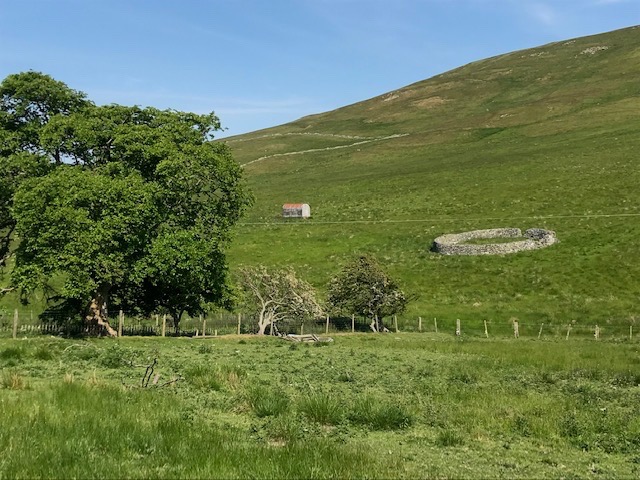
We saw a couple of stells (sheep shelters) on fellsides. One had a small cast iron Dutch barn nearby. The dry stone walls are the size and shape of a circus ring allowing the animals to find shelter from whichever way the wind blows snow or rain. From the Victorian era onwards the cattle and sheep stayed up here all year round so such places were essential to survival but these days they are taken off to lower pastures in winter. Conservation wise that fits with the older pattern of summer grazing (shielings) where the stock feed on the coarser grasses which would otherwise swamp the more delicate vascular alpine grasses and flowers. These rare plants can now once again start to thrive in the highest area of 5,500 acres, around the Cheviot itself. Approximately half that area is an SSSI (Site of Special Scientific Interest)
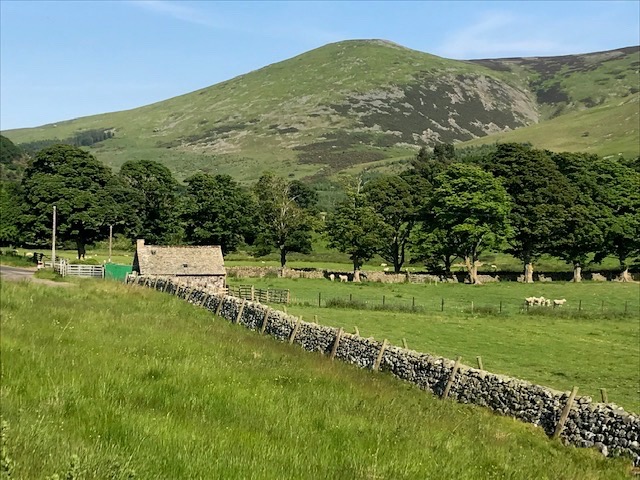
We descended gradually on the track following the Elsdon burn, past intake fields and under a fine avenue of trees to Hethpool’s impressive row of arts and crafts style workers cottages and gardens. A great walk of less than four miles, a wonderful taster that demands a return to discover more of this distinctive land.

 STEPHEN TOMLIN