Sculpture Gardens and Falls
The Western Isles, sitting in the transatlantic gulf stream, can boast some unusually verdant coastal gardens within their sheltered nooks and crannies. We discovered two such special places on the coast of Mull. Both with sculptural forms and clever landscaping at their heart, which added to the attractiveness.
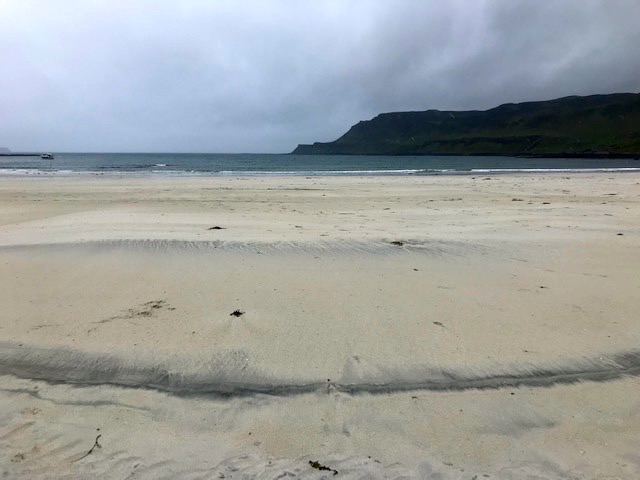
Colonel James Macleod of the Royal Canadian Mounted Police spent a very agreeable time on holiday in the 1870’s as a guest of the Calgary Castle estate on Mull’s north west coast. On returning home the Colonel, who was also a lawyer and politician, re-named a new fort in Alberta after this corner of the old country he’d left as a child. We visited on a distinctly damp day but that didn’t prevent us soaking in the atmosphere as well as the remorseless drizzle.
This corner of the island was once widely farmed and highly populated but a series of C19th clearances put an end to that. It remains a distinctly beautiful and singular landscape though. A mix of ancient and recent woodlands overlooking sweeps of protected machair grasslands behind a white shell beach, sheltered from the worst of weathers by imposing headlands of dark igneous rock.
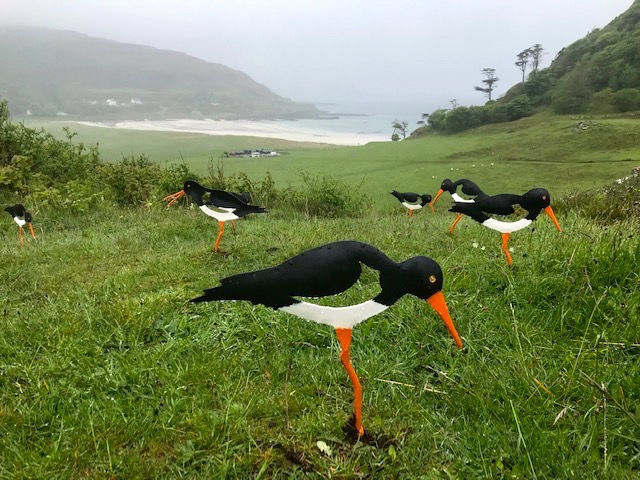
We had a great lunch at the café/studio complex – Calgary Art in Nature – situated in a handsome converted farm complex tucked away in a narrow wooded valley. Afterwards we explored the sculpture trail through its grounds, encountering art works in metal and wood, plus a distinctive self-contained eco holiday let on the hillside. (https://www.calgary.co.uk/art/art-in-nature/ )
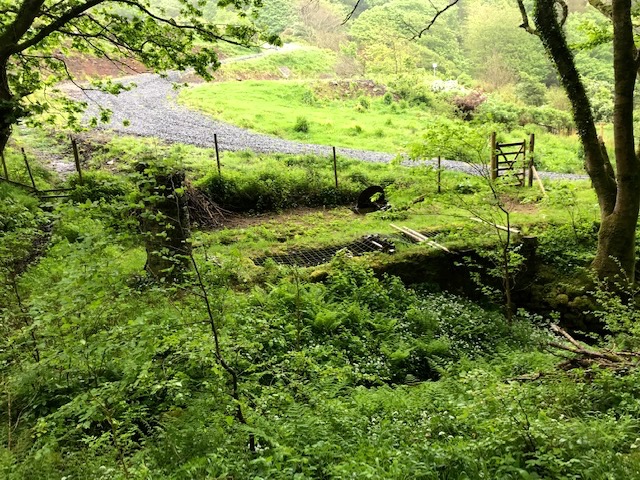
A large shady deep pond at the rear of the former farmhouse holds stream water that once powered a saw mill operational up to seventy years ago and whose scant remains of pillar and pit we picked out in deep greenery by a gravel track.
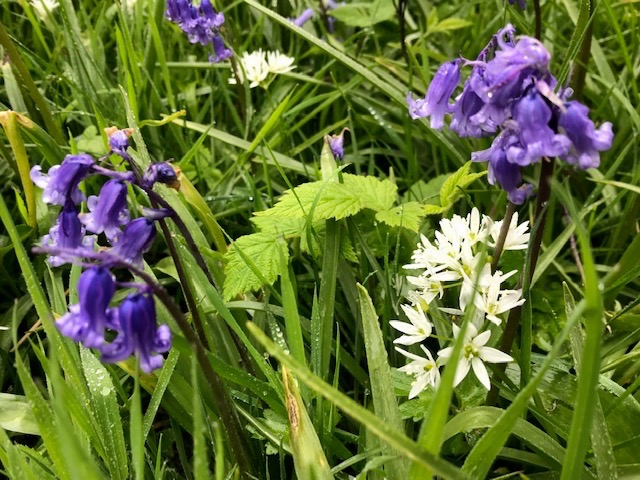
Interesting to find refugee Spanish bluebells and three cornered leeks in close company under a mixed canopy of oak, beech, sycamore and scots pine. Both are invasive plants originating from Mediterranean countries. The bluebells are toxic but the leeks (Allium triquetrum) as the name implies are edible and much favoured by foragers. The triangular title references a cross section of its stem.
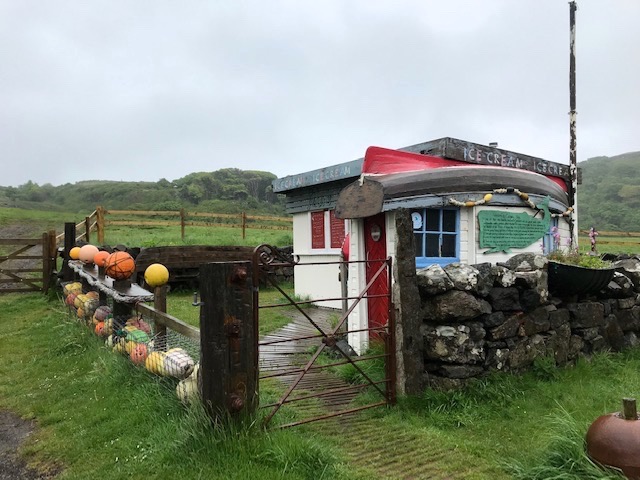
Later we motored down to amble the wide sweep of deserted beach, parking by a charmingly idiosyncratic ice cream shop – Robin’s Boat – sadly not open for business today. We’d like to return when it is open and the sun is shining.
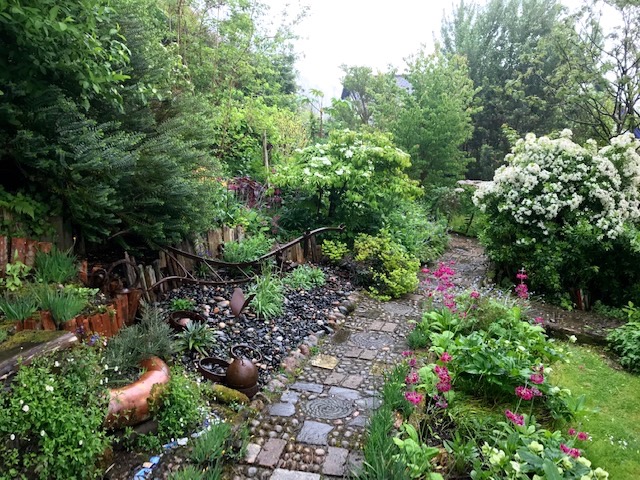
Lip na Cloiche is a garden and nursery set on a precipitous south facing hillside, surrounding the owner’s house, and overlooking Loch Tuath and the isle of Ulva. (www.lipnacloice.co.uk) Owner gardener Lucy Mackenzie Panizzon – whose bustling lean form we caught unloading deliveries on arrival – created her eccentric arboreal wonder over a decade and, of course, it is still a work in progress. Unsurprisingly, lots of articles have been penned for gardening magazines about Lip na Cloiche, and some of these were displayed at the gate.
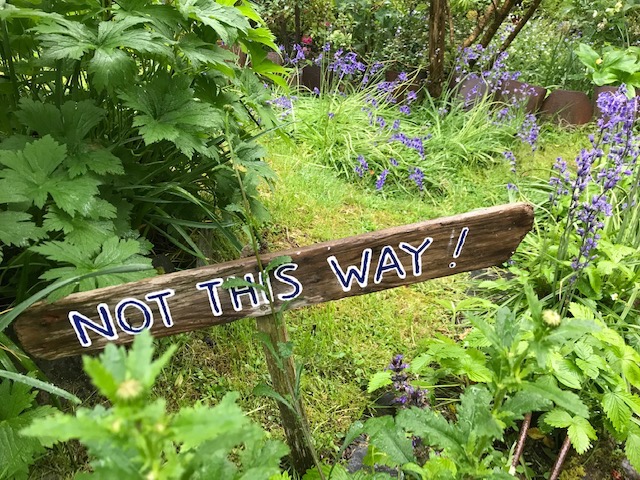
The fine rain had continued most of the time driving from Calgary, hugging the coast for much of the way. Consequently even more care needed in ascending the narrow footpaths through luxuriant dazzling vegetation. The tumbling burn that defines the garden’s western field boundary was awash with damp loving perenniels, shrubs and trees. Zig-zagging upwards along the narrow paths was experienced as a positively Amazonian experience.
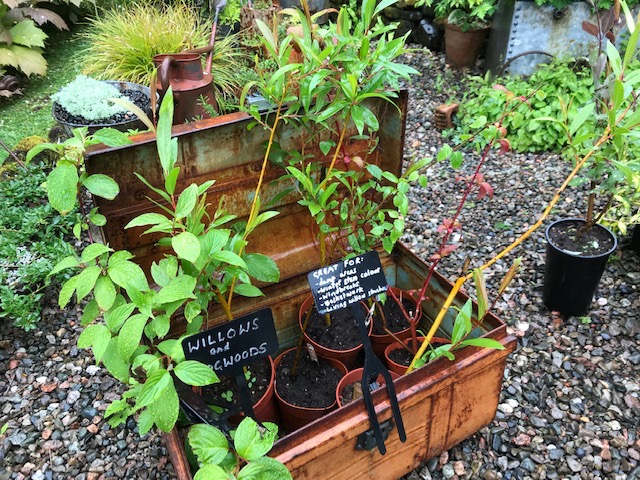
Lots of found objects encountered as we turned each corner; rusted metal boxes, ceramic tiles, driftwood, farm and garden implements, glass balls etc added greatly to the garden’s charm and playfulness.
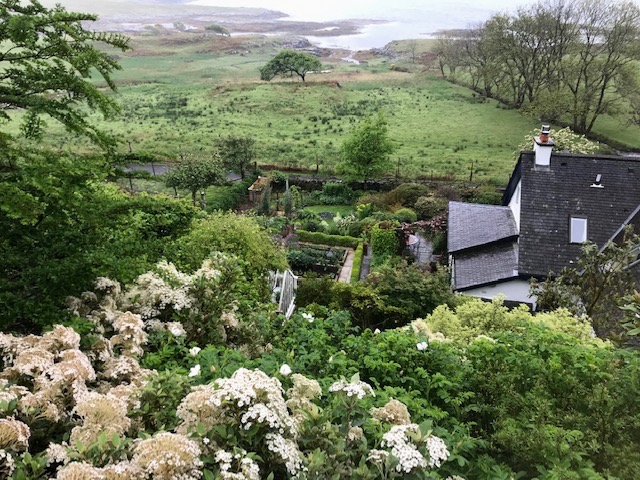
In gaining the dizzy heights of the garden’s ultimate viewpoint the terraced strips became an imagined equivalent of the Andes.
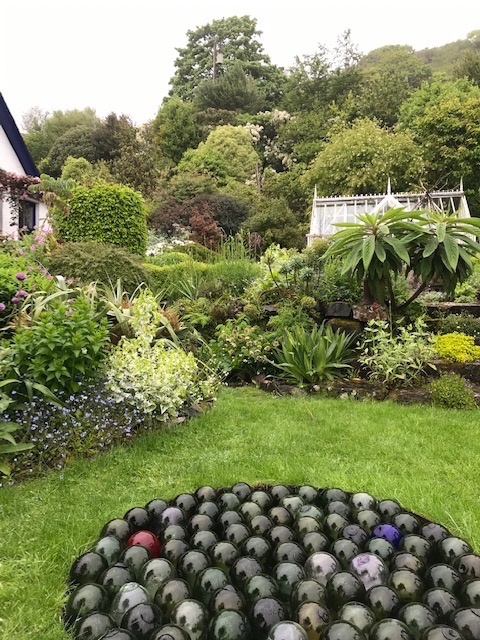
The steep winding descent brought us to a cottage garden, greenhouse and stores by the resident owners cheerful blue and white house, with its front porch display of locally produced cards and crafts.
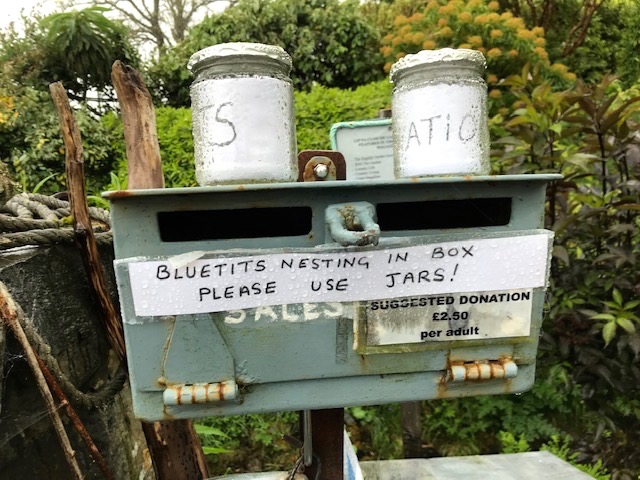
Two long display tables in the former drive were filled with home grown hardy nursery plants in pots. 25% of takings go to local charities. The honesty box for payments has had to be seasonally adjusted to fit residential requirements….
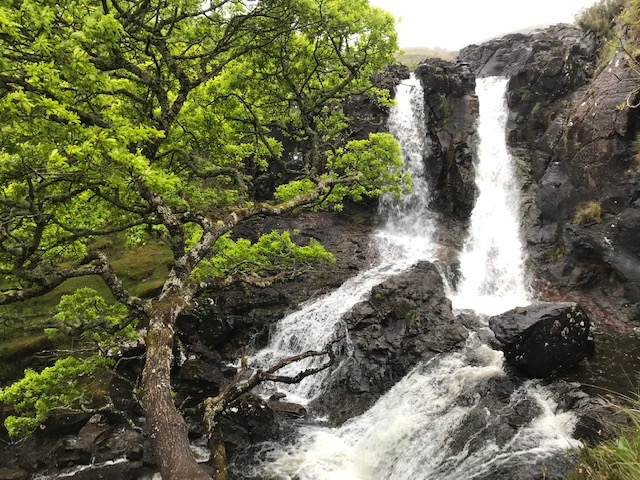
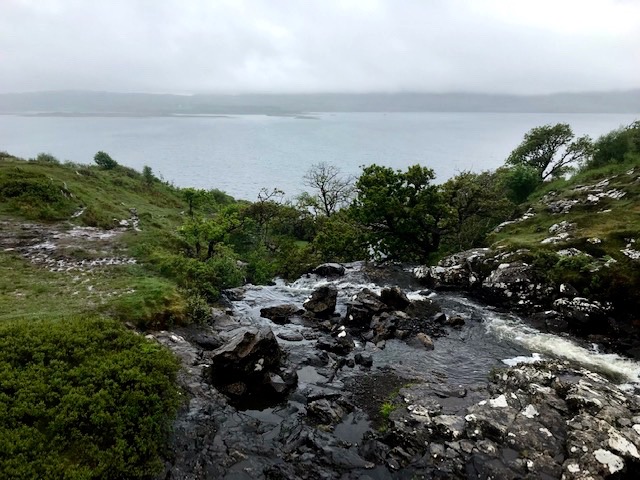
After leaving the gardens we stopped to admire the area’s most striking natural wonder, a gift from the mountain behind to the sea loch in front. Appropriately this was our third port of call that day and the rain had only served to swell its tumbling volume.
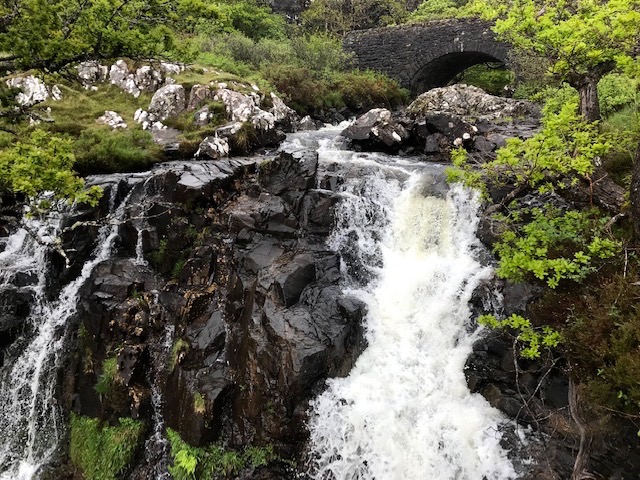
The name Ears Fors Waterfall is tautological as all three words are synonymous. Eas is Gaelic, Fors Norwegian (Viking) and the third English. The dramatic drops of white water materialise in three distinctive stages too….Wonderful happenstance!

 STEPHEN TOMLIN