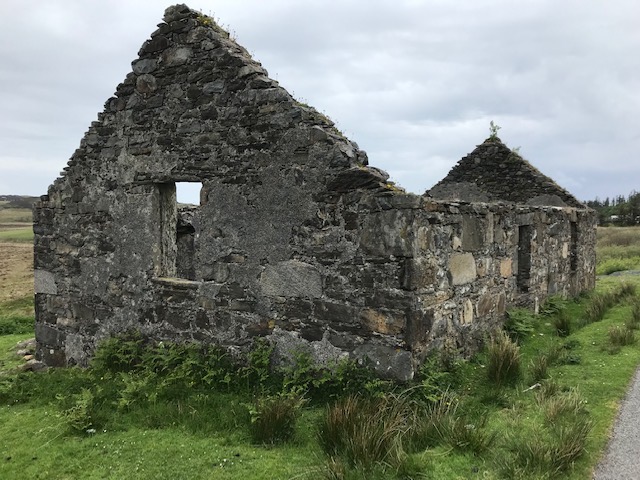
Ross of Mull. A few miles of single track winding south in wild country, passing isolated roofless dwellings. A stark reminder of centuries of depopulation here in the Western Isles, a trend only reversing in recent decades. Happily we were headed for a place that’s a great example of how traditional crafts and farming can be reinvented to meet the needs of our own age.
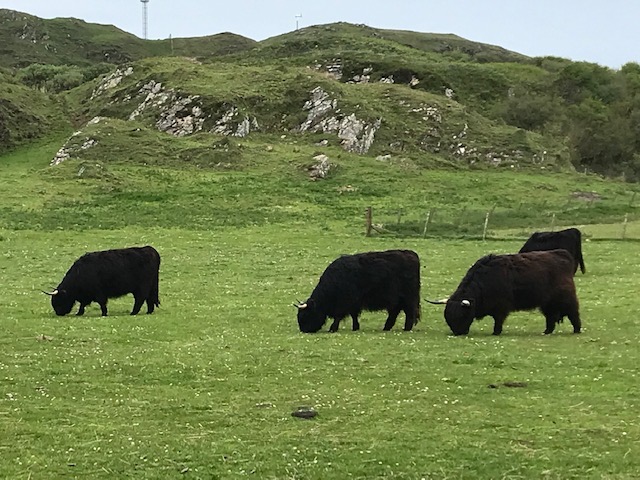
Ardalanish is a 1,500 acre hill farm. Its herd of 60-70 indigenous black coated Kyloe cattle (a third of which are breed cows) whose entire lives are spent outdoors grazing this beautiful but hard terrain. Highland cattle are highly valued by conservation bodies for their non selective foraging habits which are perfectly in tune with the environment, enhancing the flora and maintaining ecological balance.
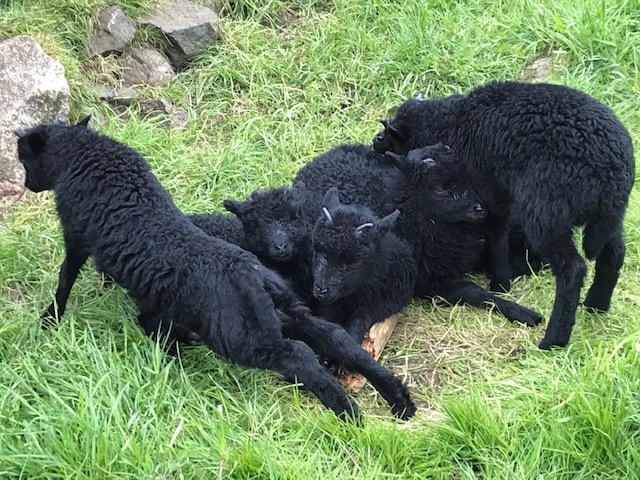
The farm’s flock of 300 distinctive black horned Hebridean sheep likewise live their whole lives outdoors with little supplementary nourishment by way of silage or hay. Delighted to see these five lambs (above) on our visit . Stock is slaughtered locally, hung for flavour for between 3-4 weeks before being cut and vacuum packed by Mull’s community butcher and available to buy both at the wee farm shop as well as online. If we weren’t staying on for longer we’d have bought some beef or lamb to sample back home.
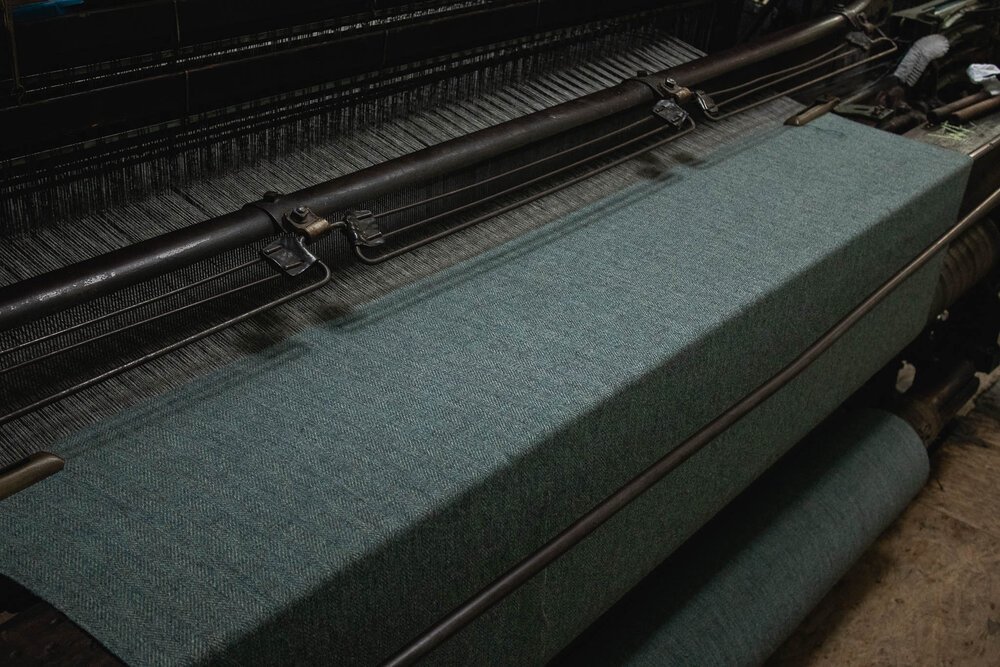
Ardalanish’s name though is best known as the home of contemporary weaving on the isle of Mull. The business was established in 1987 and the current co-owner, who we were talking to on arrival, had been here since 2004. The showroom in the barn is a wool lovers delight. Blankets, throws, shawls, wraps and scarves all woven on site alongside bags, purses, jackets and hats made elsewhere from their finished material. They also sell a range of tweeds for tailoring as clothing or soft furnishing.
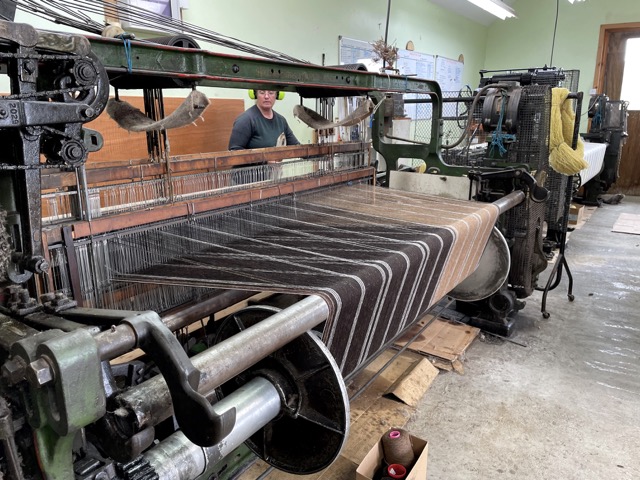
With ear mufflers donned we were able to witness manufacturing in progress. I love that blended pungent aroma of wool, hot metal and oil that fills the air in a working weaving shed. One of their 1950’s electric powered Dobcross looms flew through its multi-part paces at speed, clanging and clicketing away under the sharp eye and deft hand of the accomplished weaver, who would sometimes stop to rethread or adjust settings. The cast iron looms weigh over two and a half tons and stand around six feet tall. Between 1860 and 1967 huge numbers of these iconic machines were manufactured and exported by Hutchinson, Hollingworth & Co from their mill twixt Saddleworth and Oldham. A wonderful exemplar of textile engineering born out of the Industrial revolution, embedded in England’s Pennines, and still going great guns in this and other UK heritage weaving centres.
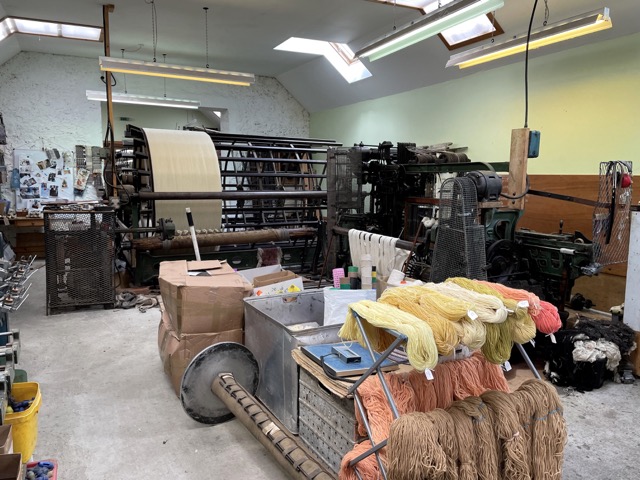
The natural colours of the landscape and its flora and fauna are reflected in the entire product line. Subtle and resonant shades of black brown and grey from the the Hebrideans blended with imported Shetland and Manx Loaghtan wool.
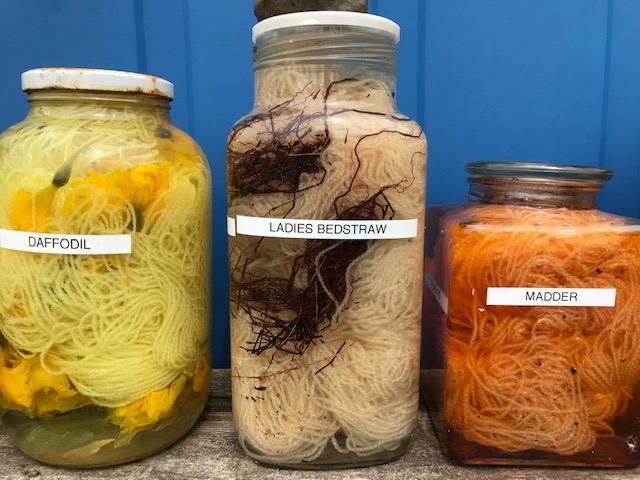
Ardalanish uses natural dyes from plants as well. It was fascinating to peruse the line up of examples displayed in old sweet and provision jars in the farm yard. They range from woad for a full range of blues, madder root for shades of red and onions for yellows. Soakings of seaweed, daffodil and ladies bedstraw were also on display.
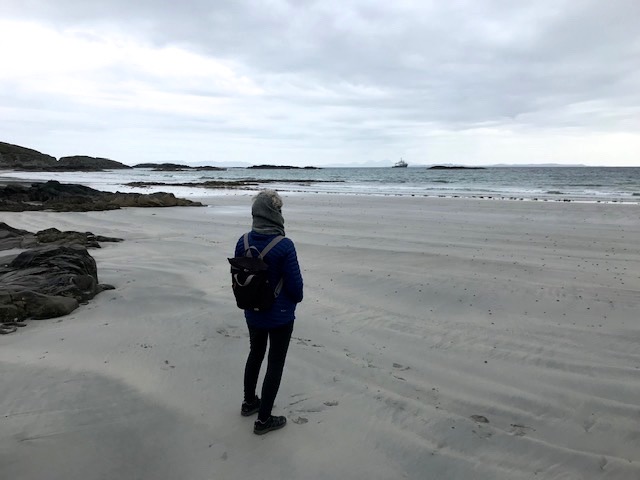
The spell was too great to resist. After trying on and sampling we bought a flat cap and scarf each, then sat out in the yard on a bench, backs to the wall, eating the shop’s very tasty home made bridies (pasties) and taking in the wonderful views. The farm has open trails over its land so we followed the obvious one down through the prize acreage of flat meadow grazed by the cattle, over the machair grassed dunes and down onto the huge sweep of shell sand, defined at the edges by impressive outcrops of ancient rock formations.
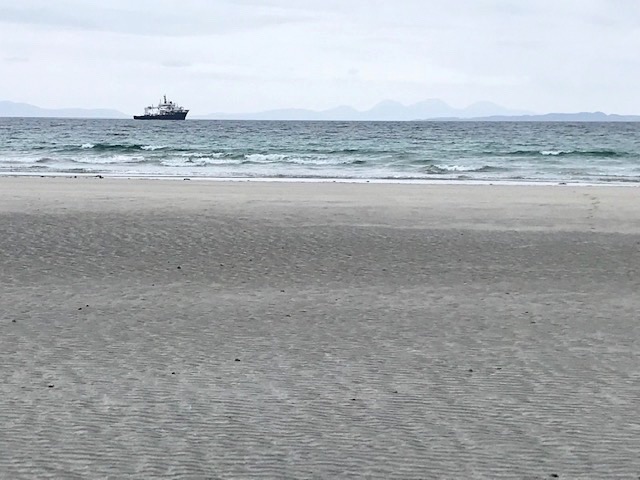
Out at sea a ship rode at anchor. Later told it was a maintenance vessel for the official authorities range of maritime fixtures, from lights to buoys. We strolled along the deserted strand, a clean smart breeze in our faces, with hardly a soul in sight, pausing to take in a fine view south of the Paps of Jura. It reminded us that the last time we’d gazed southwards towards those island mountains was on our honeymoon, from the isle of Colonsay, two summers since.

 STEPHEN TOMLIN
Wonderfully resonant. Makes me want to see some of granddad’s machine-in-action movies myself!! My ancestry (dad’s side) is full of millworkers near Dobcross; I was schooled in Oldham. So much of interest and connection in this post x
LikeLiked by 1 person