
An Easter Sunday ramble of just two miles feels a lot more when half of it’s in forest and you have to divert round fallen trees. All well worth it though for the interesting sidelines and fine views provided at journey’s end. Falstone is a small village at the head of the north Tyne River where it leaves Kielder Water, the huge reservoir created in the 1970’s surrounded by some 153,000 acres (62,000 hectares) of commercial forestry, making Kielder the largest man-made forest in Europe.
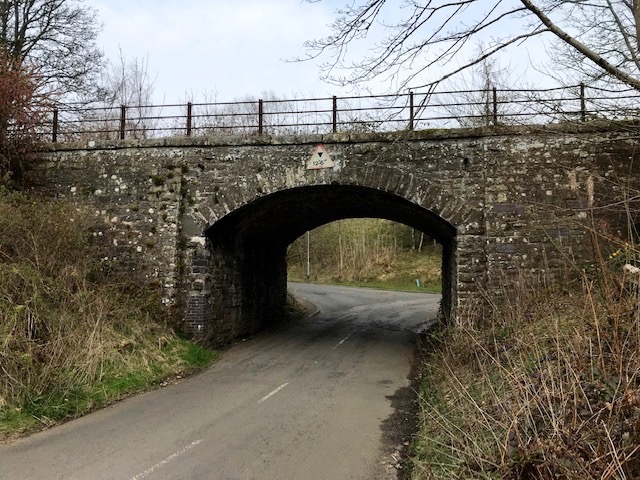
We started this circular stroll from the village through an archway onto fields. This archway is a railway bridge, an architectural remnant of the old Border Counties Railway (1866-1958) I’ve written about previously, which was once a vital lifeline ferrying all manner of goods and passengers.
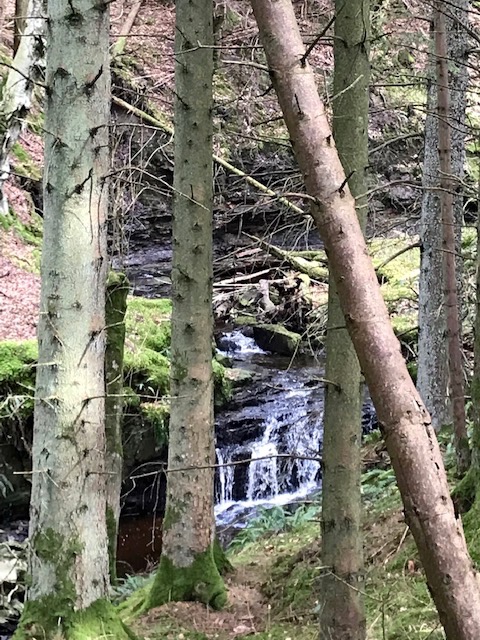
Leaving the lane we made a staggered ascent of the Falstone burn’s narrow valley, threading through a mix of conifers, with small waterfalls gracing its sharp descent through sandstone dense with moss and scattered with pinecones, brash and peeled bark. Even here in the gloom there were echoes of the land’s former moorland setting – straggly fronds of heather either side of the path.
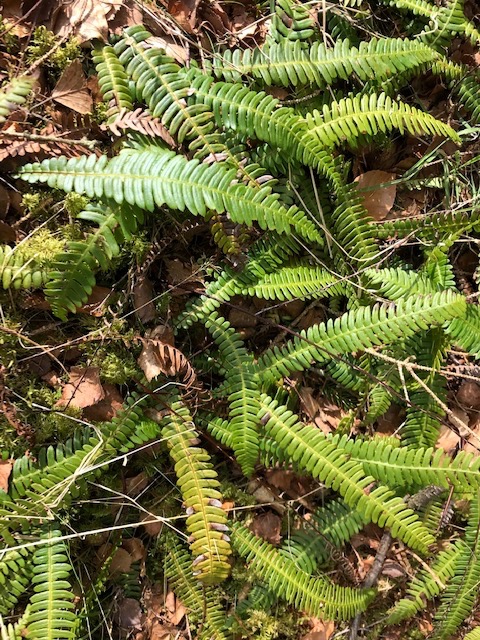
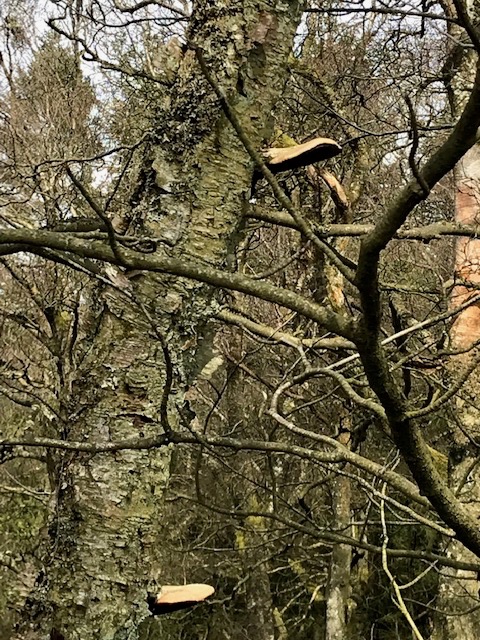
Pines and spruce suddenly gave way to birch woods. Lots of ground hugging hard fern, an indicator of ancient woodlands, growing in profusion here. Coffee coloured bracket fungus (birch polypore) on some of the older trees in process of decay. A common country name for it was ‘razorstrop fungus’ as the rubbery leathery surface was used to sharpen cutthroat razors and other bladed tools!
Having gained the heights further progress was halted by a slew of tree trunks across the bridleway. Yet another reminder of the damage wrecked by Storm Arwen eighteen months since. So extensive the damage done then and so vast the forest rights of way like this have still not been cleared and not likely to be so for a while yet.
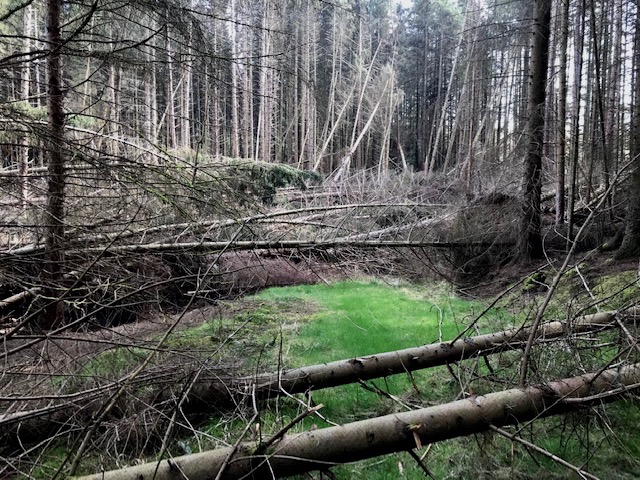
Undaunted we carefully zig-zagged a course down the valley side to cross the little stream and various drainage dykes to pick up the level line of what we took to be the track on the other side. Dense spongy moss giving way underfoot, with clambering over fallen boughs, we eventually made it. Relieved to come across no more obstacles as track transformed to stone bedded access road, following the contours of forested Hollows hill.
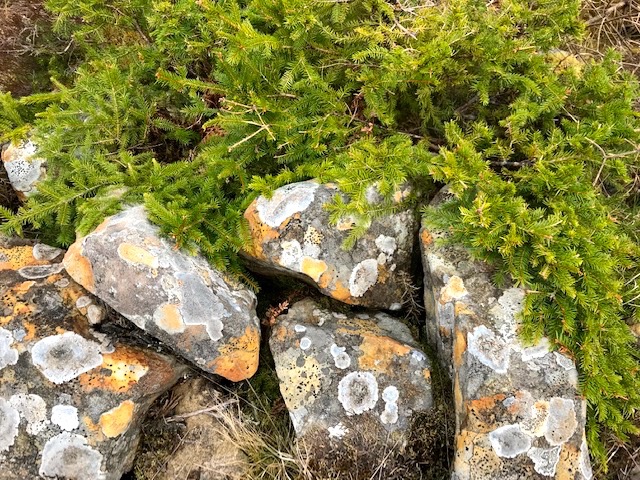
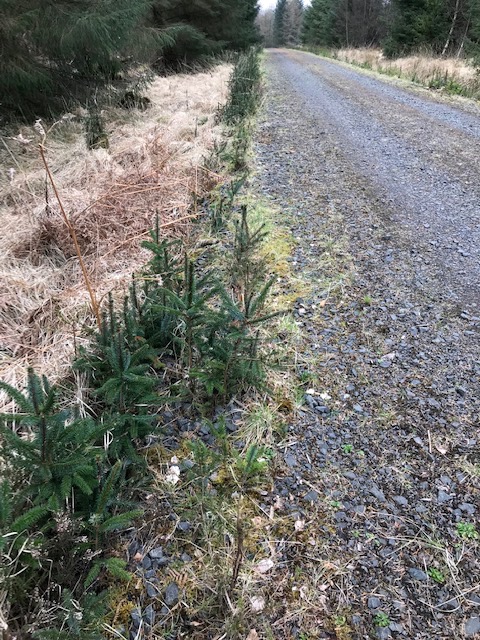
Primroses breaking through the wraithes of dead winter foliage on one side, curiously patterns of multi-coloured lichens on stones the other side, in one place embraced in the spreading arms of Juniper. All along the stony verge tiny sitka spruce and larch lined the way, like dandelions would along a lowland lane side.
Finally the mass of trees clear enough to reveal the dam and a glimpse of water beyond. The statistics are impressive. Kielder Water is 7miles long, some 158 feet deep and holds 444,000 million gallons of water. The North Tyne shines brightly in otherwise dull overcast sky as it escapes to run away eastward.
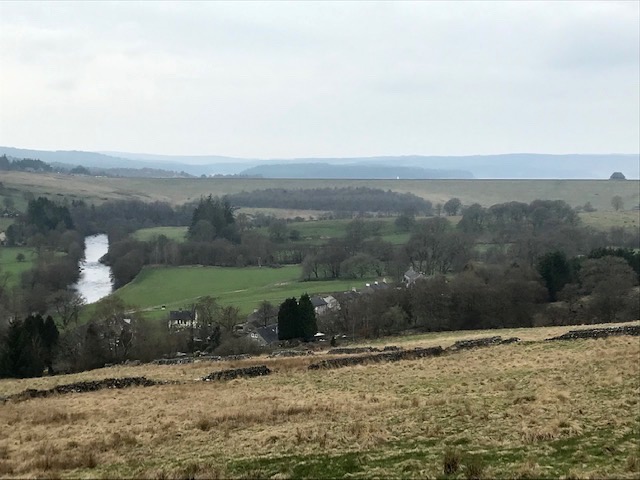
Dropping downhill on a bridleway from one forestry road to another we come upon a melancholy site. The remains of Hawkhope farm, perched high here on the fell overlooking Falstone, now shot through with self sown trees.
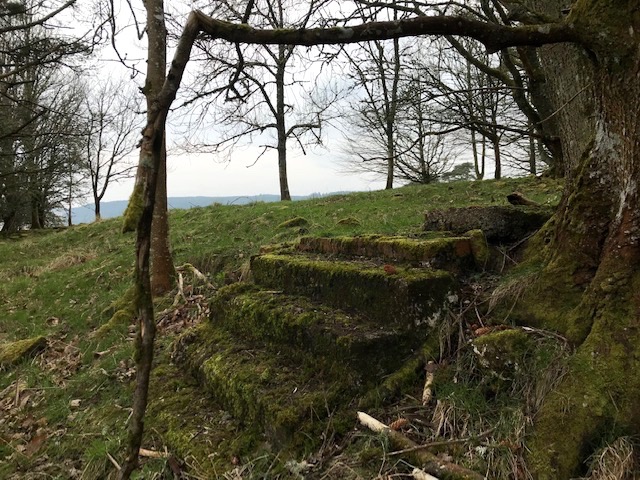
A tragic act surely to allow a large traditional farmhouse, cottage, stable, byre and hayshed to be wiped off the map at some point following the Forestry Commission’s purchase of the property and its land in the mid 20th Century.

A long lost gateway, mossed over rocks on flat foundational bedrock and some brick steps are all that remain to hint of it ever existing. The stunning view the place and its inhabitants once enjoyed does though remain for anyone else to still enjoy today.
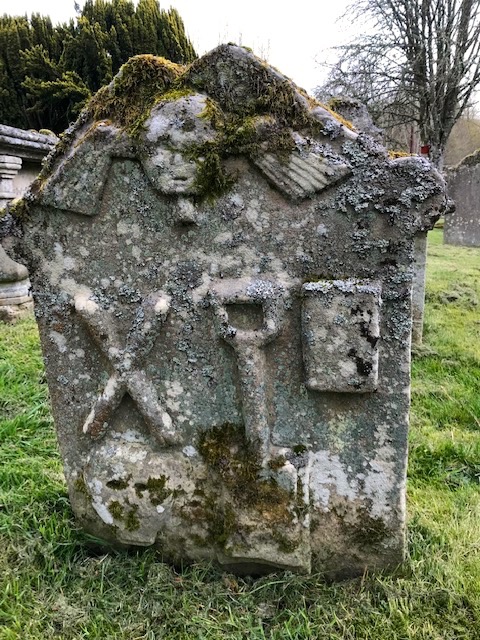
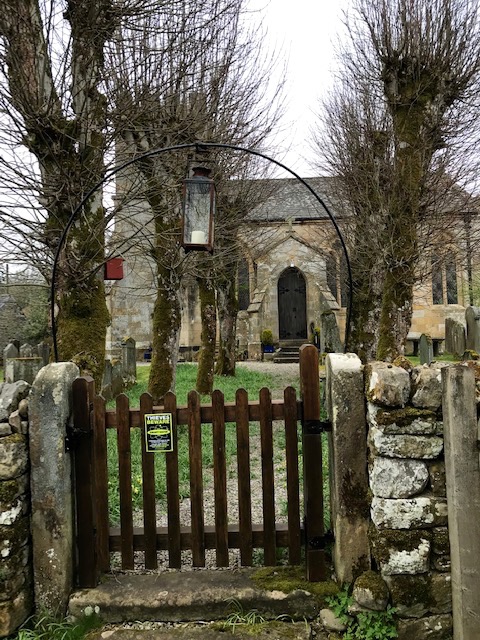
Back in the village we amble through the churchyard of St Peter, the third church dedicated on the site, dating from 1892. The first was in the early 18th Century and some fine table tombs and strongly graphic gravestones from that period grace the neatly tended graveyard. Bluebells line the south walkway, intermingling freely with the gravel pathway. A lamp adorns a simple gateway arch. The former traditional farm buildings next door are now very smart self- catering Air B&B apartments. If Hawkhope farm been spared demolition I suspect it may have eventually undergone a similar transformation.
Time for a refreshing pint and a packet of Seabrook’s crisps in ‘The Black Cock’, Falstone’s village pub named for the once common, now rare gamebird, the black grouse. Even at 3pm it’s a popular purveyor of generously portioned Sunday lunches. We make a mental note to come sample another Sunday before departing to enjoy a leisurely drive, following the beautiful river homewards.

The final leg of the journey has us pass one of our local burns where a tributary joins in a sequestered valley and I get a two second glimpse of a duck afloat on the waters which I can only describe as being compiled of the spare parts of all other ducks you can name. I’ve seen them before, at the London Wetland Centre with the grandchildren last spring. Research reminds me of their name, Mandarin ducks. Pairs mate for life so they’re seen as symbols of everlasting love. Introduced to England from the far east as an exotic eyecatcher on landed estates, they started to escape confinement in greater numbers by the mid 20th Century and have been slowly spreading across the UK ever since.

 STEPHEN TOMLIN