‘If God wills it…the summer rains will fill the wadis…and the salmon will run the river. And then my countrymen…all classes and manner of men, will stand side by side and fish for the salmon….And their natures too will be changed. They will feel the enchantment of this silver fish…and when talk turns to what this tribe said or that tribe did…then someone will say, Let us arise, and go fishing’. (From ‘Salmon Fishing in the Yemen’ by Paul Torday)
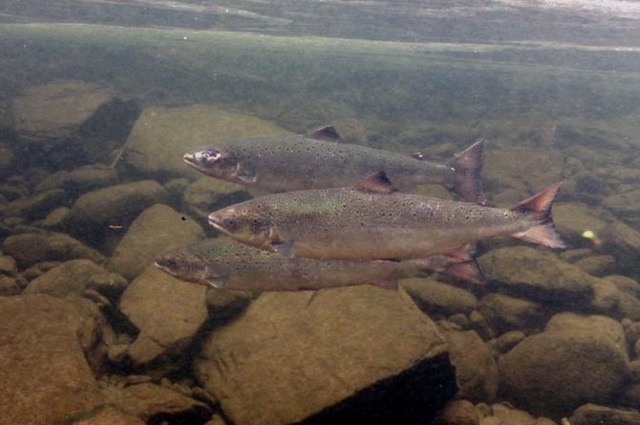
Living as we do on a high land of permanent pasture, forest and rough grazing it’s interesting to explore the valley below and the river running through it. Not an easy task as most of it is the property of a cluster of landed estates, experts at extracting every available commercial resource from soil, wood and water and keeping public access to a minimum.
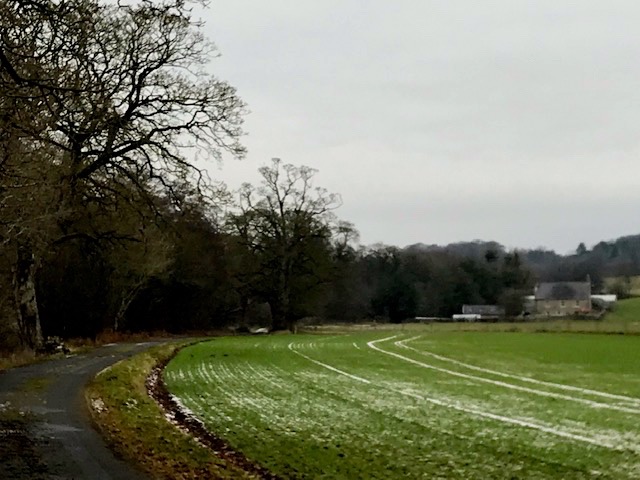
We park on a wide verge and follow a private cul-de-sac passing one of the estate farms, isolated cottages and corrugated iron barns, with a modern timber framed anglers rest room at its terminus. We pause to take in the runs and pools on the river where rods will soon be paying top rates to cast their flies. The river here, from a fisherman’s point of view, is a dream come true. It runs wide, fast and free of obstruction, oxygen rich, characteristically chocolate coloured with peat from the bogs of its source on the border with Scotland.
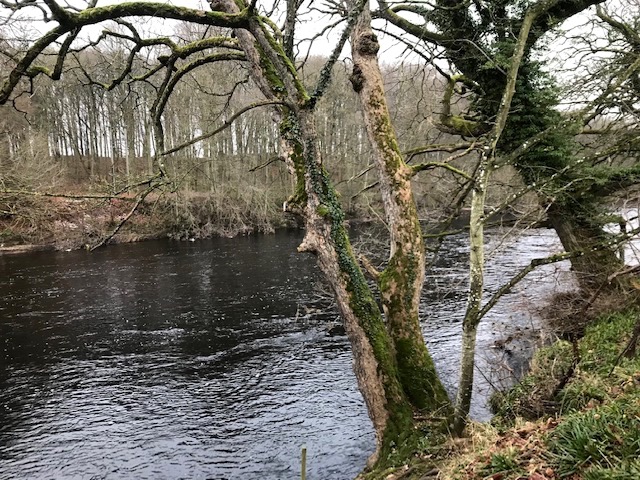
Acknowledged as England’s leading salmon and sea trout river, the Tyne’s restoration to ecological health is a rare success story. The vast majority of our country’s rivers and waterway are in a bad way ecologically, due to scandalously bad management and societal neglect, so what makes this an exception to the rule? The end of toxic heavy industry and clean up on the urban tidal estuary and a purpose built hatchery near the source, that has released hundreds of thousands of fry into the headwaters have worked wonders. Back in 1959 no salmon or sea trout were caught anywhere on the 1,000 square miles of its catchment. Today an average 30,000+ migratory fish pass upstream annually and the average yearly catch along the Tyne’s 100 miles of fishable banks is an impressive 6,000.
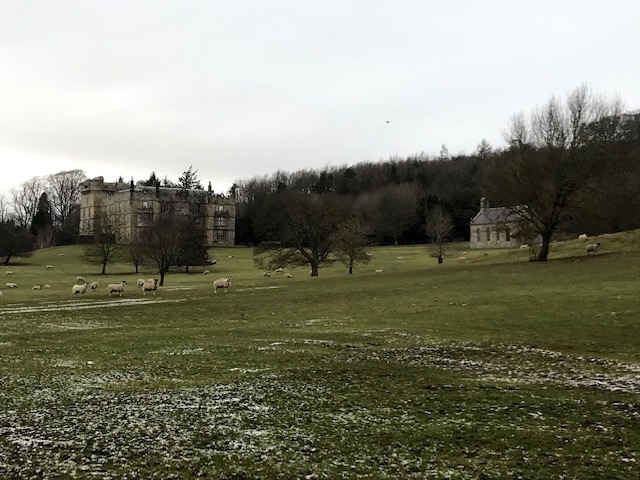
This whole stretch was deserted on the Sunday we visited. The season opens again on February 1st and I discover later that this beat is completely sold out for the year. It will bring considerable income to the estates whose farm and former deer parks frame and define this classic landscape, and their ghillies will be present to police it. This particular 1,000 acre agricultural estate is run from an imposing big house at the valley’s fertile heart. Its core a 14th century Pele Tower – the most impressive and best preserved in the area – fronted by a Jacobean mansion, largely remodelled in the 19th Century.
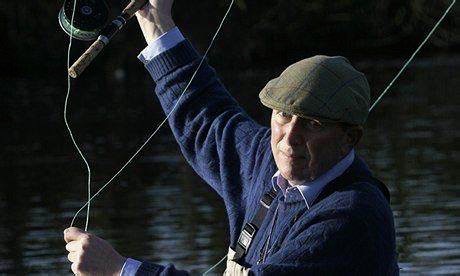
A short stroll away is a modest 18th century chapel where successive family members are commemorated. One of the most recent plaques is for successful regional businessman turned novelist Paul Torday (1946-2013). He was a renowned fisherman who lived at the big house and knew this river intimately. His first novel, written at the age of 59, Salmon Fishing in the Yemen, became a worldwide bestseller. It was made famous by the feature film starring Ewan McGregor, Emily Blunt & Kirsten Scott Thomas.
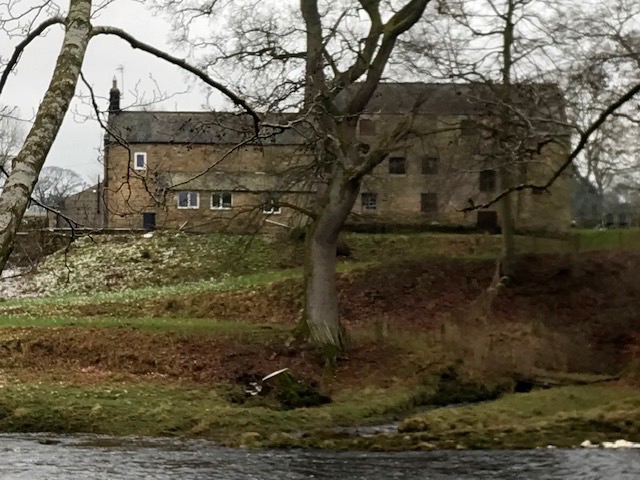
Our winter walk allows for longer revealing views through nature’s architectural forms so more of the landscape and its structures are revealed. A fine view on the opposite bank for instance of an early C19th water powered corn mill, part of the neighbouring estate, in use until 1960. The small stream entering the Tyne there that once powered the undershot mill wheel and much of the old machinery is reported to lie intact within. The miller’s house is occupied and stands a fitting companion next to it.
Our way continues as a public footpath, threading through newly planted deciduous woodland. Eventually we had to divert where a side stream entered, ascending between lines of poplars, up and out of the floodplain onto the back road linking the valley’s scattered settlements.
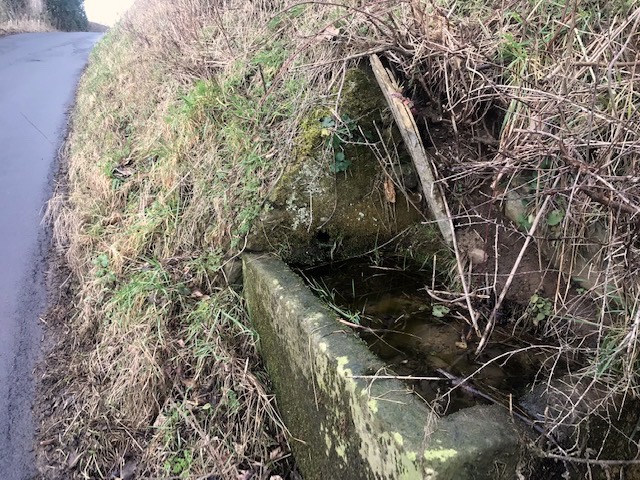
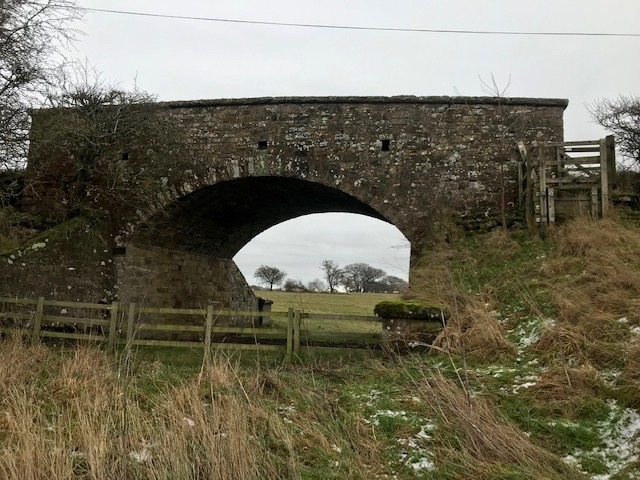
We turned back homewards along this quiet lane and discovered something tucked into the hedge bank I’d always overlooked when driving by – a stone trough below a spring. In former days a place for draught animals to drink. Shortly after we turned off on a rising farm track to gain the former Borders Railway, running parallel with the road, which once connected the valley to the wider world between 1864 and 1956. We carefully descended the steep worn steps from a bridge, still in good condition, but otherwise marooned in a swathe of estate farmland.

The wooden right of way signs, styles and gates we passed on our walk were all worn and sagging and in need of replacement. Pleased though to see most of the gaps in field hedges had been filled with infant thorn trees in guards, so conservation management measures of a sort are in evidence. The main arable crop being grown here looks like either leaf beat (cattle fodder) or sugar beet. If so then it’s a relatively new cash crop hereabouts, which got me wondering why it may have been planted in such quantity.
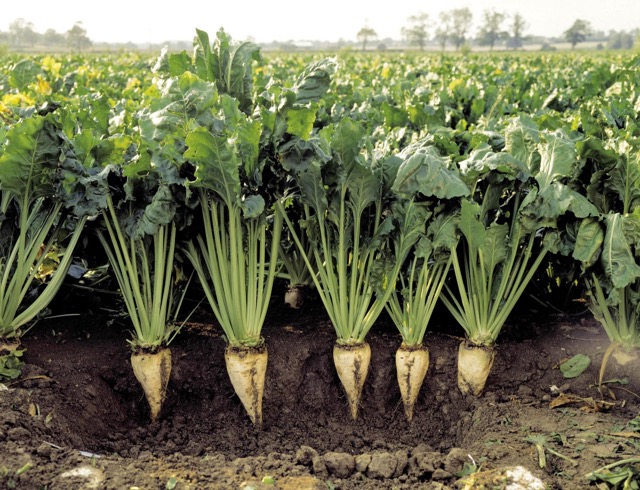
Later, I did the research…Most of the world’s sugar is produced from cane grown exclusively in the tropics. Since the mid 18th century the search for alternatives that could be grown on the European continent has seen development and growth of sugar beet on a huge scale to supplement our ever growing demand for the sweet stuff. Some 75% of the actual beet is water, up to around 20% Sucrose and the remaining 5% pulp, a by-product used in manufacturing animal feedstuffs. The world’s largest sugar beet producer is Russia. That country’s invasion of Ukraine has highlighted food security concerns worldwide and put rockets under domestic production. Although banned across the European Union certain key pesticides types are still allowed in post Brexit Britain. For the third year running, HM Government has allowed ‘emergency’ use of Thiamethoxam, a highly toxic neonicotinoid chemical used as a crop pesticide against damage caused by aphids. The RSPB, Friends of the Earth, Wildlife Trusts and other environmental organisations are deeply opposed, citing numerous scientific studies that associate their use with drastic decline in pollinator numbers, especially those of bees. In turn this has fuelled grave concerns over accumulative negative impacts on wildlife and human health.
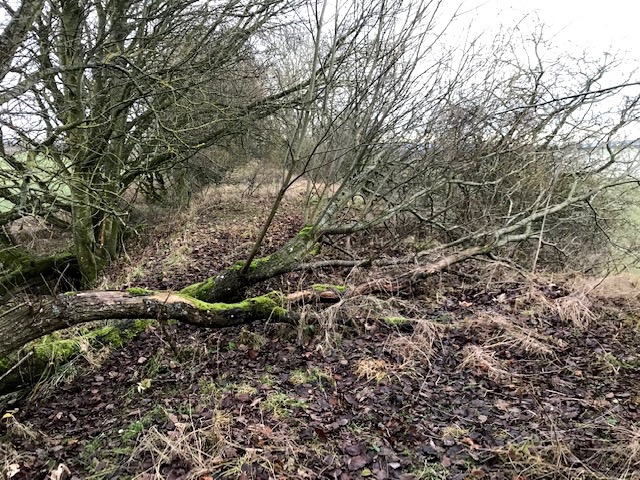
The old trackbed is virtually all privately owned and consequently became inaccessible to the public after closure. In a progressive and equitable world of course the line, where it still exists, would – through a mix of compulsory purchase and negotiated settlement – be turned into a cycle and walk way. This would open up to residents and visitors alike a safe, sustainable, healthy and enjoyable way to access our countryside; a way to commute to work or school, and otherwise promote the new green economy that would benefit everybody…But of course I’m merely daydreaming what our 21st century countryside could be like and not what it is like!
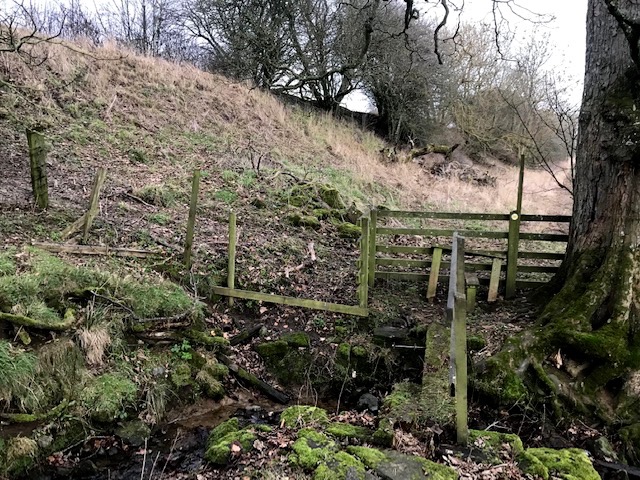
We persevere onward, weaving through encroachments of undergrowth and fallen trees. The last part of this return leg entails a gentle scramble down from the embankment, at the point where we meet a fence boundary, to pick up the official path, crossing a little stream emerging from its arched culvert under the raised trackbed, to thread through an imposing avenue of imposing mature trees to reach the lane and our parked car. A quiet short circular walk through highly managed countryside providing plenty of food for thought about our land, its history, culture and inheritance.


 STEPHEN TOMLIN